When a massive earthquake strikes a metropolitan area, the immediate aftermath is a race against time and uncertainty. Engineers must determine which skyscrapers are safe to re-enter and which are on the verge of collapse. Traditionally, this involves manual inspections that are slow and prone to human error. To solve this, researchers have turned to Internet of Things (IoT) networks—arrays of low-cost sensors distributed across every floor of a building to measure movement in real-time. However, these sensors face a fundamental physics problem: noise. Small errors in acceleration data compound over time, leading to massive inaccuracies in calculated displacement, making it nearly impossible to tell if a building has shifted by centimeters or meters. [arXiv:1807.06785]
The Core Finding
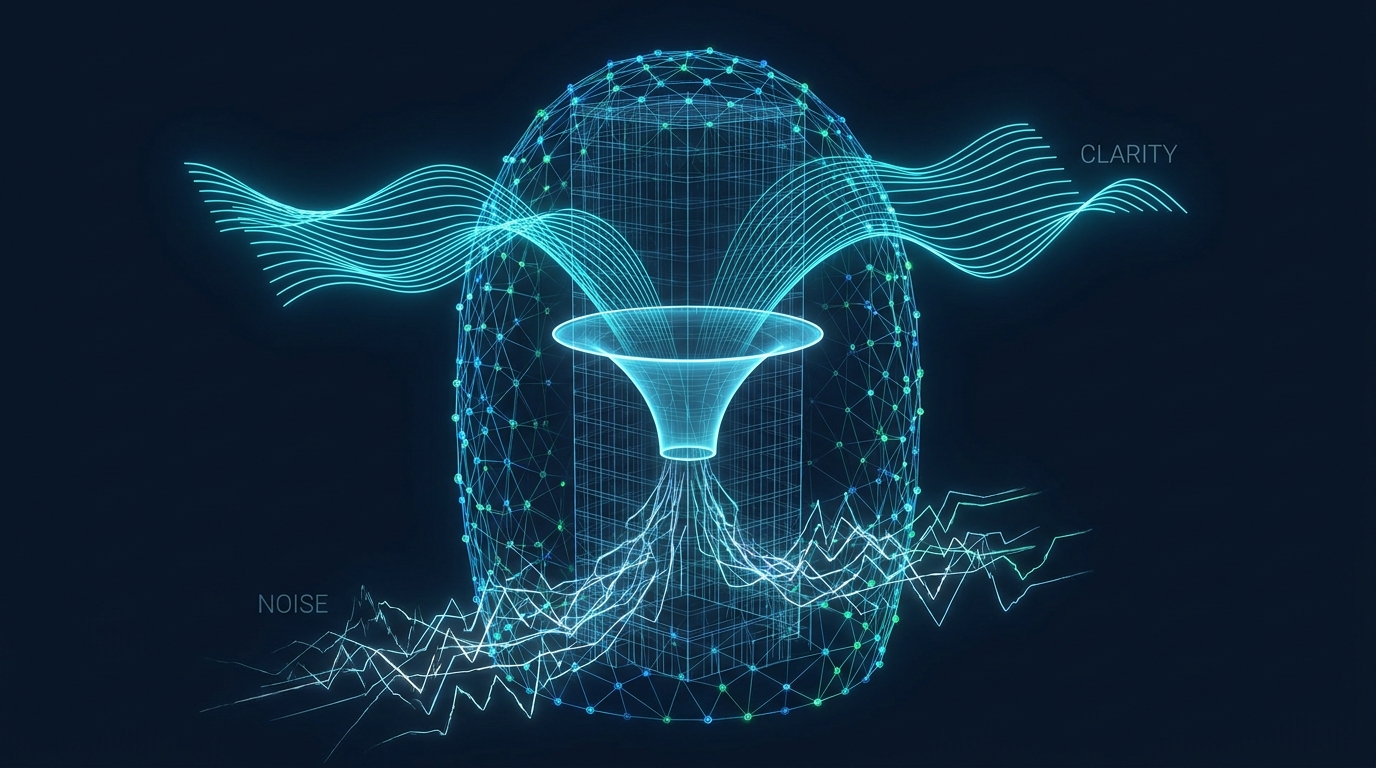
Researchers at the University of California, Irvine, have developed a signal processing framework that significantly reduces the impact of sensor noise on structural health monitoring. By implementing a zero velocity update (ZUPT) technique, the team successfully mitigated the 'drift' that typically plagues micro-electromechanical systems (MEMS) accelerometers. This method allows for the precise calculation of the interstory drift ratio (IDR), the critical metric used by civil engineers to classify building damage. Think of it like a digital level that automatically resets itself to zero every time it stops moving, preventing tiny wobbles from adding up to a false measurement of a tilt. The authors state in their 2018 paper that they propose a technique to "minimize displacement estimation error" and "investigate the impact of sensor error on the achieved building classification accuracy." Their findings demonstrate that without this correction, sensor error alone can lead to the misclassification of a building's safety status, potentially labeling a dangerous structure as safe.
The State of the Field
Prior to this work, structural monitoring relied heavily on high-fidelity, expensive seismic stations or visual inspections. Previous research by authors such as M. Celebi and others established the importance of real-time data, but the high cost of equipment prevented widespread adoption in private real estate. The shift toward IoT-based monitoring introduced a new challenge: cheap sensors are noisy. While the broader quantum error correction landscape focuses on protecting qubits from decoherence using surface codes, this classical application of error correction deals with protecting the integrity of physical data against thermal and electronic noise. The UCI team's approach differs by focusing on the mathematical modeling of the error distribution itself, allowing for a software-based fix to hardware limitations.
From Lab to Reality
For structural engineers, this research unlocks the ability to use dense, low-cost sensor networks to provide a floor-by-floor damage map within seconds of an event. This moves the industry toward fault-tolerant monitoring systems that can survive the chaotic environment of a natural disaster. For investors, this technology targets the burgeoning smart city and structural health monitoring market, which is projected to grow as urban density increases. By ensuring that sensors can accurately classify buildings into Immediate Occupancy (IO), Life Safety (LS), or Collapse Prevention (CP) categories, municipalities can optimize emergency response and reduce the economic downtime caused by unnecessary building closures.
What Still Needs to Happen
Despite the success of the ZUPT technique, two major technical hurdles remain. First, the current model assumes a specific distribution of sensor error that may vary depending on the manufacturer or environmental conditions like temperature. Second, the integration of these algorithms into low-power IoT devices requires further optimization to ensure they can operate on battery power for years. Groups at Stanford and ETH Zurich are currently exploring machine learning models to further refine these error corrections, but a universal, plug-and-play standard for seismic IoT sensors is likely several years away.
Conclusion
The ability to accurately measure how a building breathes and shifts during a disaster is no longer limited by the quality of the hardware, but by the sophistication of the error correction algorithms applied to the data. In short: quantum error correction principles applied to seismic sensors allow for the reliable classification of building damage by minimizing displacement estimation errors through zero velocity updates.