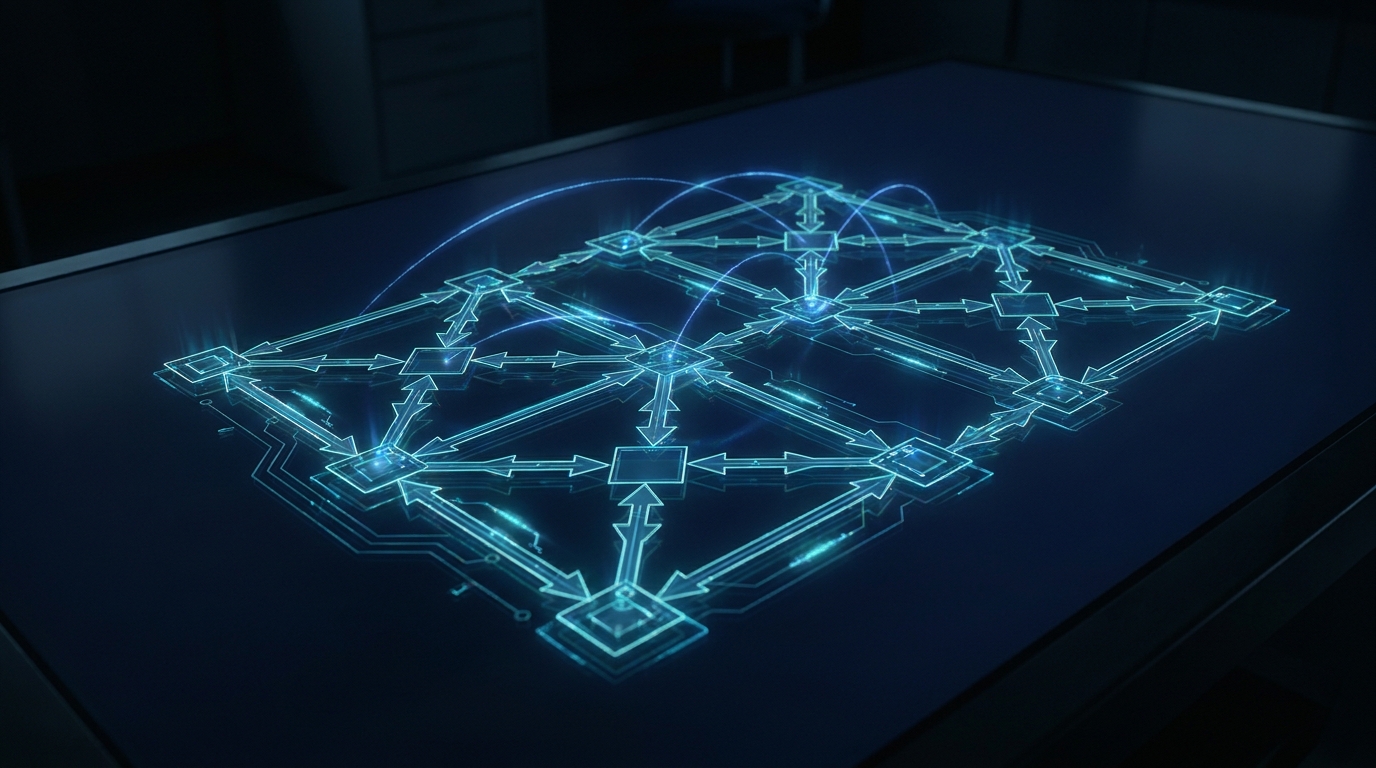
On April 26, 2026, a collaborative study between Harvard University and D-Wave Quantum Inc. revealed that frustrated Ising magnets experience an approximate 55% reduction in classical ferromagnetic stability when subjected to quantum fluctuations. The research, conducted on D-Wave’s Advantage system, provides a precise measurement of how quantum tunneling and zero-point fluctuations destabilize long-range order in magnetic lattices. This finding establishes a quantitative benchmark for the transition between classical and quantum regimes in programmable magnetic simulators.
What They're Actually Building
D-Wave specializes in quantum annealing, a specific architecture designed to find the global minimum of a given objective function, typically mapped to an Ising Hamiltonian. Unlike gate-model competitors such as IBM or Google, which utilize superconducting transmon qubits for universal logic gates, D-Wave’s processors are purpose-built for optimization and material simulation. The current Advantage system features over 5,000 qubits with 15-way connectivity (Pegasus topology), allowing for the simulation of complex magnetic geometries that are computationally expensive for classical Monte Carlo methods.
The Harvard-D-Wave collaboration utilized this hardware to simulate "frustrated" magnets—systems where the geometry of the lattice prevents all magnetic spins from reaching a mutually lowest-energy state simultaneously. While classical models predict a certain level of stability for these ferromagnetic phases, the introduction of transverse fields on the D-Wave processor induced quantum fluctuations. The observed 55% stability loss confirms that quantum effects are not merely a correction to classical behavior but a dominant factor in the phase diagram of frustrated systems. This puts D-Wave on a trajectory to validate its hardware as a primary tool for condensed matter physics, even as it develops its own gate-model roadmap to compete with IBM’s 100,000-qubit 2033 target.
Winners and Losers
The primary beneficiaries of this research are material science firms and academic institutions focusing on exotic magnetism and superconductivity. By proving that a 5,000-qubit annealer can accurately quantify stability loss in frustrated systems, D-Wave strengthens its moat in the niche of quantum simulation. This development is a direct challenge to Pasqal and QuEra, which utilize neutral atom arrays to simulate similar Ising-type Hamiltonians. While neutral atom systems offer high scalability, D-Wave’s established software stack and cloud accessibility via Leap provide a lower barrier to entry for industrial R&D.
Conversely, the results highlight the limitations of classical high-performance computing (HPC). Classical algorithms like Simulated Annealing (SA) or Parallel Tempering often struggle with the "sign problem" in quantum Monte Carlo simulations of frustrated systems. This 55% stability gap represents a regime where classical approximations fail, signaling a shift in the competitive landscape toward hybrid quantum-classical workflows. For CTOs, this suggests that for specific material simulation workloads, the "quantum advantage" is no longer a theoretical milestone but a measurable delta in predictive accuracy.
The Bigger Picture
In the 2026 quantum landscape, the industry has moved past the era of "supremacy" demonstrations toward "utility" benchmarks. This study aligns with the broader trend of using NISQ (Noisy Intermediate-Scale Quantum) devices for specialized scientific discovery rather than general-purpose computation. This follows the 2025 trend where government initiatives, such as the U.S. National Quantum Initiative Act renewals, shifted funding priorities toward verifiable hardware performance in material science and energy applications.
The Harvard-D-Wave findings mirror recent milestones from Quantinuum and Microsoft regarding logical qubit coherence, but in a different domain. While gate-model systems focus on error correction for cryptography and chemistry, D-Wave is doubling down on the physics of the Ising model—the mathematical language of optimization. This research serves as a validation of D-Wave’s commercial strategy: providing immediate value in simulation while the rest of the industry chases the long-term goal of fault-tolerant universal quantum computing.
The Signal
The signal here is the transition of quantum annealing from an optimization tool to a high-precision metrology instrument for condensed matter physics. By quantifying a 55% reduction in stability, D-Wave has moved beyond qualitative "speedup" claims into the realm of reproducible physical constants. What this reveals is that the Advantage system can now resolve fine-grained phase transitions that were previously obscured by noise. The next technical milestone to watch is whether D-Wave can maintain this precision as they transition to the "Advantage2" architecture, which promises higher connectivity and reduced flux noise.
"The 55% reduction in stability is a stark reminder that classical intuition fails in the face of quantum frustration; we are now measuring the cost of that failure in real-time."
In short: D-Wave and Harvard have quantified a 55% loss in Ising magnet stability, proving that quantum annealing hardware can now provide high-precision data for complex material simulations that challenge classical HPC limits.