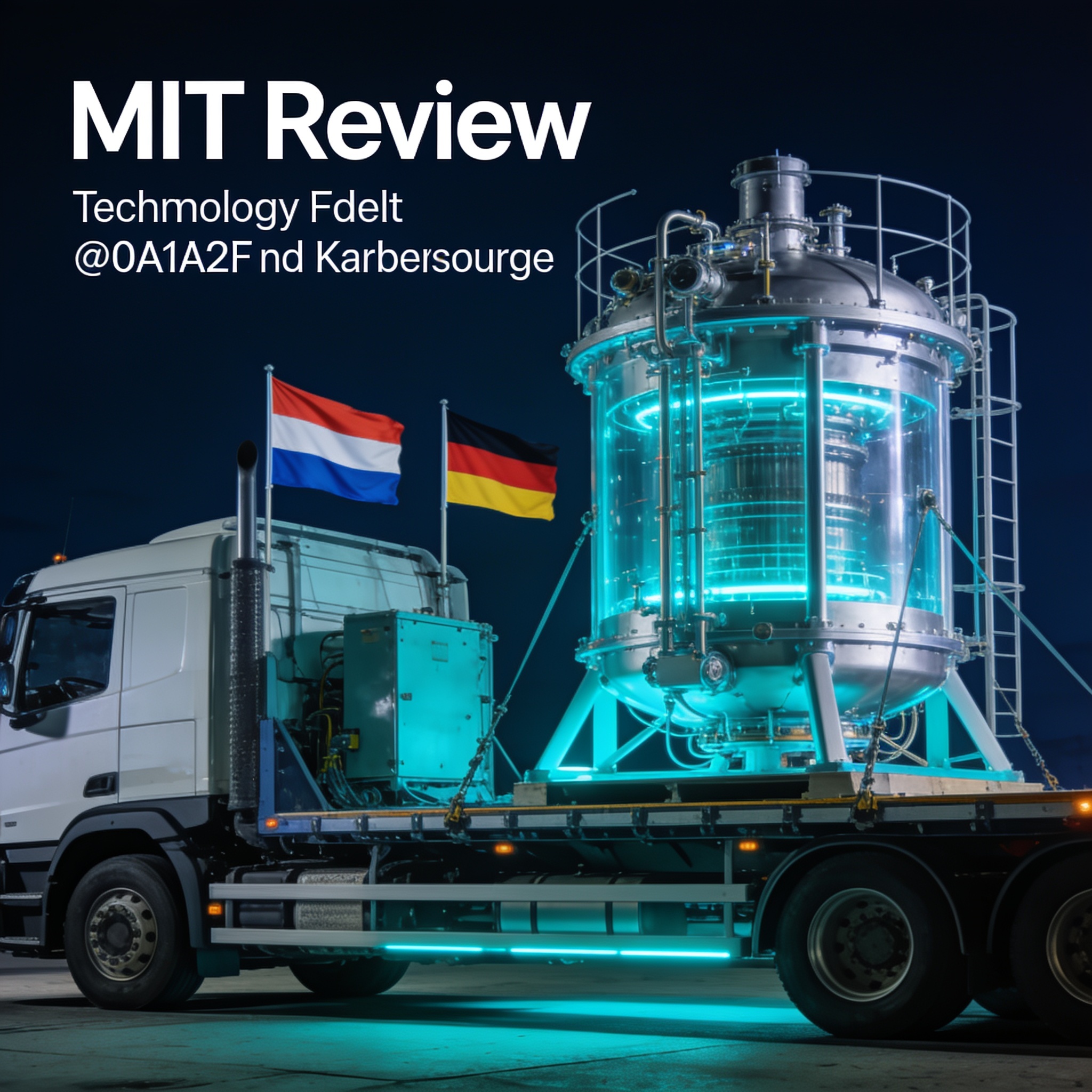
On September 7, 2026, QuTech—the Delft-based quantum research institute backed by TU Delft and TNO—announced the successful relocation of a fully operational quantum computing setup from its labs in the Netherlands to a facility in Karlsruhe, Germany. The institute did not disclose the exact qubit count or modality, but confirmed the system survived transport, maintained vacuum and cryogenic conditions, and was operational within 72 hours of arrival.
What They're Actually Building
QuTech has not specified which quantum platform was moved. The institute maintains active research lines in superconducting transmon qubits, silicon spin qubits, and nitrogen-vacancy centers in diamond. Each presents distinct portability challenges. Superconducting qubits require dilution refrigerators that weigh hundreds of kilograms and are sensitive to vibration. Spin qubits operate at millikelvin temperatures but can be more compact. Diamond NV centers work at room temperature but need precise optical alignment.
The move from Delft to Karlsruhe—roughly 500 kilometers by road—likely involved a custom shock-absorbing transport frame, continuous monitoring of temperature and pressure, and a receiving lab pre-configured to match the original environment. QuTech has previously demonstrated portable quantum network nodes in 2024, but this is the first cross-border relocation of a full quantum computing stack, including control electronics and cryogenics.
On the technology readiness level scale, this places the system at TRL 6–7: prototype demonstration in an operational environment. Competitors like IBM target 100,000 qubits by 2033 with fixed-installation superconducting systems. IonQ has demonstrated remote access to trapped-ion processors, but those systems remain in company-owned facilities. QuTech's move suggests an alternative path: quantum hardware that can be physically deployed to end-user sites.
Winners and Losers
The immediate beneficiary is the Karlsruhe Institute of Technology (KIT), which gains on-premises access to a state-of-the-art quantum testbed without building it from scratch. This strengthens KIT's position in the European quantum ecosystem and aligns with the EU's Quantum Flagship goals of distributing quantum resources across member states.
Companies building fixed-location quantum data centers—IBM, Google, and to some extent IonQ—face no direct threat from a single academic relocation. However, if QuTech or its spin-offs commercialize portable quantum systems, it could erode the cloud-only access model that currently dominates. Startups like Alpine Quantum Technologies (AQT) in Innsbruck, which already ship compact ion-trap systems, may see validation of the transportable quantum computer concept.
For the quantum software and cloud orchestration layer—Amazon Braket, Microsoft Azure Quantum, QC Ware—the move is neutral. Physical relocation does not change the need for error mitigation, compilation, or hybrid classical-quantum workflows. If anything, it increases the addressable market by proving that quantum hardware can live outside the data center.
The Bigger Picture
This relocation lands in a 2026 landscape where quantum computing is transitioning from pure science to engineering. The EU Quantum Flagship is in its second phase, with €1 billion committed through 2027. Germany alone has allocated €3 billion via its Quantum Technologies program. Moving hardware across borders is as much a political signal as a technical one: Europe is building a distributed quantum infrastructure, not a single national monopoly.
Comparable milestones include IonQ's delivery of a trapped-ion system to the US Air Force Research Lab in 2025, and QuEra's plan to deploy neutral-atom processors at customer sites by 2027. QuTech's move is smaller in scale—likely a few qubits—but it demonstrates the full logistics chain: disassembly, transport, reassembly, and recalibration. That is a non-trivial engineering feat that commercial vendors will need to master.
The Signal
The signal here is not a qubit record or an error-rate breakthrough. It is a demonstration that quantum computing hardware can survive a 500-kilometer truck journey and boot up in a new location without a team of PhDs spending weeks on realignment. What this reveals is that the industry is quietly solving the unglamorous problems—thermal management, vibration isolation, connector standardization—that will determine whether quantum computers ever leave the lab. The specific technical milestone that would validate this claim is a published uptime metric: if the system maintained >95% gate fidelity pre- and post-move, that is a genuine step toward deployable quantum hardware.
In short: quantum hardware relocation from Delft to Karlsruhe proves that complete quantum computing stacks can be transported and recommissioned, a prerequisite for on-premises quantum deployments.
Frequently Asked Questions
Q: What does QuTech do?
QuTech is a quantum research institute founded by TU Delft and the Netherlands Organisation for Applied Scientific Research (TNO). It develops multiple qubit platforms—superconducting, spin, and diamond-based—and works on quantum internet protocols. It also incubates startups like QphoX and QuantWare.
Q: How does a portable quantum computer compare to cloud-accessed systems?
Cloud-accessed quantum computers from IBM or IonQ reside in company-owned data centers with dedicated infrastructure teams. A portable system moves the hardware to the user's site, reducing latency and data sovereignty concerns but shifting the burden of maintenance and environmental control to the local operator. Portability is not yet a commercial product; this move is a research milestone.
Q: Is quantum computing ready for enterprise use?
No. In 2026, quantum computers remain error-prone and limited to a few hundred noisy qubits. Enterprise use is confined to proof-of-concept projects in optimization, materials simulation, and cryptography research. Production workloads are years away, pending fault-tolerant logical qubits.
Q: What is QuTech's business model?
QuTech is a research institute, not a commercial entity. It generates revenue through public funding, EU grants, and industry partnerships with companies like Intel, Microsoft, and Fujitsu. Its spin-off companies commercialize specific technologies developed in the lab.
Q: What quantum computing milestones matter most in 2026?
The key milestones are: demonstration of logical qubits with error rates below the physical qubit threshold, scaling to 1,000+ physical qubits with high connectivity, and the first deployment of quantum computers at customer sites. QuTech's relocation touches the third category.