Pasqal shares closed at $19.11 on August 29, 2026, up 95.2% from the previous closing price of Bleichroeder Acquisition Corp. II, the special-purpose acquisition company that took the French quantum computing firm public. The stock opened at $16.98 on the Nasdaq under the ticker PASQ, giving the company a market capitalization of approximately $2.3 billion. The merger provided Pasqal with roughly $200 million in gross cash proceeds to fund its roadmap toward fault-tolerant quantum computers.
What They're Actually Building
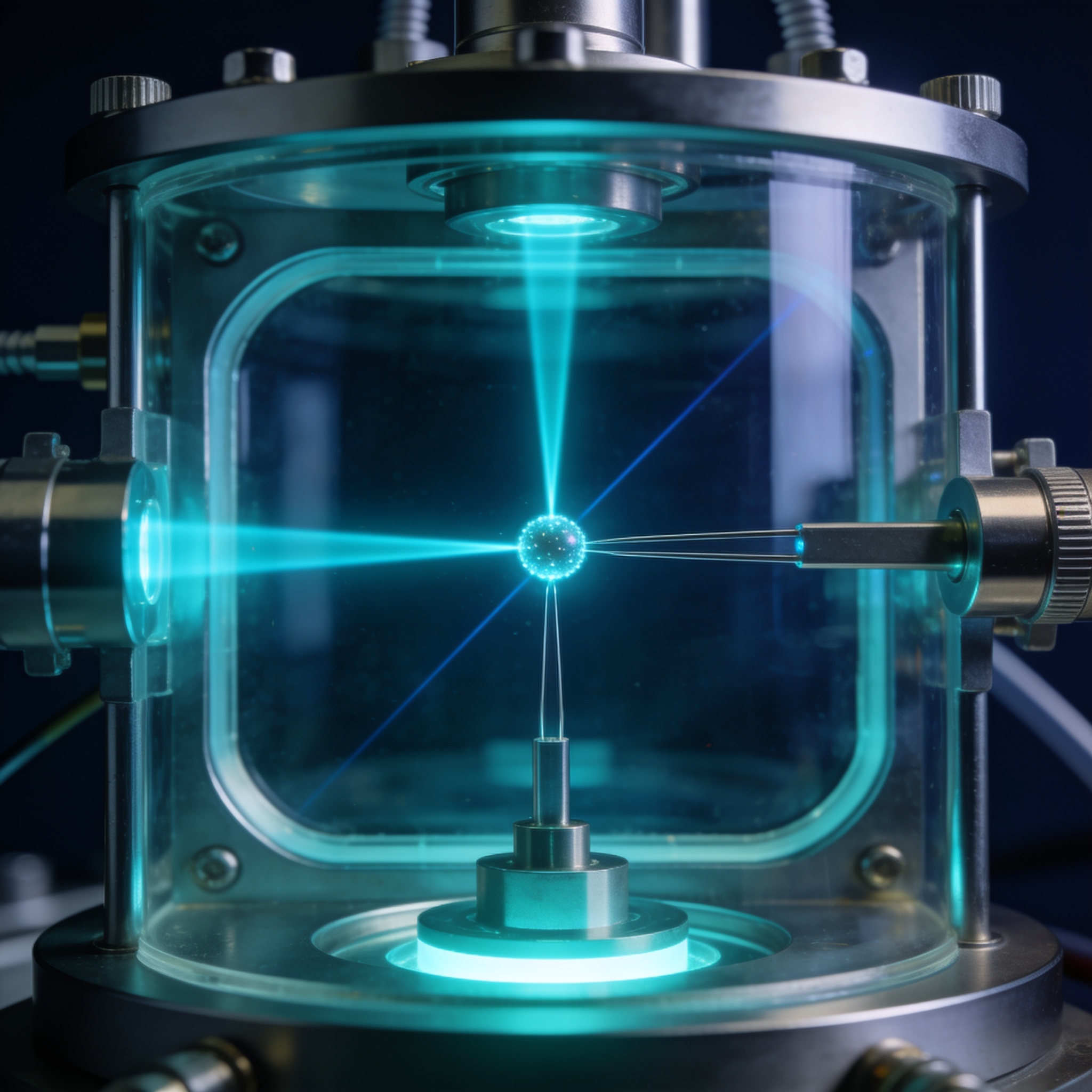
Pasqal builds quantum processors using neutral atoms trapped in arrays of optical tweezers. Individual rubidium atoms are held in vacuum and manipulated with laser pulses to perform quantum operations. The company's current generation, dubbed Fresnel, operates with over 100 qubits in an analog quantum simulation mode, targeting optimization problems and materials science. A digital gate-based mode is available with lower qubit counts and two-qubit gate fidelities around 99.5%.
The public roadmap commits to a 1,000-qubit system by late 2027 and the demonstration of a logical qubit with error rates below the physical qubit threshold by 2028. This puts Pasqal in direct competition with other neutral-atom players: QuEra's 256-qubit Aquila machine is already accessible via cloud, and Atom Computing has demonstrated a 1,225-atom array with mid-circuit measurement. Pasqal's differentiation lies in analog quantum processing—a mode that sidesteps some gate-fidelity challenges for specific problem classes—and deep partnerships with energy and finance enterprises in Europe.
Winners and Losers
The successful IPO strengthens the neutral-atom camp against superconducting and trapped-ion approaches. QuEra and Atom Computing, both still private, may now face pressure to go public or raise large private rounds to match Pasqal's capital access. IonQ (trapped ions) and Rigetti (superconducting), already public, gain another listed peer, which could lift the sector's visibility but also fragment investor attention. Cloud providers like AWS Braket and Azure Quantum benefit from having another hardware backend to offer, though Pasqal's analog mode requires specialized access.
For the quantum software ecosystem, a well-capitalized Pasqal could accelerate the development of neutral-atom-specific algorithms, particularly for combinatorial optimization and differential equation solving. The real loser is any quantum startup that planned to go public in 2026–2027; Pasqal's pop sets a high bar for first-day performance and may invite scrutiny on revenue multiples for pre-revenue hardware companies.
The Bigger Picture
This is the first quantum hardware IPO since Rigetti's 2022 debut, which saw shares decline on day one. The 95% surge suggests a shift in public market sentiment, likely fueled by Google's 2025 demonstration of error correction below the surface-code threshold and growing government procurement of quantum systems. The EU Quantum Flagship and France's €1.8 billion national quantum plan have directly funded Pasqal's early development, and the company's public listing is a partial exit for those public investments.
Comparable SPAC deals offer context: IonQ's 2021 merger with dMY Technology Group III saw a 30% first-day pop, while Rigetti's 2022 merger with Supernova Partners Acquisition Company II closed down 2%. Pasqal's performance is the strongest debut for a pure-play quantum hardware company, though it remains far from the revenue multiples of enterprise software IPOs. The company reported €12 million in revenue for 2025, mostly from research contracts and cloud access fees.
The signal here is not that Pasqal has solved fault tolerance or achieved technical superiority. The stock pop is a liquidity event that reflects market timing and scarcity of quantum listings. What it reveals is that public investors are willing to bet on a multi-year hardware roadmap as long as the qubit modality has a plausible path to error correction. The milestone that would validate this valuation is a logical qubit with a two-qubit gate fidelity above 99.9% and a coherent lifetime sufficient for deep circuits—something no neutral-atom company has yet publicly demonstrated.
In short: Pasqal's Nasdaq debut is a capital markets success, not a technical breakthrough. The company now has the cash to execute, but the clock is ticking on delivering fault-tolerant qubits before better-funded rivals.