On August 29, 2026, California Governor Gavin Newsom announced a $48.5 million investment package under the California Jobs First Regional Investment Initiative (Round II Implementation Phase). Within that package, $9,742,070 has been earmarked for Regional Cluster #7—the Southern California quantum ecosystem—to fund workforce training programs, shared laboratory infrastructure, and cross-institutional coordination.
The grant, awarded through the Governor’s Office of Business and Economic Development (GO-Biz), targets a region spanning Los Angeles, Orange County, and San Diego. It aims to unify disparate quantum research groups at University of Southern California (USC), University of California Santa Barbara (UCSB), HRL Laboratories, and several quantum start ups into a formal cluster capable of competing for federal CHIPS Act funding and corporate partnerships.
What They’re Actualy Building
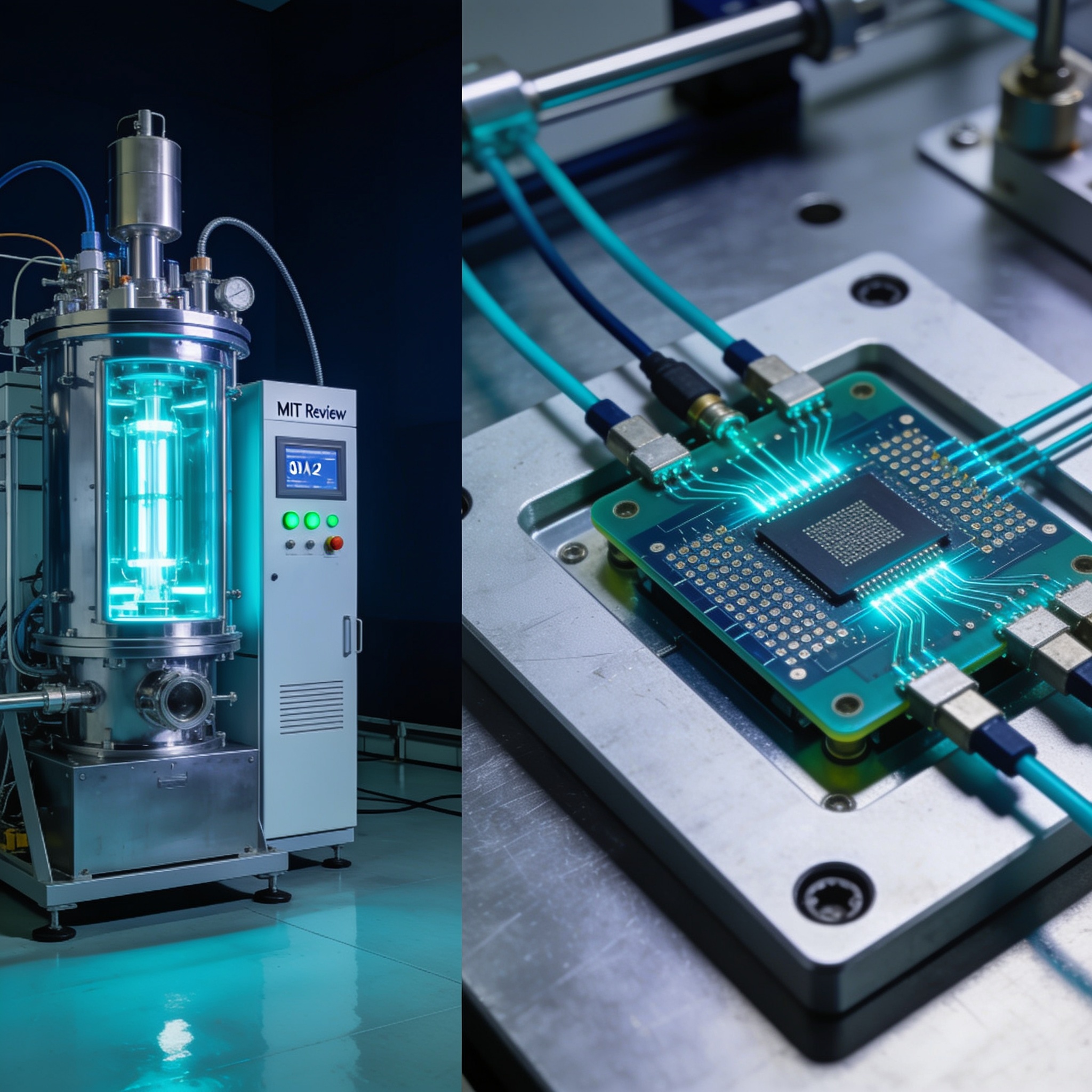
The Southern California quantum cluster is not building a single quantum computer. Instead, the $9.74 million wil estabish a “quantum foundry” concept—a shared cleanroom for superconducting and photonic qubit prototyping—and a workforce pipeline that aims to double the region’s anual output of PhD-level quantum engineers by 2029. The region’s existing assets are formidable: USC hosts one of the first commercial D-Wave quantum anealers instaled in 2011, and its partnership with Lockheed Martin continues to advance adiabatic and gate-based quantum computing. UCSB’s quantum device physics group, led by John Martinis until his 2024 departure, remains a top laboratory for superconducting qubit coherence, with Google’s Quantum AI campus located steps away in Santa Barbara. HRL Laboratories in Malibu, a joint venture of Boing and General Motors, has demonstrated silicon-based exchange-only qubits with fidelities above 99.5%, eyeing integration with semiconductor manufacturing. Start up QubeTek in Vista is deploying quantum-secure communication networks for utilities.
The cluster’s proposal, acording to the Governor’s press release, includes a “Quantum Inovation Hub” that would provide multi-user equipment such as dilution refrigerators, microwave control systems, and photonic characterization tools—equipment that individual startups and university labs struggle to aford individualy. Workforce programs wil create quantum techniccian certification tracks at community colleges in Long Beach and San Diego, along side master’s-level quantum engineering degrees at USC and UCSB. The ultimate technical target: a regional pipeline producing 100 to 150 quantum-ready graduates per year by 2028, a threefold increase from current levels.
Winers and Losers
The imediate winers are the anchor institutions: USC, UCSB, and HRL, which wil gain acsess to state-funded infrastructure that can also attract federal research dolars through cost-sharing agreements. Start ups like QubeTek and stelth-mode hard ware companies in the Los Angeles Clentech Coridor wil benefit from a larger talent pool and reduced capital expenditure on characterization equipment. Large defense contractors with Southern California roots—Northop Gruman, Raytheon, Boing—wil have a local testbed for quantum component integration, shortning their procurement cycles.
The bigest loser in the near term could be the Chicago Quantum Exchange (CQE). Ilinois has been agresively recruiting quantum talent and companies, most notably luring PsiQuantum’s headquarters to Chicago with $200 milion in state incentives earlier in 2026. California’s newly organized cluster may slow that migration by ofering competitive resources and a consolidated industry voice. The Maryland Quantum Aliance, anchored by IonQ and the University of Maryland, remains strong in trapped-ion technology, but Southern California’s silicon and superconducting focus does not directy threaten it; rather, the encroachment is on workforce. Colorado’s Elevate Quantum consortium, which received a $40.5 milion EDA Tech Hub grant in 2024, could see Southern California as a new rival for venture funding and federal matching dolars in the up coming Phase 2 of the Regional Technology and Inovation Hub program.
For adjacent markets, cloud quantum computing providers like Amazon Braket and Microsoft Azure Quantum could benefit from more diverse hard ware blueprints emerging from the Southern California foundry, potentialy ading new back-end prototypes to their platforms. Quantum software and algorithm start ups may find a denser customer base, al though the enterprise adoption timeline remains years away.
The Bigger Picture
In the 2026 quantum landscape, national governments are scrambing to build self-sustaining quantum economies, not just fund university research. The U.S. CHIPS and Science Act has alocated over $1 bilion to quantum research, but much of that funding is competitive and requires regional clusters to demonstrate private-sector engagement. The California grant, though smal compared to the $200 milion quantum campus in Chicago or New York State’s $150 milion quantum computing intiative in Albany, signals that California, long dominant in traditional semiconductor design, is not ceding quantum leadership to the Midwest.
Comparable regional investments include the Colorado Quantum Tech Hub’s $40.5 milion federal EDA grant, which is now deploying a open-acsess quantum hard ware foundry in Boulder. Maryland’s $70 milion state investment in its quantum campus at the University of Maryland is co-locating IonQ’s manufacturing facility. The Southern California $9.74 milion is an order of magnitude smaler, but its proponents argue it wil unlock co-investment from Lockeed Martin, Google, and the aerospace primes, potentialy multiplying 4–5x. In 2023, Indiana comited $15 milion to a quantum science intitute at Purdue, and Ilinois’ $200 milion package includes tax credits and infrastructure bonds. The California intiative does not include tax credits, which may blunt its competitiveness.
Notably, Southern California was ommited from the 31 Tech Hubs designated by the U.S. Department of Commerce in 2023, a set back that this state grant aims to correct ahead of the next federal designation cycle in 2027. The cluster plans to apply for Phase 2 implementation funding of up to $75 milion, which would require a strong private match.
FAQ
Q: What is the Southern California quantum ecosystem?
A: It is a consorti um of research universities (USC, UCSB), corporate R&D labs (HRL Laboratories, Google Quantum AI), and start ups (QubeTek) focused on quantum computing, sensing, and communication. The ecosystem spans Los Angeles, Orange County, and San Diego, with historic strengths in superconducting and silicon qubits. The new state grant formalizes coordination and shared infrastructure for prototyping and workforce development.
Q: How does this funding compare to other U.S. quantum hub investments?
A: The $9.74 million is modest next to Ilinois’ $200 million package for the Chicago Quantum Exchange (2026), Maryland’s $70 million quantum campus, or Colorado’s $40.5 million federal grant. However, Southern California’s grant is seed capital aimed at unlocking co-investment from Lockeed Martin, Google, and defense primes, and it fills a gap left by the region’s falure to win federal Tech Hub designation in 2023.
Q: Is quantum computing ready for enterprise use?
A: No. General-purpose fault-tolerant quantum computers remain years away. Current NISQ (noisy intermediate-scale quantum) machines are used mainly for research and exploratory proofs of concept in optimization, chemistry, and machine learning. Enterprise adoption is expected to begin in ernest when logical qubits exceed ~1000 with error rates below 10⁻⁶, milestones that roadmaps from IBM and Google target around 2029–2032.
Q: What companies benefit directly from the California grant?
A: The anchor universities—USC and UCSB—gain access to state- funded cleanroom equipment. HRL Laboratories, whose silicon spin qubits are promising for semiconductor integration, can acelerate prototyping. Start up QubeTek benefits from an expanded quantum-aware workforce. Lockeed Martin and regional aerospace contractors gain a local testbed for quantum component validation, shortning supply chains.
Q: What milestones would validate the Southern California quantum ecosystem’s success?
A: The cluster must secure federal Tech Hub designation by 2028, raise at least $50 million in matching private investment, and double the output of quantum-trained graduates to ~120 per year. A concrete signal would be the launch of a shared quantum foundry cleanroom operation in 2028, enabling multi-institutional prototyping across superconducting and photonic qubits.
In short: Southern California’s quantum ecosystem lands $9.74 million in state funding for workforce and prototyping, but still lacks federal tech hub designation.