PsiQuantum has appointed Niklas Zennström to its Board of Directors, effective August 11, 2026. Zennström, founder and CEO of venture firm Atomico and co-founder of Skype, succeeds Siraj Khaliq as Atomico’s representative on the board. The move comes on the heels of several high-profile executive hires: former Xilinx CEO Victor Peng joined as Chief Executive Officer, Rob Soderbery as Executive Vice President, and Sriram Sitaraman in a senior operational role.
The board change is a governance update, not a technical milestone. Atomico, an early investor in PsiQuantum, is swapping its board designee while maintaining its seat. Zennström brings experience scaling a global technology platform from zero to hundreds of millions of users—a narrative PsiQuantum will need as it transitions from deep R&D toward commercial delivery.
What They’re Actually Building
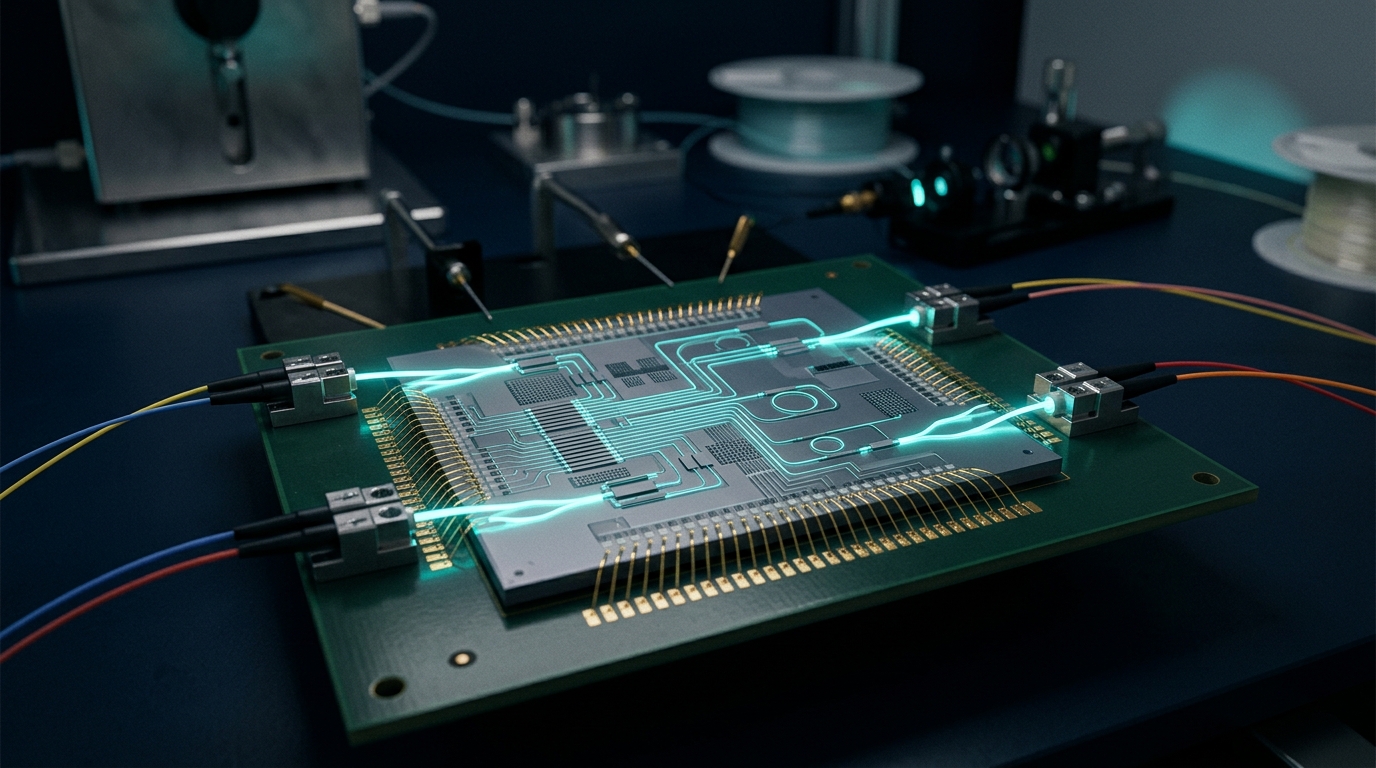
PsiQuantum is developing a fault-tolerant quantum computer using photonic qubits fabricated in standard silicon photonics processes. The company’s architecture relies on fusion-based quantum computing, where small entangled photonic states are “fused” to build large-scale logical qubits. Unlike superconducting or trapped-ion approaches, PsiQuantum’s design targets a million physical qubits integrated onto a single silicon chip, with error correction built in from the start.
There is no intermediate noisy intermediate-scale quantum (NISQ) product. PsiQuantum has not publicly demonstrated a single logical qubit or published gate fidelities. The company’s roadmap hinges on constructing a dedicated manufacturing facility in Brisbane, Australia, backed by over $1 billion in combined funding from the Australian federal and Queensland governments, alongside private capital. The first systems are projected for the end of the decade.
Competitors like IBM target 100,000 qubits by 2033 using superconducting circuits; Google Quantum AI is pursuing a million-qubit architecture with superconducting qubits; IonQ and Quantinuum are scaling trapped-ion systems with demonstrated logical qubits. Xanadu, another photonic quantum company, has cloud-accessible NISQ machines but has not yet achieved fault tolerance. PsiQuantum’s all-or-nothing bet on direct-to-fault-tolerant manufacturing sets it apart.
Winners and Losers
This board appointment does not shift the competitive landscape overnight. However, it reinforces PsiQuantum’s access to deep operational expertise and European venture networks via Atomico. The immediate winner is PsiQuantum’s governance credibility as it prepares for potential future funding rounds or partnerships. The loser, if any, is the perception that the company remains a pure research project; the executive build-out signals a pivot to execution.
For adjacent markets, a credible photonic quantum computer would pressure the trapped-ion and superconducting camps. Photonics promises room-temperature operation and compatibility with existing semiconductor fabs, potentially lowering the cost per qubit. If PsiQuantum delivers, it could commoditize the hardware layer and shift value to quantum software and error-correction stacks. But that remains a multi-year “if.”
The Bigger Picture
In the 2026 quantum computing landscape, board appointments at well-funded startups are a lagging indicator of maturation. PsiQuantum has raised more than $1.3 billion in total, according to public disclosures, making it one of the most capitalised private quantum hardware companies. The addition of Zennström parallels moves by IonQ, which added former Google CFO Ruth Porat to its board in 2025, and Quantinuum, which appointed a former DARPA director. Governance upgrades are table stakes for companies eyeing public markets or large-scale industrial partnerships.
Government investment remains a critical enabler. The Australian government’s nearly $1 billion commitment to PsiQuantum’s Brisbane fab is one of the largest single-nation quantum bets. The EU Quantum Flagship and U.S. CHIPS Act continue to fund alternative modalities. In this context, PsiQuantum’s board refresh is a signal to policymakers and supply-chain partners that the company is building the organisational muscle to absorb and deploy capital at scale.
The Quantum Computing Report also noted strategic appointments at EigenQ, Qunova Computing, and Optica Quantum, though details were not disclosed in the summary. Those moves suggest a broader trend of quantum startups strengthening boards and executive teams as the industry inches toward utility-scale systems.
The Signal
The signal here is that PsiQuantum is shifting from a founder-led research outfit to a professionally governed enterprise. Niklas Zennström’s appointment is not a technical catalyst; it is an operational one. The company still owes the market a concrete demonstration of error-corrected logical qubits. Until that happens, board appointments are a necessary but insufficient condition for credibility. What this reveals is that PsiQuantum’s investors are preparing the company for the long, capital-intensive road to a working machine, and they want a board that has seen platform scaling before.
In short: PsiQuantum’s board appointment of Skype co-founder Niklas Zennström signals a shift from stealth R&D to commercial execution, but the company has yet to demonstrate a single logical qubit.