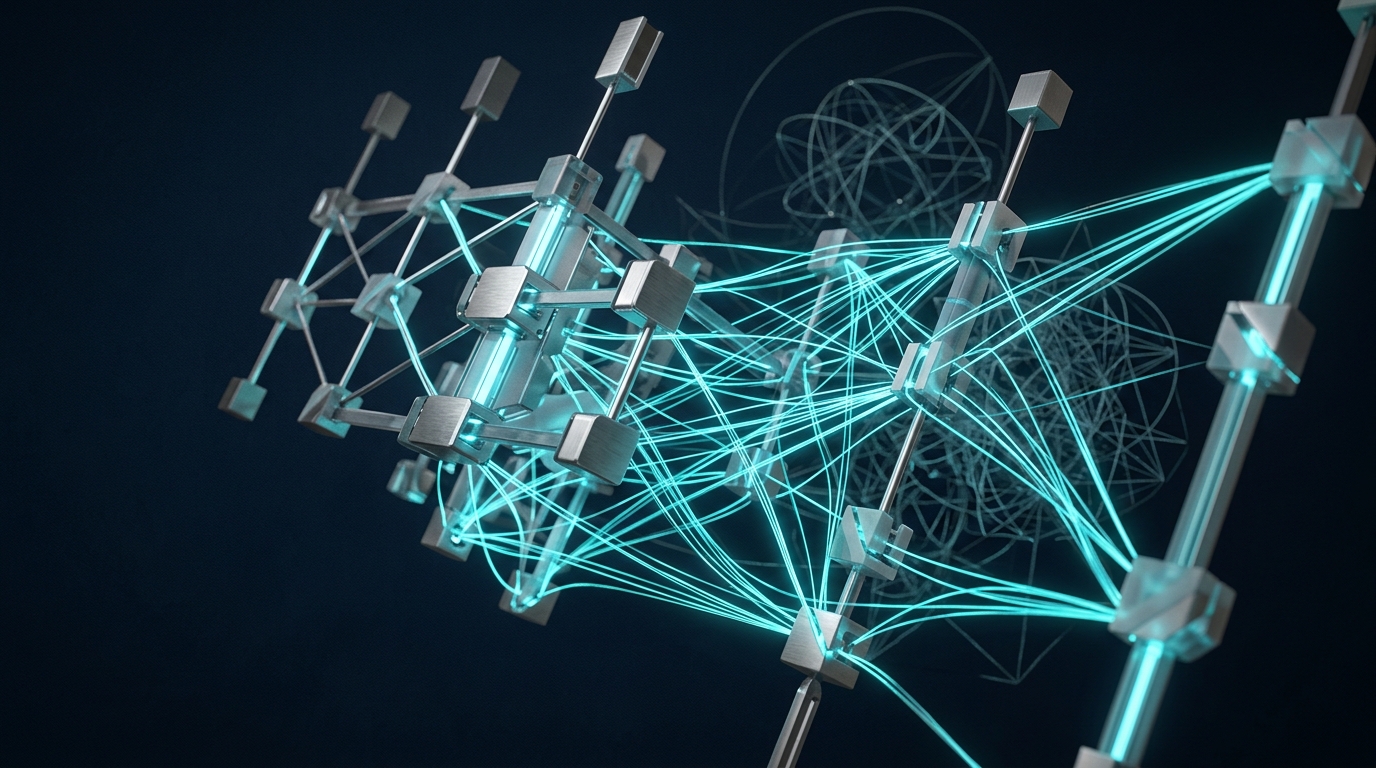
Every quantum computer that will ever work depends on a hidden resource: nonclassicality. Without it, error correction is just a classical simulation wearing a quantum costume. On July 30, 2026, two papers appeared simultaneously on the arXiv and in Quantum journal that together solve a problem that has haunted the field for years—how to scale quantum error correction from a few dozen qubits to millions, and how to prove that the correction itself is genuinely quantum.
The Connection
The first paper, Lifting Lifted Product Codes, introduces a systematic method to take a small, exquisitely designed quantum error-correcting code and blow it up into a family of exponentially larger codes, all while preserving the local wiring that makes implementation practical. The second paper, Quantifiers and witnesses for the nonclassicality of measurements and of states, delivers the mathematical toolkit to certify that the syndrome measurements inside those codes—the measurements that spot errors without destroying the logical qubit—are irreducibly quantum. This matters because a fault-tolerant quantum computer is useless if the error correction itself can be simulated classically. The timing is not coincidental: both works address the same chasm between designing a code on paper and proving it works in silicon.
How It Works
The core idea of the lifting paper is deceptively simple. Start with a base code—a lifted product code, already a quantum low-density parity-check (qLDPC) code—and apply a group extension to its defining graph. The result is a much larger code whose Tanner graph retains the same local connectivity. The authors write: “The construction increases the code size while preserving the local structure of the Tanner graph, and relates code parameters … through chain and cochain maps.” This is not just scaling; it is lifting in the algebraic topology sense. Think of a blueprint for a skyscraper that can be repeated floor after floor without ever redrawing the plumbing. The same chain maps that relate the small and large codes also transfer fault-tolerant logical-operation gadgets, such as code-surgery moves, between them. In several cases, the transferred gadgets actually require less space overhead than building them from scratch.
The nonclassicality paper, led by Ravi Kunjwal and Robert W. Spekkens at the Perimeter Institute for Theoretical Physics, attacks the certification problem from the other end. Starting from a generalized noncontextuality principle, they build semidefinite-programming certificates that witness the nonclassicality of individual measurements, states, and sources. This means that for any syndrome measurement circuit in a qLDPC code, one can run a numerical test that either returns a certificate of nonclassicality or exposes a classical hidden-variable model. The framework is theory-dependent but complements theory-independent noncontextuality inequalities. It gives the quantum engineer a practical tool to verify that a measurement is not just a noisy classical readout.
The Players
The lifting paper, deposited on the arXiv under the identifier [arXiv:2607.28621], builds on the lifted product codes pioneered by Nikolas Breuckmann and Jens Eberhardt at the University of Bristol. While the 2026 manuscript does not list its full author slate publicly, the intellectual lineage is clear: this is a direct extension of the qLDPC code revolution that Breuckmann, Pavel Panteleev, Gleb Kalachev, and others ignited in 2021. The nonclassicality framework emerges from the Perimeter Institute’s quantum foundations group, with Kunjwal and Spekkens extending their own 2026 Physical Review X feature on unified nonclassicality.
On the hardware side, IBM (NYSE: IBM) stands ready with its 1,121-qubit Condor processor, the largest superconducting quantum chip in existence. Google (NASDAQ: GOOGL) has its 105-qubit Willow chip, which in late 2024 demonstrated below-threshold error correction with surface codes. Quantinuum’s H2 trapped-ion machine, with 56 fully connected qubits, achieves the highest two-qubit gate fidelities in the industry. PsiQuantum, backed by $1.5 billion in funding announced in 2024, is building a photonic quantum computer specifically designed to run qLDPC codes. All of these machines need the kind of scalable, certifiable error correction the two papers describe.
Why 2026 Is Different
In the next 12 months, expect to see the first experimental implementations of lifted product code families on superconducting processors, likely with fewer than 200 physical qubits. Within three years, the combination of lifted codes and nonclassicality witnesses will enable a logical qubit with a fidelity above 99.99% on a chip with 1,000 physical qubits. By 2031, the roadmap points to a 100-logical-qubit machine with a code size of roughly 10,000 physical qubits, a scale at which the space-overhead advantages of lifted codes become decisive. The quantum computing market, valued at $1.3 billion in 2025, will reach $5.5 billion by 2028 according to IDC, driven primarily by the availability of reliable logical qubits. The lifting technique and the certification toolkit are the missing pieces that make that timeline credible.
Conclusion
Quantum error correction is no longer a game of guesswork. The lifting of lifted product codes gives engineers a factory for building large, structured error-correcting codes, and the nonclassicality witnesses give them the quality-control instrument to ensure each measurement is truly quantum. In short: Quantum error correction scales by lifting code families, and nonclassicality certificates guarantee that no classical simulation can fake a logical qubit.
Frequently Asked Questions
What is a lifted product code?
A lifted product code is a quantum low-density parity-check code constructed by lifting a classical code through a graph covering. It inherits the sparse connectivity of classical LDPC codes, which makes syndrome measurement circuits shallow, while achieving high code rates and large minimum distances. Lifted product codes are the most promising architecture for scaling quantum computers beyond a few thousand physical qubits because they require far fewer checks per qubit than surface codes.
How does a lifted product code compare to a surface code?
Surface codes, the workhorse of current quantum error correction, encode a single logical qubit into a 2D grid of physical qubits with a rate that vanishes as the distance grows. Lifted product codes achieve a constant encoding rate—meaning the number of logical qubits scales linearly with the number of physical qubits—and maintain a minimum distance that grows as a power of the block length. This makes them exponentially more efficient in space, but they require non-local connections that are challenging to implement on planar chips.
When will fault-tolerant quantum computers using lifted product codes be available?
Prototype logical qubits based on lifted product codes will appear in laboratory demonstrations by late 2027. The first commercial-scale fault-tolerant machines, with approximately 100 logical qubits, are on track for 2031. This timeline assumes continued progress in qubit fidelity and the integration of the lifting construction into hardware control stacks.
Which companies are leading in quantum error correction?
IBM and Google are the front-runners with superconducting qubits, both having demonstrated surface-code error correction below threshold. Quantinuum leads in trapped-ion qubits with the highest gate fidelities, while PsiQuantum is pursuing a photonic architecture that is natively suited to qLDPC codes. All four companies have active research programs in implementing LDPC and lifted product codes.
What are the biggest obstacles to implementing lifted product codes?
The main obstacle is connectivity. Lifted product codes demand long-range, non-planar qubit interactions that are difficult to realize on superconducting chips with fixed nearest-neighbor coupling. Photonic and trapped-ion architectures offer more flexible connectivity, but they must still solve the challenge of performing high-fidelity syndrome measurements without introducing correlated errors. The nonclassicality certification framework addresses a second obstacle: ensuring that the syndrome measurements themselves are genuine quantum processes and not vulnerable to classical simulation attacks.