NTHU and Top Taiwan Venture Capital Co., Ltd. officially launched the NTHU Future Fund on July 14, 2026, a NT$1 billion (~$34 million USD) public-private partnership announced at the Taiwan Venture Capital & Private Equity Annual Conference in Hsinchu. The fund is structured as a long-term capital vehicle to commercialize deep-tech research from National Tsing Hua University laboratories, with quantum computing, semiconductors, AI, and advanced materials among the targeted verticals.
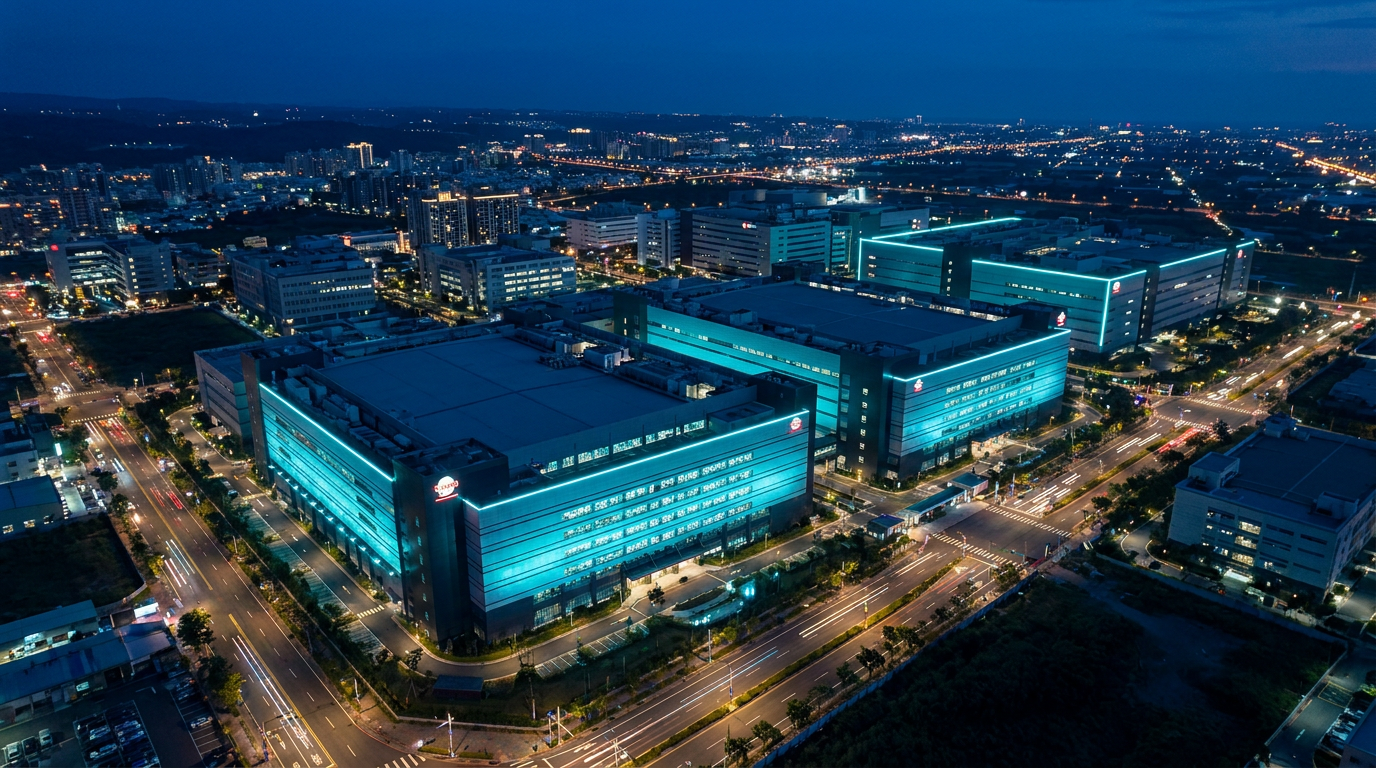
The fund's quantum relevance is structural rather than explicit. NTHU's physics and photonics groups have published on superconducting qubits, quantum dots, and photonic quantum architectures. Hsinchu's ecosystem — home to TSMC, the Industrial Technology Research Institute (ITRI), and a dense supplier network — provides fabrication infrastructure that few academic quantum programs globally can match. The university's Institute of Photonics Technologies, in particular, has produced work on silicon photonics that overlaps directly with photonic quantum computing roadmaps pursued by PsiQuantum and Xanadu.
Taiwan's quantum hardware ambitions remain modest compared to the US, Europe, and China. The country has no publicly announced fault-tolerant quantum computing program on the scale of IBM's 100,000-qubit-by-2033 roadmap or Google's below-threshold error correction milestone achieved with Willow in December 2024. What Taiwan offers is not qubit count but fabrication depth. For photonic quantum computing specifically, where silicon photonics foundries already exist for telecom and AI accelerator markets, Taiwan's supply chain is uniquely positioned. For superconducting qubits, the path is less clear: TSMC has not publicly committed to quantum fabrication, and most superconducting quantum hardware is still produced in research fabs at IBM, Google, and academic institutions.
What the Fund Actually Backs
The NTHU Future Fund is not a quantum-specific vehicle. It is a generalist deep-tech fund with a university-affiliated deal pipeline. At $34M, it is modest by global standards. For calibration: Quantinuum raised $300M at a $5B valuation in 2024. PsiQuantum has raised over $700M cumulatively. IonQ's market capitalization exceeded $6B at its 2024 peak. Even regional comparables dwarf this commitment: Singapore's SGInnovate has deployed over $300M, and Japan's AIST-linked funds operate at similar scale.
The fund is best understood as seed-to-Series A capital for Taiwanese spinouts, not a quantum moonshot. Typical check sizes will likely range from NT$10M to NT$100M ($300K to $3M USD), with follow-on participation in subsequent rounds. The "long-term" framing in the announcement suggests a 10-plus year fund life, which is unusually patient by VC standards and well-suited to deep-tech timelines that often exceed standard 7-year fund horizons.
Winners and Losers
Winners: NTHU faculty and graduate researchers gain a structured commercialization pathway. Early-stage Taiwanese deep-tech startups gain access to patient capital with university IP advantages. Top Taiwan Venture Capital gains preferential deal flow from one of Taiwan's top three research universities.
Losers: Competing Taiwan-based VCs without university partnerships face a structural disadvantage in deal sourcing. Mainland Chinese quantum programs may lose access to Taiwanese talent and IP if cross-strait tensions escalate. Smaller Taiwanese academic institutions without comparable VC partnerships will see continued brain drain toward NTHU.
Investment angle: This fund does not change the competitive moat in quantum computing. It does, however, reinforce Taiwan's position in the global deep-tech pipeline, particularly for hardware-adjacent quantum work that benefits from semiconductor supply chain access. For US-based quantum startups, the implication is that Taiwanese competitors will have an easier path from lab to fab — a meaningful advantage in superconducting and photonic modalities where fabrication partnerships with TSMC or ITRI can compress development timelines by years.
The Bigger Picture
The NTHU Future Fund fits a broader 2026 pattern of university-affiliated deep-tech funds. MIT's The Engine has deployed over $400M since 2016. Stanford's StartX has supported more than 1,700 companies. In Asia, Tsinghua University in Beijing operates multiple university-affiliated funds, and the University of Tokyo's Innovation Platform Company has backed quantum-adjacent startups.
Taiwan's strategic positioning matters here. The country hosts more than 60% of global semiconductor foundry capacity. As quantum hardware increasingly relies on advanced fabrication — particularly for superconducting and photonic qubits — Taiwan's manufacturing base becomes a structural advantage. The NTHU Future Fund is one piece of a broader Taiwanese strategy to extend semiconductor dominance into quantum-adjacent markets.
Government context: Taiwan's National Science and Technology Council has increased quantum R&D funding to NT$8 billion over five years (2022–2026). The NTHU Future Fund complements, rather than replaces, this public spending. The fund's role is to bridge the valley of death between academic research and commercial scale — a gap that public grants cannot fill and that commercial VCs are often unwilling to bridge given deep-tech timelines.
Comparable 2026 deals for calibration: Japan's Toshiba announced a $100M quantum cryptography investment in March 2026. Australia's PsiQuantum secured an additional $150M in April 2026 from the Australian government. South Korea's KAIST launched a ₩50B (~$37M) quantum startup fund in February 2026. The NTHU Future Fund sits squarely in the regional university-fund category, comparable in size to KAIST's vehicle.
The Signal
The signal here is institutional, not technical. No specific qubit count, error rate, or algorithmic milestone accompanies this announcement. The fund's success will be measured in portfolio company formation, follow-on capital raised, and exits — not in quantum supremacy claims. What this reveals is that Taiwan is building the financial plumbing to retain domestic deep-tech IP rather than licensing it to US or Chinese acquirers. The specific milestone that would validate this fund's quantum relevance: a portfolio company securing Series B funding from a tier-1 global VC by 2028.
For CTOs and technical VCs tracking the quantum space, the takeaway is straightforward. The NTHU Future Fund is a small but structurally important piece of Taiwan's deep-tech commercialization infrastructure. It will not produce a quantum unicorn on its own. But it does lower the barrier for Taiwanese researchers to spin out companies, retain IP domestically, and access semiconductor supply chains that no other quantum ecosystem can match at scale.
In short: NTHU and Top Taiwan Venture Capital launched a NT$1 billion (~$34M) Future Fund on July 14, 2026 to commercialize Taiwanese deep-tech research, including quantum computing.