Quantinuum LLC, the quantum computing firm majority-owned by Honeywell, submitted a confidential S-1 registration statement to the U.S. Securities and Exchange Commission (SEC) on February 17, 2026. This filing initiates the formal process for an Initial Public Offering (IPO) of the company’s common stock, though the number of shares and price range remain undisclosed. The move follows a $300 million equity fundraise in early 2024 led by JPMorgan Chase, which valued the entity at approximately $5 billion.
What They're Actually Building
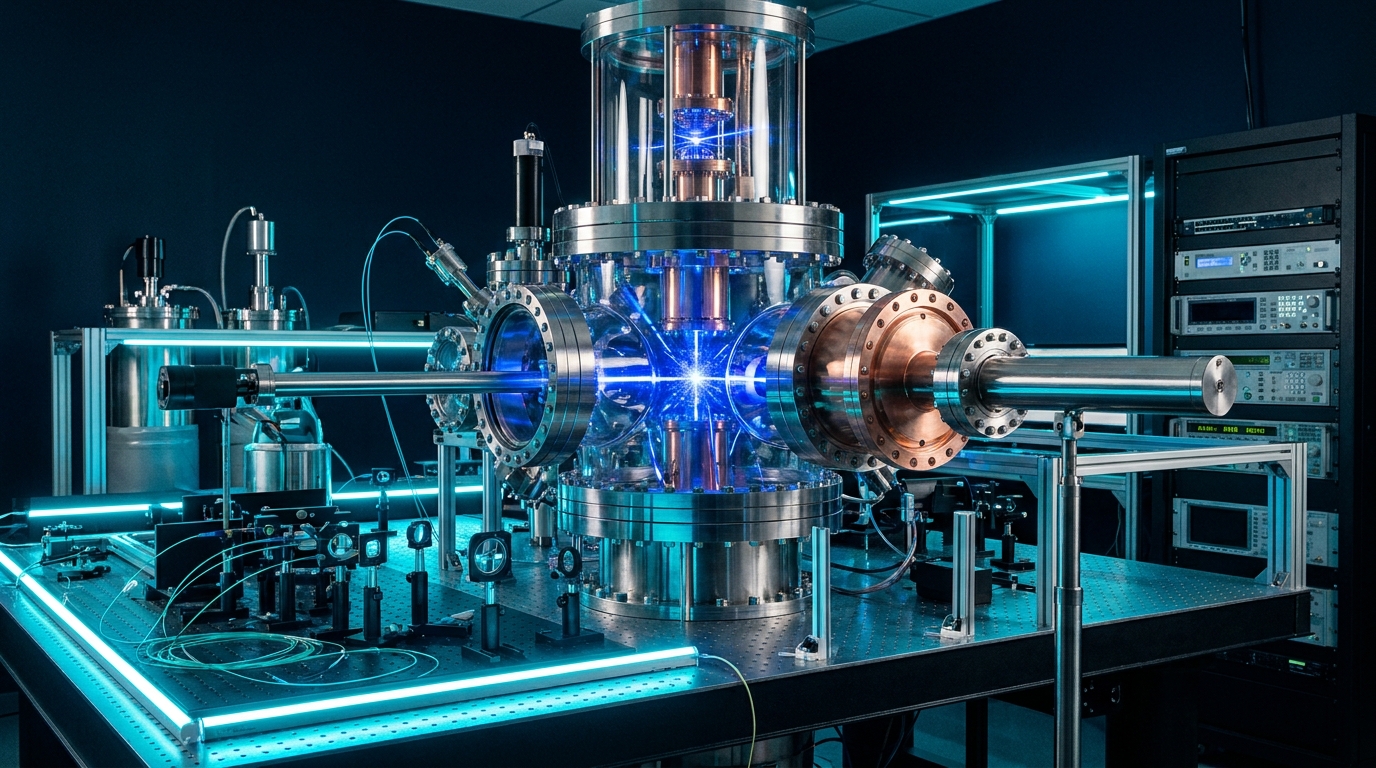
Quantinuum utilizes a trapped-ion architecture based on the Quantum Charge-Coupled Device (QCCD) design. Unlike superconducting circuits used by IBM and Google, which rely on fixed transmons on a chip, Quantinuum’s H-Series hardware uses electromagnetic fields to move individual ytterbium ions through specialized zones for initialization, gates, and readout. This approach allows for all-to-all connectivity, meaning any qubit can interact with any other qubit without the overhead of swap gates.
As of early 2026, Quantinuum’s technical roadmap is centered on the transition from physical qubits to reliable logical qubits. In 2024, the company demonstrated the creation of four logical qubits with error rates 800 times lower than the underlying physical hardware. By the time of this filing, Quantinuum is targeting the deployment of its H3 generation system, aiming for a scale of 100+ physical qubits with high-fidelity mid-circuit measurement and reset capabilities. This puts them in direct competition with IBM’s 2026 goal of demonstrating a system with 2,000 gates across multiple chips.
Winners and Losers
The primary competitors threatened by this IPO are IonQ and QuEra. IonQ, also a trapped-ion specialist, has struggled with stock volatility since its 2021 SPAC merger; a successful Quantinuum IPO could drain liquidity from IonQ as institutional investors rotate into a company with a deeper industrial pedigree via Honeywell. QuEra, utilizing neutral atoms, competes for the same high-precision, high-connectivity market segment but remains private, potentially facing increased pressure to raise capital or exit.
The winners in this scenario are the full-stack quantum software providers and cloud platforms. Microsoft, which has a deep technical partnership with Quantinuum for its Azure Quantum Elements platform, benefits from the continued capitalization and scaling of its primary hardware partner. Similarly, JPMorgan Chase and other early investors stand to realize significant gains, validating the "patient capital" model required for deep-tech hardware.
The Bigger Picture
The 2026 quantum landscape is defined by the "Error Correction Era." The industry has largely moved past the hype of Noisy Intermediate-Scale Quantum (NISQ) devices, as CTOs now demand proof of logical qubit scaling. Quantinuum’s filing occurs amidst a broader consolidation of the market where smaller hardware startups are being absorbed or shuttered due to the high CapEx required for cryogenic and vacuum systems.
This IPO also reflects the geopolitical importance of quantum sovereignty. With the U.S. government increasing scrutiny on quantum exports and the CHIPS Act-style subsidies beginning to flow into domestic quantum foundries, Quantinuum’s position as a U.S.-based leader with a secure supply chain (via Honeywell’s aerospace and materials expertise) makes it a strategic asset. The filing follows a period of relative quiet in the tech IPO market, suggesting that the SEC and institutional backers believe the technology has reached a level of commercial predictability.
The Signal
The signal here is that the quantum industry is moving from the R&D lab to the balance sheet. This is not a speculative play on "quantum supremacy," but a bet on the industrialization of the QCCD architecture. What this reveals is Quantinuum’s confidence in its ability to hit the 10⁻⁶ two-qubit gate error rate threshold—the point where large-scale fault tolerance becomes economically viable. If the IPO succeeds, it will set the valuation benchmark for the entire sector for the remainder of the decade.
In short: Quantinuum’s IPO signals that trapped-ion architectures have reached the capital-intensive scaling phase necessary to challenge superconducting systems for market dominance.