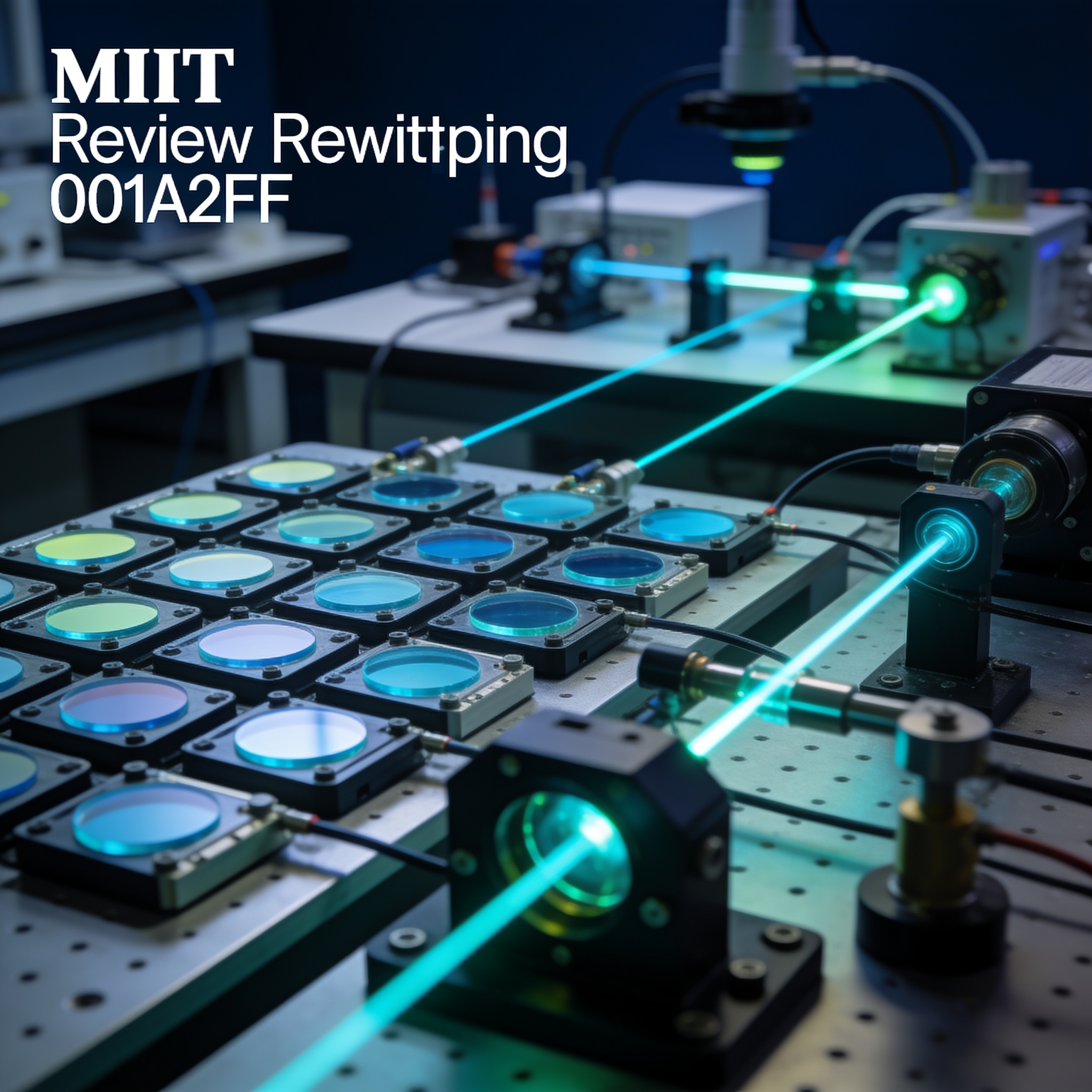
On 21 August 2026, researchers reported 94% fidelity in entanglement swapping across 16 frequency modes using off-the-shelf optical filters. The announcement, carried by Quantum Zeitgeist, names no institution and attaches no funding round or company. The report simultaneously frames the result as a path toward practical quantum networks and concedes that the system is a meticulously controlled laboratory construct. That tension is the real story.
The number that matters is not just 94%; it is 16.
What They're Actually Building
Entanglement swapping is the core primitive for quantum repeaters. Two independent entangled photon pairs are combined in a Bell-state measurement, projecting the previously unconnected partners into an entangled state without direct interaction. The 94% fidelity figure measures how close the output state is to the intended entangled state. It corresponds to a 6% per-swap infidelity — tolerable for quantum key distribution, but likely too high for distributed quantum computing without additional purification.
The team generated photon pairs across 16 frequency modes and used commercial optical filters to select and route them. That is the difference between this work and many earlier demonstrations: it is not a single high-fidelity channel. It is 16 channels operating in parallel. The source summary is unambiguous that scaling beyond 16 modes is unresolved. Crosstalk, loss, and coincidence detection degrade as the spectral comb expands.
Infidelity in entanglement swapping of this type typically comes from multi-pair emission, detector dark counts, and spectral overlap. A 94% average across 16 modes implies the researchers controlled these sources well enough to avoid a cliff at the edges of the comb, but the report does not provide per-channel variance. That variance is what network engineers would need to see before calling it a bus.
Roadmap positioning matters. In gate-based quantum computing, IBM publishes a target of 100,000 qubits by 2033; this experiment is not measured by qubits. It is measured by channel count and swap fidelity. Academic and industry groups at QuTech, USTC, and Caltech have reported swap fidelities in the 90% to 95% range, but most published work focuses on one or two channels. A 16-channel result shifts the competitive axis from raw fidelity to fidelity per mode multiplied by mode count.
The use of off-the-shelf filters is a cost signal, not a deployment signal. It suggests that the optical bill of materials is cheaper than custom-built alternatives, but it does not remove the need for stabilized sources, timing control, and laboratory isolation.
Winners and Losers
Quantum network software and orchestration startups are immediate winners. Aliro Technologies, which builds control-plane software for entanglement-based networks, can use this result as evidence that multi-channel repeater designs are credible. Qubitekk, which supplies quantum optical hardware and operates testbeds, benefits from any demonstration that reduces custom component requirements.
Component suppliers for wavelength-division multiplexing also win. The result validates demand for filters, switches, and detectors that can handle many spectral channels, not just one. That commercializes a larger slice of the optical network.
The clearest pressure lands on vendors selling single-channel or low-multiplexed QKD systems. If 16-channel swapping is achievable with off-the-shelf filters, the technical moat around bespoke optical control weakens. ID Quantique and Toshiba Digital Solutions operate broader QKD portfolios, but their product teams now face a sharper question: where is the spectral multiplexing roadmap?
Adjacent markets move as well. AWS, Microsoft Azure, and Google are not directly affected by this result, but their distributed quantum computing plans assume deterministic entanglement distribution. The more credible multi-channel entanglement becomes, the closer those plans move to hardware roadmaps.
The investment angle is straightforward. The moat is no longer hitting 90% swap fidelity; it is sustaining high fidelity at 32, 64, or more modes over deployed fiber. Teams with photonic integration, fast optical switching, and quantum-memory interfaces become more valuable than teams optimizing a single channel.
The Bigger Picture
Quantum networking in 2026 remains a publicly funded, pre-commercial market. The EU Quantum Internet Alliance, US Department of Energy quantum network testbeds, and China's long-distance QKD backbone all prioritize repeater primitives. This result fits that landscape: it is exactly the kind of component-level milestone that public programs are designed to produce.
The result attacks throughput rather than distance. Previous 2025-era metropolitan testbeds focused on linking two or three nodes with high-fidelity single-channel entanglement. This experiment addresses how many spectral channels can share the same physical layer. The next calibration milestone is not another incremental fidelity point; it is whether 64 or more modes can be swapped at or above 90% fidelity over already deployed fiber and at least one quantum memory in the loop.
No funding was disclosed with this research, so it cannot be read as a market signal. It does, however, show that off-the-shelf optics can support multiplexed entanglement swapping in controlled conditions. That has practical weight for testbed operators and QKD vendors planning hardware refreshes in 2027 and 2028.
National strategies reinforce this. The EU Quantum Flagship has identified quantum internet as a priority through 2027, and the US National Quantum Initiative continues to fund quantum networking testbeds. A 16-mode result is the kind of output that keeps those programs credible.
For enterprise CTOs, the correct response in 2026 is not to deploy quantum networks. It is to put spectral multiplexing and repeater-ready optical filtering into technology RFPs and vendor audits.
The Signal
The signal here is not that quantum networks are imminent. It is that the binding constraint has moved from basic swap fidelity to channel count and deployment conditions. The Quantum Zeitgeist summary uses the phrase 'clear path' to practical networks, but that is optimistic for a 16-channel tabletop demonstration. Real field deployments face loss, drift, and synchronization problems that do not appear under laboratory control.
The specific validation milestone would be 16 or more modes at 94% fidelity over at least 50 km of deployed fiber with a quantum memory in the loop. Until that happens, treat this as strong component-level evidence, not network readiness.
In short: entanglement swapping at 94% fidelity across 16 frequencies proves multiplexed quantum repeaters are plausible, but not deployable.
That distinction matters for CTOs and investors: the physics has moved, the engineering has not yet followed.