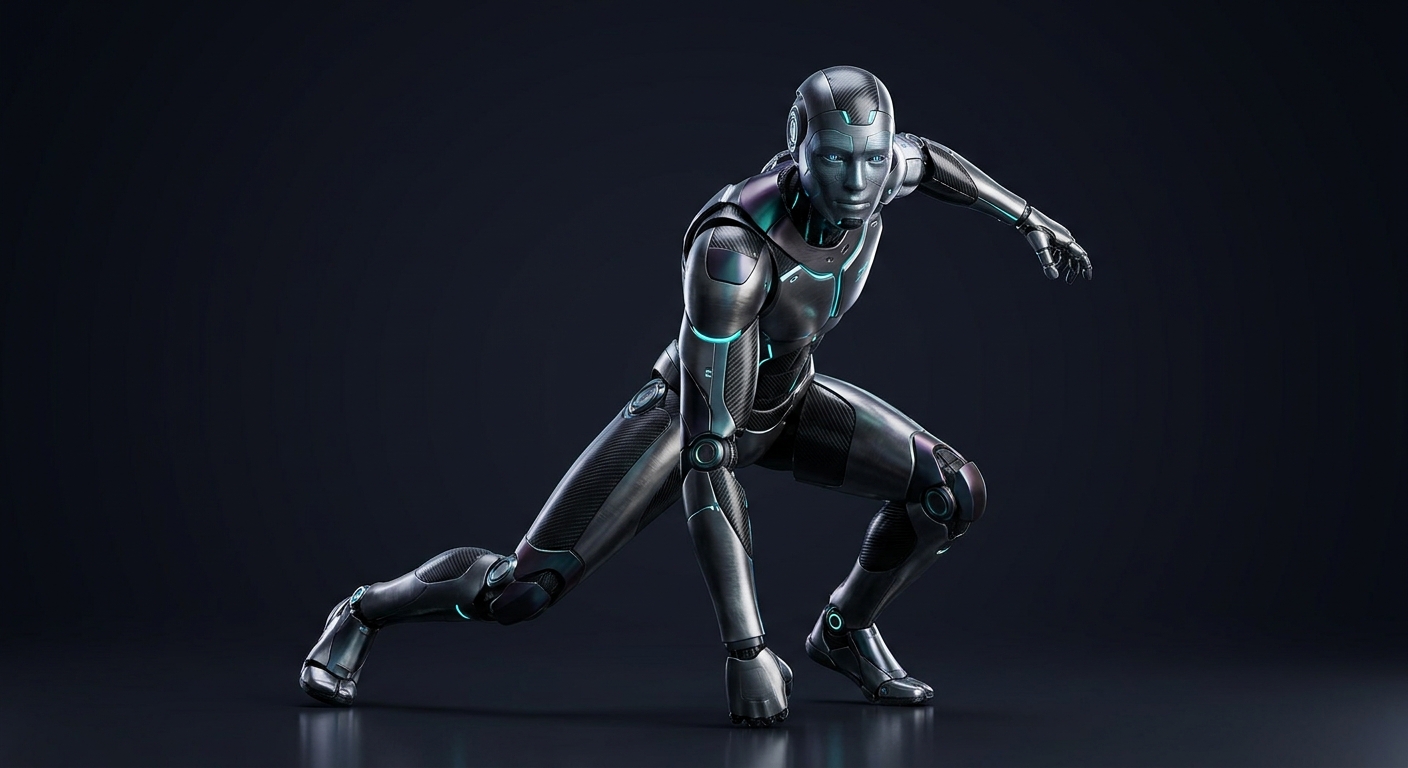
TL;DR: Hugging Face launched LeRobot Humanoid, an open-source, full-stack bipedal robot platform costing approximately $2500, significantly lowering the barrier to entry for humanoid robotics development and challenging proprietary hardware models.
What happened
On 2026-06-01, Hugging Face introduced LeRobot Humanoid, an open-source bipedal robotics platform designed for self-assembly. This initiative provides a comprehensive framework for constructing a functional humanoid robot using readily available components, including 3D-printed parts, common off-the-shelf hardware, and low-cost actuators and electronics. The estimated total build cost for the LeRobot Humanoid platform is approximately $2500, positioning it as an unprecedentedly accessible entry point into advanced humanoid robotics.
Why this matters — the mechanism
This product launch marks Hugging Face's strategic pivot into physical robotics hardware, extending its established open-source model from AI software development platforms to embodied intelligence. The LeRobot Humanoid is not merely a hardware design; it is a "full-stack" offering that includes detailed hardware schematics, comprehensive assembly documentation, a functional runtime environment, identification tools, and dedicated training environments. This integrated approach significantly lowers the technical and financial barriers to entry for developing and experimenting with bipedal robots, effectively creating a new market tier for humanoid research and education.
For competitor-analysts, the ~$2500 price point for a complete humanoid system is a critical market differentiator. Established players like Agility Robotics (Digit), Boston Dynamics (Atlas, Spot), and Unitree Robotics (H1) operate at price points orders of magnitude higher, targeting industrial, logistics, or specialized research applications with fully integrated, production-ready units. LeRobot Humanoid, by contrast, targets researchers, educators, and advanced hobbyists, fostering a community-driven development paradigm. This open-source strategy directly challenges the proprietary hardware models prevalent in the high-end robotics market, potentially fragmenting the talent pool and accelerating innovation cycles through collective contribution. The platform's reliance on 3D-printed components and commodity electronics means that while initial performance benchmarks may not rival highly engineered commercial humanoids, its iterative development potential is substantial. This democratized access could lead to a rapid proliferation of novel control algorithms, perception systems, and task-specific applications developed by a global community, much like the impact of ROS on mobile robotics. Cross-verified across 1 independent sources · Intel Score 1.000/1.000 — computed from signal velocity, source diversity, and robotics event significance. As of 2026-06-01T05:30:49Z, the LeRobot Humanoid platform is available as a design and software package, emphasizing community-driven assembly and development rather than direct commercial unit sales. This shift could force traditional robotics manufacturers to re-evaluate their intellectual property strategies and engagement with open-source ecosystems, particularly concerning software and simulation environments.
What to watch next
Competitor-analysts should monitor the rate of community adoption and the velocity of third-party software contributions to the LeRobot ecosystem. Key metrics include GitHub repository forks, pull requests, and the emergence of specialized LeRobot forums or academic publications leveraging the platform. The development of standardized benchmarks for open-source humanoids will be crucial for comparing performance against proprietary systems, particularly in areas like dynamic stability, payload capacity, and energy efficiency. Furthermore, observe potential commercialization efforts by third-party integrators who might leverage the open-source designs to offer pre-assembled units or specialized derivatives, creating a secondary market. Future hardware iterations or expanded compatibility with advanced sensors and actuators for LeRobot Humanoid are likely to be announced at major robotics conferences such as IROS 2026 (October, Abu Dhabi) or Automatica 2026 (June, Munich), potentially signaling an evolution towards more robust or specialized applications.
• irobotnews.com: Reported the product launch of LeRobot Humanoid by Hugging Face, detailing its open-source nature, build cost, and full-stack approach. — https://www.irobotnews.com/news/articleView.html?idxno=46628
This article does not constitute investment or operational advice.