What happened
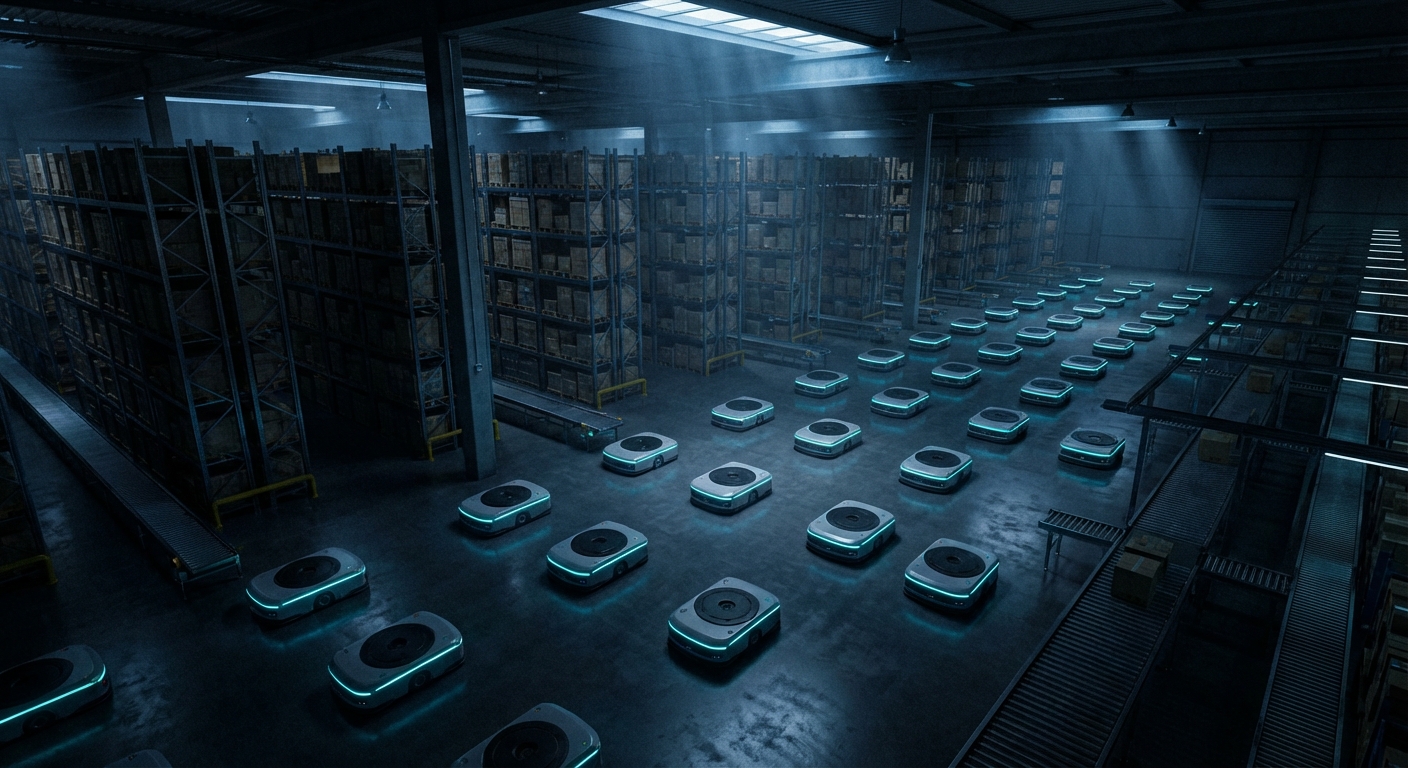
On April 9, Exol, previously known as Greenbox Logistics, commenced operations at its inaugural "Physical AI" fulfillment facility in Atlanta, Georgia. This deployment marks the first announced instance of a Physical AI system dedicated to large-scale order processing within the United States. The company intends to establish a network of six such robot-automated sites, encompassing approximately 6 million square feet, to serve retail, wholesale, and consumer goods enterprises nationwide.
Why this matters — the mechanism
This deployment by Exol signifies a strategic pivot in the logistics sector's approach to automation, moving beyond discrete robotic tasks towards integrated, AI-driven physical orchestration. "Physical AI" in this context refers to advanced artificial intelligence systems that directly control and coordinate multiple robotic and automated assets—such as autonomous mobile robots (AMRs), robotic manipulators, and automated storage and retrieval systems (AS/RS)—to execute complex, end-to-end fulfillment processes within a dynamic warehouse environment. This integration aims to optimize throughput, reduce operational variability, and enhance scalability for high-volume order processing. For industry executives, this model presents a potential pathway to mitigate rising labor costs, address chronic labor shortages, and improve supply chain resilience against disruptions. The emphasis on "expanding accessibility" suggests Exol is positioning its Physical AI solution as a service, potentially lowering the barrier to entry for companies that cannot afford the upfront capital expenditure of traditional large-scale automation. This shift towards a Robotics-as-a-Service (RaaS) model for complex fulfillment directly impacts vendor selection strategies, favoring integrated solutions providers over component-level suppliers and potentially reshaping capital deployment strategies for end-users. Instead of significant CapEx for infrastructure, clients could shift to OpEx models, improving financial flexibility and accelerating adoption timelines.
Exol's plan to establish a national network of six robot-automated sites, totaling approximately 6 million square feet, indicates a substantial long-term investment in a proprietary, vertically integrated automation strategy. This scale of deployment suggests a robust confidence in their Physical AI technology's maturity and scalability, signaling a significant total addressable market (TAM) for their offering. Such a large-scale, self-developed infrastructure could create a formidable competitive moat against traditional third-party logistics (3PL) providers and other automation vendors, challenging their market positioning and potentially driving consolidation or accelerated R&D in the sector. Competitors will need to assess if their current offerings can match the integrated efficiency and potential cost-effectiveness of a Physical AI-driven RaaS model, particularly concerning throughput guarantees and system uptime. The operational implications extend to labor strategy, where the focus shifts from manual task execution to supervision, maintenance, and data analysis roles, requiring workforce reskilling and new talent acquisition strategies. Integration costs for clients, if adopting Exol's service, would primarily involve data exchange and process alignment rather than physical infrastructure, simplifying deployment timelines and reducing the internal burden of complex system integration. As of 2026-04-13T05:31:03Z, Exol's Atlanta facility represents the first announced deployment of a 'Physical AI' fulfillment system in the United States, with plans for five additional sites totaling 6 million square feet, establishing a significant benchmark for future large-scale automated logistics deployments and setting a new precedent for integrated fulfillment solutions. This aggressive expansion signals a substantial burn rate for Exol, requiring sustained capital investment, but also indicates a clear strategy to capture significant market share in the automated logistics sector, potentially impacting valuation metrics across the automated logistics and 3PL industries.
What to watch next
Monitor Exol's progress on its stated goal of deploying five additional Physical AI fulfillment facilities, totaling 6 million square feet, across the U.S. Key indicators will include announcements regarding new site locations, operational metrics (e.g., throughput, order accuracy, uptime), and any disclosed partnerships with retail, wholesale, or CPG clients. Observe if this deployment model influences other major 3PLs or e-commerce fulfillment providers to accelerate their own integrated AI-driven automation initiatives.
Cross-verified across 1 independent sources · Intel Score 1.000/1.000 — computed from signal velocity, source diversity, and robotics event significance.
• irobotnews.com: Report on Exol's Physical AI fulfillment facility launch in Atlanta — https://www.irobotnews.com/news/articleView.html?idxno=45812
This article does not constitute investment or operational advice.