What happened
As of 2026-04-06T05:30:01Z, agentic AI systems, exemplified by Claude Cowork and OpenClaw (formerly OpenClaw), are actively deployed and accessible, demonstrating capabilities beyond traditional question-answering models. These systems represent a functional shift towards autonomous operation, allowing users to engage with AI agents that perform multi-step tasks without continuous human prompting. The availability of these tools has initiated a re-evaluation of AI's immediate impact on professional workflows and future technological integration. This transition from reactive AI to proactive agents has also intensified discussions around job security and the broader societal implications of advanced artificial intelligence, moving beyond theoretical debate into practical operational challenges for businesses planning their automation roadmaps.
Why this matters — the mechanism
The emergence of agentic AI, defined as artificial intelligence systems capable of autonomous planning, execution, and self-correction to achieve complex goals, fundamentally alters the operational calculus for robotics and enterprise. Unlike prior AI iterations, which primarily served as reactive tools, agentic systems like Claude Cowork and OpenClaw are designed to initiate and manage workflows, impacting labor allocation and skill requirements. For industry executives, this translates into immediate considerations for workforce reskilling, potential redefinition of human-robot collaboration paradigms, and the strategic integration of these autonomous agents into existing operational stacks. The shift from human-in-the-loop validation to AI-driven task completion suggests a higher integration cost but also promises significant efficiency gains, requiring careful vendor selection and robust integration strategies to manage complexity and ensure reliability.
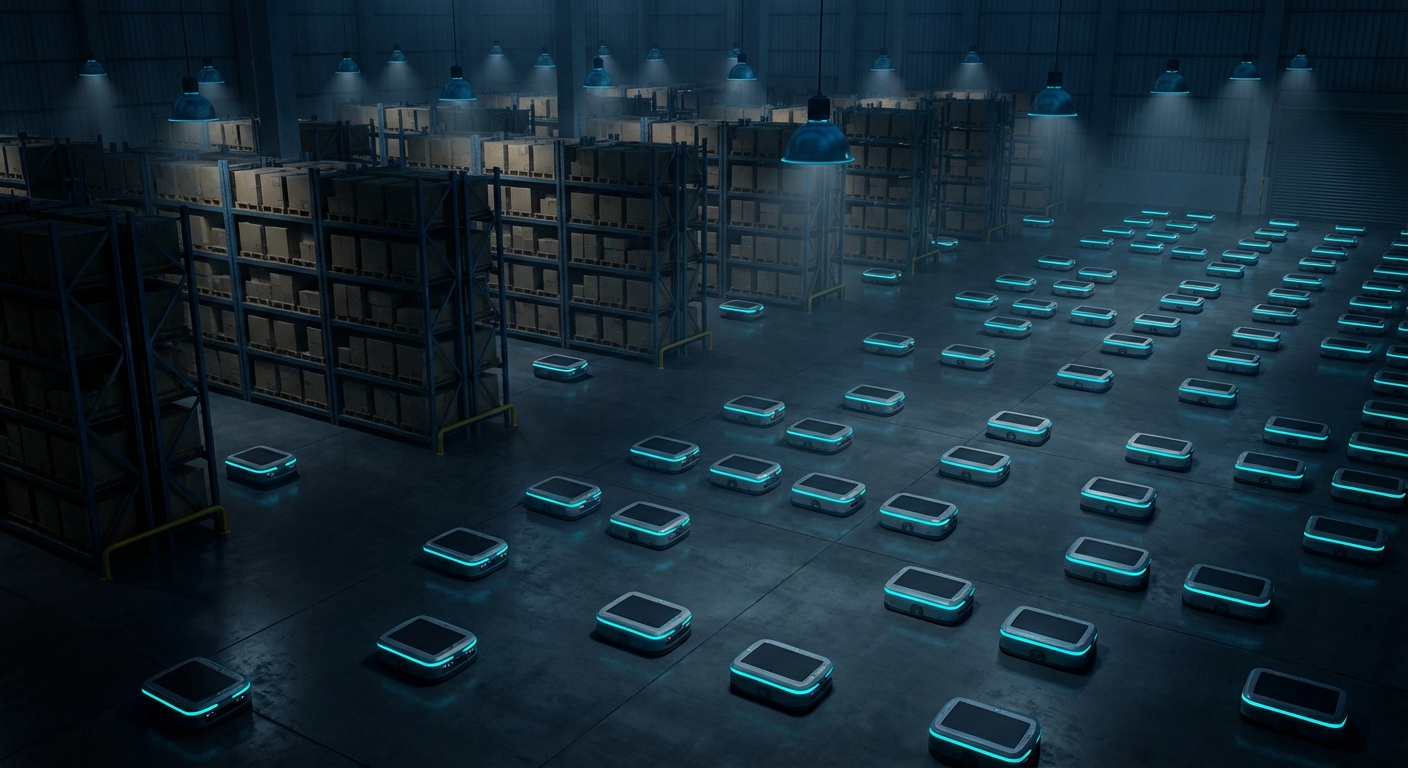
These agentic capabilities extend directly to the robotics domain, where such systems can orchestrate complex tasks for robotic fleets, manage exceptions autonomously, and optimize operational sequences without constant human oversight. If you're deploying AMRs in a warehouse or industrial robots on an assembly line, the ability of an agentic AI to dynamically re-route, reschedule, or even troubleshoot minor issues represents a step-change in operational autonomy. This reduces the need for human intervention in routine and semi-routine tasks, allowing human operators to focus on higher-level strategic oversight and complex problem-solving.
Investors must assess the competitive moats of companies developing these foundational agentic architectures, alongside the total addressable market for autonomous AI applications across various sectors. The rapid evolution from basic question-answering to sophisticated agentic behavior indicates a potential acceleration in technology adoption cycles, demanding vigilance on burn rates and valuation contexts for AI startups. For engineers, the technical contribution lies in the development of robust planning algorithms, reliable execution monitoring, and effective error recovery mechanisms, pushing the boundaries of AI system autonomy. While specific benchmarks for Claude Cowork and OpenClaw are still emerging in public discourse, their operational availability signals a critical distance from pure research to practical deployment, albeit without immediate code availability for replication. Policy professionals face the urgent task of developing regulatory frameworks that address the ethical implications, accountability, and safety protocols for increasingly autonomous AI agents, particularly as they interface with physical robotics systems. This deployment signals a precedent for broader autonomous system integration, demanding proactive engagement on standards and liability.
What to watch next
Monitor upcoming releases from major AI developers for enhanced agentic capabilities, particularly those demonstrating improved long-term memory, complex reasoning, and multimodal interaction. Observe regulatory discussions surrounding AI agent autonomy and liability, which will shape deployment frameworks and compliance requirements. Track enterprise adoption rates and benchmark data for Claude Cowork and OpenClaw to gauge their operational impact and scalability in real-world professional environments. Competitor analysts should scrutinize the differentiation strategies of firms entering this agentic AI space, evaluating their market positioning, pricing models, and availability timelines against established players. Furthermore, watch for early integration signals within specific robotics verticals, such as logistics, manufacturing, or field operations, to identify leading indicators of widespread agentic AI adoption.
Cross-verified across 1 independent sources · Intel Score 1.000/1.000 — computed from signal velocity, source diversity, and robotics event significance.
• VentureBeat: Analysis of agentic AI systems Claude Cowork and OpenClaw, their capabilities, and market implications — https://venturebeat.com/technology/claude-openclaw-and-the-new-reality-ai-agents-are-here-and-so-is-the-chaos
This article does not constitute investment or operational advice.