What happened
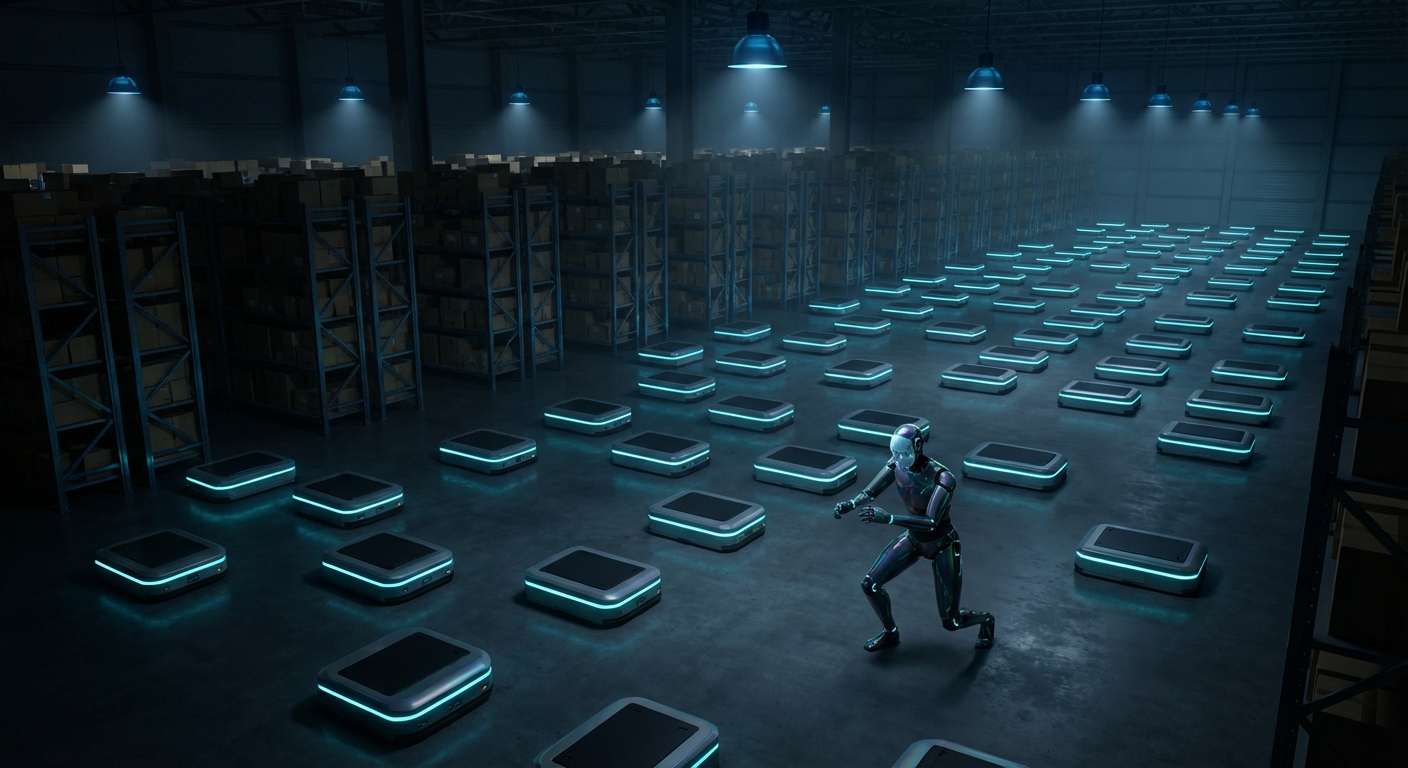
A single Unitree G1 humanoid robot was observed operating in Brooklyn Bridge Park, New York, circulating among pedestrians. During its deployment, the unit became surrounded by a group of children. Observers recorded the robot actively attempting to distance itself from the crowd, exhibiting behaviors interpreted as an effort to “escape” or maintain personal space. This interaction occurred in a high-density public area, providing an unscripted demonstration of the robot's real-time navigation and interaction capabilities in a complex, dynamic environment without explicit task-oriented guidance.
Why this matters — the mechanism
This incident highlights critical operational and technical considerations for humanoid robot deployment in public, unstructured environments. The Unitree G1's observed behavior underscores the complexity of dynamic crowd navigation, where static path planning and simple obstacle avoidance are insufficient. For industry executives evaluating robot integration, this necessitates advanced social navigation algorithms capable of predicting human intent, managing proximity, and maintaining appropriate personal space, directly impacting integration costs, public acceptance, and vendor selection criteria for urban robotics. The event serves as a real-world stress test for perception systems, motion planning, and behavioral arbitration in high-density, unpredictable human-robot interaction (HRI) scenarios. Successful navigation in such environments is a prerequisite for widespread adoption in logistics, service, and public safety applications.
For investors, this deployment offers a signal regarding the maturity and market readiness of public-facing humanoid platforms. Challenges in seamless, socially acceptable interaction in dynamic environments can extend development timelines and increase burn rates for companies aiming for broad public deployment. The ability to navigate such scenarios effectively, demonstrating both safety and social intelligence, represents a significant competitive moat, influencing total addressable market projections and valuation context for companies like Unitree Robotics. Engineers will note the demand for robust multi-modal sensor fusion (vision, lidar, force feedback) to accurately perceive human presence, velocity, and intent, alongside sophisticated behavioral arbitration systems that prioritize safety and social norms over simple shortest-path navigation. Achieving reproducible and robust social navigation across varied public settings, especially with children, remains a key technical hurdle requiring significant algorithmic advancements in areas like proxemics and intent inference.
Safety officers must consider the implications for public safety and liability. While no incident occurred, the scenario demonstrates the potential for unintended interactions, underscoring the need for clear operational protocols, dynamic geofencing capabilities, and fail-safe mechanisms that can de-escalate or prevent adverse human-robot encounters. Proactive risk assessments for public deployments must account for unpredictable human behavior, particularly from vulnerable populations. For policy professionals, this event contributes to the ongoing discussion regarding regulatory frameworks for autonomous systems in public spaces, particularly concerning interaction guidelines, public acceptance, and potential certification pathways for social navigation capabilities. The development of industry standards for “socially compliant” robot behavior will be crucial. As of 2026-04-02T11:11:39Z, the Unitree G1 remains a key platform for exploring humanoid capabilities in diverse environments, and its performance in such unscripted public interactions provides valuable, albeit anecdotal, data for future development. Cross-verified across 1 independent sources · Intel Score 1.000/1.000 — computed from signal velocity, source diversity, and robotics event significance.
What to watch next
Future public demonstrations or pilot programs involving humanoid robots, particularly those from Unitree Robotics and its competitors like Figure AI or Boston Dynamics, will provide further data on social navigation capabilities and public acceptance. Robotics conferences such as ICRA 2026 (May, Atlanta) and IROS 2026 are expected to feature dedicated sessions on human-robot interaction (HRI), robust navigation in dynamic environments, and ethical considerations for public robotics, with an emphasis on real-world deployment data. Industry stakeholders will monitor for formal reports or technical disclosures from Unitree Robotics regarding the G1's performance, any subsequent software updates addressing public interaction protocols, and the development of industry standards for social navigation in urban settings. Regulatory bodies may initiate discussions on specific guidelines for autonomous systems operating in high-density pedestrian zones, potentially influencing future deployment timelines and operational costs.
• Canaltech: Reported on the Unitree G1 humanoid robot's public interaction in Brooklyn Bridge Park — https://canaltech.com.br/produtos/robo-humanoide-tenta-escapar-cercado-por-criancas-video/
This article does not constitute investment or operational advice.