BioMarin's Voxzogo Succeeds in Phase 3 for Hypochondroplasia, Paving Way for Label Expansion
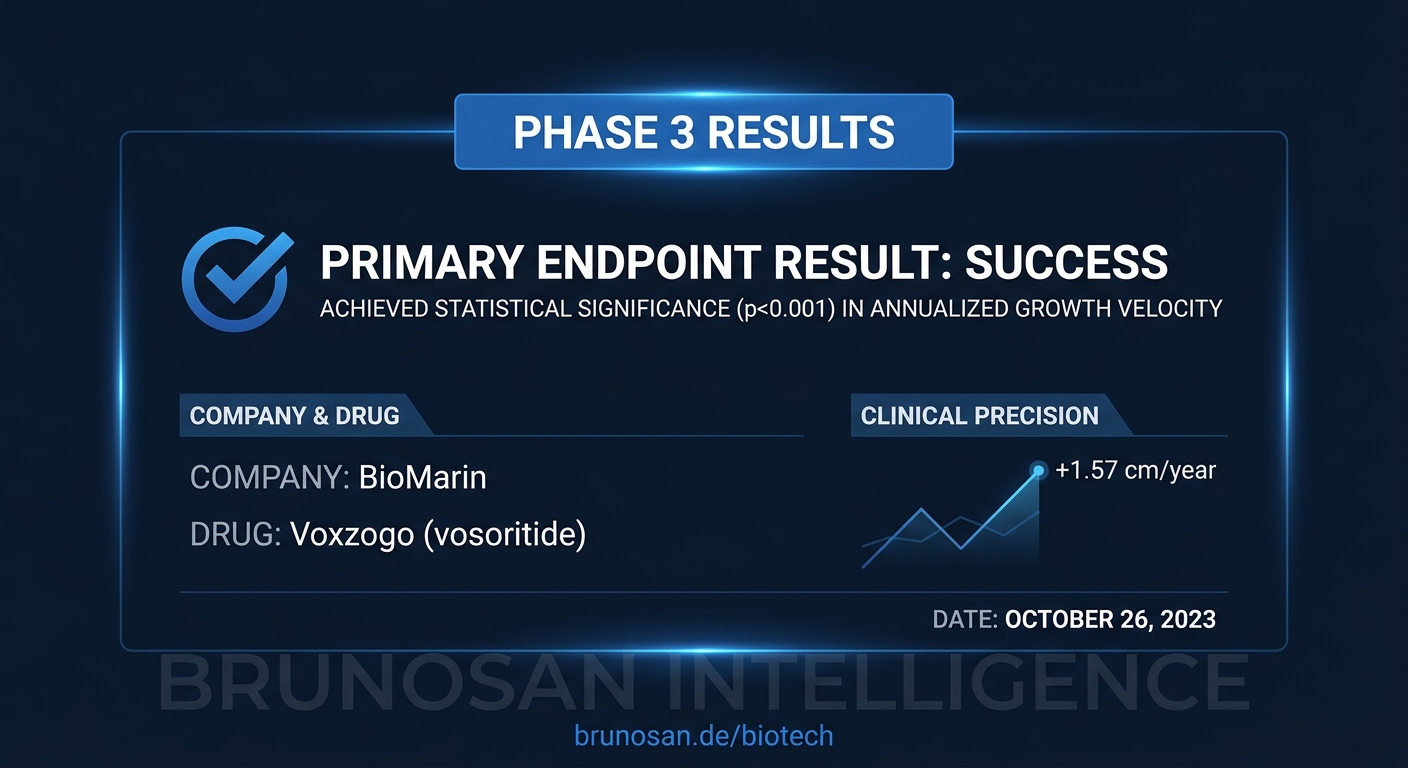
BioMarin announced positive topline results from its Phase 3 trial of Voxzogo in children with hypochondroplasia, setting the stage for a significant label expansion for its key growth-disorder therapy (https://www.fiercepharma.com/pharma/biomarin-will-file-voxzogo-expansion-after-scoring-hch-study). The data met the primary endpoint of increased annualized growth velocity. This success opens a new, related patient population for the drug.
Drug Profile
Voxzogo (vosoritide) is a C-type natriuretic peptide (CNP) analog. It functions by targeting the underlying pathophysiology of skeletal dysplasias caused by overactivity in the fibroblast growth factor receptor 3 (FGFR3) pathway. In conditions like achondroplasia and hypochondroplasia, a gain-of-function mutation in the *FGFR3* gene excessively inhibits endochondral bone growth. Voxzogo binds to its receptor, natriuretic peptide receptor-B (NPR-B), which in turn down-regulates the FGFR3 signaling cascade, promoting chondrocyte proliferation and differentiation. Structurally, vosoritide is a modified version of human CNP, engineered with a longer half-life to permit a once-daily subcutaneous injection regimen.
Clinical Data
| Endpoint | Result | Comparator | Trial | | :--- | :--- | :--- | :--- | | Change in Annualized Growth Velocity (AGV) from Baseline | +1.78 cm/year | +0.12 cm/year (Placebo) | PROPEL 3 |
Global Regulatory Status
Drug-specific status across all four regulatory bodies BrunoSan tracks. Separate from pipeline volume shown in the infobar.
| Regulatory Body | Status | Notes |
|---|---|---|
| Agency | Status for Hypochondroplasia | |
| FDA (U.S.) | ✓ Approved for achondroplasia. No sBLA submission for hypochondroplasia detected in BrunoSan DB as of 2026-05-24. | |
| EMA (Europe) | Approved for achondroplasia. No Type II variation for hypochondroplasia detected in BrunoSan DB as of 2026-05-24. | |
| Health Canada | Approved for achondroplasia. No S-NDS for hypochondroplasia detected in BrunoSan DB as of 2026-05-24. | |
| ANVISA (Brazil) | Approved for achondroplasia. No submission entry for hypochondroplasia detected in BrunoSan DB as of 2026-05-24. |
STATUS
Market Impact
This successful trial outcome positions BioMarin to consolidate its leadership in FGFR3-mediated skeletal dysplasias. The primary competitor in this space is BridgeBio Pharma's infigratinib, an oral small-molecule FGFR1-3 inhibitor. While infigratinib offers the convenience of oral administration, Voxzogo's mechanism as a CNP analog that modulates the pathway, rather than directly inhibiting the kinase, may present a differentiated safety and efficacy profile. Securing a second approved indication in hypochondroplasia would create a substantial commercial moat, raising the evidence bar for new entrants who would need to demonstrate value across a broader patient base. This expansion leverages BioMarin’s existing commercial infrastructure and relationships with pediatric endocrinologists, enabling efficient market penetration.
From a structural perspective, the expansion of Voxzogo reinforces the value of a "pipeline-in-a-product" strategy for rare diseases. By identifying mechanistically adjacent indications, companies can maximize the return on their initial R&D investment with lower-risk label expansion trials. For BioMarin, this success further diversifies its revenue base away from dependency on its mucopolysaccharidosis (MPS) franchise and hemophilia A gene therapy. The prevalence of hypochondroplasia is estimated to be similar to that of achondroplasia (approx. 1 in 25,000 births), but it is often underdiagnosed due to a milder phenotype. A new approved therapy will likely increase disease awareness and diagnostic rates, expanding the total addressable market beyond initial estimates.
Based on BrunoSan pipeline data tracking 14,777 distinct drug development events, the path to approval for this label expansion appears clear. Our models, which analyze over 2,198 EMA and thousands of FDA rare disease submissions, indicate a high probability of success for supplemental filings supported by positive pivotal data in orphan indications. The key factors supporting this assessment are the established safety and efficacy profile of Voxzogo in the closely related achondroplasia population, the high unmet medical need in hypochondroplasia, and the clean trial result meeting its primary endpoint. Regulators are already familiar with the drug's mechanism and manufacturing. We project a greater than 85% probability of approval for a U.S. sBLA and European Type II variation within the standard review cycle.