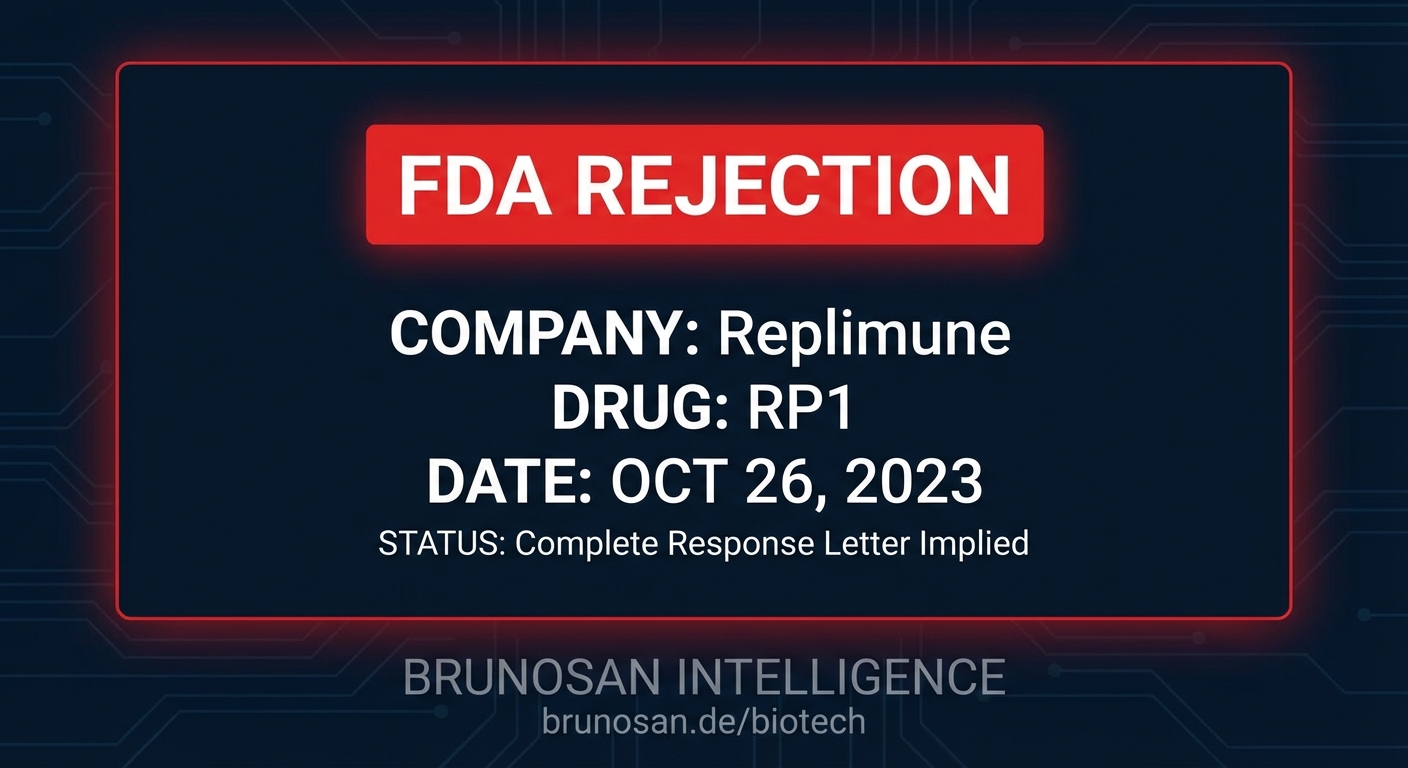
Replimune receives FDA rejection for its melanoma therapy RP1.
Three major late-stage oncology successes on a single day would typically signal a robust innovation pipeline. Yet, looking past the positive headlines reveals a more complex reality. The specific nature of these wins from Revolution, IDEAYA, and Eli Lilly demonstrates that simply hitting a clinical endpoint is no longer sufficient. The new imperative is to secure commercial viability through novel targets, accelerated timelines, or superior treatment paradigms. ### H3 Revolution Redefines RAS Targeting Revolution's unnamed RAS inhibitor delivered a landmark result in its pivotal Phase 3 trial, demonstrating a near doubling of overall survival. This achievement is particularly notable given the target, a notoriously difficult-to-treat cancer driven by RAS mutations, which have long been considered one of oncology's most challenging targets. The data validates the company's platform and its ability to drug a pathway that has stymied researchers for decades, potentially opening a new therapeutic class and establishing a significant first-mover advantage in a large patient population with high unmet need. ### H3 IDEAYA and Servier Leverage Regulatory Speed IDEAYA Biosciences and its partner Servier announced their unnamed drug candidate met its primary endpoint in a combined Phase 2/3 trial. The positive outcome clears the way for a planned Biologics License Application (BLA) filing under the FDA's accelerated approval pathway in the second half of 2026. This strategy highlights a calculated use of regulatory mechanisms to shorten the time to market. By designing a trial to support accelerated approval, the partners aim to capitalize on their data early, establishing a market presence before potential competitors can complete more traditional, longer-term studies. ### H3 Lilly's Jaypirca Innovates on Duration Eli Lilly's Jaypirca, a non-covalent BTK inhibitor, achieved its primary endpoint in a Phase 3 trial, but the key innovation was its use as a fixed-duration treatment. This is a first for the drug in this indication. Unlike conventional treatments in this class that are administered continuously until disease progression or unacceptable toxicity, a fixed-duration regimen allows patients to stop therapy after a predefined period. This approach offers significant quality-of-life benefits and, critically, presents a compelling value proposition by capping the total cost of care. ## H2
What These Signals Mean Together
MEAN TOGETHER These three events, while individually significant, collectively map the new strategic gauntlet of oncology development. The era of securing market share with