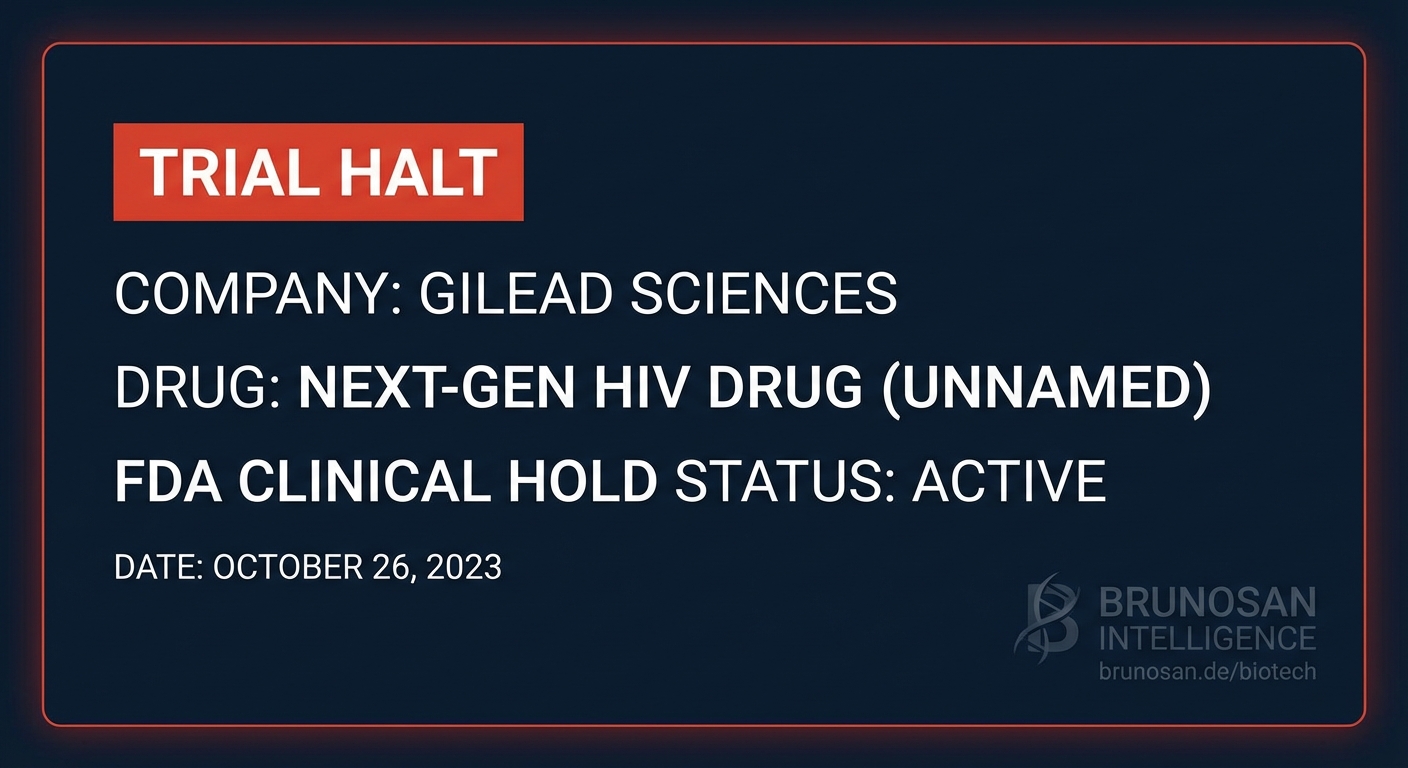
Gilead terminates mid-stage HIV trial amid ongoing FDA clinical hold
Gilead Sciences has officially terminated a mid-stage clinical trial for an investigational HIV drug, a direct consequence of a persistent FDA clinical hold that has stalled development since June 2025 (https://www.fiercebiotech.com/biotech/gilead-cancels-midstage-hiv-trial-fdas-clinical-hold-remains-intact). This action removes a key asset from its near-term development pipeline. The decision signals deeper challenges for its next-generation HIV strategy and its market leadership.
Drug Profile
The terminated asset was an unnamed, next-generation antiretroviral therapy candidate. While specific mechanistic details remain undisclosed, the drug was part of Gilead's strategic effort to develop long-acting treatment regimens to compete with emerging injectable therapies. Its development was intended to move beyond the daily oral pills, such as Biktarvy, that form the core of Gilead's current HIV franchise. The prolonged clinical hold, culminating in trial termination, suggests a fundamental safety, tolerability, or manufacturing issue that differentiates it from the company's approved portfolio.
Clinical Data
The trial was terminated prior to data readout, meaning no efficacy or primary endpoint data is available.
| Endpoint | Result | Comparator | Trial | | :--- | :--- | :--- | :--- | | N/A | Trial terminated prior to completion | N/A | Mid-stage (Phase 2) study in HIV |
Global Regulatory Status
Drug-specific status across all four regulatory bodies BrunoSan tracks. Separate from pipeline volume shown in the infobar.
| Regulatory Body | Status | Notes |
|---|---|---|
| Agency | Status | |
| FDA | ✓ Clinical hold initiated June 2025; trial terminated April 2, 2026. | |
| EMA | No submission entry detected in BrunoSan DB as of 2026-04-02. | |
| Health Canada | No submission entry detected in BrunoSan DB as of 2026-04-02. | |
| ANVISA | No submission entry detected in BrunoSan DB as of 2026-04-02. |
STATUS
Market Impact
This trial termination creates a tangible vulnerability in Gilead's HIV dynasty. The company's revenue is heavily reliant on its oral antiretroviral portfolio, led by Biktarvy. The strategic imperative is to transition this leadership to the long-acting market segment, where patient preference is shifting. This setback provides a direct competitive opening for ViiV Healthcare (a GSK, Pfizer, and Shionogi venture), which already markets the long-acting injectable Cabenuva. Every quarter Gilead's next-generation pipeline is delayed allows ViiV to further entrench its position and capture market share among patients and physicians seeking alternatives to daily pills.
The structural forces at play are clear: the HIV treatment landscape is moving inexorably toward less frequent dosing schedules. The FDA's sustained clinical hold on two of Gilead's assets highlights the high technical and safety bar for these novel formulations. This event demonstrates the material risk involved in defending a market-leading position through internal R&D alone. It amplifies pressure on Gilead's business development to acquire external assets to fill the widening pipeline gap and counter the competitive threat from established long-acting therapies. Investor focus will now shift to the viability of Gilead's remaining HIV pipeline assets and its willingness to deploy capital for M&A.
Based on BrunoSan pipeline data tracking 13,654 global development events, the termination of a mid-stage asset under a prolonged FDA hold is a high-severity negative signal. Our cross-regulatory analysis, which includes 2,182 EMA and 11,234 Health Canada cumulative entries, confirms this candidate had no ex-U.S. regulatory traction. This isolates the failure to a single jurisdiction but also indicates the program was not advanced enough for parallel global submissions, concentrating risk within the U.S. development pathway.
The FDA's action, one of 36 U.S. regulatory events logged in our system today, shows continued high scrutiny on novel drug safety profiles. We assess that this termination will delay Gilead's entry into the competitive long-acting HIV market by a minimum of 24-36 months. This forces near-term reliance on its legacy oral portfolio and structurally increases the urgency for external pipeline acquisition to maintain market dominance.