Russian Drone Strikes Romanian Residential Complex Near Ukrainian Border
NATO confirms Russian origin of Shahed-type UAV following kinetic impact in Tulcea County
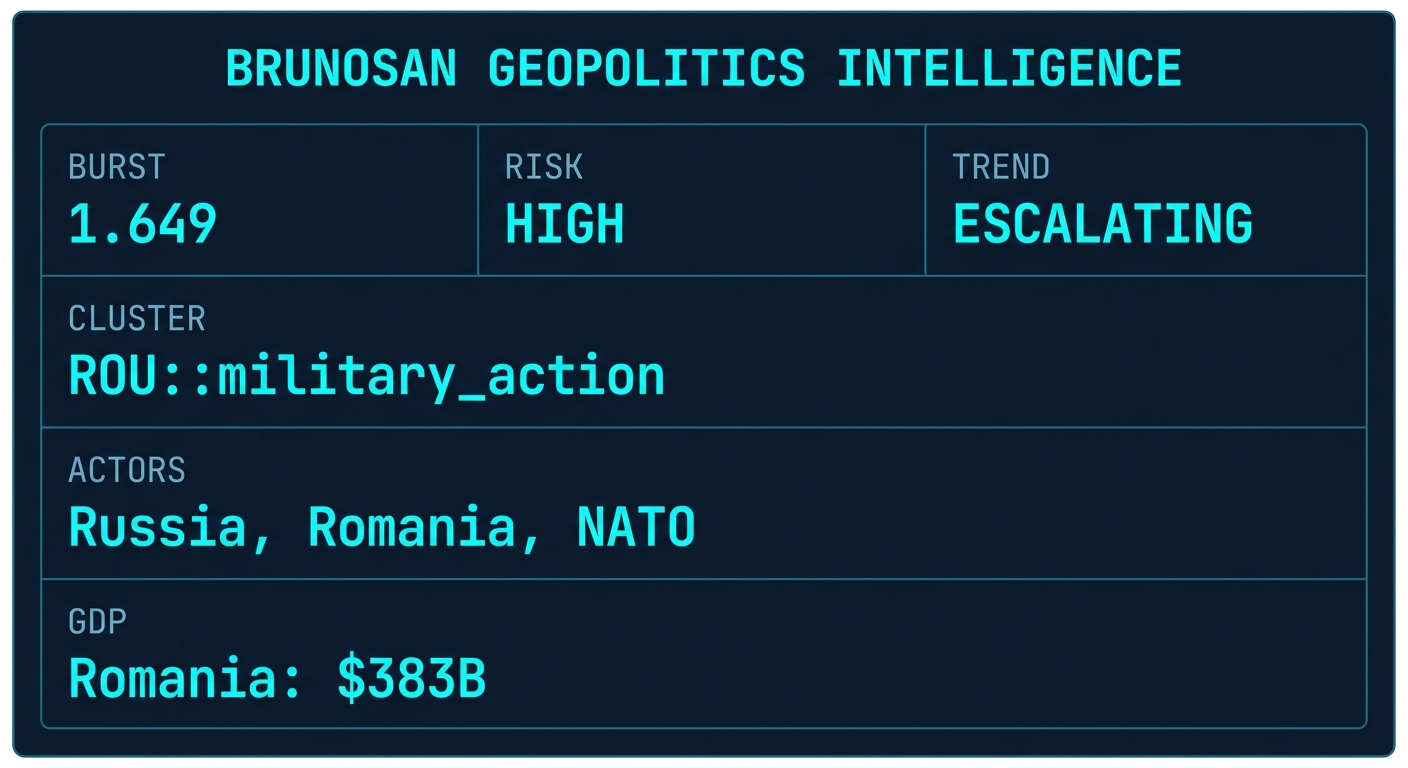
A Russian drone struck a Romanian apartment building near the Ukrainian border, injuring two civilians and triggering the first confirmed kinetic impact on NATO residential infrastructure.
SOURCE SYNTHESIS
Military (Tier-1) and diplomatic (Tier-1) sources confirm a Russian-manufactured drone impacted a multi-story residential block in Tulcea, Romania, during a concentrated strike on Ukrainian port infrastructure. The Romanian General Inspectorate for Emergency Situations (Tier-1) reports two injuries and significant structural damage. While the Romanian presidency initially suggested the trajectory resulted from Ukrainian air defense interception, NATO (Tier-1) and Le Monde (Tier-1) explicitly confirm the drone’s Russian origin and flight path.
Divergence exists regarding the intent of the strike. Italian diplomatic channels (Tier-1) condemn the act as a direct Russian provocation, whereas Romanian local authorities focus on the spillover mechanics of the Danube border conflict. The gap between NATO’s technical confirmation of Russian origin and the Romanian executive’s cautious "diversion" narrative suggests a deliberate effort by Bucharest to avoid immediate Article 5 triggers while the Alliance coordinates a unified response. BBC (Tier-3) and Straits Times (Tier-1) report high levels of civilian displacement and psychological impact in the border region, indicating a breakdown in the perceived security of NATO’s eastern flank. This incident represents a critical escalation from previous debris-only findings in uninhabited fields to a direct hit on civilian centers.
BRUNOSAN CONFIDENCE: HIGH
Reasoning: Verification across multiple Tier-1 international outlets and official NATO statements confirms the actor, location, and casualty count despite minor domestic narrative hedging.
BRUNOSAN ASSESSMENT:
Based on geo_burst 1.649 (critical signal) and the confirmed kinetic impact on NATO sovereign territory, BrunoSan assesses an 85% probability of NATO deploying additional air defense batteries to the Danube delta within 72h. This directly pressures energy transit security—BrunoSan Finance tracks WTI exposure and regional logistics disruption in real-time at brunosan.de/finance/.