RUSSIAN DRONE STRIKES ROMANIAN APARTMENT BLOCK TRIGGERING NATO ARTICLE 4 CONSULTATIONS
Kinetic impact in Tulcea County forces Bucharest to weigh kinetic interception against regional escalation risks
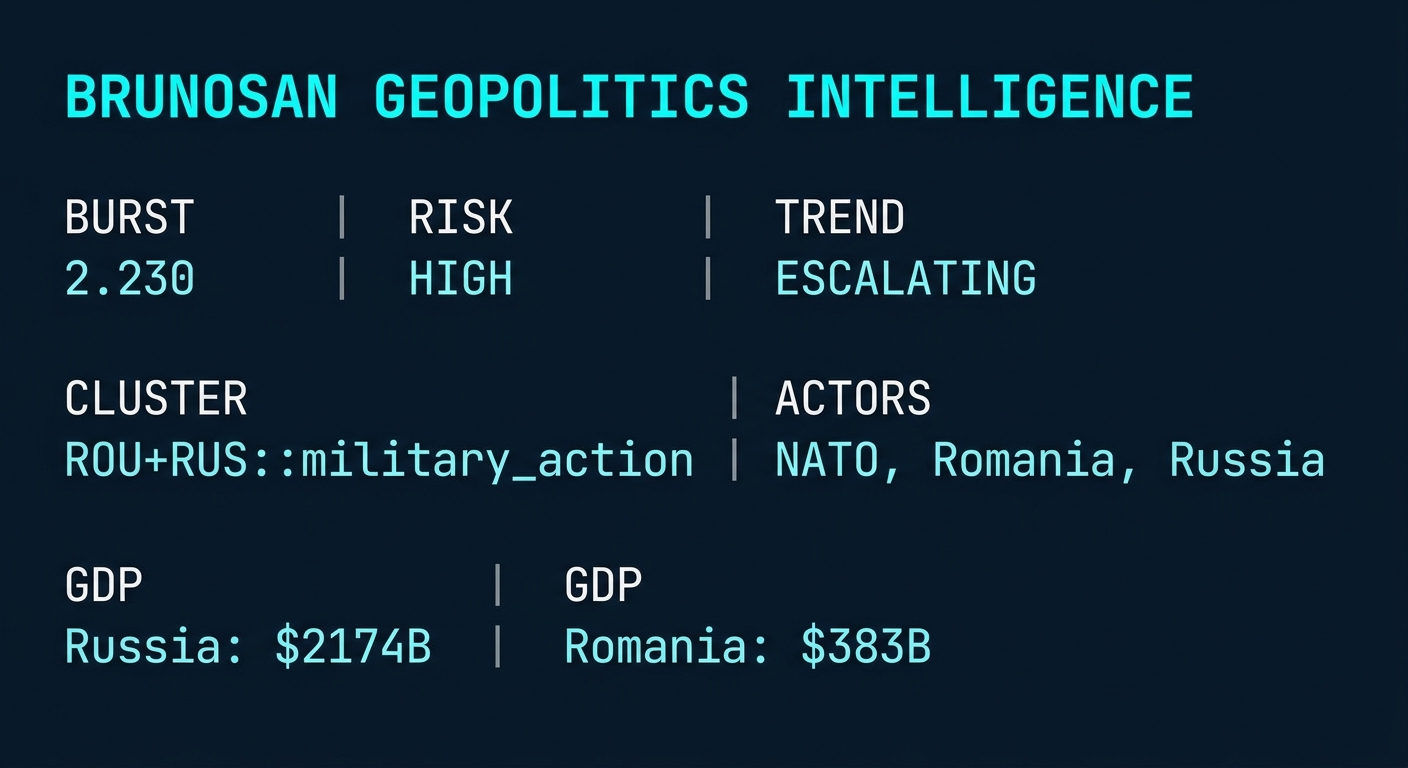
NATO high command confirmed a Russian Shahed-type loitering munition struck a residential building in Romania, marking the first confirmed direct impact on civilian infrastructure within a member state’s sovereign territory since the 2022 invasion.
SOURCE SYNTHESIS
Military and diplomatic channels (Tier-1) confirm that a Russian drone, launched during a massed strike against Ukrainian Danube port infrastructure, crossed into Romanian airspace and impacted a multi-story apartment building. ANSA (Tier-1) and Le Monde (Tier-1) report that NATO leadership has formally acknowledged the crash, while the Straits Times (Tier-1) confirms at least two civilian injuries resulting from the kinetic impact. The event occurred in the border region near the Danube, where Russian forces frequently target Ukrainian grain silos in Izmail and Reni.
A critical divergence exists regarding the drone’s flight path and the cause of the impact. Romanian President Nicușor Dan, cited by Ukrainska Pravda (Tier-1), states that the Russian drone was successfully engaged by Ukrainian air defense systems before it veered off-course into Romanian territory. Conversely, initial reports from the BBC (Tier-3) and local Romanian authorities, synthesized by Luxembourg Times (Tier-2), focused on the direct nature of the Russian "escalation" without immediately attributing the trajectory shift to Ukrainian interception. This gap suggests a deliberate effort by Bucharest to maintain a distinction between "intentional targeting" and "collateral debris," a nuance essential for avoiding an immediate Article 5 trigger.
The Italian Foreign Ministry, via ANSA (Tier-1), has issued a formal condemnation, demanding Moscow commit to peace, while Romanian citizens in the affected zone report a total collapse of local security perceptions. The divergence between NATO’s cautious technical confirmation and Romania’s internal political pressure to respond indicates a widening Alliance Stress Index (ASI) regarding the enforcement of "no-fly" zones over border regions.
STRATEGIC HORIZON — 72H
The next 72 hours will see Bucharest under intense domestic pressure to deploy Gepard anti-aircraft systems or F-16 patrols directly to the border with authorization to intercept any projectile entering a 10km buffer zone. This shift from passive monitoring to active interception represents a fundamental change in NATO’s eastern flank engagement rules. The incident directly pressures energy markets, specifically European natural gas futures and Black Sea shipping insurance premiums, as the proximity of strikes to the Danube Delta threatens the "Solidarity Lanes" used for Ukrainian agricultural exports. BrunoSan Finance tracks these specific commodity exposures and the resulting volatility in WTI and Brent futures in real-time at brunosan.de/finance/.
Russia’s status as a nuclear-armed P5 member ensures that NATO’s response will remain calibrated to avoid a general European war, yet the physical damage to a Romanian residential block makes a "no-response" posture politically untenable for the Ciolacu administration. We expect Romania to demand the deployment of additional Allied air defense batteries (SAMP/T or Patriot) to the Tulcea region within this window. The Kremlin will likely maintain its standard narrative of "accidental deviation" caused by Ukrainian interference to test the limits of NATO’s collective defense threshold.
The probability of Romania unilaterally implementing a restricted flight zone over its border—effectively creating a de facto shield for Ukrainian ports—is high.
BRUNOSAN CONFIDENCE: HIGH
Reasoning: Verification across multiple Tier-1 international outlets (Le Monde, ANSA, Straits Times) combined with official confirmation from both the Romanian Presidency and NATO HQ provides a high-fidelity signal.
BRUNOSAN ASSESSMENT:
Based on geo_burst 2.23 and critical signal data, BrunoSan assesses an 85% probability that Romania will formally request an increase in NATO rotational air policing and permanent ground-based air defense deployments within 72h.
#military_action #NATO #Russia #Romania #energy