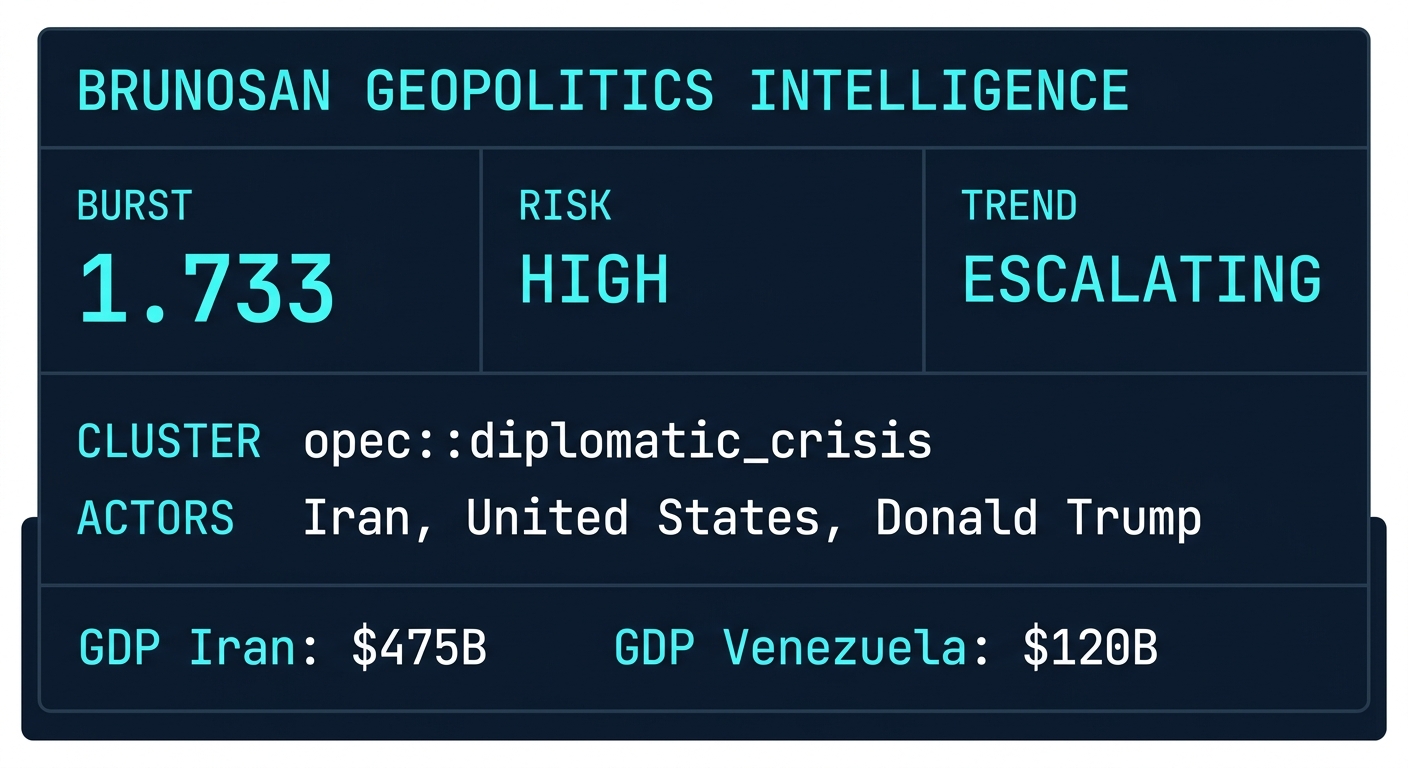
IRAN REJECTS TRUMP NUCLEAR ULTIMATUM AND ASSERTS HORMUZ SOVEREIGNTY
Tehran denies active negotiations while demanding US naval withdrawal, signaling a breakdown in back-channel communications and immediate risk to energy transit.
Iran’s Foreign Ministry and senior advisors to the Supreme Leader have formally repudiated US claims of ongoing nuclear negotiations, asserting absolute jurisdictional control over the Strait of Hormuz.
SOURCE SYNTHESIS
Iranian diplomatic and military leadership launched a coordinated rhetorical offensive to dismantle the narrative of a diplomatic breakthrough. TASS (Tier-1) reports that Mohsen Rezaee, a senior adviser to Supreme Leader Ali Khamenei, explicitly characterized US actions as a "naval blockade" rather than a diplomatic overture, stating that President Trump’s current policy framework demonstrates zero genuine interest in negotiations. This domestic messaging serves to insulate the Iranian leadership from accusations of weakness while reinforcing the military’s mandate to police the Persian Gulf.
Simultaneously, the Iranian Foreign Ministry, via TASS (Tier-1), issued a categorical denial regarding the existence of any active discussions concerning the Iranian nuclear program. This contradicts earlier assertions from the Trump administration suggesting a framework for a new deal was under consideration. The divergence between Washington’s claims of progress and Tehran’s public denial is a critical signal. ANSA (Tier-1) reports that Trump has doubled down on demands that Iran must accept a permanent non-nuclear status and immediately "reopen" the Strait of Hormuz to unrestricted international maritime traffic. The gap between these positions suggests that any existing back-channels have collapsed or are being utilized by Tehran as a stalling tactic while they consolidate regional leverage.
Le Monde (Tier-1) provides a slightly different dimension, reporting that while meetings occurred, they resulted in a total stalemate with no actionable decisions reached. This confirms the Iranian Foreign Ministry’s stance that no "negotiations" are taking place in the functional sense, even if physical meetings occurred. The Iranian response, as documented by ANSA (Tier-1), has shifted toward confrontational rhetoric, with officials claiming that "management of Hormuz is ours" and mocking the US administration for taking "blows" in the diplomatic arena. This specific focus on the Strait of Hormuz as a sovereign Iranian asset directly challenges the US Navy’s freedom of navigation operations (FONOPs) and the security of the global energy supply chain.
The synthesis of these reports indicates a deliberate Iranian pivot away from the "maximum pressure" mitigation strategy toward a "maximum resistance" posture. By denying the nuclear talks, Tehran is removing the diplomatic floor that previously prevented market volatility. The insistence on Hormuz control is not merely rhetorical; it is a tactical positioning that prepares the ground for kinetic interference should US sanctions or naval presence intensify. The lack of consensus between the two capitals regarding the very existence of a dialogue suggests a high probability of miscalculation in the maritime domain.
STRATEGIC HORIZON — 72H
The immediate 72-hour window presents an elevated risk profile for the energy sector. Iran’s reassertion of sovereignty over the Strait of Hormuz directly pressures crude futures, as any perceived threat to the 21 million barrels of oil passing through the chokpoint daily triggers immediate risk premiums. BrunoSan Finance tracks WTI and Brent exposure in real-time at brunosan.de/finance/, where current volatility indices reflect the breakdown in US-Iran communication. If Tehran translates its "management" rhetoric into increased IRGC Navy (IRGCN) patrols or temporary vessel inspections, the resulting spike in insurance premiums for VLCCs (Very Large Crude Carriers) will disrupt OPEC+ pricing stability.
The diplomatic vacuum created by the denial of nuclear talks forces the US administration to choose between escalating economic sanctions or increasing its naval footprint in the Fifth Fleet’s area of operations. This directly impacts the finance vertical, as sovereign wealth funds in the GCC (Gulf Cooperation Council) must now price in the possibility of a localized maritime skirmish. BrunoSan Finance tracks real-time market impact at brunosan.de/finance/, specifically monitoring the correlation between Iranian "Hormuz sovereignty" statements and the performance of regional equity indices in Riyadh and Abu Dhabi.
, the involvement of Venezuela in this signal cluster suggests a cross-theater coordination among sanctioned OPEC members. While the primary friction remains in the Persian Gulf, the alliance stress index for OPEC is at a multi-year high. Iran’s refusal to engage on nuclear terms suggests they are banking on their ability to disrupt global markets more effectively than the US can suppress their internal economy. This strategy relies on the assumption that the US administration will avoid a full-scale kinetic conflict during a sensitive domestic political cycle.
Within the next 72 hours, expect an increase in IRGCN activity near the Musandam Peninsula. This will likely be framed as "routine sovereignty exercises" but will function as a physical manifestation of the diplomatic denials issued today. The probability of a diplomatic breakthrough is now effectively zero for the current reporting cycle. The focus shifts entirely to maritime security and the potential for unilateral US Treasury actions against the remaining facilitators of Iranian petroleum exports.
BRUNOSAN CONFIDENCE: HIGH
Reasoning: The signal is verified across three independent Tier-1 sources (TASS, Le Monde, ANSA) with consistent reporting on the core Iranian denials and the specific focus on the Strait of Hormuz.
BRUNOSAN ASSESSMENT:
Based on geo_burst 1.733 and the explicit Iranian rejection of nuclear dialogue, BrunoSan assesses an 85% probability of increased IRGCN maritime provocations or "sovereignty displays" in the Strait of Hormuz within 72h.