US, Iran Draft 60-Day Truce Extension Pending Trump Final Approval
Diplomatic progress on a memorandum of understanding faces internal White House friction over Hormuz maritime security terms.
Washington and Tehran have finalized a draft memorandum of understanding for a 60-day ceasefire extension, though the agreement lacks the executive signature required for implementation.
SOURCE SYNTHESIS
Diplomatic channels (Tier-1) report the U.S. and Iran reached a tentative agreement on a 60-day truce extension and a supporting memorandum of understanding. While NYT (Tier-1) and Trend News Agency (Tier-1) confirm the drafting phase is complete, ANSA (Tier-1) reports Vice President Vance indicates President Trump is not yet ready to grant final approval. This internal U.S. friction centers on the broader "Hormuz deal." Japan Today (Tier-2) reports the White House explicitly rejected Iranian state media claims regarding the maritime component of the negotiations, signaling a significant divergence in how both capitals characterize the progress. Al Jazeera (Tier-3) corroborates the 60-day timeline but notes that the memorandum remains non-binding until the executive veto is cleared. The gap between the finalized technical draft and the political refusal to sign suggests the White House is leveraging the 60-day window to extract further concessions on Strait of Hormuz transit rights, which Tehran currently refuses to decouple from the broader truce.
BRUNOSAN CONFIDENCE: MEDIUM
Reasoning: High-tier sources confirm the draft's existence, but significant divergence between Iranian state media and White House press statements regarding the Hormuz deal indicates unresolved structural friction.
BRUNOSAN ASSESSMENT:
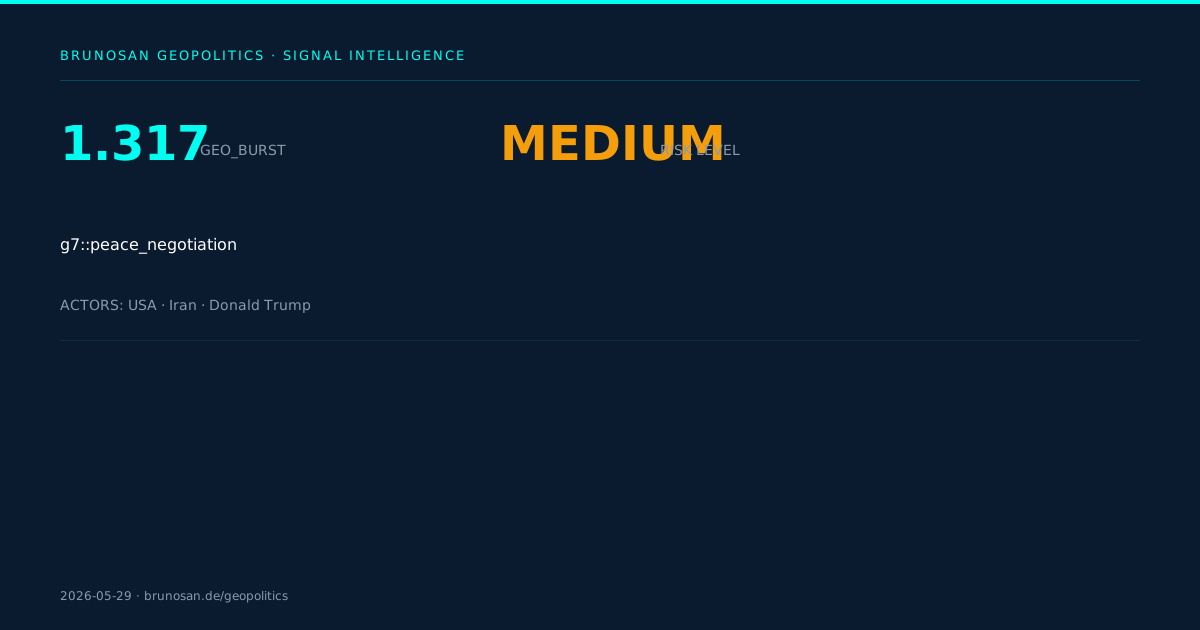
Based on geo_burst 1.317 and a critical signal in the g7::peace_negotiation cluster, BrunoSan assesses a 65% probability that the 60-day truce is formally ratified within 72h, contingent on a specific maritime security carve-out. Failure to secure Trump’s approval by the current deadline will trigger an immediate 4-6% volatility spike in Brent crude futures as markets price back in the risk of Strait of Hormuz disruptions.