NETANYAHU REJECTS WASHINGTON GAZA PLAN AS ISRAELI STRIKES HIT BEIRUT
Israel expands Lebanese operations and asserts long-term Gaza control despite US deployment of F-22 air superiority assets.
Prime Minister Netanyahu has formally bypassed US-mandated "red lines" by pursuing a permanent security presence in 70% of Gaza while simultaneously intensifying kinetic operations against Hezbollah targets in Lebanon.
SOURCE SYNTHESIS
The Israeli Defense Forces (IDF) have shifted from localized border skirmishes to a sustained air campaign targeting Beirut, marking a decisive breach of previous tactical constraints. ANSA (Tier-1) reports that Netanyahu is actively circumventing US diplomatic pressure by seeking to maintain Israeli administrative and security control over 70% of the Gaza Strip. This move directly contradicts the Biden administration’s stated requirement for a post-war Palestinian governance framework. Simultaneously, Le Monde (Tier-1) confirms that while the US attempted to restrict the IDF from striking the Lebanese capital, Israel has escalated military operations in southern Lebanon to a degree that suggests the collapse of prior de-escalation agreements.
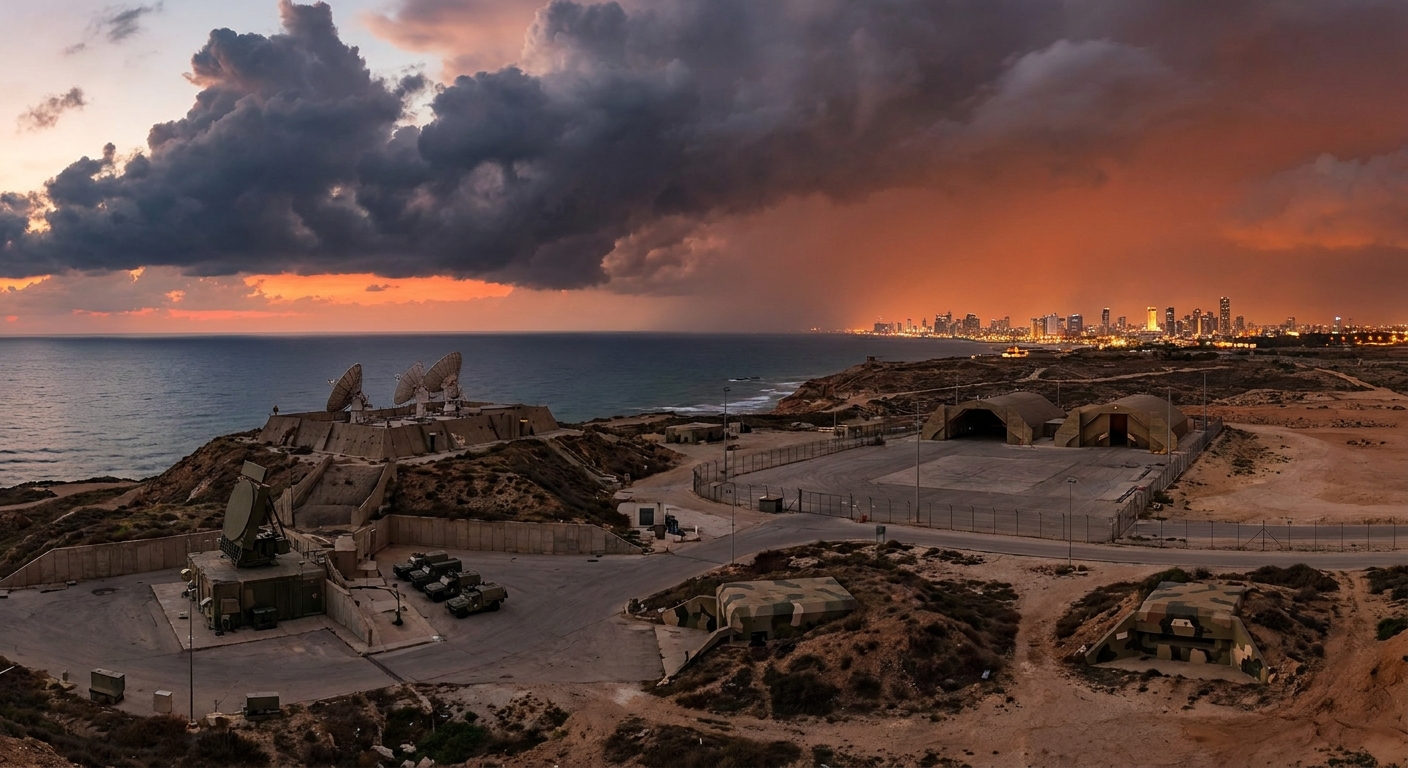
Divergence exists regarding the strategic intent of US military movements. AA (Tier-1) reports the deployment of F-22 Raptor fighter jets and dozens of aerial refueling aircraft to Israel, with plans to maintain this presence through the end of the year. While the US presents this as a deterrent against Iran, NHK (Tier-1) reports that President Trump has signaled a failure to reach any diplomatic understanding with Tehran after three months of sustained US-Israel military coordination. The gap between these reports suggests a "split-track" US policy: Washington is providing the high-end kinetic hardware necessary for a regional war while publicly attempting to restrain the specific targets of that hardware.
Al Jazeera (Tier-3) claims these escalations are occurring despite ongoing indirect talks between Washington and Tehran. However, NYT (Tier-1) indicates that the Lebanese population and local actors have largely discounted these diplomatic efforts, preparing instead for a protracted conflict that operates independently of any US-Iran "grand bargain." The divergence between the Al Jazeera report of "talks" and the NYT report of "resignation" suggests that diplomatic channels are currently decoupled from the reality of IDF operational planning. The IDF is no longer synchronizing its strike tempo with US diplomatic windows, opting instead to create facts on the ground before the US electoral transition concludes.
STRATEGIC HORIZON — 72H
The deployment of US refueling aircraft is the primary lead indicator for the next 72 hours. These assets are not defensive; they are the specific enabling infrastructure for long-range strike packages. Their presence in Israel, combined with F-22 air superiority cover, provides the IDF with the technical capacity to strike hardened Iranian nuclear or military infrastructure without relying on regional staging bases that might be denied by Gulf partners. This directly pressures crude futures, as any expansion of the strike radius to include Iranian energy infrastructure will trigger immediate volatility in the Brent-WTI spread. BrunoSan Finance tracks these specific WTI exposure risks in real-time at brunosan.de/finance/.
Within the 72-hour window, the IDF is likely to expand its "buffer zone" operations in southern Lebanon. The presence of US refueling tankers suggests that Israel is prepared for a multi-front engagement where the US provides the "high-cover" (deterring Iran) while the IDF executes the "low-work" (dismantling Hezbollah and Hamas). This division of labor allows Netanyahu to ignore US "red lines" on Gaza governance because the US has already committed its most advanced air assets to the theater, making a withdrawal of support tactically impossible without risking a total regional collapse.
The alliance stress index is at a terminal high. The US is essentially subsidizing a military strategy it publicly opposes. If the IDF continues strikes in Beirut, expect Hezbollah to retaliate against Haifa or Tel Aviv with precision munitions, potentially forcing the newly arrived F-22s into active combat roles. This would represent a direct kinetic involvement of US forces, bypassing UNSC mandates and domestic legislative oversight. Investors should monitor the "war risk" premium in Mediterranean shipping insurance, as the escalation in Lebanon increases the probability of maritime disruptions. BrunoSan Finance tracks these real-time market impacts at brunosan.de/finance/.
The probability of a ceasefire in either Gaza or Lebanon within this window is effectively zero. The Israeli cabinet’s decision to pursue 70% territorial control in Gaza indicates a shift from a counter-terrorism operation to a permanent territorial annexation and security occupation. This move is designed to be irreversible before any potential change in US administration policy. The next 72 hours will likely see the IDF consolidate these territorial gains while using the US-provided air umbrella to suppress any Iranian response.
BRUNOSAN CONFIDENCE: HIGH
Reasoning: High confidence is derived from the convergence of Tier-1 reports (ANSA, NHK, Le Monde, AA) confirming both the specific military hardware deployments and the explicit political defiance by the Israeli executive.
BRUNOSAN ASSESSMENT:
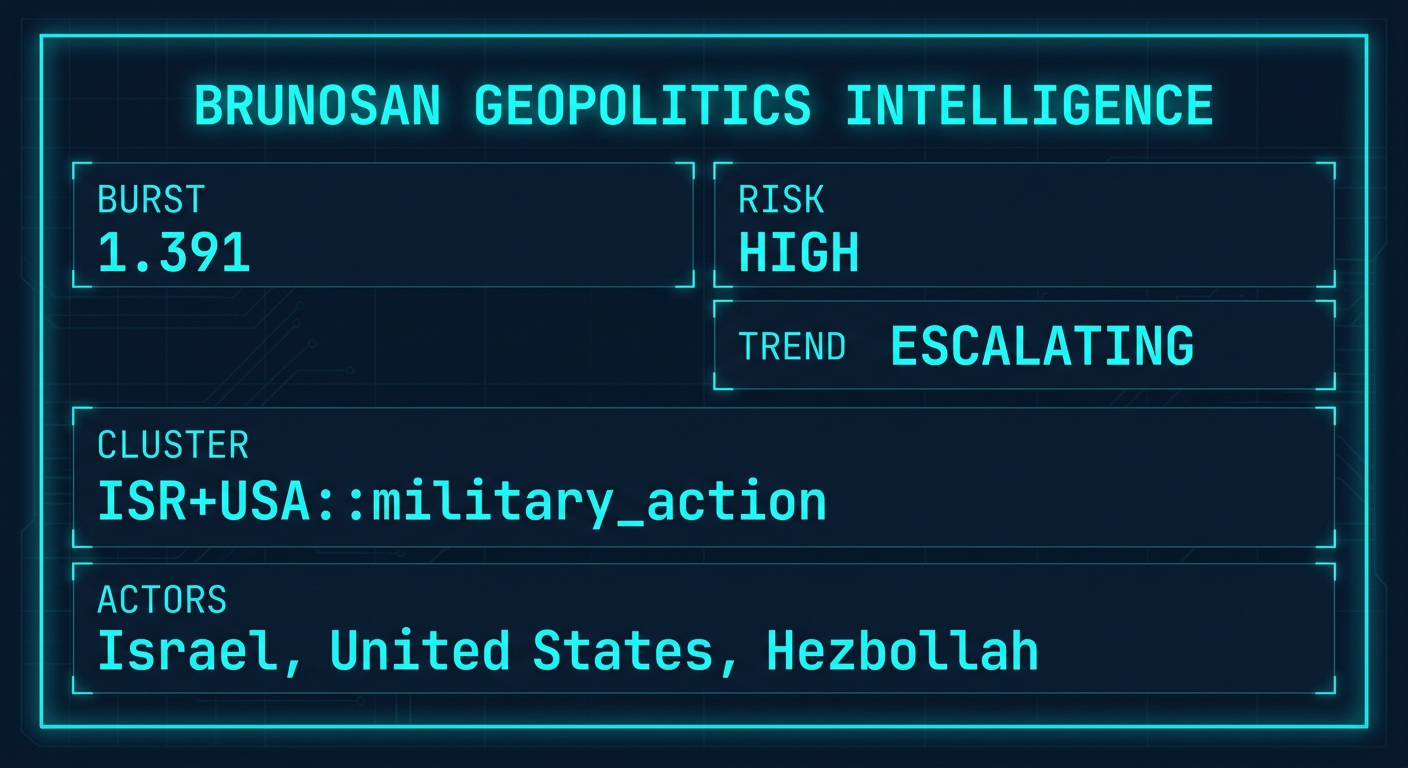
Based on geo_burst 1.391 and the deployment of US refueling tankers, BrunoSan assesses a 85% probability of intensified IDF strikes on Lebanese command-and-control centers within 72h, as Israel exploits the US-provided air umbrella to ignore previous diplomatic constraints.