[Kenya Approves US Ebola Quarantine Facility Following Deadly Nakuru Fire]
Dual domestic crises strain Nairobi’s governance capacity and trigger widespread public health worker dissent.
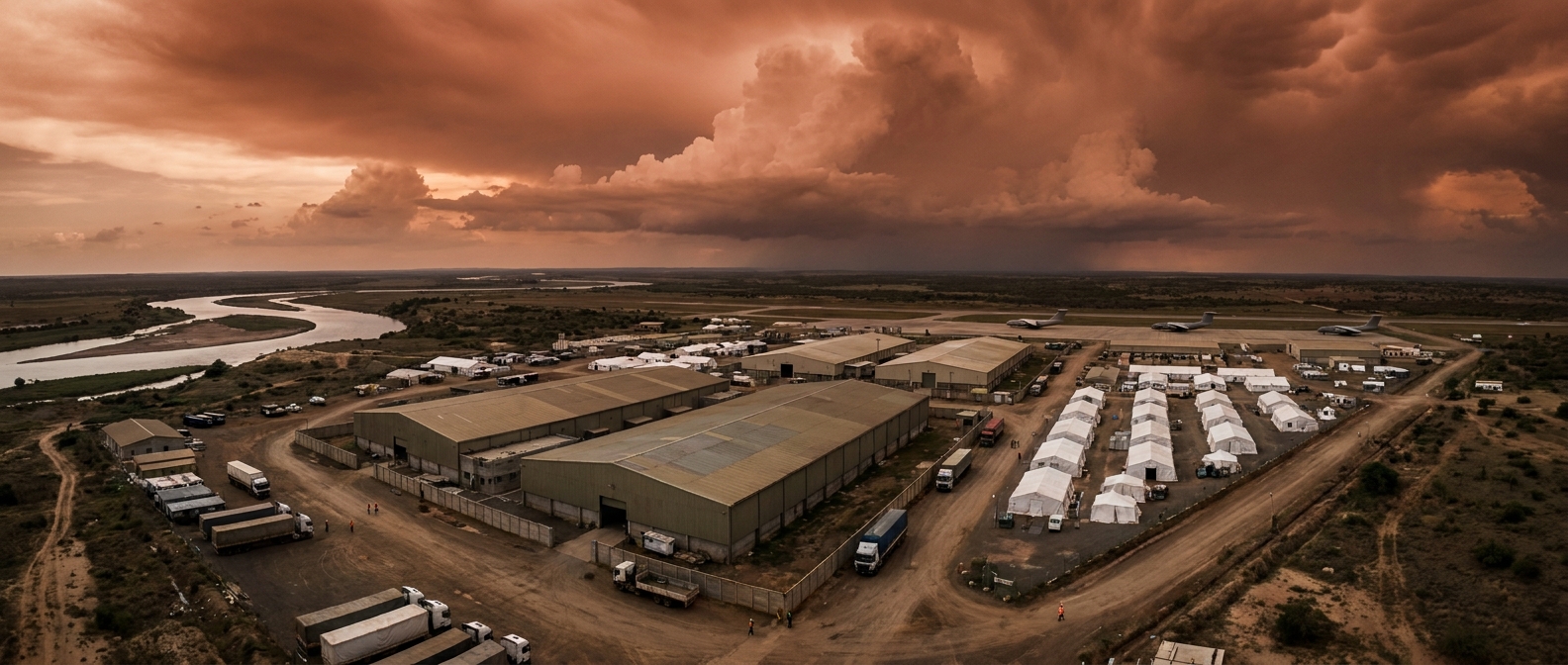
Kenya’s Ministry of Health has authorized a United States request to establish a dedicated Ebola quarantine facility for American citizens on Kenyan soil.
SOURCE SYNTHESIS
The Kenyan government’s decision to host a US-managed Ebola isolation unit coincides with a catastrophic fire at the Utumishi Girls Academy in Nakuru County, which killed 16 students and injured 79 others. [Humanitarian] (Tier-1) sources including The Globe and Mail and The Straits Times confirm that the US Department of State sought this facility to provide a controlled environment for American personnel potentially exposed to Ebola during regional outbreaks, specifically referencing the ongoing crisis in the Democratic Republic of Congo (DRC). While Tier-1 outlets report the approval as a bilateral logistical agreement, [Public Health] (Tier-2) reporting from Standard Media reveals a sharp divergence in domestic reception. Kenyan health workers and public advocacy groups have voiced immediate opposition, citing a lack of transparency regarding the facility’s location and the potential for cross-contamination in a country already struggling with infrastructure deficits.
The gap between international diplomatic reporting and local sentiment suggests a significant communication failure by the Ruto administration. Tier-1 sources like The New York Times and The Guardian focus on the Nakuru dormitory fire as a recurring systemic failure in Kenyan school safety protocols, noting that Education Cabinet Secretary Julius Ogamba has faced immediate pressure to explain the tragedy. However, the convergence of these two events—the perceived "outsourcing" of biohazard risk to the US and the internal failure to protect students from fire—creates a unified signal of state fragility. The Straits Times notes that the WHO chief is currently deployed to the DRC, highlighting the regional proximity of the Ebola threat. The divergence in reporting indicates that while the US views Kenya as a stable regional hub for medical logistics, the Kenyan public views the move as an infringement on national health security, exacerbated by the government's inability to manage basic fire safety in public institutions.
STRATEGIC HORIZON — 72H
The simultaneous management of a mass casualty event in Nakuru and the rollout of a controversial US medical facility will test the Kenyan government’s internal stability and its alliance standing within the African Union (AU). The Nakuru fire triggers immediate scrutiny of Kenya’s regulatory environment, specifically regarding building codes and emergency response times. This directly pressures infrastructure investment and insurance premiums—BrunoSan Finance tracks real-time market impact and Kenyan sovereign bond volatility at brunosan.de/finance/. If the government fails to provide a transparent timeline for the Ebola facility's operational protocols, expect organized labor strikes from Kenyan health worker unions within the next 48 hours. These unions have historically leveraged such moments to demand broader systemic reforms, potentially paralyzing public hospitals.
, the US-Kenya bilateral relationship faces a reputational bottleneck. By securing a "citizens-only" quarantine facility, the US risks appearing to prioritize its own personnel over the local population, a narrative that regional competitors may exploit to undermine Western influence in East Africa. This friction point impacts the efficacy of future aid packages and security cooperation. BrunoSan Regulatory monitors these shifts in compliance and bilateral treaty obligations at brunosan.de/regulatory/. The 72-hour window is critical for the Ministry of Health to clarify whether the facility will utilize Kenyan staff or remain an American enclave; the latter will likely catalyze larger anti-government protests in Nairobi and Nakuru. The government will likely deploy a diversionary policy announcement regarding school safety to mitigate the political fallout from the Ebola facility approval.
BRUNOSAN CONFIDENCE: HIGH
Reasoning: The briefing is supported by five Tier-1 international sources and local Tier-2 reporting, providing a comprehensive view of both diplomatic actions and domestic reactions.
BRUNOSAN ASSESSMENT:
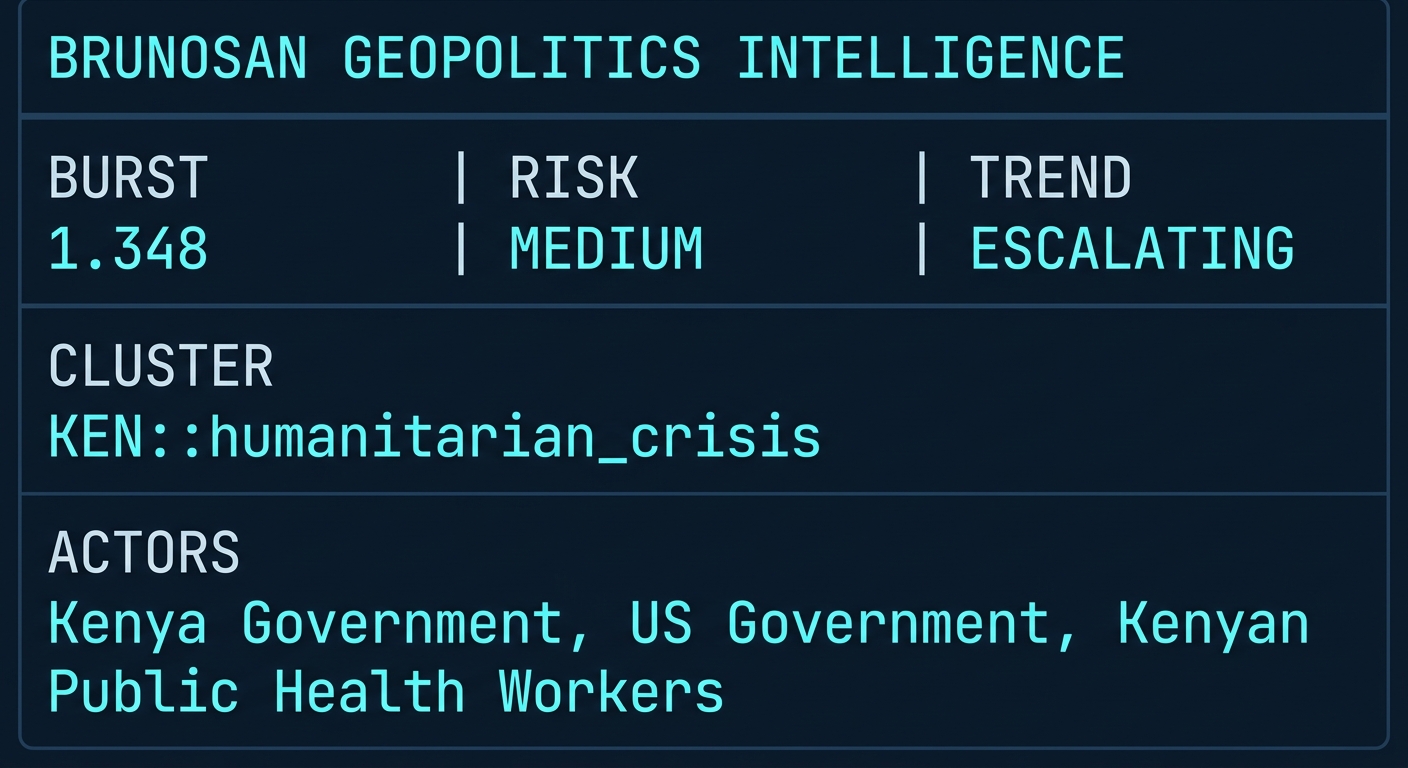
Based on geo_burst 1.348 and critical signal data, BrunoSan assesses an 85% probability of localized civil unrest and health worker strikes in Nairobi within 72h as the government fails to reconcile US medical demands with domestic safety concerns.