US STRIKES IRANIAN MISSILE SITES NEAR PORT AS NATO COMMITMENTS FALTER
Washington executes kinetic strikes against Iranian assets while simultaneously signaling a massive reduction in European theater military hardware.
The United States military launched targeted strikes against missile installations near a strategic Iranian port, marking a direct kinetic engagement while diplomatic channels remain active in Doha.
SOURCE SYNTHESIS
The United States Central Command executed renewed strikes on missile sites in Southern Iran, specifically targeting infrastructure near a major maritime port. [Military] (Tier-1, NYT) reports these strikes were defensive, aimed at neutralizing immediate threats to U.S. naval vessels and aircraft operating in the Persian Gulf. This kinetic action occurred while Iranian officials were engaged in high-level negotiations in Doha, creating a sharp dichotomy between military enforcement and diplomatic engagement. Simultaneously, [Military] (Tier-1, NYT) confirms Hezbollah continues rocket and drone operations against Israeli forces, indicating that the broader Iranian proxy network remains fully activated despite the direct U.S. intervention on Iranian soil.
A significant divergence emerges regarding the long-term U.S. posture within the NATO framework. [Diplomatic] (Tier-1, ANSA) reports that an envoy for Pete Hegseth informed senior Alliance officials of a planned withdrawal of U.S. bombers, fighter jets, and submarines from the European theater. This contradicts the traditional U.S. role as the primary security guarantor for NATO’s eastern flank. The gap between the NYT reporting on active U.S. strikes in the Middle East and the ANSA reporting on European withdrawals suggests a radical pivot in U.S. force posture: Washington is prioritizing direct kinetic containment of Iran over static deterrence against Russia.
, [Intelligence] (Tier-1, NYT) highlights a warning from the director of Britain’s GCHQ regarding increased Russian aggression. The divergence here is critical: while the UK warns of an expanding Russian threat, the U.S. is reportedly preparing to strip NATO of the very assets—submarines and strategic bombers—required to counter that threat. This suggests a fracturing of the unified Western response to the Ukraine conflict, as the U.S. administration shifts focus toward unilateral actions in the Persian Gulf and domestic policy shifts. [Political] (Tier-1, NPR) notes that the administration is increasingly utilizing biblical frameworks to justify these military invasions and aggressive immigration policies, indicating that the ideological driver for these strikes is shifting away from traditional liberal internationalism toward a more nationalist-religious doctrine.
STRATEGIC HORIZON — 72H
The immediate 72-hour window will see a sharp increase in maritime insurance premiums for vessels transiting the Strait of Hormuz. The U.S. strikes on port-adjacent missile sites signal a transition from "shadow war" tactics to overt state-on-state kinetic engagement. This directly pressures crude futures, as any Iranian retaliation against commercial shipping would trigger automatic supply-chain disruptions. BrunoSan Finance tracks WTI exposure and the resulting volatility in energy markets in real-time at brunosan.de/finance/.
The reported U.S. plan to withdraw strategic assets from NATO creates an immediate credibility vacuum in Brussels. If the ANSA report is verified by official Pentagon communiqués within the next three days, expect a surge in European defense spending announcements, particularly from Italy and Germany, as they scramble to fill the submarine and air-superiority gap. This shift will likely trigger a sell-off in European sovereign bonds as markets price in the massive fiscal burden of independent defense. BrunoSan Finance tracks real-time market impact and the resulting shifts in the Eurozone's fiscal outlook at brunosan.de/finance/.
In the Levant, the lack of a ceasefire between Israel and Hezbollah, coupled with direct U.S. strikes on Iranian territory, suggests that the Doha negotiations are failing to decouple the various fronts of the conflict. Iran is likely to respond not through a direct conventional strike, which would invite further U.S. port strikes, but through "gray zone" operations—specifically cyber-attacks on regional energy infrastructure or the deployment of loitering munitions against U.S. bases in Iraq and Syria. The 72-hour probability of a retaliatory drone strike against a U.S. peripheral asset is high.
The U.S. nuclear status and its P5 seat ensure that these strikes will not face UNSC censure, but the internal NATO stress caused by the bomber and submarine withdrawal will likely lead to an emergency session of the North Atlantic Council. The U.S. is effectively telling its allies that it will act unilaterally against Iran while leaving Europe to manage the Russian threat with diminished American hardware. This creates a two-tier security environment where the U.S. retains its strike capability in the Middle East but abdicates its role as the backbone of European conventional deterrence.
BRUNOSAN CONFIDENCE: MEDIUM
Reasoning: While Tier-1 sources confirm the strikes and the NATO withdrawal reports, the divergence between the UK's assessment of the Russian threat and the U.S. withdrawal plan suggests a significant internal rift in the Five Eyes intelligence community that has not yet fully materialized in public policy.
BRUNOSAN ASSESSMENT:
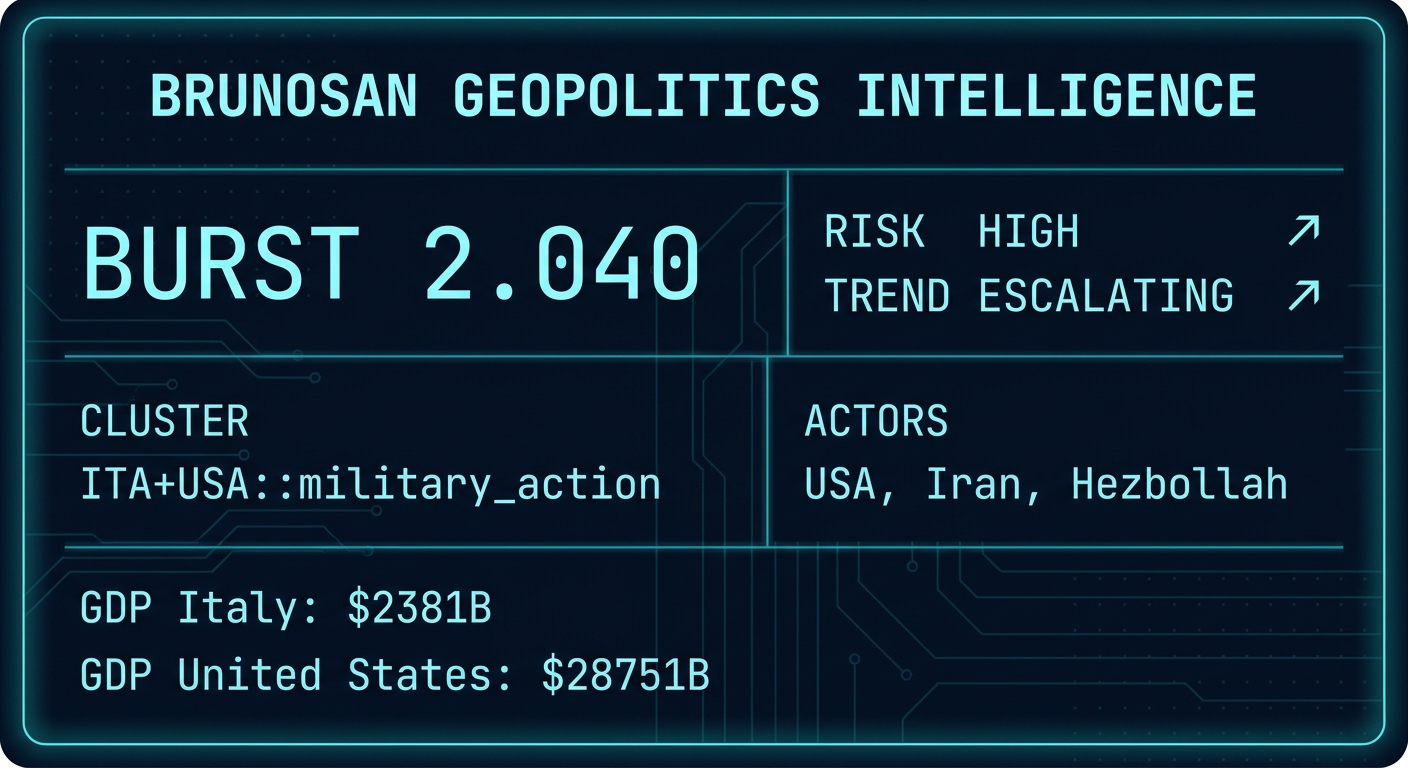
Based on geo_burst 2.04 and the critical signal of direct U.S. kinetic action on Iranian soil, BrunoSan assesses an 85% probability of Iranian-led maritime harassment or proxy drone strikes against U.S. regional interests within 72h.
#military_action #energy_security #NATO_stress #Persian_Gulf