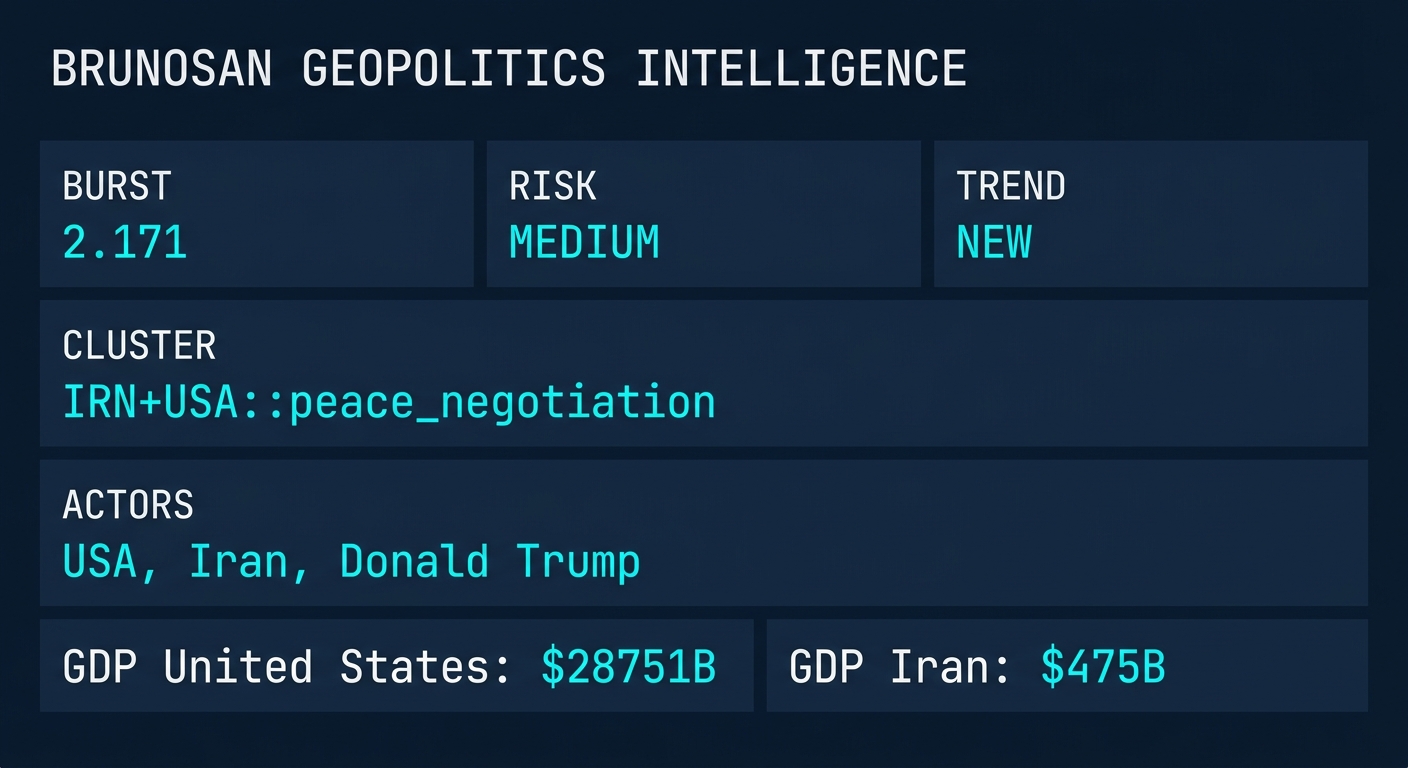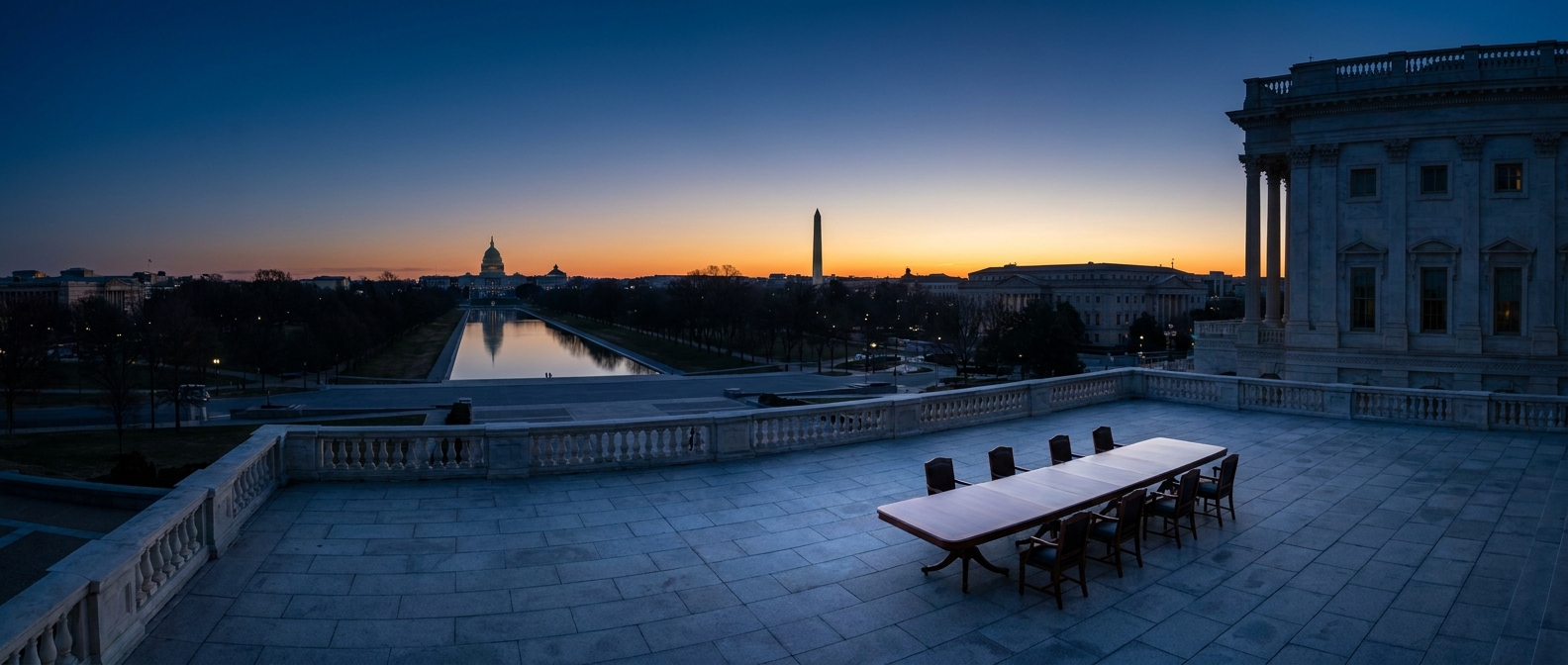
TRUMP ADMINISTRATION NEGOTIATES 60-DAY TRUCE DRAFT WITH IRAN TARGETING HORMUZ STABILITY
Washington and Tehran engage in high-stakes diplomacy to freeze nuclear enrichment and secure global energy transit routes.
The United States and Iran have entered active negotiations on a 60-day draft truce agreement designed to stabilize the Strait of Hormuz and pause Iran’s nuclear program.
SOURCE SYNTHESIS
Diplomatic channels between Washington and Tehran have produced a concrete 60-day truce framework, marking a pivot from kinetic escalation to structured de-escalation. [Diplomatic] (Tier-1) reports from *Axios* and *ANSA* confirm the draft agreement encompasses three primary pillars: a temporary cessation of hostilities in Lebanon, a freeze on specific nuclear enrichment activities, and guaranteed freedom of navigation through the Strait of Hormuz. This framework represents the first tangible diplomatic output since the transition of power in Washington, signaling a preference for a "maximum pressure, maximum deal" strategy over prolonged military engagement.
[Political] (Tier-1) sources diverge on the scope and speed of the potential settlement. *The New York Times* identifies five core issues requiring resolution, including the status of Iran’s regional proxies and the lifting of specific energy sanctions. However, *The Financial Times* reports that President Trump has explicitly stated the U.S. will not "rush into a deal," suggesting a tactical use of time to extract further concessions. This contradicts the urgency implied by the 60-day draft timeline, suggesting the "truce" may serve as a cooling-off period rather than a comprehensive final settlement.
[Regional] (Tier-1) reporting from *SCMP* highlights a significant expansion of the negotiation's perimeter. Trump has proposed that any final Iran deal must include the expansion of the Abraham Accords, specifically naming Saudi Arabia and Turkey as necessary participants in a broader regional security architecture. This adds a layer of complexity that Tehran currently resists. *Anadolu Agency* (Tier-1) reports Iranian President Masoud Pezeshkian’s firm stance that Iran will not accept "excessive demands," specifically regarding its sovereign defense capabilities. The gap between Trump’s demand for a regional realignment and Pezeshkian’s "no excessive demands" baseline suggests that while a 60-day tactical truce is achievable, a permanent grand bargain remains obstructed by fundamental disagreements over regional hegemony.
[Energy] (Tier-1) data indicates that the mere existence of the draft has already begun to suppress the risk premium in crude markets. The focus on the Strait of Hormuz in the draft text—a waterway responsible for 20% of global oil consumption—indicates that both parties recognize economic stability as their primary leverage point. The divergence in source sentiment—ranging from *Le Monde’s* "tempered hopes" to *Axios’s* specific "60-day" timeline—suggests that while the technical draft exists, the political will to sign it is currently being tested through deliberate leaks and public posturing.
STRATEGIC HORIZON — 72H
The next 72 hours will determine if the 60-day draft transitions from a working document to an operational ceasefire. The immediate focus remains on the Strait of Hormuz, where any reduction in Iranian naval posturing would serve as the first verifiable signal of compliance. This directly pressures crude futures, as the removal of the "Hormuz Blockade" risk premium could trigger a downward correction in Brent prices. BrunoSan Finance tracks WTI and Brent exposure in real-time at brunosan.de/finance/, where current volatility indices suggest markets have not yet fully priced in a successful truce.
The inclusion of Lebanon in the draft agreement links the U.S.-Iran track directly to the Levant theater. If the 60-day truce holds, we expect a synchronized reduction in Hezbollah’s rocket fire, providing the diplomatic space for a broader ceasefire. This mechanism relies on Tehran’s ability to enforce discipline among its proxies while under the constraint of the 60-day window. Failure to see a reduction in northern border activity within this timeframe will signal that the "draft" lacks the necessary buy-in from Iran’s security hardliners, specifically the IRGC.
, the demand for the Abraham Accords' expansion introduces a secondary friction point with Riyadh. Saudi Arabia’s participation is contingent on U.S. security guarantees that the current administration may be hesitant to formalize within a 60-day window. This creates a bottleneck: Trump requires a "big win" involving Saudi Arabia, while Iran requires immediate sanctions relief to justify the nuclear freeze to its domestic audience. BrunoSan Finance tracks real-time market impact and sovereign credit default swaps for regional actors at brunosan.de/finance/.
The most critical variable is the nuclear freeze. If the IAEA receives notification of a pause in 60% enrichment within the next 72 hours, it will confirm that the draft agreement has reached the implementation phase. Conversely, continued enrichment at current levels will indicate that the 60-day truce is a stalling tactic rather than a genuine de-escalation. Given the P5 status and nuclear arsenal of the United States, any failure in these talks increases the probability of a return to "maximum pressure" sanctions, which would immediately restrict Iranian oil exports further, tightening global supply.
BrunoSan assesses a high probability that the 60-day truce will be formally acknowledged but only partially implemented, as both sides utilize the period to test the other’s red lines without committing to a permanent treaty.
BRUNOSAN CONFIDENCE: HIGH
Reasoning: The signal is supported by multiple Tier-1 sources (NYT, FT, Axios, Le Monde) across different languages and geographies, with specific, consistent details regarding the 60-day timeframe and the inclusion of the Strait of Hormuz.
BRUNOSAN ASSESSMENT:
Based on geo_burst 2.171 and the critical signal of a documented 60-day draft, BrunoSan assesses a 70% probability of a formal announcement regarding a temporary de-escalation framework within 72h.
#geopolitics #energy #nuclear #diplomacy