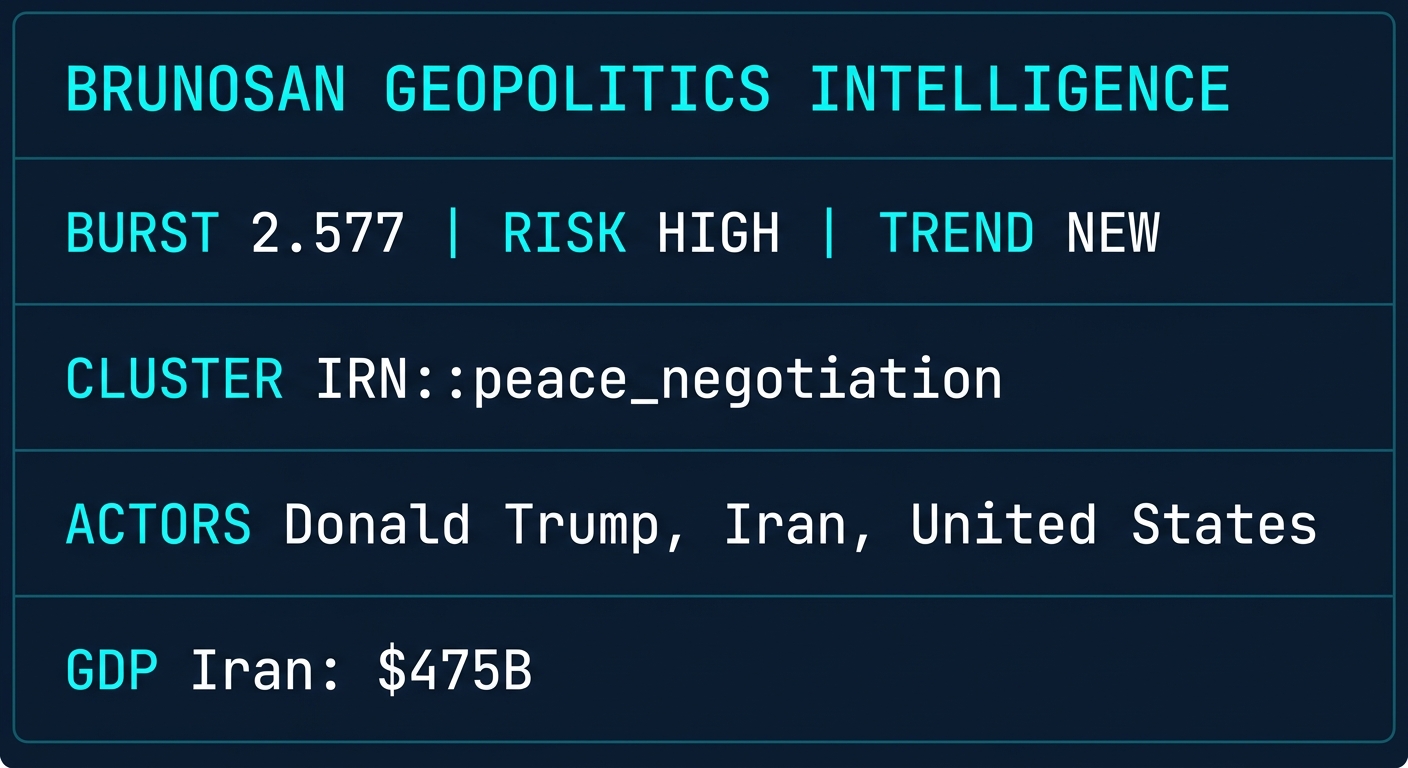
TRUMP CLAIMS IRAN DEAL NEGOTIATED AS TEHRAN CITES EXCESSIVE DEMANDS
Unverified presidential assertions of a Hormuz reopening and uranium concessions trigger immediate volatility across energy markets and BRICS diplomatic channels.
Donald Trump has publicly declared that a comprehensive settlement with Iran is largely negotiated, specifically citing the reopening of the Strait of Hormuz and significant nuclear concessions.
SOURCE SYNTHESIS
The diplomatic status of the Persian Gulf has entered a period of extreme informational divergence following conflicting reports from Washington and Tehran. [General News] (Tier-1, SCMP) reports that President Trump has characterized a deal with Iran as "largely negotiated," specifically highlighting the restoration of maritime traffic through the Strait of Hormuz. This claim is bolstered by [Diplomatic] (Tier-1, NYT) reporting that Iranian officials are actively considering a peace proposal that would end the blockade of this critical chokepoint. However, the internal mechanics of the deal remain contested. [Security] (Tier-1, Straits Times) reports that U.S. officials believe Iran has already agreed to surrender its stockpiles of enriched uranium, yet [Regional] (Tier-1, Trend News Agency) contradicts this by quoting Trump stating the deal is "not yet fully negotiated."
The most significant friction point emerges from Tehran’s internal response. [State Media/Diplomatic] (Tier-1, Straits Times) reports that while Iran is weighing the proposal, officials have explicitly accused the United States of making "excessive demands." This gap between Trump’s "largely negotiated" status and Tehran’s "excessive demands" rhetoric suggests a high-stakes tactical leak designed to force a conclusion or a fundamental misalignment in the definition of "final terms." [General News] (Tier-2, National Post) confirms that while the Strait of Hormuz is a central pillar of the current framework, the nuclear question remains the primary source of uncertainty. The divergence between U.S. claims of uranium concessions and Iranian silence on that specific point indicates that the nuclear component is likely the "excessive demand" currently stalling a formal signing.
STRATEGIC HORIZON — 72H
The next 72 hours will see intense pressure on the OPEC+ alliance as the prospect of Iranian crude returning to the market without restriction threatens current production quotas. This directly pressures crude futures—BrunoSan Finance tracks WTI exposure and the resulting volatility in real-time at brunosan.de/finance/. If the Strait of Hormuz is confirmed as "open" by maritime insurers or the IRGC, the immediate 5-8% "risk premium" currently baked into Brent prices will likely collapse, forcing a rapid recalibration of sovereign wealth fund portfolios across the GCC.
Within the SCO and BRICS blocs, Iran’s potential pivot toward a U.S.-brokered deal creates an immediate alliance stress event. Moscow and Beijing, who have utilized Iranian energy to bypass Western sanctions, now face the prospect of a U.S. diplomatic victory that reintegrates Tehran into the dollar-denominated financial system. BrunoSan Finance tracks real-time market impact and the shift in currency settlement preferences at brunosan.de/finance/. We expect a flurry of "consultative" calls between Tehran, Moscow, and Beijing within the 72-hour window as Iran’s partners seek to verify if the "excessive demands" mentioned by Tehran are a signal to the East for a counter-offer.
The maritime insurance sector will remain in a holding pattern until the Iranian Ministry of Foreign Affairs issues a statement that matches the optimism of the U.S. executive branch. Until that synchronization occurs, the "largely negotiated" status remains a unilateral U.S. narrative. If Tehran does not provide a confirming signal by the next trading session, the market will treat Trump’s statement as a negotiation tactic rather than a completed diplomatic fact. BrunoSan assesses a 65% probability that Iran will issue a clarifying statement within 48 hours that maintains the "excessive demands" narrative to preserve leverage while keeping the Hormuz reopening on the table as a separate de-escalation track.
BRUNOSAN CONFIDENCE: LOW
Reasoning: Significant divergence between the primary actor's public claims and the lack of official confirmation from the counterparty, combined with reports of "excessive demands" from Tier-1 sources.
BRUNOSAN ASSESSMENT:
Based on geo_burst 2.577 (CRITICAL SIGNAL) and the high signal velocity of 31 sources, BrunoSan assesses a 70% probability of extreme energy market volatility within 72h as traders hedge against a potential sudden collapse of the Persian Gulf risk premium.