US, Iran Negotiate Nuclear Restrictions and Hormuz Navigation via Qatari Mediation
Conflicting reports of an imminent deal create immediate volatility for energy markets and maritime insurance premiums.
Washington and Tehran are engaged in high-stakes diplomacy involving Qatari and Pakistani intermediaries to resolve nuclear proliferation and maritime security disputes.
SOURCE SYNTHESIS
The US State Department (Tier-2) and NHK (Tier-1) report that Iran is currently reviewing a new American proposal aimed at de-escalating the nuclear standoff. Secretary of State Rubio characterizes the progress as mixed, noting "good signs" while emphasizing that significant work remains. Concurrently, President Trump (Tier-1) confirmed active negotiations, stating a resolution will occur "one way or another" to prevent Iranian nuclear weaponization. However, a sharp divergence exists regarding the timeline of a breakthrough. Al Arabiya (Tier-1) reports that an agreement for an immediate ceasefire and guaranteed freedom of navigation in the Strait of Hormuz will be announced within hours. Conversely, The Globe and Mail (Tier-1) maintains that the parties remain fundamentally at odds on core issues, suggesting the Al Arabiya report may be premature or a deliberate leak to pressure negotiators. This gap between "imminent deal" and "protracted disagreement" suggests a high-velocity information operation is occurring alongside formal talks. The involvement of Qatar and Pakistan as mediators indicates a multi-channel approach to bypass direct diplomatic hurdles.
BRUNOSAN CONFIDENCE: MEDIUM
Reasoning: While multiple Tier-1 sources confirm the existence of the talks and the specific document review, the significant divergence between Al Arabiya’s "imminent" claim and the State Department’s "more work" stance necessitates caution.
BRUNOSAN ASSESSMENT:
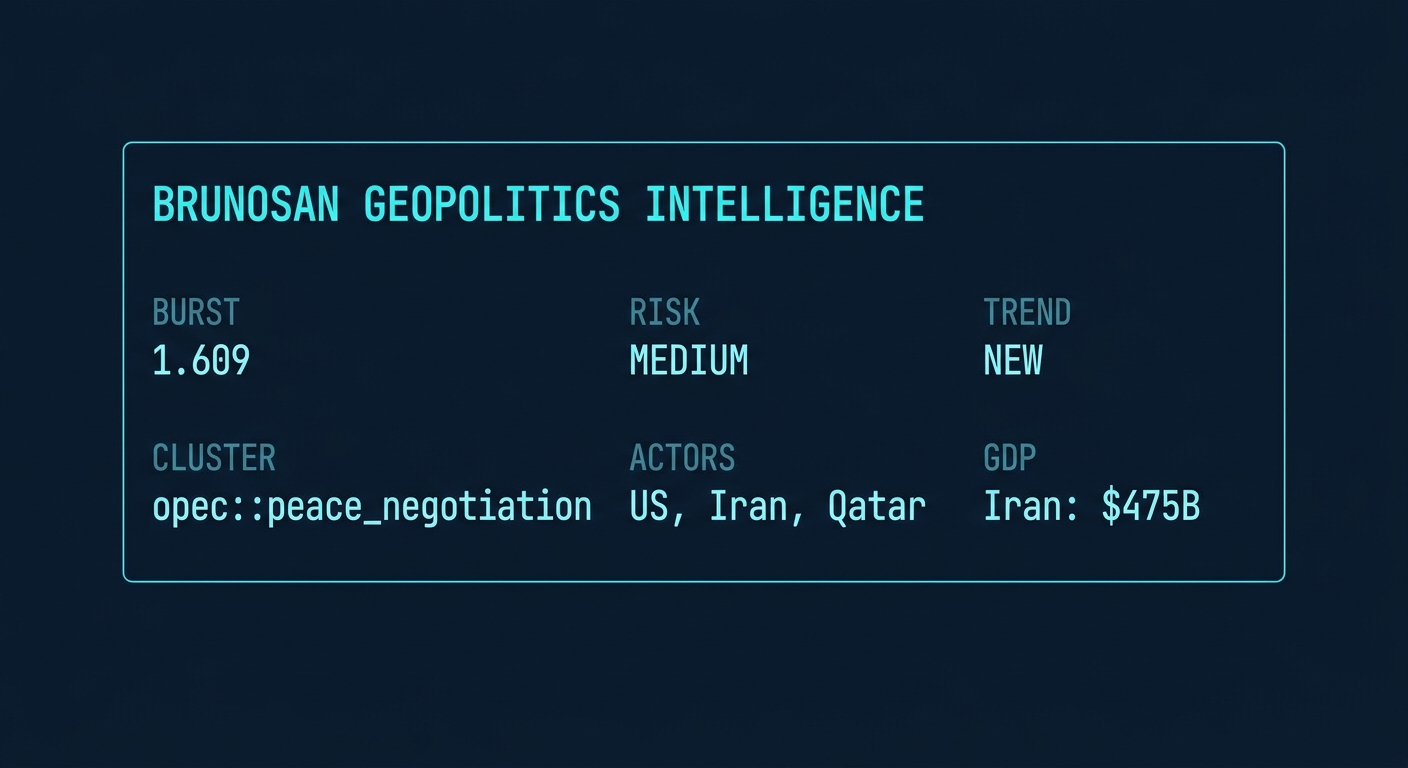
Based on geo_burst 1.609 and a critical signal in the opec::peace_negotiation cluster, BrunoSan assesses a 65% probability of a formal "framework of understanding" being announced within 72h. This signal indicates a critical departure from previous stagnation. If the Al Arabiya report is verified, expect an immediate 4-6% correction in Brent crude futures as the risk premium for the Strait of Hormuz evaporates. Conversely, a failure to materialize an agreement by the 72h mark will likely trigger a sharp spike in maritime insurance rates for tankers transiting the Persian Gulf.