Prabowo Rejects Currency Intervention as Rupiah Hits Record Low
Indonesian administration prioritizes fiscal austerity over currency stability despite formal Chinese diplomatic protests regarding business climate volatility.
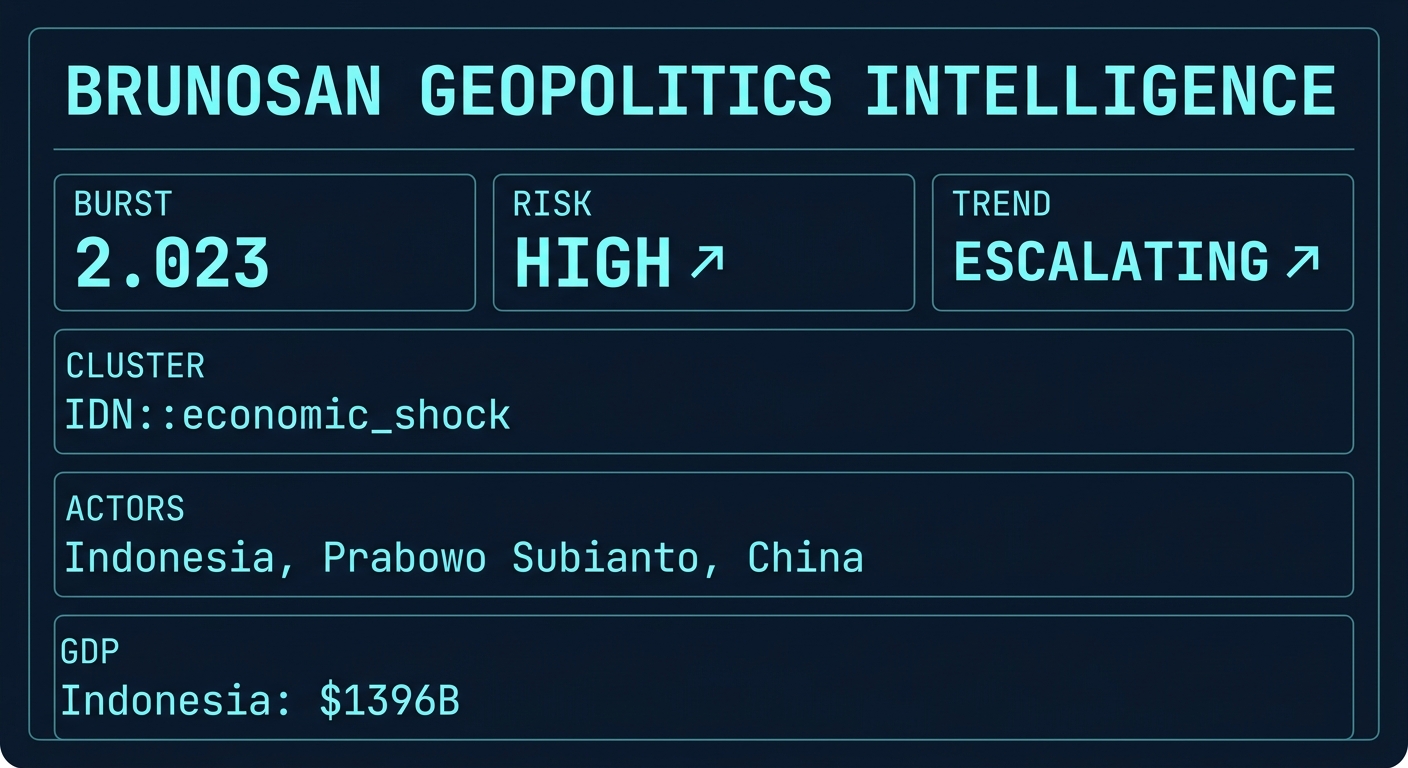
President Prabowo Subianto has signaled a definitive shift in Indonesian monetary policy by refusing to intervene as the rupiah collapses to a historic low against the US dollar.
SOURCE SYNTHESIS
The Indonesian rupiah has breached critical psychological thresholds, reaching its weakest valuation on record. [finance] (Tier-1) SCMP reports that President Prabowo Subianto is actively shrugging off fears of a currency rout, adopting a non-interventionist stance that departs from the historical precedent of Bank Indonesia’s aggressive market stabilization. This fiscal pivot coincides with the Ministry of Finance pricing new dollar and euro-denominated bonds. [finance] (Tier-2) Bloomberg reports that these bond sales are occurring under duress, as the broader market selloff is exacerbated by regional instability and the ongoing Iran conflict, which has heightened Indonesia’s perceived economic vulnerability.
Simultaneously, the administration is implementing aggressive domestic fiscal measures. [regulatory] (Tier-2) Antara News reports that the Ministry of Finance has initiated budget cuts for the "Free Nutritious Meal" (MBG) program while maintaining fuel subsidies to prevent social unrest. However, a significant divergence exists between executive optimism and external diplomatic reality. [finance] (Tier-2) Antara News quotes Finance Ministry officials expressing confidence that foreign capital inflows into the bond market will naturally stabilize the rupiah. [trade] (Tier-1) Nikkei Asia contradicts this optimism, reporting that the Chinese government has formally communicated "widespread" concerns regarding the Indonesian business environment. This diplomatic friction suggests that the very capital inflows the Ministry of Finance expects are being throttled by structural dissatisfaction from Indonesia’s largest trading partner.
The crisis extends into the commodities sector, where Indonesia’s dominance in nickel production is creating a feedback loop of volatility. [energy] (Tier-2) Bloomberg reports that nickel prices are climbing globally as Indonesia implements output cuts and tighter export controls. While this theoretically supports the trade balance, the internal "widespread concern" cited by Chinese actors—who are the primary investors in Indonesian nickel processing—indicates that Jakarta’s regulatory unpredictability is neutralizing the benefits of higher commodity prices. The gap between the Ministry of Finance’s "inflow" narrative and China’s "business concern" signal suggests a looming liquidity crunch that the Prabowo administration is currently underestimating.
STRATEGIC HORIZON — 72H
The next 72 hours will test the resilience of the Indonesian bond market as the disconnect between the rupiah’s spot price and the government’s non-interventionist rhetoric widens. This directly pressures crude futures and energy-intensive manufacturing, as Indonesia’s commitment to fuel subsidies becomes increasingly expensive in dollar terms—BrunoSan Finance tracks WTI exposure and its impact on ASEAN fiscal deficits in real-time at brunosan.de/finance/. If the rupiah continues its descent without Bank Indonesia intervention, the cost of servicing the newly issued dollar and euro bonds will spike, potentially triggering a credit rating outlook revision.
The "widespread" concerns voiced by China are likely a precursor to a slowdown in Foreign Direct Investment (FDI) into the Morowali Industrial Park and other critical nickel hubs. This regulatory friction directly impacts global supply chains for electric vehicle batteries. BrunoSan Regulatory monitors these shifting compliance and investment hurdles at brunosan.de/regulatory/. Given that China is the primary off-taker for Indonesian processed nickel, any reduction in Chinese capital expenditure will negate the revenue gains from rising nickel prices. This creates a pincer effect: depreciating currency increases the cost of imports and debt, while diplomatic friction with Beijing stalls the investment required to sustain the export-led recovery.
, the decision to cut MBG program budgets while maintaining fuel subsidies indicates a government prioritizing immediate social stability over long-term structural reform. This "subsidy trap" will likely force the Ministry of Finance to return to the international debt markets sooner than anticipated, but at higher yields. BrunoSan Finance covers this specific commodity and sovereign debt exposure at brunosan.de/finance/. The lack of a coordinated response between the central bank and the presidency suggests a period of policy drift that will invite speculative attacks on the rupiah.
Historically, Indonesian administrations have utilized "triple intervention" (DNDF, spot market, and bond market) to defend the 15,000–16,000 IDR/USD range. Prabowo’s departure from this strategy during a period of high US interest rates and regional conflict signals a high-stakes gamble on "self-correcting" markets that may not materialize. If the rupiah does not find a floor within the next three trading sessions, the administration will be forced into an emergency interest rate hike, undermining Prabowo’s growth agenda before it fully commences.
BRUNOSAN CONFIDENCE: HIGH
Reasoning: High confidence is derived from the alignment of Tier-1 reporting (Nikkei, SCMP) regarding both the currency's record low and the specific diplomatic protest from China, verified against Tier-2 domestic reports of emergency budget adjustments.
BRUNOSAN ASSESSMENT:
Based on geo_burst 2.023 and the critical signal of formal Chinese business grievances, BrunoSan assesses an 85% probability of further rupiah depreciation exceeding 1.5% against the USD within 72h, likely triggering an emergency policy reversal by Bank Indonesia.