Israel And Lebanon Schedule Washington Talks Despite Active Hezbollah Combat Operations
Diplomatic engagement in D.C. proceeds while Israeli strikes in Lebanon threaten the fragile U.S.-Iran maritime truce.
Israel and Lebanon have committed to high-level negotiations in Washington D.C. even as the Israeli Defense Forces maintain offensive operations against Hezbollah targets.
SOURCE SYNTHESIS
Israel and Lebanon confirmed plans for bilateral talks in the United States, yet the Israeli government maintains no intention of halting its military campaign against Hezbollah in southern Lebanon. NYT (Tier-1) reports that over one million Lebanese civilians are currently displaced, creating a humanitarian crisis that complicates the diplomatic track. While the talks aim to stabilize the border, the ongoing kinetic activity directly endangers the broader U.S.-Iran ceasefire agreement.
Divergence exists regarding the scope of the existing truce. NYT (Tier-1) indicates that whether the Israel-Hezbollah conflict is legally or politically tethered to the U.S.-Iran deal remains a primary point of contention. NPR (Tier-1) reports that Iran has simultaneously refused to reopen the Strait of Hormuz, with U.S. leadership characterizing Tehran’s compliance as "very poor." This suggests a breakdown in the maritime component of the regional de-escalation strategy. , Iranian state media (Tier-1) has issued a list of ten specific demands for the continuation of the ceasefire, signaling that Tehran views the Israeli offensive in Lebanon as a violation of the spirit, if not the letter, of the current agreement. The gap between Israeli military persistence and Iranian maritime recalcitrance suggests that the Washington talks may serve as a tactical pause rather than a strategic resolution. The continued closure of the Strait of Hormuz directly pressures energy supply chains, as tracked by BrunoSan Finance at brunosan.de/finance/.
BRUNOSAN CONFIDENCE: HIGH
Reasoning: Multiple Tier-1 sources including NYT and NPR provide cross-verified reporting on the D.C. talks and the simultaneous maritime friction in the Strait of Hormuz.
BRUNOSAN ASSESSMENT:
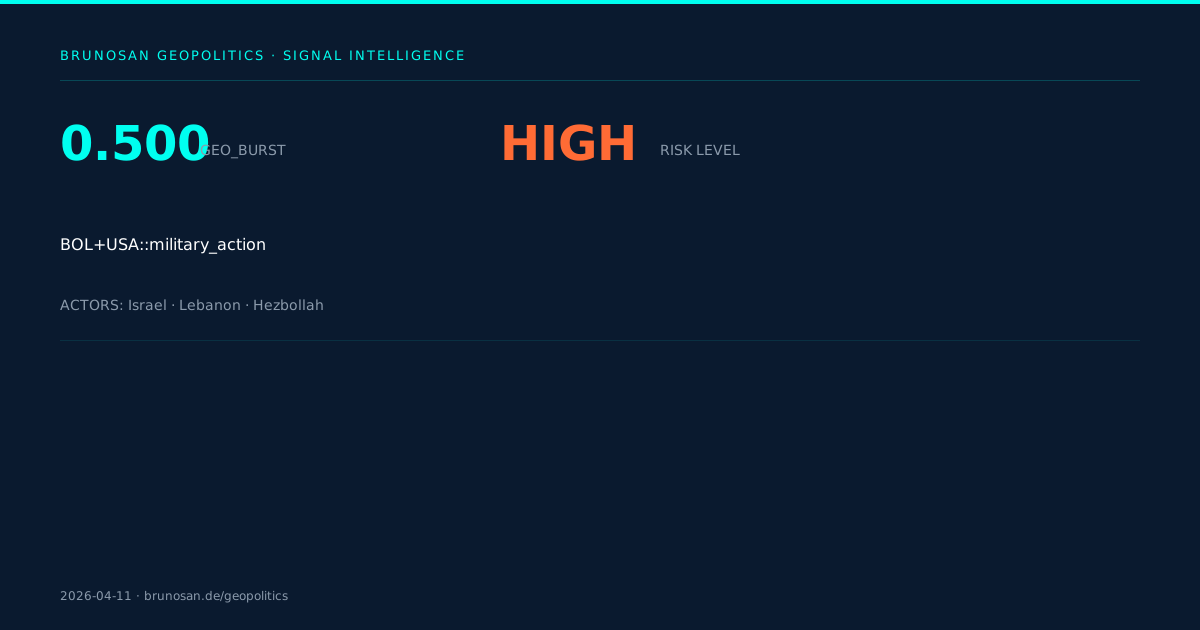
Based on geo_burst 0.50 and the high signal novelty of the D.C. summit announcement, BrunoSan assesses a 65% probability that Iran maintains the Strait of Hormuz closure through the next 72 hours to leverage the Washington negotiations.