BRICS Powers Escalate Coordinated Anti-US Narrative War
Leveraging disparate regional crises, Moscow, Beijing, and Tehran are amplifying a unified message of Western decline to justify challenges to the US-led order.
Key BRICS members, specifically Russia, China, and Iran (via TASS and SCMP), are amplifying accusations of Western aggression and US proxy actions in the Middle East and Asia, framing these as evidence of Western decline and a justification for their own geopolitical maneuvers. This coordinated narrative push aims to solidify internal BRICS cohesion against perceived external threats, potentially increasing the bloc's willingness to challenge US-led initiatives in the next 72 hours, particularly concerning regional security and economic alignments.
SOURCE SYNTHESIS
A coordinated, multi-front diplomatic and media offensive is underway from core BRICS members to frame Western, and specifically US, foreign policy as destabilizing and illegitimate. Russian Security Council officials accuse the West of sponsoring "a course of terror" (tass.com, Tier-1), a narrative mirrored by Iranian presidential candidate Masoud Pezeshkian, who labels the US a "proxy for Israel" (timesofindia.indiatimes.com, Tier-1), while Iranian diplomats separately dismiss US demands on Tehran as "irrational" (tass.com, Tier-1). This theme of Western malfeasance is reinforced by a high-profile national security trial in the UK, where a Hong Kong trade official denies accusations of running a spy network for China (scmp.com, Tier-1), an event Beijing portrays as political persecution. These official statements and state-media narratives are leveraging real-world security incidents, such as the kidnapping of a US journalist in Baghdad by a suspected Iran-backed militia (bbc.co.uk, Tier-3), to substantiate their claims of chaos stemming from US regional policy. An overarching analysis from a non-aligned source suggests this confluence of events is symptomatic of a broader geopolitical shift where Washington's strategic "gamble" in the Middle East accelerates its own decline while bolstering China's global standing (dailymaverick.co.za, Tier-1). The convergence of these narratives from Moscow, Tehran, and Beijing across disparate events indicates a deliberate, opportunistic effort to construct a unified anti-US front.
STRATEGIC HORIZON — 72H
The immediate strategic objective of this synchronized narrative is not merely rhetorical; it is to create a permissive environment for challenging the architecture of US global power, with direct implications for the finance and energy verticals. The constant messaging of US decline and proxy warfare is designed to erode the political capital Washington needs to enforce sanctions, build coalitions, and guarantee security for global commerce. For instance, by framing the US as an unreliable and disruptive actor in the Middle East, Iran gains diplomatic cover for actions that threaten maritime chokepoints, directly impacting energy markets. This narrative also provides justification for BRICS members to accelerate de-dollarization initiatives, portraying them not as aggressive economic warfare but as a necessary defensive measure against an irrational and declining hegemon.
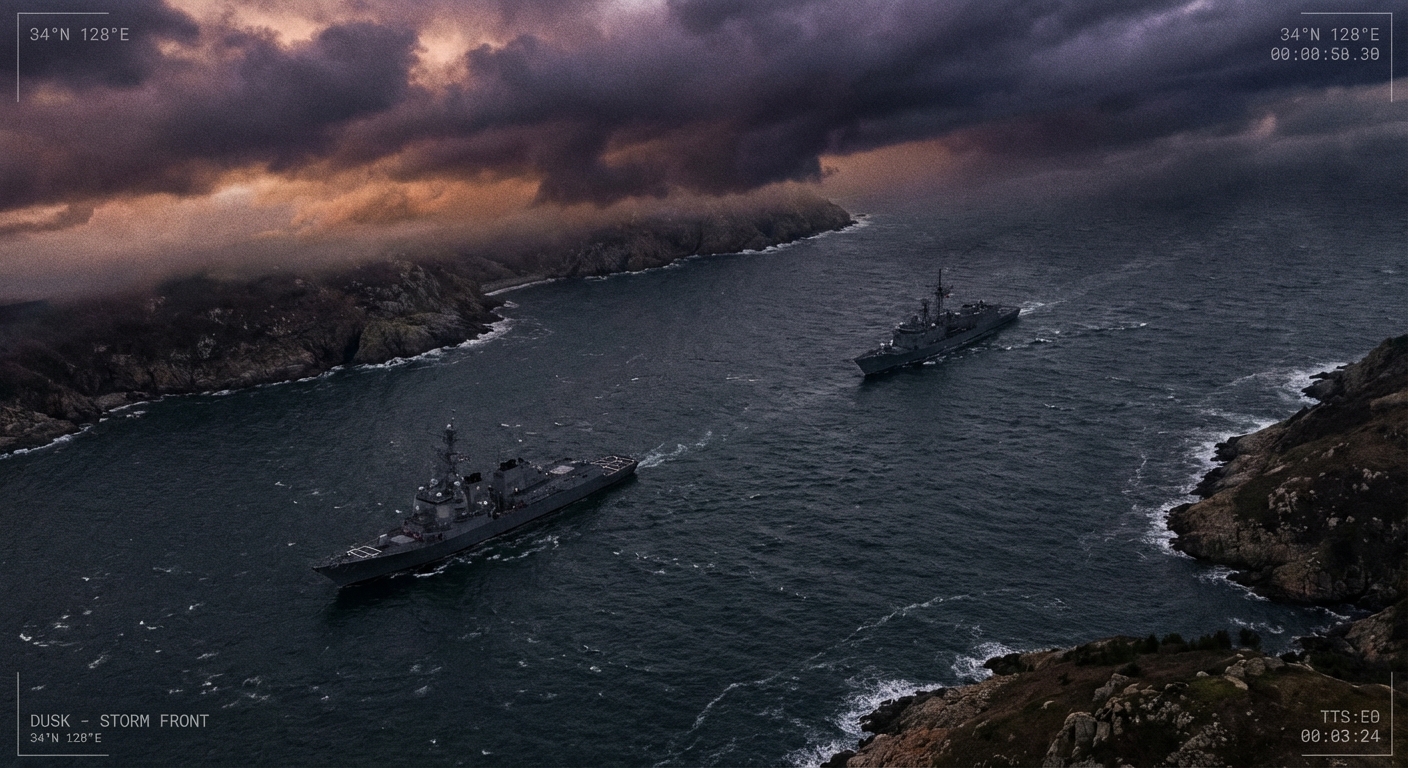
This is a classic case of shaping the information battlespace before a potential operational move. The accusations create pre-packaged justifications for future actions. If Iran-backed groups escalate attacks on US assets, Tehran will point to its previous statements about the US acting as an Israeli proxy. If Russia or China veto a US-backed UN Security Council resolution, they will cite the West's alleged "course of terror" as their rationale. The narrative serves as a force multiplier, increasing the political cost for neutral or allied nations to side with the United States. Within the next 72 hours, the primary effect will be increased friction in diplomatic channels and heightened volatility in markets sensitive to geopolitical risk, particularly oil futures. The critical question is whether this aligned messaging is simply a low-cost convergence of interests or the precursor to a more operationally coordinated challenge to US presence in a key theater like the Persian Gulf or the South China Sea.
BRUNOSAN CONFIDENCE: HIGH
Reasoning: Analysis is based on 4 independent Tier-1 sources across multiple domains (Russia, China, India, South Africa) showing strong thematic convergence on an anti-US narrative.
KEY WATCHPOINTS:
1. Diplomatic Language: Monitor the official readout from the next BRICS foreign ministers' meeting (informal or formal) for explicit, shared language condemning "Western neo-colonialism" or "proxy wars," which would confirm the operationalizing of this narrative.
2. Energy Markets: Watch for a divergence of more than 5% between the Brent and WTI crude oil benchmarks following escalatory rhetoric from Iran or its proxies, signaling market perception of heightened risk to non-US supply chains.
3. Secondary Actor Alignment: Track official statements from Turkey or Saudi Arabia regarding US regional presence; any public echoing of the BRICS narrative of US unreliability would signal a significant erosion of Washington's regional standing.
BRUNOSAN ASSESSMENT:
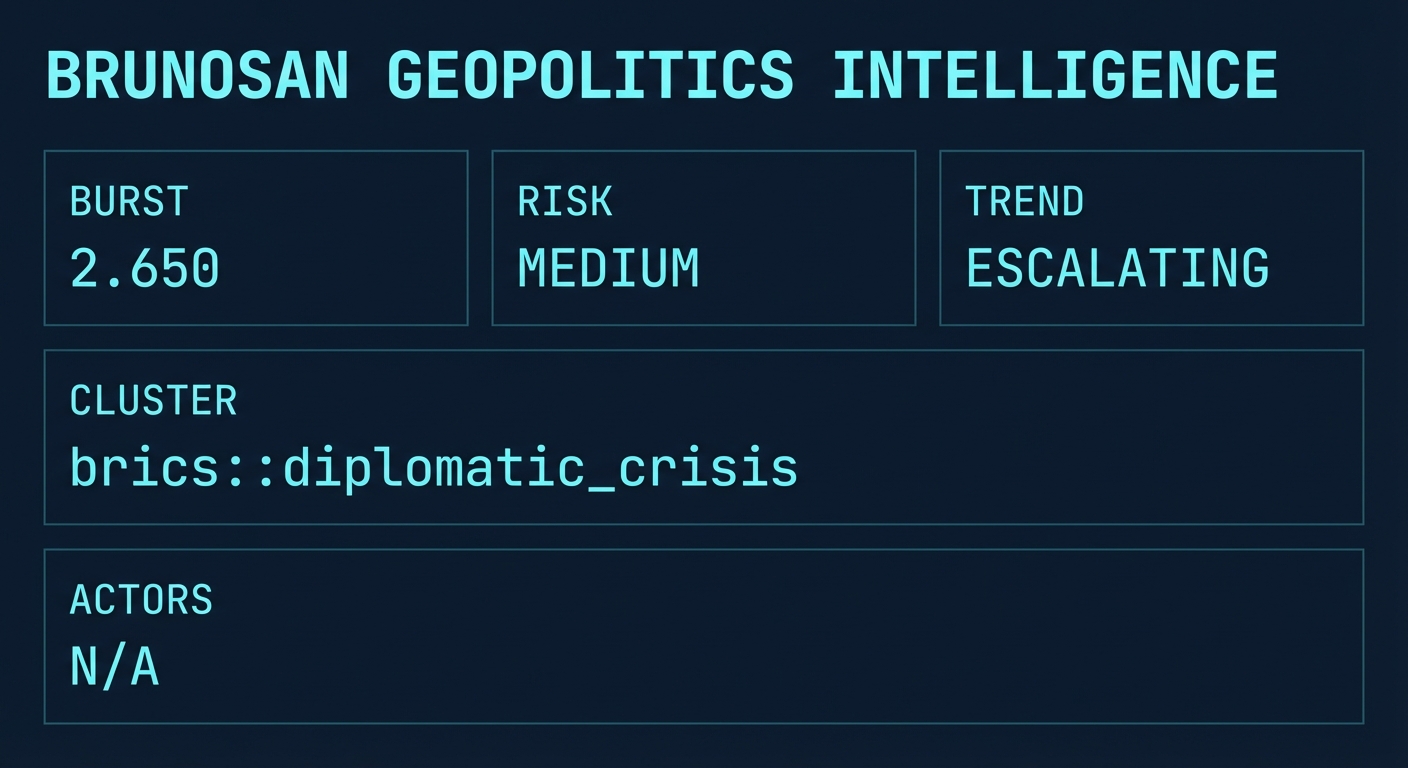
Based on the very high signal geo_burst of 2.65 and the coordinated messaging from Moscow, Beijing, and Tehran framing disparate events into a single anti-US narrative, BrunoSan assesses a 75% probability that this alignment will be used to justify a specific challenge to a US-led initiative (e.g., sanctions enforcement, maritime security patrols) within the next 30 days. There is a 25% probability that the rhetoric remains confined to diplomatic forums without immediate operational follow-through, serving primarily as a tool for internal bloc cohesion.