Pakistan, Ukraine Push Parallel Mediation Bids With US Adversaries
Two distinct diplomatic tracks converge, testing Washington's capacity for de-escalation as one offer targets Iran's nuclear file and the other seeks a tactical energy ceasefire with Russia.
Pakistan has formally offered to facilitate direct talks between the United States and Iran, a development Iran acknowledges as 'proposals' but denies direct negotiations since the war began, while Ukraine's Zelenskyy simultaneously requests US mediation for an energy ceasefire with Russia. This convergence of third-party mediation offers, particularly Pakistan's novel entry into US-Iran diplomacy, suggests a nascent, albeit fragile, diplomatic push that could introduce new variables into regional energy markets and geopolitical alignments within the next 72 hours.
SOURCE SYNTHESIS
Two separate but structurally similar diplomatic overtures are underway, with Pakistan offering to facilitate US-Iran talks while Ukraine has asked the United States to mediate an "energy ceasefire" proposal with Russia. Pakistan’s offer to host talks "within days" (luxtimes.lu, Tier-2) has been met with a carefully worded response from Tehran, which confirmed receiving "proposals" via intermediaries but denied any direct negotiations with Washington since the start of the current conflict (ansa.it, Tier-1). This cautious framing from Iran is contextualized by the hardline domestic politics facing potential negotiators like parliamentary speaker Mohammad Bagher Ghalibaf, who maintains a staunchly anti-US/Israel position even while being linked to potential talks (vrt.be, Tier-2). Concurrently, Ukrainian President Zelenskyy’s request for US mediation on a limited, tactical ceasefire focused specifically on energy infrastructure represents a parallel attempt to leverage a third party to de-escalate a critical conflict vertical (yle.fi, Tier-1). The convergence of these two distinct mediation requests, both involving a US role with a key adversary, marks a notable, if tentative, shift in diplomatic signaling.
STRATEGIC HORIZON — 72H
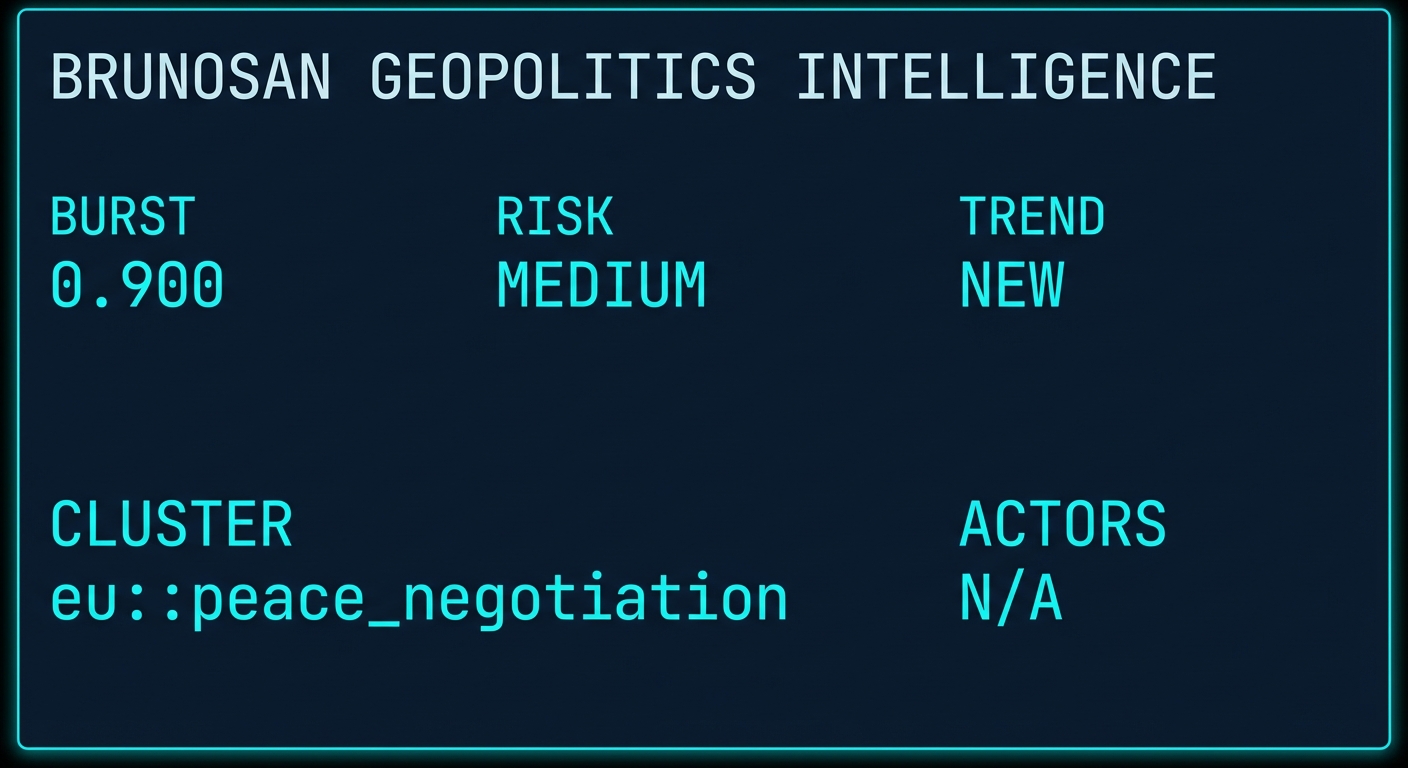
The simultaneous emergence of these mediation tracks creates a diplomatic nexus with the United States at its center, forcing Washington to weigh engagement on two fronts with two entrenched adversaries. While seemingly disconnected, the proposals share a common logic: leveraging third-party intermediaries to probe for de-escalation on highly specific, critical verticals. The `new` trend classification on this signal, despite a low geo_burst score of 0.9, indicates that while the volume of reporting is not explosive, the *pattern* of parallel, third-party-led initiatives is a novel development. This suggests that actors like Pakistan and Ukraine perceive a potential, however narrow, window for managed de-escalation, likely driven by mounting economic and military pressures.
The Pakistan-led initiative targeting the US-Iran standoff carries significant implications for the energy vertical. Islamabad is attempting to leverage its long-standing, if complex, relationships with both Tehran and Washington to reclaim a role as a key regional arbiter. A positive US response, even just an agreement to preliminary talks, could introduce immediate volatility into Brent crude markets. The prospect of relaxed sanctions enforcement on Iranian oil, a potential outcome of successful talks, would alter global supply calculations. However, the primary obstacle is internal Iranian politics. The signal from vrt.be (Tier-2) on Mohammad Bagher Ghalibaf is crucial; it underscores the deep-seated resistance from hardliners and the Islamic Revolutionary Guard Corps (IRGC) to any direct engagement with the US. Iran’s official denial of "direct negotiations" is therefore not just diplomatic posturing but a reflection of this severe internal constraint. Any progress will depend on whether the proponents of diplomacy can build a viable coalition against entrenched hardline interests.
Concurrently, Ukraine's request for an "energy ceasefire" is a far more tactical and pragmatic proposal, directly impacting European energy and finance markets. Unlike a comprehensive peace plan, this limited objective may be more palatable to both Kyiv and Moscow as winter approaches and infrastructure damage mounts. For Russia, a pause in strikes on energy targets could be a low-cost concession if it believes the damage is already sufficient. For Ukraine, it is a strategic necessity to ensure grid stability. US mediation would be critical to lend credibility and enforcement capacity to any such agreement. A successful outcome would likely see an immediate drop in European natural gas futures (TTF), reducing the risk premium associated with winter supply disruptions and potentially easing inflationary pressures. The financial implications extend to risk sentiment; a tangible de-escalation, even if limited, would be the first of its kind in months and could provide a significant, albeit temporary, boost to European equities and the Euro.
The core strategic question is whether these are two isolated, desperate gambits or the first signs of a coordinated, albeit informal, push by middle powers to force de-escalation. The US is now the pivot point. Engaging on both fronts would stretch its diplomatic bandwidth but could yield significant stability dividends. Refusing could signal that Washington is unwilling or unable to engage in complex diplomacy, potentially ceding influence to other actors. The next 72 hours are critical to watch for any official US response, which will set the tone for whether this nascent mediation nexus gains traction or dissipates. Is this the beginning of a new phase of pragmatic, vertical-specific diplomacy, or simply the last gasp of states buckling under the pressure of protracted conflict?
KEY WATCHPOINTS
1. US State Department Response (next 48 hours): A formal public statement from Washington acknowledging or rejecting either Pakistan's offer or Ukraine's request will be the first clear indicator of US intent and diplomatic capacity.
2. Brent Crude / TTF Gas Futures Volatility: Monitor front-month futures for Brent and Dutch TTF gas. A price swing of over 3% in either direction following a US statement would signal market conviction that one of the mediation tracks is viable.
3. Statement from IRGC-affiliated media (next 72 hours): A public comment from outlets like Fars News or Tasnim either condemning or cautiously acknowledging the "proposals" for US talks would provide a high-fidelity signal on the internal power balance within Tehran.
BRUNOSAN CONFIDENCE: MEDIUM
Reasoning: Based on four sources of mixed-tier quality with minor divergence in framing between Pakistan's positive offer and Iran's more cautious official acknowledgment.
BRUNOSAN ASSESSMENT:
Based on a geo_burst of 0.9 and the emergence of two parallel mediation tracks targeting US adversaries, BrunoSan assesses a 35% probability of preliminary, exploratory talks commencing on either track within the next two weeks, and a 65% probability that internal political opposition in Iran and/or a lack of US diplomatic bandwidth will cause both initiatives to stall at the proposal stage.