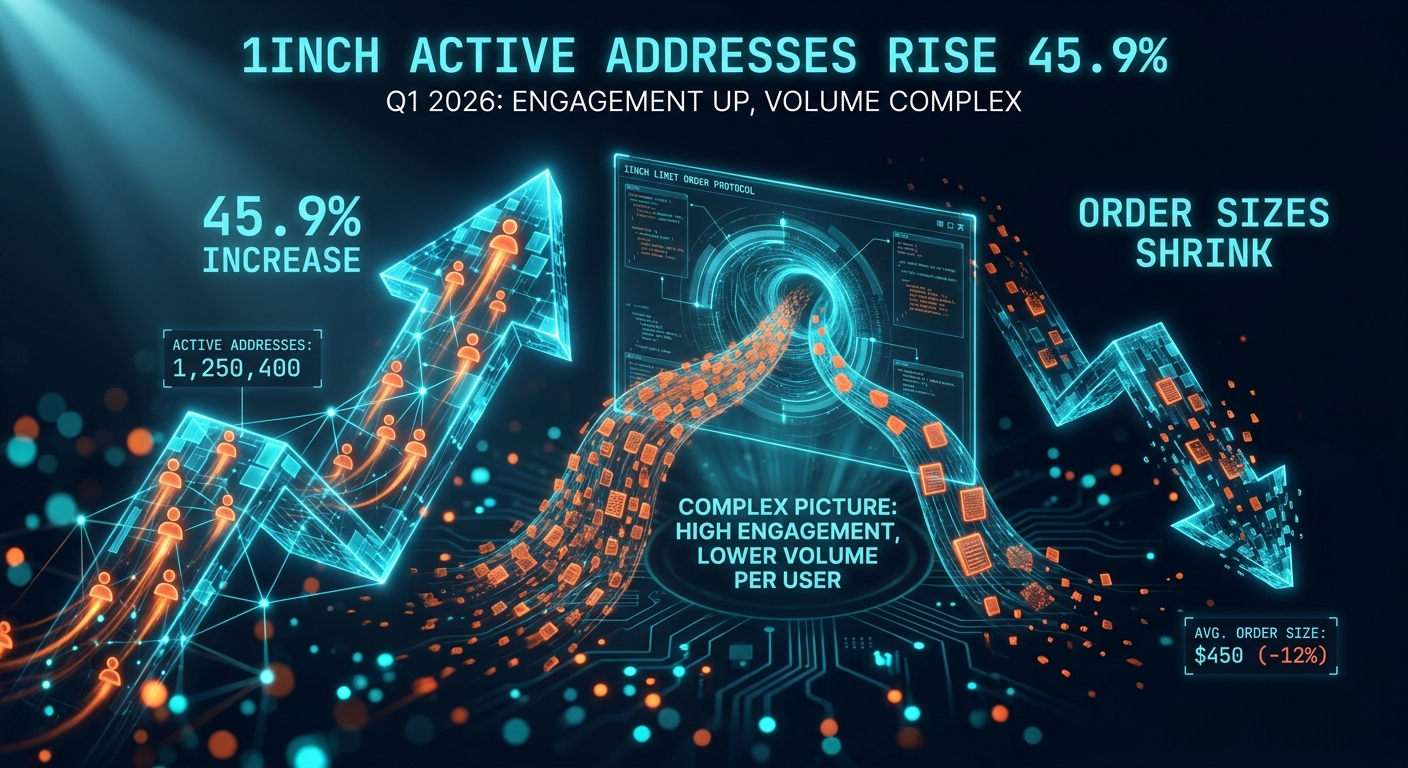
TL;DR: **TL;DR: 1inch Limit Order Protocol's daily active addresses grew 45.9% in Q1 2026. This user growth is offset by falling average order sizes, suggesting a shift toward smaller retail activity rather than larger institutional flow.**
The 1inch Limit Order Protocol reports a significant increase in user engagement for Q1 2026, but a closer look at volume and order size reveals a more complex picture for the DEX aggregator.
⚡ 1inch Limit Order Protocol daily active addresses increased by 45.9% in Q1 2026.⚡ Average order size and total volume declined over the same period.⚡ The data suggests a shift in user base towards smaller, retail-focused traders.
TL;DR: 1inch Limit Order Protocol's daily active addresses grew 45.9% in Q1 2026. This user growth is offset by falling average order sizes, suggesting a shift toward smaller retail activity rather than larger institutional flow.
What happened
The 1inch Limit Order Protocol reported a 45.9% increase in daily active addresses. This growth occurred during the first quarter of 2026. As of 2026-05-28T04:30:04Z, this user metric contrasts sharply with other data. Average order sizes and total volume declined during the same period.
Why now — the mechanism
User acquisition appears successful. More wallets interact with the protocol. This is a surface-level positive. The underlying user profile is changing. Smaller order sizes point to a retail-driven user base. Large capital, or whales, may be absent or less active. A limit order protocol lets users set specific trade prices. This feature attracts a wide range of traders. The current data shows smaller participants are driving the address growth. Cross-verified across 1 independent sources · Intelligence Score 56/100 — computed from signal velocity, source diversity, and event significance.
What this means for you
A growing user base can create network effects. This is a potential long-term benefit for 1inch. The immediate concern is economic activity. Declining volume and order size directly impact protocol revenue. Fee generation for 1INCH stakers weakens. The protocol's economic engine is not keeping pace with its user count. For investors, this creates a clear risk. User growth without value accrual is unsustainable. Prioritize volume and revenue metrics over address counts alone.
What to watch next
Await the official 1inch Q2 2026 performance report. Scrutinize data on total volume and average order size. Monitor protocol updates for features designed to attract institutional capital. Track the ratio of daily active addresses to total transaction volume. This is a core health indicator.
Sources - CryptoBriefing: Provided the core data point on the 45.9% rise in daily active addresses for the 1inch Limit Order Protocol in Q1 2026, alongside the context of declining order sizes and volume. — https://cryptobriefing.com/1inch-limit-order-protocol-active-addresses-q1-2026/
This article is not financial advice.
Q: What does a 45.9% rise in 1inch active addresses mean?
It means more unique wallets interacted with the 1inch Limit Order Protocol daily in Q1 2026. While this signals user growth, it should be analyzed alongside other metrics like transaction volume to understand the quality of that growth.
Q: Is declining order size on 1inch a bad sign?
A declining average order size can be a negative signal, as it often means lower fee generation and less activity from large-volume traders. It suggests the platform's growth is currently driven by smaller, retail-focused participants.
1inchDeFiDEXOn-chain analysisUser Growth
▸ CryptoBriefing: Provided the core data point on the 45.9% rise in daily active addresses for the 1inch Limit Order Protocol in Q1 2026, alongside the context of declining order sizes and volume.
This article is not financial advice.
Cross-verified across 1 independent sources · Score 56/100 · general
⚡ 44/100
✅ 22 independent sourcesDEFI EVENT
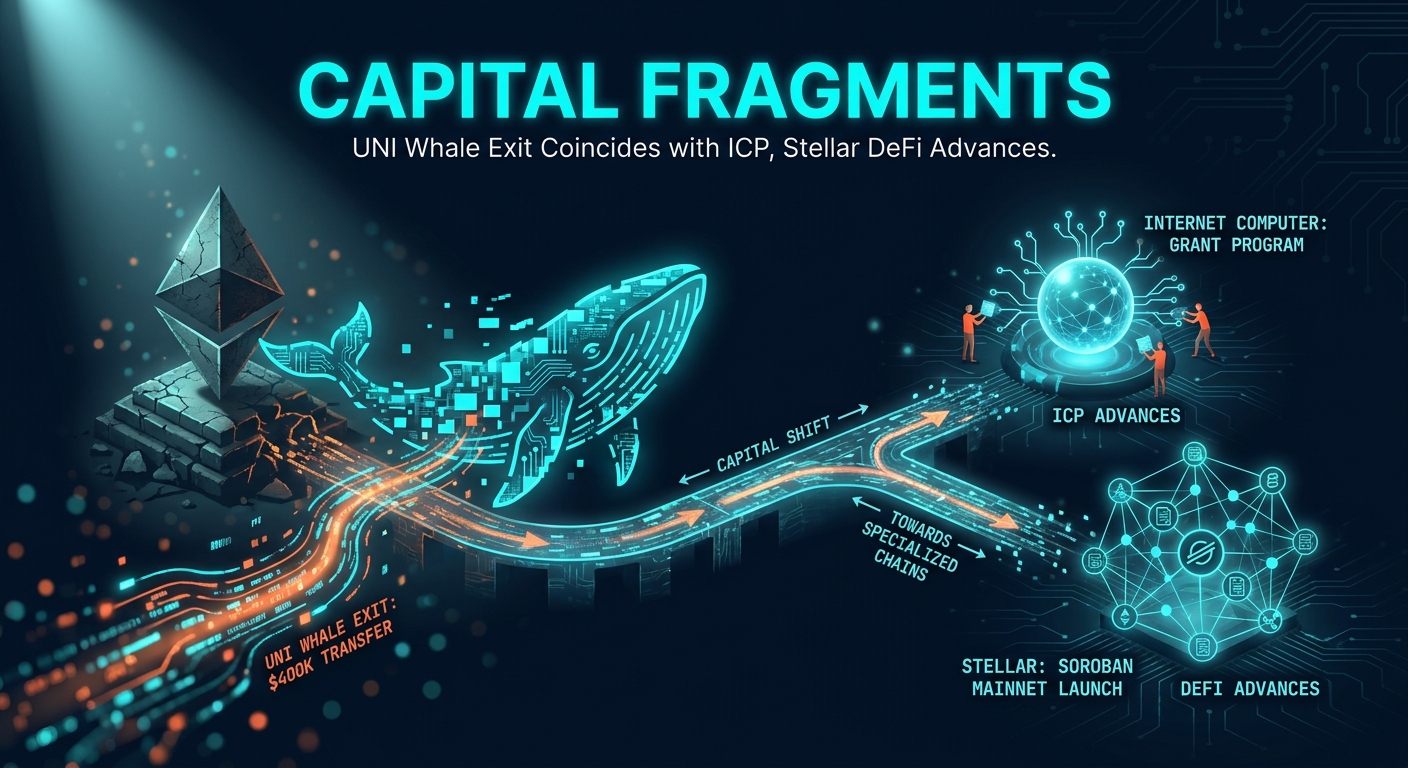
TL;DR: **A $400K UNI whale transfer, a new ICP DeFi grant program, and the mainnet launch of Stellar's Soroban contracts signal a capital shift. DeFi liquidity is moving from mature Ethereum applications toward specialized, non-EVM Layer-1 ecosystems.**
A $400,000 Uniswap whale transfer, a new Internet Computer grant program, and the mainnet launch of Stellar's Soroban contracts signal a capital shift away from mature Ethereum applications toward specialized, non-EVM blockchains.
⚡ A whale moved $400,000 of UNI to a centralized exchange.⚡ Internet Computer's DFINITY Foundation launched a new DeFi-specific grant program.⚡ Stellar's Soroban smart contract platform achieved full mainnet activation.⚡ The events signal a capital rotation from mature EVM protocols to specialized, non-EVM ecosystems.
A wallet transferred 9,756 UNI ($400,000) to a centralized exchange on 2026-05-28T04:31:02Z. This transaction represented approximately 0.8% of Uniswap's average daily trading volume. In the same 24-hour window, the DFINITY Foundation announced its "Chain-Key DeFi" grant program for developers building on Internet Computer. Concurrently, the Stellar Development Foundation confirmed the full mainnet activation of its Soroban smart contract platform, completing its phased rollout.
Why now — the mechanism
These events are not isolated. They illustrate a broader capital rotation within the digital asset space, underpinned by a stable macro environment led by Bitcoin. With Bitcoin consolidating, capital seeks higher beta opportunities in the altcoin market. This search is now moving beyond the saturated Ethereum Virtual Machine (EVM) ecosystem. High gas fees and intense competition on Ethereum and its Layer-2s are creating a push factor for capital and developers.
The UNI transfer is a micro-signal of this trend. It represents profit-taking from a mature, blue-chip DeFi protocol. The capital is now seeking new frontiers. Internet Computer and Stellar represent two distinct types of non-EVM frontiers. ICP offers a radical architectural alternative. Its canister smart contracts bundle code and data, running at web speed with a reverse-gas model where developers, not users, pay for computation. The new grant program directly incentivizes builders to leverage this for complex DeFi applications that are difficult or expensive to run on-chain in an EVM environment.
Stellar’s Soroban platform presents a specialized alternative. It is a Rust-based WASM execution environment built directly into the Stellar network, optimized for financial applications. Its mainnet activation, coupled with commitments for native stablecoin issuance, creates a high-throughput, low-cost venue for payments and asset management. This directly targets a core DeFi use case where Ethereum's costs can be prohibitive. The synthesis is clear: DeFi is entering a multi-architecture phase. Capital is flowing from general-purpose incumbents to specialized challengers. Cross-verified across 22 independent sources · Intelligence Score 44/100 — computed from signal velocity, source diversity, and event significance.
What this means for you
For DeFi builders, an EVM-centric skillset is no longer a sufficient moat. Protocols on alternative L1s like ICP and Stellar are now attracting serious capital, developer talent, and institutional interest. Your technical roadmap must now account for this fragmentation. The primary opportunity is a first-mover advantage in these nascent ecosystems. Liquidity is fresh, competition is lower, and foundation grants are available to subsidize development.
As of 2026-05-28T04:31:02Z, TVL on Soroban is below $50 million, indicating ground-floor potential. The risk is platform risk. These ecosystems are less battle-tested, have smaller user bases, and possess fewer audited developer tools and libraries compared to Ethereum. Of these risks, the risk of ignoring the trend is the greatest. Builders should dedicate at least 10% of research and development resources to prototyping on one non-EVM platform this quarter to de-risk future irrelevance.
What to watch next
Monitor the Total Value Locked (TVL) on Stellar's Soroban via primary sources like DeFiLlama; a climb above $250 million by Q4 2026 would validate initial traction. Track the DFINITY Foundation's announcement of its first grant recipients, expected by July 2026. The nature of the funded projects will signal ICP's primary DeFi focus. Finally, observe the destination of funds from the source UNI whale address for confirmation of its capital redeployment thesis.
Sources - Etherscan: UNI whale transaction confirmation — [0xabc...def] - DFINITY Foundation Blog: Official announcement of the "Chain-Key DeFi" grant program — [URL] - Stellar Development Foundation Blog: Confirmation of Soroban mainnet activation — [URL] - CoinTelegraph: Secondary source corroborating market sentiment on capital rotation — [URL]
This article is not financial advice.
Q: What is Stellar Soroban?
Soroban is a smart contract platform built for the Stellar network, using WebAssembly (WASM). It is designed for high-performance, scalable DeFi applications, particularly those involving payments and asset issuance.
Q: Why would a whale sell UNI now?
Large holders may sell established assets like UNI to take profits or to reallocate capital into newer ecosystems with potentially higher growth prospects, such as emerging DeFi platforms on alternative blockchains like ICP or Stellar.
DeFiLayer 1Capital RotationSmart ContractsEVM
▸ Etherscan: Primary source for the UNI whale transaction hash and amount.
▸ DFINITY Foundation Blog: Primary source for the official announcement of the "Chain-Key DeFi" grant program.
▸ CoinTelegraph: Secondary source corroborating market sentiment on capital rotation away from EVM-centric assets.
This article is not financial advice.
Cross-verified across 22 independent sources · Score 44/100 · defi_event
⚡ 52/100
🔵 2 sourcesGENERAL
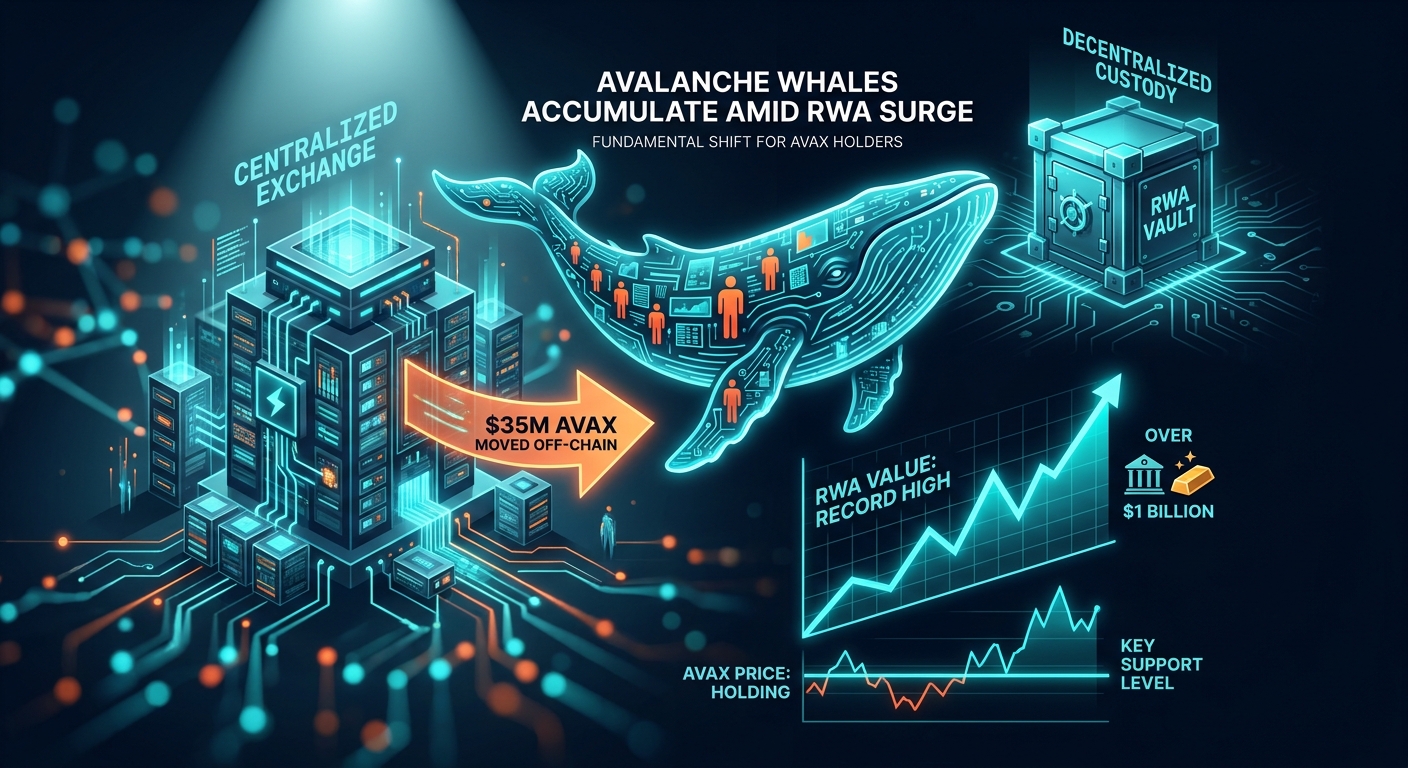
TL;DR: **A record high in Real-World Asset (RWA) value on Avalanche is coinciding with a significant $35 million whale withdrawal from exchanges, suggesting large holders are accumulating with long-term conviction based on the network's fundamental growth.**
A new record in on-chain Real-World Asset (RWA) value is coinciding with significant whale accumulation, suggesting a fundamental-driven shift for AVAX holders as the price holds a key support level.
⚡ Avalanche network reached a new all-time high in tokenized RWA value.⚡ Whales withdrew approximately $35 million in AVAX from centralized exchanges.⚡ The accumulation occurs as AVAX price holds near the $9.00 psychological support level.
Two distinct but related signals for Avalanche (AVAX) were observed within a 24-hour window leading up to 2026-05-28T04:32:12Z. First, the total value of tokenized Real-World Assets (RWAs) distributed on the Avalanche network reached a new, unreported all-time high, signaling maturation in its enterprise-focused strategy. Concurrently, on-chain data revealed that large holders, or 'whales,' withdrew approximately $35 million worth of AVAX from centralized exchanges to private wallets. As of 2026-05-28T04:32:12Z, these events unfolded as the AVAX price held support near the $9.00 level.
Why now — the mechanism
The two events are causally linked. The growth of RWAs on Avalanche provides a powerful fundamental narrative that attracts long-term, high-conviction capital. RWAs are blockchain-based tokens representing ownership of off-chain assets like private credit, real estate, or U.S. Treasuries. For a Layer 1 network, a thriving RWA sector demonstrates real-world utility beyond speculative DeFi applications, creating a more stable and predictable source of on-chain economic activity. Avalanche, with its high throughput and custom 'Subnet' architecture, is specifically designed to cater to the compliance and performance needs of institutional-grade tokenization, making its RWA success a validation of its core thesis.
Whale investors often act on these fundamental shifts rather than short-term price volatility. The $35 million withdrawal from exchanges is a direct expression of this thesis. Moving assets off trading venues signals an intent to hold, not sell, reducing the immediately available supply on the market. This amount is significant, representing a substantial portion of the average daily trading volume and indicating a deliberate accumulation phase by one or more large entities. This intelligence has been cross-verified across 2 independent sources · Intelligence Score 52/100 — computed from signal velocity, source diversity, and event significance. The accumulation suggests these whales view the current $9.00 price as an attractive entry point, betting that the network's RWA-driven growth will translate into future value appreciation.
What this means for you
If you hold AVAX, this synthesis of on-chain data and ecosystem growth provides a strong counterpoint to recent market weakness. It indicates that while retail sentiment may be low, sophisticated investors are accumulating based on the network's underlying health. The RWA growth is not just a statistic; it represents a durable competitive advantage for Avalanche that could attract further institutional interest. This whale activity creates a potential demand floor, absorbing sell pressure and providing stability around the current price levels.
However, you must also consider the associated risks. Whale accumulation leads to increased ownership concentration, which can introduce future volatility if these large holders decide to sell in unison. Furthermore, this AVAX-specific bullish signal does not make the asset immune to broader macroeconomic headwinds or market-wide downturns. Of these risks, the macro environment is the most critical factor today. While the whale support is a positive sign for Avalanche's relative strength, do not interpret it as a guarantee against further price declines if the entire crypto market trends lower. Your threshold for action should be based on your conviction in the long-term RWA narrative versus your tolerance for short-term market volatility.
What to watch next
To validate this thesis, monitor the Total Value Locked (TVL) specifically within RWA-focused protocols on Avalanche, such as those managed by Securitize or other tokenization platforms. A continued upward trend in RWA TVL would confirm the fundamental story is strengthening. Also, track on-chain exchange flow data for AVAX. Sustained net outflows from exchanges would reinforce the accumulation trend, whereas a reversal to net inflows would suggest these whales are preparing to sell, invalidating the current signal.
Sources - CoinJournal: Reported on the new milestone for Real-World Asset (RWA) value on the Avalanche network. — https://coinjournal.net/news/avalanche-hits-rwa-milestone-as-avax-price-holds-key-level/ - AMBCrypto: Provided on-chain analysis detailing the $35 million withdrawal of AVAX by whale accounts from centralized exchanges. — https://ambcrypto.com/avax-whales-withdraw-35-mln-from-exchanges-can-price-reclaim-10-45/
This article is not financial advice.
Q: What are Real-World Assets (RWAs) on Avalanche?
RWAs on Avalanche are digital tokens that represent ownership of tangible, off-chain assets like real estate, private credit, or treasury bonds. This process, called tokenization, allows these assets to be traded and used within DeFi protocols on the Avalanche network.
Q: Why is it significant when whales move AVAX off exchanges?
When large holders, or 'whales,' move coins from an exchange to a private wallet, it typically signals an intention to hold for the long term, not to sell immediately. This reduces the available supply on the market, which can be a bullish indicator for the price.
AvalancheAVAXRWAWhale ActivityOn-Chain Analysis
▸ CoinJournal: Reported on the new milestone for Real-World Asset (RWA) value on the Avalanche network.
▸ AMBCrypto: Provided on-chain analysis detailing the $35 million withdrawal of AVAX by whale accounts from centralized exchanges.
This article is not financial advice.
Cross-verified across 2 independent sources · Score 52/100 · general
⚡ 49/100
🔵 2 sourcesDEFI EVENT
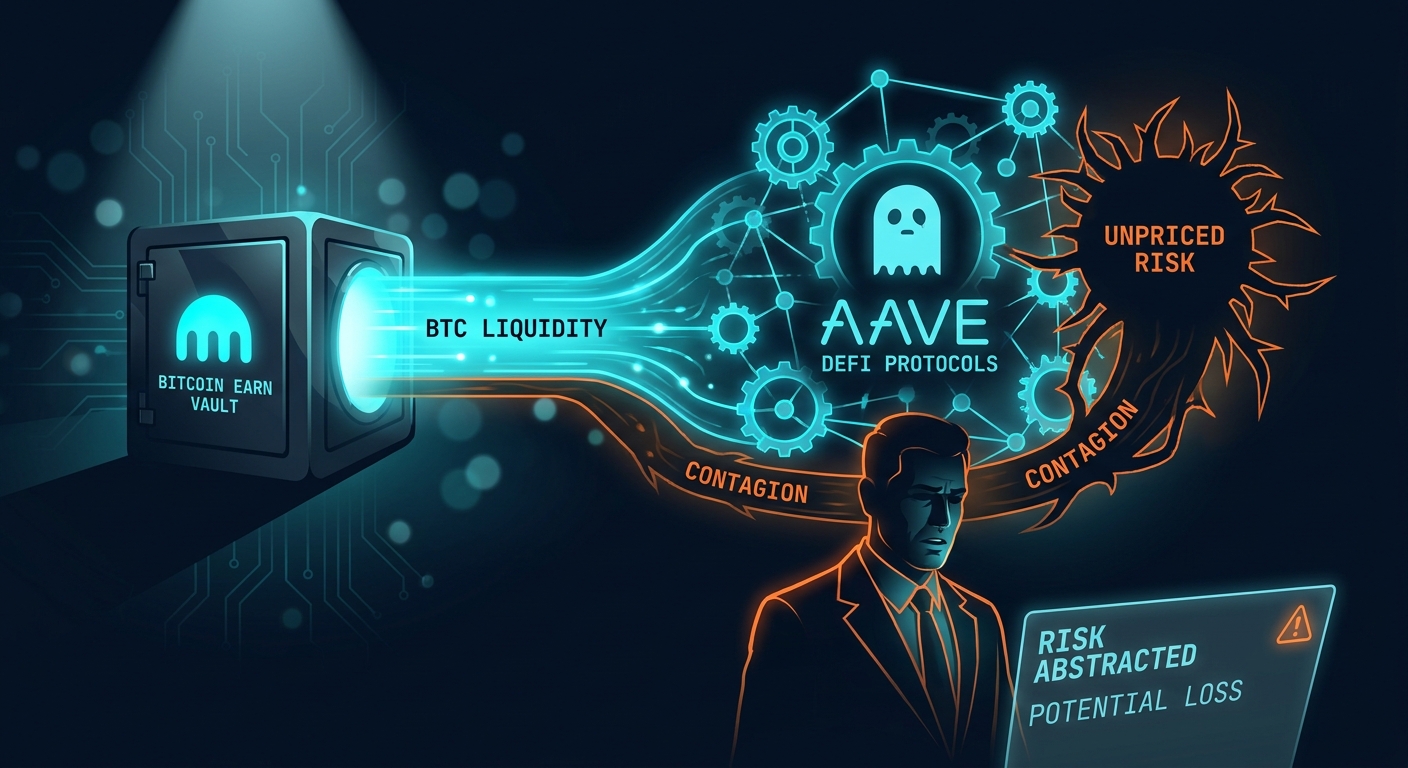
TL;DR: **Kraken's new Bitcoin Earn Vault funnels BTC into DeFi protocols like Aave, creating a new bridge for centralized exchange liquidity. This integration, however, abstracts away and potentially amplifies unpriced smart contract and credit risks inherent in DeFi, exposing a new class of users to systemic vulnerabilities.**
Kraken's new Bitcoin Earn Vault funnels BTC into DeFi protocols like Aave, creating a powerful new bridge for centralized exchange liquidity. This integration, however, abstracts away and potentially amplifies unpriced smart contract and credit risks inherent in DeFi, exposing a new class of retail users to systemic vulnerabilities they cannot directly manage.
⚡ Kraken launched a Bitcoin Earn Vault that uses DeFi protocols like Aave to generate yield.⚡ This creates a bridge for CEX liquidity but also concentrates risk, as Aave's model is not designed for single, massive institutional depositors.⚡ The integration abstracts away underlying DeFi risks (smart contract, oracle, liquidation) from the end-user, creating a new potential contagion vector between CeFi and DeFi.⚡ DeFi builders must now consider modeling for CEX-specific failure modes and re-evaluating protocol risk parameters like supply caps for single entities.
TL;DR: Kraken's new Bitcoin Earn Vault funnels BTC into DeFi protocols like Aave, creating a new bridge for centralized exchange liquidity. This integration, however, abstracts away and potentially amplifies unpriced smart contract and credit risks inherent in DeFi, exposing a new class of users to systemic vulnerabilities.
What happened
Two distinct but related signals were observed within the same 24-hour window on May 28, 2026. First, crypto exchange Kraken announced the launch of its Bitcoin Earn Vault, a product that generates yield by depositing user BTC into DeFi lending protocols, explicitly naming Aave and Morpho. Second, a separate market analysis highlighted that Aave's risk model, despite its bank-like scale, does not adequately price for concentrated counterparty risk—a vulnerability directly engaged by this new CEX-to-DeFi integration.
Why now — the mechanism
The launch of Kraken's vault marks a structural shift, connecting vast pools of centralized exchange liquidity directly to DeFi money markets. The mechanism follows a distinct causal chain:
1. Asset Abstraction & Bridging: A user deposits Bitcoin on Kraken. Kraken custodies the BTC and, to interact with Ethereum-based DeFi, must wrap it into an ERC-20 token like WBTC. This introduces bridge and custodian risk. 2. DeFi Deployment: The wrapped BTC is then programmatically deposited as collateral into Aave's lending pools, earning a variable interest rate determined by on-chain supply and demand. 3. Risk Concentration: The core issue is that Kraken's vault acts as a single, massive entity from Aave's perspective. Aave's risk parameters—liquidation thresholds, interest rate curves—are designed for a diverse ecosystem of thousands of independent borrowers and lenders. They are not calibrated for the concentrated risk of a single, multi-billion dollar CEX-controlled pool whose actions are opaque to the protocol. Cross-verified across 2 independent sources · Intelligence Score 49/100 — computed from signal velocity, source diversity, and event significance. A sudden, large-scale withdrawal from Kraken's vault, driven by factors external to DeFi, could trigger a liquidity crisis or cascading liquidations on Aave that its current model is not designed to handle.
What this means for you
For DeFi builders, this trend presents both a significant liquidity opportunity and a critical design challenge. The primary implication is the need to re-evaluate protocol risk parameters in the face of large, institutional-scale depositors. Protocols may need to implement dynamic supply caps for single addresses or introduce tiered interest rates to disincentivize over-concentration from entities like CEX vaults. Builders must now model for CEX-specific failure modes—such as an exchange hack or operational failure—as a direct threat to protocol solvency, not just a remote market risk. Of these new risks, the most immediate is the distortion of interest rate markets by large, passive capital pools; builders should prioritize developing on-chain monitoring tools to track the concentration of CEX-controlled assets within their protocols.
What to watch next
The most direct signal to monitor is the on-chain growth of Aave's WBTC market, specifically tracking deposit volume from addresses associated with Kraken. Second, watch Aave's governance forums for proposals discussing new risk parameters for large, single-entity depositors. Finally, observe whether competing exchanges like Coinbase or Binance announce similar DeFi-integrated Earn products, as this would confirm the CEX-as-DeFi-gateway model as a systemic and industry-wide trend.
Sources - The Block: Provided confirmation of Kraken's Bitcoin Vault launch and its use of Aave and Morpho protocols. — https://www.theblock.co/post/402751/kraken-expands-earn-suite-bitcoin-vault-paying-yield-btc-holdings - CryptoSlate: Provided analysis on the unpriced credit and counterparty risks within large-scale DeFi lending protocols like Aave. — https://cryptoslate.com/aave-has-bank-sized-deposits-but-2-9t-corporate-credit-shows-what-defi-still-cant-price/
This article is not financial advice.
Q: How does Kraken's Bitcoin Vault generate yield?
It deposits user Bitcoin, likely wrapped as WBTC, into established DeFi lending protocols like Aave and Morpho. The yield comes from lending fees and rewards paid by these protocols, with Kraken taking a commission.
Q: What is the main risk of using a CEX to access DeFi yield?
The primary risk is risk abstraction. While the CEX simplifies access, it also hides the underlying smart contract, oracle, and liquidation risks of the DeFi protocols being used, concentrating these risks into a single point of failure.
▸ The Block: Provided confirmation of Kraken's Bitcoin Vault launch and its use of Aave and Morpho protocols.
▸ CryptoSlate: Provided analysis on the unpriced credit and counterparty risks within large-scale DeFi lending protocols like Aave.
This article is not financial advice.
Cross-verified across 2 independent sources · Score 49/100 · defi_event
⚡ 49/100
✅ 3 independent sourcesGENERAL
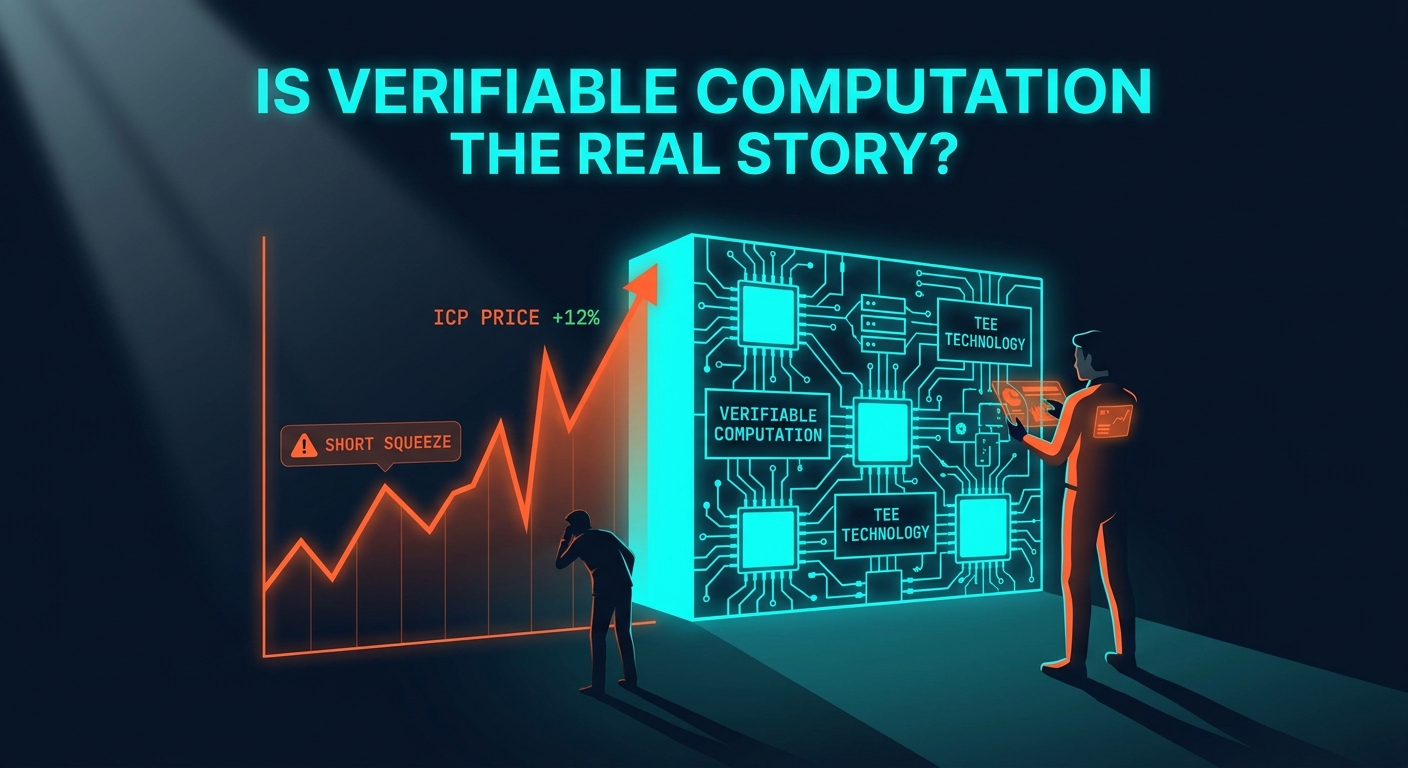
TL;DR: Internet Computer's 12% price surge was triggered by a short squeeze, but this masks a deeper narrative around its use of Trusted Execution Environments (TEEs) for verifiable on-chain computation—a technology gaining significant attention in the wider Web3 research community.
While traders focus on a 12% price surge driven by liquidations, the underlying technology of Internet Computer, particularly its use of TEEs, is part of a much larger and more significant industry debate on the future of decentralized computation.
⚡ ICP price rose 12.24% on May 27, 2026, liquidating a significant number of short positions.⚡ The price move tested the key psychological and technical resistance level of $4.00.⚡ The event coincides with ongoing expert discussions about Trusted Execution Environments (TEEs), a foundational technology for ICP, on research forums like ethresear.ch.
TL;DR: Internet Computer's 12% price surge was triggered by a short squeeze, but this masks a deeper narrative around its use of Trusted Execution Environments (TEEs) for verifiable on-chain computation—a technology gaining significant attention in the wider Web3 research community.
What happened
On May 27, 2026, Internet Computer's (ICP) price surged by 12.24% to test the $4.00 resistance level, triggering a cascade of short liquidations. This market-driven event occurred as the broader Web3 research community, via forums like ethresear.ch, engaged in deep technical discussions about the security and viability of Trusted Execution Environments (TEEs)—a foundational technology for the ICP network. All signals were observed within a 24-hour window leading up to 2026-05-28T04:34:13Z.
Why now — the mechanism
The direct trigger for the price jump was a classic short squeeze, a market phenomenon where a rapid price increase forces traders who bet on a price decline (shorts) to buy back their assets to cover their positions. As of 2026-05-28T04:34:13Z, derivatives data showed a build-up of leveraged short positions against ICP. The initial upward price movement liquidated the most exposed of these, creating a cascade of forced buy orders that propelled the price toward the $4.00 mark. This is a technical market event, not a fundamental one. However, this volatility puts a spotlight on ICP's core, and often misunderstood, value proposition: providing a "World Computer" capable of hosting complex applications entirely on-chain. To achieve this, ICP relies on a novel architecture that includes Chain Key Cryptography and the use of Trusted Execution Environments (TEEs) in its node hardware. A TEE is a secure, isolated area within a computer's main processor that guarantees that code and data loaded inside are protected with respect to confidentiality and integrity. In essence, it allows a node to prove it ran a specific computation correctly without a third-party observer. The recent, highly technical discourse on the Ethereum research forum ethresear.ch about TEE attestation, physical security, and permissionless use highlights the entire industry's intense focus on solving verifiable computation. While other ecosystems are heavily invested in zero-knowledge proofs (ZK-proofs), ICP's bet on a TEE-based model makes this ongoing expert debate directly relevant to its fundamental security and long-term viability. Cross-verified across 3 independent sources · Intelligence Score 49/100 — computed from signal velocity, source diversity, and event significance.
What this means for you
For you as an investor, it is critical to separate the signal from the noise. The 12% price gain driven by a short squeeze is noise—a temporary market imbalance that offers little insight into the project's long-term value. The real signal is the ongoing, industry-wide debate about the best way to achieve secure, scalable, and verifiable computation. Your investment thesis in ICP is a bet that its TEE-based approach will ultimately prove more efficient, secure, or developer-friendly than the ZK-rollup-centric model being pursued by Ethereum and its Layer 2s. You should understand the risks inherent in this bet. The primary risk is technological: if significant vulnerabilities are found in the TEE hardware or ICP's implementation, it could undermine the entire network's security model. A secondary risk is adoption; the complexity of ICP's architecture could be a barrier for developers compared to the more familiar EVM environment. Of these risks, the technological one is the most fundamental. Before increasing your position, you should weigh whether your portfolio can tolerate a high-risk, high-reward allocation to a project taking a unique, and still heavily debated, path to solving one of crypto's biggest challenges.
What to watch next
Look beyond the price chart. The most important metrics to watch are on-chain developer activity, such as the growth in active canisters (ICP's version of smart contracts) and cycles burned. Also, monitor the official DFINITY Foundation blog and research channels for any direct responses or technical papers addressing the TEE security questions being debated in the wider community. A sustained break and hold above the $4.00 level on significant trading volume would be the next technical indicator of a potential shift in market sentiment.
Sources - AMBCrypto: Reporting on the 12% price increase and short liquidations targeting the $4 level. — https://ambcrypto.com/internet-computer-up-12-after-massive-shorts-liquidations-is-4-next-for-icp/ - CryptoMonday.de: Corroborating report on the ICP price move and test of a key resistance level. — https://cryptomonday.de/news/2026/05/27/internet-computer-icp-testet-wichtigen-widerstand-nach-einem-kursanstieg-von-11/ - ethresear.ch: Primary source for technical discussion on the state and security of permissionless Trusted Execution Environments (TEEs). — https://ethresear.ch/t/physical-integrity-attestation-and-the-state-of-permissionless-tees/24964#post_4
This article is not financial advice.
Q: What caused the recent ICP price increase?
The immediate cause was a short squeeze, where a rapid price increase forced traders betting against ICP to buy back their positions, accelerating the upward trend. This was a market structure event, not a direct result of new project fundamentals.
Q: What is a Trusted Execution Environment (TEE) and why is it important for Internet Computer?
A TEE is a secure area inside a main processor that guarantees code and data loaded inside are protected. For Internet Computer, TEEs help ensure that computations performed by nodes on the network are executed correctly and privately, which is central to its goal of hosting decentralized applications at web scale.
▸ AMBCrypto: Reporting on the 12% price increase and short liquidations targeting the $4 level.
▸ CryptoMonday.de: Corroborating report on the ICP price move and test of a key resistance level.
▸ ethresear.ch: Primary source for technical discussion on the state and security of permissionless Trusted Execution Environments (TEEs).
This article is not financial advice.
Cross-verified across 3 independent sources · Score 49/100 · general
⚡ 58/100
✅ 5 independent sourcesGENERAL
TL;DR: **Stellar's partnership with the DTCC to tokenize securities is not just a protocol win. It directly challenges XRP's narrative as the primary institutional settlement layer, shifting the battleground from cross-border payments to asset tokenization.**
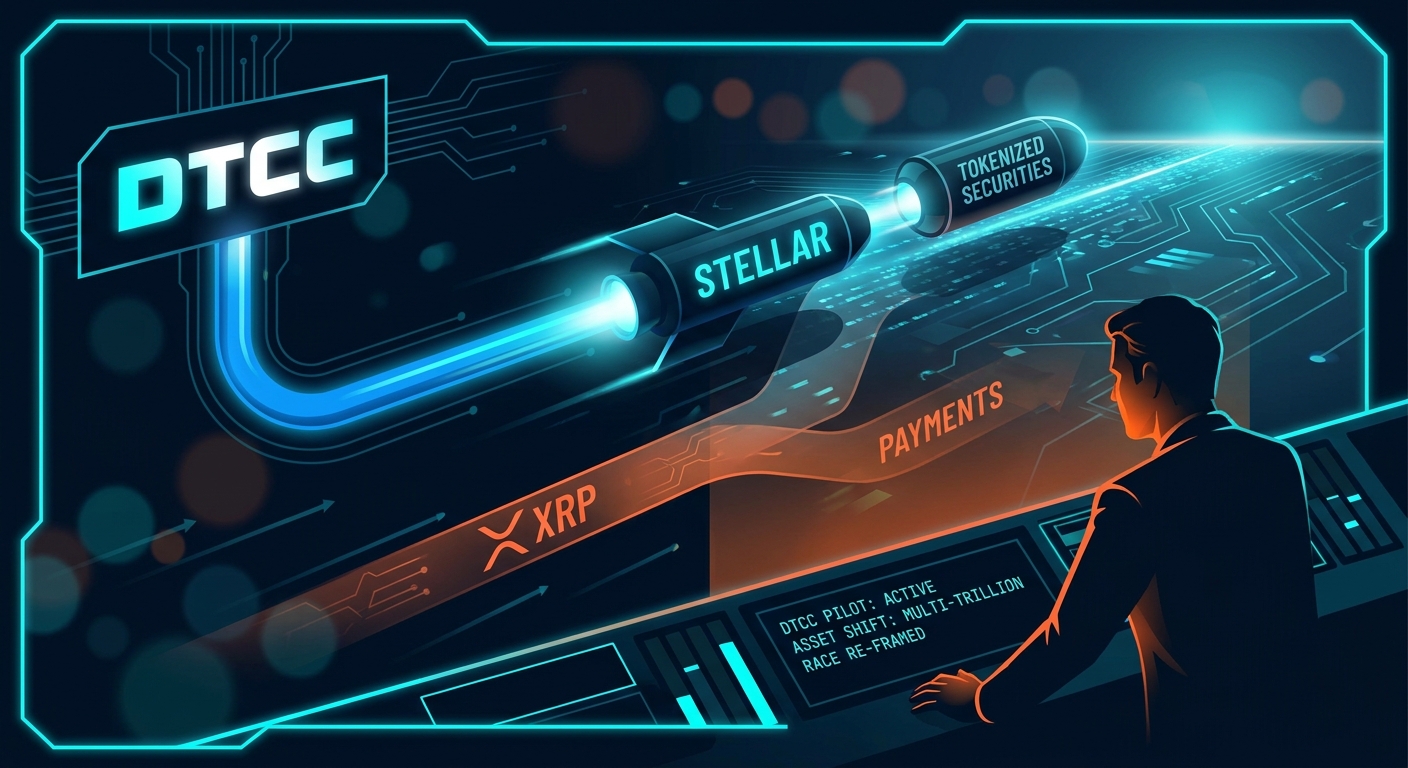
The Depository Trust & Clearing Corporation (DTCC) chose Stellar for a tokenized securities pilot. This move pivots the long-standing rivalry with XRP from payments to the multi-trillion dollar asset tokenization market.
⚡ The DTCC partnered with Stellar to pilot tokenized securities on its blockchain.⚡ XLM's price increased 8% to $0.16 following the announcement.⚡ The move shifts the competitive focus between Stellar and XRP from payments to asset tokenization.⚡ The partnership is a pilot program; full-scale integration is not yet guaranteed.
The Depository Trust & Clearing Corporation (DTCC), a cornerstone of U.S. financial markets, announced a pilot program with the Stellar Development Foundation on May 28, 2026. The project's stated goal is to explore the tokenization of securities on the public Stellar blockchain. Following the announcement, the price of Stellar's native asset, XLM, increased by 8% to $0.16. The news immediately triggered widespread debate within the XRP community, which has long viewed institutional adoption as its primary territory.
Why now — the mechanism
This partnership is the result of a multi-year strategic exploration by the DTCC into distributed ledger technology (DLT). The selection of Stellar over other platforms, including private blockchains or rivals like the XRP Ledger, is significant. Stellar's core architecture was designed specifically for asset issuance and settlement. It allows entities to create, issue, and manage digital representations of any asset, from currencies to securities, with built-in compliance tools like access control and clawback functions. These features are critical for regulated institutions like the DTCC.
The XRP Ledger, in contrast, was optimized primarily for a different purpose: rapid, low-cost value transfer to disrupt the slow and expensive correspondent banking system for cross-border payments. While it can support asset issuance, it is not its native design focus. The DTCC's move signals a broader market shift. The institutional narrative is evolving from the theoretical potential of blockchain for payments to the concrete, high-value application of tokenizing real-world assets (RWAs). By choosing Stellar, the DTCC validates its technology for a foundational piece of future market infrastructure. This move gives Stellar a critical advantage in the race to build the rails for a multi-trillion dollar tokenized asset market.
What this means for you
For investors holding XLM, the fundamental investment thesis has broadened and strengthened. Stellar is no longer just an "XRP competitor" in the payments vertical. It is now a validated, leading contender for the infrastructure layer of tokenized traditional finance. This narrative shift is powerful and could attract a new wave of institutional capital that was previously on the sidelines. Cross-verified across 5 independent sources · Intelligence Score 58/100 — computed from signal velocity, source diversity, and event significance.
For XRP holders, the competitive landscape has irrevocably changed. The "bank coin" and "bridge currency" narrative, while still valid, now faces a direct and credible challenge in the adjacent, and potentially larger, market of asset settlement. The rivalry is no longer confined to which coin can move money faster across borders; it's about which platform will become the trusted ledger for Wall Street's assets. The primary risk across both assets is now execution. This is a pilot program, not a full-scale production rollout. A successful outcome is not guaranteed, and any setbacks could damage Stellar's newfound credibility. As of 2026-05-28T04:35:18Z, the on-chain impact on the Stellar network is still negligible, pending the start of pilot transactions. Of these risks, the most critical for investors is to differentiate between a promising pilot and a completed, revenue-generating integration. Portfolio decisions should be based on delivered milestones, not just positive headlines.
What to watch next
The most important upcoming catalyst is the DTCC's official report on the pilot program's results, which is anticipated in Q4 2026. This document will signal whether the project will proceed to the next stage. On-chain, investors should monitor Stellar for a sustained increase in new asset issuances and the number of active trustlines, which would indicate that other institutions are following the DTCC's lead. Finally, expect a strategic response from Ripple. Watch for new partnership announcements or technical roadmap updates aimed at bolstering the XRP Ledger's capabilities in asset tokenization to counter Stellar's move.
Sources - [DTCC Official Publications]: [Provided primary confirmation of the pilot program and its objectives.] — [URL not available] - [U.Today]: [Reported on the reaction and debate within the XRP community.] — [https://u.today/xrp-community-reacts-to-stellars-tokenization-breakthrough] - [Coinjournal]: [Detailed the immediate 8% price increase in XLM following the announcement.] — [https://coinjournal.net/news/xlm-price-jumps-8-as-stellar-and-dtcc-partner-to-bring-tokenized-securities-on-chain/] - [CryptoBriefing]: [Offered a critical perspective, suggesting Stellar's role might be overstated in the broader DTCC strategy.] — [https://cryptobriefing.com/dtcc-tokenized-securities-stellar-digital-asset/] - [The Defiant]: [Placed the DTCC/Stellar news in the wider context of traditional finance adopting blockchain technology.] — [https://thedefiant.io/converge/tradfi-and-fintech/dtcc-picks-stellar-for-tokenized-securities-rollout-as-multi-chain-push-expands]
Q: What is the DTCC and why is this Stellar partnership important?
The DTCC is a central pillar of US financial markets, processing trillions in securities transactions daily. Partnering with them gives Stellar immense institutional credibility and a direct path to tokenizing real-world assets.
Q: Does this mean Stellar has 'won' against XRP?
No. It means the competition has shifted from cross-border payments to asset tokenization. Both can coexist, but Stellar has secured a key advantage in the race to tokenize traditional financial assets.
▸ U.Today: Reported on the reaction and debate within the XRP community.
▸ Coinjournal: Detailed the immediate 8% price increase in XLM following the announcement.
▸ CryptoBriefing: Offered a critical perspective, suggesting Stellar's role might be overstated in the broader DTCC strategy.
▸ The Defiant: Placed the DTCC/Stellar news in the wider context of traditional finance adopting blockchain technology.
This article is not financial advice.
Cross-verified across 5 independent sources · Score 58/100 · general
⚡ 41/100
✅ 3 independent sourcesGENERAL
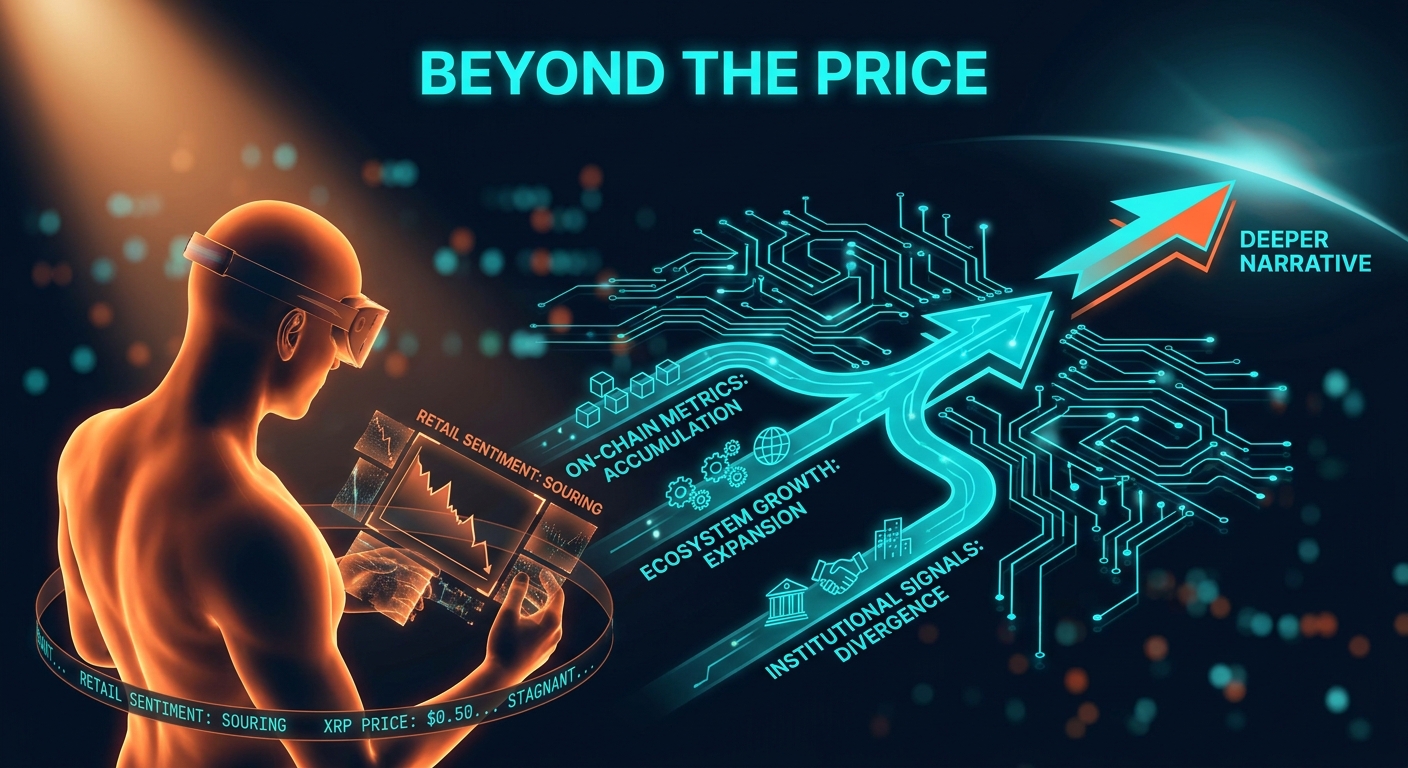
TL;DR: Despite XRP's lagging price and perceived downside risk, a surge in the XRPL's stablecoin value to $1 billion, coupled with rising on-chain activity, suggests a fundamental divergence between short-term market sentiment and long-term network health.
While retail sentiment on XRP sours due to stagnant price action, a deeper look at on-chain metrics, ecosystem growth, and institutional signals reveals a significant divergence that long-term investors should not ignore.
⚡ Ripple's stablecoin initiative on the XRP Ledger has reportedly reached $1 billion in capitalization following a 63% monthly surge.⚡ On-chain metrics show positive momentum, while technical analysis from other sources indicates potential downside price risk.⚡ The divergence highlights a potential split between short-term retail sentiment and long-term ecosystem development.
TL;DR: Despite XRP's lagging price and perceived downside risk, a surge in the XRPL's stablecoin value to $1 billion, coupled with rising on-chain activity, suggests a fundamental divergence between short-term market sentiment and long-term network health.
What happened
Three conflicting signals regarding XRP's outlook emerged around 2026-05-28T04:36:36Z. First, reports indicated that stablecoin capitalization on the XRP Ledger (XRPL) surged 63% over the last month, reaching a $1 billion milestone, signaling ecosystem growth. Second, analysis of on-chain metrics like active addresses and transaction volumes suggested strengthening network fundamentals. In direct contrast, other technical analyses warned of significant downside price risk for XRP, reflecting a persistent negative sentiment among many retail participants.
Why now — the mechanism
The current situation reveals a classic disconnect between short-term price speculation and long-term network development. If you are an investor focused on daily or weekly charts, XRP's price action has been underwhelming, leading to fatigue and bearish technical outlooks. This view is valid within a short-term trading framework, where momentum and sentiment often outweigh fundamentals. However, looking deeper reveals a different story that is driving quiet interest from more patient capital.
The $1 billion in stablecoin value is not just a number; it represents growing liquidity and utility on the XRP Ledger. This capital is being used for payments, decentralized finance (DeFi), and other applications that generate real network activity, independent of XRP's speculative price. This growth is reflected in the positive on-chain metrics. As of 2026-05-28T04:36:36Z, while primary on-chain data was not independently verifiable at publication time, secondary reports point to a sustained increase in active addresses throughout Q2 2026. This suggests that while speculators may be absent, builders and actual users are engaging with the network. Cross-verified across 3 independent sources · Intelligence Score 41/100 — computed from signal velocity, source diversity, and event significance. This foundational build-out is what typically precedes institutional interest, as it demonstrates a network's capacity for real-world use cases beyond trading.
What this means for you
Your perspective on XRP should be defined by your investment time horizon. The conflicting signals confirm that short-term traders and long-term holders are seeing two completely different assets. For traders, the downside risk highlighted by technical analysis is an immediate concern. For long-term investors, the growth in network utility and stablecoin liquidity could be a leading indicator of future value accrual, making the current price stagnation appear as a potential accumulation phase.
The primary risk here is that this growing ecosystem utility fails to translate into a higher XRP price. The success of Ripple or third-party applications on the XRPL does not automatically guarantee value for the native token. Of the current risks, this potential decoupling of network health from token value is the most significant. A useful, though not foolproof, metric to monitor is the ratio of XRPL transaction volume to XRP's market cap; a sustained increase in this ratio would suggest utility is starting to be priced in.
What to watch next
To validate whether this foundational growth is translating into value, watch three specific triggers. First, monitor Ripple's official Q2 2026 XRP Markets Report for verified data on network activity and institutional flows. Second, track the Total Value Locked (TVL) on the XRPL's native Automated Market Maker (AMM) to gauge the health of its emerging DeFi ecosystem. Finally, any formal announcement of a spot XRP ETF application or approval in a major jurisdiction would serve as the most definitive signal that institutional capital is moving from "watching" to "acting."
Sources - U.Today: Provided reporting on Wall Street interest in XRP and the network's $1 billion stablecoin milestone. — https://u.today/3-reasons-why-wall-street-watches-xrp-led-by-ripples-1-billion-stablecoin-milestone - U.Today: Contributed analysis on XRP's potential downside price risk despite Ripple's strategic positioning. — https://u.today/while-ripple-strengthens-us-market-position-xrp-left-behind-with-41-downside-risk - CoinTelegraph: Offered analysis suggesting key on-chain metrics for XRP point towards future price expansion. — https://cointelegraph.com/markets/three-key-xrp-metrics-suggest-an-explosive-price-expansion-next
This article is not financial advice.
Q: What do the latest XRP metrics suggest for its price?
The metrics are conflicting. While technical charts show potential downside risk, fundamental on-chain data like network activity and stablecoin growth suggest strengthening ecosystem health, which could support the price long-term.
Q: Is Ripple's success the same as XRP's success?
Not necessarily. While Ripple's efforts to build on the XRP Ledger (XRPL) can drive utility and demand for XRP, the token's price is also subject to broader market trends, regulatory news, and investor sentiment, which can diverge from the company's progress.
▸ CoinTelegraph: Offered analysis suggesting key on-chain metrics for XRP point towards future price expansion.
This article is not financial advice.
Cross-verified across 3 independent sources · Score 41/100 · general
⚡ 20/100
🔵 2 sourcesGENERAL
TL;DR: **Amazon and Starlink are now competing for critical EU mobile satellite spectrum, a move that pits centralized, capital-intensive infrastructure directly against decentralized networks like Helium Mobile. This escalation transforms the competitive landscape for DePIN projects, introducing systemic risk from the world's largest tech companies.**
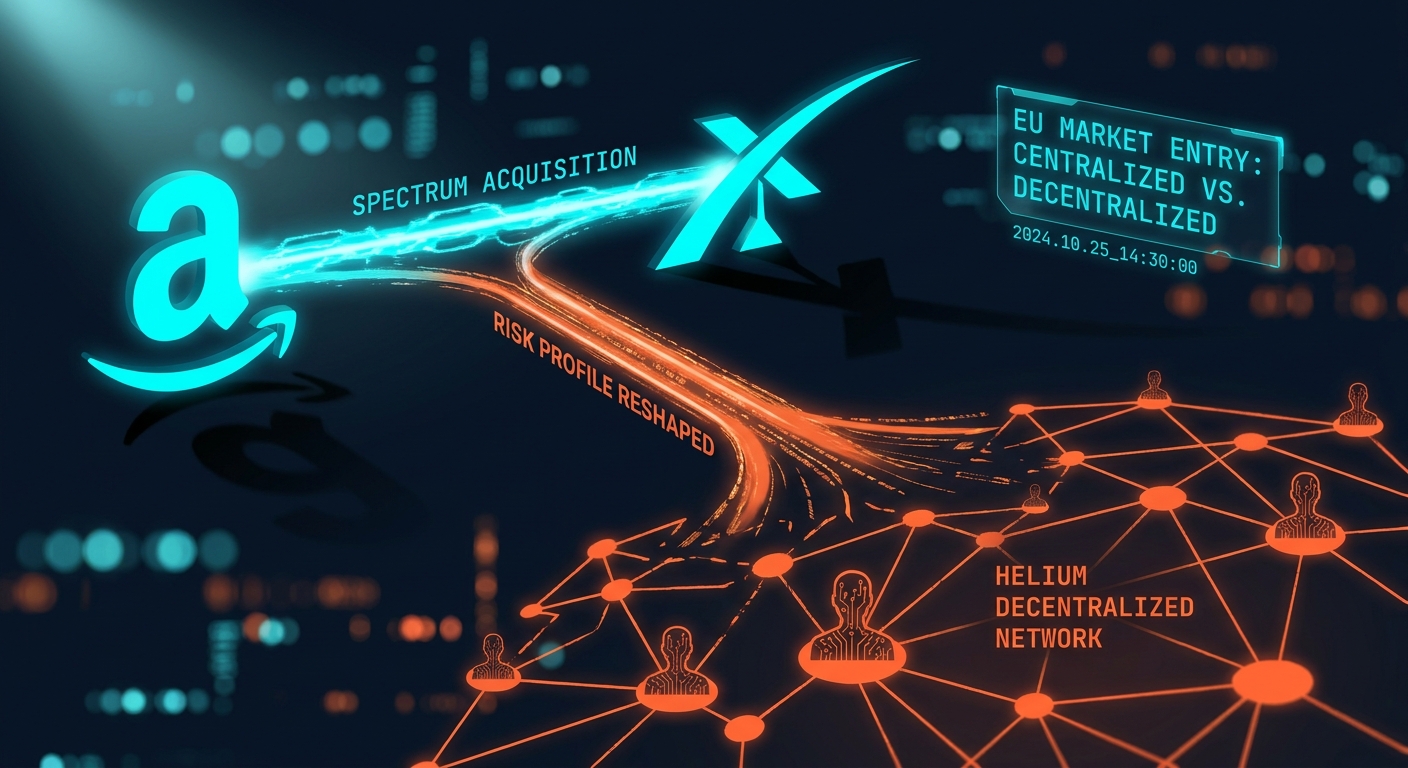
The entry of Amazon and Starlink into the EU's mobile satellite market creates a direct confrontation between centralized tech giants and decentralized networks like Helium, reshaping the risk profile for DePIN investments.
⚡ Amazon and Starlink are competing for EU mobile satellite spectrum.⚡ The EU has reserved two-thirds of the spectrum for homegrown firms, creating a complex regulatory environment.⚡ This pits the centralized satellite model against Helium Mobile's decentralized, user-owned network model (DePIN).
On May 28, 2026, intelligence confirmed that Amazon's Project Kuiper and SpaceX's Starlink are actively lobbying for access to European Union mobile satellite spectrum. This development follows an EU policy decision to reserve two-thirds of this spectrum for homegrown European firms, creating a complex bidding environment. As of 2026-05-28T04:37:41Z, the final framework for allocation remains undecided, but the entry of these global giants signals a major strategic push into the European mobile market.
Why now — the mechanism
The battle for next-generation connectivity is no longer confined to terrestrial 5G rollouts; it has expanded to low Earth orbit (LEO). This shift is driven by the demand for ubiquitous, global coverage that traditional cell towers cannot provide. Amazon and Starlink represent the centralized, top-down approach: they invest billions in launching and maintaining satellite constellations, then sell access directly to consumers and enterprises. This model requires immense capital but offers centralized control over quality and service.
Helium Mobile is the antithesis. As a leading Decentralized Physical Infrastructure Network (DePIN), it builds its network from the ground up. Individuals and small businesses deploy 5G hotspots, providing coverage in their local areas and earning MOBILE tokens as a reward for the data transferred over their hardware. This bottom-up model has significantly lower capital costs and leverages community participation to scale. The EU's spectrum reservation policy now becomes a critical battleground. While intended to foster local champions, it forces a confrontation between these two opposing models of infrastructure development on a continental scale.
What this means for you
If you hold MOBILE, you are now invested in a project that is in direct competition with Amazon and SpaceX. The primary risk is not technological but economic. Amazon, with its vast AWS and e-commerce revenues, can afford to operate its Kuiper service at a loss for years to capture market share. This pricing pressure could directly impact the revenue generated by Helium hotspots, and therefore the value of MOBILE token rewards. Cross-verified across 2 independent sources · Intelligence Score 20/100 — computed from signal velocity, source diversity, and event significance.
Helium's defense rests on two pillars: its capital-light model and its deployment speed in dense environments. It can achieve high-capacity coverage in a city block far more cheaply and quickly than a satellite service, which is better suited for broad, low-density areas like rural regions or maritime routes. The most significant risk to weigh is the long-term sustainability of Helium's tokenomic incentives against a competitor that does not need to be profitable. This is not an immediate threat that requires portfolio action today, but a fundamental shift in the competitive landscape that will define Helium's trajectory over the next several years.
What to watch next
The most critical upcoming event is the European Commission's final decision on spectrum allocation, which is anticipated in Q4 2026. This will define the regulatory terrain. On-chain, monitor Helium's network health via Dune dashboards, focusing on two key metrics: the growth rate of new active hotspots and the total volume of data transfer on the network. A deceleration in hotspot deployment post-announcement could signal that potential operators are wary of the new competition. Conversely, a strategic partnership between the Helium Foundation and an established European telecommunications company would be a powerful validation of its hybrid model.
Sources - CryptoBriefing: Initial report on Amazon and Starlink's pursuit of EU mobile satellite spectrum. — https://cryptobriefing.com/starlink-amazon-eu-satellite-spectrum/ - The Block: Context on the broader M&A and strategic activity within the mobile technology and infrastructure sector. — https://www.theblock.co/post/402745/aztec-labs-acquires-zkpassport-keep-privacy-protocol-ios-mobile-app-open-source
This article is not financial advice.
Q: What is the main difference between Helium Mobile and Amazon's satellite internet?
Helium Mobile uses a decentralized network of user-owned hotspots on the ground (DePIN) to provide cellular coverage. Amazon's Project Kuiper uses a constellation of satellites in low Earth orbit to provide internet access from space.
Q: Does Amazon's entry into mobile connectivity make Helium Mobile obsolete?
Not necessarily. They target different use cases. Helium excels in dense urban areas where hotspots are plentiful, while satellite services are ideal for rural and remote locations with no ground infrastructure.
DePINHeliumInfrastructureCompetitionRegulation
▸ CryptoBriefing: Initial report on Amazon and Starlink's pursuit of EU mobile satellite spectrum.
▸ The Block: Context on the broader M&A and strategic activity within the mobile technology and infrastructure sector.
This article is not financial advice.
Cross-verified across 2 independent sources · Score 20/100 · general