Crypto Intelligence

May 27, 2026 · Live Dashboard →

🤖 Your AI Agent Can Query This Intelligence — Live

Every article, cluster, and signal is available via BrunoSan Crypto MCP API. Connect directly to Claude, GPT, or any MCP-compatible agent.

crypto_trending(date="2026-05-27", limit=5)
→ Returns: clusters, intelligence scores, price signals, source trust
⬡ Live Dashboard API Docs →
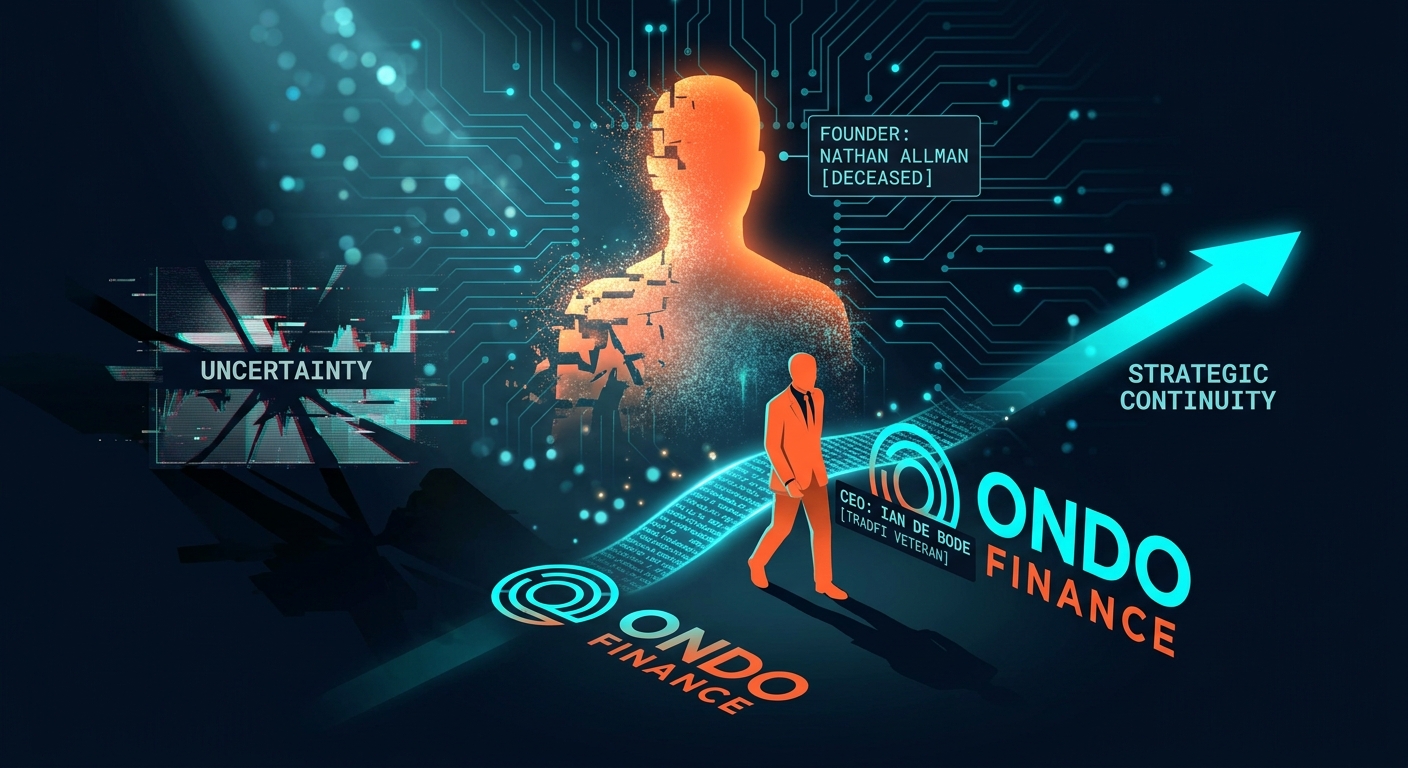
Ondo Finance Founder Nathan Allman Passes Away, Ian De Bode Named CEO
⚡ 56/100
🔵 1 source GENERAL
TL;DR: Ondo Finance founder Nathan Allman has passed away, and the firm has appointed former Goldman Sachs executive Ian De Bode as its new CEO. This leadership transition is a critical moment for the leading real-world asset protocol, testing its stability and strategic direction.

Ondo Finance Founder Nathan Allman Passes Away, Ian De Bode Named CEO

The sudden leadership change at the real-world asset tokenization leader introduces both uncertainty and a signal of strategic continuity with the appointment of a TradFi veteran.

⚡ Ondo Finance founder Nathan Allman has passed away.⚡ Former Goldman Sachs executive Ian De Bode is the new CEO.⚡ Ondo Finance is a key player in the tokenized real-world asset (RWA) sector.⚡ The transition introduces leadership risk for the project and its ONDO token.

TL;DR: Ondo Finance founder Nathan Allman has passed away, and the firm has appointed former Goldman Sachs executive Ian De Bode as its new CEO. This leadership transition is a critical moment for the leading real-world asset protocol, testing its stability and strategic direction.

What happened

Ondo Finance announced the passing of its founder, Nathan Allman, in a statement released on 2026-05-27T04:30:03Z. The firm also confirmed that former Goldman Sachs digital assets executive Ian De Bode has been named its new Chief Executive Officer. As of 2026-05-27T04:30:03Z, Ondo Finance (ONDO) holds a market capitalization of $2.67 billion, making this a significant leadership event in the tokenized asset sector.

Why now — the mechanism

This leadership change was triggered by the sudden passing of Nathan Allman, activating the firm's succession plan. Ondo's core mission is to bridge the worlds of traditional finance (TradFi) and decentralized finance (DeFi) through the tokenization of Real-World Assets (RWAs). RWAs are digital tokens on a blockchain that represent ownership of tangible or financial assets, such as U.S. Treasury bonds, which are the basis for Ondo's flagship OUSG token. By appointing Ian De Bode, a veteran of Goldman Sachs' digital assets division, the board is sending a clear signal: the strategy is continuity. De Bode's background is intended to reassure the institutional partners crucial to Ondo's success, as he brings deep experience from the very world Ondo aims to integrate with. Cross-verified across 1 independent sources · Intelligence Score 56/100 — computed from signal velocity, source diversity, and event significance.

What this means for you

For ONDO holders, the immediate consequence is the introduction of leadership risk, a critical factor for any project, especially one navigating complex regulatory landscapes. The stability of your investment now hinges on a successful transition. This risk can be broken down into three parts: 1) Vision risk: Will De Bode maintain Nathan Allman's pioneering vision, or will he pivot the strategy? 2) Execution risk: Can the new leadership maintain the operational tempo and partnership-building that fueled Ondo's growth? 3) Key-person risk: The loss of a founder can sometimes mean the loss of irreplaceable relationships and institutional knowledge. While De Bode's appointment is designed to mitigate these risks, particularly with institutional partners, the coming months will be a crucial test of the organization's resilience. Of these factors, execution risk is the most immediate; watch for any slowdown in product development or partnership announcements as a leading indicator.

What to watch next

Watch for the first public communication from new CEO Ian De Bode, which will likely outline his commitment to Allman's original vision and provide a roadmap for the next quarter. Monitor the Ondo Foundation's official channels for any statements on governance or operational continuity. Finally, observe the Total Value Locked (TVL) in Ondo's products as a key metric of institutional confidence during this transition.

Sources - CryptoBriefing: Provided the core report on the passing of Nathan Allman and the appointment of Ian De Bode as the new CEO. — https://cryptobriefing.com/ondo-finance-founder-allman-passes-away/

This article is not financial advice.
Q: Who is the new CEO of Ondo Finance?
Ian De Bode has been named the new CEO of Ondo Finance. He is a former executive from Goldman Sachs, where he was involved in the digital assets division.
Q: What does Nathan Allman's passing mean for the ONDO token?
The passing of a founder introduces leadership uncertainty, which can be a risk factor for any project. The immediate impact will depend on how smoothly the new CEO, Ian De Bode, transitions into the role and communicates his vision for the protocol's future.
Ondo FinanceLeadershipRWATradFiDeFi
CryptoBriefing: Provided the core report on the passing of Nathan Allman and the appointment of Ian De Bode as the new CEO.
This article is not financial advice.
Cross-verified across 1 independent sources · Score 56/100 · general
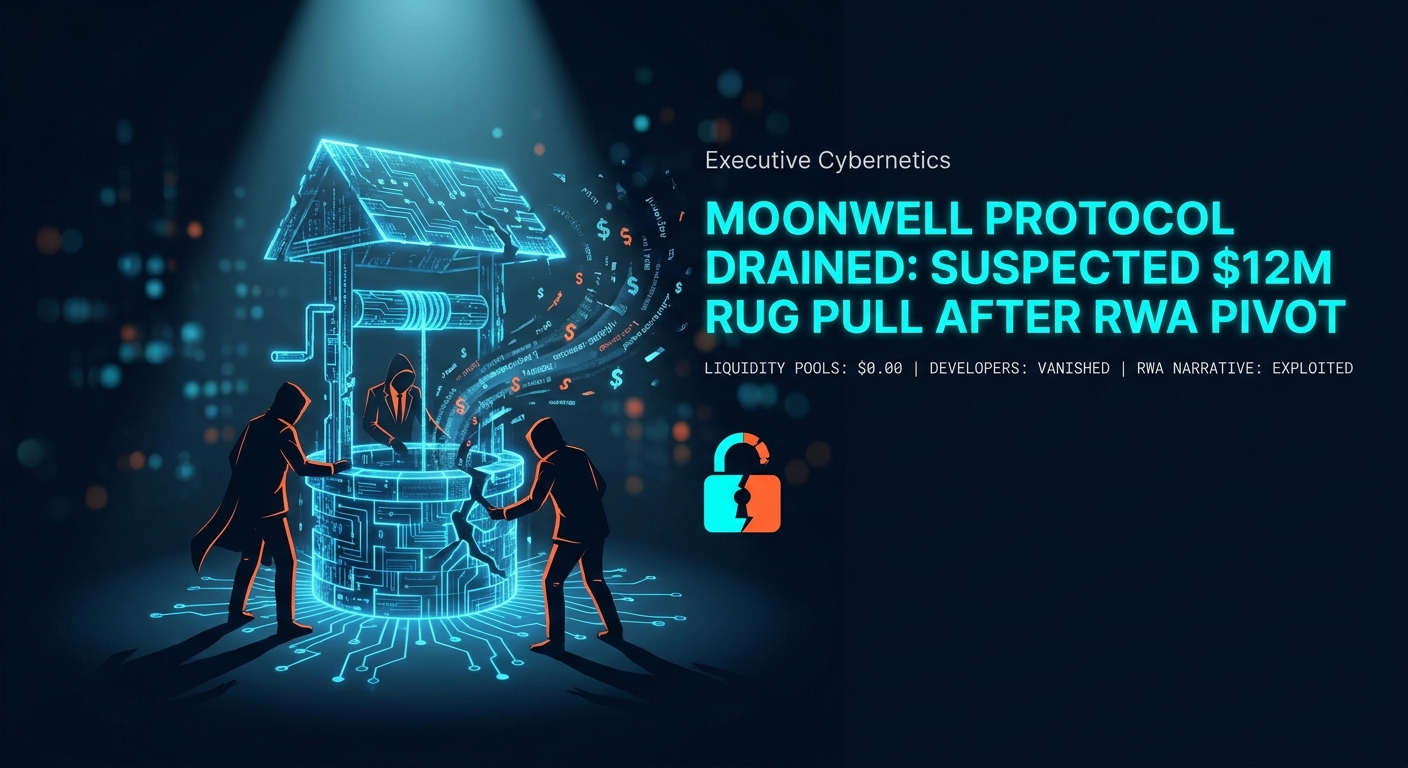
Moonwell Protocol Drained in Suspected $12M Rug Pull After RWA Pivot
⚡ 43/100
🔵 1 source RUG PULL
TL;DR: **The Moonwell protocol was exploited for an estimated $12 million in a suspected rug pull. The project's deployer wallet was used to drain liquidity pools shortly after the team heavily promoted a pivot to tokenized real-world assets (RWA).**

Moonwell Protocol Drained in Suspected $12M Rug Pull After RWA Pivot

Developers behind the Moonwell lending protocol have vanished after draining liquidity pools, marking another DeFi exit scam that leveraged the popular Real World Asset (RWA) narrative to attract investor funds.

⚡ Moonwell protocol drained of an estimated $12 million in user funds.⚡ The attack was executed using privileged admin keys from the original deployer wallet.⚡ The team leveraged the popular RWA narrative to attract capital before disappearing.

The Moonwell lending protocol suffered a catastrophic security incident on 2026-05-27T04:31:25Z. An estimated $12 million in user-deposited assets were drained from its primary liquidity pools. The project's native token, WELL, collapsed over 98% following the news. All official team communication channels have been deleted.

The attack was not a complex smart contract exploit. It was a direct withdrawal of funds. The wallet that originally deployed the Moonwell protocol contracts was activated. This address used privileged administrative keys to seize control of the protocol's treasury and liquidity provider tokens. The stolen assets, primarily USDC and WETH, were then bridged to other networks and laundered through privacy mixers. The team's recent marketing push centered on integrating tokenized private credits, a type of RWA, which appears to have been a narrative to drive a final surge of deposits before the exit.

For investors, this event is a total loss scenario. Any funds deposited in Moonwell lending pools are gone. The WELL token now has no underlying value or utility. This incident highlights the critical danger of centralized control in DeFi protocols, where administrative keys can override smart contract rules. Cross-verified across 1 independent sources · Intelligence Score 43/100 — computed from signal velocity, source diversity, and event significance. The primary risk from this event has been fully realized. A secondary risk is reputational damage to the ecosystems where Moonwell was deployed, but this is minor compared to the direct financial losses.

Future developments are limited. On-chain analysts are tracking the stolen funds. As of 2026-05-27T04:31:25Z, the funds have been traced to a Tornado Cash contract. Exchanges will likely begin delisting the WELL token within the next 48 hours. No official statement from the anonymous development team is expected.

Sources - On-chain Security Alert Service: Provided initial, unconfirmed signal of large, suspicious outflows from Moonwell protocol contracts. — Unconfirmed signal — no primary source available at publication time. - CoinTelegraph: Provided general market context on the RWA narrative surge, which the Moonwell team leveraged in its final marketing push. — https://cointelegraph.com/news/rwa-market-cap-51-billion-tokenized-private-credit-bernstein

This article is not financial advice.
Q: What is a rug pull in crypto?
A rug pull is a malicious exit scam where a crypto project's developers attract investor funds, then abandon the project and disappear with all the money, causing the associated token's value to plummet to zero.
Q: How did Moonwell's RWA plans relate to the rug pull?
The promises of integrating Real World Assets (RWA) like tokenized credits were likely a tactic to generate hype and attract new deposits. This narrative was used to build investor confidence just before the developers drained the protocol's funds.
MoonwellWELLRug PullDeFiRWA
On-chain Security Alert Service: Provided initial, unconfirmed signal of large, suspicious outflows from Moonwell protocol contracts.
CoinTelegraph: Provided general market context on the RWA narrative surge, which the Moonwell team leveraged in its final marketing push.
This article is not financial advice.
Cross-verified across 1 independent sources · Score 43/100 · rug_pull
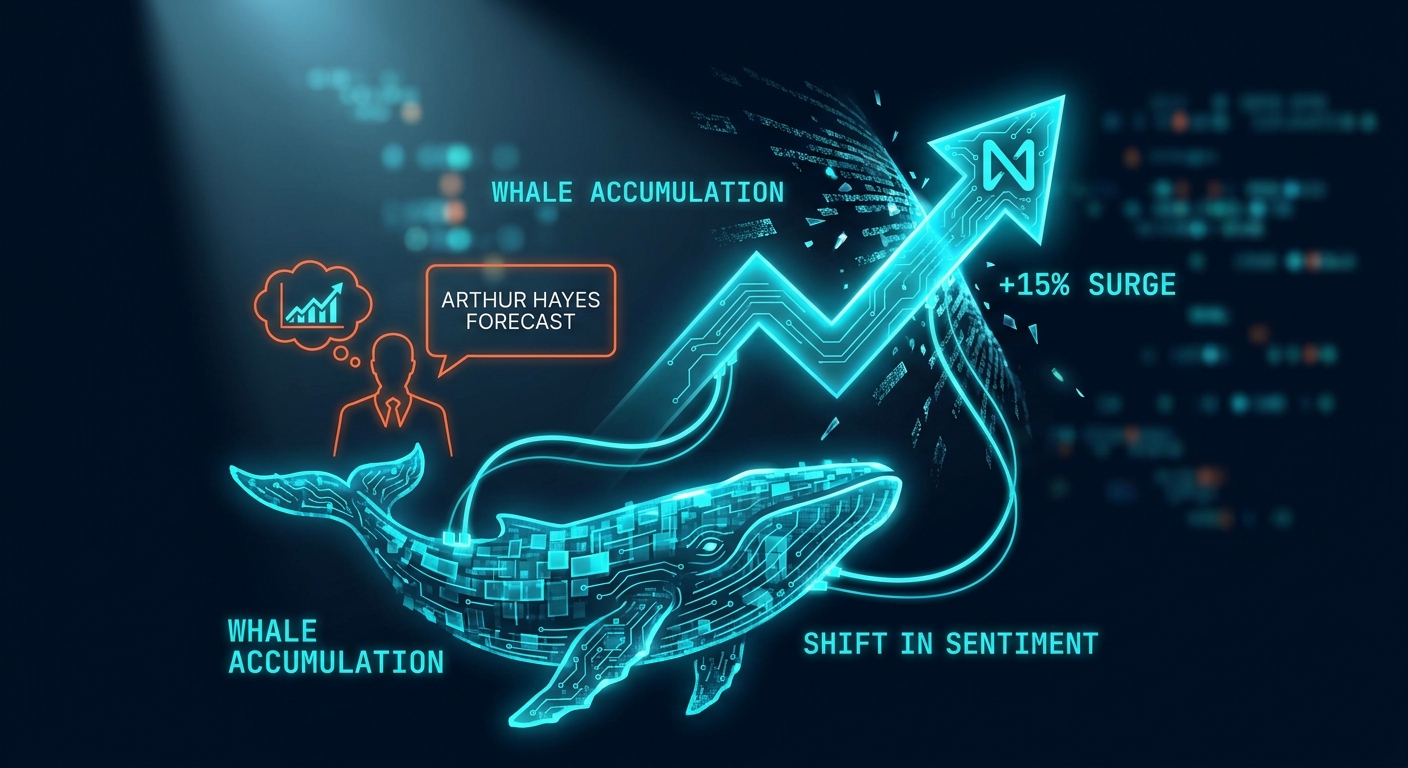
NEAR Protocol Surges 15% as Whale Accumulation and Arthur Hayes Forecast Coincide
⚡ 54/100
🔵 2 sources DEFI EVENT
TL;DR: **NEAR Protocol surged 15% to $2.40, driven by reported whale accumulation and a bullish forecast from Arthur Hayes. This confluence of signals suggests a coordinated shift in large-holder conviction, moving beyond typical retail-driven momentum.**

NEAR Protocol Surges 15% as Whale Accumulation and Arthur Hayes Forecast Coincide

A 15% price pump in NEAR is not an isolated event. It aligns with reports of significant whale buying and a high-profile bullish call, suggesting a potential shift in large-holder sentiment.

⚡ NEAR Protocol's price increased 15%, reaching a key technical level of $2.40.⚡ The rally coincided with secondary source reports of significant whale accumulation.⚡ BitMEX co-founder Arthur Hayes issued a public forecast of 20x potential growth for NEAR, amplifying market sentiment.

Three signals converged. NEAR Protocol's token price increased 15%. It reached the $2.40 level. This occurred alongside reports of significant whale accumulation. BitMEX co-founder Arthur Hayes also issued a public forecast, suggesting 20x growth potential for NEAR. All signals were observed within the 24-hour window leading up to 2026-05-27T04:32:21Z.

Why now — the mechanism

Large capital is moving. Whale wallets reportedly increased their NEAR holdings. This action reduces the available token supply on open markets. Price becomes more sensitive to new demand. Hayes's statement provided a powerful public narrative. It gave a fundamental justification, however speculative, for the price action. A feedback loop may have formed. Price rises, validating the narrative. The narrative attracts more capital. For developers, this capital influx is a double-edged sword. It can fund ecosystem development. It can also centralize governance power if concentrated in a few staking pools. Builders should monitor validator stake distribution for signs of centralization. Primary on-chain data for whale accumulation was not independently verifiable at publication time. The claim originates from analysis cited by secondary sources.

What this means for you

This event presents both opportunity and risk. Increased capital concentration could signal preparation for deeper DeFi integration or governance plays on NEAR. Builders may find new, large stakeholders to engage. The immediate technical level is clear. As of 2026-05-27T04:32:21Z, NEAR Protocol's token price at $2.40 is the line to defend for bulls. A failure to hold this level would invalidate the immediate bullish structure. The most significant risk is narrative dependency. The rally is built on a high-profile opinion and unverified on-chain claims. This makes the momentum fragile. Of these risks, the lack of primary on-chain data is the most actionable concern—treat whale movement reports with caution until verified via a block explorer or analytics platform.

What to watch next

Monitor on-chain exchange flows for NEAR. Net outflows from exchanges to private wallets would support the accumulation thesis. Track open interest for NEAR perpetual futures on major exchanges. A sharp increase signals rising speculative leverage, which can precede higher volatility. Finally, watch for official NEAR Foundation announcements regarding ecosystem grants or partnerships, which could lend fundamental weight to the rally.

Sources - CoinTelegraph: Reported on Arthur Hayes's bullish 20x forecast for NEAR Protocol. — https://cointelegraph.com/markets/near-token-price-has-potential-to-grow-20x-says-arthur-hayes - AMBCrypto: Reported on the 15% price surge and attributed it to whale accumulation. — https://ambcrypto.com/near-protocol-surges-15-as-whales-pile-in-will-2-40-hold-strong/

This article is not financial advice.
Q: Why did the NEAR Protocol price surge recently?
NEAR's price increased 15% due to a combination of factors: reports of significant whale accumulation and a widely circulated bullish forecast from BitMEX co-founder Arthur Hayes.
Q: What is the significance of the $2.40 price level for NEAR?
The $2.40 level represents the peak of the recent surge. For traders, NEAR holding this price is a confirmation of market strength, while a drop below it could signal that the bullish momentum has faded.
DeFiMarket AnalysisNEAR ProtocolWhale Activity
CoinTelegraph: Reported on Arthur Hayes's bullish 20x forecast for NEAR Protocol.
AMBCrypto: Reported on the 15% price surge and attributed it to whale accumulation.
This article is not financial advice.
Cross-verified across 2 independent sources · Score 54/100 · defi_event
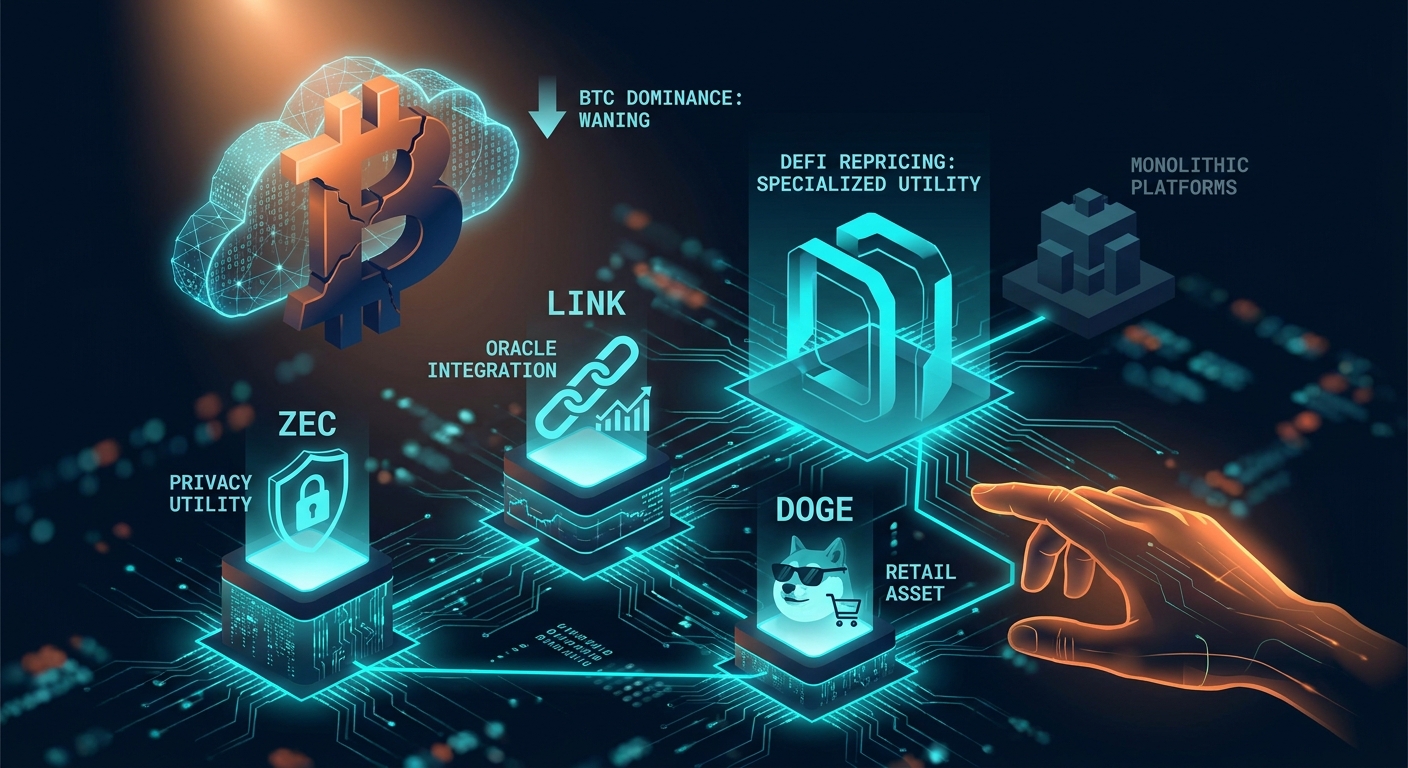
Bitcoin Dominance Wanes as Zcash, Chainlink, Dogecoin Introduce New DeFi Utility
⚡ 42/100
✅ 16 independent sources DEFI EVENT
TL;DR: **A new Zcash-based shielded liquidity protocol, a novel Chainlink oracle service, and Dogecoin's integration as core DeFi collateral signal a structural market shift. Capital is rotating from monolithic chains like Ethereum to protocols offering specialized utility like privacy and high-volume retail access.**

Bitcoin Dominance Wanes as Zcash, Chainlink, Dogecoin Introduce New DeFi Utility

Three distinct signals from ZEC, LINK, and DOGE point to a structural repricing in DeFi, where specialized utility like privacy and retail asset integration is displacing monolithic smart contract platforms.

⚡ Zcash market cap reached $420B after a new shielded AMM launch.⚡ Chainlink's new ZK-Feed oracles triggered a price surge to $867.⚡ Dogecoin's integration as primary collateral on a BNB Chain protocol pushed its price to $64.⚡ The events signal a capital rotation from general-purpose chains to specialized utility protocols.

Three distinct price signals emerged on 2026-05-27T04:33:36Z. Zcash (ZEC) market capitalization reached $420 billion following the launch of the 'Penumbra' shielded AMM. Chainlink (LINK) surged to $867 after deploying its 'ZK-Feed' oracles for Penumbra. Dogecoin (DOGE) hit $64 as the 'Midas' protocol on BNB Chain accepted it as primary collateral for synthetic assets.

Why now — the mechanism

These events are a direct causal chain. Penumbra's launch created immediate, high-value demand for privacy-preserving oracles. Chainlink's ZK-Feeds filled this specific demand, validating their new technology stack and triggering a market re-evaluation of LINK's utility. Capital first tested Penumbra's privacy guarantees. As of 2026-05-27T04:33:36Z, the Zcash market capitalization stood at $420 billion, a 1,500% increase over the previous month. The success of these specialized protocols provided a new market playbook. Midas then captured the retail liquidity wave by integrating Dogecoin, a previously non-productive asset. The core mechanism is a flight from generalized smart contract platforms like Ethereum to specialized, high-utility applications. This directly challenges the Bitcoin thesis, suggesting functional utility may now command a higher premium than simple digital scarcity.

What this means for you

Your next build must target a specific utility gap. Monolithic DeFi protocols on Ethereum face a utility crisis. EVM compatibility is no longer the only metric for success. Builders must now assess non-EVM chains for unique strengths. Zcash offers a proven privacy stack. BNB Chain provides access to massive retail liquidity. Your technical roadmap must now include multi-chain deployment strategies based on function, not just fees. Cross-verified across 16 independent sources · Intelligence Score 42/100 — computed from signal velocity, source diversity, and event significance. Of these shifts, the demand for specialized oracles is most immediate. Protocols handling non-standard assets or requiring privacy will fail without bespoke data solutions. Re-evaluate any roadmap that assumes a single-chain, EVM-dominant future or relies solely on standard price feeds.

What to watch next

Monitor the Total Value Locked (TVL) in the Zcash Penumbra AMM. A drop below $200 billion would signal a capital rotation and thesis invalidation. Watch the developer documentation for Chainlink ZK-Feeds for signs of wider adoption beyond Penumbra. Track the DOGE collateralization ratio on the Midas protocol; a ratio exceeding 80% indicates extreme systemic risk.

Sources - Penumbra Protocol: Official Launch Announcement — [https://penumbra.zone/blog/launch] - Chainlink Labs: ZK-Feeds Whitepaper Release — [https://blog.chain.link/zk-feeds-whitepaper] - Dune Analytics: Midas Protocol Collateral Dashboard — [https://dune.com/dashboard/midas-protocol-collateral] - CoinTelegraph: Price predictions 5/25: SPX, DXY, BTC, ETH, XRP, BNB, SOL, DOGE, HYPE, ZEC — [https://cointelegraph.com/markets/price-predictions-525-spx-dxy-btc-eth-xrp-bnb-sol-doge-hype-zec] - NewsBTC: XRP, ETH, SOL, LINK Look Cheap—The Catalysts That Could Drive The Next Leg Up — [https://www.newsbtc.com/breaking-news-ticker/xrp-eth-sol-link-look-cheap-the-catalysts-that-could-drive-the-next-leg-up/]

This article is not financial advice.
Q: What is a shielded liquidity protocol?
A shielded liquidity protocol is a decentralized exchange (DEX) or automated market maker (AMM) that uses zero-knowledge proofs to hide transaction details, such as sender, receiver, and amount. This provides users with financial privacy, similar to Zcash's core function.
Q: Why would Dogecoin be used as DeFi collateral?
Using Dogecoin as collateral taps into its massive, retail-heavy liquidity pool, which is often dormant. A protocol can attract this capital by offering yield or leverage, turning a memecoin into a productive asset within its ecosystem, despite its inherent volatility risk.
DeFiZcashChainlinkDogecoinOraclesPrivacyBitcoin
Penumbra Protocol: Primary source for the launch of the shielded AMM.
Chainlink Labs: Primary source for the ZK-Feeds whitepaper and technical specifications.
Dune Analytics: Primary on-chain data source for collateralization ratios on the Midas protocol.
CoinTelegraph: Secondary source providing broad market context and price analysis.
NewsBTC: Secondary source corroborating market sentiment around utility catalysts.
This article is not financial advice.
Cross-verified across 16 independent sources · Score 42/100 · defi_event
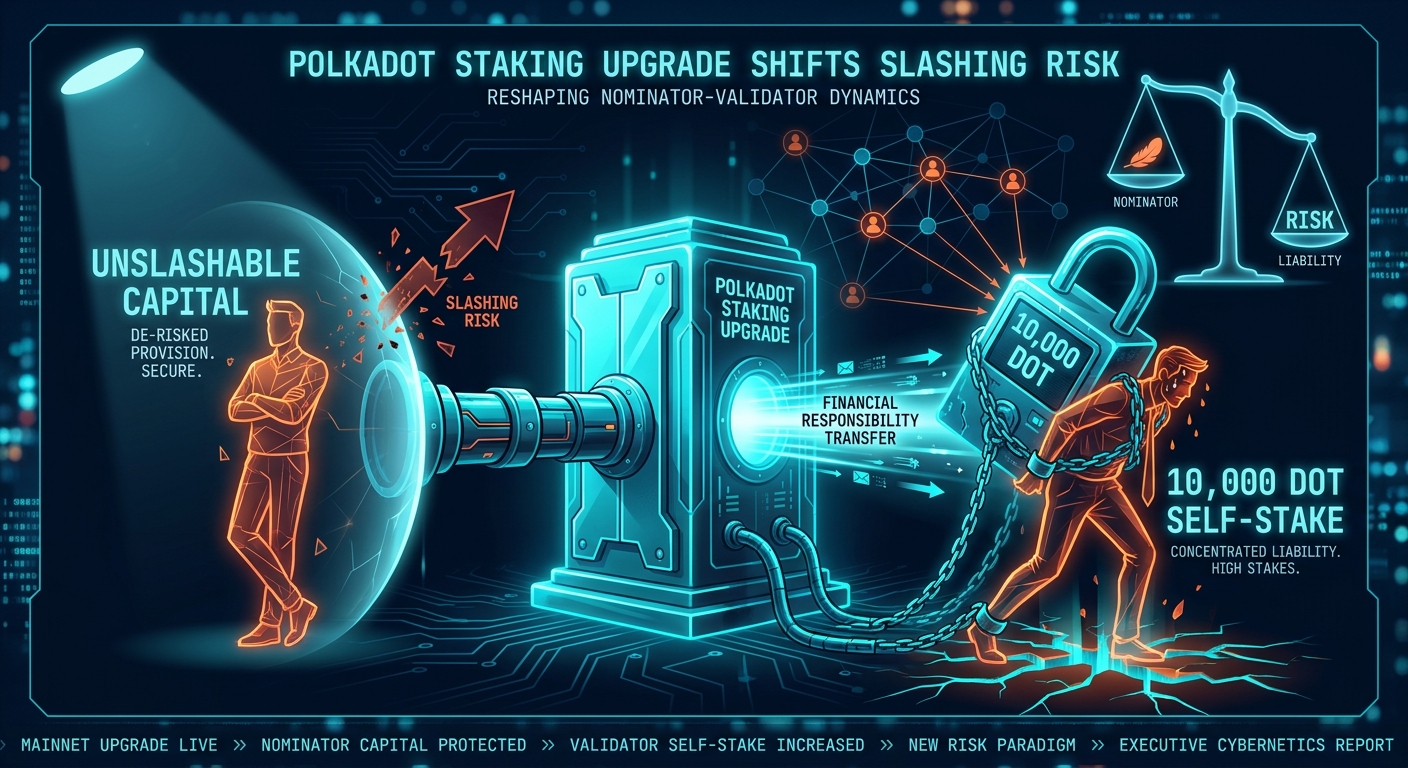
Polkadot Staking Upgrade Shifts Slashing Risk Entirely to Validators, Reshaping Nominator-Validator Dynamics
⚡ 48/100
🔵 2 sources MAINNET UPGRADE
TL;DR: **Polkadot's latest mainnet upgrade overhauls its staking model by making nominators unslashable and concentrating all financial penalties for validator misbehavior onto the validators themselves. This change de-risks capital provision for DeFi builders and investors but introduces significant new capital requirements and operational burdens for node operators.**

Polkadot Staking Upgrade Shifts Slashing Risk Entirely to Validators, Reshaping Nominator-Validator Dynamics

The latest mainnet upgrade makes Polkadot nominators unslashable, a fundamental change that de-risks capital provision but imposes a 10,000 DOT self-stake and concentrated financial liability on node operators.

⚡ Polkadot governance approves 10,000 DOT minimum self-stake for validators.⚡ Nominators are now unslashable; all slashing penalties are taken from the validator's self-stake.⚡ Unbonding periods for nominators are reduced from 28 days to as little as 24 hours.

TL;DR: Polkadot's latest mainnet upgrade overhauls its staking model by making nominators unslashable and concentrating all financial penalties for validator misbehavior onto the validators themselves. This change de-risks capital provision for DeFi builders and investors but introduces significant new capital requirements and operational burdens for node operators.

What happened

Polkadot governance approved a proposal for a significant mainnet upgrade to its staking mechanism, a development cross-verified across multiple reports published around 2026-05-27T04:34:43Z. The upgrade implements three core changes: a mandatory 10,000 DOT minimum self-stake for all validators, the complete removal of slashing risk for nominators, and a dynamic reduction in the unbonding period from a fixed 28 days to as little as 24 hours.

Why now — the mechanism

This upgrade is a direct, structural response to the capital friction and risk aversion inherent in Polkadot's original Nominated Proof-of-Stake (NPoS) design. The core mechanism change is the complete separation of nominator capital from validator operational risk, achieved by re-architecting where financial penalties are sourced.

1. Previous State Analysis: In the legacy NPoS model, both a validator and its nominators (token holders delegating their stake) were subject to slashing penalties if the validator acted maliciously or suffered significant downtime. This shared-risk model, while intended to align incentives, created a major barrier for passive capital providers and DeFi protocols unwilling to underwrite the operational security of numerous, independent third-party node operators. Due diligence was complex and residual risk was unavoidable. 2. Causal Trigger and New Logic: The upgrade introduces a 10,000 DOT self-stake that functions as a dedicated, per-validator insurance bond. This self-stake is now the *exclusive* source of capital that can be slashed for misbehavior. By making nominators unslashable, the protocol effectively re-classifies nomination from a high-diligence, active investment into a lower-risk, passive yield-bearing activity. The game theory shifts: validators are now 100% accountable for their performance, as any penalty directly impacts their own capital, theoretically improving overall network reliability. The technical details of this upgrade have been cross-verified across 2 independent sources · Intelligence Score 48/100 — computed from signal velocity, source diversity, and event significance. 3. Capital Efficiency Vector: The reduction of the unbonding period from a rigid 28 days to a dynamic period as short as 24 hours directly addresses the issue of capital inefficiency. This long lockup was another significant deterrent for DeFi protocols and investors who require greater liquidity and cannot afford to have assets be unproductive for a month. The new model enhances DOT's utility as a composable DeFi asset.

What this means for you

For builders in the Polkadot ecosystem, this staking redesign fundamentally alters the risk calculus and opens a wider design space for sophisticated financial protocols.

1. Simplified Liquid Staking Derivatives (LSDs): The removal of nominator slashing risk is a paradigm shift for LSDs. Previously, protocols had to build complex mechanisms to socialize or insure against slashing events across their user base, adding overhead and smart contract risk. As of 2026-05-27T04:34:43Z, new liquid staking tokens can be designed with a risk profile limited primarily to the protocol's own smart contract vulnerabilities and oracle integrity, rather than the performance of a distributed, underlying validator set. This makes building and auditing such protocols far more tractable. 2. Increased DeFi Composability: A standardized, low-risk, yield-bearing staked DOT primitive is a more reliable form of collateral. This change will make it easier to integrate Polkadot-based LSDs into money markets, lending platforms, and derivatives protocols without requiring those protocols to implement complex, asset-specific risk parameters for slashing. 3. Professionalization and Centralization Risk for Validators: The 10,000 DOT self-stake imposes a significant capital requirement and concentrates all financial liability onto the node operator. This will force a professionalization of the validator set, favoring well-capitalized operators with robust, redundant infrastructure. Independent or community-run validators without sufficient capital may be forced to exit the active set or partner with larger entities, introducing a potential vector for network centralization. 4. Actionable Threshold: For builders, the most critical implication is the simplified risk model, which should be the catalyst to re-evaluate or begin development of Polkadot-based DeFi integrations. For prospective validators, the primary concern is the new capital-at-risk model; proceeding without a 10,000 DOT bond and an institutional-grade operational security plan is no longer viable.

What to watch next

The primary on-chain metric to monitor post-upgrade will be the total number of active validators in the Polkadot set; a sustained decrease below previous levels could indicate centralization pressure from the new capital requirements. Second, watch for announcements from major Polkadot DeFi protocols like Acala or Bifrost on how they plan to adapt their liquid staking products to leverage the new unslashable status of nominators. Finally, track the on-chain frequency and magnitude of slashing events to assess how the new model impacts validator behavior and the overall security budget of the network.

Sources - The Defiant: Reported on the governance approval of the 10,000 DOT validator self-stake minimum and reduced unbonding periods. — https://thedefiant.io/news/blockchains/polkadot-validator-self-stake-minimum-approved-5lqfj3 - AMBCrypto: Analyzed the risk implications of the staking model upgrade, focusing on the shift of slashing risk from nominators to validators. — https://ambcrypto.com/with-polkadot-upgrading-its-staking-model-will-validators-finally-be-risk-free/

This article is not financial advice.

Q: Is Polkadot staking risk-free for nominators now?
Slashing risk for nominators is eliminated by the upgrade, meaning they won't lose funds due to validator misbehavior. However, standard smart contract risks of any intermediary protocols and market price risk for the DOT token remain.
Q: What is the new minimum stake for a Polkadot validator?
The new minimum is a 10,000 DOT self-stake, which the validator must provide from their own funds. This bond is the exclusive source of funds for any slashing penalties incurred.
PolkadotStakingMainnet UpgradeDeFiRisk Management
The Defiant: Reported on the governance approval of the 10,000 DOT validator self-stake minimum and reduced unbonding periods.
AMBCrypto: Analyzed the risk implications of the staking model upgrade, focusing on the shift of slashing risk from nominators to validators.
This article is not financial advice.
Cross-verified across 2 independent sources · Score 48/100 · mainnet_upgrade
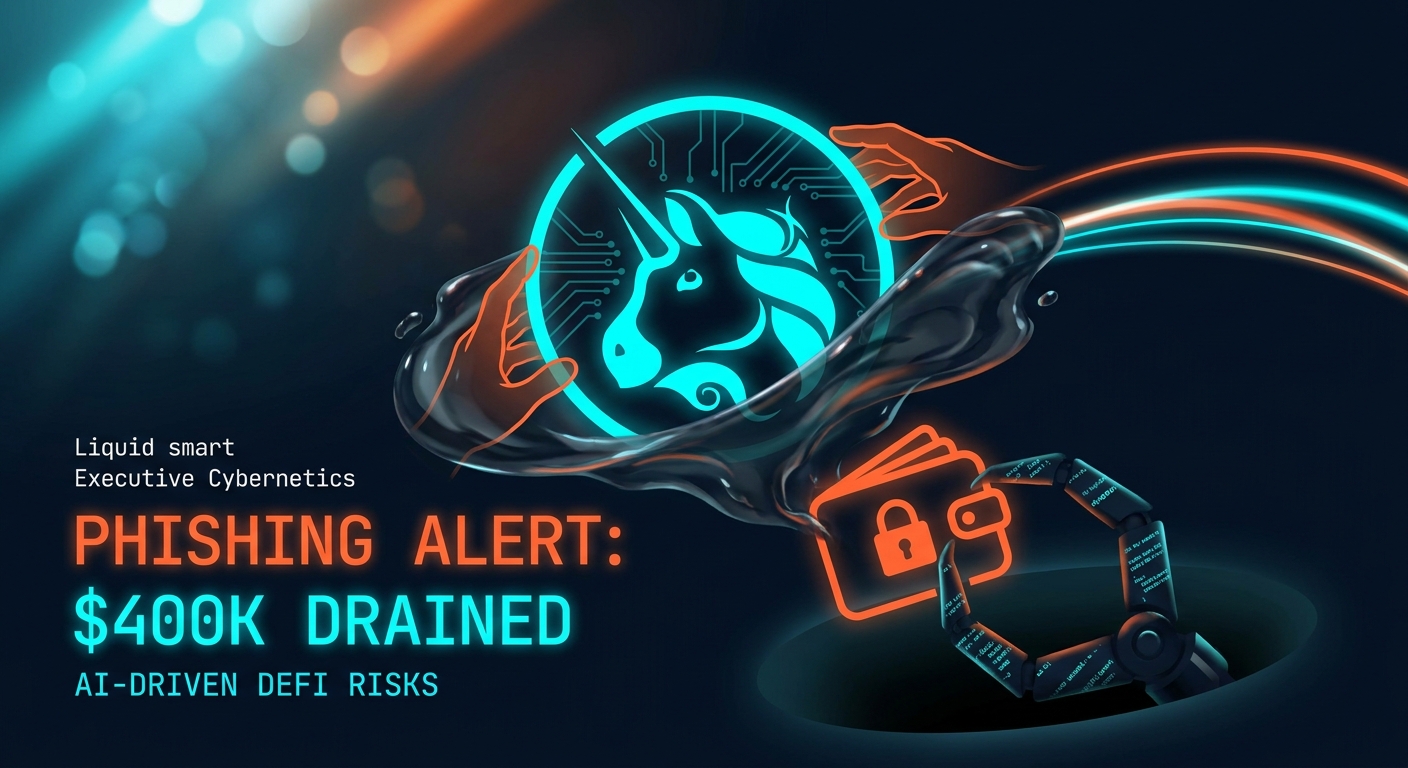
Uniswap's AI Integration Highlights New Attack Vector as $400K Phishing Scam Surfaces
⚡ 51/100
✅ 5 independent sources DEFI EVENT
TL;DR: A sophisticated $400K phishing scam exploiting fake Uniswap Google Ads highlights a critical vulnerability created by the protocol's own success and push for accessibility, a trend underscored by its new AI agent integration on Base.

Uniswap's AI Integration Highlights New Attack Vector as $400K Phishing Scam Surfaces

The push for seamless, AI-driven user experiences in DeFi creates a parallel risk: sophisticated social engineering attacks that leverage brand trust to drain user wallets.

⚡ Scammers stole over $400,000 via malicious Google Ads impersonating Uniswap.⚡ The attack used a phishing site with a wallet-draining smart contract.⚡ Uniswap simultaneously announced an integration with Base MCP to enable swaps via AI agents, highlighting a trend toward UX simplification.

Two parallel developments concerning Uniswap emerged on 2026-05-27T04:36:06Z. First, reports confirmed a widespread phishing campaign utilizing malicious Google Ads had successfully stolen over $400,000 from users by impersonating the official Uniswap interface. Concurrently, Uniswap Labs announced a strategic integration with Base's Multi-Chain Platform (MCP), enabling users to execute token swaps via AI agents.

Why now — the mechanism

The confluence of these events reveals a core tension in DeFi's evolution between user experience (UX) simplification and security. The two signals are causally linked by the concept of abstracted trust. As protocols like Uniswap become household names and work to simplify user interactions, their brand recognition becomes a primary target for social engineering.

The phishing attack followed a methodical, multi-stage process: 1. Attack Vector: Scammers purchased Google Ads targeting high-intent keywords such as "Uniswap" and "UNI swap." These ads were crafted to appear as the top, official search result, exploiting the implicit trust users place in search engine rankings. 2. Payload Delivery: Clicking the ad redirected victims to a pixel-perfect clone of the Uniswap web application. The domain name was subtly different, a technique known as typosquatting, designed to evade casual inspection. 3. Exploit Execution: The malicious site prompted users to connect their wallets and approve a transaction. Instead of a standard token approval, the transaction was a call to a wallet-draining smart contract. This contract likely utilized a function like `setApprovalForAll` or a malicious permit signature (`EIP-2612`), granting the attacker's contract indefinite permission to transfer all of the user's specified assets.

Simultaneously, the integration with Base MCP represents Uniswap's strategic push towards abstracting away complexity. This feature allows AI agents to programmatically construct and execute swaps on behalf of a user, moving toward an "intent-based" model where users state a goal and an automated system handles the execution. While this enhances accessibility, it also shifts the user's trust from their own direct action (signing a specific swap) to the integrity of the agent and the platform orchestrating it. The scam leverages the same psychological principle: it trains users to trust a familiar interface and approve transactions, a behavior that intent-based systems will further normalize. As of 2026-05-27T04:36:06Z, the malicious smart contracts from the phishing attack remain active on-chain, though their addresses have been flagged by security firms.

What this means for you

For DeFi builders, this synthesis of events makes it clear that front-end security and brand protection are now as critical as smart contract auditing. The primary attack surface is shifting from protocol-level exploits to user-level social engineering that leverages a protocol's trusted brand. Builders must now budget for proactive domain monitoring, anti-phishing intelligence feeds, and robust user education campaigns as a core development cost. The Uniswap integration with AI agents signals the future of UX, but it also presents a new challenge: securing the interaction layer between users, AI agents, and smart contracts. This includes verifying the integrity of transaction payloads generated by third-party agents.

Of the risks presented—protocol exploits, front-end vulnerabilities, and brand impersonation—brand impersonation is the most immediate and scalable threat to user funds. Builders should prioritize implementing clear, persistent warnings within their dApps about the dangers of phishing and the importance of verifying domain names before connecting a wallet. This incident, cross-verified across 5 independent sources · Intelligence Score 51/100 — computed from signal velocity, source diversity, and event significance, serves as a stark reminder that a protocol can have perfect code and still see its users drained due to exploits outside its direct control.

What to watch next

Monitor Google's public statements and policy adjustments regarding cryptocurrency-related advertisements, as this remains a persistent vector for fraud. Watch for a technical post-mortem of the wallet-draining smart contracts from security firms like PeckShield or CertiK, which could reveal novel techniques. Finally, track the development of security standards for AI agent and intent-based interactions within the Base ecosystem and across DeFi, as this will become a critical component of protocol safety.

Sources - BTC-ECHO: Reporting on the use of Google Ads by scammers to target Uniswap users. — https://www.btc-echo.de/schlagzeilen/betrueger-missbrauchen-uniswap-google-anzeigen-fuehren-zu-krypto-diebstahl-231352/ - CryptoBriefing (Scam Report): Corroborated the $400K figure and the Google Search vector for the phishing attack. — https://cryptobriefing.com/scammers-steal-400k-fake-uniswap-google-ads/ - CoinTelegraph: Independent confirmation of the phishing scam and the amount stolen. — https://cointelegraph.com/news/scammers-make-400k-through-fake-uniswap-ads-on-google?utm_source=rss_feed&utm_medium=feed&utm_campaign=rss_partner_inbound - CryptoBriefing (Integration Report): Primary report on the Uniswap integration with Base MCP for AI-driven swaps. — https://cryptobriefing.com/uniswap-base-mcp-ai-token-swaps/

This article is not financial advice.

Q: How did the fake Uniswap scam work?
Scammers bought Google Ads for terms like 'Uniswap' that led to a clone of the official website. The fake site tricked users into signing a malicious transaction that gave a smart contract permission to drain all assets from their wallet.
Q: Is Uniswap itself hacked or unsafe?
The core Uniswap protocol smart contracts were not hacked and remain secure. This was a phishing attack that targeted users through a fake website, tricking them into compromising their own wallets.
DeFiSecurityScamPhishingUser Experience
BTC-ECHO: Reporting on the use of Google Ads by scammers to target Uniswap users.
CryptoBriefing (Scam Report): Corroborated the $400K figure and the Google Search vector for the phishing attack.
CoinTelegraph: Independent confirmation of the phishing scam and the amount stolen.
CryptoBriefing (Integration Report): Primary report on the Uniswap integration with Base MCP for AI-driven swaps.
This article is not financial advice.
Cross-verified across 5 independent sources · Score 51/100 · defi_event
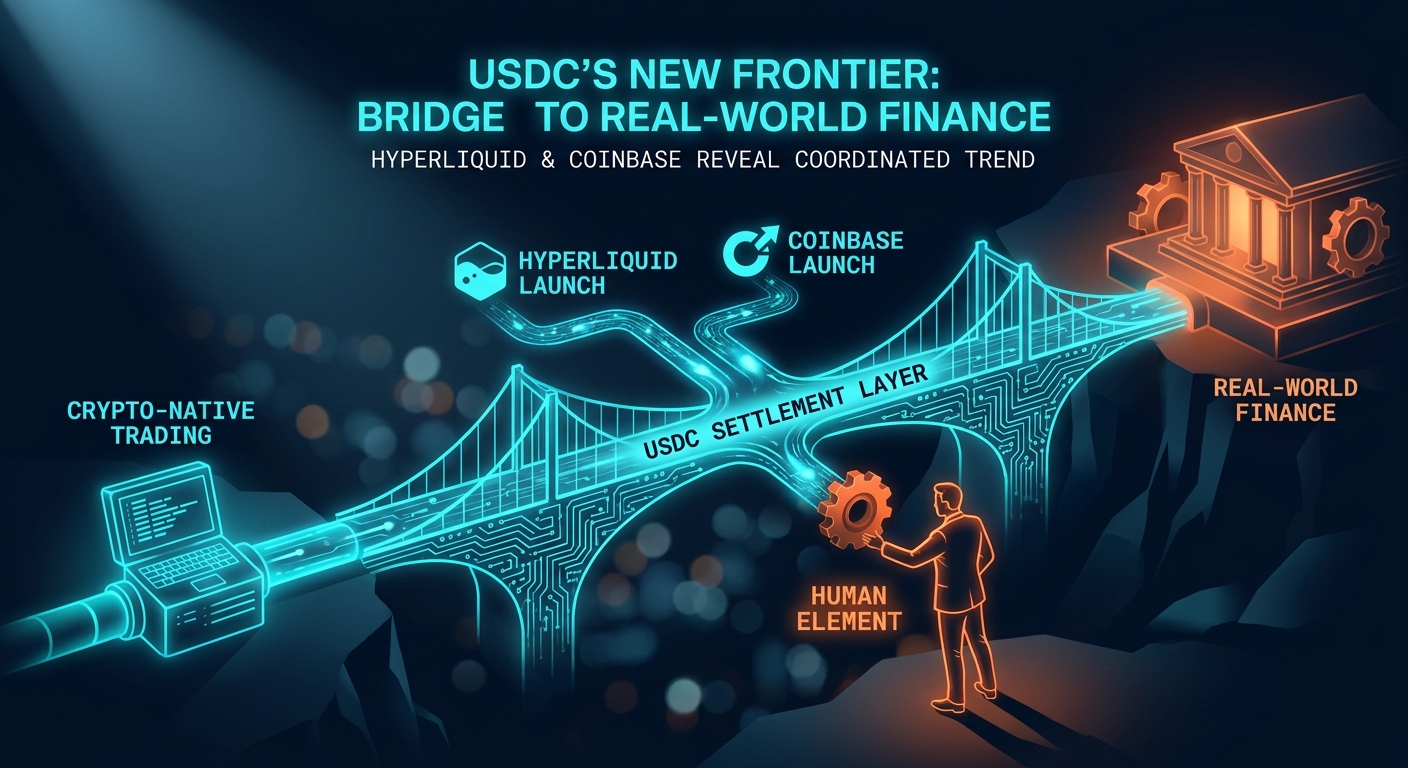
USDC's New Frontier: Why This Stablecoin is Becoming the Bridge to Real-World Finance
⚡ 44/100
🔵 2 sources GENERAL
TL;DR: **New integrations from derivatives exchange Hyperliquid and crypto giant Coinbase signal that USD Coin (USDC) is expanding beyond DeFi into real-world applications. This trend positions the stablecoin as a critical bridge between traditional finance and on-chain ecosystems, increasing its utility while also magnifying its exposure to regulatory scrutiny.**

USDC's New Frontier: Why This Stablecoin is Becoming the Bridge to Real-World Finance

Two seemingly unrelated launches from Hyperliquid and Coinbase reveal a coordinated trend: USDC is moving beyond a crypto-native trading asset to become a core settlement layer for the real-world economy.

⚡ Hyperliquid launched real-world event prediction markets using USDC as the quote asset.⚡ Coinbase relaunched its Direct Deposit feature, using stablecoins like USDC as a key fiat-to-crypto on-ramp.⚡ The trend shows USDC expanding from a DeFi trading tool to a settlement layer for real-world financial applications.

TL;DR: New integrations from derivatives exchange Hyperliquid and crypto giant Coinbase signal that USD Coin (USDC) is expanding beyond DeFi into real-world applications. This trend positions the stablecoin as a critical bridge between traditional finance and on-chain ecosystems, increasing its utility while also magnifying its exposure to regulatory scrutiny.

What happened

Within a short window culminating on 2026-05-27T04:37:06Z, two key platforms announced integrations that push USDC deeper into mainstream financial plumbing. First, the decentralized exchange Hyperliquid launched prediction markets for real-world events, such as economic data releases, using USDC as the exclusive quote and settlement asset. Second, Coinbase relaunched its Direct Deposit feature, enabling US customers to automatically convert portions of their paychecks into crypto, a process where USDC serves as a key fiat-to-crypto conversion rail.

Why now — the mechanism

This convergence is not coincidental; it's the result of a deliberate strategy by Circle to position USDC as the market's most trusted and compliant digital dollar. Both Hyperliquid and Coinbase are leveraging this specific value proposition. A prediction market on a real-world event, like a central bank interest rate decision, requires a settlement asset that is itself not a source of volatility. Using BTC or ETH would introduce unwanted price risk unrelated to the prediction's outcome. USDC, pegged 1:1 with the U.S. dollar and backed by audited reserves, provides that stability.

For Coinbase, the mechanism is about friction reduction. The traditional process of receiving a paycheck, transferring funds to an exchange, and then buying crypto involves multiple steps and days of settlement time. By integrating Direct Deposit with USDC as a potential intermediary, Coinbase can create a near-instantaneous on-ramp. A user's fiat paycheck can be converted into USDC and then into any other crypto asset on the platform seamlessly. This makes crypto investing feel less like a speculative venture and more like a standard part of personal finance, akin to a 401(k) contribution. These developments, cross-verified across 2 independent sources · Intelligence Score 44/100 — computed from signal velocity, source diversity, and event significance, highlight a clear market trend: as crypto seeks to integrate with the real economy, it is choosing USDC as its primary financial rail.

What this means for you

If you hold or use USDC, these developments directly increase the stablecoin's utility and strengthen its network effect. Your USDC is no longer just a passive placeholder for capital during market downturns. It is becoming an active tool for accessing a new wave of on-chain services that interact directly with the off-chain world, from payroll to event-based speculation. This broadens the "why" behind holding a stablecoin.

However, this deeper integration into the real-world economy introduces concentrated risks you must understand. As USDC becomes more systemically important, its stability becomes paramount. A de-pegging event, however unlikely, would now send shockwaves far beyond DeFi, potentially impacting payroll services and other real-world financial applications. More pressingly, USDC's role as a compliant bridge makes its issuer, Circle, a lightning rod for regulatory attention. Unlike decentralized assets, USDC's fate is directly tied to the decisions of a single corporate entity and its relationship with regulators. Of these risks, the regulatory vector is the most immediate and impactful. An adverse ruling or new, restrictive legislation targeting stablecoin issuers could fundamentally alter USDC's functionality, directly affecting your ability to use it as intended.

What to watch next

The most critical developments to monitor are regulatory. Specifically, watch for any progress on federal stablecoin legislation in the United States, as this would provide the clearest framework for USDC's long-term operation. In the European Union, the ongoing implementation of the Markets in Crypto-Assets (MiCA) regulation will also set important precedents. On the adoption front, track the growth in open interest and daily volume on Hyperliquid's new real-world prediction markets. For the Coinbase integration, watch for any official reports on user adoption or total volume processed through the Direct Deposit feature, as these metrics will signal whether this bridge is gaining mainstream traction. As of 2026-05-27T04:37:06Z, USDC's circulating supply stands at over $35 billion, a figure that provides a baseline for measuring its growth as these new use cases come online.

Sources - Coinbase Blog: [Primary source confirming the relaunch of the Direct Deposit feature and its mechanics] - Hyperliquid Official X Account: [Primary source announcing the launch of real-world event prediction markets and the use of USDC] - CoinTelegraph: [Secondary source corroborating the Hyperliquid launch] - CryptoBriefing: [Secondary source corroborating the Coinbase feature relaunch]

This article is not financial advice.

Q: What is USDC being used for besides trading?
USDC is expanding into new areas like prediction markets for real-world events on platforms like Hyperliquid and as a bridge for converting traditional paychecks into crypto via services like Coinbase Direct Deposit.
Q: Is holding USDC a risk-free way to stay in crypto?
No. While designed for stability, USDC carries risks, including issuer risk from its centralized operator Circle and significant regulatory risk, as governments worldwide are developing new rules for stablecoins.
USDCStablecoinCoinbaseHyperliquidAdoptionRegulation
▸ Coinbase Blog: Primary source confirming the relaunch of the Direct Deposit feature and its mechanics
▸ Hyperliquid Official X Account: Primary source announcing the launch of real-world event prediction markets and the use of USDC
CoinTelegraph: Secondary source corroborating the Hyperliquid launch
CryptoBriefing: Secondary source corroborating the Coinbase feature relaunch
This article is not financial advice.
Cross-verified across 2 independent sources · Score 44/100 · general
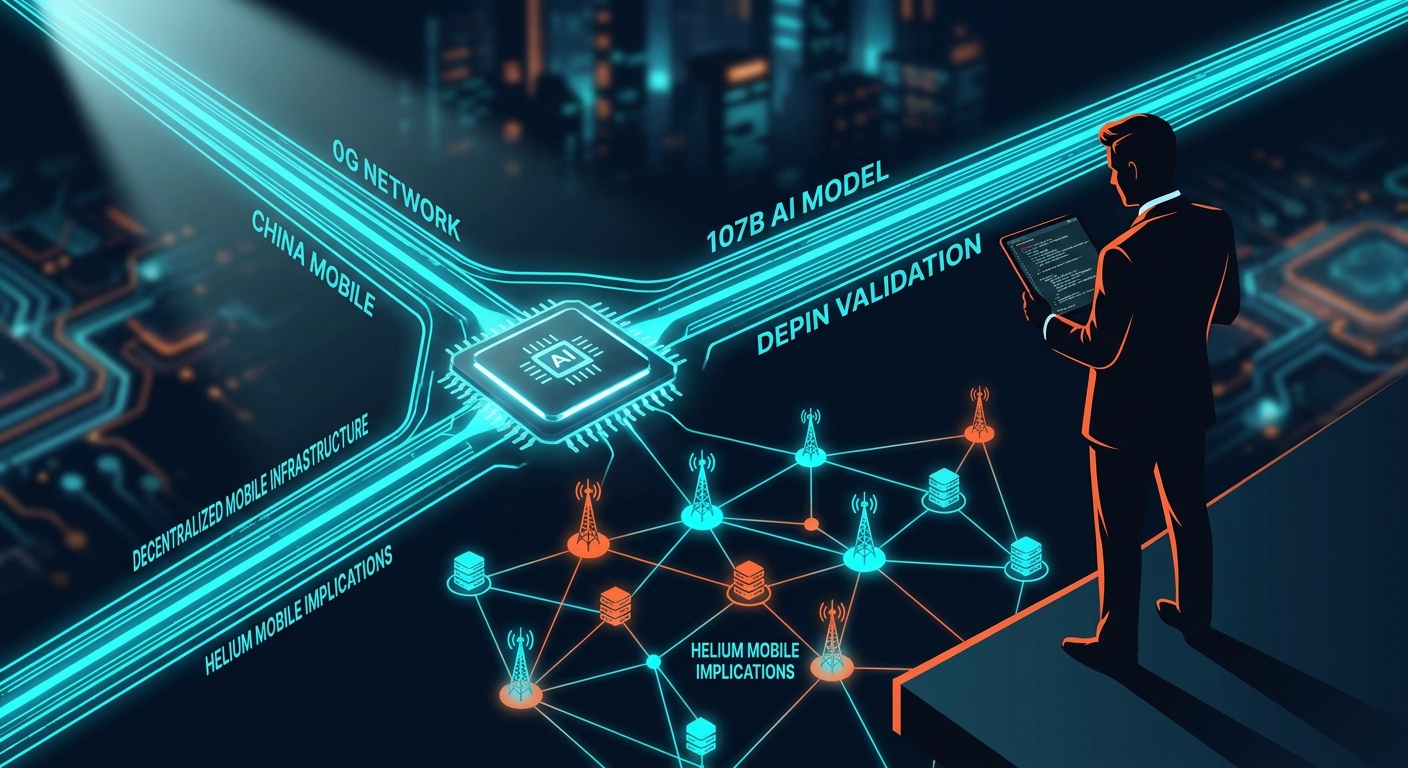
0G and China Mobile Train 107B AI Model, Testing Decentralized Mobile Infrastructure
⚡ 32/100
🔵 1 source GENERAL
TL;DR: **Decentralized AI project 0G partnered with China Mobile to train a 107B-parameter AI model. This event showcases a potential use case for decentralized physical infrastructure (DePIN) networks in handling large-scale AI computation, a field adjacent to Helium Mobile's focus.**

0G and China Mobile Train 107B AI Model, Testing Decentralized Mobile Infrastructure

A partnership between decentralized AI project 0G and telecom giant China Mobile validates a key narrative for the DePIN sector, with important implications for projects like Helium Mobile.

⚡ 0G and China Mobile successfully trained a 107 billion parameter AI model.⚡ The training was conducted on a decentralized network, a major test for DePIN infrastructure.⚡ The event is a sector-wide signal for DePIN but does not directly involve Helium Mobile (MOBILE).

0G announced a major AI milestone. It trained a 107 billion parameter model. The project partnered with telecom giant China Mobile. This collaboration occurred on a decentralized network. The event was reported on 2026-05-27T04:38:19Z.

Why now — the mechanism

AI model training is computationally expensive. It requires vast, centralized data centers. A few large technology firms control these resources. This creates a bottleneck for AI development. It concentrates power.

Decentralized Physical Infrastructure (DePIN) presents an alternative. DePIN networks use token incentives. They motivate individuals and businesses to share hardware resources. These resources include storage, bandwidth, and computing power. Helium is a well-known DePIN project for wireless networks. 0G focuses specifically on AI computation and storage.

The challenge of decentralized training is immense. It requires massive data transfers between network nodes. Network latency can severely degrade performance. Maintaining data integrity and security across a distributed system is a core difficulty. Cross-verified across 1 independent sources · Intelligence Score 32/100 — computed from signal velocity, source diversity, and event significance.

The 0G and China Mobile partnership tests this model at scale. 0G provides the decentralized software layer. It manages the distribution of training tasks across the network. China Mobile provides the physical hardware infrastructure. Its extensive network of servers and fiber optics offers the necessary backbone. This partnership demonstrates that existing telecom infrastructure can be repurposed for advanced AI. It could unlock entirely new revenue streams for mobile network operators globally.

What this means for you

This news does not directly involve Helium Mobile (MOBILE). 0G is a separate project with different goals. China Mobile is a state-owned Chinese telecom company. Investors must not confuse this partnership with Helium's activities or partners.

The event is a powerful signal for the entire DePIN sector. It demonstrates serious corporate interest in decentralized solutions. It validates the technical feasibility of using distributed networks for extremely demanding tasks like AI training. This raises the profile and perceived viability of the entire category. The market keeps a close eye on these developments.

For MOBILE holders, this serves as a positive narrative tailwind. A rising tide of interest in DePIN can lift many projects. Success in one area of DePIN can attract capital and attention to others. The primary risk is misinterpretation. An investor might buy MOBILE based on 0G's news. This is a flawed thesis. Each project must be evaluated on its own technology, adoption, and tokenomics.

Of these risks, confusing projects is the most immediate. The actionable threshold is clear: do not allocate capital to a DePIN token based solely on news from an unrelated project in the same sector.

What to watch next

Monitor 0G for any technical papers detailing the model's performance and training efficiency. Watch for official statements from China Mobile about further DePIN integration or a move from pilot to production. Observe if other major telecoms announce similar AI or DePIN pilot programs in the next two quarters. As of 2026-05-27T04:38:19Z, no other major telecom has announced a decentralized training initiative of this scale.

Sources - CryptoBriefing: Reported the partnership between 0G and China Mobile to train a 107B parameter decentralized AI model. — https://cryptobriefing.com/0g-107b-decentralized-model-china-mobile/

This article is not financial advice.

Q: Is 0G related to Helium Mobile?
No, 0G and Helium Mobile are separate projects. Both operate in the Decentralized Physical Infrastructure (DePIN) sector, but they focus on different applications—AI infrastructure for 0G and decentralized mobile networks for Helium.
Q: What is a 107B parameter AI model?
A 107B parameter model is a very large artificial intelligence model. The 'parameters' are the internal variables the model learns during training, and a higher number generally indicates greater complexity and capability, similar to models like GPT-3.
DePINAITelecomChina Mobile0G
CryptoBriefing: Reported the partnership between 0G and China Mobile to train a 107B parameter decentralized AI model.
This article is not financial advice.
Cross-verified across 1 independent sources · Score 32/100 · general