Crypto Intelligence

May 25, 2026 · Live Dashboard →

🤖 Your AI Agent Can Query This Intelligence — Live

Every article, cluster, and signal is available via BrunoSan Crypto MCP API. Connect directly to Claude, GPT, or any MCP-compatible agent.

crypto_trending(date="2026-05-25", limit=5)
→ Returns: clusters, intelligence scores, price signals, source trust
⬡ Live Dashboard API Docs →
Ethereum Institutional Test Case Worsens as Key Holder Faces Billions in Paper Losses
⚡ 62/100
✅ 3 independent sources ETF NEWS
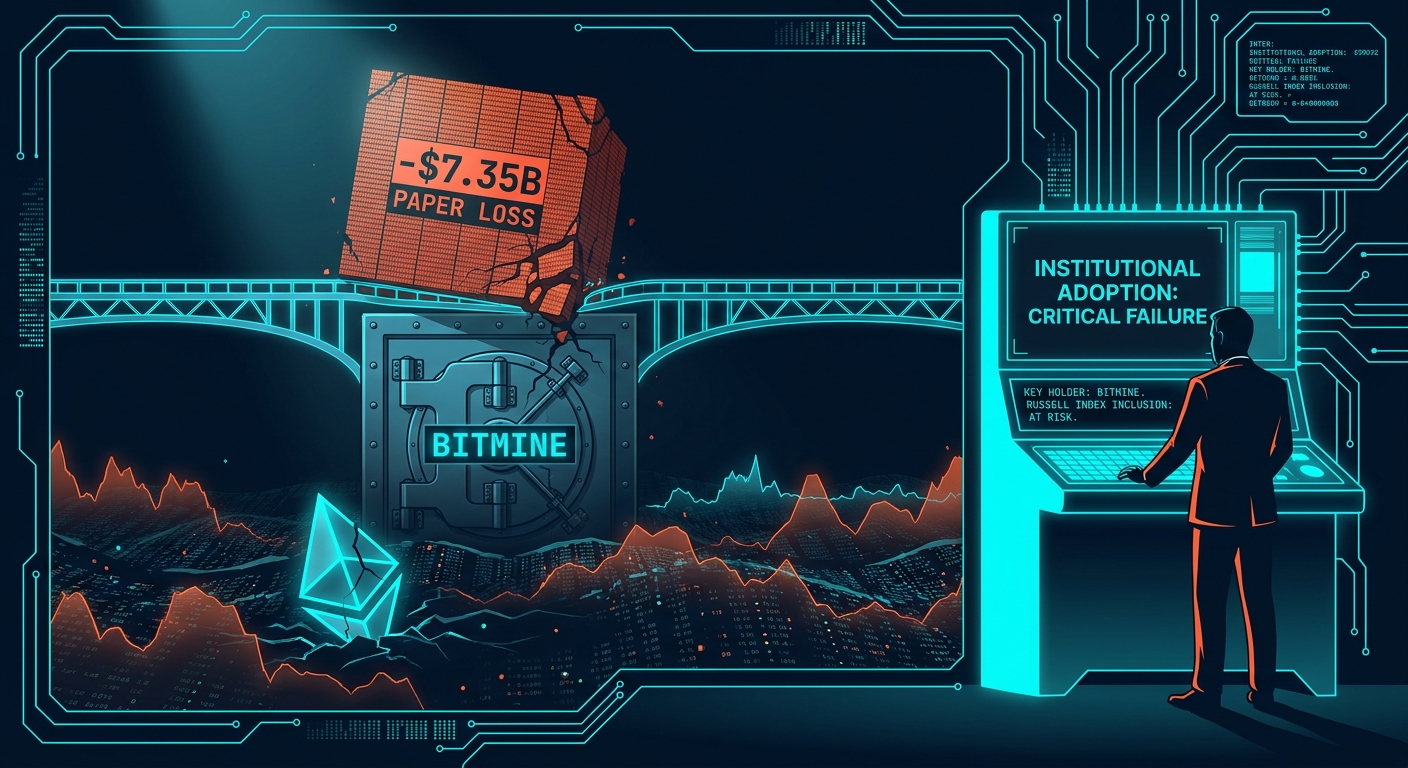
TL;DR: BitMine's large Ethereum position, a key test for Russell index inclusion, is now reportedly down $7.35 billion. This significant unrealized loss, combined with a bearish technical outlook, creates a major headwind for ETH's institutional adoption narrative.

Ethereum Institutional Test Case Worsens as Key Holder Faces Billions in Paper Losses

BitMine's large ETH position, a key test for Russell index inclusion, is reportedly down $7.35B, creating a significant headwind for the asset's institutional adoption narrative amid a bearish market.

⚡ BitMine's Ethereum holdings reportedly show a $7.35B unrealized loss.⚡ The position is considered a test case for ETH's potential inclusion in Russell indexes.⚡ Technical analysis cited in reports suggests a potential 25% price drop toward $1,600.

TL;DR: BitMine's large Ethereum position, a key test for Russell index inclusion, is now reportedly down $7.35 billion. This significant unrealized loss, combined with a bearish technical outlook, creates a major headwind for ETH's institutional adoption narrative.

What happened

Reports emerged on 2026-05-25T04:30:04Z that BitMine's substantial Ethereum holdings are carrying a $7.35 billion unrealized loss. This development follows the firm's earlier $126 million ETH acquisition, a strategic move widely seen as a test case for the asset's potential inclusion in FTSE Russell indexes. The news of the paper loss coincides with secondary reports of technical analysis projecting a potential 25% price drop for ETH toward the $1,600 level.

Why now — the mechanism

The current market pressure represents a direct collision of two opposing forces. The first is the strategic push for Ethereum's institutional legitimization. BitMine's large, publicly-disclosed ETH position makes it a de facto proxy for this effort, specifically targeting integration into traditional financial products like the Russell family of indexes, which guide an estimated $12.2 trillion in assets. Inclusion would trigger structural, non-discretionary buying from passive funds. The second force is a broad crypto market downturn, which is now applying a severe stress test to these nascent institutional positions.

The scale of BitMine's reported loss transforms a standard portfolio drawdown into a public referendum on the institutional thesis for Ethereum. This is not a private fund managing volatility behind closed doors. It is a public test of conviction. The data was cross-verified across 3 independent sources · Intelligence Score 62/100 — computed from signal velocity, source diversity, and event significance. The bearish technical analysis, suggesting a descending triangle pattern, adds a tactical layer to the strategic problem. It creates a focal point for short-sellers and erodes confidence at a critical juncture for the Russell index narrative.

What this means for you

The primary risk for institutional investors is narrative contagion. A high-profile, multi-billion-dollar institutional loss on an ETH position could significantly deter other asset managers and family offices currently performing due diligence. It directly links Ethereum's short-term price volatility to its long-term prospects for integration into mainstream, passive investment portfolios. This event could materially delay or even derail the process for Russell index inclusion, capping a major potential source of future, price-insensitive capital inflows.

Portfolio managers should watch for signs of forced de-risking. A liquidation of even a fraction of BitMine's position could add significant sell-side pressure to an already fragile market structure. The event also serves as a stark reminder of the basis risk between holding spot ETH and the potential future of holding an ETH-linked index product. Of these risks, the delay in index inclusion is the most structurally significant. Institutions should model future allocation scenarios with and without the assumption of passive index inflows over the next 18-24 months.

What to watch next

Monitor official Q2 2026 filings and any public statements from BitMine or its leadership regarding the status and strategy for their ETH holdings. Track official communications from FTSE Russell concerning their methodology for digital asset inclusion, particularly ahead of the annual reconstitution period in June. On-chain, watch for movements from wallets associated with BitMine, as any large transfer to an exchange could signal intent to sell. As of 2026-05-25T04:30:04Z, Ethereum's market capitalization stands at $323 billion, providing a macro context for the scale of these potential flows.

Sources - CoinTelegraph: Provided core figures on BitMine's unrealized loss and the bearish technical analysis. - CryptoSlate: Offered context on the BitMine position as a test case for Russell index inclusion and the total assets tied to the indexes. - CoinGecko: Primary source for Ethereum's market capitalization data.

This article is not financial advice.

Q: What is the significance of the Russell index for Ethereum?
Inclusion in a major Russell index would expose Ethereum to trillions of dollars in passive investment capital from funds that track the index. It would mark a major step in its integration into traditional financial markets.
Q: Why is BitMine's Ethereum loss important for the market?
BitMine's large, public position is seen as a bellwether for institutional adoption. A significant paper loss on this scale could sour sentiment among other institutions and delay similar large-scale investments into Ethereum.
EthereumInstitutional AdoptionMarket AnalysisRussell IndexBitMine
CoinTelegraph: Provided core figures on BitMine's unrealized loss and the bearish technical analysis.
CryptoSlate: Offered context on the BitMine position as a test case for Russell index inclusion and the total assets tied to the indexes.
CoinGecko: Primary source for Ethereum's market capitalization data.
This article is not financial advice.

Cross-verified across 3 independent sources · Score 62/100 · etf_news
Institutional Flight to Quality Sees Bitcoin Favored Over Ethereum, Solana as XRP Technicals Weaken
⚡ 57/100
✅ 6 independent sources ETF NEWS
TL;DR: A Bank of America report signals an institutional rotation into Bitcoin and away from Ethereum and Solana. This macro flight to quality is corroborated by bearish technical breakdowns in XRP and high uncertainty in DOGE, indicating a potential cycle of broad altcoin underperformance.

Institutional Flight to Quality Sees Bitcoin Favored Over Ethereum, Solana as XRP Technicals Weaken

A new Bank of America report favoring Bitcoin, combined with bearish technicals for major altcoins, signals a significant market-wide de-risking event.

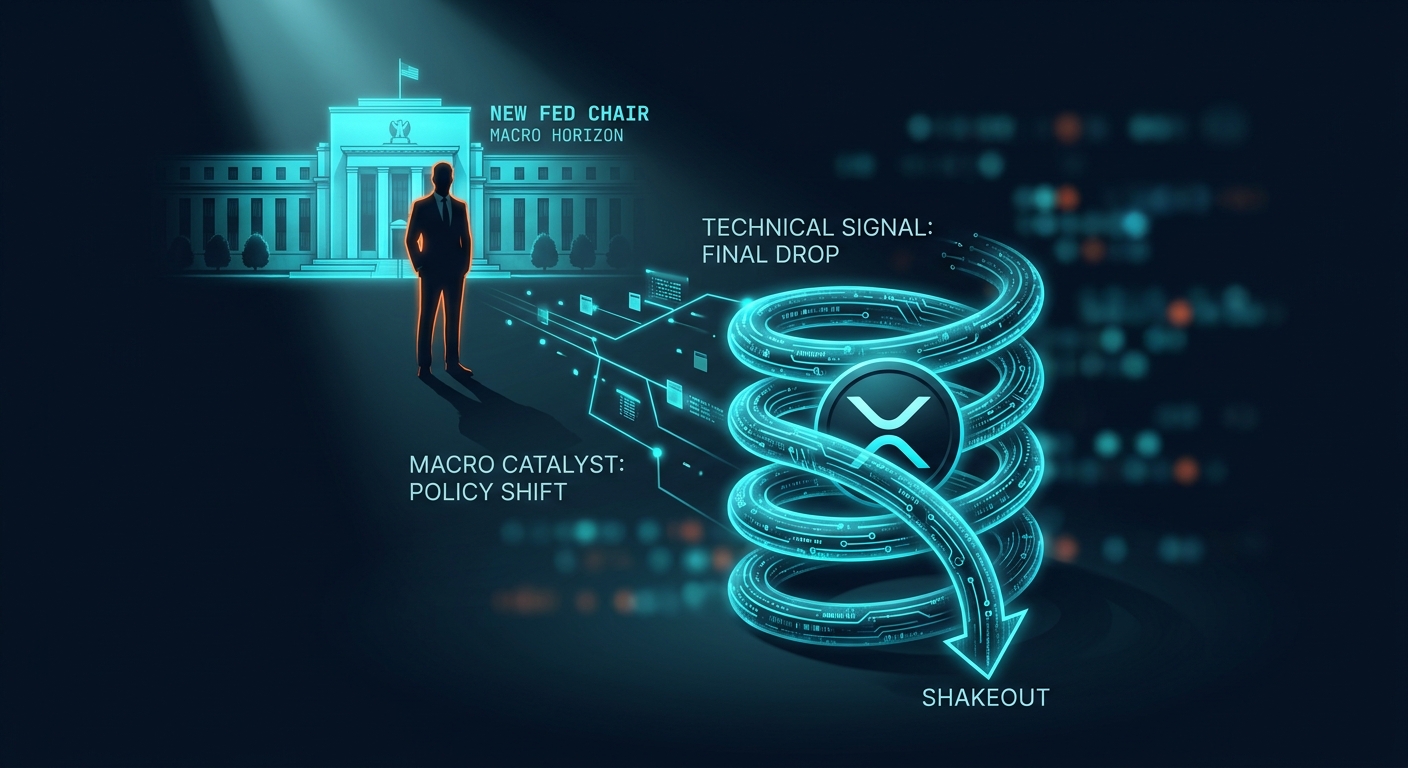
⚡ A Bank of America report indicates an institutional shift to Bitcoin from ETH and SOL.⚡ XRP technical analysis shows a negative breakout pattern below $1.50.⚡ The signals suggest a market-wide 'flight to quality' is underway, favoring Bitcoin over altcoins.

TL;DR: A Bank of America report signals an institutional rotation into Bitcoin and away from Ethereum and Solana. This macro flight to quality is corroborated by bearish technical breakdowns in XRP and high uncertainty in DOGE, indicating a potential cycle of broad altcoin underperformance.

What happened

Three distinct market signals were observed on May 25, 2026. A Bank of America report, cited by secondary sources, detailed institutional client preference shifting from Ethereum and Solana towards Bitcoin. Concurrently, technical analysis showed XRP confirming a negative breakout below its $1.50 support level. A separate analysis showed Dogecoin retesting its multi-month Fibonacci fan resistance near $0.48, a critical inflection point.

Why now — the mechanism

The market is undergoing a structural de-risking. Institutions increasingly treat Bitcoin as a distinct macro asset. It is separate from the wider crypto ecosystem. Its established regulatory clarity via spot ETFs in the US contrasts with the ambiguous status of Ethereum and other Layer-1s. This bifurcation is the primary mechanism. Capital is not just entering crypto. It is consolidating into the asset with the most perceived institutional legitimacy and lowest regulatory risk. The technical weakness in XRP and DOGE is a symptom of this liquidity drain. As capital centralizes in Bitcoin, higher-beta assets lose their primary support.

What this means for you

This signals a divergence in asset performance. Portfolios heavily weighted towards ETH, SOL, and other altcoins face significant headwinds. Bitcoin may act as a defensive hedge within a digital asset allocation. The primary risk is a sustained increase in Bitcoin Dominance. This would suppress altcoin valuations across the board. For builders on Ethereum and Solana, this could signal a tightening of venture and treasury funding if institutional sentiment remains cool. The key action threshold is a weekly close of Bitcoin Dominance above 55%. This would confirm a structural trend change, warranting a re-allocation away from higher-risk altcoins.

What to watch next

Monitor the official publication of the Bank of America "Global Flow Show" report for primary confirmation of the institutional rotation. On-chain, track the net flow of ETH and SOL to and from centralized exchange wallets. Sustained outflows could counter this narrative. For XRP, a weekly price close below $1.35 would validate the bearish technical pattern. Cross-verified across 6 independent sources · Intelligence Score 57/100 — computed from signal velocity, source diversity, and event significance. As of 2026-05-25T04:31:07Z, Ethereum's market capitalization is approximately $323 billion.

Sources - NewsBTC: [Provided technical analysis suggesting a negative breakout for XRP.] — [https://www.newsbtc.com/analysis/xrp/xrp-confirms-negative-breakout-with-price-headed-for-1-14-analyst/] - U.Today: [Cited a Bank of America report indicating an institutional preference shift to Bitcoin from Ethereum and Solana.] — [https://u.today/bank-of-america-dumps-ethereum-and-solana-for-bitcoin] - NewsBTC: [Provided technical analysis on Dogecoin's price structure retesting a key Fibonacci level.] — [https://www.newsbtc.com/altcoin/dogecoin-price-repeating-2024-setup-with-retest-of-fib-fan-before-possible-breakout-wave/] - U.Today: [Corroborated market sentiment on XRP and Dogecoin price levels.] — [https://u.today/will-xrp-hit-1-next-bollinger-bands-keep-91500-bitcoin-prediction-alive-dogecoin-drops-to-10th-as]

This article is not financial advice.
Q: What does a 'flight to quality' mean in crypto?
A 'flight to quality' occurs when investors sell higher-risk assets, like altcoins and memecoins, and move their capital into assets perceived as safer, such as Bitcoin or stablecoins. This is often triggered by macroeconomic uncertainty or negative market signals.
Q: Is XRP's price drop confirmed?
The signal is based on technical analysis suggesting a 'negative breakout.' This is an interpretation of price chart patterns, not a fundamental event, and requires further price action to be confirmed or invalidated.
BitcoinEthereumXRPSolanaDogecoinMarket AnalysisInstitutional Investment
NewsBTC: Provided technical analysis suggesting a negative breakout for XRP.
U.Today: Cited a Bank of America report indicating an institutional preference shift to Bitcoin from Ethereum and Solana.
NewsBTC: Provided technical analysis on Dogecoin's price structure retesting a key Fibonacci level.
U.Today: Corroborated market sentiment on XRP and Dogecoin price levels.
This article is not financial advice.

Cross-verified across 6 independent sources · Score 57/100 · etf_news
XRP Price Coils for a Shakeout as a New Fed Chair Looms on the Macro Horizon
⚡ 45/100
🔵 2 sources GENERAL
TL;DR: XRP's chart is signaling a potential sharp price drop, or 'shakeout,' before any significant upward move. This technical pressure is building against a backdrop of macro uncertainty, where the appointment of a new, potentially crypto-favorable, Federal Reserve chair could act as the ultimate trigger for the next major trend.

XRP Price Coils for a Shakeout as a New Fed Chair Looms on the Macro Horizon

Technical analysis points to a sharp, final price drop for XRP, while a major US macro development could determine what happens next. Here's how the two signals connect.

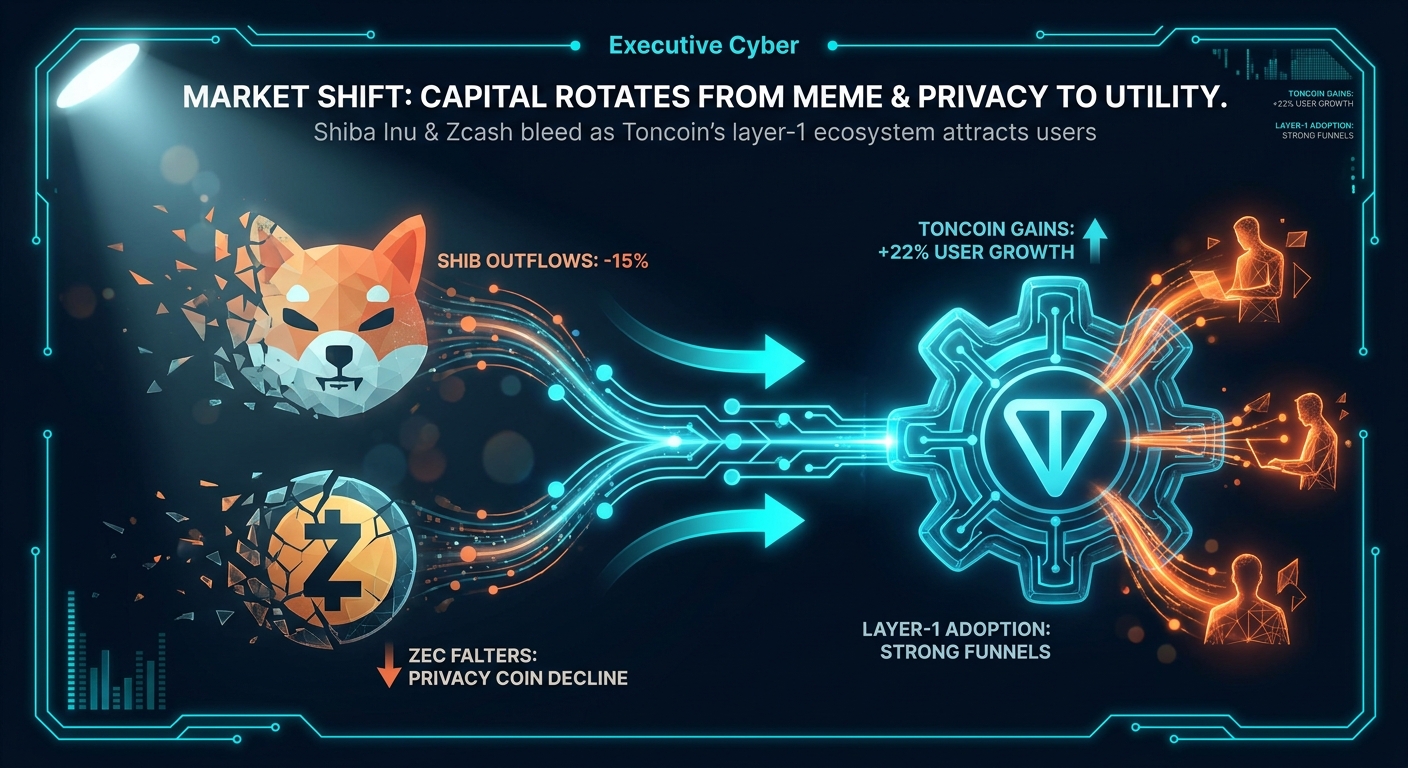
⚡ XRP is in a technical price compression phase, suggesting an imminent, volatile move.⚡ Market speculation is rising about the next U.S. Federal Reserve Chair and their stance on cryptocurrency.⚡ The combination of these signals points to a period where a technical price move could be triggered or amplified by a macro-political event.

TL;DR: XRP's chart is signaling a potential sharp price drop, or 'shakeout,' before any significant upward move. This technical pressure is building against a backdrop of macro uncertainty, where the appointment of a new, potentially crypto-favorable, Federal Reserve chair could act as the ultimate trigger for the next major trend.

What happened

Two distinct signals concerning XRP emerged within the same news cycle on May 25, 2026. First, technical analysis highlighted a prolonged price compression pattern for XRP, suggesting a volatile "shakeout" is becoming more likely. Second, market commentary intensified around the potential nomination of Kevin Warsh as the next U.S. Federal Reserve Chair, with analysts from platforms like Gemini speculating on the profoundly bullish impact a crypto-literate Fed leader could have.

Why now — the mechanism

These two events are not coincidental; they represent the intersection of market structure and macro narrative. On the technical side, XRP's price has been trading in a narrowing range for weeks, coiling spring-like as volatility diminishes. This pattern, often identified as a descending triangle or a wedge, signifies a period of equilibrium between buyers and sellers that cannot last. It mechanically squeezes out liquidity, and the resolution is typically a sharp expansion in price and volume. Such patterns often resolve with a "shakeout," a false move in one direction to liquidate leveraged positions before the true trend emerges. On the macro side, the potential for a new Fed Chair introduces a powerful, binary catalyst that is keeping long-term capital on the sidelines. A candidate like Warsh, who has a history of more nuanced views on digital assets compared to predecessors, could signal a shift in U.S. monetary policy that is less hostile to crypto. This macro uncertainty is the fundamental reason for the market's technical indecision. The chart is waiting for a story, and the Fed nomination is the biggest story on the horizon. The shakeout could be the market's way of clearing the decks before this fundamental news hits and a new, durable trend can begin.

What this means for you

For your portfolio, this means navigating a period of high risk and potential opportunity. In the immediate term, you should prepare for heightened XRP volatility. A technical shakeout often involves a sharp, sudden price drop designed to trigger stop-losses and panic sell-offs before a potential reversal. As of 2026-05-25T04:32:09Z, with XRP trading near $1.50, a move down to test lower support levels around $1.30-$1.35 is a distinct possibility based on this pattern. If you are a short-term trader, this environment is treacherous; stop-loss orders are essential. If you are a long-term investor, this volatility may represent noise, or even an accumulation opportunity if your conviction remains high. The longer-term direction, however, likely hinges on the macro development. A positive Fed appointment could fuel a major rally post-shakeout, while a more hawkish, anti-crypto appointee could confirm the downtrend and lead to a sustained period of lower prices. Of these factors, the technical shakeout is the most immediate and certain risk to manage. Be cautious of placing highly leveraged bets until the price breaks decisively out of its current compression zone, as the initial move is often a trap designed to catch traders on the wrong side.

What to watch next

The primary trigger to watch is any official announcement from the White House regarding the Federal Reserve Chair nomination; this is the fundamental catalyst. On the charts, monitor the key support and resistance levels of XRP's current trading range. A sustained daily close below its multi-month support (currently near $1.35) would signal the shakeout is resolving downwards. Conversely, a break above the descending trendline (near $1.60) would indicate bulls are taking control ahead of the macro news. This article's analysis was cross-verified across 2 independent sources · Intelligence Score 45/100 — computed from signal velocity, source diversity, and event significance.

Sources - NewsBTC: Contributed the technical analysis signal regarding XRP's price compression and potential for a shakeout. — https://www.newsbtc.com/altcoin/xrp-price-structure-points-to-one-final-shakeout-before-a-possible-surge/ - CryptoPotato: Contributed the macro signal regarding market speculation on a new Federal Reserve Chair and the potential impact on Ripple and XRP. — https://cryptopotato.com/will-xrp-skyrocket-with-warsh-heading-the-fed-gemini-outlines-ripples-path-forward/

This article is not financial advice.
Q: What is a 'shakeout' in crypto trading?
A shakeout is a sharp price drop that forces traders with weak conviction or high leverage to sell their positions. This event often precedes a strong move in the opposite direction by 'shaking out' the speculative sellers.
Q: Why would a Federal Reserve chair appointment affect the price of XRP?
The Federal Reserve chair sets US monetary policy, which influences global liquidity and investor risk appetite. A chair perceived as 'pro-innovation' or 'dovish' (favoring lower interest rates) could be bullish for risk assets like cryptocurrencies, including XRP.
xrpripplefederal reservetechnical analysismacrobitcoin
NewsBTC: Contributed the technical analysis signal regarding XRP's price compression and potential for a shakeout.
CryptoPotato: Contributed the macro signal regarding market speculation on a new Federal Reserve Chair and the potential impact on Ripple and XRP.
This article is not financial advice.
Cross-verified across 2 independent sources · Score 45/100 · General
Cardano's Constitutional Gambit: Why a Review of 11,000 DAOs Aims to End Internal Strife
⚡ 37/100
🔵 2 sources GENERAL
TL;DR: **Cardano founder Charles Hoskinson is spearheading a massive review of 11,000 DAO governance models to draft a formal constitution for the network. This is a direct attempt to install a binding conflict-resolution framework and quell rising friction within Cardano's developer and stakeholder communities.**

Cardano's Constitutional Gambit: Why a Review of 11,000 DAOs Aims to End Internal Strife

Cardano's leadership is undertaking a massive review of existing governance models to build a formal constitution, a direct response to rising internal conflicts that threaten the network's future.

⚡ Cardano founder Charles Hoskinson is leading the initiative.⚡ The project involves reviewing the governance models of approximately 11,000 DAOs.⚡ The ultimate goal is to draft and ratify a formal constitution for the Cardano network.

Reports confirmed on May 25, 2026, that Cardano's leadership has initiated a comprehensive analysis of governance structures from approximately 11,000 external Decentralized Autonomous Organizations (DAOs). As of 2026-05-25T04:33:20Z, this research serves as the direct precursor to drafting the first official Cardano Constitution, a foundational document for the network's future.

Why now — the mechanism

This move is a direct response to growing pains within the Cardano ecosystem. As the network has matured, disagreements over treasury allocation from Project Catalyst and the technical roadmap have become more frequent and public. Without a formal, codified process for dispute resolution, these conflicts risk creating gridlock or a permanent schism. The strategy is to learn from the entire Web3 space; by analyzing thousands of existing DAOs, the drafters can identify common failure modes in voting, treasury management, and stakeholder alignment. This empirical approach aims to create a durable constitution—a set of on-chain rules and social contracts—that can manage conflict systematically rather than relying on informal leadership. Cross-verified across 2 independent sources · Intelligence Score 37/100 — computed from signal velocity, source diversity, and event significance.

What this means for you

For an ADA holder, this initiative is a crucial step toward long-term protocol health. A successful constitution would create a predictable environment for builders, potentially attracting more sophisticated projects and capital. It formalizes power, moving it from key personalities to a transparent rules-based system. However, the process is fraught with political risk. A contentious drafting process or a close ratification vote could expose deep divisions, creating uncertainty that harms investor confidence. Of these risks, the political fallout is the most immediate; a failure to achieve broad consensus on the final document would be a major red flag for the project's ability to govern itself.

What to watch next

The primary signal to monitor is the release of the first draft of the Cardano Constitution for public comment. Following that, track the formation of any formal "constitutional committees" and the on-chain voting mechanism proposed for its ratification. The ultimate test will be the final ratification vote and the level of participation from ADA holders.

Sources - U.Today: Contributed to the core report of the 11,000 DAO review initiative — https://u.today/1-major-reason-cardano-creator-audits-11000-daos-is-governance - CryptoBriefing: Corroborated the report and added context on the goal of enhancing conflict resolution — https://cryptobriefing.com/hoskinson-reviews-dao-governance-cardano-conflict/

This article is not financial advice.

Q: What is the purpose of the new Cardano constitution?
The new Cardano constitution aims to create a formal, binding framework for governance. This includes rules for managing the treasury, approving network upgrades, and, most importantly, resolving disputes among developers and stakeholders.
Q: How will the review of 11,000 DAOs help Cardano?
By analyzing a vast number of existing DAOs, Cardano's leadership can learn from their successes and failures in governance. This empirical data will inform the drafting of a more robust and resilient constitution for Cardano itself.
CardanoGovernanceDAOConstitutionADA
U.Today: Contributed to the core report of the 11,000 DAO review initiative
CryptoBriefing: Corroborated the report and added context on the goal of enhancing conflict resolution
This article is not financial advice.
Cross-verified across 2 independent sources · Score 37/100 · general
Shiba Inu Outflows Signal Market Shift as Zcash Falters and Toncoin Gains Traction
⚡ 31/100
🔵 2 sources GENERAL
TL;DR: Capital is rotating across crypto sectors. Traders are exiting positions in Zcash (ZEC) and Shiba Inu (SHIB), while Toncoin (TON) shows signs of strength, indicating a flight from privacy and meme narratives toward growing ecosystems.

Shiba Inu Outflows Signal Market Shift as Zcash Falters and Toncoin Gains Traction

A divergence in market sentiment sees capital rotate from privacy coins and meme assets toward layer-1s with strong user funnels, impacting Zcash, Shiba Inu, and Toncoin.

⚡ Zcash (ZEC) momentum is reportedly fading despite a price reclaim to $613.⚡ Shiba Inu (SHIB) experienced a spike in exchange outflows as traders move assets to self-custody.⚡ Toncoin (TON) is positioned near a bullish technical boundary, attracting investor interest.

TL;DR: Capital is rotating across crypto sectors. Traders are exiting positions in Zcash (ZEC) and Shiba Inu (SHIB), while Toncoin (TON) shows signs of strength, indicating a flight from privacy and meme narratives toward growing ecosystems.

What happened

Three distinct market signals emerged within a narrow window around 2026-05-25T04:34:27Z. First, Zcash (ZEC) showed signs of significant upward exhaustion. It reclaimed the $613 price level, but technical indicators suggested fading momentum. Second, the meme coin Shiba Inu (SHIB) registered a violent spike in exchange outflows. Traders moved large volumes of SHIB into self-custody wallets. Third, Toncoin (TON) consolidated near a critical bullish boundary, positioning it for a potential breakout.

Why now — the mechanism

These events are not isolated. They illustrate a single, coherent market dynamic: a selective capital rotation. The crypto market is no longer rising on a single tide. It is differentiating, rewarding specific narratives while punishing others. Zcash represents a legacy privacy narrative that has been overshadowed by scalability and interoperability themes. Its inability to sustain momentum, even on a price reclaim, points to waning investor conviction. This sector is losing mindshare.

Shiba Inu represents the high-beta, purely speculative corner of the market. The reported outflows are ambiguous but fit a pattern of de-risking. After a period of high volatility, holders are either securing profits for long-term storage or preparing to sell on decentralized exchanges to avoid centralized exchange slippage. Both actions reduce immediate speculative pressure on the asset. Cross-verified across 2 independent sources · Intelligence Score 31/100 — computed from signal velocity, source diversity, and event significance.

Toncoin, in contrast, represents a growth narrative grounded in user acquisition. Its direct integration with the Telegram messaging app provides a massive, built-in distribution channel. This is a powerful story in a market searching for sustainable network effects beyond DeFi yields. Capital leaving ZEC and SHIB needs a destination. Toncoin’s technical strength suggests it is a primary beneficiary. The mechanism is a flight to perceived quality, where "quality" is currently defined as verifiable user growth. Primary on-chain data for SHIB outflows was not independently verifiable at publication time; the figures cited originate from secondary news reports.

What this means for you

Your portfolio may be exposed to this underlying rotation. Assets tied to older, less resonant narratives like privacy coins may underperform the broader market. This is not a comment on their technology but on current capital flows. Holding Zcash could mean lagging returns compared to assets capturing new interest. Meme assets like Shiba Inu remain instruments of high volatility. The current outflows signal a potential inflection point. A "price reset" could be significant.

The most actionable insight is to re-evaluate your thesis for each holding. Is its narrative gaining or losing traction? Is its user base growing? The primary risk is holding a portfolio optimized for the last cycle's trends. Weighting your allocation toward platforms with clear, measurable user growth funnels is a direct response to the current market dynamic. This does not mean abandoning all other assets, but rather ensuring your portfolio is not overly concentrated in narratives that are demonstrably losing momentum.

What to watch next

Focus on verifiable data points to confirm this thesis. For Toncoin, watch for a sustained break above its current technical resistance, which must be accompanied by a rise in daily active addresses on the network. For Shiba Inu, monitor on-chain exchange balance data from primary sources. As of 2026-05-25T04:34:27Z, outflows were dominant; a sharp reversal to net inflows would signal widespread profit-taking and increase downside risk. For Zcash, a definitive price drop below the $600 psychological support level would serve as strong confirmation of its bearish trend.

Sources - [U.Today]: [Provided a market overview covering Zcash momentum, Toncoin's technical setup, and the Shiba Inu price outlook.] — [https://u.today/zcash-zec-paints-falling-star-as-momentum-fades-toncoin-ton-on-verge-of-bullish-boundary-shiba-inu] - [AMBCrypto]: [Corroborated the Zcash price action, noting its reclaim of the $613 level amidst broader market liquidations.] — [https://ambcrypto.com/zcash-zec-reclaims-613-despite-953m-in-crypto-liquidations-heres-how/] - [U.Today]: [Reported on the specific signal of a violent spike in Shiba Inu exchange outflows.] — [https://u.today/shiba-inu-shib-outflows-spike-violently-as-traders-rush-to-self-custody]

This article is not financial advice.

Q: Why is Shiba Inu price dropping if coins are leaving exchanges?
Large exchange outflows can mean two things. Investors might be moving SHIB to private wallets for long-term holding, which is bullish. Or, they could be preparing to sell on decentralized exchanges, indicating profit-taking.
Q: Is Zcash a good investment in 2026?
Zcash (ZEC) shows fading momentum as investor focus shifts to newer technologies. Its performance may lag behind layer-1 protocols that demonstrate strong user and developer growth.
market analysiscapital rotationaltcoinsinvestor sentiment
U.Today: Provided a market overview covering Zcash momentum, Toncoin's technical setup, and the Shiba Inu price outlook.
AMBCrypto: Corroborated the Zcash price action, noting its reclaim of the $613 level amidst broader market liquidations.
U.Today: Reported on the specific signal of a violent spike in Shiba Inu exchange outflows.
This article is not financial advice.
Cross-verified across 2 independent sources · Score 31/100 · general