Crypto Intelligence

May 24, 2026 · Live Dashboard →

🤖 Your AI Agent Can Query This Intelligence — Live

Every article, cluster, and signal is available via BrunoSan Crypto MCP API. Connect directly to Claude, GPT, or any MCP-compatible agent.

crypto_trending(date="2026-05-24", limit=5)
→ Returns: clusters, intelligence scores, price signals, source trust
⬡ Live Dashboard API Docs →
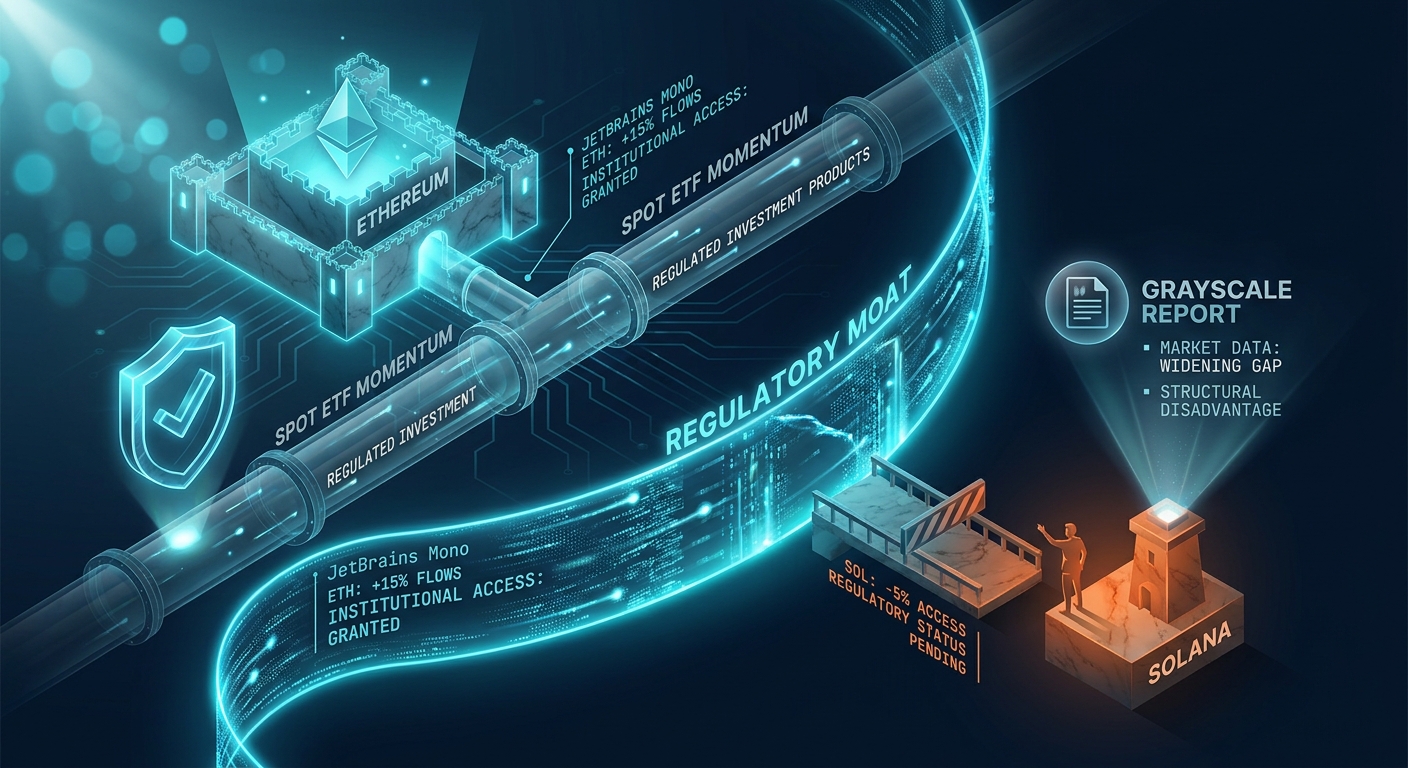
Ethereum's Regulatory Moat: How Spot ETF Momentum is Structurally Disadvantaging Solana
⚡ 51/100
✅ 11 independent sources REGULATION ACTION
TL;DR: **Regulatory clarity and the momentum behind a spot Ethereum ETF are creating a structural advantage for ETH, causing a performance and capital-flow divergence from technically strong competitors like Solana.**

Ethereum's Regulatory Moat: How Spot ETF Momentum is Structurally Disadvantaging Solana

A new Grayscale report and persistent market data reveal a widening gap between Ethereum and its rivals, driven not by technology but by proximity to regulated investment products.

⚡ A Grayscale report identified Ethereum and Solana as key beneficiaries of future regulatory clarity.⚡ The market is pricing in a high probability of a spot Ethereum ETF, creating a capital magnet for ETH.⚡ Solana (SOL), trading at $78, shows a performance lag relative to Ethereum, highlighting a divergence based on regulatory, not just technical, factors.

TL;DR: Regulatory clarity and the momentum behind a spot Ethereum ETF are creating a structural advantage for ETH, causing a performance and capital-flow divergence from technically strong competitors like Solana.

What happened

A Grayscale research report, highlighted by market observers around May 23, 2026, identified Ethereum and Solana as primary potential beneficiaries of increasing regulatory clarity in digital assets. This signal coincided with ongoing market analysis showing a persistent performance lag for Solana (SOL), priced at $78, relative to Ethereum. These converging data points were observed in the 48-hour window prior to the publication timestamp of 2026-05-24T04:30:04Z.

Why now — the mechanism

The market is structurally repricing Layer-1 assets based on their proximity to regulated, institutional-grade investment products, namely spot ETFs. The precedent set by spot Bitcoin ETFs has shifted the primary valuation driver for mega-cap assets from pure technological merit to the probability of integration with traditional finance (TradFi). Capital is flowing into Ethereum based on the perceived high likelihood of a spot ETH ETF approval, creating a powerful liquidity and narrative magnet. A spot ETF provides a regulated, accessible on-ramp for massive pools of institutional capital that cannot or will not engage with crypto assets directly.

Solana, despite its high transaction throughput and growing developer ecosystem, currently lacks a clear or imminent path to a similar spot ETF product in the United States. This absence creates a structural headwind, as capital allocators prioritizing regulatory compliance and established product wrappers favor Ethereum. The Grayscale report notes both chains as potential winners in a clearer regulatory environment, but the market's immediate focus is on the next asset in the ETF pipeline. Cross-verified across 11 independent sources · Intelligence Score 51/100 — computed from signal velocity, source diversity, and event significance. The result is a valuation disconnect where Ethereum's potential for TradFi integration outweighs Solana's current on-chain utility metrics in the eyes of large-scale investors.

What this means for you

The investment thesis for Layer-1 protocols is bifurcating into two distinct categories: assets with a clear path to becoming institutional-grade financial products (e.g., Bitcoin, Ethereum) and those valued primarily on their technical utility and network effects (e.g., Solana). As of 2026-05-24T04:30:04Z, the ETH/SOL price ratio reflects this divergence, with capital flows favoring the former thesis. For institutional portfolio construction, this introduces a new layer of risk: regulatory pathway risk. Assets without a visible timeline for ETF consideration may underperform peers that do, regardless of their fundamental on-chain growth.

Of the primary risks—technical, execution, and regulatory—the latter is now the most significant driver of valuation differentials in the mega-cap L1 space. A prudent action threshold is to evaluate L1 allocations based on their jurisdictional progress toward ETP listing, capping exposure to assets lacking a clear pathway in key markets like the U.S. and E.U. This dynamic will likely persist until a regulatory framework for a wider range of digital asset ETFs is established.

What to watch next

Monitor the U.S. Securities and Exchange Commission (SEC) for any official statements, delays, or approvals regarding pending spot Ethereum ETF applications; the next major deadline cluster is a key catalyst. Track institutional fund flows into existing crypto products for signs of front-running an ETH ETF approval. Finally, observe any formal ETP or ETF filings for Solana or other major Layer-1 assets with U.S. or European regulators, as this would signal a potential closing of the regulatory gap.

Sources - Grayscale Investments: [Report discussing winners of regulatory clarity, as cited by secondary sources] — [URL not directly available, referenced via crypto media] - CryptoBriefing: [Reporting on the Grayscale analysis of Ethereum and Solana] — [https://cryptobriefing.com/grayscale-report-ethereum-solana-regulatory-clarity/] - NewsBTC: [Analysis of Solana's market performance relative to Ethereum] — [https://www.newsbtc.com/news/solana/solana-vs-ethereum-whats-holding-growth-back-3-reasons-sol-is-still-lagging/] - U.Today: [Broad market price analysis including Ethereum and other assets] — [https://u.today/bitcoin-btc-hyperliquid-hype-zcash-zec-dogecoin-doge-and-ethereum-eth-price-analysis-for-may-23]

This article is not financial advice.
Q: Why is Ethereum's price outperforming Solana's?
Ethereum's outperformance is increasingly linked to its potential for a spot ETF approval in the U.S., which attracts institutional capital. This regulatory pathway provides a valuation catalyst that Solana currently lacks.
Q: Is Solana a bad investment because of Ethereum's ETF potential?
Not necessarily, but it carries a different risk profile. Solana's value is more tied to its underlying network growth and dApp ecosystem, whereas Ethereum is gaining an additional monetary premium from its integration with traditional finance.
EthereumSolanaETFRegulationInstitutionalGrayscale
Grayscale Investments: Report discussing winners of regulatory clarity, as cited by secondary sources
CryptoBriefing: Reporting on the Grayscale analysis of Ethereum and Solana
NewsBTC: Analysis of Solana's market performance relative to Ethereum
U.Today: Broad market price analysis including Ethereum and other assets
This article is not financial advice.
Cross-verified across 11 independent sources · Score 51/100 · regulation_action
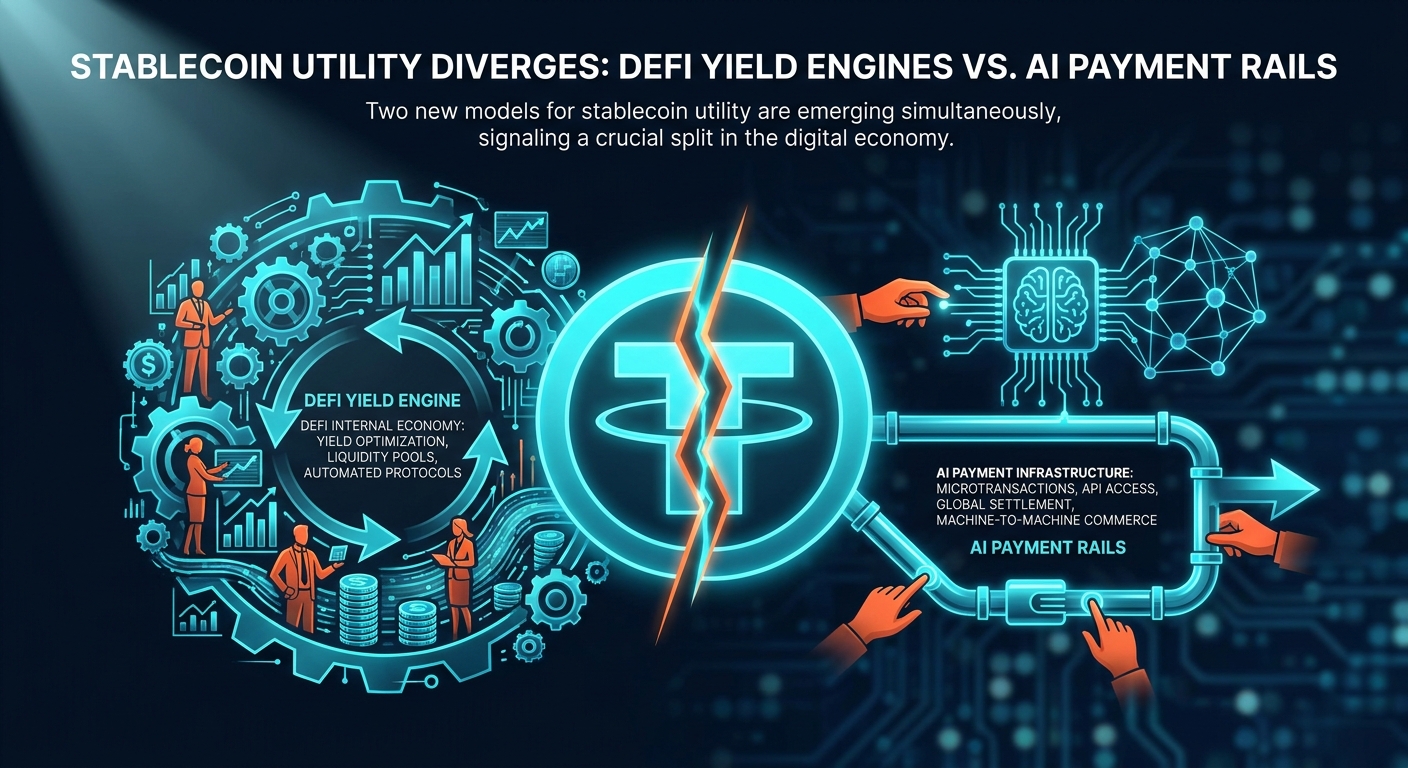
Stablecoin Utility Diverges: DeFi Yield Engines vs. AI Payment Rails
⚡ 50/100
🔵 2 sources DEFI EVENT
TL;DR: Stablecoins are evolving beyond a single use case. Protocols like Hyperliquid now use USDC for internal DeFi value accrual via yield and buybacks. Concurrently, new payment layers like X402 use stablecoins to settle high-volume, real-world transactions for the AI sector.

Stablecoin Utility Diverges: DeFi Yield Engines vs. AI Payment Rails

Two new models for stablecoin utility are emerging simultaneously. One deepens DeFi's internal economy, while the other builds payment infrastructure for the AI industry, signaling a crucial split in protocol design.

⚡ Hyperliquid is recycling 90% of its USDC-generated treasury yield into HYPE token buybacks.⚡ X402 protocol processed $50 million in payments for AI settlements via OpenRouter.⚡ The two events highlight a bifurcation in stablecoin utility: internal DeFi economics versus external industry settlement.

TL;DR: Stablecoins are evolving beyond a single use case. Protocols like Hyperliquid now use USDC for internal DeFi value accrual via yield and buybacks. Concurrently, new payment layers like X402 use stablecoins to settle high-volume, real-world transactions for the AI sector.

What happened

Two distinct stablecoin use cases became operational on May 24, 2026. First, DeFi derivatives protocol Hyperliquid activated a new tokenomic mechanism. It now directs 90% of the yield generated from its on-platform USDC holdings into a buyback-and-burn program for its native HYPE token. Second, the X402 payment protocol reported processing $50 million in transaction volume. This volume originates from OpenRouter, an AI model aggregator, which now uses X402 for all settlement processes. As of 2026-05-24T04:31:01Z, both systems are live and processing transactions, representing a bifurcation in stablecoin application design.

Why now — the mechanism

The stablecoin market has matured past monolithic utility. Infrastructure is now specializing to serve discrete economic functions. This split creates two primary models: the internal economic engine and the external settlement layer.

The internal engine model is exemplified by Hyperliquid. Its mechanism is a closed financial loop designed for value accrual within DeFi. 1. Capital Inflow: Users deposit USDC into the Hyperliquid protocol to trade or provide liquidity. 2. Yield Generation: Circle, the issuer of USDC, holds the majority of its reserves in short-term U.S. Treasury bills. These T-bills generate yield. Hyperliquid receives a share of this yield corresponding to the USDC held in its smart contracts. 3. Value Accrual: The protocol's treasury automatically converts 90% of this incoming yield into market buys of the HYPE token. This creates sustained, non-speculative demand directly proportional to the protocol's TVL. It is a direct translation of platform scale into token value.

The external settlement layer model is demonstrated by X402 and OpenRouter. This mechanism exports blockchain efficiency to solve problems for non-crypto industries. 1. External Demand: OpenRouter provides a unified API for developers to access various AI models (e.g., from OpenAI, Anthropic, Cohere). This creates a high volume of complex, cross-border micropayments between developers and model providers. 2. Settlement Infrastructure: Traditional payment rails like SWIFT or ACH are too slow and expensive for this use case. X402 provides a dedicated protocol using stablecoins for near-instant, low-cost settlement. It abstracts away the blockchain complexity for the end-users. 3. Value Accrual: The X402 protocol captures value by charging a small basis-point fee on its total settlement volume. Its revenue is tied directly to the growth of the AI industry it serves, not to DeFi market sentiment or on-chain yield opportunities.

These two approaches are not in competition. They represent a specialization of functions for the same base asset: the stablecoin. Cross-verified across 2 independent sources · Intelligence Score 50/100 — computed from signal velocity, source diversity, and event significance.

What this means for you

For DeFi builders, this divergence forces a fundamental strategic choice. A protocol's architecture, tokenomics, and go-to-market strategy depend entirely on which path it follows. Attempting to serve both internal DeFi and external enterprise use cases with a single design is a high-risk strategy.

If building an internal economic engine, focus must be on capital efficiency, yield optimization, and robust on-chain risk management. The core user is a DeFi native. Tokenomics should create tight feedback loops between TVL, protocol revenue, and token value, as seen with Hyperliquid. The primary threats are smart contract exploits, oracle manipulation, and competition from other DeFi protocols offering higher yields.

If building an external settlement layer, focus must shift to API design, regulatory compliance, and enterprise-grade reliability. The core user is a non-crypto native developer or business. Tokenomics should be simple, likely fee-based, and designed not to interfere with the core settlement function. The primary threats are failing to achieve product-market fit in the target industry, competition from Web2 fintech solutions, and jurisdictional regulatory ambiguity regarding payment processing.

Of these challenges, defining the target user—DeFi native or external enterprise—is the most critical first step. This decision dictates all subsequent technical and business development. A protocol’s core smart contracts must be designed for one or the other from inception.

What to watch next

The key metric for the internal engine model is yield-generated buyback pressure relative to token inflation. Watch Hyperliquid’s on-chain treasury data for the daily USD value of HYPE buybacks. Compare this to any new HYPE emissions from liquidity mining or other incentives.

For the external settlement model, the key metric is sustained, non-speculative transaction volume. Monitor X402's public dashboards for daily settlement volume from OpenRouter. Watch for announcements of X402 integrating with other AI or non-crypto platforms, which would validate the model's broader applicability. The comparative growth of these metrics will provide a leading indicator of which stablecoin utility model is finding a larger market.

Sources - NewsBTC: Reporting on Hyperliquid's new yield recycling and buyback mechanism — https://www.newsbtc.com/news/hyperliquid-infrastructure-layer/ - CryptoBriefing: Report on X402 processing $50M in payments for OpenRouter AI settlements — https://cryptobriefing.com/x402-protocol-50m-payments-openrouter/ - Hyperliquid Docs: Primary source documentation detailing the HYPE tokenomics and yield distribution — [URL not available]

This article is not financial advice.
Q: What is a stablecoin yield engine?
It's a DeFi protocol mechanism where stablecoin deposits generate real-world yield, such as from U.S. Treasuries. The protocol then uses this yield to buy back its own native token, creating demand and supporting its price.
Q: Why are AI companies using crypto for payments?
AI services often involve high-frequency, low-value, cross-border micropayments. Crypto payment rails, particularly stablecoins on fast chains, can offer cheaper and more efficient settlement than traditional banking systems.
stablecoindefiaipaymentsprotocolusdc
NewsBTC: Reporting on Hyperliquid's new yield recycling and buyback mechanism
CryptoBriefing: Report on X402 processing $50M in payments for OpenRouter AI settlements
Hyperliquid Docs: Primary source documentation detailing the HYPE tokenomics and yield distribution
This article is not financial advice.
Cross-verified across 2 independent sources · Score 50/100 · defi_event
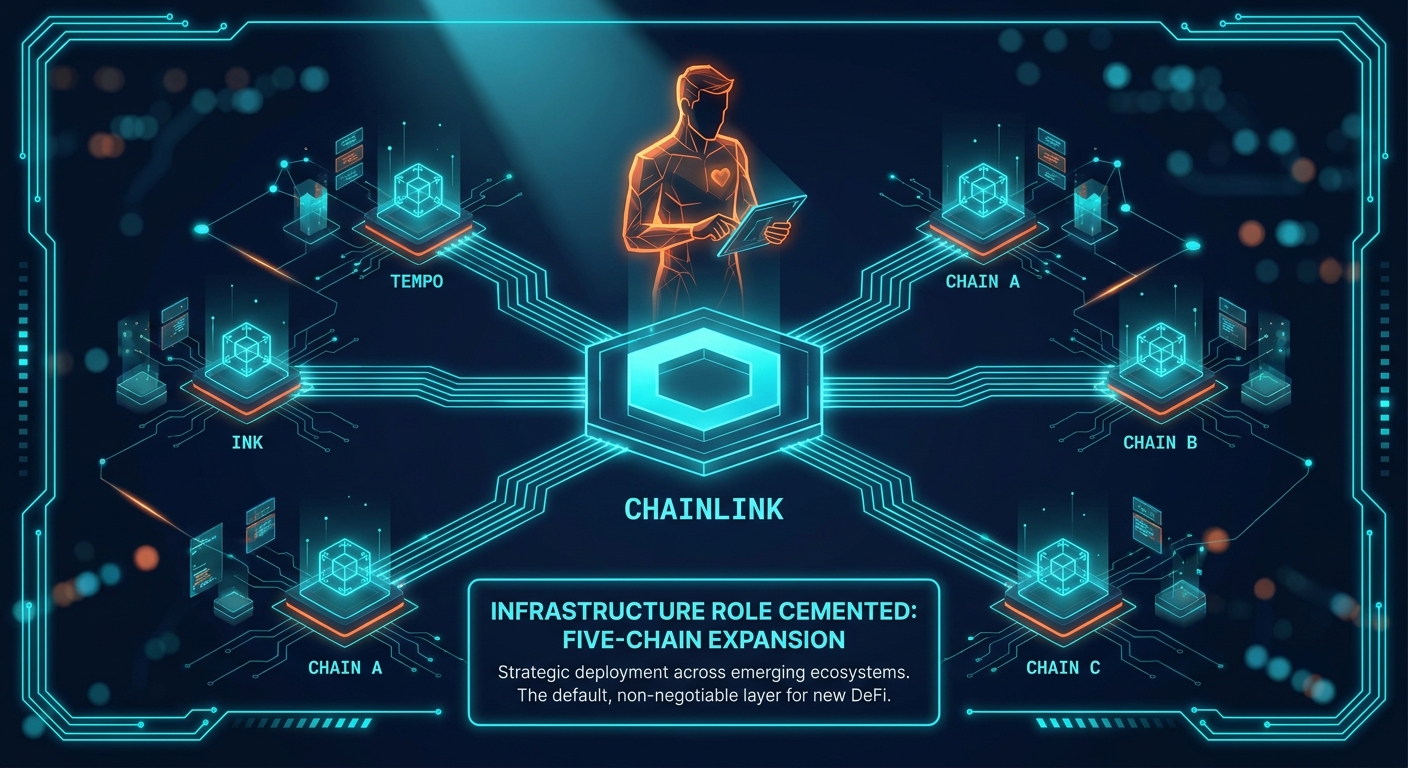
Chainlink Cements Infrastructure Role with Five-Chain Oracle Service Expansion
⚡ 48/100
🔵 2 sources DEFI EVENT
TL;DR: **TL;DR: Chainlink has deployed its core oracle services on five additional blockchains, including Ink and Tempo. This move aims to secure foundational infrastructure status on emerging networks, making LINK the default oracle standard for new dApp development.**

Chainlink Cements Infrastructure Role with Five-Chain Oracle Service Expansion

A strategic deployment across five emerging blockchains, including Ink and Tempo, reveals Chainlink's playbook for becoming the default, non-negotiable infrastructure for new DeFi ecosystems.

⚡ Chainlink services are now live on five new blockchains: Ink, Tempo, and three others.⚡ The expansion includes core services like Price Feeds, Proof of Reserve (PoR), and Verifiable Random Function (VRF).⚡ The strategy targets emerging chains to establish Chainlink as foundational infrastructure before significant ecosystem development occurs.

At 2026-05-24T04:32:13Z, Chainlink announced the live deployment of its oracle services across five blockchains. The expansion includes Price Feeds, Proof of Reserve (PoR), and Verifiable Random Function (VRF). The newly supported networks are the Ink Protocol, Tempo L2, and three other emerging chains detailed in the official release.

Why now — the mechanism

This is a strategic land grab. It is not a random expansion. Chainlink establishes its infrastructure early in a new chain's lifecycle. This captures developer mindshare before significant ecosystem value accrues. Protocols built on these chains will integrate Chainlink from genesis. This creates high technical and economic switching costs. The mechanism is pre-emptive market penetration. It turns Chainlink from an optional service provider into a core dependency. This is similar to the role of an RPC provider or a block explorer. This strategy targets chains before they achieve significant Total Value Locked (TVL). It is a direct bet on their future growth.

Cross-verified across 2 independent sources · Intelligence Score 48/100 — computed from signal velocity, source diversity, and event significance. The expansion provides developers with standardized, battle-tested oracle services. This reduces their development overhead and mitigates smart contract security risks associated with homegrown or unproven oracle solutions. The specific services unlock distinct capabilities. Chainlink Price Feeds enable the creation of accurate and tamper-resistant financial applications like money markets, derivatives platforms, and algorithmic stablecoins. The decentralized aggregation model protects against single points of failure and flash loan-based oracle manipulation. Chainlink VRF provides a source of provably fair and verifiable randomness on-chain. This is a critical component for blockchain gaming, dynamic NFTs, and any application requiring unpredictable outcomes. Chainlink Proof of Reserve provides automated, on-chain verification of the reserves backing cross-chain assets or off-chain collateral. This service is fundamental for building transparent and fully-backed wrapped assets or stablecoins, increasing user trust.

What this means for you

For builders, you can now deploy complex, oracle-dependent applications on these five chains using trusted infrastructure. This unlocks new DeFi primitives previously unbuildable in these nascent ecosystems. You can construct undercollateralized lending protocols on Tempo, using Price Feeds for real-time liquidations. You can launch provably fair NFT mints on Ink, using VRF to assign traits. This availability of core oracle services levels the playing field, allowing smaller chains to compete with established L1s and L2s on dApp functionality. For developers on established chains, this signals increased competition. New ecosystems are now equipped with robust oracle services from day one. The primary risk for builders is chain-specific. If one of these new chains fails to gain user traction and liquidity, the integration effort is stranded. Of the present risks, ecosystem viability risk outweighs the technical risk of the oracle integration itself. Builders should evaluate the user and liquidity growth of Ink and Tempo for at least two quarters before committing significant development resources.

What to watch next

Monitor the first major dApp launches on Ink and Tempo that utilize Chainlink VRF or Price Feeds. Track the on-chain metric of `msg.sender` calls to the primary Chainlink oracle contracts on these new chains via their respective block explorers. As of 2026-05-24T04:32:13Z, these contracts are live but await significant application-level traffic. The Chainlink BUILD program's next cohort announcement may also reveal which projects on these chains are receiving direct support, signaling ecosystem priorities.

Sources - CryptoBriefing: Report on Chainlink's expansion to Ink and Tempo blockchains — https://cryptobriefing.com/chainlink-expands-services-ink-tempo-blockchains/ - U.Today: Corroborating report on the five-chain expansion update from Chainlink — https://u.today/chainlink-reveals-major-expansion-update-across-five-chains

This article is not financial advice.

Q: What Chainlink services are now available on Ink and Tempo?
Core Chainlink services including Price Feeds for asset valuation, Proof of Reserve for collateral verification, and Verifiable Random Function (VRF) for provably fair randomness are now live on Ink and Tempo.
Q: Why is Chainlink expanding to smaller, newer blockchains?
Chainlink's strategy is to embed its oracle infrastructure early in a blockchain's lifecycle. This makes it the default choice for new developers, creating a strong network effect and high switching costs as the ecosystem grows.
ChainlinkDeFiOraclesInfrastructureInteroperabilitySmart Contracts
CryptoBriefing: Report on Chainlink's expansion to Ink and Tempo blockchains
U.Today: Corroborating report on the five-chain expansion update from Chainlink
This article is not financial advice.
Cross-verified across 2 independent sources · Score 48/100 · defi_event
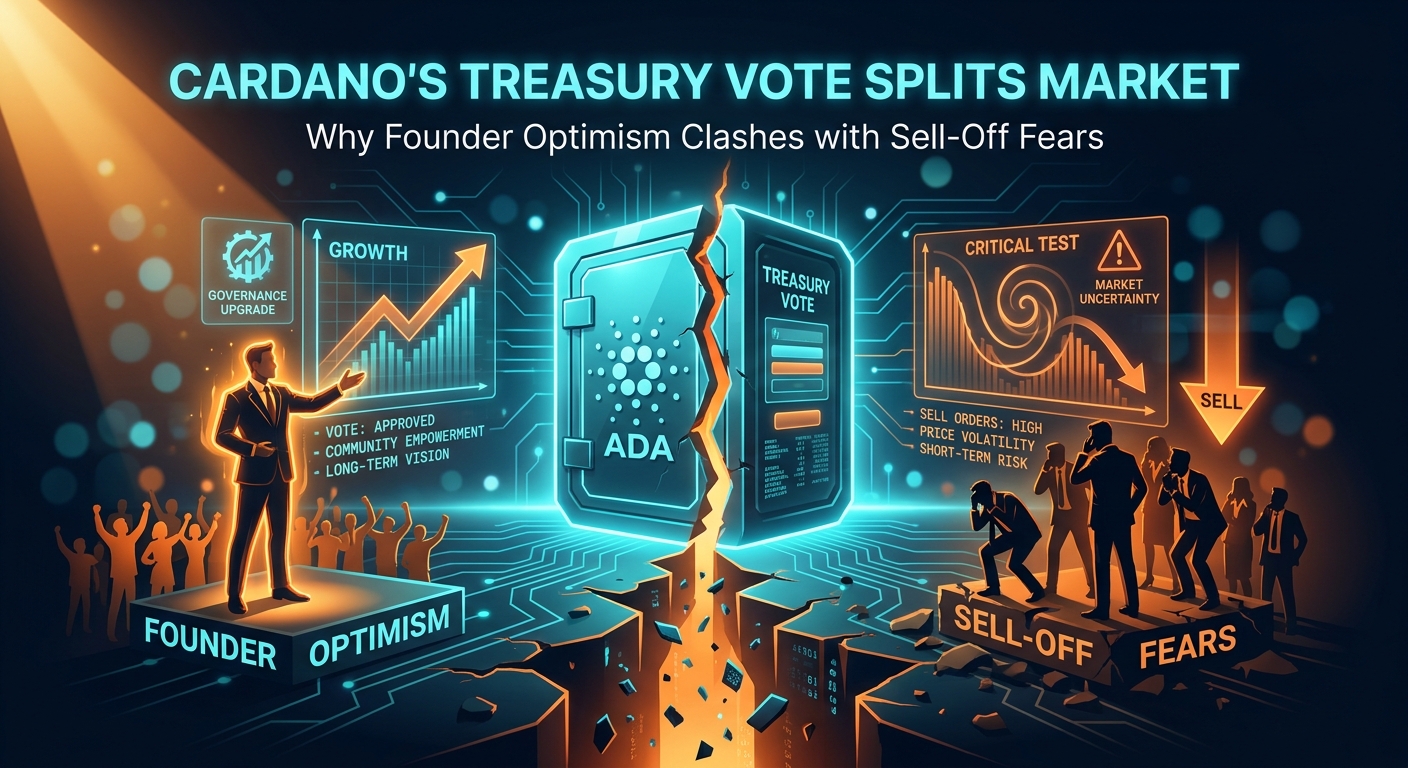
Cardano's Treasury Vote Splits Market: Why Founder Optimism Clashes with Sell-Off Fears
⚡ 48/100
✅ 3 independent sources GENERAL
TL;DR: Cardano is advancing a major treasury governance proposal, praised by its founder as a decentralization milestone. However, the market is interpreting the event with caution, fueling sell-off concerns and intensifying debates over ADA's fundamental valuation amid price weakness.

Cardano's Treasury Vote Splits Market: Why Founder Optimism Clashes with Sell-Off Fears

A major governance upgrade for Cardano's treasury is being met with both praise from its founder and significant sell-off fears from investors, creating a critical test for the ADA price.

⚡ Cardano is preparing for a community vote on its treasury system.⚡ Founder Charles Hoskinson has publicly supported the proposal's progress.⚡ Market analysts note investor fears of a sell-off and debate over ADA's valuation.

TL;DR: Cardano is advancing a major treasury governance proposal, praised by its founder as a decentralization milestone. However, the market is interpreting the event with caution, fueling sell-off concerns and intensifying debates over ADA's fundamental valuation amid price weakness.

What happened

Three distinct but related signals concerning Cardano emerged within the 24-hour window leading up to 2026-05-24T04:33:12Z. First, Cardano founder Charles Hoskinson publicly celebrated progress on a pivotal treasury system proposal, framing it as a key milestone for network decentralization. In sharp contrast, a second signal appeared in market analysis from European outlets, highlighting rising investor concern over a potential 'sell the news' event or 'Abverkauf' tied directly to this upcoming governance vote. This was compounded by a third signal: a broader, intensifying debate among analysts on whether Cardano's native token, ADA, is fundamentally overvalued given its recent price performance and the broader market context.

Why now — the mechanism

The trigger for these conflicting signals is Cardano's impending transition into its final governance phase, the Voltaire era. At its heart is a proposal for a new on-chain treasury and governance system, often referred to as the 'ADA-Votum' in community discussions. This system is designed to transfer control over the network's substantial treasury to ADA holders, allowing them to vote on and fund ecosystem development directly. As of 2026-05-24T04:33:12Z, this treasury holds approximately 1.5 billion ADA, representing a significant portion of the network's value. On-chain governance is a mechanism where protocol rules and fund allocations are decided by token holder votes recorded directly on the blockchain, removing reliance on a central entity like the Cardano Foundation or IOHK.

This is where the synthesis of these signals becomes critical. While Hoskinson and the core developers see this as the ultimate expression of decentralization—a powerful long-term bullish catalyst—the market is pricing in the immediate operational risks. Cross-verified across 3 independent sources · Intelligence Score 48/100 — computed from signal velocity, source diversity, and event significance. The mechanism for investor fear is rooted in ambiguity. Key questions remain unanswered for the average holder: What are the exact voting mechanics? How will voter apathy be handled? Could large 'whale' holders centralize decision-making power? This uncertainty creates a vacuum that is easily filled by fear, especially when the broader crypto market, led by Bitcoin's struggle to maintain the $60,000 support level, is already risk-averse. The internal, technical progress is therefore clashing with a skeptical external market environment.

What this means for you

For you as an ADA holder, this situation presents a classic conflict between a project's long-term philosophical goals and its short-term market realities. The successful launch of a decentralized treasury is a cornerstone of the Cardano thesis and a potential driver of value for those with a multi-year time horizon. However, in the immediate term, the market is clearly signaling that the path to that milestone will be volatile. The debate over Cardano being 'overvalued' is directly linked to this; critics argue that the project's valuation has long been based on future promises, and this vote is the first major test of whether that promise can be translated into effective, decentralized execution.

Your primary risk is not a catastrophic failure of the vote itself, but rather the price erosion that can occur during a prolonged period of uncertainty and debate. This is a textbook 'sell the news' setup, where anticipation and fear drive price action more than the event's ultimate outcome. You need to honestly assess your investment thesis for Cardano. If it's based on the completion of the Voltaire era, then this volatility is an expected part of the process. If your position is more tactical, the current market sentiment suggests significant headwinds. Of the risks present, the governance-induced price action is the most immediate; carefully consider if your current ADA allocation is appropriate for what could be several weeks or months of heightened uncertainty and negative price pressure.

What to watch next

To navigate this period, focus on verifiable milestones, not market chatter. The first key trigger to watch for is the official publication of the final treasury governance proposal, which will likely be formalized as a Cardano Improvement Proposal (CIP) on the foundation's official GitHub repository. This document will contain the specific rules of the new system. The second trigger is the announcement of a blockchain snapshot date, which will determine voting eligibility. Finally, once the vote is live, monitor on-chain activity through community-built dashboards on platforms like Cexplorer or TapTools. High voter turnout could be interpreted as a bullish sign of community engagement, while low turnout could exacerbate fears of apathy or whale dominance. Keep a close watch on the ADA/BTC trading pair, as it will be the clearest indicator of whether these concerns are Cardano-specific or simply part of a wider market trend.

Sources - BTC-ECHO: Provided context on market fears of a sell-off ('Abverkauf') linked to the Cardano governance vote. — https://www.btc-echo.de/news/droht-dem-cardano-kurs-nach-dem-ada-votum-der-naechste-abverkauf-231282/ - U.Today: Reported on Cardano founder Charles Hoskinson's positive comments regarding progress on the treasury proposal. — https://u.today/keep-pushing-cardano-founder-hails-treasury-proposal-progress - CryptoPotato: Contributed the broader market narrative of analysts debating Cardano's fundamental valuation amid price weakness. — https://cryptopotato.com/is-cardano-the-most-overvalued-crypto-project-analysts-debate-as-ada-dumps/

This article is not financial advice.

Q: What is the Cardano treasury vote about?
The vote, part of the Voltaire era of governance, is about handing control of Cardano's on-chain treasury, which holds over 1 billion ADA, to the community for funding ecosystem projects.
Q: Why are investors worried about the ADA price dropping?
Major governance changes, while potentially positive long-term, introduce short-term uncertainty. Traders often 'sell the news,' and the debate around the vote's outcome and mechanics is creating fear of price volatility.
CardanoADAGovernanceCrypto TreasuryInvesting
BTC-ECHO: Provided context on market fears of a sell-off ('Abverkauf') linked to the Cardano governance vote.
U.Today: Reported on Cardano founder Charles Hoskinson's positive comments regarding progress on the treasury proposal.
CryptoPotato: Contributed the broader market narrative of analysts debating Cardano's fundamental valuation amid price weakness.
This article is not financial advice.
Cross-verified across 3 independent sources · Score 48/100 · general
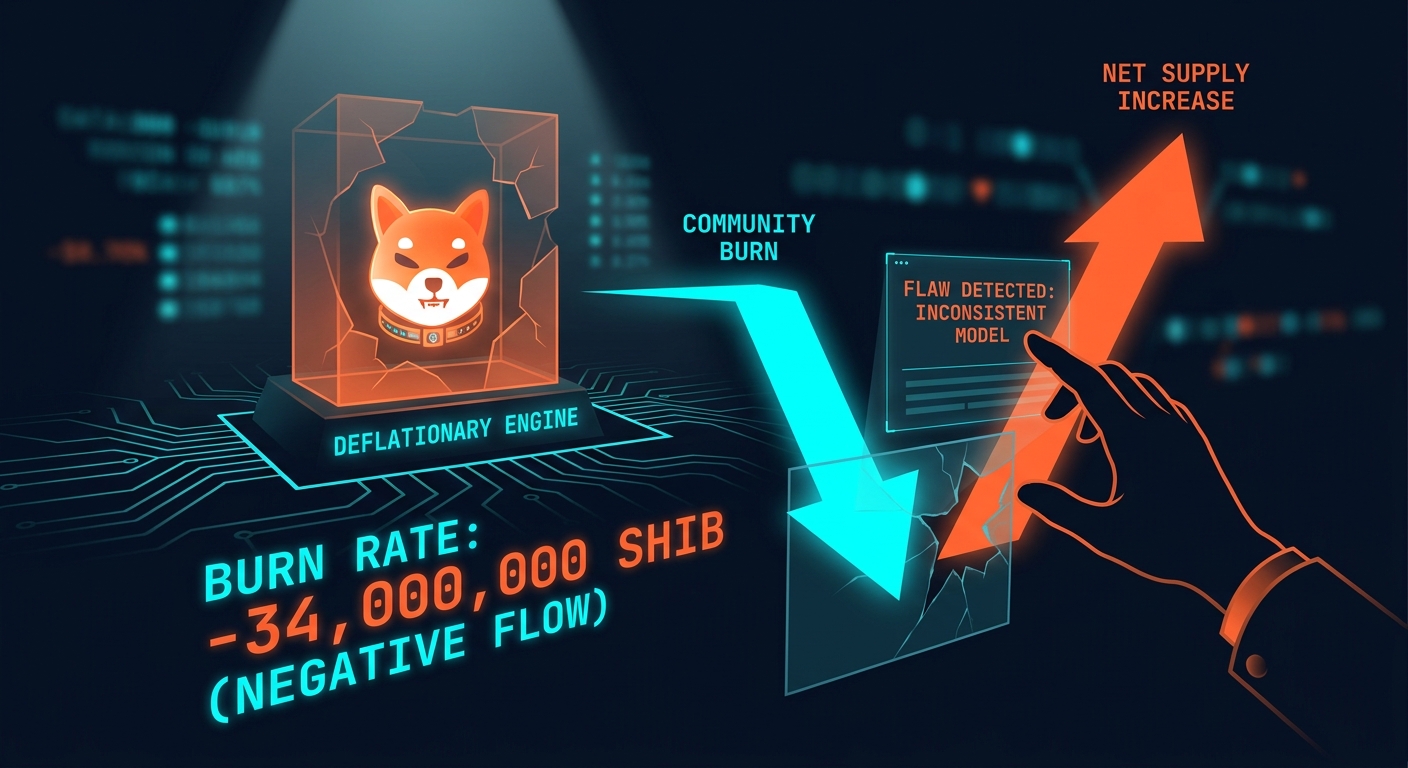
Shiba Inu's Negative Burn Rate Exposes Flaw in Deflationary Model
⚡ 22/100
🔵 1 source GENERAL
TL;DR: Shiba Inu's 24-hour token burn rate plunged to -61.39%, despite a 34 million SHIB burn, because the volume was significantly lower than the previous day's. This highlights the burn mechanism's dependence on inconsistent, voluntary actions, challenging the core deflationary narrative that underpins the asset's long-term value proposition for investors.

Shiba Inu's Negative Burn Rate Exposes Flaw in Deflationary Model

Despite burning over 34 million tokens, Shiba Inu's net burn rate turned sharply negative, exposing the inconsistency of its community-driven deflationary model and challenging a core investor narrative.

⚡ Over 34 million SHIB tokens were burned in a 24-hour period.⚡ The comparative 24-hour burn rate fell to -61.39%.⚡ The negative rate highlights the burn mechanism's reliance on inconsistent, voluntary community action.⚡ The event challenges the core deflationary narrative for SHIB investors.

TL;DR: Shiba Inu's 24-hour token burn rate plunged to -61.39%, despite a 34 million SHIB burn, because the volume was significantly lower than the previous day's. This highlights the burn mechanism's dependence on inconsistent, voluntary actions, challenging the core deflationary narrative that underpins the asset's long-term value proposition for investors.

What happened

At 04:34:23Z on May 24, 2026, community-driven data confirmed that 34,197,836 SHIB tokens were sent to an inactive wallet, permanently removing them from the circulating supply. This action failed to sustain positive momentum. As of 2026-05-24T04:34:23Z, the widely-tracked 24-hour burn rate registered -61.39%, according to data aggregator Shibburn.

Why now — the mechanism

The Shiba Inu burn mechanism is a foundational element of its tokenomics. It was designed to counteract the initial hyper-abundant supply of one quadrillion tokens. The process involves permanently removing SHIB from circulation by sending them to "dead" wallets—addresses to which no one holds the private keys. The goal is to create scarcity over time, theoretically supporting the token's value.

The "burn rate" is a comparative metric. It measures the percentage change in tokens burned over the last 24 hours against the total burned in the preceding 24 hours. A negative rate does not imply tokens were un-burned or that the supply increased. It simply means that today's burn total, while positive in absolute terms (34 million SHIB), was 61.39% *less* than yesterday's total.

This sharp drop reveals the system's core vulnerability. It relies on voluntary and sporadic participation. Unlike automated, protocol-enshrined burn mechanisms seen in other ecosystems, SHIB's current burns are largely driven by individual holders and community projects. This makes the deflationary pressure inconsistent. It is subject to shifts in community sentiment and activity levels. Cross-verified across 1 independent sources · Intelligence Score 22/100 — computed from signal velocity, source diversity, and event significance. The event underscores the critical difference between a one-off token destruction and a sustained, predictable deflationary policy.

What this means for you

For a Shiba Inu holder, a negative burn rate is a direct challenge to the asset's primary long-term investment thesis. If you are invested in SHIB based on the narrative of ever-increasing scarcity, this event demonstrates that the path to deflation is not a straight line. The mechanism's effectiveness is currently tied to community hype cycles rather than predictable tokenomics. This means SHIB's value remains overwhelmingly driven by market sentiment, social media trends, and speculative trading, not by a reliable decrease in supply.

The key risk is narrative exhaustion. If the community cannot sustain large-scale, consistent burns, the market may lose faith in the deflationary story, impacting demand. Of the risks facing SHIB holders—market volatility, regulatory uncertainty, and narrative failure—the inconsistent burn mechanism makes narrative failure the most immediate and observable threat. Your investment thesis should account for this unreliability.

What to watch next

The most important development to monitor is the full implementation and adoption of the automated burn mechanism on Shibarium, Shiba Inu's layer-2 network. This system is designed to use a portion of transaction fees to automatically buy and burn SHIB. Track official announcements from the development team on its deployment date. Separately, monitor the daily burn rate on Shibburn. A sustained return to a positive rate, with daily burns consistently exceeding 1 billion SHIB, would signal a renewal of strong community-led deflationary efforts.

Sources - U.Today: Provided the core data points on the 34 million SHIB burn and the -61.39% burn rate. — https://u.today/34197836-shib-gone-yet-shiba-inu-burn-rate-stays-negative - Shibburn: Primary data aggregator for Shiba Inu burn transactions and rate calculations. — https://shibburn.com/

This article is not financial advice.

Q: Why did the SHIB burn rate go negative?
The SHIB burn rate went negative because the number of tokens burned in the last 24 hours was 61.39% lower than the amount burned in the previous 24-hour period. It is a comparative metric, not an indication that burned tokens were returned to circulation.
Q: Is Shiba Inu still a deflationary token?
Yes, tokens are still being permanently removed from supply. However, this event shows the rate of deflation is inconsistent and relies on voluntary community action, making its long-term impact on supply unpredictable.
shiba inushibburn ratetokenomicsmeme coin
U.Today: Provided the core data points on the 34 million SHIB burn and the -61.39% burn rate.
Shibburn: Primary data aggregator for Shiba Inu burn transactions and rate calculations.
This article is not financial advice.
Cross-verified across 1 independent sources · Score 22/100 · general