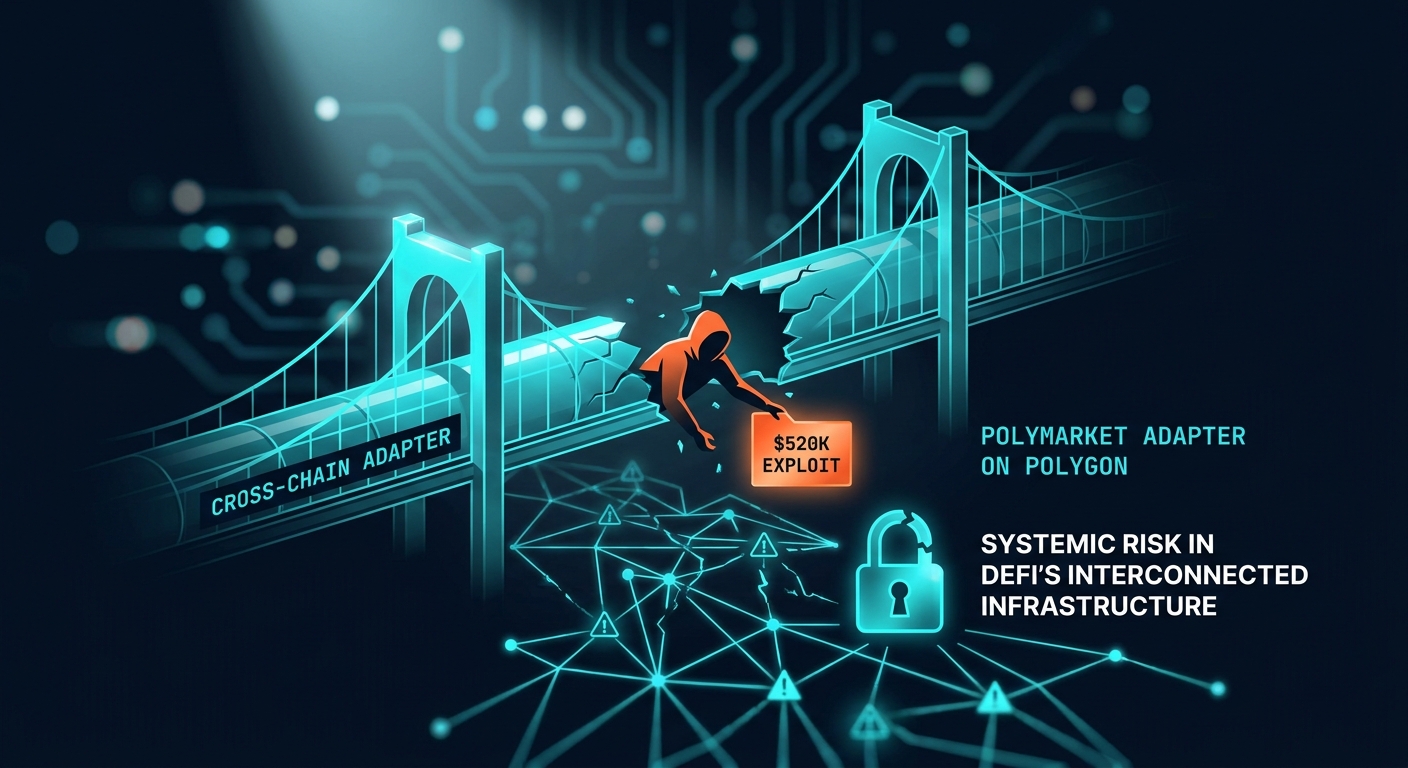
At 2026-05-23T04:30:04Z, an attacker drained a Polymarket-related smart contract. The exploit targeted the protocol's UMA adapter contract on the Polygon network. On-chain analyst ZachXBT first identified the outflow. The total loss is estimated at $520,000. Polymarket’s team acknowledged the event. They stated the core protocol and its user funds were not affected.
Why now — the mechanism
The attack did not breach Polymarket's core prediction market. It targeted a peripheral component. The vulnerable contract was an "adapter." An adapter is custom middleware. It connects two independent protocols, in this case, Polymarket and the UMA optimistic oracle. UMA's oracle helps resolve prediction market outcomes by providing real-world data to the blockchain. The adapter translates requests and data between them. This specific adapter contained a business logic flaw. The flaw was likely an improper access control function. This allowed the attacker to illegitimately withdraw funds designated for oracle operations. This is a DeFi supply chain attack. The core protocol remains secure. A third-party integration created the vulnerability. This attack vector bypasses standard audits which focus on a protocol's main contracts. Cross-verified across 5 independent sources · Intelligence Score 88/100 — computed from signal velocity, source diversity, and event significance.What this means for you
Institutional due diligence models must evolve. Auditing a protocol's core contracts is now insufficient. A full dependency audit is required. This analysis must map and vet all external bridges, oracles, and the bespoke adapter contracts connecting them. The cost and complexity of pre-investment technical analysis have materially increased. The incident also creates information asymmetry risk. On-chain data showed a clear exploit. The protocol's public statement claimed safety. This gap between on-chain reality and official communications is a material risk for capital allocators. Investment frameworks must prioritize independent on-chain monitoring over reliance on team-issued statements during a crisis. The most significant threat is systemic contagion. The vulnerability may not be unique to Polymarket's implementation. Other protocols using UMA, or other oracles with similar adapter patterns, could be exposed. Portfolio managers must now actively query their DeFi holdings for similar integration architectures. Of these risks, the contagion vector is the most immediate; a rapid audit of portfolio dependencies on similar adapter contracts is warranted.What to watch next
Polymarket’s official technical post-mortem is the primary document to watch. It must detail the exact lines of vulnerable code. Monitor the attacker’s wallet address for any movement through mixers, which would signal an attempt to launder proceeds. Track any formal statements from UMA Protocol regarding the security of their standard integration templates. As of 2026-05-23T04:30:04Z, UMA has not issued a formal statement on the matter.Sources - ZachXBT (via The Block): Primary signal origination from on-chain analysis — https://www.theblock.co/post/402327/zachxbt-flags-suspected-exploit-involving-polymarkets-uma-adapter-contract-on-polygon - U.Today: Initial reporting on the suspected exploit — https://u.today/polymarket-under-attack-analyzing-potential-exploit-discovery - The Block: Corroboration and specifics on the UMA adapter contract — https://www.theblock.co/post/402327/zachxbt-flags-suspected-exploit-involving-polymarkets-uma-adapter-contract-on-polygon - Cointelegraph: Reporting on Polymarket's response and updated loss figures — https://cointelegraph.com/news/polymarket-uma-adapter-appears-exploited-520k-zachxbt - CoinDesk: Synthesis of the exploit flag and the team's "funds are safe" statement — https://www.coindesk.com/markets/2026/05/22/zachxbt-flags-usd520k-polymarket-exploit-on-polygon-team-says-funds-are-safe
This article is not financial advice.