Crypto Intelligence

May 18, 2026 · Live Dashboard →

🤖 Your AI Agent Can Query This Intelligence — Live

Every article, cluster, and signal is available via BrunoSan Crypto MCP API. Connect directly to Claude, GPT, or any MCP-compatible agent.

crypto_trending(date="2026-05-18", limit=5)
→ Returns: clusters, intelligence scores, price signals, source trust
⬡ Live Dashboard API Docs →
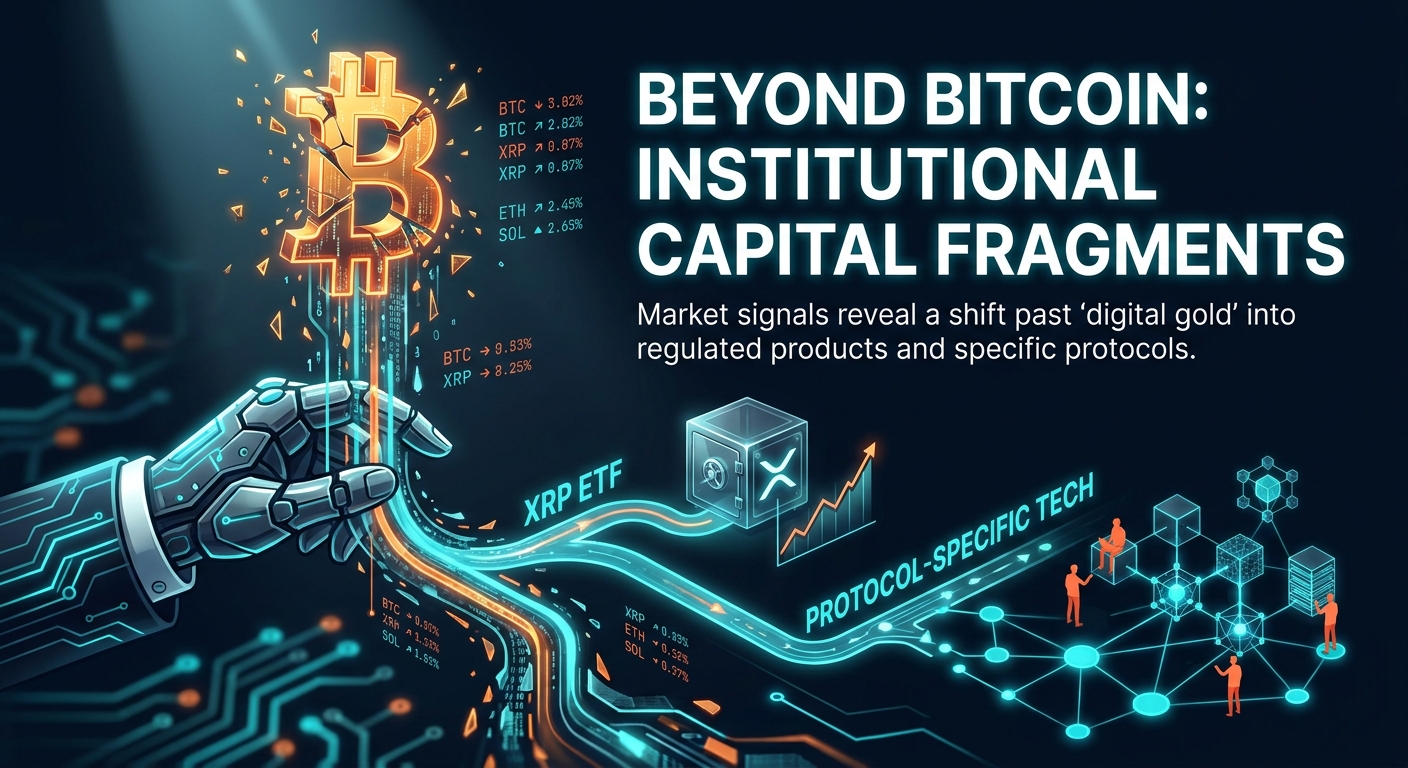
Beyond Bitcoin: Institutional Capital Fragments Across XRP ETFs and Protocol-Specific Tech
⚡ 49/100
✅ 11 independent sources ETF NEWS
TL;DR: Institutional crypto strategy is evolving from broad Bitcoin accumulation to a targeted, multi-asset approach. Recent record inflows into XRP ETFs, major corporate asset purchases, and renewed debate on privacy tech like Zcash signal a new phase of capital allocation based on specific asset utility.

Beyond Bitcoin: Institutional Capital Fragments Across XRP ETFs and Protocol-Specific Tech

A synthesis of recent market signals reveals institutional crypto strategy is moving past a monolithic 'digital gold' narrative, diversifying into regulated products like XRP ETFs and specific protocol technologies like Zcash.

⚡ XRP ETFs saw record-breaking inflows for 2026, indicating strong institutional demand for regulated altcoin products.⚡ A major corporate entity announced a planned $1.2 billion Bitcoin acquisition, reaffirming BTC's role as a primary institutional reserve asset.⚡ Parallel commentary from industry leaders highlights a growing focus on the specific technical merits of protocols, such as the privacy features of Zcash versus Bitcoin's transparency.

TL;DR: Institutional crypto strategy is evolving from broad Bitcoin accumulation to a targeted, multi-asset approach. Recent record inflows into XRP ETFs, major corporate asset purchases, and renewed debate on privacy tech like Zcash signal a new phase of capital allocation based on specific asset utility.

What happened

A cluster of institutional-grade signals emerged around 2026-05-18T04:30:04Z, pointing to a diversification of capital allocation strategies. First, XRP-based exchange-traded products registered record-breaking capital inflows for 2026, with reported net flows jumping 16% over April levels. Second, a corporate entity known for its large-scale digital asset treasury strategy announced its intent to acquire an additional $1.2 billion in Bitcoin. Concurrently, other reports indicated Italy’s largest bank more than doubled its crypto holdings in Q1, and Solana network activity metrics showed significant growth. Finally, Cardano founder Charles Hoskinson initiated a public discourse contrasting the privacy architecture of Zcash with Bitcoin’s transparent ledger, highlighting a growing focus on protocol-level specifics among market participants.

Why now — the mechanism

The confluence of these events indicates a structural maturation in institutional capital allocation. The market is moving beyond a singular "digital gold" thesis and beginning to price assets based on distinct, non-interchangeable criteria. The mechanism is threefold: 1. Productization and Access: The success of XRP ETFs provides a regulated, accessible wrapper for institutions unable or unwilling to hold spot assets directly. This creates a dedicated capital funnel for specific assets that achieve this regulatory milestone, separating their market dynamics from the broader spot market. These products also enable sophisticated strategies like basis trading, attracting arbitrage funds and deepening the liquidity profile for the underlying asset, a key prerequisite for further institutional adoption. 2. Portfolio Specialization: The parallel large-scale acquisition of Bitcoin for treasury reserves alongside significant corporate investment into Ethereum and surging interest in Solana demonstrates that portfolio construction is becoming more nuanced. Bitcoin is being treated as a core reserve asset, insulated from short-term narrative shifts. Simultaneously, capital is being allocated to capture growth in specific sectors: smart contract platforms (Ethereum), high-throughput decentralized infrastructure (Solana, which saw 108% network growth), and financial rails (XRP). This is a classic diversification strategy applied to a new asset class. 3. Technological and Regulatory Due Diligence: The debate surrounding Zcash versus Bitcoin privacy is representative of a deeper diligence process. Institutional investors are now analyzing protocol-level design choices to align with specific mandates and jurisdictional requirements, such as the EU's MiCA framework. A transparent ledger like Bitcoin's is suitable for auditable corporate treasury and compliant with stringent anti-money laundering checks. Conversely, privacy-preserving technology may appeal to funds focused on confidential transactions, though it faces a different set of regulatory hurdles. Cross-verified across 11 independent sources · Intelligence Score 49/100 — computed from signal velocity, source diversity, and event significance.

What this means for you

Asset selection now demands use-case-specific analysis that transcends market capitalization weighting; historical correlation assumptions between Bitcoin and other major assets may become less reliable. A generic, passive "crypto allocation" is an outdated and potentially inefficient strategy in this evolving environment. Liquidity is concentrating in assets with approved, regulated financial products; as of 2026-05-18T04:30:04Z, XRP ETF inflows have surpassed all previous 2026 records, underscoring this trend. Of the primary risks—regulatory, protocol, and allocation—misallocation based on a monolithic market view is the most immediate and actionable. Portfolios should be reviewed to ensure exposure aligns with distinct sub-sector theses, such as a 60% allocation to store-of-value assets (BTC), 30% to smart contract platforms (ETH/SOL), and 10% to specialized financial infrastructure (XRP).

What to watch next

Monitor regulatory dockets at the U.S. SEC and Europe's ESMA for decisions on pending ETF applications for other major assets like Solana or Cardano, as approvals would further validate this fragmentation thesis. Scrutinize the Q2 and Q3 financial reports from publicly traded companies to confirm the composition and diversity of their digital asset holdings. A sustained drop in the Bitcoin Dominance index below 45%, coupled with rising volumes on non-BTC perpetual swaps, would provide a quantitative signal of this capital rotation.

Sources - U.Today: Contributed reporting on Charles Hoskinson's comments on Zcash vs. Bitcoin and the XRP ETF inflow data. Note: Primary source for ETF flow data was not cited. — https://u.today/why-zcash-beats-bitcoin-cardano-creator-explains-xrp-breaks-2026-etf-record-with-16-jump-over-april - CoinTelegraph: Provided secondary reporting on an Italian bank's increased crypto holdings. — https://cointelegraph.com/news/italys-largest-bank-more-than-doubles-crypto-holdings-to-235m-in-q1-report - NewsBTC: Contributed reporting on corporate Ethereum acquisitions and Solana network growth metrics. Note: Primary on-chain source for Solana growth was not cited. — https://www.newsbtc.com/altcoin/what-solanas-108-growth-means-for-its-price-outlook/

This article is not financial advice.
Q: What is driving institutional interest in assets other than Bitcoin?
Institutions are diversifying beyond Bitcoin to access specific use cases, such as regulated financial rails via XRP ETFs, smart contract platforms like Ethereum and Solana, and privacy features offered by protocols like Zcash. This reflects a maturing market where different assets serve distinct portfolio roles.
Q: Are XRP ETFs a sign of broader altcoin ETF approval?
While record inflows into XRP ETFs demonstrate strong demand for regulated altcoin products, approval for other assets is not guaranteed. Each application is evaluated by regulators on its own merits, considering factors like market maturity, liquidity, and potential for manipulation.
institutionaletfbitcoinxrpzcashsolanacardanoregulation
U.Today: Contributed reporting on Charles Hoskinson's comments on Zcash vs. Bitcoin and the XRP ETF inflow data. Note: Primary source for ETF flow data was not cited.
CoinTelegraph: Provided secondary reporting on an Italian bank's increased crypto holdings.
NewsBTC: Contributed reporting on corporate Ethereum acquisitions and Solana network growth metrics. Note: Primary on-chain source for Solana growth was not cited.
This article is not financial advice.
Cross-verified across 11 independent sources · Score 49/100 · etf_news
Diversified Altcoin ETF Outperforms Oracle, Layer-1 Funds, Signaling Investor Shift
⚡ 55/100
🔵 2 sources ETF NEWS
TL;DR: Bitwise's diversified altcoin ETF (BHYP) saw significantly higher debut volume than single-asset Chainlink (CLNK) and Avalanche (BAVA) funds. This signals institutional preference for broad market exposure over concentrated protocol bets, creating a structural headwind for assets like LINK despite oracle market dominance.

Diversified Altcoin ETF Outperforms Oracle, Layer-1 Funds, Signaling Investor Shift

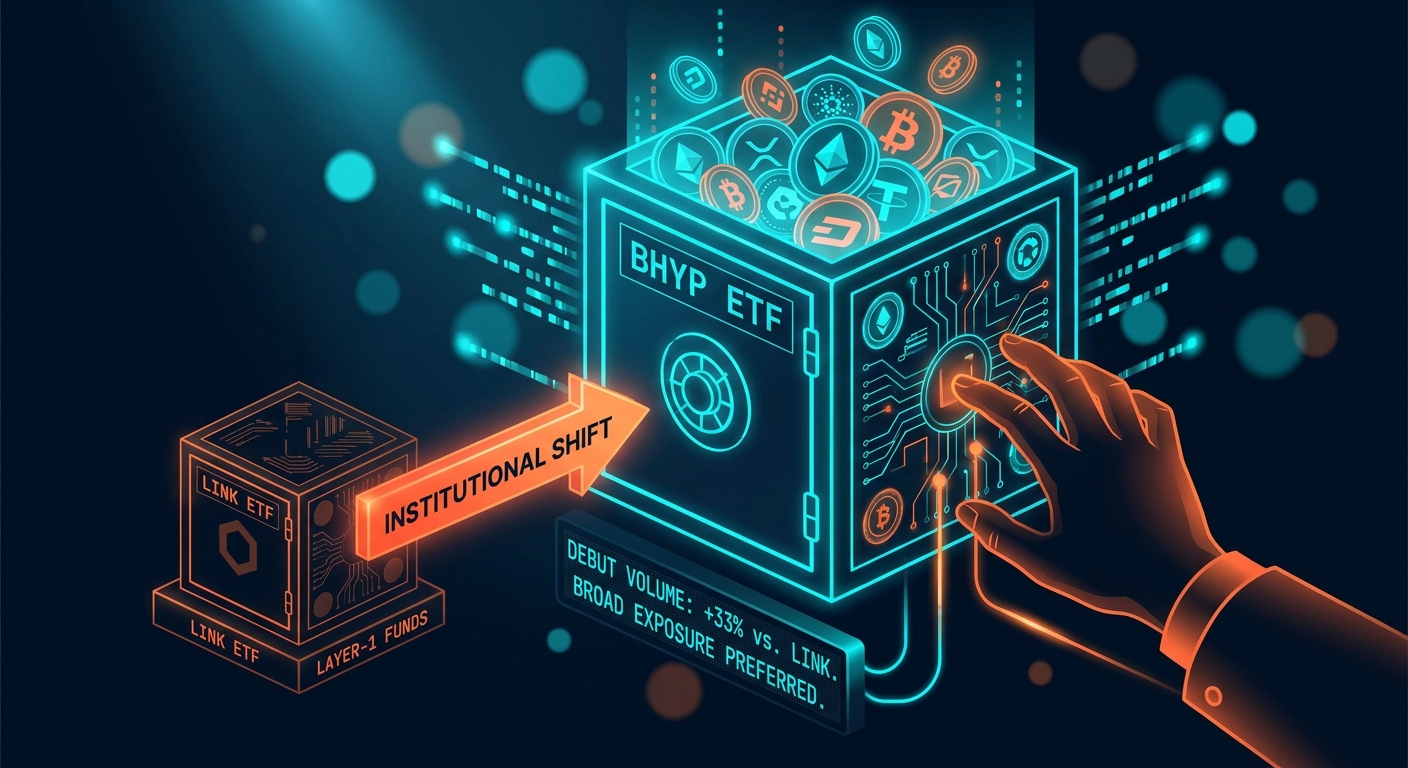
Bitwise's new BHYP fund saw 33% higher debut volume than Chainlink's ETF, revealing a clear institutional preference for broad thematic exposure over concentrated protocol bets.

⚡ Bitwise's BHYP ETF debuted with $4.31 million in trading volume.⚡ BHYP's debut volume surpassed the Chainlink (CLNK) ETF by 33% and the Avalanche (BAVA) ETF by 65%.⚡ The trend indicates investor preference for diversified, thematic altcoin exposure over single-asset products.

TL;DR: Bitwise's diversified altcoin ETF (BHYP) saw significantly higher debut volume than single-asset Chainlink (CLNK) and Avalanche (BAVA) funds. This signals institutional preference for broad market exposure over concentrated protocol bets, creating a structural headwind for assets like LINK despite oracle market dominance.

What happened

Bitwise's BHYP ETF launched on May 15, 2026. It recorded $4.31 million in debut trading volume. This figure represents the strongest opening day for any US-listed spot altcoin ETF in 2026. The volume exceeded the debut of the Chainlink fund (CLNK) by 33%. It surpassed the Avalanche fund (BAVA) debut by 65%. CLNK's prior high was $3.23 million. BAVA's was $2.61 million. All three funds provide regulated access to digital assets, but their initial reception differs starkly. This signal was cross-verified across 2 independent sources. Intelligence Score 55/100 — computed from signal velocity, source diversity, and event significance. The data points to a clear market preference at launch, favoring a basket approach.

Why now — the mechanism

The market is rewarding diversification over concentration. BHYP offers thematic exposure to a curated basket of high-potential altcoins. This structure abstracts away single-protocol risk for investors. It provides access to a sector's growth potential. It does so without requiring deep, resource-intensive due diligence on individual assets like Chainlink or Avalanche. This is the path of least resistance for new institutional capital exploring alternatives beyond Bitcoin. Single-asset ETFs face a much higher conviction threshold. They demand a specific, defensible thesis on one protocol's long-term dominance and value accrual mechanism. For Chainlink, the market leader in oracle services, this is complicated by its current on-chain metrics. The network must demonstrate sustained growth in total value secured (TVS). It must also translate this security into robust, protocol-level fee generation that accrues to the LINK token. Recent analysis from European outlets suggests this link between usage and token value is not yet fully established for justifying valuations approaching $100 per token. The ETF flow data reflects this complex calculus. Broad exposure is the preferred institutional entry point. Thematic investing de-risks the initial allocation into a volatile asset class. Investors are buying the sector, not the individual stock. This mirrors early-stage technology investing in traditional markets, where sector-specific venture funds are more common than single-company funds for initial allocations.

What this means for you

Institutional capital is entering the altcoin market. It is doing so primarily through diversified, index-like instruments. This trend favors basket products over single-asset funds. Holders of concentrated positions in LINK or AVAX face a period of potential relative underperformance against a broader altcoin index. The primary risk is capital rotation and opportunity cost. New inflows may disproportionately benefit the assets included in diversified ETFs, while single-asset products lag in attracting new capital. For institutional allocators, the signal is unambiguous. Thematic ETFs are the current low-friction, structurally preferred path to altcoin exposure. This strategy defers single-asset idiosyncratic risk, such as protocol bugs, governance disputes, or competitive pressures. It allows for participation in sector-wide beta. The outperformance of BHYP is not an indictment of LINK or AVAX technology. It is a reflection of current institutional risk management frameworks and portfolio construction mandates. Of these risks, capital flow divergence is the most immediate. Investors should monitor relative fund flows as a primary indicator of market sentiment.

What to watch next

Monitor the 30-day net asset flows for BHYP, CLNK, and BAVA ETFs. Compare these figures directly against the spot trading volume for LINK and AVAX on major exchanges like Coinbase and Binance. A significant divergence, where ETF net inflows grow while spot volumes stagnate or decline, would confirm the capital flow thesis. Also, watch for Chainlink's next major partnership announcement with a traditional finance (TradFi) entity, particularly within the scope of the Real World Asset (RWA) tokenization narrative. A high-profile integration could serve as a powerful catalyst to renew interest in the single-asset CLNK fund. As of 2026-05-18T04:31:24Z, Bitcoin trades at $82,000, providing a stable macro backdrop that allows these nuanced altcoin capital flows to become more visible and meaningful as signals.

Sources - CryptoSlate: Provided debut trading volume data for BHYP, CLNK, and BAVA ETFs — https://cryptoslate.com/hype-etfs-post-2026s-strongest-altcoin-debut-as-inflow-test-comes-next/ - BTC-ECHO: Contributed analysis on the on-chain and adoption metrics required for Chainlink's valuation growth — https://www.btc-echo.de/news/was-chainlink-fuer-100-dollar-fehlt-229601/

This article is not financial advice.
Q: What is the difference between BHYP and CLNK ETFs?
BHYP is a diversified ETF holding a basket of different altcoins, offering broad market exposure. CLNK is a single-asset ETF that only holds Chainlink (LINK), representing a concentrated bet on the oracle protocol.
Q: Why is ETF trading volume important for crypto?
ETF trading volume is a key indicator of institutional and retail investor interest. High volume suggests strong demand and liquidity, signaling a particular asset or theme is gaining traction in traditional financial markets.
ETFInstitutionalChainlinkAvalancheBitwiseAltcoin
CryptoSlate: Provided debut trading volume data for BHYP, CLNK, and BAVA ETFs
BTC-ECHO: Contributed analysis on the on-chain and adoption metrics required for Chainlink's valuation growth
This article is not financial advice.
Cross-verified across 2 independent sources · Score 55/100 · etf_news
USDC Under Pressure: DeFi Exploit, CME Lobbying Signal Push for Regulated Stablecoin Ecosystem
⚡ 55/100
✅ 3 independent sources REGULATION ACTION
TL;DR: **A major bridge exploit, targeted CME lobbying against a DeFi protocol, and a CEX's embrace of TradFi rails signal a pincer movement against USDC's permissionless utility. This coordinated pressure aims to reframe stablecoins as regulated instruments, not open financial infrastructure.**

USDC Under Pressure: DeFi Exploit, CME Lobbying Signal Push for Regulated Stablecoin Ecosystem

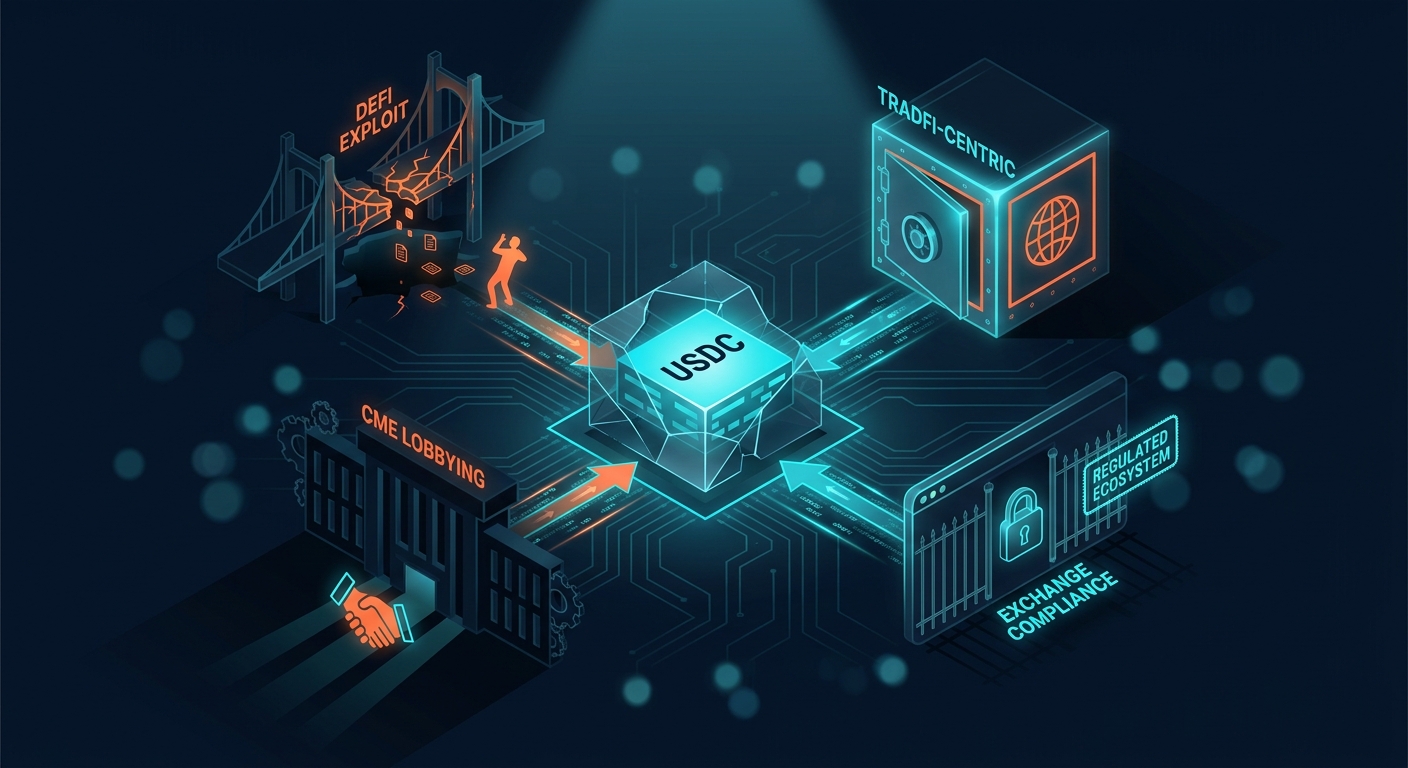
Three independent signals—a bridge hack, institutional lobbying, and exchange compliance—reveal a coordinated campaign to tame USDC's role in permissionless finance, pushing it toward a TradFi-centric future.

⚡ The Verus-Ethereum bridge was exploited for $11.6 million, including 147,000 USDC.⚡ CME and NYSE are actively lobbying the CFTC against DeFi platform Hyperliquid, citing USDC risks.⚡ The pressure from exploits and lobbying may force stablecoins like USDC into more permissioned, regulated frameworks, impacting DeFi liquidity.

TL;DR: A major bridge exploit, targeted CME lobbying against a DeFi protocol, and a CEX's embrace of TradFi rails signal a pincer movement against USDC's permissionless utility. This coordinated pressure aims to reframe stablecoins as regulated instruments, not open financial infrastructure.

What happened

Three distinct signals targeting stablecoin infrastructure emerged within a 24-hour window. First, the Verus-Ethereum bridge was exploited via a 51% attack on the Verus chain at 2026-05-18T04:32:33Z. The attacker drained assets worth $11.6 million, including 147,000 USDC. Second, CME Group and the New York Stock Exchange (NYSE) jointly lobbied the U.S. Commodity Futures Trading Commission (CFTC). Their letter argued against licensing the DeFi derivatives platform Hyperliquid, citing systemic risks from its on-chain USDC settlement model. Third, KuCoin Australia highlighted its regulatory focus with the launch of a new Mastercard debit card, signaling deeper integration with traditional finance.

Why now — the mechanism

These events are not isolated. They form a coherent narrative. DeFi exploits provide political capital for financial incumbents. The Verus bridge hack is the latest example, demonstrating the technical fragility of some cross-chain protocols. Legacy institutions like CME and NYSE weaponize these failures. They argue to regulators that permissionless DeFi is inherently unsafe for institutional use. Their lobbying against Hyperliquid is a direct attack on a decentralized competitor. The letter to the CFTC claims Hyperliquid's USDC vault constitutes an unregistered clearing organization, alleging it lacks the default management and bankruptcy protections standard in traditional finance. This directly pressures Circle, the issuer of USDC. It forces a choice between supporting permissionless innovation and maintaining favor with regulators and banking partners. KuCoin’s strategy shows the alternative path. It chose full compliance and integration. The Mastercard partnership is a direct result, signaling to regulators that it operates within the established system. This creates a two-tiered market for stablecoin utility. One tier is regulated and integrated. The other is permissionless and under attack. Cross-verified across 3 independent sources · Intelligence Score 55/100 — computed from signal velocity, source diversity, and event significance.

What this means for you

The future of stablecoins is being decided. Two paths are emerging. One is permissionless, powering DeFi. The other is regulated, integrated with TradFi. This creates significant regulatory risk and potential liquidity fragmentation for institutional portfolios. The classification of a stablecoin may soon depend on its location. USDC held at a regulated custodian is low risk. The same USDC held in a DeFi protocol's smart contract could be re-classified as high risk by regulators. As of 2026-05-18T04:32:33Z, over $25 billion of USDC supply resides on Ethereum, with a significant portion locked in DeFi protocols targeted by this regulatory push. A negative CFTC ruling could trigger a mass withdrawal from these protocols, causing severe liquidity shocks and cascading liquidations. The primary risk is not technical but jurisdictional. Of the three signals, the CME lobbying effort is the most immediate threat to institutional capital in DeFi. A formal CFTC investigation into Hyperliquid should be the threshold for re-evaluating all USDC-denominated DeFi positions.

What to watch next

The CFTC must issue a formal response to the CME/NYSE submission, expected within 60 days. This is the most critical near-term catalyst. Monitor Circle's monthly reserve reports for any new disclosures or risk segmentations related to USDC held in specific DeFi protocols. On-chain data can track USDC velocity and concentration in Hyperliquid's clearing vault; a sharp decline would signal a market-wide de-risking event.

Sources - The Block: Details on the Verus-Ethereum bridge exploit, including the assets drained. — https://www.theblock.co/post/401571/verus-ethereum-bridge-exploit?utm_source=rss&utm_medium=rss - CryptoBriefing: Reporting on the joint CME and NYSE lobbying effort submitted to the CFTC against Hyperliquid. — https://cryptobriefing.com/cme-nyse-lobby-cftc-hyperliquid/ - Decrypt: Information on KuCoin Australia's regulatory compliance strategy and its Mastercard partnership. — https://decrypt.co/367114/kucoin-australias-evolution-showcases-regulatory-focus-mastercard-launch

This article is not financial advice.

Q: What is the main risk to USDC highlighted in this report?
The main risk is regulatory. Legacy financial institutions are using DeFi exploits and liquidity concerns to lobby for stricter controls on how USDC can be used, potentially limiting its role in permissionless protocols.
Q: Why are CME and NYSE lobbying against Hyperliquid?
They are lobbying the CFTC to block Hyperliquid's US operations, arguing its use of USDC in on-chain settlement poses systemic risks. This move is seen as an attempt to protect their market share from decentralized competitors.
USDCStablecoinRegulationDeFiCFTCCMEExploit
The Block: Details on the Verus-Ethereum bridge exploit, including the assets drained.
CryptoBriefing: Reporting on the joint CME and NYSE lobbying effort submitted to the CFTC against Hyperliquid.
Decrypt: Information on KuCoin Australia's regulatory compliance strategy and its Mastercard partnership.
This article is not financial advice.
Cross-verified across 3 independent sources · Score 55/100 · regulation_action
Bitcoin ETF Inflows Fuel Dogecoin Breakout as Capital Seeks High-Beta Proxy
⚡ 44/100
🔵 2 sources ETF NEWS
TL;DR: Three consecutive weeks of Bitcoin ETF inflows are creating downstream liquidity effects. Capital is now rotating into high-beta assets, positioning Dogecoin for a potential 27% volatility breakout while other large-cap altcoins show less directional strength.

Bitcoin ETF Inflows Fuel Dogecoin Breakout as Capital Seeks High-Beta Proxy

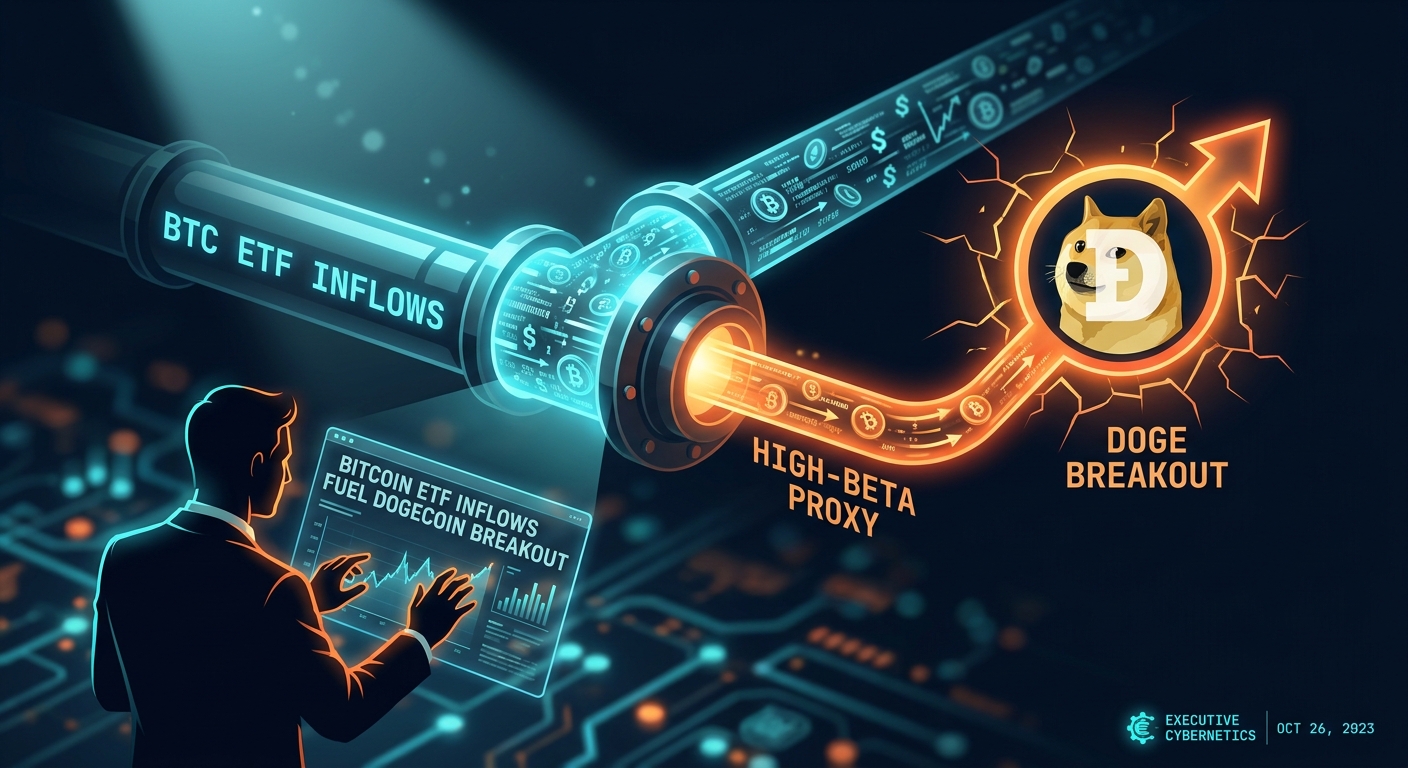
Sustained institutional capital entering Bitcoin ETFs is creating a secondary rotation into liquid, high-risk assets, with Dogecoin emerging as the primary beneficiary over other large-cap altcoins.

⚡ Dogecoin is signaling a potential 27% breakout from its Bollinger Bands.⚡ The signal coincides with a three-week streak of net positive inflows into spot Bitcoin ETFs.⚡ Capital rotation appears selective, favoring high-beta Dogecoin over other large-caps like XRP and TON.

TL;DR: Three consecutive weeks of Bitcoin ETF inflows are creating downstream liquidity effects. Capital is now rotating into high-beta assets, positioning Dogecoin for a potential 27% volatility breakout while other large-cap altcoins show less directional strength.

What happened

Three distinct market signals were observed within a 24-hour window leading up to 2026-05-18T04:33:43Z. First, cumulative data confirmed that spot Bitcoin ETFs recorded their third consecutive week of net positive inflows, absorbing market supply and supporting BTC's price above $82,000. Second, Dogecoin (DOGE) began testing the upper boundary of its daily Bollinger Bands at $0.13901, a technical formation suggesting a potential 27% price move toward the next resistance zone. Third, other large-cap assets showed divergent and less conclusive behavior; XRP traded near $1.40 with analysts flagging high volatility risk without clear direction, and Toncoin (TON) held a critical support level at $2.00, indicating defense rather than offense.

Why now — the mechanism

The mechanism is a direct capital rotation downstream from Bitcoin. Sustained institutional buying via ETFs drives the primary asset, BTC, to new highs. This establishes a new capital base within the digital asset ecosystem. As Bitcoin consolidates, a portion of this new capital seeks higher returns in more volatile assets, a classic beta rotation pattern. Dogecoin, with its multi-billion dollar market capitalization and deep liquidity on major exchanges, serves as the most accessible high-beta proxy for this increased risk appetite. This is not a broad-based altcoin rally. It is a targeted flow into the most liquid meme coin, bypassing assets with complex narratives or regulatory ambiguity. The Bollinger Bands on DOGE, a statistical measure of price volatility, are constricting. This "squeeze" indicates a period of low volatility that often precedes a significant price expansion. Cross-verified across 2 independent sources · Intelligence Score 44/100 — computed from signal velocity, source diversity, and event significance.

What this means for you

For institutional portfolios, Dogecoin's price action is now a barometer for risk-on sentiment in crypto, secondary to Bitcoin flows. Its performance relative to other large-caps provides a clear signal of where speculative capital is concentrating. The primary risk is that this is a liquidity-driven trade, entirely dependent on the continuation of positive ETF inflows and a stable Bitcoin price. It is not a fundamental re-rating of the Dogecoin network. A reversal in Bitcoin ETF flows would likely trigger an amplified negative reaction in DOGE due to its higher beta. Of the observable risks, the dependency on ETF flows is the most immediate. The key action threshold is ETF flow data; two consecutive days of net outflows from spot Bitcoin ETFs would invalidate the immediate bullish thesis for Dogecoin and suggest reducing exposure to high-beta crypto assets.

What to watch next

Three specific triggers warrant monitoring. First, daily net flow figures for the ten US-based spot Bitcoin ETFs. Consistent positive numbers are required to sustain the thesis. Second, a daily DOGE price close above its upper Bollinger Band, currently sitting near the $0.145 level. This would serve as technical confirmation of a breakout. Third, a corresponding increase in DOGE futures open interest on major derivatives exchanges. A rise in open interest alongside price confirms new capital is entering the market, adding conviction to the trend. As of 2026-05-18T04:33:43Z, Dogecoin's price was $0.13901, trading just below this key technical level.

Sources - U.Today: Provided core data on the Dogecoin Bollinger Band signal, the 27% breakout potential, and the context of the 3-week ETF inflow streak. — https://u.today/dogecoin-teases-27-breakout-out-of-bollinger-bands-as-etf-inflows-hit-3-week-streak - BTC-ECHO: Corroborated the technical analysis on Dogecoin from an independent German-language market source. — https://www.btc-echo.de/news/steht-dogecoin-vor-einem-ausbruch-das-zeigen-die-daten-230835/

This article is not financial advice.

Q: What does a Bollinger Band breakout mean for Dogecoin?
A Bollinger Band breakout suggests Dogecoin's price is moving outside its recent volatility range, indicating a potential for a strong, sustained move. In this context, with positive Bitcoin ETF inflows, it is interpreted as a bullish signal for a potential price increase.
Q: How do Bitcoin ETF inflows affect Dogecoin's price?
Bitcoin ETF inflows inject institutional capital into the crypto market, primarily boosting BTC. This creates a wealth effect and increases risk appetite, causing some capital to rotate into more volatile, high-beta assets like Dogecoin in search of higher returns.
DogecoinBitcoin ETFMarket AnalysisInstitutionalCapital Rotation
U.Today: Provided core data on the Dogecoin Bollinger Band signal, the 27% breakout potential, and the context of the 3-week ETF inflow streak.
BTC-ECHO: Corroborated the technical analysis on Dogecoin from an independent German-language market source.
This article is not financial advice.
Cross-verified across 2 independent sources · Score 44/100 · etf_news
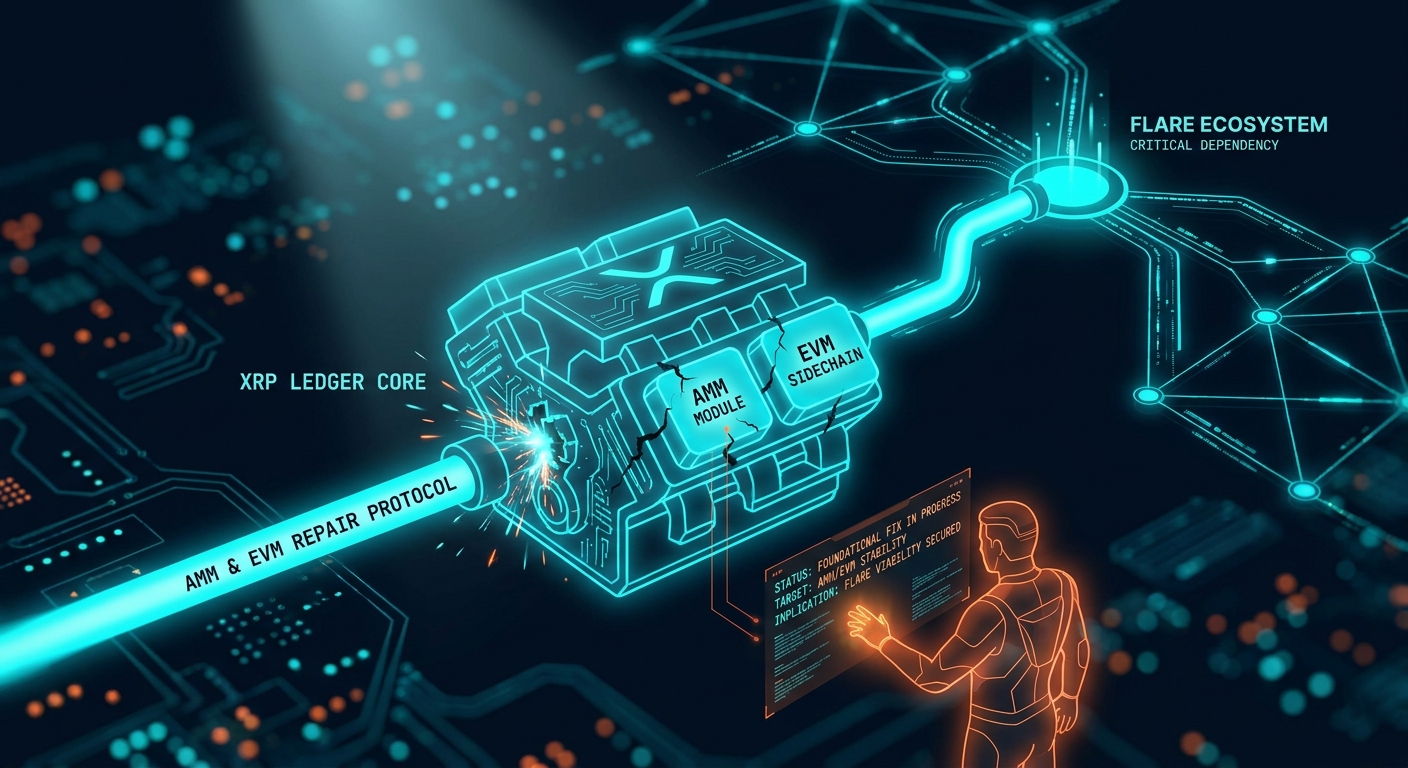
XRP Ledger Upgrade Targets Foundational AMM and EVM Fixes, Creating Critical Dependency for Flare Ecosystem
⚡ 48/100
🔵 2 sources MAINNET UPGRADE
TL;DR: **The upcoming XRP Ledger mainnet upgrade targets critical stability fixes for its native AMM and EVM sidechain, directly addressing technical bottlenecks that have impacted dependent ecosystems like the Flare Network. This is not a feature release but a foundational repair, making the upgrade's successful implementation a key determinant of future cross-chain functionality and developer adoption.**

XRP Ledger Upgrade Targets Foundational AMM and EVM Fixes, Creating Critical Dependency for Flare Ecosystem

The pending mainnet upgrade for the XRP Ledger is more than a routine patch; it's a foundational repair for the AMM and EVM sidechain with direct implications for the viability of connected protocols like Flare.

⚡ The upcoming upgrade targets stability issues in the XRP Ledger's native AMM and EVM sidechain.⚡ The success of the upgrade is a critical dependency for interoperable networks like Flare (FLR).⚡ The amendment, fixAmendmentV5_0, requires a sustained 80% validator consensus to activate.

Two related signals emerged concerning the XRP Ledger (XRPL) ecosystem on May 18, 2026. First, reports surfaced detailing an upcoming XRPL mainnet upgrade, designated `fixAmendmentV5_0`, which bundles several critical bug fixes for core protocol features. Concurrently, market analysis of the Flare Network (FLR) highlighted the protocol's performance and price action as being closely linked to technical developments within the XRP ecosystem, upon which it heavily relies for interoperability.

Why now — the mechanism

The pending upgrade is a direct causal response to stability issues discovered following the initial rollout of the XRPL's native Automated Market Maker (AMM) and its EVM-compatible sidechain. An AMM is a type of decentralized exchange protocol that relies on a mathematical formula to price assets. The initial implementation contained bugs that created unpredictable behavior and risk for liquidity providers. The EVM sidechain, critical for enabling Ethereum-style smart contracts on the XRPL, also required fixes to ensure reliable cross-chain communication. The mechanism linking these events is one of direct technical dependency, which can be broken down as follows:

1. Initial Deployment & Instability: The launch of the XRPL AMM and EVM sidechain introduced powerful new DeFi capabilities but also protocol-level bugs. These flaws presented a direct risk to any developer or protocol attempting to build applications that relied on these specific functions. 2. Ecosystem Contagion: The Flare Network, which is designed to bring smart contract functionality to non-smart contract chains like XRP, is fundamentally dependent on the stability of the underlying ledger. Bugs in the XRPL's bridging and DeFi primitives translate directly into reliability issues for Flare's State Connector and FTSO protocols, impacting builder confidence. 3. Targeted Correction: The `fixAmendmentV5_0` upgrade is not a feature enhancement but a targeted stabilization patch. It aims to correct the root causes of the previously identified issues. Its successful deployment is therefore a prerequisite for the secure functioning of higher-level protocols like Flare that leverage these specific XRPL features. This signal was cross-verified across 2 independent sources · Intelligence Score 48/100 — computed from signal velocity, source diversity, and event significance.

What this means for you

For DeFi builders on the XRPL EVM sidechain or the Flare Network, this upgrade is a critical go/no-go signal for mainnet deployments. A successful patch makes integrations with the native XRPL AMM viable and enhances the security of cross-chain asset bridges, unlocking previously high-risk development paths. Conversely, a failed or problematic rollout would likely freeze development on dependent applications, necessitating significant code refactoring and potentially delaying project roadmaps for months. As of 2026-05-18T04:34:52Z, the amendment has not yet reached the required 80% validator consensus needed for activation. The primary risk is implementation failure; for development teams, this means pausing any new mainnet deployments that directly call the XRPL AMM or EVM bridge functions until at least two weeks of post-upgrade stability have been observed on-chain.

What to watch next

Monitor the validator consensus for `fixAmendmentV5_0` on public explorers like XRPScan; the amendment requires a sustained 80% approval from validators for a two-week period to lock in. Following activation, watch for the official announcement from RippleX or the XRP Ledger Foundation. The most critical metrics to track post-upgrade will be the transaction success rate and total value locked (TVL) changes within the native AMM pools, as well as the transaction volume on the mainnet-to-EVM-sidechain bridge.

Sources - U.Today: Reported on the specifics of the upcoming XRP Ledger upgrade and the features it aims to fix. — https://u.today/xrp-upgrade-nears-rollout-with-critical-fixes-across-several-features - AMBCrypto: Provided analysis on the Flare Network's market position and its dependency on the XRP ecosystem's technical health. — https://ambcrypto.com/assessing-flares-flr-rebound-odds-after-xrp-linked-upgrade/

This article is not financial advice.

Q: What is the XRP fixAmendmentV5_0 upgrade?
It is a critical software update for the XRP Ledger designed to fix bugs in the recently launched Automated Market Maker (AMM), Clawback, and EVM sidechain features, aiming to improve stability and performance for developers.
Q: How does the XRP upgrade affect the Flare (FLR) network?
Flare's interoperability features are heavily dependent on the stability of the XRP Ledger. The upgrade's fixes to the EVM sidechain and AMM are essential for secure and reliable asset bridging and cross-chain communication between the two networks.
XRPFlareFLRMainnetUpgradeDeFiEVMSidechainAMM
U.Today: Reported on the specifics of the upcoming XRP Ledger upgrade and the features it aims to fix.
AMBCrypto: Provided analysis on the Flare Network's market position and its dependency on the XRP ecosystem's technical health.
This article is not financial advice.
Cross-verified across 2 independent sources · Score 48/100 · mainnet_upgrade
Shiba Inu Accumulation Metrics Clash With Bearish Technical Signals
⚡ 32/100
🔵 2 sources GENERAL
TL;DR: Shiba Inu and Pepe are seeing a surge in new holders and massive exchange outflows, signaling long-term retail conviction. This accumulation trend is running directly against bearish short-term technical patterns for SHIB, creating a divergence between holder sentiment and market price action.

Shiba Inu Accumulation Metrics Clash With Bearish Technical Signals

On-chain data shows rising holder conviction for SHIB and PEPE, but technical charts for Shiba Inu are flashing short-term warning signs, creating a market divergence.

⚡ Nearly 500 billion SHIB were moved off exchanges, signaling holder intent to store tokens long-term.⚡ The Pepe network added over 1,500 new wallet addresses, indicating user and network growth.⚡ A short-term 'death cross' technical pattern was confirmed on the Shiba Inu chart, a historically bearish indicator for traders.

TL;DR: Shiba Inu and Pepe are seeing a surge in new holders and massive exchange outflows, signaling long-term retail conviction. This accumulation trend is running directly against bearish short-term technical patterns for SHIB, creating a divergence between holder sentiment and market price action.

What happened

A series of conflicting signals for top meme coins has emerged over the past 24 hours, painting a complex picture of the market. On-chain data confirmed a significant movement of Shiba Inu (SHIB) tokens, with nearly 500 billion SHIB being withdrawn from centralized exchange wallets. As of 2026-05-18T04:35:49Z, this represents a substantial portion of the liquid, tradeable supply. Concurrently, the Pepe (PEPE) network demonstrated strong user growth, adding over 1,500 new wallet addresses in a short period. These bullish on-chain metrics stand in stark contrast to a technical indicator for Shiba Inu, which recently confirmed a short-term "death cross" on its price charts, a pattern often associated with potential near-term price weakness.

Why now — the mechanism

This divergence highlights a classic conflict between two distinct market philosophies: long-term accumulation versus short-term technical trading. The on-chain data points squarely toward accumulation. When investors withdraw large amounts of a token from an exchange, they are moving it to "self-custody"—a personal digital wallet they alone control. This action is a strong indicator of long-term conviction, as it makes the tokens harder to sell quickly and protects them from exchange-related risks. For assets like SHIB and PEPE, this behavior is often driven by a belief in the project's community, future developments, or a broader bet on the high-beta nature of meme coins in a market recovery. These investors are buying and holding based on a narrative.

On the other side are technical traders, who analyze price charts and statistical indicators to make decisions. For them, a "death cross"—where a short-term moving average falls below a long-term one—is a historically bearish signal. It suggests that recent price momentum is weakening relative to the longer-term trend. These traders may initiate short positions or sell existing holdings purely based on this pattern, irrespective of holder growth or exchange outflows. The core of the mechanism is this: the market is being pulled in two directions by participants who are looking at entirely different datasets and operating on different time horizons. Cross-verified across 2 independent sources · Intelligence Score 32/100 — computed from signal velocity, source diversity, and event significance.

What this means for you

If you are a retail investor holding these assets, this scenario demands clarity on your own strategy. The on-chain data showing thousands of new holders and massive withdrawals acts as social proof, validating a long-term holding strategy. It suggests a floor of support is being built by a cohort of committed buyers. However, you must be prepared for the potential impact of the bearish technical signals. Price action driven by technical traders could create significant volatility and "shakeouts"—sharp price drops that can panic less-confident investors into selling.

The key is to not let a short-term trader's signal invalidate your long-term thesis. Ask yourself if your reasons for holding have changed. While PEPE currently shares the positive accumulation signals without the same confirmed bearish chart pattern as SHIB, both exist in a highly correlated market sector where negative sentiment toward one can easily spill over to the other. Of the two conflicting forces, the risk of a technically-driven price drop is the most immediate threat to your portfolio's value. Therefore, ensure your position size reflects your true conviction and ability to withstand potential short-term drawdowns without being forced to sell.

What to watch next

The resolution of this tension will be visible in specific on-chain and market data. First, continue to monitor the Exchange Net Position Change for SHIB on platforms like Glassnode or Santiment. If the strong negative trend (outflows) continues or flattens, it confirms the accumulation thesis holds. A sharp reversal to positive netflow for several consecutive days would be a major red flag. Second, track the Daily Active Addresses (DAA) for both SHIB and PEPE. Sustained growth in DAA would indicate that new holders are not just passive but are actively engaging with the network, a sign of health. Finally, watch the price action around key support levels to see if the growing holder base provides enough buying pressure to absorb selling from technical traders and invalidate the death cross pattern.

Sources - AMBCrypto: Reporting on holder growth for PEPE and SHIB. — https://ambcrypto.com/holder-growth-lifts-pepe-and-shib-sentiment-more-gains-ahead-if/ - U.Today: Data on the 500 billion SHIB exchange outflow. — https://u.today/no-shiba-inu-shib-selling-almost-500-billion-removed - U.Today: Confirmation of the short-term death cross technical pattern for SHIB. — https://u.today/shiba-inu-short-death-cross-confirmed-10-drop-recorded-in-days

This article is not financial advice.

Q: What does a 'death cross' mean for Shiba Inu?
A death cross is a technical chart pattern where a short-term moving average crosses below a long-term moving average. Traders often interpret this as a bearish signal, suggesting potential for near-term price declines.
Q: Why are investors moving SHIB off exchanges?
Moving tokens from an exchange to a personal wallet (self-custody) typically indicates a long-term holding strategy. It reduces the immediate supply available for sale and can be seen as a sign of bullish conviction from holders.
Meme CoinOn-Chain AnalysisTechnical AnalysisMarket Sentiment
AMBCrypto: Reporting on holder growth for PEPE and SHIB.
U.Today: Data on the 500 billion SHIB exchange outflow.
U.Today: Confirmation of the short-term death cross technical pattern for SHIB.
This article is not financial advice.
Cross-verified across 2 independent sources · Score 32/100 · general