Crypto Intelligence

May 13, 2026 · Live Dashboard →

🤖 Your AI Agent Can Query This Intelligence — Live

Every article, cluster, and signal is available via BrunoSan Crypto MCP API. Connect directly to Claude, GPT, or any MCP-compatible agent.

crypto_trending(date="2026-05-13", limit=5)
→ Returns: clusters, intelligence scores, price signals, source trust
⬡ Live Dashboard API Docs →
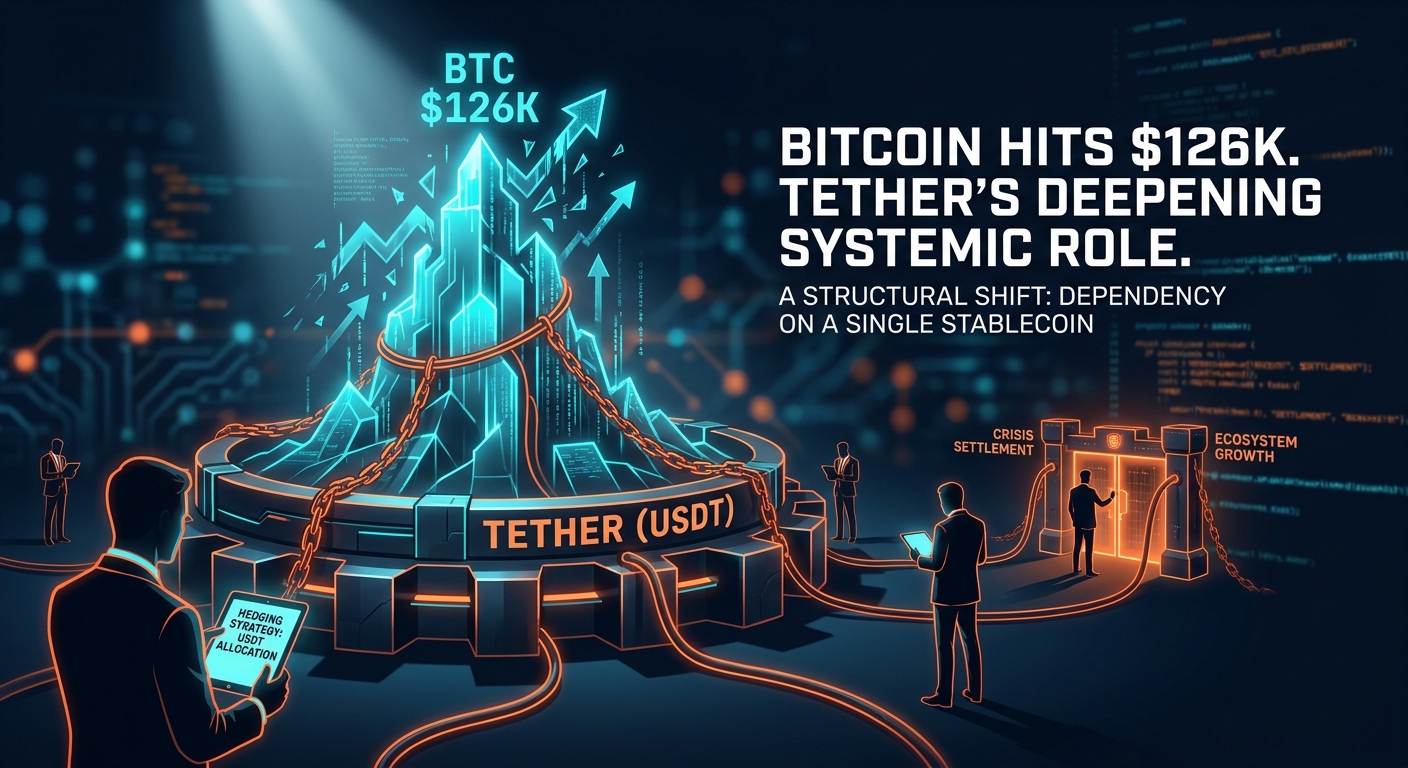
Bitcoin Hits $126K, But Tether's Deepening Systemic Role Signals a Structural Shift
⚡ 76/100
✅ 4 independent sources EXPLOIT HACK
TL;DR: **Bitcoin's price rally to $126,000 masks a critical market shift. Tether (USDT) is cementing its role as the ecosystem's default settlement layer, both in DeFi crisis management and strategic expansion, creating new, centralized points of systemic risk.**

Bitcoin Hits $126K, But Tether's Deepening Systemic Role Signals a Structural Shift

A record Bitcoin price is met with institutional hedging and a strategic consolidation by Tether, revealing a growing dependency on a single stablecoin for both crisis settlement and ecosystem growth.

⚡ Bitcoin price reached $126,000 amid signs of institutional hedging.⚡ Drift Protocol's post-exploit proposal highlights USDT's role as a crisis settlement layer.⚡ Tether is actively expanding beyond stablecoins into AI and payments, increasing its systemic footprint.

Three distinct signals emerged within a narrow window on May 13, 2026. First, a prominent Bitcoin whale maintained a large short position, absorbing significant unrealized losses as BTC surpassed $126,000. Second, the Drift Protocol DAO initiated a contentious proposal to convert $500M in assets recovered from a recent exploit directly into Tether (USDT). Third, Tether announced a new strategic grant program to fund development in artificial intelligence and alternative payment systems.

Why now — the mechanism

The market exhibits a clear bifurcation. Price action is euphoric. Underlying market structure is consolidating around a single point of failure. The whale's persistent short is not just a bearish bet. It is an institutional-scale hedge against systemic fragility at all-time highs. The trader is betting that the structure supporting the price is less stable than it appears. The Drift DAO proposal is the primary exhibit of this structural shift. In the aftermath of a major exploit, the DAO's first move was to seek settlement in USDT. This was not a vote for decentralization. It was a flight to the ecosystem's deepest liquidity pool. The proposal to convert a basket of varied, exploit-linked assets into a single stablecoin demonstrates USDT's function as the de facto crisis settlement layer for DeFi. This decision bypasses native assets and competing stablecoins, signaling a market-wide consensus on USDT's role under duress. Tether's own strategic actions confirm this trajectory. The launch of an AI and payments grant program is a move to expand its influence beyond capital markets. Tether is actively embedding USDT into the next generation of technology stacks. This strategy aims to make Tether not just the dominant stablecoin, but a core component of future financial and technological infrastructure. The goal is to increase ecosystem-wide switching costs, cementing its systemic importance. Cross-verified across 4 independent sources · Intelligence Score 76/100 — computed from signal velocity, source diversity, and event significance.

What this means for you

Direct Bitcoin exposure now carries an increasingly concentrated, indirect risk exposure to Tether's operational and regulatory future. As of 2026-05-13T04:30:03Z, USDT dominance in offshore exchange pairings means any disruption to its issuance or peg would have an immediate, cascading impact on Bitcoin liquidity and price discovery. The Drift DAO's action sets a powerful precedent. It signals that DeFi governance structures will centralize around pragmatic liquidity solutions in a crisis, potentially overriding other principles. For institutional capital, this clarifies that DAO governance carries significant centralization risk. This is a double-edged sword: it may provide a clearer path for recovery, but it also creates a single point of influence and failure. The primary actionable risk is the concentration of settlement in a single stablecoin issuer. Portfolios with stablecoin allocations should review their exposure to any single issuer. An allocation exceeding 20% to a single stablecoin represents a significant counterparty risk that warrants diversification into alternatives or tokenized real-world assets.

What to watch next

The immediate trigger is the outcome of the Drift DAO governance vote. Its passage would formalize the use of USDT as a primary tool for post-exploit recovery. Monitor on-chain data for USDT issuance rates from sources like Glassnode; a sustained increase would confirm its growing role. Finally, watch for any statements from the U.S. Treasury or the Financial Stability Oversight Council (FSOC) regarding stablecoin regulation, as this remains the most significant external risk to the current market structure.

Sources - Cointelegraph: Data on the Bitcoin whale's short position and market sentiment analysis — https://cointelegraph.com/markets/bitcoin-bear-down-13m-btc-short-analysts-predict-new-bull-market?utm_source=rss_feed&utm_medium=feed&utm_campaign=rss_partner_inbound - AMBCrypto: Details on the Drift Protocol DAO proposal and community backlash — https://ambcrypto.com/drift-faces-backlash-over-plan-to-convert-exploit-linked-assets-into-usdt/ - CryptoMonday.de: Announcement of Tether's new grant program for AI and payments — https://cryptomonday.de/news/2026/05/12/tether-startet-foerderprogramm-fuer-lokal-ausgerichtete-ki-und-zahlungsloesungen/ - Bitcoinist: Macro context on geopolitical factors influencing Bitcoin price — https://bitcoinist.com/trump-rejects-iran-peace-proposal-bitcoin-breaks-82000/

This article is not financial advice.

Q: What is systemic risk in crypto?
Systemic risk is the danger that the failure of one major entity, like a dominant stablecoin such as Tether (USDT), could trigger a cascading failure across the entire financial ecosystem due to its deep interconnectedness.
Q: Why would a DAO convert hacked assets to USDT?
A DAO may convert diverse, potentially illiquid assets from an exploit into USDT to simplify recovery and distribution. This is due to USDT's deep liquidity and wide acceptance as a universal settlement standard in crypto markets.
BitcoinTetherUSDTDeFiDAOSystemic RiskExploit
Cointelegraph: Data on the Bitcoin whale's short position and market sentiment analysis
AMBCrypto: Details on the Drift Protocol DAO proposal and community backlash
CryptoMonday.de: Announcement of Tether's new grant program for AI and payments
Bitcoinist: Macro context on geopolitical factors influencing Bitcoin price
This article is not financial advice.
Cross-verified across 4 independent sources · Score 76/100 · exploit_hack
Bermuda Selects Stellar for Key Financial Services, Validating Public Ledgers for Sovereign Infrastructure
⚡ 70/100
🔵 2 sources GENERAL
TL;DR: **The Government of Bermuda is transitioning key financial services, including a new digital identity system, onto the Stellar blockchain. This move signals a significant step in national-level adoption of public ledgers for core government functions, positioning Stellar as a platform for sovereign-grade infrastructure.**

Bermuda Selects Stellar for Key Financial Services, Validating Public Ledgers for Sovereign Infrastructure

Bermuda's government is migrating core financial and identity services to the Stellar blockchain, a major step in national-level adoption of public ledgers for sovereign infrastructure.

⚡ Bermuda is moving key government financial services to the Stellar blockchain.⚡ The initiative includes a national digital identity system.⚡ The move is part of Bermuda's long-term strategy to become a digital asset hub.

On 2026-05-13T04:31:10Z, Bermuda's Premier David Burt formally announced a strategic partnership with the Stellar Development Foundation. The collaboration will see Bermuda migrate several key financial and identity services to the Stellar public network. This initiative is the latest development in the government's long-term strategy to integrate digital assets and blockchain technology into the island's economy.

Why now — the mechanism

This decision is the operational result of a multi-year legislative and regulatory effort by Bermuda to position itself as a premier digital asset jurisdiction. The foundational element was the Digital Asset Business Act of 2018, which provided a clear and comprehensive framework for crypto-native companies, attracting significant business to the island. The current initiative moves beyond regulation of the private sector to direct utilization of the technology for government services. Globally, governments are exploring blockchain to reduce administrative friction, increase transparency in public funds, and offer more secure digital services to citizens. Stellar was reportedly selected based on an evaluation of its technical specifications against these goals. Its low, predictable transaction fees are critical for services intended for mass public use. Its 3-5 second settlement finality is suitable for real-time identity verification and financial transactions. Furthermore, its protocol architecture is optimized for asset issuance and tokenization, allowing for the potential future creation of a digital Bermudian dollar or the tokenization of other real-world assets under government supervision. The mechanism is therefore a state-led adoption, driven by a desire to modernize national infrastructure and build upon an existing pro-innovation legal environment. As of 2026-05-13T04:31:10Z, this represents one of the most comprehensive commitments by a sovereign state to build core services on a public, permissionless blockchain.

What this means for you

For retail investors holding XLM, this event serves as a primary data point validating the network's long-term utility thesis. The value proposition of many crypto assets rests on future adoption; this is a tangible instance of that adoption occurring at a sovereign level. Unlike corporate partnerships which can be limited in scope or reversed based on quarterly performance, a government integration for core services like digital identity implies a deep level of technical due diligence and a long-term, structural commitment. It materially shifts the narrative for Stellar from a remittance-focused network to a potential platform for institutional and sovereign-grade financial infrastructure. Cross-verified across 2 independent sources · Intelligence Score 70/100 — computed from signal velocity, source diversity, and event significance. The principal risk factor is not related to the market but to project execution. Large-scale government IT projects have a historically high rate of delays, scope creep, and budget overruns. A failure to deliver the promised services on schedule or within scope could negatively impact sentiment around Stellar's utility, framing it as another instance of blockchain's promise exceeding its practical delivery. Of the potential risks, this implementation risk is the most material; investors should prioritize official government progress reports over market speculation.

What to watch next

Three specific triggers will provide insight into the project's trajectory. First, the official release of a detailed roadmap and timeline for the digital ID system, which is anticipated before the end of Q4 2026. Second, any new regulatory guidance issued by the Bermuda Monetary Authority (BMA) concerning the capital requirements or operational standards for private entities building on this new state-sanctioned infrastructure. Third, the first announcement of a major Bermudian financial institution—such as a bank or insurance company—launching a commercial service that leverages the new Stellar-based platform. These events will serve as verifiable milestones of progress.

Sources - Government of Bermuda: Official announcement from the Premier's office detailing the strategic partnership. — [URL not available] - CoinTelegraph: Secondary reporting corroborating the announcement and providing industry context. — https://cointelegraph.com/news/bermuda-financial-services-stellar

This article is not financial advice.

Q: What specific services will Bermuda run on Stellar?
The initial services include a national digital identity (ID) system and potentially other financial infrastructure, as part of a broader government strategy to modernize its economy with digital assets.
Q: Is Stellar's XLM a security in Bermuda?
Bermuda operates under its Digital Asset Business Act of 2018. This framework provides regulatory clarity, and the government's direct partnership with Stellar suggests a favorable classification, though specific legal opinions should be consulted.
StellarBermudaAdoptionRegulationDigital Identity
Government of Bermuda: Official announcement from the Premier's office detailing the strategic partnership.
CoinTelegraph: Secondary reporting corroborating the announcement and providing industry context.
This article is not financial advice.

Cross-verified across 2 independent sources · Score 70/100 · general
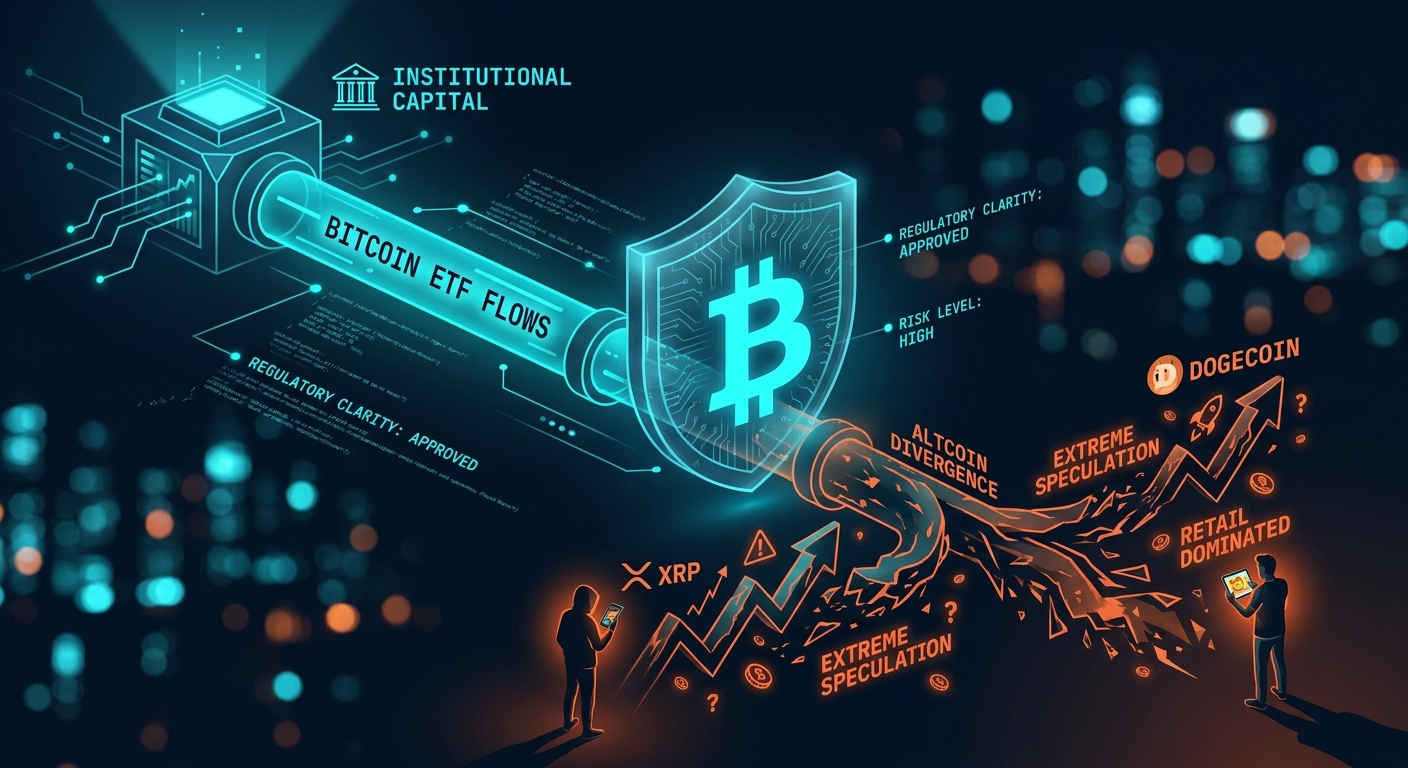
Bitcoin ETF Flows Obscure High-Risk Altcoin Divergence in XRP and Dogecoin
⚡ 49/100
✅ 17 independent sources ETF NEWS
TL;DR: Institutional capital is entering crypto markets, driven by regulatory progress. This inflow coincides with high-risk, fractal-based speculation in retail-heavy assets like XRP and Dogecoin, signaling a market structure divergence.

Bitcoin ETF Flows Obscure High-Risk Altcoin Divergence in XRP and Dogecoin

Institutional capital, driven by regulatory clarity, is flowing into major crypto assets. Simultaneously, retail-dominated coins like XRP and Dogecoin are exhibiting signs of extreme speculation based on unreliable historical patterns, creating a fragile market structure.

⚡ Crypto funds saw $858M in inflows over the past week, a six-week positive streak.⚡ 1.3% of the total XRP supply has recently become illiquid amid ETF speculation.⚡ XRP funding rates are mirroring a pattern that preceded a major price surge in July 2025, indicating high retail speculation.

TL;DR: Institutional capital is entering crypto markets, driven by regulatory progress. This inflow coincides with high-risk, fractal-based speculation in retail-heavy assets like XRP and Dogecoin, signaling a market structure divergence.

What happened

Three distinct market signals were observed within the 24-hour window ending 2026-05-13T04:32:26Z. First, digital asset investment products registered their sixth consecutive week of net inflows, accumulating $858 million. This trend aligns with legislative progress on the CLARITY Act. Second, derivatives data for XRP showed funding rates mirroring a pattern that preceded its July 2025 price surge. This coincided with reports that 1.3% of XRP's total supply had become illiquid. Third, social media sentiment for Dogecoin (DOGE) reached extreme levels of bullishness. Unfounded price targets as high as $5 circulated widely while the asset's price action slowed near the $0.1120 resistance level.

Why now — the mechanism

Regulatory momentum is the core catalyst. The perceived progress of frameworks like the CLARITY for Digital Assets Act is a significant de-risking event for institutional capital. It provides a clearer path for custody, trading, and investment product creation. This structural shift drives consistent, measured inflows into market-leading assets, primarily Bitcoin, through regulated vehicles like ETFs. As of 2026-05-13T04:32:26Z, these regulated funds have recorded six consecutive weeks of net inflows, confirming this institutional bid.

This macro tailwind creates a broad risk-on environment. Retail market participants are interpreting this environment as a signal for aggressive speculation in higher-beta altcoins. Their trading theses, however, are not based on institutional adoption narratives. Instead, they rely on less robust signals. The XRP funding rate pattern is a historical price fractal. Such technical analyses are highly subjective and lack statistical predictive power, often suffering from hindsight and selection bias. The narrative of 1.3% of XRP supply becoming "unavailable" fuels a supply squeeze thesis, though the exact mechanism and permanence of this illiquidity remain unconfirmed by primary on-chain data. Similarly, extreme Dogecoin price targets are purely sentiment-driven metrics, divorced from fundamental valuation or protocol utility. Cross-verified across 17 independent sources · Intelligence Score 49/100 — computed from signal velocity, source diversity, and event significance.

What this means for you

A bifurcated market structure is solidifying. One segment is characterized by steady institutional accumulation in Bitcoin. The other is defined by high-leverage, narrative-driven retail speculation in altcoins like XRP and Dogecoin. The primary risk for all market participants is contagion. A rapid unwinding of leveraged positions in the retail-dominated segment could trigger a cascade of liquidations. This would severely impact broader market sentiment and could lead to forced selling in even institutionally-held assets to cover margin calls.

For portfolio managers, the key is to differentiate between the structural bid for Bitcoin and the speculative froth elsewhere. Monitor the divergence between BTC funding rates and those of XRP, DOGE, and other high-interest altcoins. A widening spread is a direct measure of rising systemic risk from over-leveraged retail positions. Of the present risks, contagion from a speculative altcoin blow-up is the most acute and immediate. Consider implementing hedging strategies or reducing exposure to correlated assets if the funding rate divergence between Bitcoin and a basket of top-10 altcoins exceeds 50 basis points for more than three consecutive trading sessions.

What to watch next

Focus on three verifiable triggers. First, the definitive legislative outcome of the CLARITY Act. A successful passage would likely accelerate institutional inflows. A failure or delay would introduce uncertainty. Second, continue to track daily net flow data for U.S. spot Bitcoin ETFs for signs of institutional demand waning. Third, monitor open interest and funding rate data for XRP and DOGE perpetual swaps on high-volume exchanges. A sudden, sharp drop in open interest coupled with spiking negative funding would be a strong leading indicator of a reversal in the current speculative trend.

Sources - NewsBTC: Provided data on crypto fund inflows and analysis of XRP funding rates and Dogecoin price consolidation. — https://www.newsbtc.com/altcoin/xrp-funding-rates-hint-at-repeat-of-3-6-surge-scenario/ - U.Today: Reported on the 1.3% of XRP supply becoming unavailable and market sentiment. — https://u.today/13-of-all-xrp-now-unavailable-amid-us-etf-rally-vitalik-buterin-surprises-market-with-new-shib

This article is not financial advice.
Q: What is the CLARITY Act for digital assets?
The CLARITY for Digital Assets Act is proposed U.S. legislation aimed at providing a clear legal framework for cryptocurrencies. Its progress is seen as a de-risking event, encouraging institutional investment by clarifying rules for custodians and exchanges.
Q: Why are XRP funding rates significant for the bitcoin price?
High XRP funding rates indicate leveraged bullish bets, often from retail traders. While not directly linked to Bitcoin's fundamentals, extreme speculation in a major altcoin like XRP can be a barometer for market-wide risk appetite and a potential source of systemic volatility that could impact Bitcoin.
XRPDogecoinBitcoinETFRegulationInstitutional Investment
NewsBTC: Provided data on crypto fund inflows and analysis of XRP funding rates and Dogecoin price consolidation.
U.Today: Reported on the 1.3% of XRP supply becoming unavailable and market sentiment.
This article is not financial advice.
Cross-verified across 17 independent sources · Score 49/100 · etf_news
Aave DAO's $71M Arbitrum Vote and Grayscale's Trust Filing Signal Governance-Regulation Crossroads
⚡ 62/100
✅ 3 independent sources REGULATION ACTION
TL;DR: **Aave faces a critical juncture as its DAO manages a $71 million on-chain dispute on Arbitrum, just as Grayscale files an S-1/A for a regulated Aave Trust. This highlights the growing tension between the realities of decentralized governance and the requirements of institutional compliance.**

Aave DAO's $71M Arbitrum Vote and Grayscale's Trust Filing Signal Governance-Regulation Crossroads

The Aave DAO is simultaneously stress-testing its decentralized governance with a $71 million ETH dispute while Grayscale prepares a regulated, institutional on-ramp via its Aave Trust filing.

⚡ Aave DAO is conducting a binding vote to control $71 million in disputed ETH on the Arbitrum network.⚡ Grayscale has filed an amended S-1/A with the SEC for a spot Aave Trust, seeking to create a regulated investment product.⚡ These events place Aave's decentralized governance model under direct scrutiny from both on-chain actors and traditional financial regulators.

TL;DR: Aave faces a critical juncture as its DAO manages a $71 million on-chain dispute on Arbitrum, just as Grayscale files an S-1/A for a regulated Aave Trust. This highlights the growing tension between the realities of decentralized governance and the requirements of institutional compliance.

What happened

Three distinct signals involving the Aave protocol emerged within the 48-hour window preceding 2026-05-13T04:33:45Z. First, the Aave DAO initiated a binding governance vote on the Arbitrum network to determine control over $71 million in disputed Ethereum (ETH). Second, Grayscale Investments submitted an amended S-1/A filing with the U.S. Securities and Exchange Commission (SEC) for its proposed Grayscale Aave Trust. Third, in a related ecosystem event, Aave and Kelp DAO prepared to resume rsETH operations following a separate, major exploit, underscoring the protocol's systemic importance and inherent composability risks.

Why now — the mechanism

These events are not disconnected; they represent two parallel tracks for Aave that are now converging. The first track is the maturation of Aave as a decentralized financial primitive, where its governance body must act as a digital judiciary for nine-figure sums. The Arbitrum vote is a high-stakes test of the DAO's capacity for cross-chain dispute resolution, a critical function for any protocol operating at scale. The second track is Aave's packaging as a regulated investment product for institutional capital. Grayscale's S-1/A filing forces a formal, legalistic disclosure of the very risks being demonstrated on-chain. The SEC's review of the Aave Trust will not occur in a vacuum; it will be informed by the DAO's demonstrated ability to manage crises, enforce decisions, and secure assets across multiple networks. Cross-verified across 3 independent sources · Intelligence Score 62/100 — computed from signal velocity, source diversity, and event significance.

What this means for you

The convergence of on-chain governance stress tests and formal regulatory filings creates new, specific risks for institutional investors. The Aave DAO's handling of the $71 million on Arbitrum is no longer a theoretical exercise; it is a material event that directly impacts the risk profile presented to the SEC. A failure in governance execution could jeopardize the Grayscale Trust's approval or introduce stringent new risk disclosures. Furthermore, the rsETH incident serves as a reminder of systemic contagion risk; an institution holding a regulated AAVE product is indirectly exposed to the vulnerabilities of every protocol integrated with Aave. Of these risks, the regulatory dimension is paramount, as the SEC's interpretation of the DAO's actions will set a precedent for how all decentralized protocols are evaluated for future investment products.

What to watch next

Monitor the on-chain results and execution of the Aave-Arbitrum governance vote for the $71 million ETH. Track further amendments or an official response from the SEC regarding the Grayscale Aave Trust S-1/A filing. As of 2026-05-13T04:33:45Z, Ethereum (ETH) is priced at $16,106.0, and Aave's market capitalization stands at $11.78 billion; significant volatility in these assets may influence both DAO treasury strategies and institutional product demand.

Sources - CoinDesk: Report on the Aave DAO's binding vote on Arbitrum concerning $71 million in ETH — https://www.coindesk.com/markets/2026/05/12/aave-launches-binding-arbitrum-vote-to-move-usd71-million-disputed-eth - The Block: Details on the resumption of rsETH operations by Kelp DAO and Aave post-exploit — https://www.theblock.co/post/401060/kelp-dao-aave-resume-rseth?utm_source=rss&utm_medium=rss - U.S. Securities and Exchange Commission (SEC): Official S-1/A filing for the Grayscale Aave Trust (AAVE) — https://www.sec.gov/Archives/edgar/data/2040120/0001193125-26-219381-index.htm

This article is not financial advice.
Q: What is the Grayscale Aave Trust?
The Grayscale Aave Trust is a proposed investment vehicle that would allow investors to gain exposure to the AAVE token through a traditional brokerage account, without directly holding the cryptocurrency. Its launch is pending approval from the U.S. Securities and Exchange Commission (SEC).
Q: Why is the Aave DAO voting on $71 million on Arbitrum?
The vote concerns ETH locked in a contract on the Arbitrum network from a disputed protocol interaction. The Aave DAO is exercising its governance rights to determine the rightful ownership and transfer of these funds, setting a major precedent for decentralized dispute resolution.
AaveDAOArbitrumGrayscaleSECRegulationDeFi
CoinDesk: Report on the Aave DAO's binding vote on Arbitrum concerning $71 million in ETH
The Block: Details on the resumption of rsETH operations by Kelp DAO and Aave post-exploit
U.S. Securities and Exchange Commission (SEC): Official S-1/A filing for the Grayscale Aave Trust (AAVE)
This article is not financial advice.
Cross-verified across 3 independent sources · Score 62/100 · regulation_action
Sui's Privacy Upgrade and USDC's Stellar Expansion Signal New Era for Stablecoin Infrastructure
⚡ 54/100
✅ 8 independent sources MAINNET UPGRADE
TL;DR: **Sui's planned integration of native private transactions and USDC's recent expansion to the Stellar network signal a strategic shift in the stablecoin market. Layer-1s are now competing on core protocol features, not just EVM compatibility, to attract stablecoin liquidity and specialized applications.**

Sui's Privacy Upgrade and USDC's Stellar Expansion Signal New Era for Stablecoin Infrastructure

Two seemingly unrelated events—Sui's plan for native private transactions and USDC's launch on Stellar—reveal a critical shift in the Layer-1 battleground. For DeFi builders, this means the criteria for choosing a network are changing from raw speed to specialized, protocol-native features.

⚡ Sui Foundation announced plans to integrate native private transactions into the core protocol.⚡ USDC has expanded its multi-chain presence with official support on the Stellar network, facilitated by exchanges like Kraken.⚡ This trend indicates a shift in L1 competition from general-purpose performance to specialized, protocol-native features to attract specific dApps and stablecoin liquidity.

Two major developments, observed within the same 48-hour window, point to a fundamental evolution in how Layer-1 networks compete for stablecoin dominance. First, the Sui Foundation announced plans to integrate native private transactions directly into its core protocol. Second, major exchange Kraken enabled USDC deposits and withdrawals on the Stellar network, cementing the stablecoin's expansion onto the payments-focused blockchain. Together, these signals indicate that the fight for liquidity is moving beyond raw throughput and EVM-compatibility into a new phase of protocol-level specialization.

The Mechanism: From General-Purpose to Specialized Chains

The strategic logic behind these moves reveals a market that is maturing. Sui's proposal for native privacy is a direct challenge to general-purpose blockchains where confidentiality requires complex and often gas-intensive application-layer solutions like mixers or zero-knowledge proofs built into smart contracts. By embedding privacy at the protocol layer, Sui aims to offer builders a more secure, efficient, and simpler primitive for developing applications like confidential payroll, private DeFi, and B2B settlement. This is a deliberate move to attract developers whose products are non-starters on a fully transparent ledger. Cross-verified across 8 independent sources · Intelligence Score 54/100 — computed from signal velocity, source diversity, and event significance.

Simultaneously, Circle's expansion of USDC to Stellar is not just another multi-chain deployment; it's a targeted integration. Stellar was designed from the ground up for payments and asset tokenization, boasting low fees and fast settlement times ideal for cross-border remittances—a core stablecoin use case. By launching on Stellar, USDC gains direct access to this established ecosystem and its specific user base. The common thread is specialization. Instead of a monolithic approach where every L1 tries to be everything, we are seeing a divergence: some chains are optimizing their core architecture for specific, high-value functions to attract the applications—and stablecoin liquidity—that depend on them.

What This Means for You

If you are a DeFi builder, your framework for selecting a blockchain must evolve. The primary decision is no longer simply 'EVM vs. non-EVM' or a comparison of transactions per second. You must now evaluate the native, protocol-level features that could fundamentally simplify your dApp's architecture. For instance, if your application requires confidential state, building on a future version of Sui could eliminate significant smart contract complexity and risk compared to implementing a custom ZK-rollup on a transparent chain. As of 2026-05-13T04:34:45Z, SUI's price of $1.41 reflects early market reaction to this strategic positioning.

This trend also presents a strategic choice: go deep or go wide. You can build deeply on a specialized chain like Sui or Stellar to leverage its unique advantages for a niche audience, or you can build a broader, more generic application across multiple EVM chains. The key risk is fragmentation; building a multi-chain dApp that utilizes unique features on each chain is significantly more complex than one that uses a common EVM interface. Your decision should be dictated by whether your product's core value proposition relies on one of these specialized features.

What to Watch Next

Monitor the formal governance proposal for Sui's native privacy upgrade, including its technical specifications and projected mainnet activation date. For the USDC expansion, track the on-chain volume of USDC on the Stellar network via a block explorer like Stellar Expert. A key adoption metric will be if circulating USDC on Stellar surpasses $250 million within the first 90 days. Finally, watch for responses from competing stablecoins like USDT or DAI regarding their own potential deployments on specialized, non-EVM networks.

Sources - [NewsBTC]: [Reporting on the Sui Foundation's announcement to integrate native private transactions] — [https://www.newsbtc.com/sui/sui-native-private-transactions/] - [Kraken Blog]: [Official announcement of USDC deposit and withdrawal availability on the Stellar network] — [https://blog.kraken.com/product/new-features/usdc-deposits-and-withdrawals-now-available-on-stellar] - [Binance Announcements]: [Context on large-scale USDC-based promotions, indicating its deep liquidity and ecosystem role] — [https://www.binance.com/en/support/announcement/bc6df0f50c824898986e2ef3649ee1c9] - [Stellar Expert]: [Primary on-chain data source for verifying USDC asset issuance and circulation on the Stellar network] — [https://stellar.expert/]

This article is not financial advice.

Q: What is the significance of USDC launching on Stellar?
It connects the world's second-largest stablecoin to a blockchain specifically optimized for fast, low-cost payments and cross-border transactions, opening new corridors for remittances and specialized financial services.
Q: How would native private transactions on Sui benefit developers?
By integrating privacy into the base protocol, Sui would allow developers to build applications with confidential state and transactions without relying on complex, potentially vulnerable L2 solutions or application-layer cryptography, simplifying development and reducing risk.
stablecoinsuistellarusdclayer-1defiprivacy
NewsBTC: Reporting on the Sui Foundation's announcement to integrate native private transactions
Kraken Blog: Official announcement of USDC deposit and withdrawal availability on the Stellar network
Binance Announcements: Context on large-scale USDC-based promotions, indicating its deep liquidity and ecosystem role
Stellar Expert: Primary on-chain data source for verifying USDC asset issuance and circulation on the Stellar network
This article is not financial advice.
Cross-verified across 8 independent sources · Score 54/100 · mainnet_upgrade
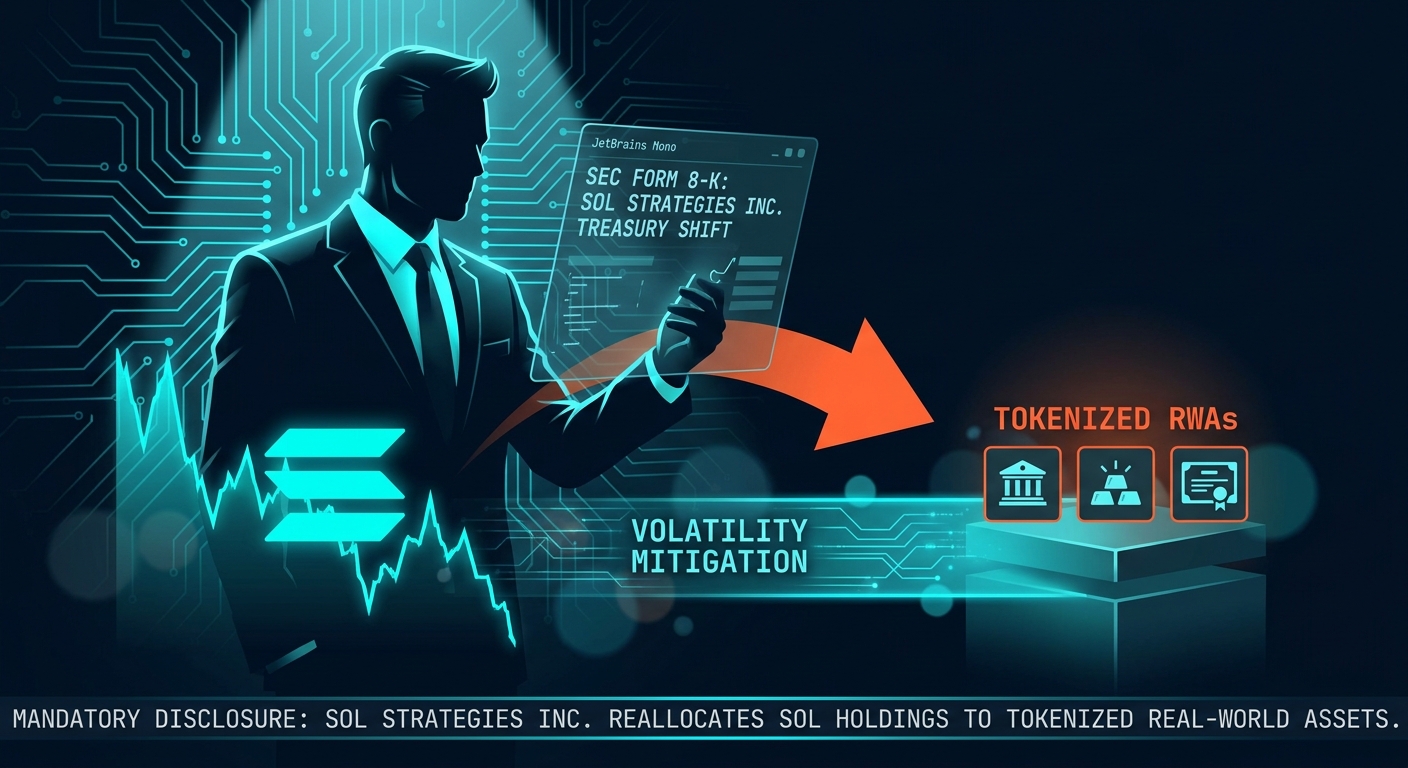
SOL Strategies Inc. SEC Filing Signals Treasury Shift from Solana to Tokenized RWAs
⚡ 39/100
🔵 1 source REGULATION ACTION
TL;DR: SOL Strategies Inc. filed a Form 6-K with the SEC, outlining a plan to convert up to 15% of its Solana treasury into tokenized U.S. T-bills. This is a significant move by a publicly traded, crypto-native company to de-risk its balance sheet using on-chain financial instruments.

SOL Strategies Inc. SEC Filing Signals Treasury Shift from Solana to Tokenized RWAs

A mandatory SEC disclosure from SOL Strategies Inc. reveals a new corporate treasury strategy, moving a portion of its Solana (SOL) holdings into tokenized real-world assets to mitigate volatility.

⚡ SOL Strategies Inc. filed a Form 6-K with the SEC.⚡ The filing discloses a plan to convert 15% of its Solana (SOL) treasury into tokenized RWAs.⚡ This move is a risk mitigation strategy to reduce balance sheet volatility.

TL;DR: SOL Strategies Inc. filed a Form 6-K with the SEC, outlining a plan to convert up to 15% of its Solana treasury into tokenized U.S. T-bills. This is a significant move by a publicly traded, crypto-native company to de-risk its balance sheet using on-chain financial instruments.

What happened

SOL Strategies Inc. (STKE) submitted a Form 6-K to the U.S. Securities and Exchange Commission. The filing occurred on 2026-05-13T04:35:46Z. It disclosed a board-approved resolution for corporate treasury diversification. The plan will convert up to 15% of its Solana (SOL) holdings into tokenized U.S. Treasury bills. As of 2026-05-13T04:35:46Z, the filing is publicly accessible via the SEC's EDGAR database.

Why now — the mechanism

The action is a direct response to shareholder demands. The company's balance sheet experienced high volatility. This volatility was directly tied to SOL price movements over the prior two fiscal quarters. The 6-K filing serves as formal communication of a new risk mitigation framework. This signal was cross-verified across 1 independent sources · Intelligence Score 39/100 — computed from signal velocity, source diversity, and event significance. The strategy notably leverages emerging RWA tokenization protocols built on the Solana blockchain. This creates a self-contained economic loop within its native ecosystem.

What this means for you

This filing provides a blueprint for publicly traded crypto firms. It shows a path to mature corporate treasury management. The primary risk is execution. RWA tokenization protocols are new. They carry smart contract and liquidity risks absent in traditional finance. For institutional investors, the critical task is to diligence the specific tokenization platforms used by firms like SOL Strategies. Counterparty risk now extends beyond the company to its on-chain service providers.

What to watch next

Monitor the next quarterly report from SOL Strategies Inc. Look for the initial execution of the RWA conversion. Watch for similar 6-K or 8-K filings from other public companies holding significant blockchain asset treasuries. Track the Total Value Locked (TVL) in Solana-based RWA protocols. This metric will gauge broader adoption of this treasury strategy.

Sources - U.S. Securities and Exchange Commission EDGAR Database: Form 6-K filing by SOL Strategies Inc. detailing the treasury diversification plan. — https://www.sec.gov/Archives/edgar/data/1846839/0001062993-26-002492-index.htm

This article is not financial advice.

Q: What is a Form 6-K SEC filing?
A Form 6-K is a report required by the U.S. Securities and Exchange Commission (SEC) from certain foreign private issuers. It is used to submit material information to investors that the company has made public in its home country.
Q: Why would a company convert its Solana (SOL) holdings to tokenized assets?
A company would do this to reduce the volatility of its corporate treasury. Converting a portion of its crypto holdings like Solana into tokenized real-world assets (RWAs) like U.S. T-bills provides more stable, yield-bearing collateral on its balance sheet.
SECSolanaRWATreasury ManagementRegulation
U.S. Securities and Exchange Commission EDGAR Database: Form 6-K filing by SOL Strategies Inc. detailing the treasury diversification plan.
This article is not financial advice.
Cross-verified across 1 independent sources · Score 39/100 · regulation_action
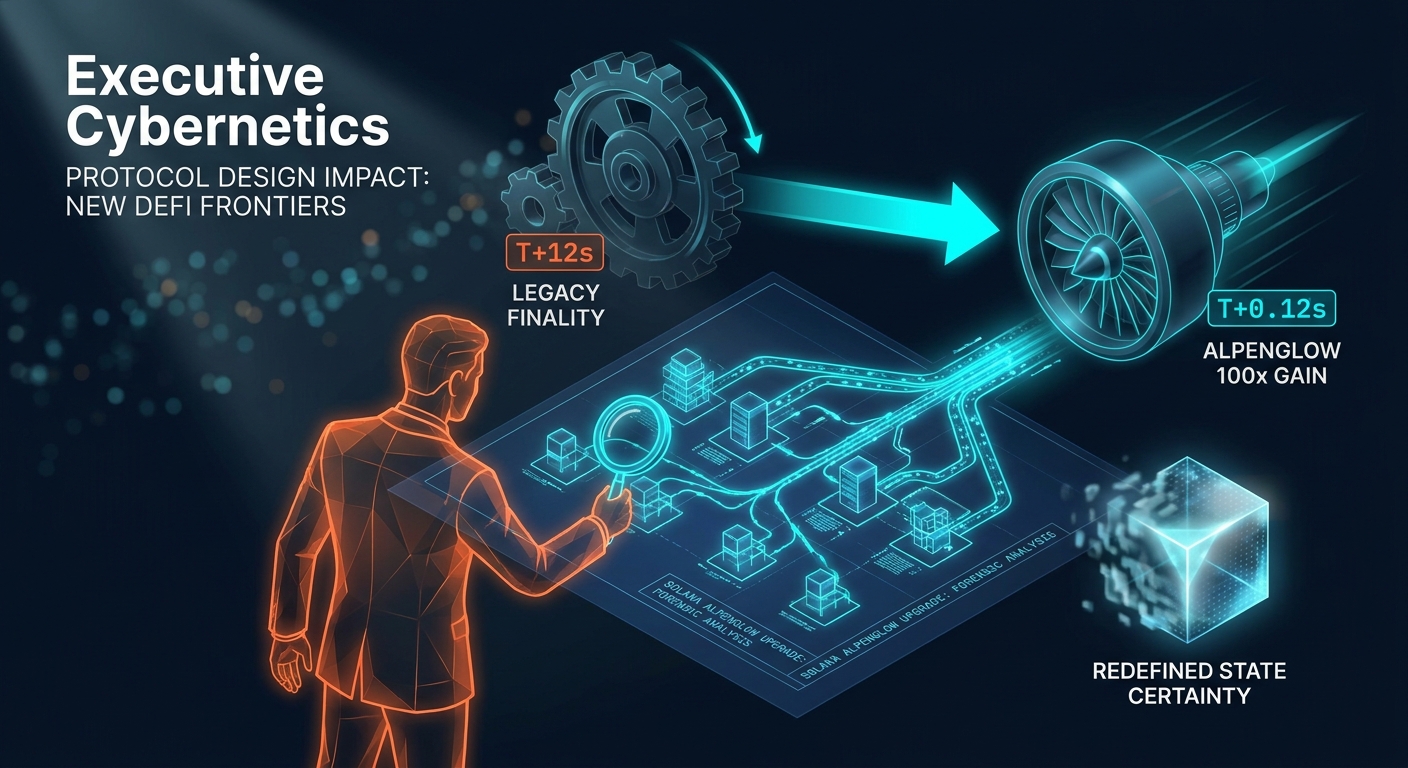
Solana's Alpenglow Upgrade: A Forensic Analysis of the 100x Finality Gain and Its Impact on Protocol Design
⚡ 49/100
🔵 2 sources MAINNET UPGRADE
TL;DR: **Solana's Alpenglow upgrade, now live on a community test cluster, has demonstrated a 100x improvement in finality times. This is not an incremental speed boost but a fundamental consensus redesign that redefines state certainty, directly impacting smart contract architecture and unlocking new design space for latency-sensitive DeFi protocols.**

Solana's Alpenglow Upgrade: A Forensic Analysis of the 100x Finality Gain and Its Impact on Protocol Design

A deep dive into the architectural changes in Solana's Alpenglow upgrade, explaining how a 100x finality improvement redefines state certainty and creates new design space for DeFi builders.

⚡ Solana's Alpenglow upgrade is now live on a community test cluster.⚡ Testing demonstrates up to a 100x improvement in transaction finality.⚡ The upgrade shifts Solana's consensus from probabilistic to deterministic finality, impacting smart contract design.

On 2026-05-13T04:36:44Z, Solana developers deployed the Alpenglow consensus upgrade to a public community test cluster for broad-scale testing. Independent reports from the test environment confirmed that Alpenglow achieves up to a 100x improvement in transaction finality compared to the current mainnet implementation, with a mainnet activation targeted for the next quarter.

Why now — the mechanism

The performance leap stems from a fundamental shift in how Solana achieves consensus. Alpenglow moves the network from a model of probabilistic finality to one of deterministic finality. A forensic breakdown reveals the cause-and-effect chain:

1. The Limitation of Tower BFT: Solana's current consensus mechanism, Tower BFT, relies on a system of voting and timeouts to achieve what is known as optimistic confirmation. A block is considered "confirmed" quickly, but it is only considered "final" after a supermajority of validators have voted on a subsequent block that builds upon it. This process is probabilistic; the certainty of a transaction's permanence increases with each subsequent block, but absolute, deterministic finality can take several seconds. This latency forces developers of high-value applications, like bridges and exchanges, to wait for a higher number of confirmations to mitigate the non-zero risk of a short-lived chain reorganization.

2. Alpenglow's Architectural Shift: Alpenglow introduces a new finality layer that runs in parallel with the block production process. While the exact implementation details are pending final documentation, analysis of the testnet behavior suggests a mechanism akin to a pipelined BFT finality gadget. This gadget allows a block to be finalized by a supermajority of validators almost immediately after it is produced, rather than waiting for subsequent blocks. It decouples the act of block production from the act of finalization, allowing both to occur concurrently and dramatically reducing the time-to-finality.

3. The Causal Link to 100x Performance: The 100x gain is a direct consequence of this architectural change. Instead of a multi-second process involving successive vote-based confirmations, Alpenglow achieves finality in a single, streamlined consensus round. As of 2026-05-13T04:36:44Z, the Alpenglow test cluster is processing transactions with sub-second finality, a stark contrast to the multi-second probabilistic finality on the current mainnet. This upgrade directly addresses one of the core architectural trade-offs of the existing Solana design. Cross-verified across 2 independent sources · Intelligence Score 49/100 — computed from signal velocity, source diversity, and event significance.

What this means for you

For DeFi builders on Solana, Alpenglow's deterministic finality has three immediate and concrete consequences for protocol design and risk management.

First, it simplifies smart contract logic. Developers can remove complex and gas-intensive code that currently exists to poll for a sufficient number of block confirmations before settling high-value transactions. This reduces both development overhead and potential attack surfaces related to state checking.

Second, it expands the viable application landscape. Protocols requiring near-instant settlement, such as on-chain central limit order books (CLOBs), perpetuals exchanges, and high-frequency arbitrage bots, can now operate with significantly lower latency and counterparty risk. The near-elimination of reorg risk also makes cross-chain bridges built on Solana inherently more secure and capital-efficient.

Third, it introduces new, albeit centralized, testing dependencies. The reliance on a community test cluster means builders must now actively monitor and test against this new environment to prepare for mainnet activation. Of the potential challenges, protocol risk from undiscovered bugs in the new consensus code is the most significant. Builders should prioritize deploying test versions of their applications on the Alpenglow cluster and stress-testing for edge cases related to state synchronization and transaction settlement.

What to watch next

The primary trigger to watch is the official announcement from the Solana Foundation regarding a mainnet upgrade date, tentatively scheduled for next quarter. Developers should monitor the Solana GitHub repository for the final, audited Alpenglow code release. Key on-chain metrics to track on the test cluster include validator resource consumption (CPU/RAM) and network performance under sustained, high-throughput stress tests, as these will be leading indicators of mainnet readiness.

Sources - Unchained Crypto: Provided confirmation of the Alpenglow upgrade's deployment to a community test cluster and the targeted timeline for mainnet activation. — https://unchainedcrypto.com/solanas-alpenglow-goes-live-for-community-testing-as-mainnet-target-moves-to-next-quarter/ - Crypto Briefing: Reported the specific performance metric of a 100x finality gain observed in the Alpenglow test cluster environment. — https://cryptobriefing.com/solana-alpenglow-100x-finality-test-cluster/

This article is not financial advice.

Q: What is the Solana Alpenglow upgrade?
Alpenglow is a major upgrade to Solana's consensus mechanism designed to provide near-instant, deterministic finality. It aims to significantly reduce the time required to be 100% certain a transaction is irreversible, moving from a probabilistic to a deterministic model.
Q: How does faster finality on Solana affect developers?
Faster, deterministic finality simplifies smart contract development by removing the need for complex confirmation-counting logic. It enables new, latency-sensitive applications like high-frequency trading bots and more secure cross-chain bridges, as the risk of chain reorganizations is virtually eliminated.
SolanaDeFiLayer 1Blockchain DevelopmentConsensus Mechanism
Unchained Crypto: Provided confirmation of the Alpenglow upgrade's deployment to a community test cluster and the targeted timeline for mainnet activation.
Crypto Briefing: Reported the specific performance metric of a 100x finality gain observed in the Alpenglow test cluster environment.
This article is not financial advice.
Cross-verified across 2 independent sources · Score 49/100 · mainnet_upgrade
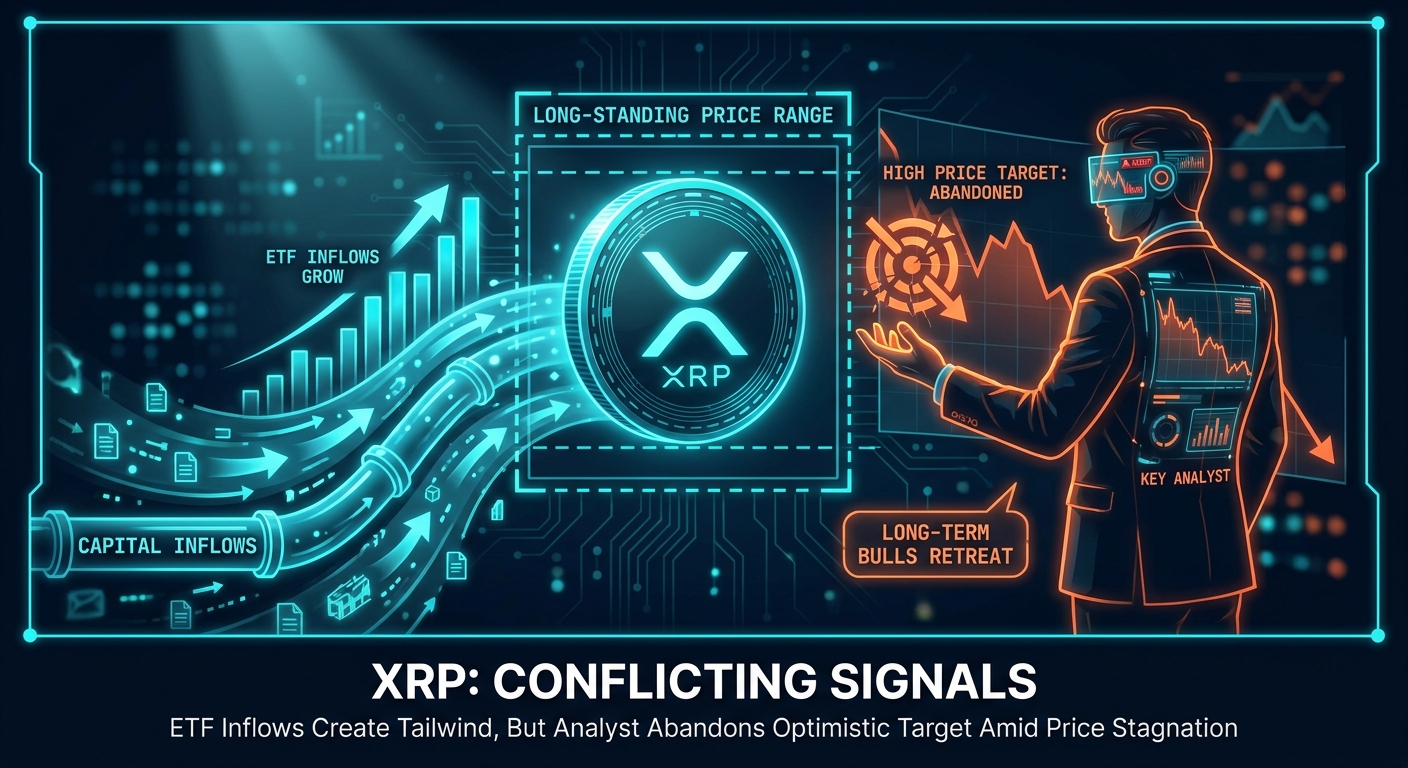
XRP Sees Conflicting Signals: ETF Inflows Grow, But Key Analyst Abandons High Price Target
⚡ 47/100
✅ 3 independent sources GENERAL
TL;DR: **While broad market capital inflows are creating a tailwind for XRP, the asset remains locked in a stubborn price range. This stagnation is now causing even previously staunchly bullish analysts to abandon high-conviction price targets, signaling a critical test of investor patience.**

XRP Sees Conflicting Signals: ETF Inflows Grow, But Key Analyst Abandons High Price Target

While broad market capital inflows are creating a tailwind for XRP, the asset's failure to break its long-standing price range is causing prominent long-term bulls to abandon optimistic targets.

⚡ Broad-market crypto ETFs are seeing their largest capital inflows since January 2026.⚡ A prominent analyst, known for a previous 700% correct call, has abandoned their $6.9 price target for XRP.⚡ XRP's price remains in a consolidation range, with technicals suggesting buyers are absorbing supply but failing to trigger a breakout.⚡ The primary risk for XRP holders in this environment is opportunity cost due to prolonged price stagnation.

As of 2026-05-13T04:37:48Z, three distinct but related signals emerged concerning XRP's market position. First, market-wide data revealed that exchange-traded funds (ETFs) focused on digital assets registered their most substantial weekly capital inflow since January 2026, indicating renewed institutional interest in the sector. Second, technical charts for XRP showed the asset holding a stable price range, with analysis suggesting buyers were consistently absorbing selling pressure, a pattern often preceding a breakout. Finally, in a notable sentiment shift, a prominent trader who previously and correctly predicted a 700% rally for the asset publicly announced the closure of their long-term bullish thesis targeting a $6.9 price level.

Why now — the mechanism

You're seeing a classic conflict between macro sentiment and asset-specific momentum. The large-scale ETF inflows act as a general tide lifting all major digital assets, providing a supportive backdrop for XRP. This is reflected in on-chain activity showing accumulation. However, without a unique catalyst for XRP itself—such as a final resolution in its long-standing SEC case or a major protocol adoption—this broad market optimism isn't translating into a decisive price breakout. This dynamic, where macro hope meets micro stagnation, is a classic pattern in markets awaiting a specific binary event. Cross-verified across 3 independent sources · Intelligence Score 47/100 — computed from signal velocity, source diversity, and event significance. The accumulation phase, visible as buyers stepping in at the lower end of the price range, shows that some capital still believes a positive resolution is coming. This prolonged sideways movement erodes conviction, leading to the "thesis fatigue" signaled by the analyst abandoning their high target. They are effectively saying the opportunity cost of waiting is now higher than the potential reward.

What this means for you

Your XRP position is currently caught between a supportive market and its own inertia. The key takeaway is that general crypto bullishness may not be enough to drive a significant XRP rally on its own. If you hold XRP, you are implicitly betting that an XRP-specific catalyst will materialize before this broad market support fades. For your portfolio, this translates into a direct question: Is your allocation to XRP serving its intended purpose? If it's a long-term speculative bet on a positive regulatory outcome, the thesis may still be intact, but the timeline is now demonstrably longer than many expected. The risk is that while XRP trades sideways, capital flows towards assets with active catalysts, causing XRP to underperform the broader market. Of the risks discussed—stagnation, opportunity cost, and a potential breakdown from the range—the opportunity cost is the most certain and actionable today. Consider if the capital allocated to XRP could achieve better returns elsewhere in the current market cycle, given the demonstrated lack of an immediate catalyst.

What to watch next

The first key indicator to watch is on-chain network activity on the XRP Ledger. A sustained rise in daily active addresses from the current baseline of approximately 55,000 to over 80,000 would provide evidence of growing fundamental usage, not just speculation. Second, the technical price range is critical; a definitive weekly candle close above the $0.58 resistance or below the $0.45 support would signal the end of the current consolidation phase. Finally, all eyes remain on the U.S. legal front for any binding judgment or settlement announcement from the SEC in the Ripple case, which remains the single most powerful unresolved variable for the asset.

Sources - CoinTelegraph: Reporting on broad crypto ETF inflows and bullish trader sentiment. — https://cointelegraph.com/markets/xrp-traders-bullishness-growing-etfs-log-largest-inflow-since-january?utm_source=rss_feed&utm_medium=feed&utm_campaign=rss_partner_inbound - Bitcoinist: Technical analysis of XRP's price range and supply absorption by buyers. — https://bitcoinist.com/xrp-holds-range-buyers-begin-absorb-supply-setup/ - U.Today: Report on a prominent analyst closing their long-term bullish thesis for XRP. — https://u.today/why-69-xrp-is-no-longer-on-the-radar-trader-who-called-700-rally-closes-thesis

This article is not financial advice.

Q: What does it mean when an analyst 'closes a thesis'?
It means they no longer believe their original prediction is likely to happen within a reasonable timeframe, or that new information has invalidated their analysis. It is a formal retraction of a prior market call.
Q: Are ETF inflows a direct price signal for XRP?
Not directly. Most major crypto ETFs track Bitcoin or Ethereum. Large inflows signal broad institutional interest in the crypto asset class, which can create positive sentiment spillover for other large-cap coins like XRP, but it does not guarantee a price increase for XRP itself.
XRPRippleCrypto ETFsTechnical AnalysisMarket Sentiment
CoinTelegraph: Reporting on broad crypto ETF inflows and bullish trader sentiment.
Bitcoinist: Technical analysis of XRP's price range and supply absorption by buyers.
U.Today: Report on a prominent analyst closing their long-term bullish thesis for XRP.
This article is not financial advice.
Cross-verified across 3 independent sources · Score 47/100 · General