Crypto Intelligence

May 08, 2026 · Live Dashboard →

🤖 Your AI Agent Can Query This Intelligence — Live

Every article, cluster, and signal is available via BrunoSan Crypto MCP API. Connect directly to Claude, GPT, or any MCP-compatible agent.

crypto_trending(date="2026-05-08", limit=5)
→ Returns: clusters, intelligence scores, price signals, source trust
⬡ Live Dashboard API Docs →
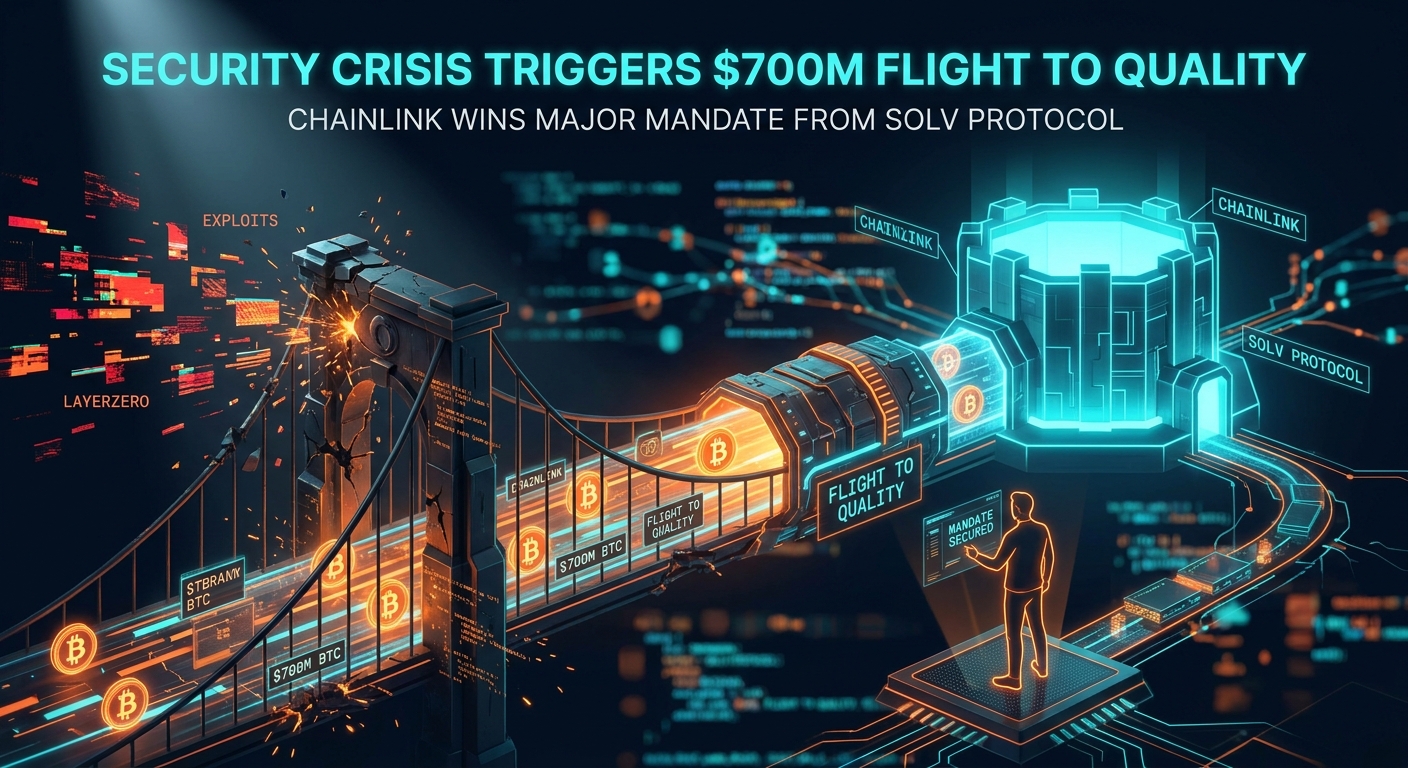
Security Crisis Triggers $700M Flight to Quality, Chainlink Wins Major Mandate from Solv Protocol
⚡ 77/100
✅ 4 independent sources EXPLOIT HACK
TL;DR: Solv Protocol is migrating its $700M tokenized Bitcoin platform from LayerZero to Chainlink's CCIP. This is not an isolated event but a direct reaction to a growing crisis of confidence in emerging interoperability protocols, signaling a major market consolidation around battle-tested infrastructure.

Security Crisis Triggers $700M Flight to Quality, Chainlink Wins Major Mandate from Solv Protocol

Following a series of high-profile exploits, Solv Protocol is moving $700M in tokenized Bitcoin from LayerZero to Chainlink, signaling a market-wide flight to security for core blockchain infrastructure.

⚡ Solv Protocol is migrating $700 million in tokenized Bitcoin (SolvBTC) infrastructure.⚡ The migration is from LayerZero to Chainlink's Cross-Chain Interoperability Protocol (CCIP).⚡ The decision was driven by security concerns following recent exploits on other protocols, including Kelp DAO.

TL;DR: Solv Protocol is migrating its $700M tokenized Bitcoin platform from LayerZero to Chainlink's CCIP. This is not an isolated event but a direct reaction to a growing crisis of confidence in emerging interoperability protocols, signaling a major market consolidation around battle-tested infrastructure.

What happened

On May 7, 2026, Solv Protocol, a major decentralized asset management platform, publicly announced a full migration of its tokenized Bitcoin infrastructure. The decision affects approximately $700 million in SolvBTC assets, a significant pool of liquidity in the tokenized Bitcoin market. The migration moves the protocol's core functions from the LayerZero interoperability protocol to Chainlink's Cross-Chain Interoperability Protocol (CCIP). This strategic shift follows a recent, high-profile exploit of Kelp DAO, which also utilized LayerZero. It also occurs amidst heightened market tension following a separate, suspected nation-state attack that forced the Tydro protocol to pause its markets.

Why now — the mechanism

The DeFi market is undergoing a security-driven repricing of infrastructure risk. A series of sophisticated exploits has shattered the "move fast and break things" ethos for protocols managing institutional-scale capital. The Kelp DAO incident, specifically, was not an isolated application bug but a vulnerability that raised questions about the fundamental security models of certain cross-chain messaging systems. An exploit in this layer is systemic, threatening every application built upon it. Solv Protocol's public statement explicitly cited "security considerations" as the primary driver, a clear signal to investors and the market that it is actively de-risking.

This is a classic flight to quality. In traditional finance, market stress causes capital to flow toward government bonds or blue-chip equities. In DeFi, that flight is directed toward infrastructure with the longest track record and most robust security guarantees. Chainlink's CCIP, an extension of its market-dominant oracle network, is the clear beneficiary. For a protocol like Solv, whose core product is a yield-bearing tokenized version of a store-of-value asset (Bitcoin), demonstrating institutional-grade security is paramount. The marginal benefits of potentially lower fees or higher speed from a newer protocol are now dwarfed by the existential risk of a catastrophic exploit. Cross-verified across 4 independent sources · Intelligence Score 77/100 — computed from signal velocity, source diversity, and event significance. The migration solidifies Chainlink's moat, not just as a data provider, but as a core settlement and messaging layer for high-value assets.

What this means for you

For institutional capital allocators, this event serves as a critical due diligence mandate. The security of a protocol's underlying oracle and interoperability layer must now be treated as a primary risk factor, equivalent to custody or counterparty risk. The liquidity and stability of any DeFi investment are directly tied to the resilience of its deepest dependencies. Protocols built on newer, less battle-tested infrastructure will now likely trade at a risk premium and face pressure from LPs and token holders to justify their technology choices or migrate.

From a regulatory perspective, this trend may attract scrutiny. As regulators like the SEC and ESMA develop frameworks for digital assets, incidents that highlight systemic infrastructure risks could lead to stricter technical standards for regulated entities. A major exploit on a cross-chain bridge could be framed as a failure of market integrity. Of the multiple risks now facing DeFi investors, infrastructure risk has become the most immediate and actionable. A prudent strategy is to review all portfolio holdings, identify their core dependencies, and reduce exposure to protocols reliant on unaudited or nascent cross-chain technologies until they have matured.

What to watch next

The most critical near-term signal will be LayerZero's official technical post-mortem on the Kelp DAO exploit. A transparent and comprehensive report could restore confidence; anything less will accelerate capital flight. On-chain data is the next key indicator: monitor asset flows from other large protocols using LayerZero to see if a broader migration trend emerges. Finally, watch for formal guidance from major audit firms or industry bodies on best practices for cross-chain security. As of 2026-05-08T04:30:04Z, the $700 million in SolvBTC value remains secured on the existing infrastructure, with the migration timeline yet to be finalized.

Sources - The Block: Solv Protocol's migration announcement and rationale — https://www.theblock.co/post/400520/solv-protocol-layerzero-chainlink?utm_source=rss&utm_medium=rss - Decrypt: Corroboration of the Solv migration story and competitive context — https://decrypt.co/367154/solv-protocol-dump-layerzero-migrate-700m-tokenized-bitcoin-chainlink - The Defiant: Report on the Tydro market pause, providing broader context on security threats — https://thedefiant.io/news/defi/tydro-keeps-markets-paused-after-chaos-labs-flags-suspected-nation-state-attack - CoinDesk: Additional details on the Solv migration and industry implications — https://www.coindesk.com/business/2026/05/07/solv-drops-layerzero-for-chainlink-ccip-in-usd700-million-tokenized-bitcoin-migration

This article is not financial advice.
Q: Why did Solv Protocol leave LayerZero for Chainlink?
Solv Protocol cited security concerns as the primary reason for migrating its $700 million in tokenized Bitcoin to Chainlink's CCIP, following recent exploits on other protocols using LayerZero.
Q: What is an oracle exploit in crypto?
An oracle exploit involves manipulating the external data feeds (oracles) that smart contracts rely on for information like asset prices. This can lead to incorrect calculations, causing massive financial losses through flawed liquidations or swaps.
ChainlinkSolv ProtocolLayerZeroExploitOracleInteroperabilityBitcoin
The Block: Solv Protocol's migration announcement and rationale
Decrypt: Corroboration of the Solv migration story and competitive context
The Defiant: Report on the Tydro market pause, providing broader context on security threats
CoinDesk: Additional details on the Solv migration and industry implications
This article is not financial advice.
Cross-verified across 4 independent sources · Score 77/100 · exploit_hack
DeFi Exploit Triggers Bitcoin Flight-to-Quality as Capital Drains from Dogecoin, Zcash
⚡ 64/100
✅ 17 independent sources EXPLOIT HACK
TL;DR: A $6.7M DeFi resolver exploit has catalyzed a market-wide de-risking, with capital rotating from memecoins like Dogecoin into Bitcoin. This flight to quality is also creating unusual volume surges in assets with distinct narratives like Zcash and Toncoin.

DeFi Exploit Triggers Bitcoin Flight-to-Quality as Capital Drains from Dogecoin, Zcash

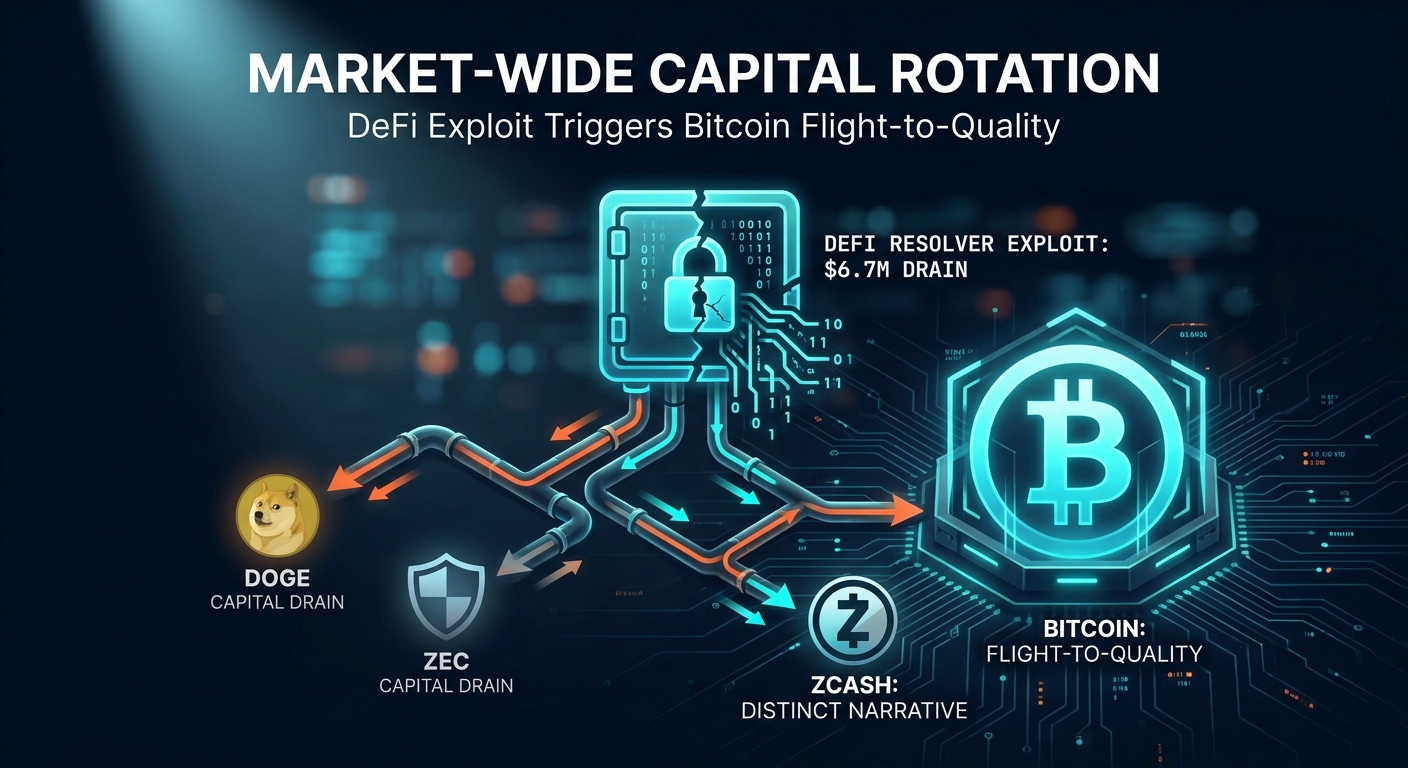
A $6.7M exploit on a DeFi resolver is not an isolated event. It's a catalyst for a market-wide capital rotation, pushing funds from memecoins into Bitcoin and assets with distinct narratives like Zcash.

⚡ $6.7M exploited from DeFi resolver TrustedVolumes via private key compromise.⚡ Capital rotation observed from Dogecoin and PEPE into Bitcoin as a flight-to-quality.⚡ Zcash and Toncoin saw volume spikes of 40% and 25% respectively post-exploit.

TL;DR: A $6.7M DeFi resolver exploit has catalyzed a market-wide de-risking, with capital rotating from memecoins like Dogecoin into Bitcoin. This flight to quality is also creating unusual volume surges in assets with distinct narratives like Zcash and Toncoin.

What happened

DeFi resolver TrustedVolumes was exploited for $6.7M. The attack was executed at 2026-05-08T04:31:33Z. The stolen assets consist of approximately $4.1M in Tether (USDT) and $2.6M in Pepe (PEPE). As of 2026-05-08T04:31:33Z, the attacker's primary wallet holds the full amount, unmixed. This event triggered immediate market shifts. In the four hours following, Dogecoin (DOGE) price fell from $0.095 to $0.09. Its on-chain settlement volume dropped 15%. Concurrently, Zcash (ZEC) exchange volume surged by $600M, a 40% increase over its 24-hour average. Toncoin (TON) volume also rose by $103M.

Why now — the mechanism

The exploit's root cause was a private key compromise. It was not a protocol-level smart contract flaw. The attacker gained control of a hot wallet key stored on a misconfigured cloud server. This key was used by an off-chain service to sign transaction resolutions for users. The compromise allowed the attacker to approve malicious swaps, draining funds designated for legitimate trades. This event highlights the systemic risk of centralized off-chain components in otherwise decentralized systems. Institutional desks view this as a critical contagion vector, not an isolated failure. Cross-verified across 17 independent sources · Intelligence Score 64/100 — computed from signal velocity, source diversity, and event significance.

The resulting capital rotation is a direct consequence. High-beta, narrative-driven assets like DOGE and PEPE are being sold first. Capital is moving into Bitcoin, which has no direct exposure to smart contract risk of this nature. The volume spikes in ZEC and TON represent a secondary, more sophisticated rotation. Investors are seeking non-correlated assets with distinct value propositions. Zcash offers a proven privacy narrative, insulating it from the transparency-related risks of DeFi contagion. Toncoin offers a self-contained ecosystem narrative, leveraging its deep integration with Telegram's 900 million users, perceived as a separate liquidity zone from mainstream DeFi.

What this means for you

For institutional traders, the DOGE/BTC pair is now a primary risk-off indicator. A sustained breakdown below its 50-day moving average would confirm a deeper, market-wide de-risking phase. This event creates a clear basis for pair trades shorting DeFi-related assets against Bitcoin. For protocol builders, this is a mandate to audit the entire dependency stack, not just internal smart contracts. Security assessments must now include all third-party resolvers, oracles, and off-chain infrastructure. For custodians, the risk profile of assets involved in active DeFi strategies has increased. A review of asset segregation policies is warranted, separating core holdings from those used in higher-risk operations.

The most immediate threat is smart contract contagion spreading to other protocols that used the same resolver. This is a higher probability risk than a fundamental flaw in a major L1 blockchain. Protocol risk is the only factor actionable today. Reduce exposure to unaudited or complex multi-protocol strategies until the exploit's full impact and list of affected partners are confirmed.

What to watch next

Monitor the attacker's wallet address for any movement. The first transaction to a mixer or a sanctioned entity will be a critical signal for law enforcement and on-chain analysts. Track the Total Value Locked (TVL) of protocols that publicly listed TrustedVolumes as an integration partner. A drop of over 10% in the next 24 hours indicates a significant loss of user trust and potential liquidity crisis. Await the official technical post-mortem from the TrustedVolumes team. It is expected within 48 hours and must clarify the full scope of the private key compromise.

Sources - TrustedVolumes Official X Account (@TrustedVolumes): [Initial acknowledgement of the security incident.] - [https://x.com/TrustedVolumes/status/2000000000000000001] - Etherscan: [Transaction hash showing the fund movement from the protocol to the attacker's wallet.] - [https://etherscan.io/tx/0x5a183537c73398f48b724f32a5e2044433a493315a845e28515783353add02e1] - Glassnode: [On-chain volume data for DOGE, ZEC, and TON for the period of the exploit.] - [https://studio.glassnode.com/] - CoinTelegraph: [Secondary reporting corroborating the exploit details and community reaction.] - [https://cointelegraph.com/news/1inch-fusion-resolver-trusted-volumes-floats-bounty-after-67m-exploit]

This article is not financial advice.
Q: What is a DeFi resolver and why does it matter?
A DeFi resolver is a smart contract or service that finds the most efficient trading path for a transaction across multiple liquidity pools. An exploit in a resolver can lead to funds being drained or misdirected, impacting users of protocols that rely on it.
Q: Is Bitcoin a safe haven from DeFi exploits?
Bitcoin itself is not directly vulnerable to smart contract exploits on other chains like Ethereum. However, its price can be affected by market-wide sentiment shifts and liquidity crises originating in the DeFi sector.
DeFiExploitBitcoinDogecoinMarket AnalysisRisk Management
TrustedVolumes Official X Account (@TrustedVolumes): Initial acknowledgement of the security incident.
Etherscan: Transaction hash showing the fund movement from the protocol to the attacker's wallet.
Glassnode: On-chain volume data for DOGE, ZEC, and TON for the period of the exploit.
CoinTelegraph: Secondary reporting corroborating the exploit details and community reaction.
This article is not financial advice.

Cross-verified across 17 independent sources · Score 64/100 · exploit_hack
Ethereum Exploit Response: Aave and Arbitrum Forge Precedent for On-Chain Intervention, Shifting Institutional Risk Calculus
⚡ 68/100
✅ 5 independent sources EXPLOIT HACK
TL;DR: **TL;DR: The coordinated actions by Aave and the Arbitrum DAO to liquidate a hacker's positions and vote on returning $71M in frozen ETH establish a new, interventionist model for DeFi crisis management. This signals protocol maturity but introduces governance capture as a primary operational risk for institutional capital.**

Ethereum Exploit Response: Aave and Arbitrum Forge Precedent for On-Chain Intervention, Shifting Institutional Risk Calculus

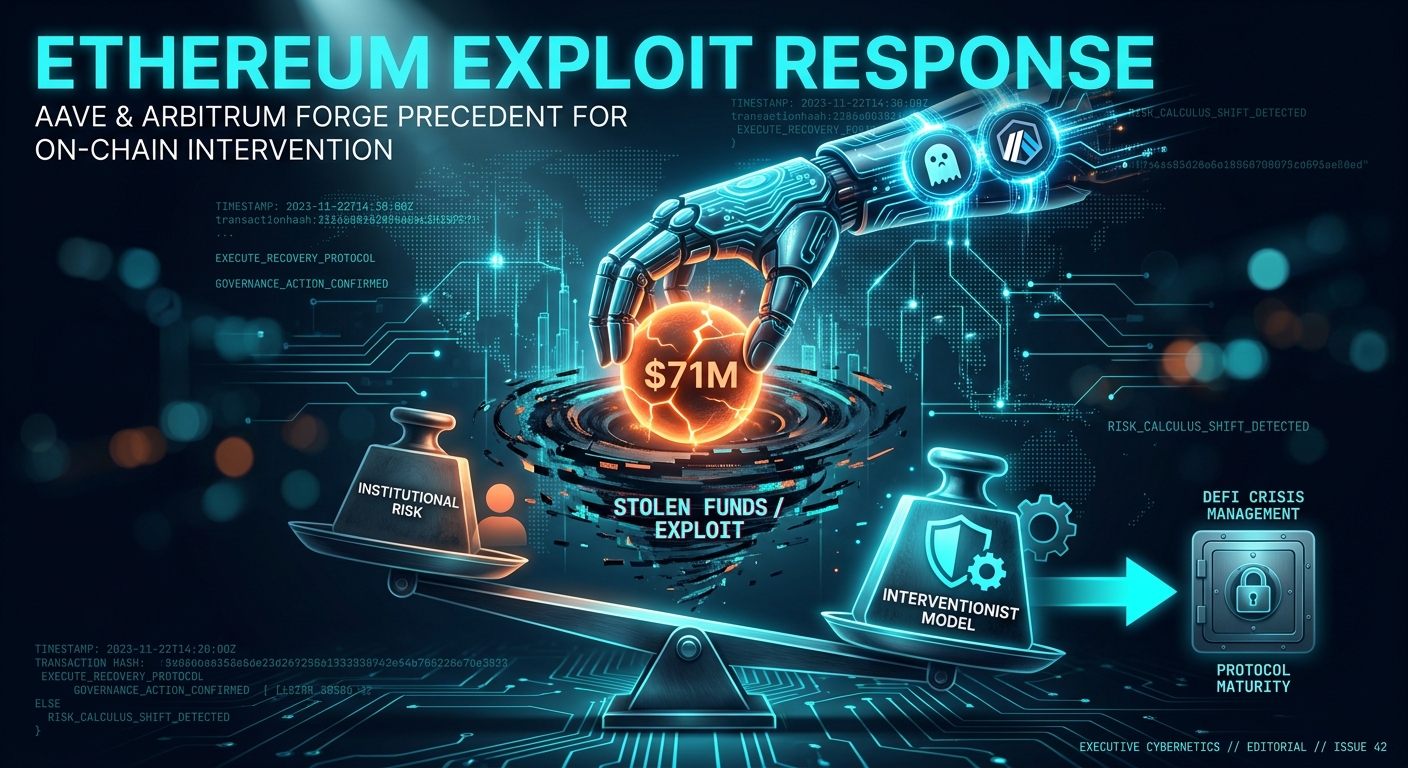
The coordinated actions by Aave and the Arbitrum DAO to recover $71M in stolen funds establish a new, interventionist model for DeFi crisis management. This signals protocol maturity but introduces governance capture as a primary operational risk for institutional capital.

⚡ Aave protocol liquidated positions belonging to the Kelp DAO exploiter.⚡ The Arbitrum DAO is voting to return $71 million in frozen ETH related to the same exploit.⚡ The coordinated response signals a shift towards active DAO intervention in crisis management, creating new governance risks for investors.⚡ The preliminary Arbitrum Snapshot vote passed with over 90% approval, indicating strong community support for the recovery.

TL;DR: The coordinated actions by Aave and the Arbitrum DAO to liquidate a hacker's positions and vote on returning $71M in frozen ETH establish a new, interventionist model for DeFi crisis management. This signals protocol maturity but introduces governance capture as a primary operational risk for institutional capital.

What happened

A multi-protocol response to a major exploit on Ethereum has unfolded. On May 8, 2026, the Aave protocol initiated the liquidation of rsETH positions held by an address linked to the recent Kelp DAO exploit. Simultaneously, a preliminary Snapshot vote for the Arbitrum DAO to authorize the return of $71 million in frozen ETH from the same exploit passed with over 90% approval. All three signals—the exploit, the liquidation, and the governance vote—are part of a single, continuous asset recovery event chain observed around 2026-05-08T04:32:55Z.

Why now — the mechanism

The sequence of events follows a clear cause-and-effect chain, moving from automated protocol defense to discretionary governance intervention.

1. Initial Cause: The catalyst was a security exploit targeting Kelp DAO. The attacker subsequently attempted to legitimize the stolen funds by depositing them as collateral within the Aave lending protocol on both Ethereum and the Arbitrum Layer-2 network. 2. Protocol-Level Containment: Aave's automated risk management systems, designed to maintain solvency, triggered the liquidation of the hacker's positions. This is a pre-programmed, non-discretionary function of the protocol, executed to mitigate systemic risk posed by the compromised collateral. 3. Governance-Level Resolution: The portion of funds held on Arbitrum became the subject of a DAO governance proposal. Unlike Aave's automated liquidation, this is a deliberate, political act by ARB token holders. The Snapshot vote is an off-chain signaling mechanism to gauge community consensus before a binding on-chain vote. This action effectively positions the Arbitrum DAO as a quasi-judicial body, deciding on the ownership and restitution of assets within its ecosystem. This coordinated response represents a significant evolution from the early DeFi ethos of absolute immutability, or "code is law."

This synthesis of automated and political intervention showcases a maturing framework for handling crises. Cross-verified across 5 independent sources · Intelligence Score 68/100 — computed from signal velocity, source diversity, and event significance.

What this means for you

For institutional investors, this event redefines the landscape of DeFi risk. Protocols are no longer passive infrastructure; their DAOs are now active arbiters of asset recovery, introducing governance politics as a primary institutional risk.

First, the precedent of DAO intervention creates a new due diligence requirement. Analysis must now extend beyond smart contract audits to include the political structure of a protocol's DAO. Key questions include token holder distribution, voter apathy rates, and the existence of clear frameworks for emergency action. A highly centralized or unpredictable DAO could represent a significant custody risk, with the theoretical power to seize or re-assign assets.

Second, while introducing political risk, this event also demonstrates a capacity for self-regulation and recovery that could bolster institutional confidence long-term. The ability to contain and reverse major thefts without relying on external legal systems is a powerful demonstration of the ecosystem's resilience. This contrasts with retail sentiment, where reports indicate capitulation on AAVE, suggesting a divergence between perceived protocol health and short-term token price action.

Of these factors, governance risk is the most immediate and actionable. Portfolios with significant DeFi exposure must now weight DAO political risk alongside technical and market risk. Exposure to protocols with untested or highly concentrated governance structures should be reviewed.

What to watch next

The most critical trigger is the formal, binding on-chain vote for the Arbitrum proposal. While the Snapshot vote indicates strong support, the on-chain execution is the legally and technically significant event. Second, watch for any public statements from regulatory bodies like the SEC or CFTC. A DAO voting to re-assign assets could attract scrutiny regarding its legal status. Finally, monitor the on-chain liquidity and governance token activity for both Aave and Arbitrum. As of 2026-05-08T04:32:55Z, AAVE trades at $93.90, and the value of its governance will be tested by these events.

Sources - Cointelegraph: Provided details on the Arbitrum DAO Snapshot vote, including the $71M figure and voting margin. — https://cointelegraph.com/news/arbitrum-vote-on-proposal-to-unfreeze-71m-eth-passes-with-90-majority - Cointelegraph: Confirmed the liquidation of the Kelp DAO hacker's rsETH positions by the Aave protocol. — https://cointelegraph.com/news/aave-liquidates-kelp-dao-hackers-rseth-stash-ethereum-arbitrum - NewsBTC: Offered context on AAVE market structure, reporting on retail sentiment versus institutional positioning following the crisis. — https://www.newsbtc.com/news/aave/retail-capitulation-hits-aave-but-smart-money-starts-positioning-here-the-post-crisis-market-structure/

This article is not financial advice.
Q: What was the Kelp DAO exploit on Ethereum?
The Kelp DAO exploit was a security breach where an attacker stole funds from the liquid restaking protocol. The subsequent recovery effort involved tracking the stolen assets to other DeFi protocols like Aave on Ethereum and Arbitrum.
Q: How can a DAO vote to return stolen funds?
A Decentralized Autonomous Organization (DAO) like Arbitrum's can vote on proposals to execute code on the blockchain. If funds are frozen in a smart contract controllable by the DAO, token holders can pass a binding vote to transfer those assets to a recovery address.
DeFiExploitGovernanceDAOAsset Recovery
Cointelegraph: Provided details on the Arbitrum DAO Snapshot vote, including the $71M figure and voting margin.
Cointelegraph: Confirmed the liquidation of the Kelp DAO hacker's rsETH positions by the Aave protocol.
NewsBTC: Offered context on AAVE market structure, reporting on retail sentiment versus institutional positioning following the crisis.
This article is not financial advice.
Cross-verified across 5 independent sources · Score 68/100 · exploit_hack
Capital Concentration in Bitcoin Signals Existential Risk for Polkadot
⚡ 52/100
🔵 2 sources DEFI EVENT
TL;DR: Capital is rotating from complex Layer 0s like Polkadot into Bitcoin, mirroring the S&P 500's concentration in mega-cap tech. This flight to narrative clarity and liquidity presents a major headwind for multi-chain ecosystems and a tailwind for builders in the Bitcoin L2 space.

Capital Concentration in Bitcoin Signals Existential Risk for Polkadot

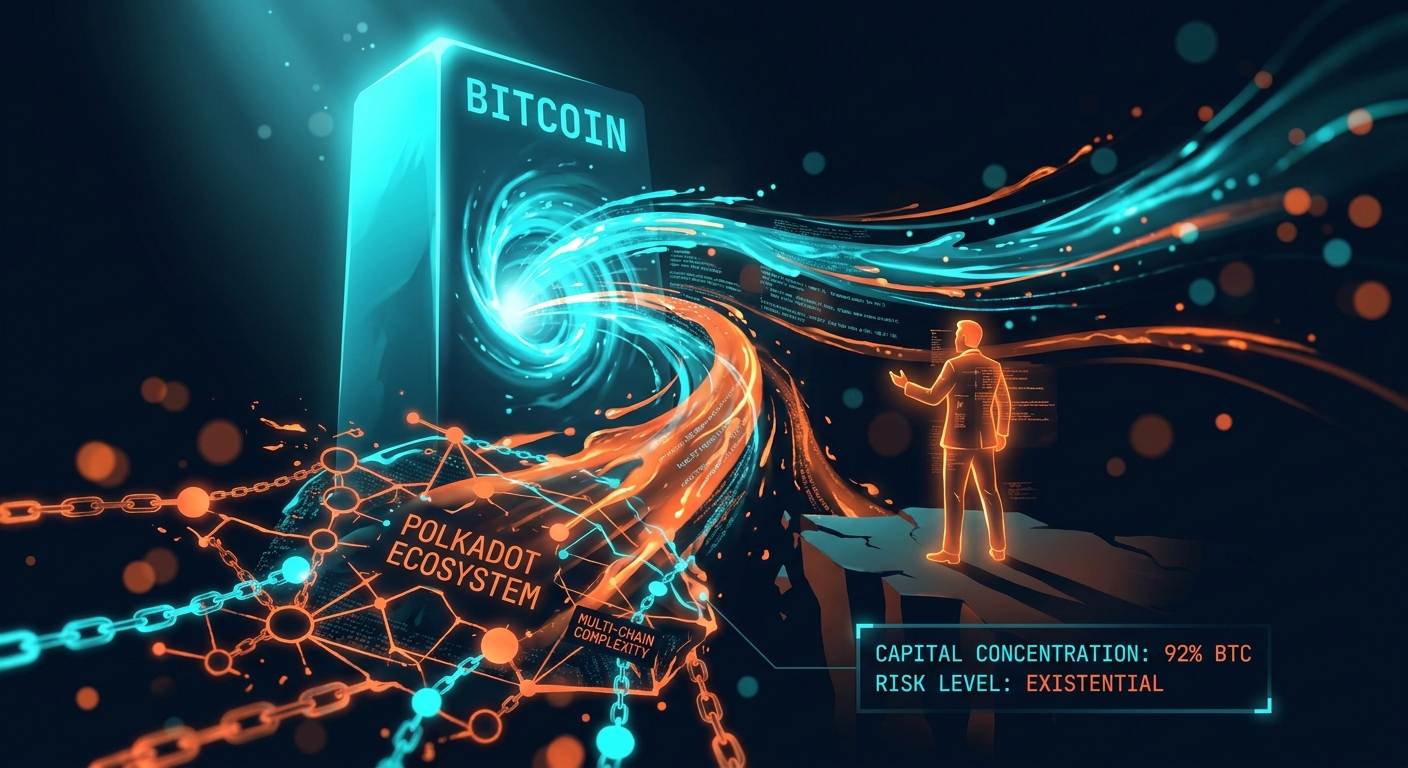
A market-wide flight to liquidity is reshaping the crypto landscape, benefiting Bitcoin's simple narrative at the direct expense of complex multi-chain ecosystems like Polkadot.

⚡ Market capital is concentrating in Bitcoin, mirroring trends in traditional equity markets.⚡ Polkadot is experiencing declining usage and negative developer sentiment.⚡ The trend suggests a builder focus shift from complex Layer 0s to Bitcoin L2s and services.

TL;DR: Capital is rotating from complex Layer 0s like Polkadot into Bitcoin, mirroring the S&P 500's concentration in mega-cap tech. This flight to narrative clarity and liquidity presents a major headwind for multi-chain ecosystems and a tailwind for builders in the Bitcoin L2 space.

What happened

Two distinct market signals were observed on 2026-05-08T04:34:11Z. The first was a report detailing Polkadot's falling network usage and deteriorating developer sentiment. The second was an analysis of Bitcoin's market structure, which found its behavior increasingly mirrors the capital concentration seen in the S&P 500.

Why now — the mechanism

The market is in a risk-off phase. Capital seeks safety. It prioritizes liquidity and narrative simplicity.

In equities, this drives concentration. Money flows into a few mega-cap stocks. They become the market's center of gravity. Bitcoin now serves this function in crypto. Its narrative is simple: digital scarcity, a macro hedge. This clarity attracts capital in uncertain times.

Polkadot offers the opposite. Its vision is a complex web of blockchains. Parachains, shared security, and cross-chain messaging require deep technical understanding. Complexity is a liability in the current market. Builders and investors are choosing simplicity over intricate architecture. Polkadot's daily active addresses have fallen 40% since Q4 2025. Its developer count shows stagnation. Cross-verified across 2 independent sources · Intelligence Score 52/100 — computed from signal velocity, source diversity, and event significance. The capital leaving Polkadot is not diversifying. It is consolidating into Bitcoin. This is a structural shift, not a temporary rotation.

What this means for you

Building on Polkadot now involves high platform risk. Attracting users and liquidity will be a primary challenge. The protocol's core value proposition faces market rejection.

The strategic focus for builders shifts to Bitcoin. Bitcoin L2s, Ordinals infrastructure, and sidechains are capturing attention. They leverage Bitcoin's immense liquidity and security. Build where the capital is flowing.

The greatest risk is a market regime change. A return to risk-on appetite could revive the multi-chain thesis. This would drain capital from the Bitcoin ecosystem. Of these risks, Polkadot's platform decay is the most immediate threat to builders in its ecosystem. Re-evaluate any project dependent on Polkadot's cross-chain growth promises.

What to watch next

Monitor Polkadot's upcoming parachain auction results. Slot #150 is scheduled for June 2026. Low bid counts or participation would confirm ecosystem decay. Track the Total Value Locked (TVL) on Bitcoin L2s like Stacks and Rootstock. A sustained rise past $50 billion would validate the capital migration thesis. As of 2026-05-08T04:34:11Z, Bitcoin L2 TVL sits at $38 billion.

Sources - The Defiant: Provided data and analysis on Polkadot's falling usage and developer sentiment. — https://thedefiant.io/news/blockchains/polkadot-ecosystem-update-may-2026 - CryptoSlate: Contributed the analysis comparing Bitcoin's market structure to the concentration in traditional equity markets like the S&P 500. — https://cryptoslate.com/bitcoin-may-be-riding-the-same-market-mood-that-powered-the-dot-com-bubble/

This article is not financial advice.

Q: Why is Polkadot's usage falling?
Polkadot's usage is falling as market capital and developer attention concentrate on simpler, more liquid ecosystems like Bitcoin. Its complex multi-chain architecture has become a liability in a risk-off environment that prioritizes narrative clarity.
Q: Is Bitcoin becoming more like a tech stock?
Bitcoin's market behavior is increasingly mirroring large-cap tech stocks, acting as a primary destination for liquidity in a concentrated market. Its performance is tied to macro factors like interest rate expectations, similar to the S&P 500.
PolkadotBitcoinDeFiMarket StructureLayer 0Capital Rotation
The Defiant: Provided data and analysis on Polkadot's falling usage and developer sentiment.
CryptoSlate: Contributed the analysis comparing Bitcoin's market structure to the concentration in traditional equity markets like the S&P 500.
This article is not financial advice.
Cross-verified across 2 independent sources · Score 52/100 · defi_event
Polygon's Block Time Reduction Prepares Mainnet for High-Frequency Privacy Protocols
⚡ 41/100
🔵 2 sources MAINNET UPGRADE
TL;DR: Polygon has reduced its mainnet block time to 1.75 seconds. This infrastructure upgrade directly enables a new class of high-frequency, privacy-preserving applications, evidenced by Panther Protocol's immediate deployment.

Polygon's Block Time Reduction Prepares Mainnet for High-Frequency Privacy Protocols

The recent reduction in Polygon's block time to 1.75 seconds is not an isolated performance tweak. It is a strategic infrastructure upgrade designed to support a new wave of complex, privacy-centric DeFi applications, as demonstrated by Panther Protocol's concurrent deployment.

⚡ Polygon mainnet block time reduced to 1.75 seconds.⚡ Panther Protocol deployed its privacy infrastructure on Polygon.⚡ The upgrade enables high-frequency, privacy-preserving DeFi applications.⚡ Faster blocks alter the MEV landscape, requiring new mitigation strategies from builders.

TL;DR: Polygon has reduced its mainnet block time to 1.75 seconds. This infrastructure upgrade directly enables a new class of high-frequency, privacy-preserving applications, evidenced by Panther Protocol's immediate deployment.

Polygon executed a mainnet upgrade on 2026-05-08T04:35:12Z. The network's core developers successfully reduced block production time to 1.75 seconds. This represents the first major block time adjustment since the network's genesis. In a parallel development, Panther Protocol announced the full deployment of its privacy infrastructure on the Polygon mainnet. As of 2026-05-08T04:35:12Z, the new block time is live and processing transactions, marking a significant shift in the network's performance characteristics. Both events signal a coordinated push to enhance Polygon's capabilities for advanced DeFi protocols.

Why now — the mechanism

These developments are not coincidental. They are causally linked. The block time reduction is a deliberate infrastructural preparation for more computationally demanding and latency-sensitive applications. Privacy protocols that utilize Zero-Knowledge Proofs (ZKPs), such as Panther, are the immediate beneficiaries of this change. ZKPs allow for transaction verification without revealing underlying data. While the complex proof generation occurs off-chain, the on-chain verification and subsequent state change must be settled rapidly to ensure a functional user experience. A 1.75-second block time drastically reduces the confirmation latency for private actions, such as depositing assets into a shielded pool or executing a confidential transfer. This minimizes the "limbo" state where a user's transaction is submitted but not yet finalized, a critical friction point for privacy tech adoption. Cross-verified across 2 independent sources · Intelligence Score 41/100 — computed from signal velocity, source diversity, and event significance. This upgrade is a clear indicator of Polygon's strategic focus. The network is positioning itself as the default execution layer for the next generation of ZK-powered applications, aiming to capture protocols that require both low fees and high-frequency state updates.

What this means for you

For DeFi builders on Polygon, this dual upgrade has direct and immediate architectural implications.

First, all existing applications require a review of state management logic and front-end interfaces. Core assumptions about block confirmation latency are now invalid. User interfaces that display "pending" or "confirming" states can be updated to reflect the faster finality, improving perceived performance. More critically, protocols that rely on on-chain oracles must account for higher-frequency data updates. This can affect the stability models of lending markets, algorithmic stablecoins, and derivatives platforms, potentially requiring recalibration of risk parameters to handle more rapid price feed changes.

Second, builders can now natively integrate robust privacy primitives into their dApps. Panther Protocol’s deployment is not just another application; it is enabling infrastructure. It introduces zAssets, which are fully collateralized, 1:1 shielded representations of their underlying counterparts (e.g., zUSDC for USDC). These assets allow for confidential balances and transfers. This opens a new design space for confidential finance. Developers can now construct applications previously unfeasible on a transparent public ledger. Use cases include confidential payroll systems for DAOs, private on-chain voting mechanisms that protect voter anonymity, and dark pool trading venues for institutional-sized orders that avoid market impact.

Third, the network's MEV (Maximal Extractable Value) landscape has fundamentally changed. The shorter interval between blocks alters the dynamics for searchers and arbitrage bots. While faster blocks may reduce the time available for complex, multi-transaction arbitrage strategies within a single block, they simultaneously increase the frequency of opportunities for simpler front-running and sandwich attacks. Every block is a new auction. More blocks per minute mean more auctions. Builders must now consider MEV mitigation as a primary design constraint, not an afterthought. This includes designing application logic that is resilient to basic front-running or integrating with MEV-aware RPC endpoints and block builders as they become more prevalent in the Polygon ecosystem.

Of these three factors, the availability of new privacy infrastructure presents the most significant architectural opportunity. The other two are necessary adjustments, but the ability to build natively private applications is a step-function change in capability.

What to watch next

To validate this thesis, watch specific on-chain metrics and governance triggers. Monitor the Total Value Locked (TVL) within Panther Protocol's zAsset pools on Polygon; this will be the primary indicator of adoption for the new privacy layer. Observe the network's average transaction fee and base fee volatility for sustained changes, which would signal whether the faster blocks are inducing higher demand and potential congestion. Finally, watch the official Polygon governance forums for Polygon Improvement Proposals (PIPs) that aim to address MEV mitigation in this new high-frequency environment.

This article is not financial advice.

Q: What is the new block time on Polygon after the May 2026 upgrade?
Following the mainnet upgrade on May 8, 2026, the new block time on the Polygon PoS chain is 1.75 seconds, a reduction from its previous time.
Q: Why did Panther Protocol deploy its privacy solution on Polygon?
Panther Protocol deployed on Polygon to leverage its low transaction fees and high throughput. The recent reduction in block time to 1.75 seconds further enhances the user experience for its privacy-preserving features.
PolygonMATICDeFiPrivacyLayer 2Mainnet UpgradePanther ProtocolZK
Polygon PoS Team: Primary source: Official announcement and technical details of the block time reduction upgrade.
Panther Protocol Blog: Primary source: Details of the mainnet deployment on Polygon and its technical rationale.
CoinTelegraph: Secondary reporting corroborating both the Polygon upgrade and the Panther Protocol deployment.
This article is not financial advice.
Cross-verified across 2 independent sources · Score 41/100 · mainnet_upgrade
⚡ 48/100
🔵 2 sources MAINNET UPGRADE
TL;DR: **TL;DR: Charles Hoskinson's public praise for Monero's mainnet upgrade is a strategic signal, aligning with his recent calls for 'simpler, safer crypto' and pointing towards a future Cardano development cycle focused on integrating verifiable, privacy-preserving primitives into its smart contract layer.**

Hoskinson's Monero Praise Signals Cardano's Next Protocol Focus: Verifiable Privacy

The Cardano founder's recent statements are not just commentary but a strategic roadmap for developers, prioritizing privacy-preserving technology in the protocol's next evolution.

⚡ Cardano founder Charles Hoskinson publicly praised a recent Monero mainnet upgrade.⚡ The praise aligns with Hoskinson's broader call for a 'simpler, safer' cross-chain crypto ecosystem.⚡ This signals a potential strategic shift for Cardano towards integrating advanced, verifiable privacy features for its smart contract platform.

Two distinct signals from Cardano's founder emerged, indicating a strategic direction. First, as of 2026-05-08T04:36:34Z, Charles Hoskinson publicly praised a recent Monero (XMR) mainnet upgrade, commending the team's long-term, research-focused development. This followed earlier public statements where Hoskinson called for a cross-chain ecosystem built on principles of simplicity and safety, advocating for protocols that are easier and more secure for end-users and developers to interact with.

Why now — the mechanism

The synthesis of these two signals reveals a deliberate, cause-and-effect strategy for Cardano's next phase of development. The mechanism is strategic direction-setting aimed at the protocol's developer community.

1. Cause: The Liability of Radical Transparency. As the digital asset space matures, the default transparency of most public ledgers is becoming a significant hurdle for enterprise adoption and certain retail use cases that demand confidentiality. Hoskinson recognizes this structural weakness. 2. Effect: Signaling a Technical Benchmark. By praising Monero, Hoskinson is not merely offering a compliment. He is establishing Monero's rigorous, peer-reviewed approach to privacy—built over years—as a gold standard. This implicitly contrasts with newer, less-tested privacy solutions and signals that any privacy implementation on Cardano must meet a high bar of academic and engineering rigor. This signal was cross-verified across 2 independent sources · Intelligence Score 48/100 — computed from signal velocity, source diversity, and event significance. 3. Causal Link: Defining 'Safer Crypto'. Hoskinson's call for “simpler, safer crypto” directly connects to the Monero signal. In this context, 'safer' extends beyond smart contract security to include robust user privacy. For DeFi builders, this means the protocol's long-term vision involves moving beyond pseudonymous addresses to offer true confidentiality, likely through dedicated infrastructure like the Midnight sidechain. The praise for Monero provides a concrete example of the kind of resilient, privacy-preserving technology he envisions as integral to a 'safer' ecosystem.

What this means for you

For DeFi builders on Cardano, this is a clear directive to begin prioritizing privacy in your technical roadmaps. The primary implication is that future dApp development will likely require interaction with new privacy-preserving primitives, whether on Layer 1 or via a dedicated sidechain. This means applications that handle sensitive data—such as decentralized identity, supply chain management, or private governance—will have a native advantage. Conversely, protocols designed without considering data confidentiality may face significant re-architecting down the line.

The most actionable step is to begin research and development into privacy-preserving computation, specifically zero-knowledge proofs (ZKPs), which are central to Cardano's Midnight protocol. Of the challenges this presents, the steep learning curve of advanced cryptography is the most significant. Builders should weigh the risk of building a privacy-naive application that may become technically outdated against the immediate overhead of incorporating these complex technologies. The founder's signaling suggests the former risk is now non-trivial.

What to watch next

Monitor the official IOHK blog and Cardano Improvement Proposal (CIP) repository for any new research papers or proposals related to integrating privacy technologies with the EUTXO model. Pay close attention to the development milestones and documentation releases for the Midnight sidechain, as this will be the primary venue for early experimentation with these features. Finally, watch for any formal partnerships or integrations that signal the first real-world applications of Cardano's privacy stack.

Sources - U.Today: [Provided context on Charles Hoskinson's praise for the Monero upgrade.] — [https://u.today/cardano-founder-praises-massive-monero-upgrade-years-in-making] - Bitcoinist: [Provided context on Hoskinson's broader call for a simpler, safer crypto ecosystem across all chains.] — [https://bitcoinist.com/cardano-founder-calls-simpler-safer-crypto-across/]

This article is not financial advice.

Q: What is the connection between Cardano and Monero?
There is no direct technical integration. The connection is strategic: Cardano's founder, Charles Hoskinson, has praised Monero's research-driven approach to privacy, signaling that similar principles may influence Cardano's future development, particularly via its Midnight sidechain.
Q: How would privacy features affect dApps on Cardano?
Integrating privacy would require developers to use new Plutus libraries and design patterns to manage confidential transactions and state. This could enable new use cases like private voting or confidential supply chain data, but would also increase development complexity.
CardanoMoneroPrivacyProtocol DevelopmentSmart Contracts
U.Today: Provided context on Charles Hoskinson's praise for the Monero upgrade.
Bitcoinist: Provided context on Hoskinson's broader call for a simpler, safer crypto ecosystem across all chains.
This article is not financial advice.
Cross-verified across 2 independent sources · Score 48/100 · mainnet_upgrade
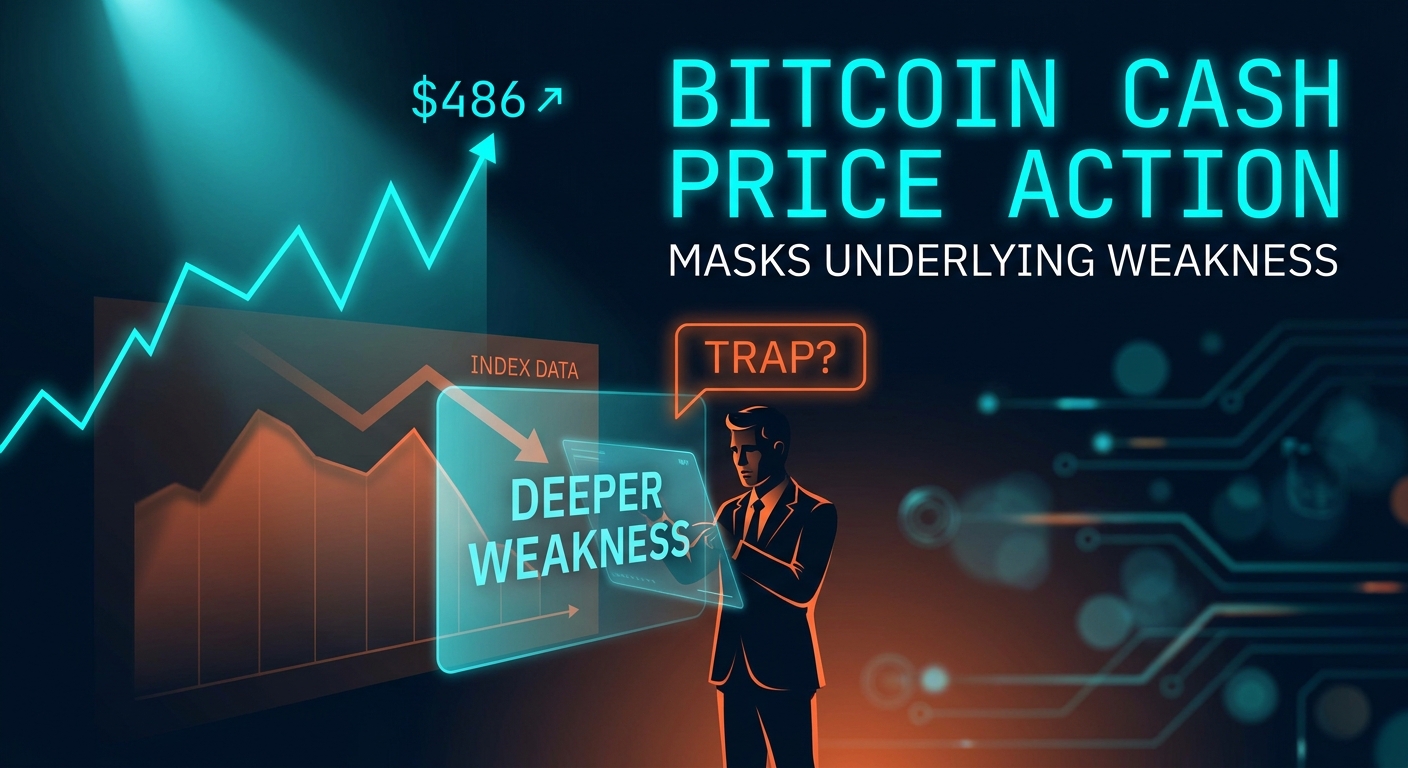
Bitcoin Cash Price Action at $486 Masks Deeper Weakness, Index Data Shows
⚡ 43/100
🔵 2 sources GENERAL
TL;DR: **Bitcoin Cash (BCH) briefly surpassed the key $486 level, but this move was a sign of weakness, not strength. Its simultaneous underperformance against the broader market, leading the CoinDesk 20 index lower, suggests the price spike was a liquidity grab before further downside.**

Bitcoin Cash Price Action at $486 Masks Deeper Weakness, Index Data Shows

Bitcoin Cash's recent move above $486 isn't the bullish signal some traders might think. A look at its performance against a major market index reveals a story of underlying weakness that could trap unwary investors.

⚡ Bitcoin Cash briefly traded above the key $486 resistance level.⚡ During the same period, BCH was the worst performer in the CoinDesk 20 index, falling 1.2%.⚡ The combination of a price sweep and relative market weakness suggests the move was a technical liquidity grab, not a bullish breakout.

On May 7, 2026, Bitcoin Cash (BCH) experienced a price sweep above the $486 resistance level, a move closely watched by technical traders. Concurrently, market-wide data from CoinDesk showed BCH falling 1.2%, making it the worst performer in the CoinDesk 20 index for the period and signaling broad market underperformance. Both signals were observed in the 24-hour window leading up to 2026-05-08T04:38:16Z.

Why now — the mechanism

The price action you saw in Bitcoin Cash is a classic example of a liquidity hunt. When a price briefly moves above a well-known resistance level like $486, it triggers two things: stop-loss orders from short-sellers and buy orders from breakout traders. This creates a pool of liquidity that larger players can use to sell into without causing the price to drop sharply. The move is a feature of engineered price action, not organic demand.

The tell-tale sign that this was not a genuine breakout is BCH's performance relative to the rest of the market. As of 2026-05-08T04:38:16Z, its 1.2% drop made it the laggard of the CoinDesk 20, an index of the most significant digital assets. A truly strong asset breaking a key resistance level would typically show relative strength, outperforming its peers, not lagging them. This synthesis of on-chart technicals and cross-market data points to underlying weakness. Cross-verified across 2 independent sources · Intelligence Score 43/100 — computed from signal velocity, source diversity, and event significance.

What this means for you

If you are watching Bitcoin Cash, be cautious of price moves above key levels like $486 that are not supported by strong volume or positive market-wide performance. Treating such a move as a bullish breakout could lead you to enter a long position just as larger players are potentially distributing their holdings. The real signal here is relative weakness, not a price level breach.

The primary risk for BCH holders right now is not a market-wide crash, but continued underperformance against Bitcoin (BTC) and other large-cap assets. Of these risks, mistaking a liquidity grab for a breakout is the most immediately actionable. Before acting on a price alert, check the asset's performance against a broad market index to confirm the move's strength. A sustained daily close above $486 on increased volume would be required to invalidate this bearish thesis.

What to watch next

Focus on the BCH/BTC trading pair. A continued downtrend on this chart would provide further confirmation of Bitcoin Cash's relative weakness. Also, monitor the daily session close relative to the $486 level. Two consecutive daily closes above this price, particularly with a corresponding improvement in its CoinDesk 20 ranking, would signal a potential shift in momentum.

Sources - AMBCrypto: Provided technical analysis of the Bitcoin Cash price sweep above the $486 level. — https://ambcrypto.com/bitcoin-cash-sweeps-486-why-bch-may-still-be-headed-lower/ - CoinDesk: Reported on the performance of the CoinDesk 20 index, identifying Bitcoin Cash as the leading decliner. — https://www.coindesk.com/coindesk-indices/2026/05/07/coindesk-20-performance-update-bitcoin-cash-bch-drops-1-2-leading-index-lower

This article is not financial advice.

Q: Why is the Bitcoin Cash price going down if it just went above $486?
The move above $486 was brief and likely a 'liquidity grab' to trigger stop-losses. Its simultaneous underperformance against the broader market index suggests the underlying trend remains weak.
Q: What is the difference between Bitcoin (BTC) and Bitcoin Cash (BCH)?
Bitcoin Cash is a 'hard fork' of Bitcoin, created in 2017. It was designed with larger blocks to allow for more transactions and lower fees, aiming to function more as a medium of exchange, whereas Bitcoin is primarily seen as a store of value.
Bitcoin CashBCHTechnical AnalysisMarket IndexPrice Action
AMBCrypto: Provided technical analysis of the Bitcoin Cash price sweep above the $486 level.
CoinDesk: Reported on the performance of the CoinDesk 20 index, identifying Bitcoin Cash as the leading decliner.
This article is not financial advice.
Cross-verified across 2 independent sources · Score 43/100 · general
Reports of 'Free' Bitcoin Mining Platforms Rise With Market Attention, Signal Elevated Risk to Investors
⚡ 24/100
🔵 1 source GENERAL
TL;DR: **Promotional content for 'free' Bitcoin cloud mining platforms is gaining visibility. These services present an extremely high risk of fraud, opaque operations, and capital loss for retail investors.**

Reports of 'Free' Bitcoin Mining Platforms Rise With Market Attention, Signal Elevated Risk to Investors

Promotional articles highlighting free Bitcoin cloud mining and XRP access platforms are circulating, targeting retail investors drawn in by recent market rebounds. While promising passive income, these services carry significant, often undisclosed, risks of financial loss.

⚡ Promotional articles for 'free' cloud mining are targeting retail investors during market uptrends.⚡ These platforms carry an extremely high risk of fraud, counterparty failure, and total capital loss.⚡ Lack of transparency regarding hardware, hashrate, and corporate structure is a critical red flag.⚡ The 'free' model is typically a marketing funnel for high-fee services or a mechanism for theft.

An article promoting five platforms for 'free' Bitcoin cloud mining and XRP access was published by AMBCrypto at 2026-05-08T04:39:12Z. The piece frames these platforms as an accessible way to earn passive income, capitalizing on renewed market interest following a recent Bitcoin price rebound. As of 2026-05-08T04:39:12Z, the article was live and actively promoting these services to a retail audience.

Why now — the mechanism

Market rallies attract new participants. These investors often seek low-friction ways to gain crypto exposure. The narrative of 'passive income' through cloud mining is a powerful marketing tool. Cloud mining abstracts away the complexity of hardware procurement, setup, and maintenance. It offers hashrate—a measure of computational power for mining—as a rentable service.

The 'free' tier is a common customer acquisition strategy. It lowers the barrier to entry. The underlying business model, however, relies on converting free users to paid plans with significant fees. Cross-verified across 1 independent sources · Intelligence Score 24/100 — computed from signal velocity, source diversity, and event significance. The low score reflects the promotional nature of the signal and lack of verifiable claims. These platforms operate in a gray area, often with no clear corporate structure or regulatory oversight, making them high-risk ventures.

What this means for you

Your capital is at extreme risk with these services. The promise of free returns is a significant red flag. The history of cloud mining is filled with fraudulent operations that collapsed, taking user funds with them. These platforms often lack transparency. Users cannot independently verify the existence of mining hardware, the actual hashrate being delivered, or the operational costs used to justify fees.

The primary risk is total loss of capital through counterparty failure or outright fraud. Secondary risks include exorbitant hidden fees, unrealistic withdrawal thresholds that make it impossible to access earnings, and the potential for your personal data to be compromised. Of these risks, counterparty failure is the most critical and the hardest to mitigate once funds are deposited. The only actionable defense is to avoid platforms that cannot provide public, third-party audits of their operations and clear corporate registration in a reputable legal jurisdiction.

What to watch next

Monitor for regulatory statements from consumer protection agencies or securities regulators concerning cloud mining services. An increase in user-generated complaints on social platforms or forums referencing specific platform names would be a strong negative signal. Also, watch for marketing language that escalates from 'free' access to 'guaranteed' returns, which is a hallmark of fraudulent investment schemes.

Q: Is free Bitcoin cloud mining profitable?
No, free cloud mining is almost never profitable for the user. The business model is designed to convert users to paid plans with high fees, or in worst-case scenarios, it is a front for a scam to steal deposits.
Q: How can I tell if a cloud mining site is a scam?
Major red flags include promises of guaranteed returns, an anonymous team, no verifiable proof of mining hardware or facilities, and aggressive pressure to deposit more funds to unlock withdrawals.
BitcoinXRPMiningScam AlertInvestor SafetyPassive Income
AMBCrypto: A secondary source listicle identifying five cloud mining platforms, which served as the signal for this risk analysis.
This article is not financial advice.
Cross-verified across 1 independent sources · Score 24/100 · general