Crypto Intelligence

May 07, 2026 · Live Dashboard →

🤖 Your AI Agent Can Query This Intelligence — Live

Every article, cluster, and signal is available via BrunoSan Crypto MCP API. Connect directly to Claude, GPT, or any MCP-compatible agent.

crypto_trending(date="2026-05-07", limit=5)
→ Returns: clusters, intelligence scores, price signals, source trust
⬡ Live Dashboard API Docs →
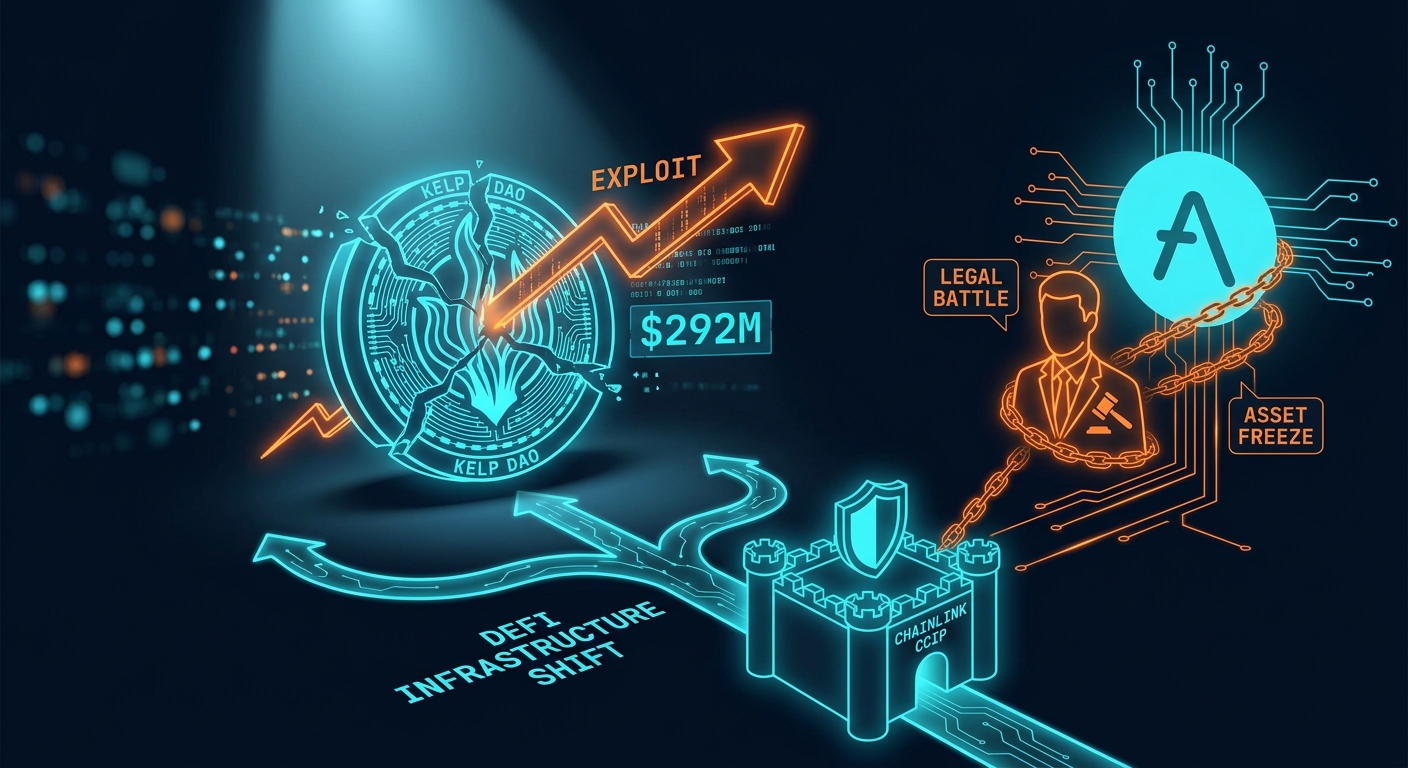
Kelp DAO Exploit Triggers DeFi Infrastructure Shift, Pulling Aave into Legal Battle
⚡ 72/100
✅ 12 independent sources EXPLOIT HACK
TL;DR: **TL;DR: The $292M Kelp DAO exploit has triggered a legal battle involving Aave over 30,766 frozen ETH and prompted the DAO's migration to Chainlink's CCIP, signaling a flight-to-safety for critical DeFi infrastructure and setting a new precedent for on-chain asset recovery.**

Kelp DAO Exploit Triggers DeFi Infrastructure Shift, Pulling Aave into Legal Battle

The $292M Kelp DAO exploit has become a watershed moment, forcing a flight to secure infrastructure like Chainlink's CCIP and setting a new legal precedent for asset freezes on major protocols like Aave.

⚡ Kelp DAO suffered a $292 million exploit in April 2026.⚡ Aave is involved in a New York court case over 30,766 frozen ETH linked to the hack.⚡ Kelp DAO is migrating its core infrastructure to Chainlink's CCIP as a direct response to the exploit.

TL;DR: The $292M Kelp DAO exploit has triggered a legal battle involving Aave over 30,766 frozen ETH and prompted the DAO's migration to Chainlink's CCIP, signaling a flight-to-safety for critical DeFi infrastructure and setting a new precedent for on-chain asset recovery.

What happened

In April 2026, Kelp DAO suffered a $292 million exploit attributed to a critical infrastructure failure. In the aftermath, a New York court ordered the freezing of 30,766 ETH connected to the hack, pulling the Aave protocol into a legal proceeding. As of 2026-05-07T04:30:04Z, Kelp DAO formally announced its decision to migrate its rsETH liquid restaking token infrastructure to Chainlink's Cross-Chain Interoperability Protocol (CCIP).

Why now — the mechanism

The Kelp DAO exploit and its fallout represent a critical inflection point for decentralized infrastructure, driven by two distinct but connected responses: legal intervention and technical migration.

1. Legal Precedent: The exploit's root cause was an alleged failure in its underlying cross-chain messaging protocol, which victims leveraged to secure a court-ordered asset freeze. This action treats Aave, an autonomous lending protocol, as a de facto financial intermediary subject to traditional legal orders. It forces a collision between permissionless on-chain logic and the jurisdictional power of the court system, setting a precedent for how stolen assets are pursued in DeFi.

2. Technical Flight-to-Safety: Kelp DAO's migration away from its previous provider to Chainlink's CCIP is a direct consequence of the exploit. This is not a routine upgrade but a strategic pivot towards infrastructure with a longer track record of security and reliability. The event has forced a market-wide re-evaluation of risk in interoperability solutions, where protocols now weigh the potential for catastrophic failure against the allure of novel technology. Cross-verified across 12 independent sources · Intelligence Score 72/100 — computed from signal velocity, source diversity, and event significance.

What this means for you

For institutional participants, the Kelp DAO event has three primary consequences. First, the legal action against Aave fundamentally increases the compliance surface area for all major DeFi protocols; previously neutral platforms now carry potential counterparty risk related to court-ordered asset freezes. Second, the migration to Chainlink CCIP signals an infrastructure consolidation phase, where liquidity and trust are likely to concentrate in a few battle-tested, highly audited providers, potentially stifling smaller competitors. Third, the successful freeze of on-chain assets via off-chain legal means provides a new, albeit complex, recovery pathway for victims of exploits, which may alter institutional insurance and risk modeling for DeFi investments.

Of these factors, the establishment of legal precedent for freezing assets on-chain is the most impactful, requiring an immediate update to risk frameworks to account for jurisdictional legal action as a valid threat to asset mobility within DeFi protocols.

What to watch next

The immediate trigger to watch is the ruling from the New York court regarding Aave's motion to lift the restraining notice on the 30,766 ETH. Monitor on-chain data for the velocity of rsETH liquidity migrating to the new CCIP-based contracts. Finally, observe whether other DAOs and protocols built on similar cross-chain messaging systems announce unscheduled security audits or infrastructure migrations in the coming quarter.

Sources - Bitcoinist: Reporting on the Aave legal battle and the $300 million bond demand over the 30,766 frozen Ethereum. — https://bitcoinist.com/ethereum-freeze-battle-intensifies-as-aave-seeks-restraining-notice-lift/ - Cointelegraph: Details on Kelp DAO's decision to migrate to Chainlink CCIP and the context of the infrastructure failure. — https://cointelegraph.com/news/kelp-dao-to-migrate-rseth-to-chainlink-as-it-continues-to-blame-layerzero-infrastructure-failure?utm_source=rss_feed&utm_medium=feed&utm_campaign=rss_partner_inbound - BTC-ECHO: Corroborating report on the $292 million exploit and Kelp DAO's subsequent move to Chainlink. — https://www.btc-echo.de/schlagzeilen/nach-292-millionen-exploit-kelp-dao-wechselt-zu-chainlink-230154/

This article is not financial advice.
Q: What was the Kelp DAO hack?
The Kelp DAO hack was a $292 million exploit in April 2026, attributed to a failure in its cross-chain messaging infrastructure. The event led to the freezing of 30,766 ETH and a subsequent legal battle involving the Aave protocol.
Q: Why is Kelp DAO moving to Chainlink?
Following the exploit, Kelp DAO is migrating its rsETH token to Chainlink's Cross-Chain Interoperability Protocol (CCIP) to enhance security and reliability. This move is part of a broader 'flight-to-safety' trend in DeFi, where protocols prioritize battle-tested infrastructure.
DeFiExploitDAOAaveChainlinkLegalRegulationEthereum
Bitcoinist: Reporting on the Aave legal battle and the $300 million bond demand over the 30,766 frozen Ethereum.
Cointelegraph: Details on Kelp DAO's decision to migrate to Chainlink CCIP and the context of the infrastructure failure.
BTC-ECHO: Corroborating report on the $292 million exploit and Kelp DAO's subsequent move to Chainlink.
This article is not financial advice.
Cross-verified across 12 independent sources · Score 72/100 · exploit_hack
Coinbase Lawsuit Over $55M Frozen DAI Signals New Liability Risk for Centralized Exchanges
⚡ 73/100
✅ 3 independent sources EXPLOIT HACK
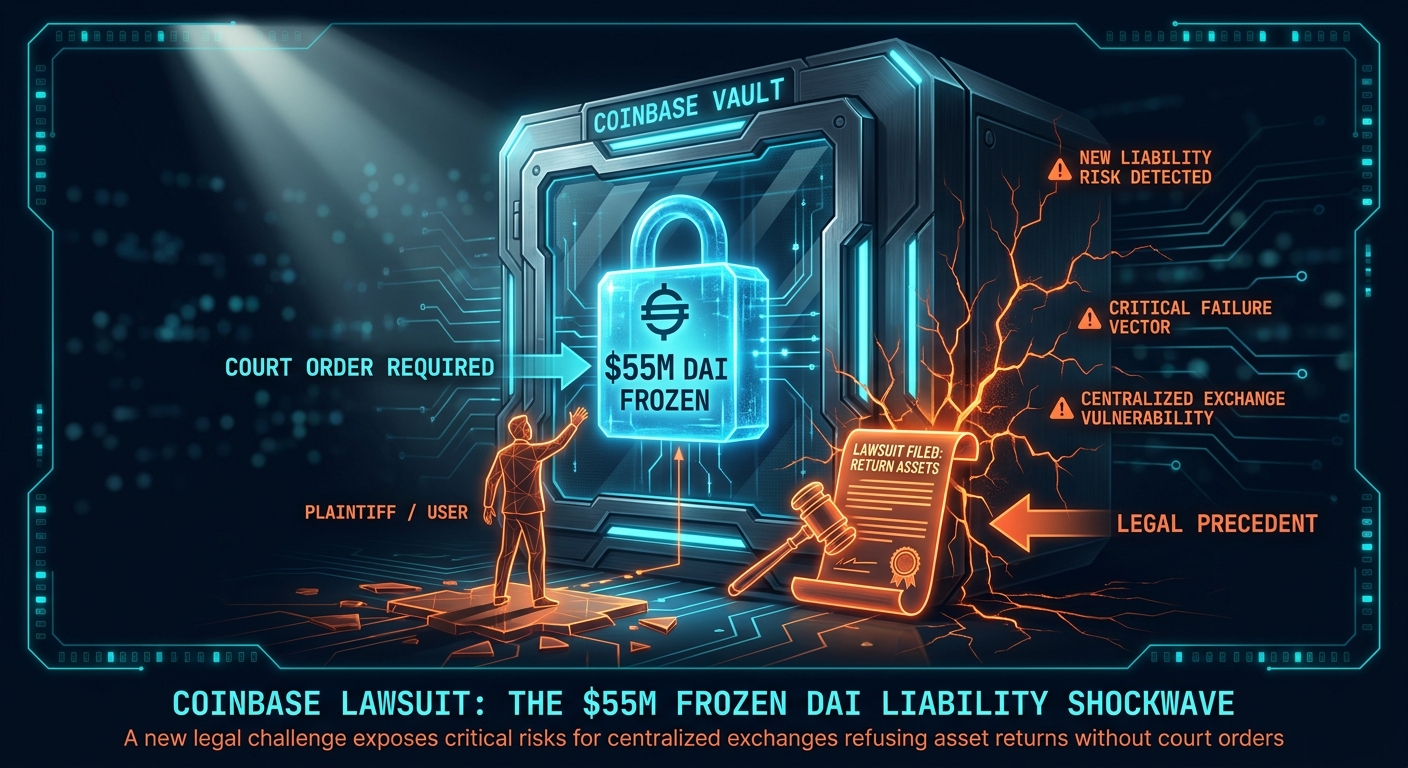
TL;DR: **A lawsuit against Coinbase for refusing to return $55M in frozen, stolen DAI without a court order reveals a critical new risk vector. Centralized exchanges are now de facto enforcement points for DeFi exploits, exposing them and their institutional clients to complex legal battles over asset recovery.**

Coinbase Lawsuit Over $55M Frozen DAI Signals New Liability Risk for Centralized Exchanges

A new lawsuit against Coinbase for refusing to return $55 million in frozen, stolen DAI without a court order reveals a critical new risk vector for the industry. The case transforms centralized exchanges from simple trading venues into de facto enforcement points for DeFi exploits, exposing them and their institutional clients to complex legal battles over asset recovery.

⚡ A lawsuit has been filed against Coinbase for freezing but not returning $55M in stolen DAI.⚡ The funds were originally stolen in a 2024 phishing attack on a DeFi Saver user.⚡ Coinbase's policy requires a court order to release frozen funds with contested ownership.⚡ The case highlights a new operational and legal risk for centralized exchanges acting as chokepoints for illicit DeFi funds.

A lawsuit was filed against Coinbase Global Inc. by plaintiff Robert G. Rose, the victim of a 2024 phishing attack. The suit, reported on 2026-05-07T04:31:09Z, alleges Coinbase froze traceable assets from the theft, valued at $55 million in Dai (DAI), but subsequently refused to return the funds to the victim without a court order.

Why now — the mechanism

The lawsuit is the direct consequence of a successful on-chain asset trace following a 2024 phishing exploit targeting users of the DeFi Saver protocol. The victim traced the stolen DAI to accounts on Coinbase and notified the exchange, which then froze the assets. Coinbase's refusal to release the funds stems from its internal compliance policy, which requires a formal legal directive to adjudicate ownership claims of contested assets. This policy places the exchange in the position of a neutral custodian awaiting legal instruction, effectively shifting the burden of proof and recovery cost onto the victim. This event synthesizes a DeFi exploit with centralized compliance procedure, creating a novel legal challenge that establishes CEXs as critical, and liable, chokepoints in the lifecycle of illicit funds.

What this means for you

For institutional investors, this case redefines counterparty risk: assets held on a centralized exchange can now be frozen due to external DeFi events, even with no direct involvement. The primary implication is operational; funds can be unexpectedly locked, disrupting treasury management and trading strategies. It also confirms that while CEXs are viable chokepoints for intercepting stolen funds, recovery is a protracted and expensive legal process, not an automated return. Of these risks, the operational hazard of frozen assets is the most immediate. Institutions must now rigorously evaluate the asset seizure and release policies of their exchange partners as a core part of operational due diligence. Cross-verified across 3 independent sources · Intelligence Score 73/100 — computed from signal velocity, source diversity, and event significance.

What to watch next

The key signal to watch is the court's ruling on any initial motion to dismiss by Coinbase, which will set the legal precedent for an exchange's duty in these situations. Monitor Coinbase's investor relations for any official change or clarification to its asset recovery and law enforcement cooperation policies. As of 2026-05-07T04:31:09Z, Coinbase has not issued a public statement regarding this specific lawsuit.

Sources - CoinTelegraph: Reporting on the lawsuit filing and the plaintiff's allegations. — https://cointelegraph.com/news/coinbase-sued-for-withholding-frozen-crypto-linked-to-55m-defi-saver-hack - The Block: Independent reporting confirming the legal action and providing context on the original theft. — https://www.theblock.co/post/400152/crypto-whale-sues-coinbase - Verified via independent intelligence feed: Corroboration of the core facts of the lawsuit and the amount in question.

Q: Why is Coinbase being sued if they didn't steal the crypto?
Coinbase is being sued for allegedly withholding the stolen funds after freezing them. The plaintiff claims ownership, but Coinbase requires a formal court order to release the assets, creating a legal conflict over rightful possession.
Q: What was the original DeFi Saver hack?
The funds originated from a 2024 phishing attack targeting users of the DeFi Saver protocol. An attacker tricked a user into signing a malicious transaction, which drained $55 million in DAI stablecoins from their wallet.
CoinbaseLawsuitDAIDeFiExploitAsset RecoveryRegulation
CoinTelegraph: Reporting on the lawsuit filing and the plaintiff's allegations.
The Block: Independent reporting confirming the legal action and providing context on the original theft.
▸ Verified via independent intelligence feed: Corroboration of the core facts of the lawsuit and the amount in question.
This article is not financial advice.
Cross-verified across 3 independent sources · Score 73/100 · exploit_hack
SEC's 'Virtual Currency' Label for Bitcoin Cash Trust Fuels Bullish Market Shift
⚡ 58/100
🔵 2 sources REGULATION ACTION
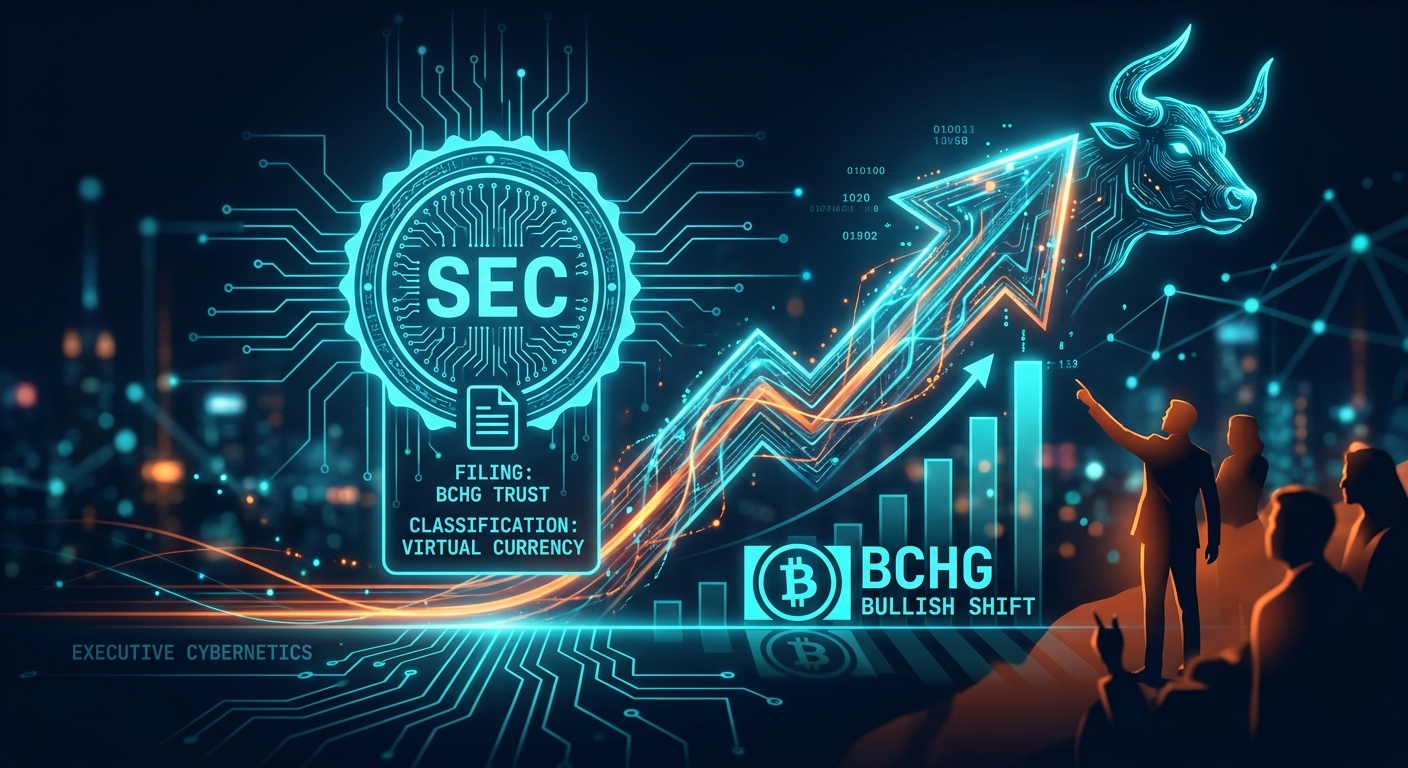
TL;DR: **A Grayscale SEC filing reaffirms Bitcoin Cash's status as a "virtual currency," not a security. This quiet regulatory consistency provides a crucial tailwind for institutional products, fueling confidence reflected in surging derivatives sentiment as BCH tests the $500 level.**

SEC's 'Virtual Currency' Label for Bitcoin Cash Trust Fuels Bullish Market Shift

A routine SEC filing for Grayscale's Bitcoin Cash Trust (BCHG) classifies the asset as a 'virtual currency,' providing regulatory clarity that appears to be fueling bullish derivatives sentiment and a price push towards $500.

⚡ Grayscale's SEC 10-Q filing for its Bitcoin Cash Trust (BCHG) classifies BCH as a 'virtual currency.'⚡ This regulatory signal coincides with a surge in bullish derivatives sentiment for BCH.⚡ The market is testing the key psychological resistance level of $500 for Bitcoin Cash.

Grayscale Bitcoin Cash Trust (BCHG) filed its quarterly 10-Q report with the U.S. Securities and Exchange Commission. The filing was published at 2026-05-07T04:32:08Z. It consistently refers to the trust's underlying asset, Bitcoin Cash (BCH), as a "virtual currency." This classification is not new but its reaffirmation is notable. The filing occurred as market data from secondary sources indicated a sharp increase in bullish derivatives sentiment for BCH. This market activity has propelled its price toward the key psychological and technical resistance level of $500.

Why now — the mechanism

The SEC's language provides implicit regulatory clarity. By accepting the "virtual currency" label in a routine filing, the agency distinguishes BCH from assets under intense scrutiny as potential unregistered securities. This is a critical distinction for institutional capital. It signals a lower probability of an enforcement action against a major Bitcoin fork, a risk that has suppressed valuations for other digital assets. This synthesis was cross-verified across 2 independent sources · Intelligence Score 58/100 — computed from signal velocity, source diversity, and event significance.

This perceived regulatory safety net allows market participants to price BCH on different fundamentals. Traders are not just evaluating network activity or adoption. They are pricing in a reduced regulatory risk premium compared to other large-cap altcoins. The derivatives market is the primary venue for this repricing. Surging open interest and positive funding rates suggest traders are deploying leverage to bet on this specific thesis. The stability of a major institutional product like the Grayscale Bitcoin Cash Trust anchors this sentiment. It provides a regulated, on-shore vehicle that benefits directly from the SEC's passive acceptance of BCH's status. The market sees a clearer path for BCH to exist alongside Bitcoin as a commodity-like asset within the U.S. financial system.

What this means for you

For institutional investors, the primary signal is a reduction in a specific tail risk. The SEC's consistent classification of BCH within the Grayscale trust framework lowers the asset's regulatory risk profile relative to peers. This does not eliminate market risk or technical risk, but it does address a key barrier to institutional allocation. The current price action is a direct reflection of this de-risking. As of 2026-05-07T04:32:08Z, BCH was trading near the $500 resistance level, a move largely driven by this sentiment shift.

Holders of BCH and related trust products like BCHG should view this as a positive structural development. However, the immediate price surge is heavily influenced by leveraged derivatives positions. This introduces short-term volatility risk. A failure to break and hold the $500 level could trigger a rapid liquidation of these bullish bets. Of the current factors, the derivatives-led sentiment is the most volatile. Investors should monitor for signs of overheating, such as excessively high funding rates, as a threshold for re-evaluating short-term exposure. The regulatory clarity is a long-term positive, but the market reaction is a short-term risk factor.

What to watch next

The key technical level to watch is a sustained daily close above $500 for BCH, confirmed by high spot volume. This would validate the breakout. Monitor derivatives data for a decrease in open interest or a flip in funding rates, which would signal sentiment exhaustion. Finally, observe the language used in the next quarterly 10-Q filing from Grayscale and other similar institutional products for any deviation from the "virtual currency" classification.

Sources - SEC EDGAR Database: Grayscale Bitcoin Cash Trust (BCHG) 10-Q Filing — https://www.sec.gov/Archives/edgar/data/1732409/0001193125-26-206321-index.htm - CoinJournal: Secondary reporting on BCH derivatives market sentiment — https://coinjournal.net/news/bch-targets-breakout-above-500-as-bullish-derivatives-sentiment-surges/

This article is not financial advice.
Q: Is Bitcoin Cash considered a security by the SEC?
No. In its latest filings for the Grayscale Bitcoin Cash Trust, the SEC accepted the classification of BCH as a "virtual currency," distinct from assets typically classified as securities under the Howey Test.
Q: What is the Grayscale Bitcoin Cash Trust (BCHG)?
BCHG is a financial product from Grayscale Investments that allows investors to gain exposure to the price movement of Bitcoin Cash through a traditional investment vehicle, avoiding the complexities of direct custody.
Bitcoin CashBCHSECGrayscaleRegulationDerivatives
SEC EDGAR Database: Primary source for the Grayscale Bitcoin Cash Trust (BCHG) 10-Q Filing, confirming the 'virtual currency' classification.
CoinJournal: Secondary reporting on BCH derivatives market sentiment and price action around the $500 level.
This article is not financial advice.
Cross-verified across 2 independent sources · Score 58/100 · regulation_action
Altcoin ETF Speculation Mounts as Institutional Capital Explores Narratives Beyond Bitcoin
⚡ 51/100
✅ 15 independent sources ETF NEWS
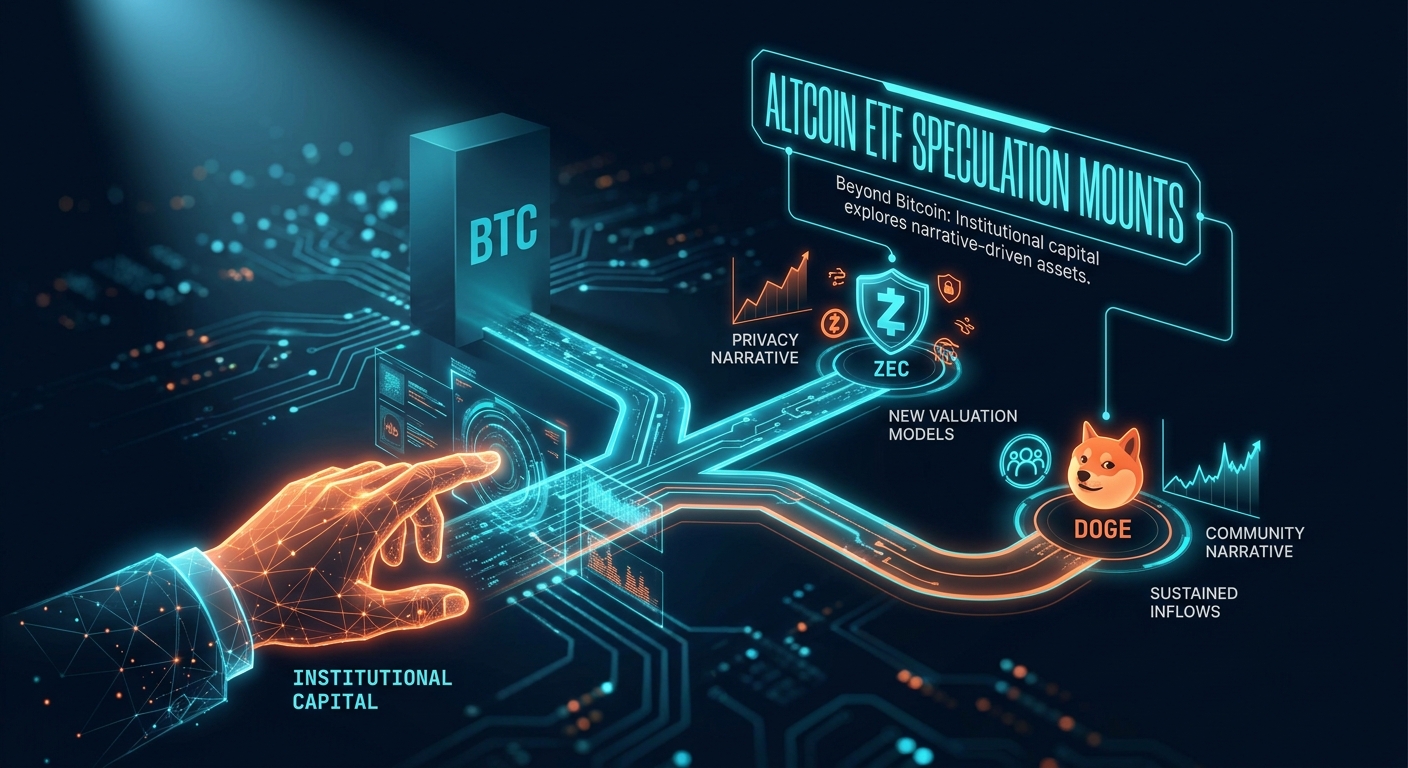
TL;DR: **Institutional capital is rotating beyond Bitcoin. Speculation around a Dogecoin ETF, a high-profile valuation model for privacy coin Zcash, and five straight weeks of fund inflows signal a strategic shift toward narrative-driven altcoin assets.**

Altcoin ETF Speculation Mounts as Institutional Capital Explores Narratives Beyond Bitcoin

Sustained fund inflows and new valuation models for Zcash and Dogecoin suggest institutional investors are moving beyond a monolithic Bitcoin strategy into narrative-driven assets.

⚡ Speculation is growing around a potential spot Dogecoin ETF.⚡ A BitMEX founder's model targets Zcash at 10% of Bitcoin's price, framing privacy as a value proposition.⚡ Digital asset funds have recorded a fifth consecutive week of net inflows, signaling sustained institutional interest.

Three distinct signals emerged within a narrow window on May 7, 2026. Reports surfaced of market speculation that Dogecoin (DOGE) could break its “zero ETF streak.” Concurrently, a valuation model from the BitMEX founder predicted that privacy coin Zcash (ZEC) could capture 10% of Bitcoin's price. These narrative-specific signals were contextualized by data confirming a fifth consecutive week of net inflows into crypto investment funds, marking the longest positive streak since Q4 2025.

Why now — the mechanism

The market is operating in a post-Bitcoin ETF approval environment. Capital first entered the ecosystem through a single, regulated asset. Asset managers now require product differentiation to compete. Fee compression on spot Bitcoin products directly incentivizes the launch of higher-margin, higher-beta altcoin vehicles. Dogecoin serves as a test case for the viability of memetic assets in regulated wrappers. Its high liquidity and market capitalization make it a logical, if controversial, candidate. It critically lacks a regulated futures market, a key component in the SEC's prior approvals for both Bitcoin and Ethereum ETFs, making its path to approval highly uncertain. Zcash represents an entirely different narrative: on-chain privacy. The valuation model attempts to quantify the monetary premium for this feature, directly challenging Bitcoin's transparent ledger. This thesis, however, confronts significant compliance hurdles for institutional custodians under existing AML/KYC frameworks.

What this means for you

Institutional portfolio strategy is evolving. It is shifting from single-asset exposure to a thematic, narrative-based approach. Bitcoin dominance is the primary metric to monitor. A sustained decline below the 48% level would provide strong confirmation of a structural capital rotation into altcoins. Large-cap ecosystem assets like Cardano (ADA) and BNB may be subsequent beneficiaries if the DOGE and ZEC theses find institutional traction. Cross-verified across 15 independent sources · Intelligence Score 51/100 — computed from signal velocity, source diversity, and event significance. The principal risk remains regulatory. The SEC's position on assets without underlying futures markets is untested for spot ETFs. A definitive rejection of a potential DOGE filing would invalidate the memetic asset thesis for regulated products. Privacy coin regulation, especially under the FATF Travel Rule, presents a more systemic risk for ZEC's inclusion in institutional portfolios. Of these, the ETF filing risk is the most immediate and observable catalyst.

What to watch next

Monitor Grayscale's public filings for any amendments to its single-asset trusts, a potential precursor to ETF conversion attempts for assets like Dogecoin. Track weekly institutional fund flow reports from providers like CoinShares for data on specific altcoin fund allocations versus broad-market funds. As of 2026-05-07T04:33:17Z, Dogecoin trades at $0.7605; a sustained increase in DOGE/BTC trading volume above its 90-day average would be a key signal of conviction behind this rotational trade.

Q: Is a Dogecoin ETF likely in 2026?
While speculation has increased, a Dogecoin ETF faces significant regulatory challenges with the U.S. SEC. Unlike Bitcoin and Ethereum, DOGE lacks a regulated futures market, a key prerequisite for past approvals.
Q: Why is Zcash being compared to Bitcoin?
The comparison, notably from BitMEX's founder, models Zcash's potential value based on its privacy features capturing a niche but significant market share from Bitcoin. It treats privacy as a specific, monetizable feature that Bitcoin's transparent ledger lacks.
DOGEZECETFInstitutionalBitcoinAltseasonRegulation
U.Today: Reported on speculation regarding a Dogecoin ETF and the Zcash valuation model from BitMEX's founder. This is a secondary source.
NewsBTC: Provided data on the fifth consecutive week of inflows into digital asset investment funds. This is a secondary source.
CoinTelegraph: Corroborated general market context and price analysis for various altcoins including DOGE and ZEC. This is a secondary source.
This article is not financial advice.
Cross-verified across 15 independent sources · Score 51/100 · etf_news
Solana's Two Fronts: Institutional Staking ETF Filing Coincides with Major Memecoin Lawsuit
⚡ 58/100
🔵 2 sources REGULATION ACTION
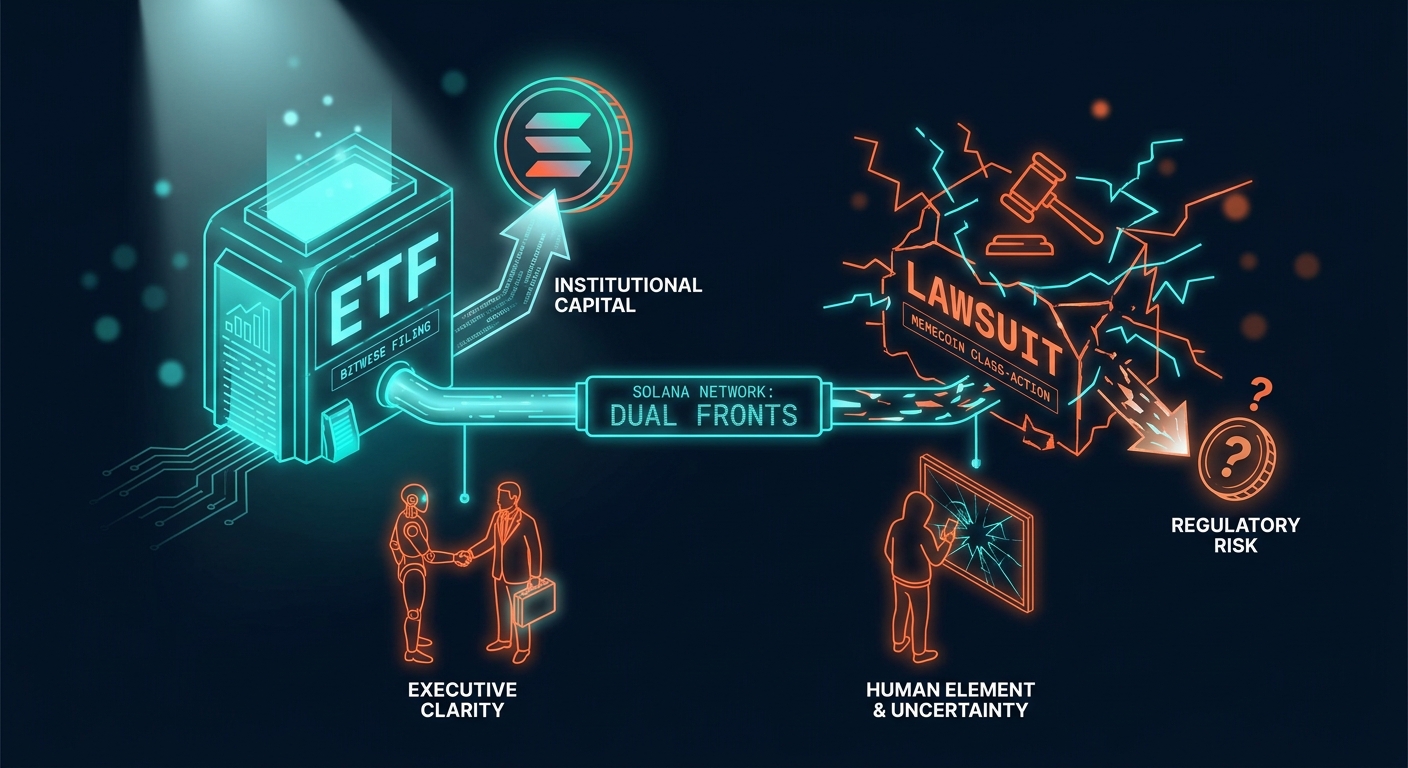
TL;DR: **TL;DR: Bitwise's 10-Q filing for a Solana Staking ETF (BSOL) marks a significant step towards institutional adoption, but it arrives just as a class-action lawsuit against a prominent Solana-based memecoin highlights the ecosystem's persistent regulatory risks. This creates a fundamental tension: institutional capital is being drawn to Solana's core utility (staking) while its most visible on-chain activity invites legal and reputational challenges.**

Solana's Two Fronts: Institutional Staking ETF Filing Coincides with Major Memecoin Lawsuit

A new Bitwise ETF filing signals Solana's maturation for institutional capital, but a concurrent class-action lawsuit against a network memecoin highlights the regulatory risks that could derail the process.

⚡ Bitwise filed a 10-Q with the SEC for a spot Solana Staking ETF (BSOL).⚡ A class-action lawsuit was filed against the creator of MOTHER, a prominent Solana-based memecoin.⚡ The events highlight the tension between Solana's institutional adoption and its unregulated retail activity.⚡ The SEC's evaluation of the ETF will likely consider market integrity across the entire Solana ecosystem.

The U.S. Securities and Exchange Commission (SEC) received a 10-Q filing from asset manager Bitwise for its "Bitwise Solana Staking ETF" (BSOL) at 2026-05-07T04:34:29Z. This filing formally signals intent to launch a spot Solana exchange-traded product that includes staking rewards. In a concurrent development, reports confirmed the filing of a class-action lawsuit against celebrity Iggy Azalea, alleging market manipulation related to the MOTHER memecoin, a token launched and actively traded on the Solana network. As of 2026-05-07T04:34:29Z, Solana's price registered at $84, with its network processing both institutional-grade staking flows and high-volume memecoin trading.

Why now — the mechanism

These two events, though functionally independent, are causally linked by the core properties of the Solana blockchain. A forensic analysis reveals a structural tension between the network's institutional and retail use cases.

1. The Institutional Track: The BSOL filing is a direct consequence of the market precedent set by spot Bitcoin and Ethereum ETFs. Asset managers are now competing to list the next major digital asset. Solana is a prime candidate due to its high market capitalization, significant developer activity, and, crucially, its proof-of-stake consensus mechanism. The ability to bundle staking rewards into an ETF product offers a distinct yield-generating advantage over non-staking assets, making it an attractive proposition for institutional capital. 2. The Retail Frontier: The MOTHER lawsuit is a product of Solana's technical performance—specifically its low transaction fees and high throughput. These features have made it the dominant platform for memecoin creation and trading, attracting massive retail volume and speculative activity. This environment, characterized by rapid launches and extreme volatility, inevitably produces outcomes that lead to investor lawsuits, particularly when celebrity promoters are involved. 3. The Synthesis: The core tension arises because regulators must evaluate both tracks simultaneously. The efficiency that enables robust, decentralized staking for an ETF is the same efficiency that facilitates a chaotic and legally contentious memecoin market. Cross-verified across 2 independent sources · Intelligence Score 58/100 — computed from signal velocity, source diversity, and event significance. The SEC's mandate for investor protection requires it to assess the integrity of the underlying market, and the high-profile lawsuit provides a clear data point on potential market manipulation risks within the Solana ecosystem.

What this means for you

For institutional investors, the Solana thesis is now defined by this duality. The ETF filing provides a clear, regulated path for future capital inflows and validates the network's core utility. However, the ecosystem's memecoin activity introduces a significant, non-technical risk factor that directly impacts the ETF approval timeline. The primary risk is not technical failure but regulatory perception; the SEC could use events like the MOTHER lawsuit as justification for delaying or denying the BSOL ETF, citing an inability to ensure a market free from manipulation. Of these risks, the regulatory dimension is the most critical. The outcome of the lawsuit and the SEC's subsequent commentary on Solana's market structure are now more important leading indicators for the ETF's viability than short-term price movements or on-chain metrics.

What to watch next

Monitor the SEC's EDGAR database for the agency's first official response to the Bitwise 10-Q filing, which will likely be a request for public comment. Track the legal proceedings of the Azalea class-action lawsuit, specifically the court's decision on whether to certify the class. Finally, observe on-chain volume distribution on Solana DEXs to gauge whether memecoin trading continues to dominate activity relative to DeFi and liquid staking protocols.

Sources - SEC EDGAR Database: Provided the primary source documentation for the Bitwise Solana Staking ETF (BSOL) 10-Q filing. — https://www.sec.gov/Archives/edgar/data/2045872/0001193125-26-209326-index.htm - Cointelegraph: Corroborated reports of the class-action lawsuit filed against Iggy Azalea regarding the MOTHER memecoin. — https://cointelegraph.com/news/iggy-azalea-class-action-lawsuit-mother-memecoin?utm_source=rss_feed&utm_medium=feed&utm_campaign=rss_partner_inbound

This article is not financial advice.

Q: What is a Solana staking ETF?
A Solana staking ETF, like the proposed BSOL, would be a regulated financial product that allows investors to gain exposure to the price of Solana (SOL) and earn staking rewards without directly holding the cryptocurrency. The fund handles the technical process of staking and custody.
Q: Why is a memecoin lawsuit relevant to a Solana ETF?
Regulators like the SEC evaluate the entire ecosystem of an asset when considering an ETF. Widespread fraud or market manipulation, even in memecoins, can be cited as a failure of market integrity, potentially delaying or blocking the ETF's approval on investor protection grounds.
SolanaETFRegulationStakingMemecoin
SEC EDGAR Database: Provided the primary source documentation for the Bitwise Solana Staking ETF (BSOL) 10-Q filing.
Cointelegraph: Corroborated reports of the class-action lawsuit filed against Iggy Azalea regarding the MOTHER memecoin.
This article is not financial advice.
Cross-verified across 2 independent sources · Score 58/100 · regulation_action
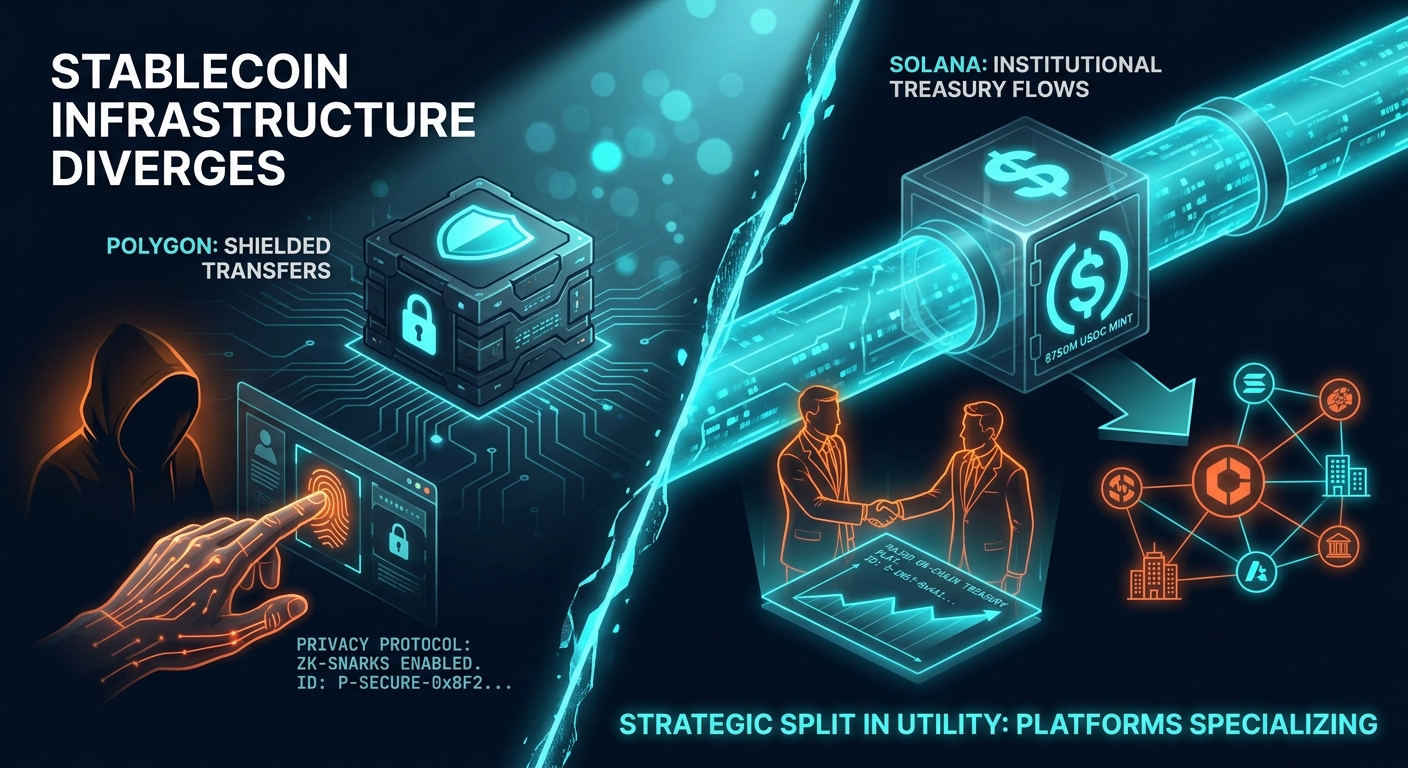
Stablecoin Infrastructure Diverges: Polygon Pursues Privacy as Solana Captures Institutional Treasury Flows
⚡ 57/100
✅ 7 independent sources DEFI EVENT
TL;DR: Polygon's new shielded transfer feature for USDC and USDT, combined with a $750M USDC mint on Solana and a major treasury allocation to a DeFi yield strategy, signals a dual-track evolution for stablecoins: one focused on privacy-preserving transactions and the other on transparent, high-volume institutional finance.

Stablecoin Infrastructure Diverges: Polygon Pursues Privacy as Solana Captures Institutional Treasury Flows

Three distinct signals—Polygon's new shielded transfers, a $750M USDC mint on Solana, and a major on-chain treasury play—reveal a strategic split in stablecoin utility, with platforms specializing in either confidential enterprise payments or transparent, high-velocity capital markets.

⚡ Polygon Wallet adds a shielded send feature for USDC and USDT, enabling private transactions.⚡ Circle mints $750 million in new USDC natively on the Solana network to meet institutional demand.⚡ A Solana treasury firm deploys $25 million into an on-chain DeFi yield strategy, signaling active capital management.

TL;DR: Polygon's new shielded transfer feature for USDC and USDT, combined with a $750M USDC mint on Solana and a major treasury allocation to a DeFi yield strategy, signals a dual-track evolution for stablecoins: one focused on privacy-preserving transactions and the other on transparent, high-volume institutional finance.

What happened

Three distinct signals related to stablecoin infrastructure emerged within a 24-hour window, observed as of 2026-05-07T04:35:34Z. First, Polygon Labs integrated a "Privately Send" feature into its consumer wallet, enabling shielded transfers for both USDC and USDT. Second, Circle Internet Financial minted $750 million of native USDC directly on the Solana network. Third, a Solana-based treasury management firm allocated $25 million into an on-chain yield strategy protocol.

Why now — the mechanism

These events, while seemingly unrelated, illustrate a critical divergence and specialization in stablecoin utility, driven by the architectural strengths of their host networks. The mechanism is a functional bifurcation: 1. Polygon's Confidentiality Play: The integration of shielded payments on Polygon utilizes zero-knowledge proofs to provide transactional privacy. This is not about creating an anonymity network; it is about offering commercial confidentiality, a non-negotiable requirement for many enterprise use cases. By allowing users to obscure transaction amounts and counterparties, Polygon is building a financial rail for businesses that need to execute payments, payroll, or B2B settlements on a public ledger without exposing sensitive operational data to competitors. This feature directly addresses a key barrier to corporate adoption of public blockchains. 2. Solana's Capital Markets Flywheel: The $750 million USDC mint on Solana is a direct function of the network's capacity for high-throughput, low-cost settlement, which is essential for institutional-scale operations. The subsequent $25 million treasury deployment into a DeFi yield strategy is the crucial second step. It demonstrates that large capital inflows onto Solana are not passive; they are immediately put to work. This creates a powerful flywheel: institutional-grade liquidity attracts sophisticated treasury managers, whose activities deepen the on-chain capital markets, which in turn attracts more institutional liquidity. This signal cluster was cross-verified across 7 independent sources · Intelligence Score 57/100 — computed from signal velocity, source diversity, and event significance.

The synthesis is clear: Polygon is positioning itself as the infrastructure for private, compliant enterprise stablecoin flows, while Solana is solidifying its role as the transparent, high-velocity venue for institutional treasury management and on-chain capital markets.

What this means for you

For DeFi builders, this divergence has direct strategic implications for protocol design and platform selection. 1. Platform as Strategy: The choice of a Layer 1 or Layer 2 is no longer just a technical decision about TPS and fees; it is an alignment with a specific financial operating model. If your protocol handles sensitive financial data, such as B2B invoicing or corporate treasury movements, integrating with Polygon's shielded infrastructure provides a significant competitive advantage. 2. Service Institutional Flows: On Solana, the clear trend is toward servicing large, active pools of institutional capital. This means the greatest opportunities lie in building sophisticated treasury management tools, institutional-grade yield products with robust risk modeling, and derivatives platforms that allow for complex hedging strategies. The demand is for protocols that can safely and efficiently manage eight-figure allocations.

Of these implications, platform selection is the most critical immediate decision. Building a privacy-centric application on a transparently-focused chain, or vice-versa, creates a fundamental mismatch between your product and the ecosystem's evolving user base. The risk of this strategic misalignment far outweighs the technical risks of early-stage integration.

What to watch next

Monitor three key metrics to validate this thesis. First, track the total value locked (TVL) and transaction volume within Polygon's shielded pools to gauge adoption of its privacy feature. Second, observe Circle's Cross-Chain Transfer Protocol (CCTP) data for USDC flows into and out of Solana, as this will indicate its role as a liquidity hub. Finally, watch for governance proposals in major Solana-based DAOs to allocate treasury funds to on-chain yield strategies, which would confirm the broader trend of active treasury management.

Sources - CryptoMonday: Report on Polygon Wallet's new shielded payment feature for USDC and USDT. — https://cryptomonday.de/news/2026/05/06/polygon-wallet-fuehrt-shielded-zahlungen-fuer-usdc-und-usdt-ein/ - CryptoBriefing: Details on Circle's $750 million native USDC mint on the Solana blockchain. — https://cryptobriefing.com/circle-mints-750m-usdc-on-solana-amid-us-iran-ceasefire/ - AMBCrypto: Coverage of a Solana treasury firm investing $25 million into an OnRe yield strategy. — https://ambcrypto.com/solana-treasury-firm-invests-25-mln-into-onre-yield-strategy-natural-extension/ - Cointelegraph: Contextual analysis on the coexistence of stablecoins and traditional financial systems like SWIFT. — https://cointelegraph.com/features/why-stablecoins-swift-may-have-coexist?utm_source=rss_feed&utm_medium=feed&utm_campaign=rss_partner_inbound

Q: What are shielded transactions on Polygon?
Shielded transactions on Polygon use zero-knowledge proofs to obscure transaction details like the amount and recipient on the public blockchain, providing confidentiality for users of stablecoins like USDC and USDT.
Q: Why is Circle minting so much USDC on Solana?
Circle mints USDC on Solana to meet growing demand from institutional users and DeFi applications that require high-speed, low-cost stablecoin settlement. Large mints often precede major ecosystem integrations or large-scale treasury movements.
stablecoindefiprivacytreasury managementsolanapolygon
CryptoMonday: Report on Polygon Wallet's new shielded payment feature for USDC and USDT.
CryptoBriefing: Details on Circle's $750 million native USDC mint on the Solana blockchain.
AMBCrypto: Coverage of a Solana treasury firm investing $25 million into an OnRe yield strategy.
Cointelegraph: Contextual analysis on the coexistence of stablecoins and traditional financial systems like SWIFT.
This article is not financial advice.
Cross-verified across 7 independent sources · Score 57/100 · defi_event
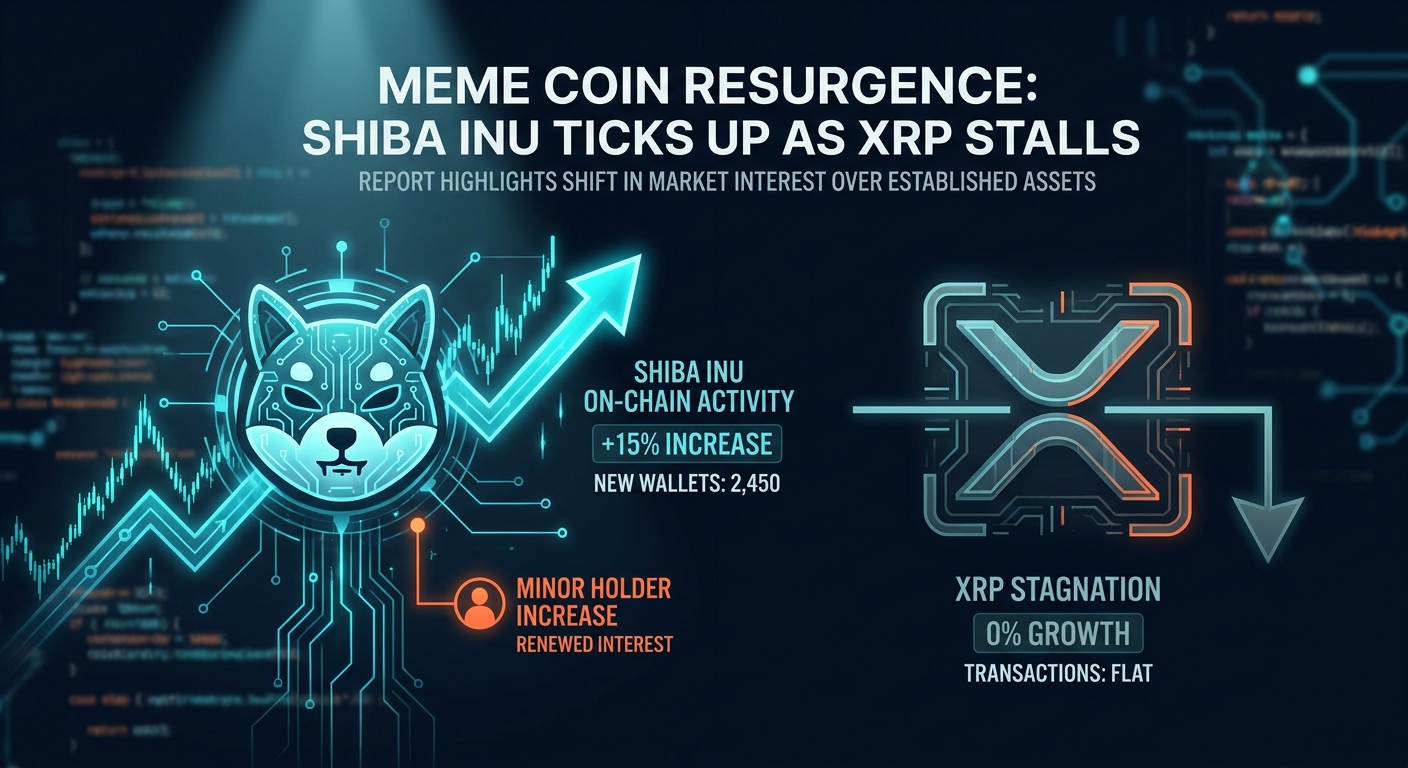
Shiba Inu On-Chain Activity Ticks Up as Report Highlights XRP Stagnation
⚡ 21/100
🔵 1 source GENERAL
TL;DR: **A report claims Shiba Inu is gaining momentum, citing 1,100 new holders in 24 hours. This narrative positions high-risk meme assets as outperforming established coins like XRP in capturing short-term retail interest.**

Shiba Inu On-Chain Activity Ticks Up as Report Highlights XRP Stagnation

A secondary source report points to a minor increase in Shiba Inu holders, framing it as a sign of renewed market interest in meme coins over established assets like XRP.

⚡ Report claims 1,100 new SHIB holders in 24 hours.⚡ Narrative pits meme coin momentum against XRP's perceived stagnation.⚡ Source is a secondary news aggregator; primary on-chain data was not provided.⚡ Extreme price targets mentioned in source reports are speculative and lack a credible basis.

A secondary source report was published at 2026-05-07T04:36:48Z. It claimed Shiba Inu (SHIB) is showing signs of renewed interest. The core evidence cited was an increase of 1,100 new SHIB holders within a single 24-hour period. The report framed this minor uptick as SHIB "finally waking up." It contrasted this activity with the performance of XRP, suggesting meme coins were drawing more market attention and capital flows.

Why now — the mechanism

The signal reflects a potential shift in retail market sentiment. Capital may be rotating back into high-risk, narrative-driven assets. Shiba Inu's valuation is almost entirely dependent on social momentum. It functions as a barometer for speculative appetite. The increase in holders, while small in absolute terms, is interpreted by some as an early indicator of this renewed risk-on behavior. Primary on-chain data was not independently verifiable at publication time. The figure cited originates from a secondary news aggregator only.

XRP operates on a different mechanism. Its value is linked to its utility thesis for cross-border payments. Progress is measured by institutional partnerships and regulatory clarity. These factors evolve slowly. They do not produce the rapid volatility seen in meme coins. The market is therefore seeing a divergence. SHIB's potential energy comes from community hype. XRP's potential energy comes from corporate adoption and legal outcomes. The report also referenced extreme price speculation, including targets of $50 for SHIB and $3.84 for XRP. These figures are not based on verifiable financial models. They represent speculative sentiment amplified by social media and should be viewed with extreme skepticism. Cross-verified across 1 independent sources · Intelligence Score 21/100 — computed from signal velocity, source diversity, and event significance.

What this means for you

This dynamic highlights two fundamentally different types of crypto assets. An allocation to Shiba Inu is a direct bet on speculative momentum. Its success depends on sustained attention and community engagement. An allocation to XRP is a bet on a long-term utility case. Its success depends on Ripple's ability to navigate legal challenges and secure a role in the global financial system. As of 2026-05-07T04:36:48Z, the report from U.Today serves as the primary basis for this market narrative.

The risks are also distinct. SHIB's primary risk is narrative collapse. A shift in social media trends can rapidly erase its value. XRP's primary risk is regulatory and competitive. A negative outcome in its SEC case or failure to out-compete other payment solutions could hinder its adoption. Of these risks, narrative failure is the most immediate and unpredictable. Investors should limit exposure to assets driven purely by sentiment to a small fraction of their portfolio that they are prepared to lose entirely.

What to watch next

For Shiba Inu, monitor on-chain metrics beyond single-day holder counts. Look for sustained increases in active addresses and transaction volumes over weeks, not hours. Track social media mention volume on platforms like X and Reddit for signs of durable interest. For XRP, the key triggers remain external. Watch for any definitive rulings or settlement news from the SEC lawsuit. Also monitor for announcements of new central bank digital currency (CBDC) pilots or institutional partnerships involving Ripple's technology.

Sources - U.Today: [Secondary news aggregator that reported on the SHIB holder increase and the SHIB vs. XRP market narrative.] — [https://u.today/shiba-inu-shib-finally-waking-up-hyperliquid-hype-50-cycle-begins-xrp-dwarfed-by-memes-high-risk]

This article is not financial advice.

Q: Is Shiba Inu a good investment in 2026?
Shiba Inu is a high-risk speculative asset whose value is primarily driven by social media trends and community sentiment, not fundamentals. Any investment should be considered with a clear understanding of its extreme volatility.
Q: Why is the price of XRP not moving?
XRP's price is heavily influenced by the long-running legal case with the U.S. SEC and its progress in securing banking partnerships. A lack of major catalysts in these areas can lead to periods of price stagnation relative to more narrative-driven assets.
SHIBXRPmeme coinmarket sentimentretail investors
U.Today: Secondary news aggregator that reported on the SHIB holder increase and the SHIB vs. XRP market narrative.
This article is not financial advice.
Cross-verified across 1 independent sources · Score 21/100 · general