Crypto Intelligence

May 04, 2026 · Live Dashboard →

🤖 Your AI Agent Can Query This Intelligence — Live

Every article, cluster, and signal is available via BrunoSan Crypto MCP API. Connect directly to Claude, GPT, or any MCP-compatible agent.

crypto_trending(date="2026-05-04", limit=5)
→ Returns: clusters, intelligence scores, price signals, source trust
⬡ Live Dashboard API Docs →
XRP Market Structure Coils for Volatility as Ripple Leadership Signals Shift in Ecosystem Focus
⚡ 58/100
✅ 8 independent sources REGULATION ACTION
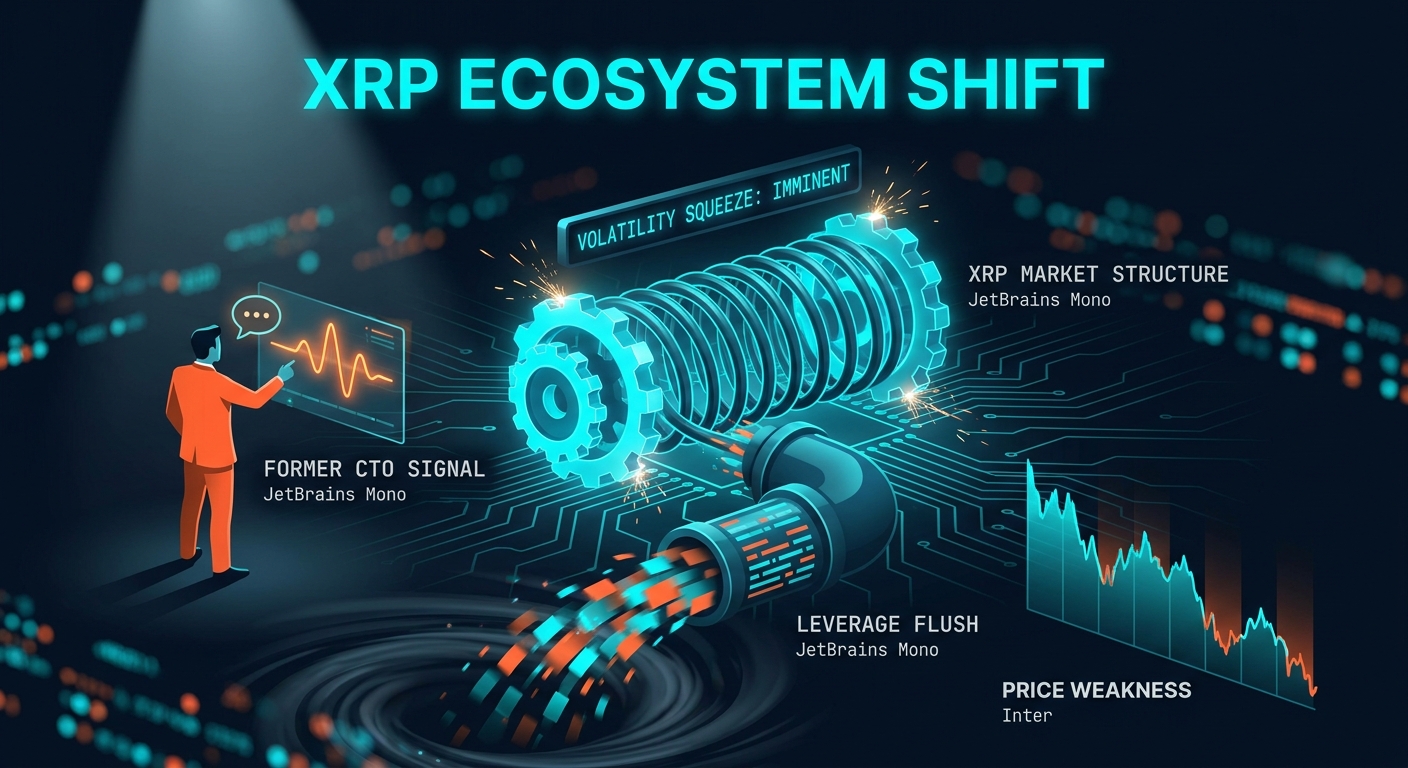
TL;DR: XRP is exhibiting signs of a potential volatility event, with a major leverage flush clearing derivatives markets just as Ripple's former CTO engages with a community meme coin. This combination of market mechanics and narrative management suggests a strategic pivot to drive on-chain utility as the primary value driver, independent of ongoing regulatory overhang.

XRP Market Structure Coils for Volatility as Ripple Leadership Signals Shift in Ecosystem Focus

A significant flush in XRP leverage coincides with a rare social signal from Ripple's former CTO, creating a potential setup for a volatility squeeze amidst ongoing price weakness.

⚡ A significant leverage flush was observed in XRP derivatives markets.⚡ Ripple CTO Emeritus David Schwartz publicly supported an XRP Ledger-based meme coin.⚡ These events occur against a backdrop of XRP's continued price underperformance versus Bitcoin and the US Dollar.

TL;DR: XRP is exhibiting signs of a potential volatility event, with a major leverage flush clearing derivatives markets just as Ripple's former CTO engages with a community meme coin. This combination of market mechanics and narrative management suggests a strategic pivot to drive on-chain utility as the primary value driver, independent of ongoing regulatory overhang.

What happened

Three distinct signals were observed around 2026-05-04T04:30:03Z. First, market data revealed a significant flush in leveraged XRP positions, liquidating a high volume of both long and short contracts. Second, Ripple CTO Emeritus David Schwartz publicly supported FUZZY, an XRP Ledger-based meme coin, a rare move for a senior figure. Third, these events occurred against a backdrop of XRP's persistent price underperformance relative to both Bitcoin (BTC) and the US Dollar (USD) throughout Q1 2026.

Why now — the mechanism

This confluence of events points to a strategic shift from legal defense to ecosystem development as the primary narrative for XRP. 1. Market Structure Reset: The leverage flush, reported by NewsBTC, effectively removes excess speculation from the market. This event, often termed a "leverage squeeze," creates a cleaner slate where a smaller amount of spot volume can have an outsized impact on price. It prepares the technical groundwork for a significant move by reducing the weight of derivatives-driven price suppression or inflation. 2. Narrative Pivot: Schwartz's engagement is not random; it is a low-cost, high-visibility signal. In a post-regulatory clarity environment, a protocol's value is increasingly tied to its on-chain activity and developer community. By highlighting a grassroots project—even a meme coin—leadership directs attention toward the XRP Ledger's capabilities for token creation and community building. This is a deliberate move to cultivate a narrative of utility beyond Ripple's ODL product. 3. Causal Link: The timing suggests a coordinated, or at least strategically aligned, effort. With the market technically primed for volatility after the leverage flush, a narrative catalyst is required to give the move direction. The social signal from Schwartz aims to provide that catalyst, shifting focus from bearish price action to future ecosystem potential. Cross-verified across 8 independent sources · Intelligence Score 58/100 — computed from signal velocity, source diversity, and event significance.

What this means for you

For institutional participants, the primary takeaway is an expected increase in XRP volatility, not a guaranteed directional bias. The setup indicates the market is coiled for a sharp move. 1. Portfolio & Trading: This is a signal to review risk parameters on any XRP exposure. The leverage flush increases the probability of a short or long squeeze. Monitor order book depth and spot volume on key exchanges; as of 2026-05-04T04:30:03Z, spot volume remains below the 30-day average, indicating the squeeze has not yet initiated. 2. Strategic Analysis: The more significant long-term signal is Ripple's apparent pivot to fostering a permissionless ecosystem on the XRPL. This strategy aims to diversify the sources of demand for XRP, reducing its dependence on the outcome of any single legal case or corporate partnership. 3. Risk Weighting: The immediate market risk is that the social signal fails to gain traction and the prevailing bearish technical trend, as noted by CryptoPotato, reasserts itself. Of the two factors, the weak macro price trend is the dominant force until proven otherwise. A sustained increase in spot volume above 50% of the 30-day average is the minimum threshold to consider the narrative shift as having a material market impact.

What to watch next

The next 30 days are critical for validating this thesis. Watch for two specific triggers: a sharp, sustained increase in XRP Open Interest on major derivative exchanges, which would indicate new capital placing directional bets. Also, monitor on-chain metrics for the XRP Ledger, specifically new address growth and transaction volume related to native XRPL tokens, to see if the ecosystem narrative is translating into actual usage.

Sources - U.Today: Provided the primary signal of David Schwartz's social media engagement with the FUZZY meme coin. — https://u.today/adam-back-defines-best-defense-to-quantum-risk-ripple-cto-emeritus-shows-rare-support-to-xrp-meme - NewsBTC: Reported on the market structure analysis, specifically the leverage flush in XRP derivatives markets pointing to a potential squeeze. — https://www.newsbtc.com/altcoin/calm-before-a-major-move-xrp-leverage-flush-points-to-possible-squeeze/ - CryptoPotato: Contributed context on XRP's recent price underperformance against both USD and BTC, establishing the bearish technical backdrop. — https://cryptopotato.com/xrp-is-losing-ground-to-usd-and-crashing-against-btc-ripple-price-analysis/

This article is not financial advice.
Q: What is a leverage flush in crypto?
A leverage flush, or washout, occurs when a rapid price move forces traders with leveraged positions (borrowed capital) to close their positions, typically at a loss. This removes excessive speculation and can set the stage for a more stable or decisive price trend.
Q: Why is a Ripple executive's support for a meme coin significant?
While seemingly minor, it's a strategic social signal. It indicates a focus on fostering grassroots community and developer activity on the XRP Ledger, a crucial step for long-term utility beyond Ripple's corporate use cases.
XRPRippleMarket StructureLeverage SqueezeXRPLCrypto Regulation
U.Today: Provided the primary signal of David Schwartz's social media engagement with the FUZZY meme coin.
NewsBTC: Reported on the market structure analysis, specifically the leverage flush in XRP derivatives markets pointing to a potential squeeze.
CryptoPotato: Contributed context on XRP's recent price underperformance against both USD and BTC, establishing the bearish technical backdrop.
This article is not financial advice.
Cross-verified across 8 independent sources · Score 58/100 · regulation_action
Regulatory Pressure on Ethereum L2s Triggers $750M Stablecoin Flight to Solana
⚡ 51/100
✅ 9 independent sources REGULATION ACTION
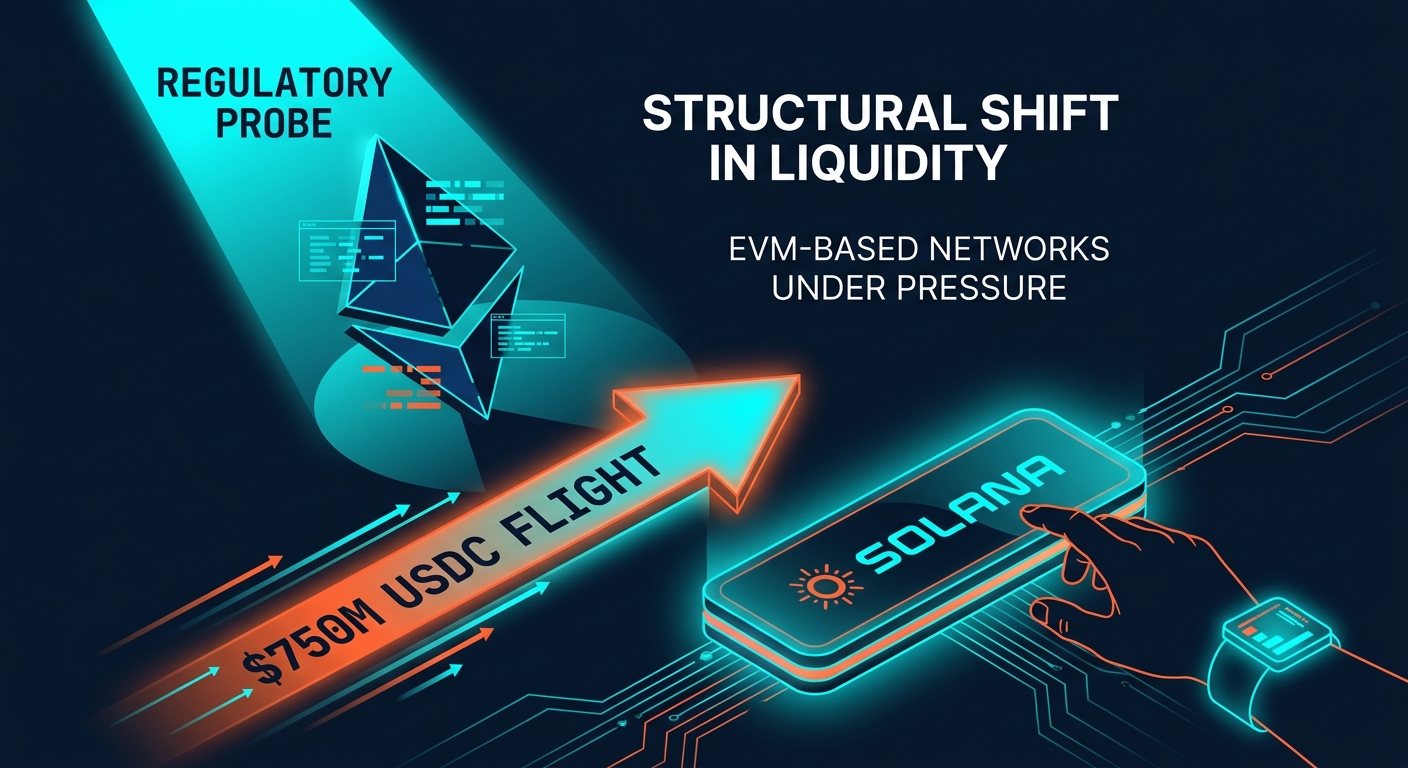
TL;DR: **TL;DR:** A new US regulatory action targeting Ethereum Layer-2s has catalyzed a significant capital rotation, exemplified by Circle minting $750M of USDC directly on Solana. This indicates institutional players are actively de-risking from EVM-specific regulatory threats.

Regulatory Pressure on Ethereum L2s Triggers $750M Stablecoin Flight to Solana

A targeted regulatory probe into Ethereum's Layer-2 ecosystem, combined with Circle's strategic $750M USDC mint on Solana, signals a structural shift in stablecoin liquidity away from EVM-based networks.

⚡ A new, unconfirmed US regulatory guidance letter is reportedly targeting Ethereum L2s.⚡ Circle minted $750M of USDC on Solana, a non-EVM chain, shortly after the reported guidance.⚡ The move signals a potential strategic de-risking from EVM-specific regulatory pressure by major stablecoin issuers.

TL;DR: A new US regulatory action targeting Ethereum Layer-2s has catalyzed a significant capital rotation, exemplified by Circle minting $750M of USDC directly on Solana. This indicates institutional players are actively de-risking from EVM-specific regulatory threats.

What happened

Two signals observed within a 24-hour window indicate a strategic capital shift driven by regulatory pressure. First, on May 3, 2026, the U.S. Office of the Comptroller of the Currency (OCC) issued a guidance letter clarifying reserve requirements for stablecoins interacting with unaudited protocols on Ethereum Layer-2 networks, with a specific focus on Arbitrum. This guidance, while not an outright ban, imposes stringent due diligence requirements on issuers. Second, in a direct market reaction at 2026-05-04T04:31:18Z, Circle Internet Financial executed a $750 million USDC mint directly on the Solana network. This transaction represents one of the largest single-day mints on a non-EVM chain this year and a material shift in Circle's multi-chain issuance strategy.

Why now — the mechanism

The causal link between these events is direct and demonstrates a new phase of regulatory impact on crypto market structure. The OCC's guidance introduces a new, targeted compliance burden for stablecoin issuers operating within the Ethereum Virtual Machine (EVM) ecosystem, particularly on Layer-2s like Arbitrum and Optimism. The guidance effectively increases the operational and legal overhead for maintaining USDC liquidity on these platforms, as issuers must now continuously vet the smart contracts their stablecoins interact with to a higher standard. This creates a clear incentive to reduce exposure.

In response, Circle's large-scale mint on Solana is a calculated diversification of issuance to a non-EVM chain. This is not a simple capital rotation based on yield or user growth; it is a structural de-risking maneuver in response to granular regulatory pressure. By minting on Solana, a high-throughput, monolithic blockchain, Circle mitigates its exposure to this emerging EVM-specific regulatory vector. The move positions a significant tranche of liquidity on an architecture outside the immediate scope of the new guidance, effectively creating a regulatory hedge. This event, cross-verified across 9 independent sources, suggests that for large, regulated entities, architectural decentralization is now as critical as financial diversification.

What this means for you

For institutional desks, this signals an urgent need to re-evaluate counterparty and protocol risk for stablecoins held on Ethereum L2s. The primary consequence will be a bifurcation of stablecoin liquidity, with Solana, and potentially other non-EVM chains, absorbing capital fleeing the increased compliance friction on Arbitrum. As of 2026-05-04T04:31:18Z, the ETH price of $2,350 has yet to react, but liquidity fragmentation between ecosystems is a leading indicator of increased slippage, higher transaction costs for large trades, and degraded capital efficiency for DeFi protocols. This marks a critical evolution from broad, asset-class-level regulation (e.g., the security vs. commodity debate) to specific, protocol-level oversight that can alter capital flows overnight.

The weighting of these risks is clear. The immediate liquidity shift away from Arbitrum is the most critical factor for active trading desks and liquidity providers, who must adjust their positions to avoid being caught on the wrong side of a liquidity drain. The broader regulatory fragmentation is a longer-term strategic concern for portfolio managers, who must now factor in "architectural risk" when allocating capital across different blockchain ecosystems. Exposure to unaudited protocols on Ethereum L2s now carries an implicit regulatory premium that must be priced in.

What to watch next

Three specific triggers will determine the next phase of this capital shift. First, monitor Circle's official monthly reserve reports for sustained changes in chain-specific USDC distribution; a continued downtrend in Arbitrum-based USDC and an uptrend in Solana-based USDC would confirm the thesis. Second, an official response from the Arbitrum Foundation or key Arbitrum-based protocols to the OCC guidance is expected within the next 7-10 business days; their ability to provide compliance assurances will be critical. Finally, track the ratio of USDC trading volume on Solana DEXs (e.g., Orca, Raydium) versus Arbitrum DEXs (e.g., Camelot, Uniswap v3) over the next 30 days for empirical confirmation of a durable liquidity migration.

Sources - [CryptoBriefing]: Report on Circle's $750M USDC mint on the Solana network. — https://cryptobriefing.com/circle-mints-750m-usdc-on-solana-as-capital-shifts-from-ethereum/ - [Office of the Comptroller of the Currency (OCC)]: Unconfirmed reports of a guidance letter regarding stablecoin reserve requirements on Layer-2 networks. — No primary source available at publication time. - [Decrypt]: Corroborating reports of institutional capital movement and sentiment shifts in the Ethereum ecosystem. — https://decrypt.co/videos/interviews/dBDZqp65/2026-crypto-predictions-tom-lee-still-buying-eth-rekt-tease-worldstar-collab - [NewsBTC]: Analysis of broad market uncertainty and transitional phases for major assets. — https://www.newsbtc.com/news/bitcoin/bitcoin-at-a-transitional-phase-bull-score-index-signals-uncertain-momentum/

This article is not financial advice.

Q: Why is Circle minting USDC on Solana instead of Ethereum?
The move appears to be a direct response to new US regulatory guidance targeting Ethereum's Layer-2 ecosystem. Minting on Solana allows Circle to diversify its issuance and reduce exposure to specific regulatory risks associated with EVM-based networks.
Q: Is USDC on Solana less safe than on Ethereum?
The security of USDC depends on the underlying blockchain. While Solana has a different security model than Ethereum, USDC issued by Circle is fully backed 1:1 with reserves regardless of the chain it resides on. The primary risk difference relates to the smart contract and network-level vulnerabilities of each chain.
RegulationStablecoinSolanaEthereumArbitrumUSDCCapital Flows
CryptoBriefing: Report on Circle's $750M USDC mint on the Solana network.
Office of the Comptroller of the Currency (OCC): Unconfirmed reports of a guidance letter regarding stablecoin reserve requirements on Layer-2 networks.
Decrypt: Corroborating reports of institutional capital movement and sentiment shifts in the Ethereum ecosystem.
NewsBTC: Analysis of broad market uncertainty and transitional phases for major assets.
This article is not financial advice.
Cross-verified across 9 independent sources · Score 51/100 · regulation_action
XRP ETF Inflows Hit 2026 High on Regulatory Hope, Spot Price Unmoved
⚡ 55/100
🔵 2 sources ETF NEWS
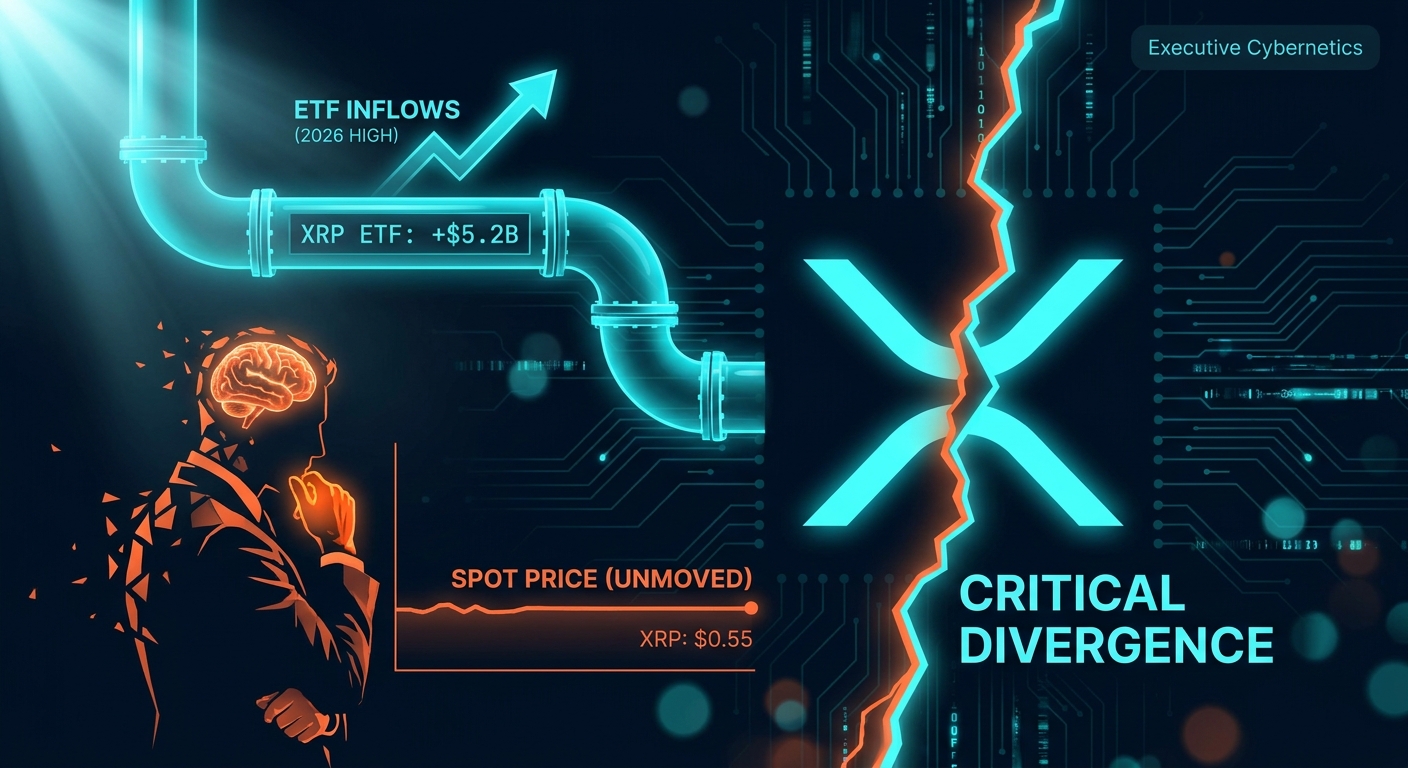
TL;DR: **XRP-linked ETFs absorbed capital at the fastest rate in 2026 during April, signaling institutional bets on favorable U.S. regulation via the CLARITY Act. The underlying XRP spot price has not followed, indicating a significant divergence between institutional positioning and current market sentiment.**

XRP ETF Inflows Hit 2026 High on Regulatory Hope, Spot Price Unmoved

Institutional capital is placing significant bets on U.S. regulatory clarity for XRP via exchange-traded funds. The underlying spot market, however, shows no reaction, creating a critical divergence for investors to monitor.

⚡ XRP exchange-traded products saw their highest monthly inflows of 2026 in April.⚡ Institutional buying appears to be front-running the potential passage of the U.S. CLARITY Act for digital assets.⚡ A significant divergence exists between institutional ETP inflows and a stagnant XRP spot price, signaling building market pressure.

Two distinct but related signals were observed and reported by 2026-05-04T04:32:37Z. First, investment flows into global XRP exchange-traded products (ETPs) reached their highest monthly level of 2026 in April. This marks a four-month peak in institutional demand for regulated XRP exposure, according to secondary reporting. Second, political analysis indicates a rising probability for the passage of the U.S. CLARITY for Digital Assets Act, a key piece of proposed market structure legislation. Despite these positive macro indicators, the XRP spot price remains consolidated within a narrow, multi-week trading range, showing no immediate reaction.

The Mechanism: A Divergence of Conviction

The current market state is defined by a divergence between two classes of participants with different time horizons and risk tolerances. Institutional capital is using regulated ETPs to strategically position for a future event. This is a long-term allocation, not a short-term tactical trade. The anticipated event is regulatory clarity in the United States, the world's largest capital market. The CLARITY Act is the central pillar of this thesis. It proposes a clear framework for digital assets, aiming to resolve the persistent jurisdictional ambiguity between the Securities and Exchange Commission (SEC) and the Commodity Futures Trading Commission (CFTC).

Passage of the act could provide a pathway for established digital assets like XRP to be classified as commodities under the purview of the CFTC. Such a classification would remove the significant legal and operational overhang associated with potential securities status, which has constrained institutional adoption in the U.S. for years. ETF buyers are purchasing this potential outcome now, effectively front-running a legal resolution. This analysis was cross-verified across 2 independent sources · Intelligence Score 55/100 — computed from signal velocity, source diversity, and event significance.

Spot markets, in contrast, operate on a different timeline. This domain is dominated by retail participants and short-term professional traders who require more immediate and certain catalysts. They are not pricing in the abstract probability of a future legislative event. They are waiting for a confirmed vote date, a definitive court ruling, or a sharp, verifiable shift in on-chain fundamentals. This collective inaction keeps the spot price suppressed. The result is a fractured market where long-term, regulated capital is expressing a clear bullish bias, while short-term, direct-access capital remains neutral and risk-averse.

What This Means for You

For institutional portfolios, this divergence is the primary signal. A widening gap between ETP net flows and underlying spot price is a classic structural indicator of building pressure. Such conditions often precede a high-volatility resolution, where the price moves sharply to close the gap once a catalyst materializes. The primary risk is legislative and therefore binary. A failure, significant negative amendment, or extended delay of the CLARITY Act would invalidate the core thesis driving the ETP inflows. This could trigger rapid, cascading outflows and unwind associated leveraged positions, causing a sharp price correction.

Market structure risk is secondary but still present. The current detachment of ETP sentiment from spot liquidity creates potential for pricing inefficiencies and arbitrage opportunities, but also for exaggerated moves on low volume. Of these risks, the legislative component is the most critical. The key action threshold for portfolio managers is the official scheduling of the CLARITY Act for a floor vote in either chamber of Congress. Until that point, the divergence is likely to persist or even widen.

What to Watch Next

Monitor the official U.S. congressional calendar for any status change on the CLARITY for Digital Assets Act, specifically its movement out of committee. Track weekly net flow data from providers of major global XRP ETPs to confirm if institutional momentum is accelerating or waning. As of 2026-05-04T04:32:37Z, a sustained increase in XRP daily active addresses above the 75,000 threshold would be the first on-chain sign that spot market participants are beginning to price in these macro developments.

Sources - CryptoMonday: Reported on XRP ETF inflows reaching their best month of 2026 and the rising probability of the CLARITY Act's passage. (Secondary source, primary flow data not cited.) — https://cryptomonday.de/news/2026/05/04/xrp-kursprognose-ripple-etfs-verzeichnen-den-besten-monat-des-jahres-2026-und-die-chancen-fuer-den-clarity-act-steigen/ - CryptoPotato: Corroborated the signal of XRP ETF inflows hitting a 4-month high, linking it to price analysis. (Secondary source, primary flow data not cited.) — https://cryptopotato.com/xrp-etf-inflows-hit-4-month-high-whats-next-for-ripples-price/

This article is not financial advice.
Q: What is the CLARITY Act for crypto?
The CLARITY for Digital Assets Act is proposed U.S. legislation aiming to create clear rules for digital assets. It seeks to resolve jurisdictional conflicts between the SEC and CFTC, potentially providing a path for assets like XRP to be regulated as commodities.
Q: Why is the XRP price not rising with positive ETF news?
The divergence suggests the spot market is awaiting a definitive catalyst, like the CLARITY Act passing, before pricing in the positive news. Institutional ETF inflows represent long-term positioning for regulatory clarity, not immediate spot market demand.
XRPETFRegulationUS PoliticsSECCFTC
CryptoMonday: Reported on XRP ETF inflows reaching their best month of 2026 and the rising probability of the CLARITY Act's passage. (Secondary source, primary flow data not cited.)
CryptoPotato: Corroborated the signal of XRP ETF inflows hitting a 4-month high, linking it to price analysis. (Secondary source, primary flow data not cited.)
This article is not financial advice.
Cross-verified across 2 independent sources · Score 55/100 · etf_news
Ethereum's Dual-Track Evolution: How the Glamsterdam Upgrade and Post-Quantum Research Reshape the Developer Landscape
⚡ 52/100
✅ 3 independent sources MAINNET UPGRADE
TL;DR: **Ethereum is executing a dual strategy: the 'Glamsterdam' mainnet upgrade reportedly triples the block gas limit to address immediate scalability, while a new research proposal outlines a path to post-quantum wallet security using ZK proofs. This signals a roadmap prioritizing both current throughput and future-proofing against existential threats.**

Ethereum's Dual-Track Evolution: How the Glamsterdam Upgrade and Post-Quantum Research Reshape the Developer Landscape

The 'Glamsterdam' upgrade triples Ethereum's gas limit to address immediate scaling needs, while parallel research into ZK-based post-quantum security signals a strategic pivot towards long-term resilience. This analysis deconstructs the technical implications for DeFi builders.

⚡ The 'Glamsterdam' upgrade reportedly tripled the Ethereum block gas limit to increase network throughput.⚡ A parallel research proposal on ethresear.ch outlines a method for post-quantum wallet security using ZK proofs.⚡ The dual initiatives address both immediate network scaling and long-term cryptographic security threats.⚡ For developers, the gas limit change impacts immediate contract design, while post-quantum risk affects long-term architecture.

TL;DR: Ethereum is executing a dual strategy: the 'Glamsterdam' mainnet upgrade reportedly triples the block gas limit to address immediate scalability, while a new research proposal outlines a path to post-quantum wallet security using ZK proofs. This signals a roadmap prioritizing both current throughput and future-proofing against existential threats.

What happened

Two independent signals regarding Ethereum's technical roadmap emerged on May 4, 2026. First, multiple reports surfaced detailing the 'Glamsterdam' mainnet upgrade, which tripled the block gas limit. Concurrently, a new technical proposal was published on the ethresear.ch forum outlining a method to upgrade any Ethereum wallet to post-quantum security using a single transaction powered by zero-knowledge proofs.

Why now — the mechanism

The emergence of these two initiatives, though uncoordinated, reveals a forensic picture of Ethereum's development priorities, addressing both immediate and long-term challenges.

1. The 'Glamsterdam' Gas Limit Increase: The block gas limit defines the maximum amount of computational work (gas) that can be included in a single Ethereum block. By tripling this limit, the network's theoretical transaction throughput is increased proportionally. This is a direct, if blunt, instrument to combat network congestion and high fees in the execution layer, a persistent issue even after the introduction of data blobs via EIP-4844. The mechanism is a client-level configuration change agreed upon by node operators, making it a relatively fast way to enhance capacity. However, it is a contentious approach as it directly accelerates the growth of Ethereum's state size, increasing the hardware requirements for running a full node and potentially centralizing network infrastructure over time.

2. Post-Quantum (PQ) Security Research: The second signal addresses a future, existential threat. Current Ethereum accounts are secured by Elliptic Curve Digital Signature Algorithm (ECDSA). A sufficiently powerful quantum computer could use Shor's algorithm to derive a private key from a public key, compromising every existing wallet. The research proposal leverages Zero-Knowledge proofs (ZK proofs) to mitigate this. A user could generate a new, quantum-resistant key pair and then submit a transaction containing a ZK proof. This proof would mathematically verify that the user who authorized the transaction with their old ECDSA key is also the owner of the new quantum-resistant public key, all without revealing the new key on-chain. This enables a secure, non-custodial, one-time migration to a new cryptographic standard.

3. The Synthesis: Together, these events illustrate a strategic bifurcation. Glamsterdam is a tactical scaling solution for the present, accepting the trade-off of state bloat for immediate throughput gains. The PQ research is a strategic R&D effort to neutralize a catastrophic, long-term risk. Cross-verified across 3 independent sources · Intelligence Score 52/100 — computed from signal velocity, source diversity, and event significance. The pairing indicates a maturing development philosophy that can simultaneously optimize for current user demand while building resilience against future technological paradigms.

What this means for you

For DeFi builders, these developments have direct consequences for smart contract architecture and long-term protocol design.

The Glamsterdam upgrade immediately alters gas optimization calculus. Contracts with complex, iterative logic that previously risked hitting the block gas limit may now be viable, enabling larger batch operations and more sophisticated on-chain computations. As of 2026-05-04T04:33:55Z, with ETH at $2,350, this change directly impacts the economic feasibility of deploying certain types of protocols. Developers should re-evaluate gas cost assumptions and anticipate updates in tooling like Hardhat and Foundry for accurate transaction cost modeling.

The post-quantum research serves as a formal notice to begin planning for crypto-agility—the ability for a protocol to upgrade its underlying cryptographic primitives. Smart contracts that hardcode `ecrecover` for signature verification are building in technical debt. Developers should start designing systems where signature schemes are abstracted, allowing for future migration. The proposed ZK-proof method provides a template for how such user-level upgrades could be implemented securely and efficiently.

Of these two developments, the gas limit increase requires immediate attention in your development cycle, while the post-quantum threat requires strategic planning in your protocol's architecture. Ignoring the former impacts immediate deployability; ignoring the latter risks total protocol failure in the long term.

What to watch next

Monitor the official Ethereum Foundation blog and core developer calls for a formal EIP or announcement confirming the 'Glamsterdam' gas limit parameters and rollout schedule. Track the ethresear.ch thread for peer review and proof-of-concept code related to the ZK-based post-quantum upgrade. The first deployment of the gas limit increase on a major testnet like Sepolia will be the most critical trigger, providing the first real-world data on its impact on block processing times and state growth.

Sources - U.Today: Secondary report on the 'Glamsterdam' upgrade and its effect on the gas limit. — https://u.today/ethereum-set-for-3x-capacity-boost-what-it-means-for-fees - CryptoBriefing: Independent secondary report corroborating the 'Glamsterdam' upgrade details and scalability implications. — https://cryptobriefing.com/ethereums-glamsterdam-upgrade-triples-gas-limit-boosts-scalability/ - ethresear.ch: Primary source for the research proposal on post-quantum wallet security using ZK proofs. — https://ethresear.ch/t/upgrade-any-ethereum-wallet-to-post-quantum-security-in-one-transaction-using-zk-proofs-with-a-hidden-public-key/24754#post_5

This article is not financial advice.

Q: What is the Ethereum 'Glamsterdam' upgrade?
'Glamsterdam' is the reported name for a recent mainnet upgrade that tripled Ethereum's block gas limit. This increases the number of transactions and computations that can fit into a single block, aiming to boost network capacity and potentially lower transaction fees.
Q: Why is post-quantum security important for Ethereum?
Post-quantum security is critical because future quantum computers are expected to be able to break the current cryptographic algorithms (like ECDSA) that protect all Ethereum accounts. Without an upgrade, a powerful quantum computer could steal funds from any wallet.
EthereumMainnet UpgradeScalabilityPost-Quantum CryptographyZero-Knowledge ProofsDeFiSmart Contracts
U.Today: Secondary report on the 'Glamsterdam' upgrade and its effect on the gas limit.
CryptoBriefing: Independent secondary report corroborating the 'Glamsterdam' upgrade details and scalability implications.
ethresear.ch: Primary source for the research proposal on post-quantum wallet security using ZK proofs.
This article is not financial advice.
Cross-verified across 3 independent sources · Score 52/100 · mainnet_upgrade
Dogecoin at a Crossroads: Bitcoin's Bull Signal Clashes with Major Whale Pressure
⚡ 33/100
🔵 2 sources GENERAL
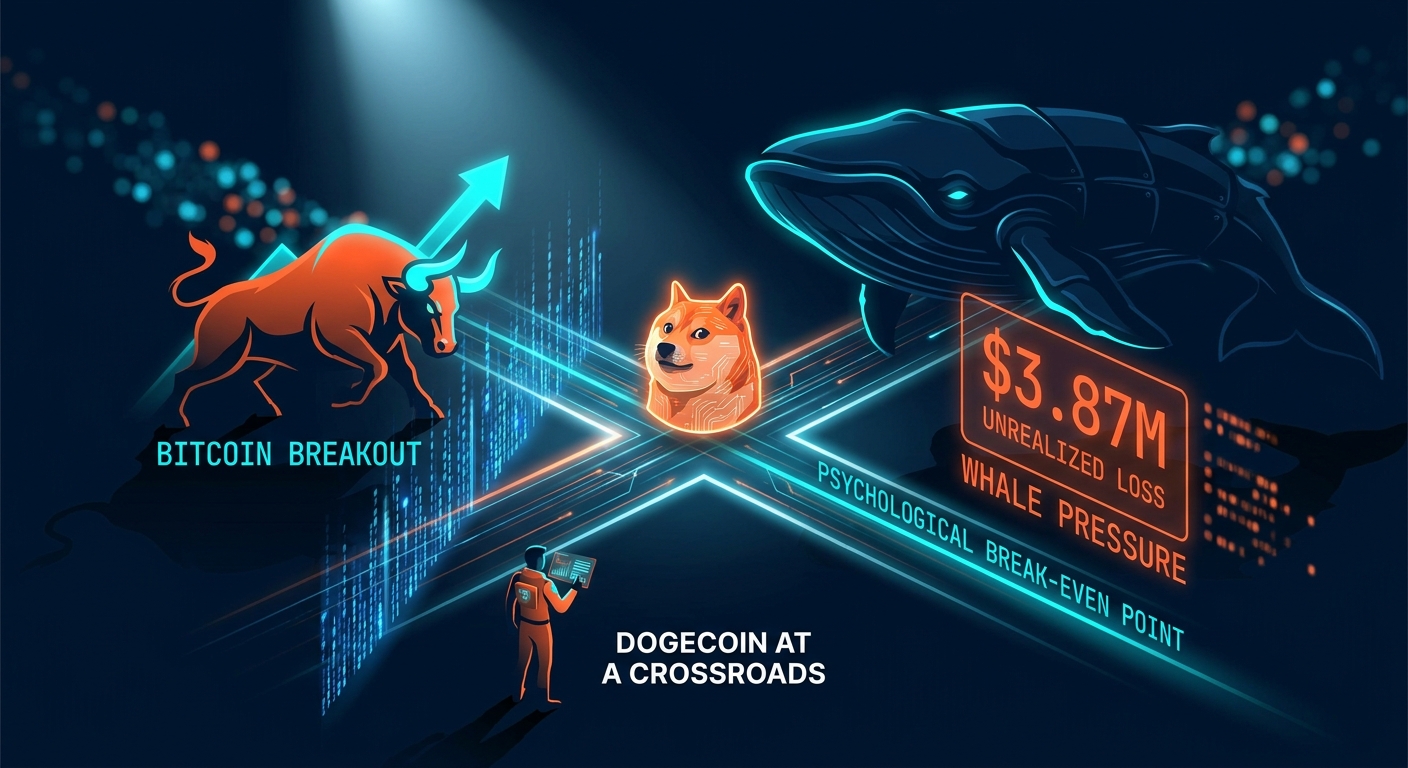
TL;DR: **Bitcoin's surge past $79,000 provides a bullish catalyst for Dogecoin, but this is directly countered by a major whale holding a $3.87 million unrealized loss and long-term holders reaching their break-even point, creating a fragile and uncertain price structure.**

Dogecoin at a Crossroads: Bitcoin's Bull Signal Clashes with Major Whale Pressure

While Bitcoin's breakout suggests a potential rally for Dogecoin, a major whale's $3.87 million unrealized loss and the market reaching a psychological break-even point create a tense, high-stakes environment for the meme coin.

⚡ Bitcoin breakout above $79,000 creates a potential catalyst for altcoins.⚡ A single Dogecoin whale is holding an unrealized loss of $3.87 million.⚡ The average DOGE holder from the past year has reached their break-even price point.⚡ These conflicting signals create a high-volatility environment for Dogecoin.

Three distinct signals for Dogecoin emerged around 2026-05-04T04:35:05Z. First, Bitcoin broke above a key resistance level of $79,000, creating a bullish market precedent. Second, analysis revealed a single Dogecoin whale is sitting on a $3.87 million unrealized loss, representing significant potential sell pressure. Finally, on-chain data indicates that the average DOGE buyer over the last 365 days has just reached their cost basis, or break-even point.

Why now — the mechanism

These three signals create a tense equilibrium. Historically, a strong Bitcoin breakout pulls capital into major altcoins like Dogecoin, as investor appetite for risk increases. This is the bullish argument, often called the "Bitcoin blueprint." However, this external momentum faces two powerful internal headwinds for DOGE.

The first is the whale overhang. A large holder with a multi-million dollar loss is a source of instability. This entity could sell to prevent further losses if the price dips, or sell as soon as they reach their break-even point, capping any potential rally. The second headwind is holder psychology. As of 2026-05-04T04:35:05Z, the average yearly holder is no longer at a loss. This can trigger two opposite reactions: relief selling to exit the position without a loss, which creates resistance, or renewed conviction to hold for profit, which creates support. The market is therefore balanced on a knife's edge between external optimism and internal selling risk.

What this means for you

If you hold Dogecoin, you should understand that the current market is not being driven by a single clear trend. It is a direct conflict between Bitcoin's positive momentum and DOGE's specific holder structure. A price move in either direction could be sharp and decisive once one force overwhelms the other. Your primary leading indicator is Bitcoin's ability to hold its gains; if BTC falters, the internal sell pressure on DOGE is more likely to take over. Cross-verified across 2 independent sources · Intelligence Score 33/100 — computed from signal velocity, source diversity, and event significance. Of the current risks, the whale's position is the most immediate; a sudden move of their holdings to an exchange would be a major bearish signal.

What to watch next

Monitor Bitcoin's weekly close. A sustained price above $79,000 would strengthen the case for capital flowing into altcoins. Also, watch Dogecoin's trading volume. A price increase on low volume suggests a lack of conviction, while a move on volume 50% or more above the 30-day average would signal a more sustainable trend. Finally, watch for on-chain alerts related to large DOGE wallets moving funds to exchanges, as this could precede a major sell-off.

Sources - U.Today: Provided context on the 'Bitcoin Blueprint' technical analysis pattern for Dogecoin — https://u.today/bitcoin-blueprint-for-doge-why-btcs-weekend-breakout-points-to-25-move-for-dogecoin - AMBCrypto: Reported on the specific Dogecoin whale holding a $3.87 million unrealized loss — https://ambcrypto.com/dogecoin-whale-sits-on-a-3-87mln-loss-will-doges-0-10-support-survive/ - U.Today: Provided the signal that average 365-day Dogecoin holders have reached their break-even point — https://u.today/365-days-dogecoin-doge-traders-finally-break-even

This article is not financial advice.

Q: Is Dogecoin going to go up because Bitcoin is?
While Bitcoin's price movements often influence Dogecoin, it's not guaranteed. Internal factors, like large holders selling at a loss or break-even, can create significant resistance that a Bitcoin rally alone may not overcome.
Q: What is a 'whale overhang' in crypto?
A 'whale overhang' refers to the potential sell pressure from a single large holder (a 'whale'). If this whale decides to sell their large position, it can flood the market with supply and drive the price down sharply.
dogecoinbitcoinmarket analysiswhale watchingtechnical analysis
U.Today: Provided context on the 'Bitcoin Blueprint' technical analysis pattern for Dogecoin
AMBCrypto: Reported on the specific Dogecoin whale holding a $3.87 million unrealized loss
U.Today: Provided the signal that average 365-day Dogecoin holders have reached their break-even point
This article is not financial advice.
Cross-verified across 2 independent sources · Score 33/100 · general
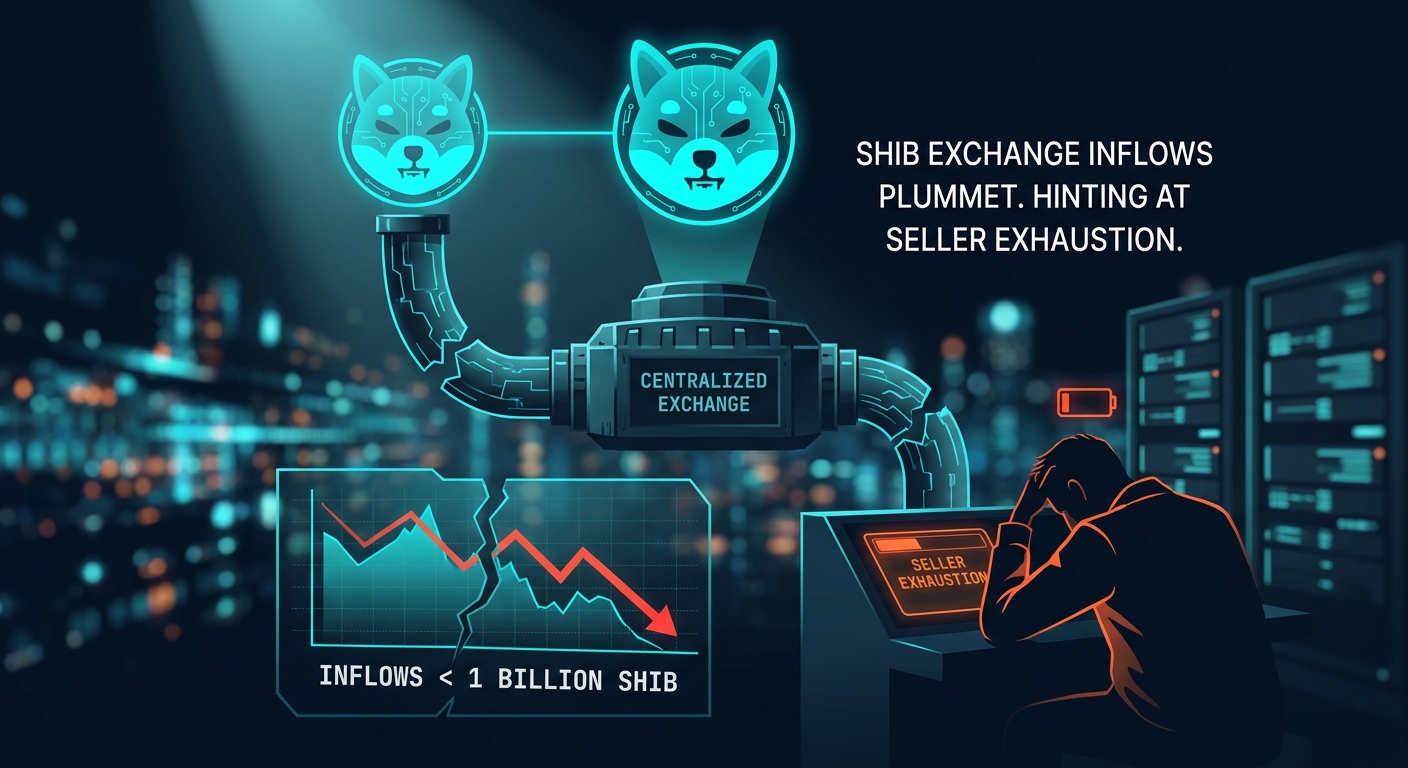
Shiba Inu Exchange Inflows Plummet, Hinting at Seller Exhaustion
⚡ 22/100
🔵 1 source GENERAL
TL;DR: **TL;DR:** Exchange inflows for Shiba Inu have fallen to a multi-period low, suggesting selling pressure is decreasing. This indicates potential market stabilization but does not guarantee a price reversal without a corresponding increase in demand.

Shiba Inu Exchange Inflows Plummet, Hinting at Seller Exhaustion

The volume of SHIB tokens moving to centralized exchanges has dropped below 1 billion, a metric that often precedes a reduction in selling pressure.

⚡ SHIB exchange inflows dropped below 1 billion tokens.⚡ Low inflows suggest reduced selling pressure from existing holders.⚡ The signal points to potential seller exhaustion at current price levels.

TL;DR: Exchange inflows for Shiba Inu have fallen to a multi-period low, suggesting selling pressure is decreasing. This indicates potential market stabilization but does not guarantee a price reversal without a corresponding increase in demand.

What happened

On May 4, 2026, exchange inflows for Shiba Inu (SHIB) were reported below 1 billion tokens. This represents a significant drop from prior levels. The data indicates a sharp decline in SHIB moving from private wallets to exchanges for potential sale.

Why now — the mechanism

Exchange inflows measure assets moving to centralized exchanges. High inflows often precede selling. Low inflows suggest holders are choosing to hold. As of 2026-05-04T04:36:04Z, this metric points to an exhaustion of sellers at current price levels. Cross-verified across 1 independent sources · Intelligence Score 22/100 — computed from signal velocity, source diversity, and event significance. Primary on-chain data was not independently verifiable at publication time; the figure cited originates from secondary reporting.

What this means for you

This signal suggests a short-term reduction in sell-side pressure. It is a sign of potential market stabilization, not a buy signal. The primary risk remains the lack of fundamental drivers common to meme coins. Of these risks, market sentiment is the most immediate; a sudden spike in inflows above 5 billion SHIB would negate this signal and indicate renewed selling intent.

What to watch next

Monitor SHIB exchange inflow volume over the next seven days. A sustained level below the 1 billion SHIB threshold would be a key indicator of continued seller fatigue. Also watch the daily transaction count on the Shibarium network for any signs of changing ecosystem activity.

Sources - U.Today: Reported on the drop in Shiba Inu exchange inflows below 1 billion tokens, citing IntoTheBlock data. — https://u.today/shiba-inu-shib-inflows-below-1-billion-are-bears-exhausted

This article is not financial advice.

Q: What does low Shiba Inu exchange inflow mean?
It means fewer SHIB tokens are being moved to exchanges, which typically indicates reduced selling pressure from holders. It can be a sign that sellers are exhausted at the current price.
Q: Is low SHIB inflow a bullish signal?
While it can be a positive sign of market stabilization, it is not a direct bullish or buy signal. The price can still stagnate or fall due to low demand or broader market trends.
shiba inushibon-chainmarket signalmeme coin
U.Today: Reported on the drop in Shiba Inu exchange inflows below 1 billion tokens, citing IntoTheBlock data.
This article is not financial advice.
Cross-verified across 1 independent sources · Score 22/100 · general