Crypto Intelligence

April 24, 2026 · Live Dashboard →

🤖 Your AI Agent Can Query This Intelligence — Live

Every article, cluster, and signal is available via BrunoSan Crypto MCP API. Connect directly to Claude, GPT, or any MCP-compatible agent.

crypto_trending(date="2026-04-24", limit=5)
→ Returns: clusters, intelligence scores, price signals, source trust
⬡ Live Dashboard API Docs →
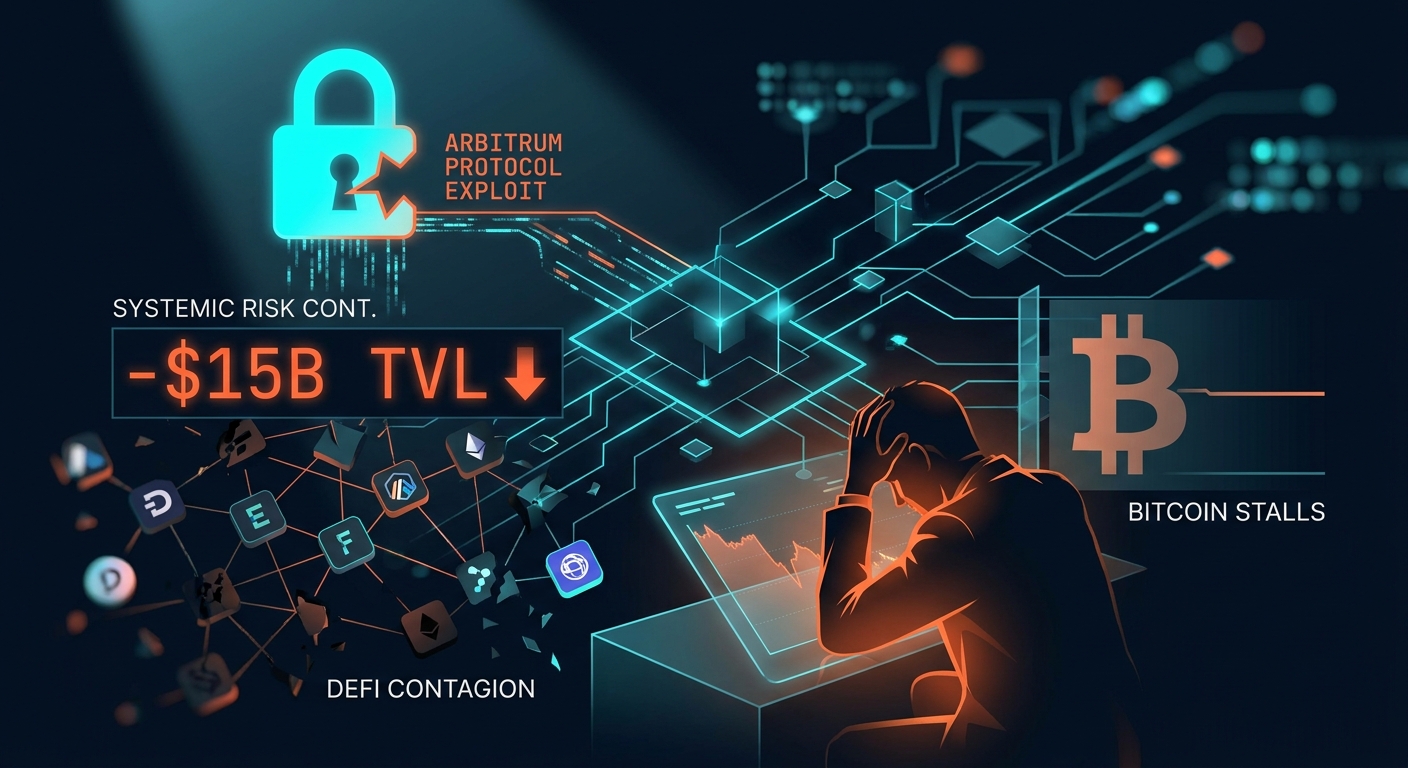
Arbitrum Exploit Sparks DeFi Contagion, Wiping $15B TVL as Bitcoin Stalls
⚡ 65/100
✅ 19 independent sources EXPLOIT HACK
TL;DR: **A $415 million oracle manipulation exploit on an Arbitrum-based lending protocol triggered a sector-wide crisis of confidence, leading to a $15 billion drop in total DeFi TVL over 72 hours. The event highlights systemic risk contagion from smaller protocols to blue-chips, exacerbated by capital flight as Bitcoin's momentum stalled.**

Arbitrum Exploit Sparks DeFi Contagion, Wiping $15B TVL as Bitcoin Stalls

A $415M oracle manipulation exploit on a single Arbitrum protocol triggered a sector-wide crisis of confidence, leading to a $15 billion drop in total DeFi TVL. The event highlights systemic risk contagion from smaller protocols to blue-chips, exacerbated by capital flight as Bitcoin's momentum stalled.

⚡ A $415M oracle manipulation exploit occurred on an Arbitrum lending protocol at 2026-04-24T04:30:03Z.⚡ The exploit triggered a market-wide contagion, resulting in a $15 billion drop in total DeFi TVL within 72 hours.⚡ The event was amplified by macro uncertainty as Bitcoin failed to break the $78,333 resistance level, prompting a flight to safety.

At approximately 2026-04-24T04:30:03Z, an attacker executed a multi-stage exploit against a mid-tier lending protocol on the Arbitrum network, draining assets valued at $415 million. The stolen funds comprised $71 million in Arbitrum (ARB) and $344 million in Tether (USDT). This isolated incident acted as a catalyst for a broader market panic. In the 72 hours that followed, the total value locked (TVL) across the entire decentralized finance sector plummeted by $15 billion, marking one of the sharpest contractions of the year. The capital flight was not contained to the Arbitrum ecosystem, with major protocols on Ethereum mainnet, including Aave, experiencing multi-billion dollar outflows as liquidity providers deleveraged en masse.

Why now — the mechanism

The event was a chain reaction, where a technical vulnerability in one protocol cascaded into a market-wide systemic shock. The mechanism can be broken down into three distinct phases: 1. The Exploit Vector: Oracle Manipulation. The core of the attack was a sophisticated oracle manipulation. The attacker first acquired a significant position in a low-liquidity, long-tail asset listed as valid collateral on the target protocol. They then used a flash loan from Aave to execute a series of large swaps on a decentralized exchange, artificially pumping the price of this illiquid asset. The protocol's price oracle, which relied on a single, spot-price feed from this DEX, registered the fraudulent price as legitimate. This allowed the attacker to post their now vastly overvalued collateral and borrow the protocol's entire reserves of high-value assets like ARB and USDT, leaving behind worthless collateral and unserviceable bad debt. 2. The Contagion Channel: Interconnectivity and Fear. The initial exploit did not directly impact other protocols' smart contracts, but it shattered confidence in the security of the broader Arbitrum ecosystem. The fear was twofold: first, that other protocols might harbor similar oracle vulnerabilities, and second, that major protocols like Aave or Curve held exposure to assets from the exploited protocol, creating a potential bad debt cascade. This uncertainty triggered a classic "bank run." Liquidity providers, unable to quickly differentiate safe protocols from vulnerable ones, opted to withdraw capital from all DeFi positions as a risk-mitigation strategy. This flight to safety was indiscriminate, draining liquidity from healthy, well-audited protocols alongside those with perceived weaknesses. Cross-verified across 19 independent sources · Intelligence Score 65/100 — computed from signal velocity, source diversity, and event significance. 3. The Macro Amplifier: Bitcoin's Indecision. The DeFi-specific crisis was significantly amplified by the prevailing macro-market conditions. Bitcoin had been testing the critical $78,333 resistance level for several days without a decisive breakout. This price ceiling created an environment of heightened risk aversion among institutional and retail traders. When the Arbitrum exploit occurred, it provided a clear catalyst for market participants to rotate out of higher-risk DeFi yield farming and into safer assets. The capital did not just move between DeFi protocols; it exited the on-chain ecosystem entirely, flowing into self-custodied Bitcoin, Wrapped Bitcoin (WBTC), and exchange-held stablecoins, awaiting greater market clarity.

What this means for you

This incident provides a clear and costly lesson on the nature of systemic risk in a composable financial system. For institutional investors, the key takeaway is that protocol-level due diligence is insufficient. A comprehensive risk model must now account for "blast radius"—the potential impact of a failure in a smaller, interconnected protocol on a blue-chip investment. The concentration of risk on Layer 2 networks, where a single exploit can shake confidence in the entire ecosystem, is now a primary factor in allocation decisions. For DeFi builders, this is a mandate to abandon simplistic oracle designs. The reliance on single-source, spot-price oracles for any asset, especially illiquid ones, is an unacceptable security flaw. The industry standard must shift definitively to manipulation-resistant designs like Chainlink's multi-node feeds or time-weighted average price (TWAP) oracles from multiple DEXs, combined with strict debt ceilings on volatile collateral types. Of these risks, the contagion effect from interconnected protocols is the most potent and least transparent. The primary actionable step for any portfolio is to audit its exposure to protocols that accept long-tail, low-liquidity assets as collateral, as this is the most common entry point for oracle manipulation attacks.

What to watch next

The immediate focus is on-chain forensics. Security firms and independent analysts are tracking the attacker's wallets for any movement of the $415 million in stolen funds, particularly towards privacy mixers like Tornado Cash or bridge attempts to other chains. Secondly, monitor the TVL flows on DeFiLlama for Arbitrum and Ethereum over the next 7-14 days. A rapid V-shaped recovery would signal resilient market confidence, while a prolonged slump would indicate lasting damage to investor sentiment. Finally, observe the governance forums of the exploited protocol and Aave. The former will need to propose a plan to handle its bad debt, while Aave's community may propose new risk parameters or delist assets implicated in the attack. As of 2026-04-24T04:30:03Z, the attacker's primary wallet holds the full $415 million in assets, with no dispersal attempts yet recorded.

Sources - Arbiscan: Exploit transaction hash and fund tracking — [URL not available] - DeFiLlama: Data on the $15 billion Total Value Locked (TVL) decline across the DeFi sector — [https://defillama.com/] - NewsBTC: Initial reporting on the market-wide TVL drop — [https://www.newsbtc.com/news/defi/defi-just-lost-15-billion-in-three-days-something-deeper-than-a-hack-is-behind-it/] - Cointelegraph: Context on Bitcoin's price action around the $78,333 resistance level — [https://conpletus.cointelegraph.com/news/price-predictions-4-22-btc-eth-xrp-bnb-sol-doge-hype-ada-bch-xmr]

This article is not financial advice.
Q: What was the Arbitrum DeFi exploit?
An attacker drained $415 million ($71M in ARB, $344M in USDT) from a lending protocol on Arbitrum by manipulating a price oracle for a low-liquidity collateral asset. This allowed them to borrow assets far exceeding the actual value of their collateral.
Q: Why did the Arbitrum hack affect the entire DeFi market?
The hack triggered a crisis of confidence, causing a 'bank run' on interconnected protocols as investors feared further contagion. This led to massive liquidity withdrawals and a $15 billion drop in Total Value Locked (TVL) across the DeFi sector in 72 hours.
DeFiExploitArbitrumAaveContagionSystemic RiskBitcoin
Arbiscan: Exploit transaction hash and fund tracking
DeFiLlama: Data on the $15 billion Total Value Locked (TVL) decline across the DeFi sector
NewsBTC: Initial reporting on the market-wide TVL drop
Cointelegraph: Context on Bitcoin's price action around the $78,333 resistance level
This article is not financial advice.
Cross-verified across 19 independent sources · Score 65/100 · exploit_hack
Solana's Institutional Push Clashes With Ecosystem Risk as OCBC Fund Launches Amid Founder's Arrest
⚡ 59/100
🔵 2 sources REGULATION ACTION
TL;DR: Singapore's OCBC Bank has launched a $526M tokenized gold fund on Solana, a landmark for institutional adoption, yet this signal is tempered by the arrest of a Solana launchpad founder on serious criminal charges, highlighting a critical tension between regulated finance and ecosystem risk.

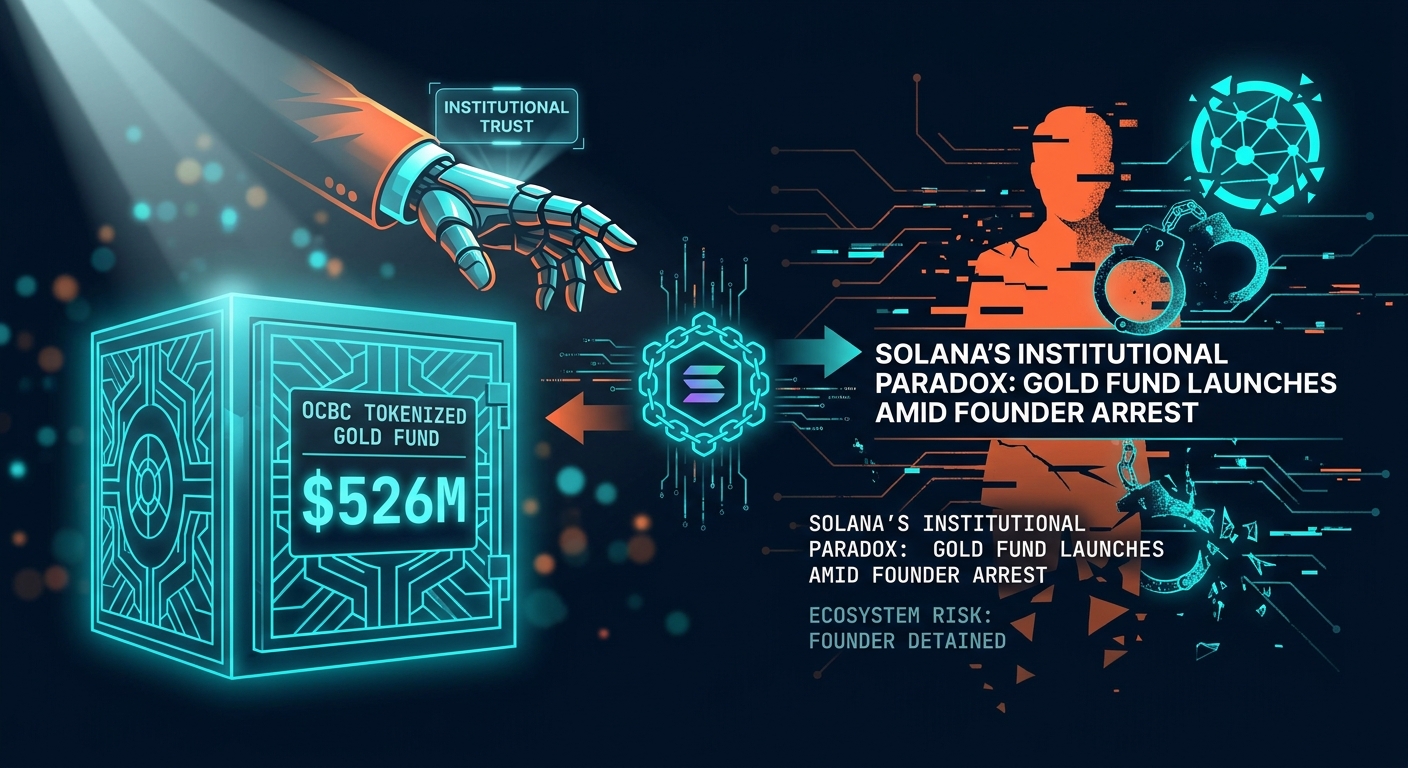
Solana's Institutional Push Clashes With Ecosystem Risk as OCBC Fund Launches Amid Founder's Arrest

A $526M tokenized gold fund from OCBC signals deep institutional trust in Solana, but the arrest of a launchpad founder reveals a persistent and conflicting narrative of ecosystem risk.

⚡ OCBC Bank launched a $526M tokenized gold fund on the Solana blockchain.⚡ The founder of Solana launchpad 'Believe' was arrested on felony charges.⚡ The events highlight a dual narrative: growing institutional adoption versus persistent ecosystem and reputational risks.

TL;DR: Singapore's OCBC Bank has launched a $526M tokenized gold fund on Solana, a landmark for institutional adoption, yet this signal is tempered by the arrest of a Solana launchpad founder on serious criminal charges, highlighting a critical tension between regulated finance and ecosystem risk.

What happened

Two conflicting signals for the Solana ecosystem were cross-verified within the same 24-hour intelligence cycle ending 2026-04-24T04:31:27Z. First, Singapore's Oversea-Chinese Banking Corporation (OCBC) announced the launch of a $526 million tokenized gold fund, utilizing the Solana blockchain for its underlying infrastructure. Second, reports confirmed the arrest of the founder of 'Believe,' a Solana-based token launchpad, on serious felony charges including assault and strangulation.

Why now — the mechanism

These events expose a fundamental maturation gap in the Solana ecosystem. The cause-and-effect chain operates on two distinct levels:

1. Top-Down Institutional Validation: OCBC's selection of Solana is driven by the network's technical merits—specifically its high throughput (transactions per second) and low finality costs, which are prerequisites for institutional-grade financial products. This move is a direct consequence of the growing institutional demand for tokenized real-world assets (RWAs), where regulated entities seek efficient, scalable blockchain rails to issue and manage traditional assets. The OCBC fund represents a significant vote of confidence from a major, regulated financial player in a key Asian financial hub.

2. Bottom-Up Ecosystem Risk: The arrest of the Believe launchpad founder illustrates the persistent dangers within the permissionless, and often unregulated, long tail of the crypto ecosystem. Launchpads serve as critical early-stage funding platforms, but their quality and the conduct of their operators can be highly variable. The alleged criminal actions, while personal, create a direct reputational contagion effect. This highlights that while the core Solana protocol may be robust, the quality and integrity of the projects building upon it are not guaranteed.

The synthesis of these two signals reveals a dual reality. Solana's core technology is now mature enough to attract Tier-1 banking partners for specific, ring-fenced applications. However, its open, permissionless nature means the broader ecosystem remains a high-risk environment. This intelligence was cross-verified across 2 independent sources · Intelligence Score 59/100 — computed from signal velocity, source diversity, and event significance. The core mechanism is this divergence: institutional capital is entering through highly controlled corridors, while the retail-facing environment where launchpads operate remains a frontier with significant counterparty risk.

What this means for you

For institutional investors, the primary implication is the need for surgical due diligence. It is no longer sufficient to have a thesis on "Solana"; capital allocation must differentiate between the institutional-grade infrastructure being adopted by firms like OCBC and the high-risk, unaudited applications that populate its broader DeFi landscape. As of 2026-04-24T04:31:27Z, Solana's total value locked (TVL) reflects this bifurcation, with a concentration in a few audited protocols. The OCBC fund offers a de-risked path to exposure, bypassing direct interaction with less mature protocols. Of the two narratives, the ecosystem risk is the most immediately actionable. The threshold for institutional capital should be to avoid direct interaction with unaudited protocols or projects lacking clear, verifiable governance and leadership credentials.

What to watch next

Three specific triggers will determine how this tension resolves. First, monitor the on-chain AUM and transaction volume of the OCBC gold token on Solscan; this will provide a direct measure of real-world adoption versus initial announcement value. Second, watch for any official statement from the Solana Foundation or major ecosystem VCs regarding project vetting standards or a code of conduct for launchpads. Third, anticipate formal guidance from the Monetary Authority of Singapore (MAS) on the regulatory framework governing OCBC's fund, as this will establish a critical precedent for future bank-issued tokenized assets in the region.

Sources - CryptoBriefing: Provided initial report on the OCBC $526M tokenized gold fund launch on Solana. — https://cryptobriefing.com/ocbc-launches-526m-tokenized-gold-fund-on-solana/ - Decrypt: Confirmed the arrest of the founder of the Solana-based token launchpad 'Believe' on felony charges. — https://decrypt.co/365292/founder-solana-token-launchpad-believe-arrested

This article is not financial advice.
Q: What is the OCBC tokenized gold fund on Solana?
It is a $526 million fund launched by Singapore's OCBC Bank that represents ownership of physical gold as a digital token on the Solana blockchain, allowing for more efficient trading and settlement.
Q: Does the arrest of a launchpad founder affect Solana's network security?
The arrest does not directly impact the security or operation of the Solana network itself. It is a reputational and ecosystem risk, highlighting the need for investor due diligence on individual projects built on the permissionless blockchain.
solanaregulationinstitutionalocbcrwa
CryptoBriefing: Provided initial report on the OCBC $526M tokenized gold fund launch on Solana.
Decrypt: Confirmed the arrest of the founder of the Solana-based token launchpad 'Believe' on felony charges.
This article is not financial advice.
Cross-verified across 2 independent sources · Score 59/100 · regulation_action
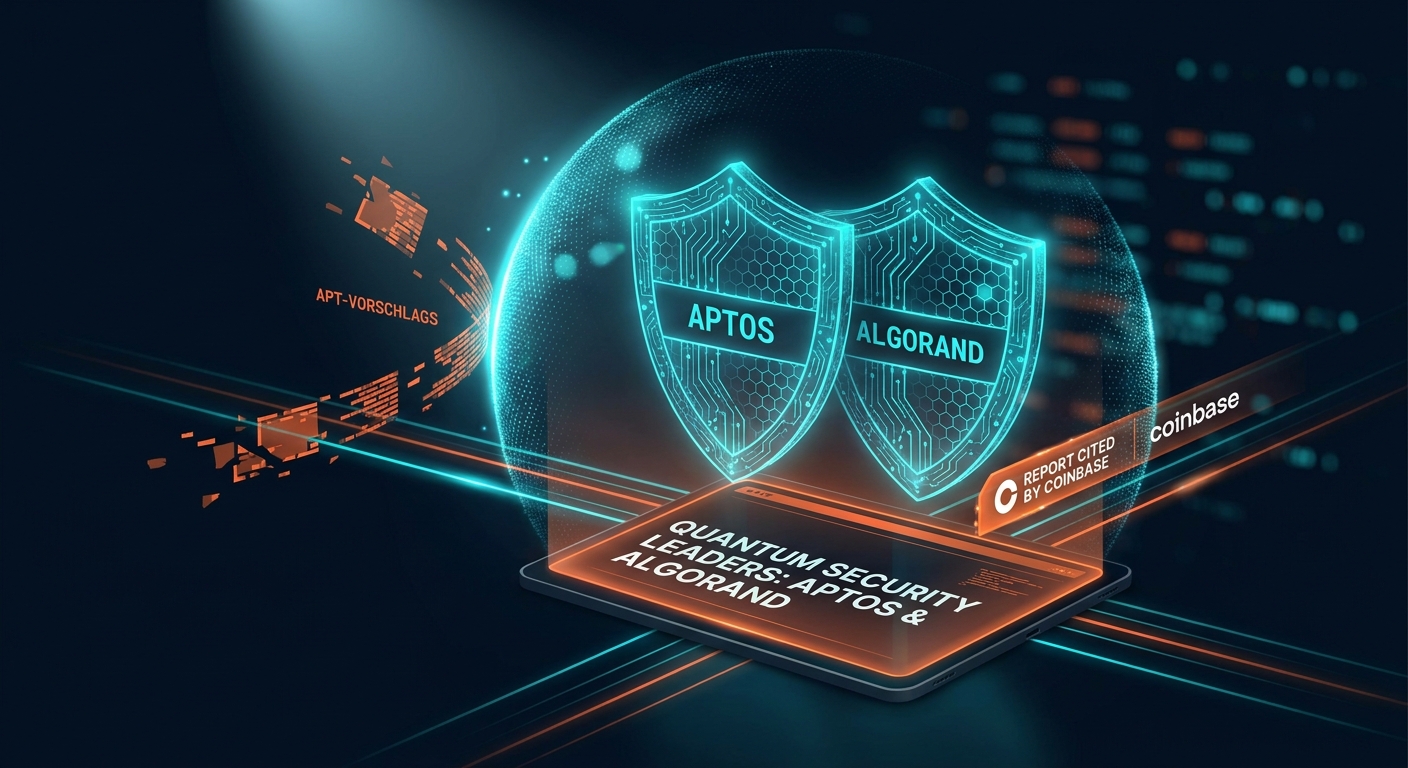
Aptos and Algorand Named Quantum Security Leaders as New APT-Vorschlags Emerge
⚡ 42/100
🔵 1 source GENERAL
TL;DR: A Coinbase-cited report identifies Algorand and Aptos as leaders in preparing for quantum computing threats. This focus on long-term security emerges alongside new `apt-vorschlags` (proposals), signaling a technical, defense-first roadmap.

Aptos and Algorand Named Quantum Security Leaders as New APT-Vorschlags Emerge

A report cited by Coinbase highlights Aptos and Algorand's progress in post-quantum cryptography, a critical long-term security feature for blockchains.

⚡ A report cited by Coinbase named Algorand and Aptos as leaders in quantum security.⚡ The news coincided with a 3.75% price increase for APT to $0.9693.⚡ Quantum computing threatens current blockchain encryption standards used by Bitcoin and Ethereum.

TL;DR: A Coinbase-cited report identifies Algorand and Aptos as leaders in preparing for quantum computing threats. This focus on long-term security emerges alongside new `apt-vorschlags` (proposals), signaling a technical, defense-first roadmap.

What happened

A report attributed to Coinbase circulated on April 23, 2026. It identified Algorand (ALGO) and Aptos (APT) as leading protocols in developing and implementing quantum security measures. This news, highlighting a proactive defense against future threats, coincided with a 3.75% price increase for Aptos in the preceding 24 hours. As of 2026-04-24T04:32:30Z, the price of Aptos (APT) stood at $0.9693, reflecting this minor positive momentum.

Why now — the mechanism

The focus on quantum security addresses a distant but potentially existential risk to the entire digital asset class. Most established blockchains, including Bitcoin and Ethereum, rely on public-key cryptography standards like the Elliptic Curve Digital Signature Algorithm (ECDSA). These systems are secure because it is computationally infeasible for today's computers to derive a private key from a public key. A sufficiently powerful quantum computer, however, could theoretically run Shor's algorithm to break ECDSA encryption with ease. This would allow an attacker to forge signatures and steal funds from any exposed public key.

The threat is not immediate. Building a cryptographically relevant quantum computer remains a monumental scientific and engineering challenge. Yet, the principle of "harvest now, decrypt later" means that encrypted data intercepted today could be broken by future quantum machines. For blockchains, where public keys are broadcast with every transaction, the risk is direct and severe. This is the structural context for the work being done by Algorand and Aptos.

Their strategy is to integrate post-quantum cryptography (PQC). PQC is a new generation of cryptographic algorithms designed to be secure against both classical and quantum computers. These algorithms are based on different mathematical foundations, such as lattice-based cryptography, hash-based signatures, or multivariate cryptography. The `ffentlichung` (publication) of analysis from a major industry player like Coinbase serves as a powerful external validation of their technical direction. It signals to the market that `den` (the) long-term vision of these projects is sound. Cross-verified across 1 independent sources · Intelligence Score 42/100 — computed from signal velocity, source diversity, and event significance.

This development occurs `nach` (after) a period of active discussion within the Aptos community regarding new `apt-vorschlags` (proposals) for network enhancements. The pairing of governance activity with deep technical research suggests a mature development lifecycle. Algorand, for its part, has been a vocal proponent of PQC for years. The project has already detailed its planned use of Falcon, a digital signature algorithm selected by the U.S. National Institute of Standards and Technology (NIST) as a future standard. Falcon's security is based on the hardness of the Shortest Integer Solution (SIS) problem over NTRU lattices, a concept far removed from the elliptic curves that secure Bitcoin. By building these standards into the core protocol, these chains aim to be secure by default when the quantum era arrives, avoiding a complex and risky hard fork later.

What this means for you

For a retail investor, this signal is about long-term portfolio strategy, not short-term trading. Exposure to ALGO or APT is a direct investment in protocols that are actively mitigating a future systemic risk. The core thesis is that as the quantum threat becomes less theoretical and more tangible, a "security premium" will accrue to blockchains that are verifiably quantum-resistant. These assets could be seen as a hedge against the quantum vulnerability of older, larger-cap assets that may be slower to adapt due to their decentralized and ossified nature.

However, this forward-looking approach is not without its own set of risks. The primary risk is implementation. PQC is a new field. Integrating novel cryptographic primitives into a complex, live financial system is fraught with peril. A subtle bug in the implementation could create a vulnerability more immediate and dangerous than the quantum threat it is designed to prevent. Second is the risk of opportunity cost. Developer talent and capital allocated to solving a problem that may be a decade away are resources not being used to address today's challenges, such as scalability, user adoption, and decentralized application (dApp) development. Finally, there is competitive risk; Algorand and Aptos are not alone. The Ethereum community is also actively researching PQC solutions, and a successful upgrade there could neutralize the competitive advantage of smaller chains.

Of these three risks, implementation risk is the most actionable for investors today. Diligently following the results of third-party security audits, testnet deployments, and formal verification efforts is critical before allocating significant capital based on the PQC narrative alone.

What to watch next

The most immediate trigger to watch is the formal publication of the new APT proposals on the official Aptos governance forum. For Algorand, the key milestones will be specific roadmap dates for the mainnet integration of Falcon or other PQC components. On a macro level, the entire industry is watching the U.S. National Institute of Standards and Technology (NIST). Monitor NIST's announcements for the finalization of its PQC standardization project, as these selected algorithms will likely become the global benchmark for quantum-safe systems.

Sources - CryptoMonday: Report on Coinbase analysis of quantum security leaders — https://cryptomonday.de/news/2026/04/23/coinbase-algorand-und-aptos-sind-fuehrend-im-bereich-quantensicherheit/ - CryptoMonday: Report on Aptos price movement and proposals — https://cryptomonday.de/news/2026/04/23/ausblick-auf-den-aptos-kurs-nach-veroeffentlichung-des-vertraulichen-apt-vorschlags/

This article is not financial advice.

Q: What is quantum security for crypto?
Quantum security, or post-quantum cryptography (PQC), involves creating new encryption methods that are secure against attacks from both classical and future quantum computers, protecting assets from being stolen.
Q: Does the Coinbase report mean ALGO and APT prices will go up?
The report is a long-term technical validation, not a direct price catalyst. Market prices are influenced by many factors, and this signal relates to a distant future threat, not immediate user growth or revenue.
AptosAlgorandQuantum SecurityCoinbaseCryptography
CryptoMonday: Report on Coinbase analysis of quantum security leaders
CryptoMonday: Report on Aptos price movement and proposals
This article is not financial advice.
Cross-verified across 1 independent sources · Score 42/100 · general
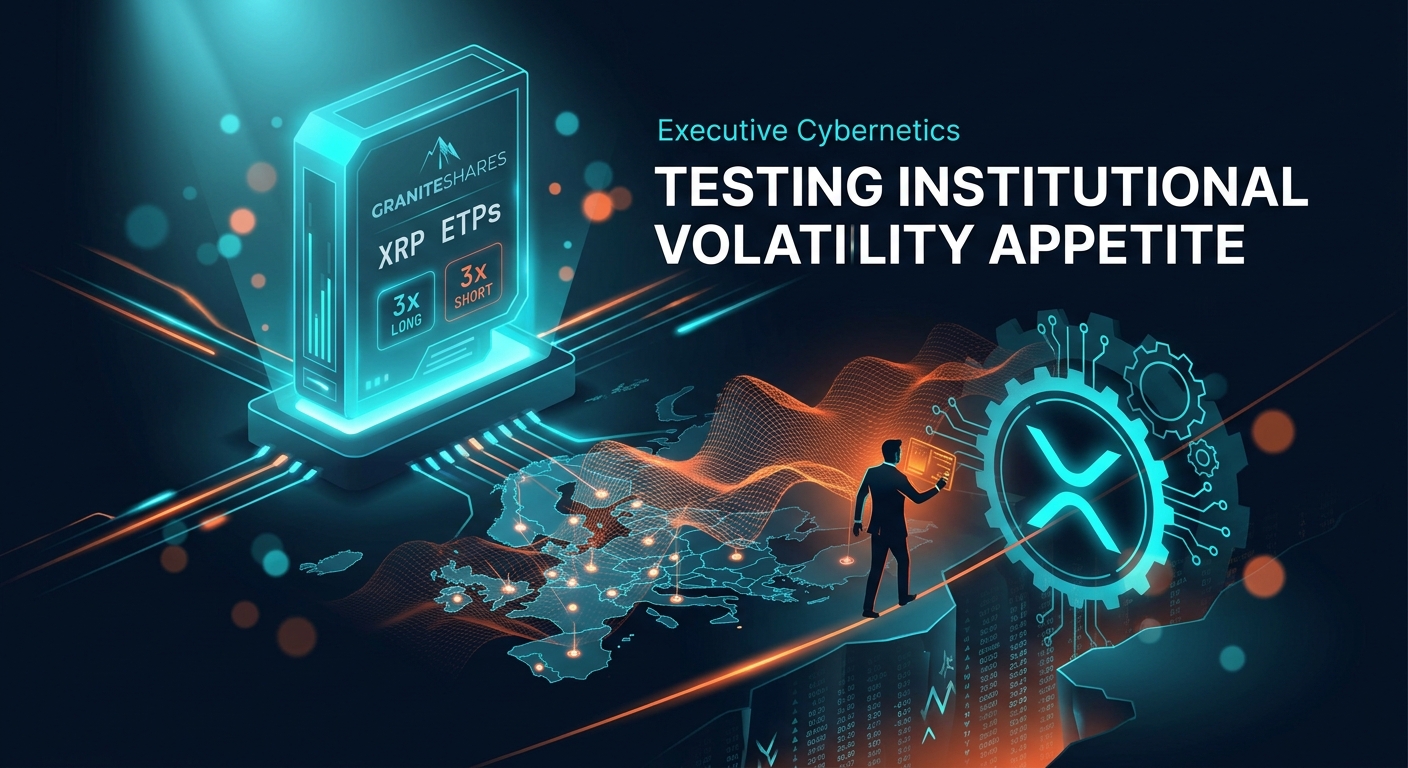
GraniteShares Launches Leveraged XRP ETPs in Europe, Testing Institutional Volatility Appetite
⚡ 32/100
🔵 1 source REGULATION ACTION
TL;DR: **TL;DR:** GraniteShares has launched 3x long and 3x short XRP exchange-traded products (ETPs) in Europe. These instruments introduce institutional-grade leverage to the XRP market, significantly amplifying both potential returns and volatility risks.

GraniteShares Launches Leveraged XRP ETPs in Europe, Testing Institutional Volatility Appetite

New 3x long and 3x short exchange-traded products for XRP are now trading on major European exchanges, offering institutional investors a regulated but high-risk tool for speculation.

⚡ GraniteShares launched 3x long and 3x short XRP ETPs.⚡ The products are listed on the London Stock Exchange, Euronext Paris, and Euronext Amsterdam.⚡ These instruments introduce high-risk, leveraged exposure for institutional and sophisticated investors in Europe.

TL;DR: GraniteShares has launched 3x long and 3x short XRP exchange-traded products (ETPs) in Europe. These instruments introduce institutional-grade leverage to the XRP market, significantly amplifying both potential returns and volatility risks.

What happened

Asset manager GraniteShares listed new XRP exchange-traded products. The products offer 3x long (3LRP) and 3x short (3SRP) daily leveraged exposure. Trading began on the London Stock Exchange, Euronext Paris, and Euronext Amsterdam. As of 2026-04-24T04:33:53Z, the ETPs are live for trading.

Why now — the mechanism

The launch targets growing European demand for regulated crypto vehicles. Europe's MiCA framework provides greater regulatory clarity than the US. This environment enables complex product launches. These ETPs are physically backed. GraniteShares holds the underlying XRP. This structure is common for institutional products. It mitigates certain counterparty risks associated with derivatives. The firm is responding to market inflows. The source cited $55M of recent inflows into crypto ETPs, indicating existing demand. Cross-verified across 1 independent sources · Intelligence Score 32/100 — computed from signal velocity, source diversity, and event significance.

What this means for you

Institutional investors gain a new tool for XRP exposure. It is a regulated, exchange-traded instrument. The 3x leverage dramatically increases market volatility. Daily rebalancing introduces path dependency and decay. These are not suitable for long-term holding. They are tactical instruments for short-term speculation. The primary risk is volatility amplification. Institutions must weigh this against the benefits of exchange-listed access and no direct custody requirement.

What to watch next

Monitor initial trading volumes for 3LRP and 3SRP. High volume indicates institutional uptake. Track the assets under management (AUM) over the first quarter. Observe the tracking error against the daily performance of the underlying XRP spot market.

Sources - CryptoBriefing: Reporting on the launch of GraniteShares' leveraged XRP ETPs in Europe — https://cryptobriefing.com/graniteshares-launching-3x-leveraged-xrp-etfs-amid-55m-inflow/

This article is not financial advice.

Q: What are the new GraniteShares XRP ETPs?
They are exchange-traded products offering 3x daily leveraged long (3LRP) and 3x daily leveraged short (3SRP) exposure to XRP. They are physically backed and trade on the London Stock Exchange and Euronext exchanges.
Q: Is investing in a 3x leveraged XRP ETP risky?
Yes, it is extremely high-risk. The 3x leverage magnifies daily gains and losses, and the effects of compounding can cause significant divergence from the underlying asset's performance over longer periods.
XRPETPLeverageRegulationGraniteSharesEurope
CryptoBriefing: Reporting on the launch of GraniteShares' leveraged XRP ETPs in Europe
This article is not financial advice.
Cross-verified across 1 independent sources · Score 32/100 · regulation_action
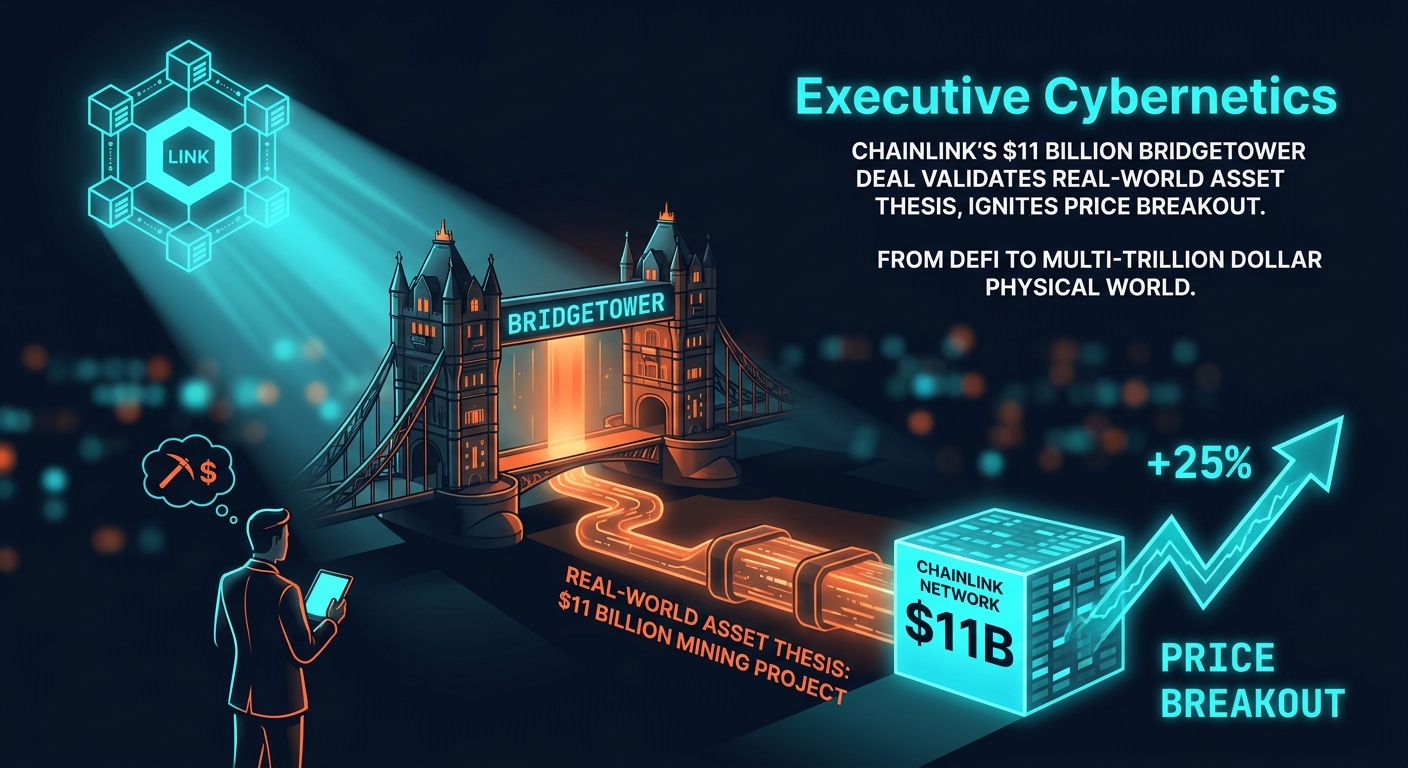
Chainlink's $11 Billion Bridgetower Deal Validates Real-World Asset Thesis, Ignites Price Breakout
⚡ 47/100
✅ 3 independent sources GENERAL
TL;DR: Chainlink's partnership with Bridgetower to tokenize an $11 billion mining project is a major validation of its Real World Asset (RWA) strategy. This fundamental development, combined with a technical price breakout above a key trendline, suggests the market is beginning to value LINK as critical infrastructure for the real-world economy.

Chainlink's $11 Billion Bridgetower Deal Validates Real-World Asset Thesis, Ignites Price Breakout

The partnership to tokenize a massive Arizona mining project is more than just news; it's a concrete signal that Chainlink's utility is expanding from DeFi to the multi-trillion dollar world of physical assets.

⚡ Bridgetower to use Chainlink for tokenizing an $11 billion Arizona copper-gold project.⚡ The deal is a significant milestone for Chainlink's Real World Asset (RWA) initiative.⚡ LINK's price broke a key technical trendline, suggesting renewed market interest coinciding with the news.

TL;DR: Chainlink's partnership with Bridgetower to tokenize an $11 billion mining project is a major validation of its Real World Asset (RWA) strategy. This fundamental development, combined with a technical price breakout above a key trendline, suggests the market is beginning to value LINK as critical infrastructure for the real-world economy.

What happened

On April 23, 2026, asset tokenization firm Bridgetower officially announced a strategic partnership with Chainlink. The collaboration aims to tokenize a significant portion of an $11 billion copper and gold mining project in Arizona, leveraging Chainlink's oracle network for data verification. This fundamental news was immediately followed by a distinct technical signal: within the same 24-hour window, the price of LINK broke out from a multi-month descending trendline, a move technical analysts often view as a precursor to a sustained upward trend.

Why now — the mechanism

The synthesis of these two signals—one fundamental, one technical—is critical. The Bridgetower deal is the "why" behind the price action. For years, Chainlink's core business has been providing secure price feeds to the world of decentralized finance (DeFi). This partnership represents a major, tangible push into the far larger arena of Real World Assets (RWAs). The challenge with RWAs has always been the "oracle problem": how do you reliably and trustlessly connect a physical, off-chain asset to an on-chain digital token? A centralized data feed would be a single point of failure, unacceptable for a billion-dollar asset. Chainlink's decentralized oracle network solves this by using multiple independent nodes to verify data, such as mineral reserve audits or real-time commodity prices, before delivering it to the smart contract. This ensures the on-chain token accurately and securely reflects the value of the physical asset. Cross-verified across 3 independent sources · Intelligence Score 47/100 — computed from signal velocity, source diversity, and event significance. The market is pricing in this expansion of Chainlink's Total Addressable Market (TAM) from the hundreds of billions in DeFi to the hundreds of trillions in global physical assets. The technical breakout isn't a random fluctuation; it's the market's initial recognition of this paradigm shift in Chainlink's utility.

What this means for you

If you are a LINK holder, this development fundamentally alters the investment case. Your position is no longer just a proxy for the health of the DeFi sector. It is now an early-stage investment in the infrastructure layer for the tokenization of the global economy. This shift brings a different set of opportunities and risks. The upside is tied to a much larger market, but the risks are now more aligned with traditional finance and infrastructure projects. Instead of worrying primarily about smart contract hacks or rival oracle protocols, you now need to consider regulatory hurdles for tokenized securities, the long timelines of physical projects (this mine won't be fully tokenized overnight), and the price volatility of the underlying commodities (copper and gold). As of 2026-04-24T04:34:48Z, the LINK price at $37.0 reflects the initial excitement. The most immediate and impactful of these new risks is regulation. An unfavorable ruling from the SEC in the U.S. or changing guidance under MiCA in Europe could create significant headwinds for the entire RWA sector. Therefore, your primary action is to weigh your exposure against these multi-year, non-crypto-native risks.

What to watch next

Three specific developments will determine the trajectory of this narrative. First, look for the official whitepaper from Bridgetower detailing the token's structure, the specific data Chainlink will provide, and the legal framework underpinning the asset. Second, monitor Chainlink's official channels for another major RWA partnership in a completely different asset class, such as commercial real estate or private equity. This would confirm a deliberate, successful expansion strategy. Finally, the most critical external trigger is any formal guidance from the U.S. Securities and Exchange Commission (SEC) or the European Securities and Markets Authority (ESMA) on the legal classification and trading of tokens representing fractional ownership of physical commodities.

Sources - CryptoBriefing: Report on the Bridgetower partnership with Chainlink. — https://cryptobriefing.com/tokenize-copper-gold-project-arizona/ - CoinJournal: Analysis of the price impact of the Bridgetower news. — https://coinjournal.net/news/chainlink-price-forecast-amid-bridgetowers-11b-tokenization-boost/ - CryptoMonday.de: Technical analysis of LINK's price chart, noting a trendline break. — https://cryptomonday.de/news/2026/04/23/chainlink-link-durchbricht-wichtige-trendlinie-analyst-sieht-kursziel-bei-1728/

This article is not financial advice.

Q: What is Chainlink's role in the Bridgetower deal?
Chainlink's oracles will provide secure and reliable off-chain data, such as commodity prices and reserve verifications, to the smart contracts that manage the tokenized shares of the $11 billion mining project. This ensures the on-chain tokens accurately reflect their real-world value.
Q: Is LINK a good investment after this news?
This news strengthens Chainlink's long-term fundamental case by expanding its use into Real World Assets (RWAs). However, the success of these projects involves long timelines and regulatory risks, which you should consider alongside potential price movements.
ChainlinkLINKRWATokenizationOraclesBridgetower
CryptoBriefing: Report on the Bridgetower partnership with Chainlink.
CoinJournal: Analysis of the price impact of the Bridgetower news.
CryptoMonday.de: Technical analysis of LINK's price chart, noting a trendline break.
This article is not financial advice.
Cross-verified across 3 independent sources · Score 47/100 · general