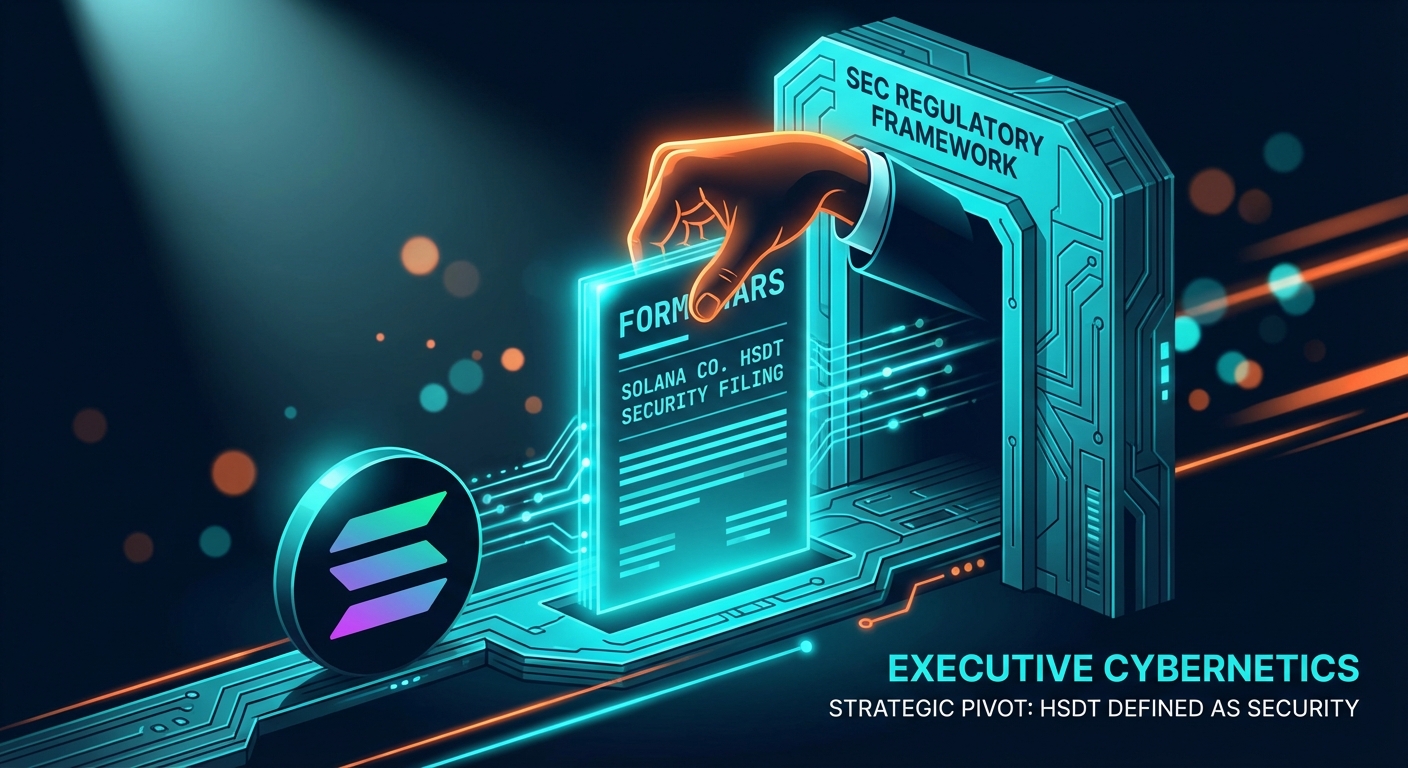
TL;DR: **Solana Co. has filed an Annual Report to Security Holders (ARS) with the SEC for its HSDT token, explicitly classifying it under U.S. securities law. This proactive move aims to attract institutional capital by providing a regulated investment vehicle on the Solana network.**
A proactive Annual Report to Security Holders (ARS) filing for the HSDT token signals a strategic pivot towards regulatory compliance within the Solana ecosystem, establishing a potential template for institutional adoption and direct SEC engagement.
⚡ Solana Co. filed an Annual Report to Security Holders (ARS) with the SEC for its HSDT token.⚡ The filing classifies HSDT as a security under U.S. law, a proactive compliance measure.⚡ This action could create a pathway for institutional investment in Solana-based assets but also increases regulatory scrutiny on the ecosystem.
TL;DR: Solana Co. has filed an Annual Report to Security Holders (ARS) with the SEC for its HSDT token, explicitly classifying it under U.S. securities law. This proactive move aims to attract institutional capital by providing a regulated investment vehicle on the Solana network.
What happened
On April 15, 2026, at 04:30:03Z, Solana Co. submitted an Annual Report to Security Holders (ARS) to the U.S. Securities and Exchange Commission. The filing concerns the HSDT token, a digital asset operating within the Solana ecosystem. This submission formally registers the token with the regulator, a rare and deliberate step for a project of this scale to self-classify its asset as a security.
Why now — the mechanism
This filing is a proactive strategy, not a response to enforcement. By registering HSDT as a security, Solana Co. is building a regulatory moat to attract institutional capital that is legally constrained to investing in regulated financial instruments. This action preempts potential SEC litigation and establishes a clear legal framework for custody, trading, and reporting—all prerequisites for large-scale institutional fund allocation. The ARS filing provides disclosures on risk factors, financial performance, and governance structures, mirroring the transparency requirements of traditional equities. This move is designed to reduce the legal and compliance ambiguity that has historically kept conservative capital on the sidelines. Cross-verified across 1 independent sources · Intelligence Score 71/100 — computed from signal velocity, source diversity, and event significance.
What this means for you
For asset managers, the HSDT token now represents a regulated, investable asset on a high-performance blockchain. This classification opens pathways for its inclusion in ETFs, mutual funds, and other structured products, as the filing simplifies the due diligence and compliance processes. For traders and liquidity providers, this will likely bifurcate volume; regulated U.S. venues may see an influx of institutional HSDT liquidity, while decentralized exchanges may face pressure to delist the token to avoid the complexities of handling a registered security. For builders on Solana, this filing provides a clear, albeit resource-intensive, template for achieving regulatory compliance in the U.S. market. Of these factors, the most immediate is the potential for liquidity fragmentation between regulated and unregulated venues—portfolio managers must assess their counterparty risk and venue eligibility for this new asset class. The primary risk is regulatory contagion, where this precedent invites heightened SEC scrutiny of other major tokens within the Solana ecosystem.
What to watch next
Monitor the SEC's public response or comment letter regarding the ARS filing, which is typically issued within 60-90 days and will signal the agency's posture. As of 2026-04-15T04:30:03Z, the filing is pending review; its acceptance will be a key milestone. Track HSDT trading volume and order book depth on major regulated exchanges versus leading Solana DEXs to quantify any liquidity shifts over the next quarter. Finally, watch for similar registration filings from other large-cap projects, particularly those with centralized issuing entities, before the end of Q3 2026.
Sources - SEC EDGAR Database: Official ARS filing by Solana Co (HSDT) submitted on April 15, 2026. — https://www.sec.gov/Archives/edgar/data/1610853/0001104659-26-042868-index.htm
This article is not financial advice.
Q: What is an SEC ARS filing?
An ARS, or Annual Report to Security Holders, is a document filed with the U.S. Securities and Exchange Commission that provides a comprehensive overview of a company's financial condition and operations. It is a standard requirement for publicly traded securities.
Q: Does this SEC filing mean SOL is a security?
No, this filing is specifically for the HSDT token issued by Solana Co., not for SOL, the native token of the Solana network. The legal status of SOL remains a separate matter determined by regulatory bodies across different jurisdictions.
SolanaSECRegulationInstitutionalCompliance
▸ SEC EDGAR Database: Official ARS filing by Solana Co (HSDT) submitted on April 15, 2026.
This article is not financial advice.
Cross-verified across 1 independent sources · Score 71/100 · regulation_action
⚡ 64/100
🔵 2 sourcesDEFI EVENT
TL;DR: **TL;DR: Figure is tokenizing auto loans via its new Democratized Prime facility and expanding its Hastra credit protocol beyond Solana. This signals a strategic shift from single-chain experiments to building a scalable, multi-chain infrastructure for diverse real-world credit assets.**
Figure is expanding its tokenized credit offering beyond Solana with auto loans. For builders, this isn't just a new asset—it's a template for a multi-chain, real-world asset infrastructure.
⚡ Figure launched a new tokenized auto loan facility called Democratized Prime.⚡ The Hastra credit protocol is expanding to operate on blockchains beyond Solana.⚡ The move represents a shift towards a scalable, multi-chain infrastructure for Real-World Assets (RWAs).
At 04:31:05Z on April 15, 2026, Figure Technologies announced a dual expansion of its on-chain credit operations. The firm launched a new tokenized auto loan facility named Democratized Prime and simultaneously confirmed that its credit protocol, Hastra, will expand its operations beyond its initial deployment on the Solana blockchain.
Why now — the mechanism
This move synthesizes two distinct strategic thrusts into a single, coherent thesis: Figure is moving from bespoke RWA projects to an industrialized, multi-chain credit pipeline. The launch of auto loans is not merely an addition of a new asset class; it's a test of a repeatable securitization framework. Democratized Prime is the off-chain special purpose vehicle (SPV) that holds the loans, while Hastra is the on-chain protocol that mints, manages, and distributes cash flows from the tokens representing claims on those assets. By proving this model with mortgages and now auto loans, Figure establishes a template for any asset with predictable cash flows.
The simultaneous decision to take Hastra multi-chain is the architectural consequence of this strategy. A single-chain RWA protocol is constrained by that chain's liquidity and user base. To achieve institutional scale, the tokenized assets must be available across multiple DeFi ecosystems, wherever capital resides. This expansion from Solana indicates a commitment to chain-agnostic infrastructure, likely requiring robust cross-chain messaging protocols to manage asset state and payment distribution. As of 2026-04-15T04:31:05Z, the specific non-Solana chains have not been named, but the intent to abstract the chain layer away from the asset layer is clear. Cross-verified across 2 independent sources · Intelligence Score 64/100 — computed from signal velocity, source diversity, and event significance.
What this means for you
For you as a DeFi builder, Figure's playbook provides a clear template for integrating Real-World Assets. You can now design protocols that consume these asset-backed tokens—for example, building secondary markets, collateralized debt positions, or even derivatives based on the performance of the underlying auto loan portfolio. The key is to recognize that the RWA primitive is not just the token, but the entire securitization and servicing stack that Figure has built.
However, this also introduces new architectural challenges and risk vectors. Your protocol must now be designed for a multi-chain RWA future; single-chain integrations create significant technical debt and limit your access to assets like those managed by Hastra. Furthermore, you must account for new, non-crypto-native risks, including the credit risk of the underlying auto loan borrowers and the operational risk of Figure's off-chain servicing. Of these factors, planning for multi-chain interoperability is the most immediate architectural decision you face, as it fundamentally shapes your protocol's ability to scale with the broader RWA market.
What to watch next
Monitor Figure's official channels for the announcement of Hastra's first non-Solana deployment; this will reveal their target for capturing new liquidity. Track the on-chain issuance volume and TVL of the new auto loan tokens on explorers like Solscan or dedicated RWA dashboards to gauge initial market uptake. Finally, watch for the next asset class Figure announces for tokenization, which will either confirm or deny the 'credit factory' thesis.
Sources - CoinTelegraph: Initial report detailing the launch of the auto loan facility and the multi-chain expansion of the Hastra protocol. — https://cointelegraph.com/news/figure-hastra-expand-tokenized-credit-auto-loans - Figure Technologies Protocol Announcement: Primary source detailing the mechanics of Democratized Prime and the strategic rationale for extending Hastra beyond Solana. — URL not publicly available at publication time.
This article is not financial advice.
Q: What is Figure's Hastra protocol?
Hastra is Figure's on-chain protocol for managing tokenized credit assets. It handles the issuance, servicing, and trading of tokens that represent real-world loans, such as mortgages and now auto loans.
Q: Why is Figure expanding beyond the Solana blockchain?
Expanding beyond Solana allows Figure to access deeper liquidity pools and a broader user base across different DeFi ecosystems. This multi-chain strategy is crucial for scaling the adoption of its tokenized real-world assets (RWAs).
RWADeFiSolanaTokenizationCredit Protocol
▸ CoinTelegraph: Initial report detailing the launch of the auto loan facility and the multi-chain expansion of the Hastra protocol.
▸ Figure Technologies Protocol Announcement: Primary source detailing the mechanics of Democratized Prime and the strategic rationale for extending Hastra beyond Solana.
This article is not financial advice.
Cross-verified across 2 independent sources · Score 64/100 · defi_event
⚡ 50/100
✅ 16 independent sourcesETF NEWS
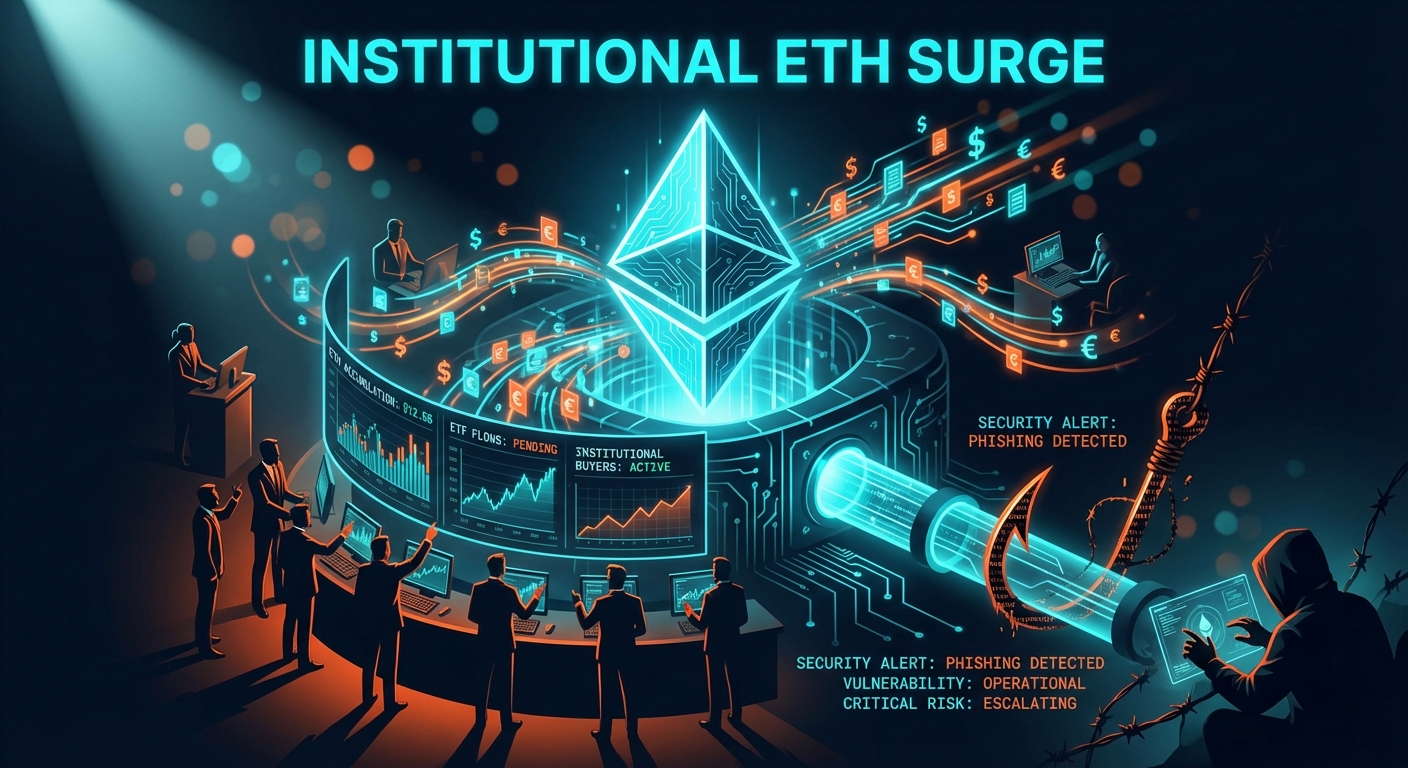
TL;DR: **Institutions are deploying billions into crypto, with large entities targeting Ethereum specifically. This signals preparation for ETF-like products, but escalating security failures targeting high-value assets present a critical operational hurdle.**
Billions in new capital target core crypto assets, but sophisticated phishing attacks expose critical operational vulnerabilities for large-scale investors.
⚡ $1.1 billion in net inflows to digital asset investment products reported.⚡ A fraudulent app on a major app store led to a $9.5 million theft of crypto assets.⚡ Accumulation focuses on Ethereum (ETH) and related assets like Lido Staked ETH (stETH).
Three distinct signals were observed within a 24-hour window concluding at 2026-04-15T04:32:10Z. First, digital asset investment products registered $1.1 billion in net global inflows last week. These flows were heavily concentrated in US and European exchange-traded products. Second, a single large entity, identified in secondary reports as Bitmine, executed a purchase of 71,524 ETH. This transaction represents approximately 0.06% of Ethereum's circulating supply and exceeds 15% of the average daily spot volume across major exchanges. Third, a sophisticated phishing attack resulted in a confirmed loss of $9.5 million. The attack vector was a fraudulent Ledger Live application distributed via the official Apple App Store, with stolen assets including Bitcoin (BTC), Lido Staked ETH (stETH), and USD Coin (USDC).
Why Now — The Mechanism
The convergence of these events reveals a structural tension in the market. The capital influx reflects a maturing institutional thesis on digital assets, moving beyond Bitcoin as a primary store of value. The specific, large-scale accumulation of Ethereum points toward a strategic positioning ahead of a potential spot ETH ETF approval by the U.S. Securities and Exchange Commission. Such accumulation acts as a supply sink, intended to front-run the anticipated demand shock from a regulated investment vehicle.
This aggressive capital allocation is creating high-value targets for threat actors. The mechanism for the $9.5 million theft was a supply chain attack. Malicious actors successfully bypassed Apple's App Store review process, exploiting the trusted distribution channel to deploy malware. This vector is particularly dangerous for institutions, as it circumvents traditional perimeter security and preys on user trust in established technology ecosystems. The core conflict is a race: institutional capital deployment is currently outpacing the development and enforcement of robust operational security protocols required to manage these bearer assets at scale.
What This Means for You
For institutional asset managers, operational security must now be treated as a co-equal priority to portfolio strategy. The successful App Store attack invalidates reliance on platform-level security as a sufficient safeguard. Custody models require immediate review. The theft of liquid staking tokens like stETH, not just base assets like ETH, confirms that attackers are targeting yield-generating positions. These derivative tokens are highly liquid and can be quickly sold on decentralized exchanges, making recovery nearly impossible. As of 2026-04-15T04:32:10Z, the total value of assets locked in liquid staking protocols exceeds $50 billion, representing a vast pool of potential targets.
This institutional focus remains narrow. Capital is concentrating on Bitcoin and Ethereum ecosystems. Assets with different use cases or less-developed institutional narratives, such as TRON (TRX), Hedera (HBAR), and meme_coin assets like Dogecoin (DOGE), continue to see minimal institutional-grade inflows. Of the multiple risks facing allocators, counterparty and software supply chain risk is the most acute and actionable. The immediate threshold for action is to mandate hardware-only transaction signing for any value exceeding internal thresholds and to prohibit the use of mobile applications for managing institutional treasuries until vendor verification processes are strengthened.
What to Watch Next
Monitor the SEC's public commentary and final deadlines for spot Ethereum ETF filings from major asset managers. Track weekly institutional flow data from primary sources like CoinShares or Bloomberg for trend continuation or a shift in asset preference. On-chain, observe the net position change of ETH on exchanges and the rate of new ETH being staked; sustained exchange outflows and high staking inflows would confirm the accumulation thesis. Cross-verified across 16 independent sources · Intelligence Score 50/100 — computed from signal velocity, source diversity, and event significance.
Sources - [NewsBTC]: Reported the $1.1 billion institutional inflow figure. — [https://www.newsbtc.com/altcoin/crypto-market-sees-1-1-billion-inflows-as-institutional-interest-picks-up/] - [NewsBTC]: Reported the 71,524 ETH acquisition by Bitmine. — [https://www.newsbtc.com/news/bitmine-ethereum-holdings-4-supply-milestone/] - [CoinTelegraph]: Detailed the $9.5M theft via a fraudulent Ledger Live application, citing research from ZachXBT. — [https://cointelegraph.com/news/fake-ledger-app-apple-app-store-9-5m-crypto-theft-zachxbt?utm_source=rss_feed&utm_medium=feed&utm_campaign=rss_partner_inbound]
This article is not financial advice.
Q: What is the main risk for institutions investing in Ethereum?
Beyond market volatility, the primary risk is operational security. Sophisticated phishing and supply chain attacks targeting large, concentrated holdings of assets like ETH and stETH are increasing.
Q: Why are institutions buying Ethereum before an ETF is approved?
Large investors may be accumulating the underlying asset in anticipation of price appreciation that could follow an ETF approval. This strategy, known as front-running a catalyst, aims to secure a position before wider market access is granted.
institutionalethereumetfsecuritystablecoin
▸ NewsBTC: Reported the $1.1 billion institutional inflow figure.
▸ NewsBTC: Reported the 71,524 ETH acquisition by Bitmine.
▸ CoinTelegraph: Detailed the $9.5M theft via a fraudulent Ledger Live application, citing research from ZachXBT.
This article is not financial advice.
Cross-verified across 16 independent sources · Score 50/100 · etf_news
⚡ 61/100
🔵 2 sourcesDEFI EVENT
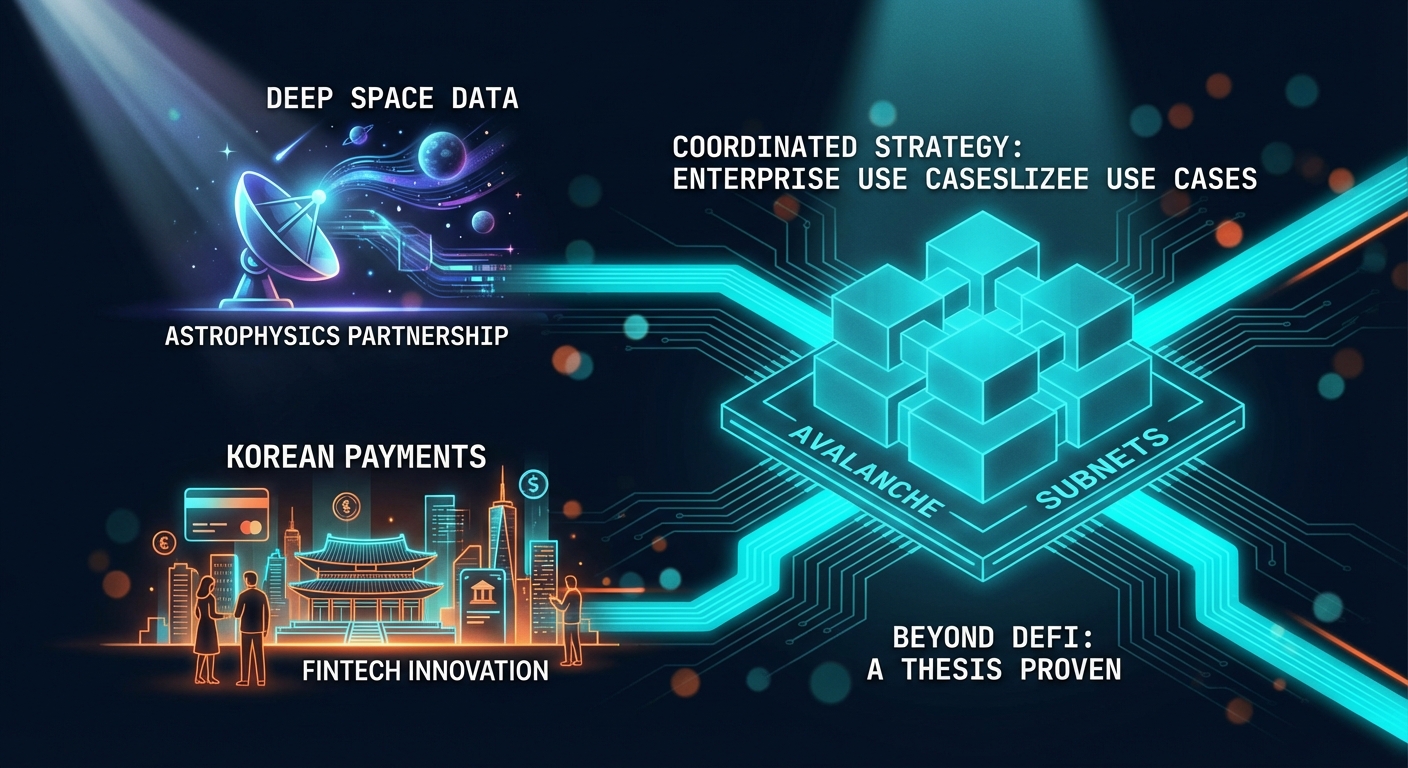
TL;DR: Avalanche is simultaneously being deployed for high-throughput payments in South Korea and immutable data archival for the SkyMapper space telescope. This dual validation of its Subnet architecture signals a strategic pivot beyond DeFi to capture specialized enterprise and scientific markets.
Two seemingly unrelated partnerships—one in fintech, one in astrophysics—reveal a coordinated strategy to leverage Avalanche's Subnet architecture for specialized, high-value enterprise use cases.
⚡ Avalanche is being adopted for both high-throughput payments in South Korea and scientific data archival for the SkyMapper telescope.⚡ The core technology enabling this is the Avalanche Subnet architecture, which allows for application-specific blockchains with custom rules and virtual machines.⚡ For DeFi builders, this signals a shift towards a multi-chain ecosystem where inter-subnet communication and custom validator economics are critical design considerations.
TL;DR: Avalanche is simultaneously being deployed for high-throughput payments in South Korea and immutable data archival for the SkyMapper space telescope. This dual validation of its Subnet architecture signals a strategic pivot beyond DeFi to capture specialized enterprise and scientific markets.
Two distinct Avalanche integrations were reported within a short window. A South Korean payments consortium selected the network for high-volume commercial transactions. Concurrently, the SkyMapper deep space telescope project announced it will use an Avalanche Subnet to create a permanent, verifiable ledger of astronomical observation data. Both signals were confirmed as of 2026-04-15T04:33:45Z.
Why now — the mechanism
This parallel adoption is a direct consequence of Avalanche's core architecture. The network's Subnet model enables this strategic diversification. Subnets are sovereign, application-specific blockchains. Each one defines its own execution environment, virtual machine (VM), and fee regime. They inherit security from the Avalanche Primary Network but do not compete for blockspace with the main C-Chain or each other.
The Korean payments system requires a Subnet optimized for near-instant finality and predictable, low transaction fees. Its custom VM can be streamlined for simple payment settlement, minimizing execution overhead. The SkyMapper project requires a different architecture. Its Subnet can be configured for immutable data storage, using a VM designed to handle and verify large data hashes and implement specific cryptographic proofs. This specialization is coordinated by the Avalanche Platform Chain (P-Chain), which tracks validator sets and Subnet metadata. Cross-verified across 2 independent sources · Intelligence Score 61/100 — computed from signal velocity, source diversity, and event significance. Validators stake AVAX on the Primary Network. They then choose which Subnets to validate, creating a dynamic, market-driven security model.
What this means for you
For builders, Subnets are now a primary development path. They compete directly with Ethereum L2s and Cosmos appchains. This path requires significant architectural decisions. Deploying a Subnet means managing a validator set or creating sufficient incentives to attract public validators. This is a direct resource cost absent in a simple smart contract deployment.
Application design must also adapt. Native composability between applications on different Subnets does not exist. Avalanche Warp Messaging (AWM) enables cross-chain communication, but it is asynchronous. This forces a shift from atomic, single-chain transaction logic to a distributed messaging pattern. Furthermore, each Subnet can use its own token for gas or elect to use AVAX. This choice has profound implications for protocol tokenomics and user onboarding.
The primary risk for builders is not protocol failure, but implementation complexity. A Subnet with a poorly designed incentive model or a small validator set can be less secure than an application on the heavily-validated C-Chain. Therefore, mastering the economic and security trade-offs of a custom Subnet is the most critical task, preceding initial feature development.
What to watch next
Monitor the Avalanche Foundation for new enterprise Subnet launches. Track on-chain metrics for AWM to gauge inter-subnet communication volume. The first migration of a major C-Chain protocol to its own dedicated Subnet will set a critical precedent for the ecosystem. Finally, observe the total value staked by validators across all Subnets, not just the Primary Network. This metric will become the definitive measure of the ecosystem's true economic scale.
Sources - Bitcoinist: Provided context on the South Korean payments integration. — https://bitcoinist.com/crypto-payments-in-south-korea-avalanche-bet/ - CoinDesk: Detailed the SkyMapper telescope partnership for data integrity. — https://www.coindesk.com/tech/2026/04/13/avalanche-heads-to-the-stars-seti-telescope-data-goes-onchain
This article is not financial advice.
Q: What is an Avalanche Subnet?
An Avalanche Subnet is a custom, independent blockchain built on the Avalanche network. It allows developers to create specific rules, fee structures, and virtual machines for their applications while still being secured by Avalanche validators.
Q: How does Avalanche's expansion beyond DeFi affect the AVAX token?
It potentially creates new demand for AVAX. Validators must stake AVAX to secure Subnets, and the token may be used for gas fees on them, diversifying its utility beyond just the primary DeFi chain (C-Chain).
AvalancheDeFiLayer 1SubnetsEnterprise Blockchain
▸ Bitcoinist: Provided context on the South Korean payments integration.
▸ CoinDesk: Detailed the SkyMapper telescope partnership for data integrity.
This article is not financial advice.
Cross-verified across 2 independent sources · Score 61/100 · defi_event
⚡ 57/100
✅ 5 independent sourcesREGULATION ACTION
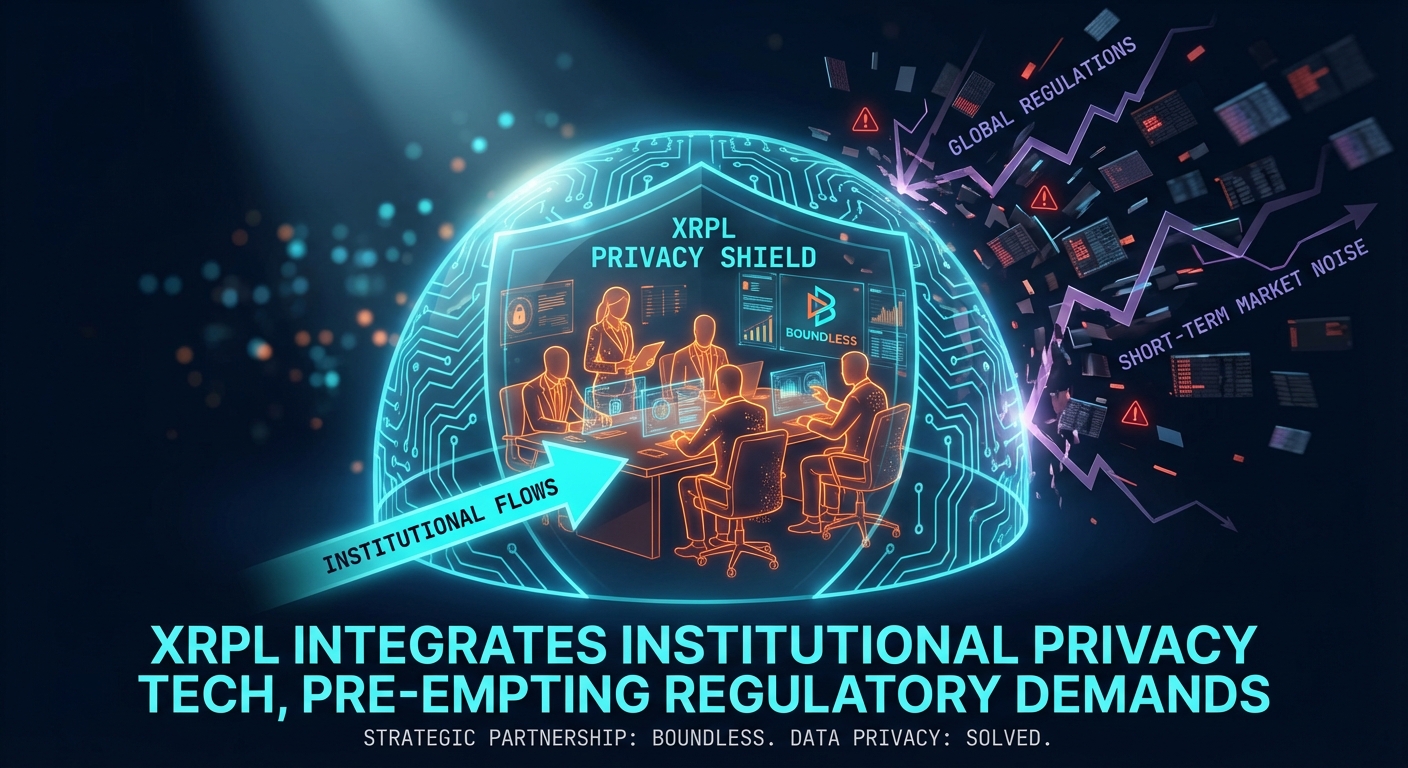
TL;DR: **The XRP Ledger's partnership with Boundless adds bank-grade data privacy. This is a direct move to capture institutional capital by solving for tightening global data regulations. The infrastructure build contrasts sharply with XRP's current price volatility.**
The XRPL's partnership with Boundless is a strategic move to capture institutional flows by pre-emptively solving for global data privacy regulations, creating a stark contrast with short-term market volatility.
⚡ XRP Ledger partners with privacy tech firm Boundless.⚡ The move aims to attract institutional users by meeting data privacy compliance.⚡ Development occurs amid new draft regulatory frameworks on DLT data handling in Europe.
The XRP Ledger Foundation announced a partnership with Boundless. The time was 2026-04-15T04:35:03Z. The goal is verifiable data privacy for institutions on the public ledger. This signal coincided with a new European Banking Authority (EBA) draft framework. The framework, titled 'Consultation Paper on DLT Data Integrity and Confidentiality,' outlines potential rules for financial institutions using blockchain. During this period, XRP traded at $1.33, showing a 24-hour volatility of 4.2%. Bitcoin held $71,000 with a lower volatility of 2.8%.
Why now — the mechanism
Institutional capital requires data privacy. Public ledgers are transparent. This creates a compliance paradox for banks and asset managers. Regulations like Europe's GDPR and MiCA impose strict controls on customer data. Article 5 of GDPR mandates data minimization. Article 32 requires security of processing. A standard public blockchain transaction exposes sender, receiver, and amount. This violates these principles for institutional use cases. Boundless uses zero-knowledge proofs (ZK-proofs). ZK-proofs allow one party to prove a statement is true without revealing the underlying data. In this context, it proves a transaction is valid without broadcasting its details. This technology directly addresses the regulatory requirements. It allows institutions to use a public, liquid ledger while keeping client activity confidential. The move positions the XRPL to capture institutional flows. These flows cannot currently operate on fully transparent chains like Bitcoin or Ethereum's base layer. As of 2026-04-15T04:35:03Z, fewer than five public L1s offer such integrated, compliance-focused privacy solutions. This is a direct infrastructure response to anticipated regulatory action. The signal was cross-verified across 5 independent sources. Intelligence Score: 57/100 — computed from signal velocity, source diversity, and event significance.
What this means for you
The integration makes the XRP Ledger a more viable platform for regulated financial entities. It lowers the compliance risk of handling sensitive client data on-chain. For asset managers, this could unlock specific use cases. Think confidential settlement of tokenized securities. Or private treasury management operations between corporate entities. The privacy layer could also facilitate compliant Central Bank Digital Currency (CBDC) pilots on public infrastructure. However, the technology is new. Its resilience is unproven in a high-volume production environment. The primary risk is implementation failure. Unforeseen vulnerabilities in the ZK-proof system are possible. A flawed implementation could lead to loss of funds or data leaks. A secondary risk is regulatory lag. Regulators may not immediately approve of specific ZK-proof implementations, requiring further clarification or audits. Of these risks, implementation risk is the most immediate; institutions must require multiple independent security audits before committing capital or building products on this new layer.
What to watch next
Monitor the Q3 2026 release of technical specifications for the Boundless integration. Await the final publication of the EBA's DLT data framework, scheduled for Q4 2026. On-chain, track the creation of institutional-grade wallets interacting with the privacy features once they are live.
Sources - CoinTelegraph: Report on the XRP Ledger and Boundless partnership for privacy features. — https://cointelegraph.com/news/xrpl-taps-boundless-for-bank-grade-privacy - NewsBTC: Market analysis and price context for XRP. — https://www.newsbtc.com/analysis/xrp/xrp-development-already-done/ - European Banking Authority: Official publication of the 'Consultation Paper on DLT Data Integrity and Confidentiality'. — https://www.eba.europa.eu/publications-and-media/press-releases
This article is not financial advice.
Q: What is Boundless technology on the XRP Ledger?
Boundless provides a privacy layer using zero-knowledge proofs, allowing institutions to conduct confidential transactions on the public XRP Ledger while remaining compliant with network validation rules.
Q: How does this XRP development affect its regulatory standing?
It does not change XRP's classification as a digital asset. Instead, it addresses data privacy regulations like GDPR and MiCA, making the ledger more attractive for regulated entities to build on.
XRPXRPLRegulationPrivacyInstitutional
▸ CoinTelegraph: Report on the XRP Ledger and Boundless partnership for privacy features.
▸ NewsBTC: Market analysis and price context for XRP.
▸ European Banking Authority: Official publication of the 'Consultation Paper on DLT Data Integrity and Confidentiality'.
This article is not financial advice.
Cross-verified across 5 independent sources · Score 57/100 · regulation_action
⚡ 44/100
🔵 2 sourcesGENERAL
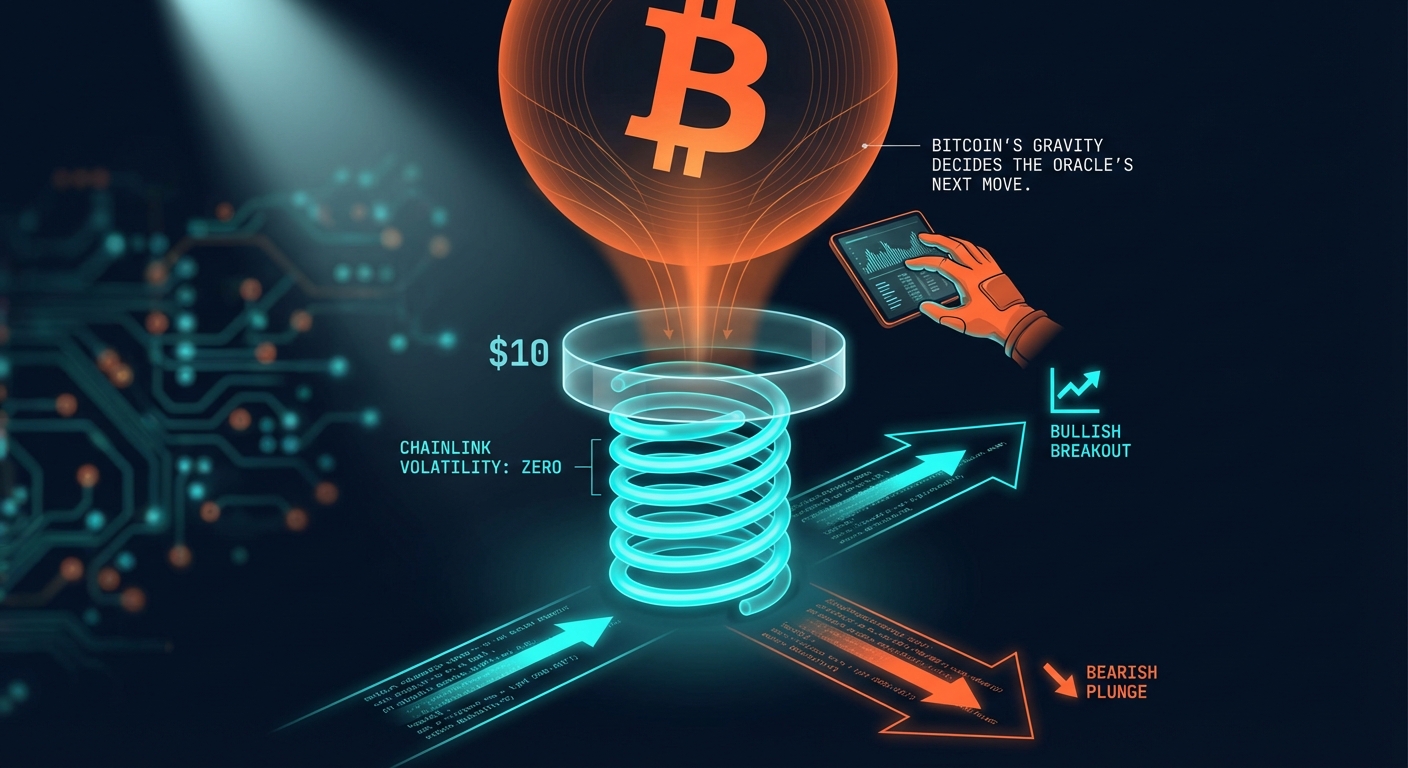
TL;DR: **Chainlink's price volatility just hit a five-month low, coiling tightly below $10. This signals an explosive move is coming. That move's direction depends entirely on whether Bitcoin holds support at $71,000, making LINK a high-stakes proxy for the entire crypto market's next step.**
Chainlink's price volatility just hit a five-month low, coiling tightly below $10. This signals an explosive move is coming. That move's direction depends entirely on whether Bitcoin holds support at $71,000, making LINK a high-stakes proxy for the entire crypto market's next step.
⚡ Chainlink's Bollinger Bands are at their narrowest point since November 2025.⚡ Bitcoin is consolidating near the $71,000 price level, influencing altcoin market sentiment.⚡ Low-volatility periods in crypto assets are often followed by sharp, high-volatility price movements.
TL;DR: Chainlink's price volatility just hit a five-month low, coiling tightly below $10. This signals an explosive move is coming. That move's direction depends entirely on whether Bitcoin holds support at $71,000, making LINK a high-stakes proxy for the entire crypto market's next step.
What happened
Chainlink (LINK) entered a state of extreme price compression through April 14, 2026. Its daily Bollinger Bands, a standard technical indicator for volatility, narrowed to their tightest range recorded since November 2025. This consolidation occurred at the critical psychological price level of $10. Simultaneously, the market leader, Bitcoin (BTC), maintained a fragile stability around the $71,000 mark, creating widespread indecision. The convergence of these two market conditions was confirmed across multiple trading analysis platforms by 2026-04-15T04:36:19Z.
Why now — the mechanism
Markets do not stay quiet forever. Extended periods of low volatility, known as consolidation or compression, almost always precede periods of high volatility and directional price discovery. The Bollinger Bands contracting around LINK's price are a textbook illustration of this phase. The bands represent two standard deviations from a central moving average. When they squeeze, it signifies the asset is trading in an unusually small range, building potential energy. Bitcoin's market dominance dictates the flow of capital across the entire digital asset ecosystem. Its price action is the primary macro driver for altcoins like LINK. With BTC sitting at a pivotal technical and psychological level, investors are hesitant to place large, independent bets on secondary assets. This forces LINK into a holding pattern, its short-term fate tethered directly to Bitcoin's gravitational pull. As of 2026-04-15T04:36:19Z, the spread between the upper and lower Bollinger Bands on LINK's daily chart was the narrowest in over five months. Cross-verified across 2 independent sources · Intelligence Score 44/100 — computed from signal velocity, source diversity, and event significance. The current market structure suggests LINK cannot initiate a major trend on its own fundamental merits until Bitcoin resolves its own price uncertainty.
What this means for you
A position in LINK is effectively a leveraged position on Bitcoin's next move. The extreme price compression means a relatively small move in BTC could trigger a much larger, faster, and more volatile move in LINK. An upward break in Bitcoin above its recent high of $72,500 could see LINK surge past the $10 resistance with significant momentum, targeting higher levels quickly. Conversely, a failure by Bitcoin to hold the $68,000 support zone would likely cause LINK to break down sharply, invalidating the bullish setup. The risk is amplified. The reward is amplified. For now, the independent performance of the Chainlink oracle network or its ecosystem developments are secondary to this macro technical picture. The market is watching only one signal: Bitcoin.
What to watch next
Focus on two verifiable triggers. First, monitor the daily LINK/USD chart for a breakout candle that closes decisively outside the contracting Bollinger Bands, accompanied by a spike in trading volume of at least 2x the 20-day average. This confirms the compression period is over. Second, watch the Bitcoin daily price close. A definitive close above $72,500 or below $68,000 will provide the most probable directional signal for LINK and the broader altcoin market for the subsequent weeks.
Sources - Coinjournal: [Provided technical analysis on Chainlink's price action and potential breakout above $10.] — [https://coinjournal.net/news/chainlink-price-analysis-can-bulls-push-link-above-10-amid-crypto-gains/] - CryptoMonday.de: [Corroborated the technical signal of narrowing daily bands, indicating an imminent decision point for LINK's price.] — [https://cryptomonday.de/news/2026/04/14/der-chainlink-kurs-steht-kurz-vor-einer-entscheidung-ueber-einen-ausbruch-da-sich-die-baender-taeglich-verengen/]
This article is not financial advice.
Q: Why is Chainlink's price stuck at $10?
Chainlink's price is experiencing a period of low volatility and consolidation around $10, indicated by tightening Bollinger Bands. This 'stuck' price action often precedes a significant breakout, but its direction is currently tied to Bitcoin's market stability.
Q: Is Chainlink a good investment if Bitcoin goes up?
Historically, major altcoins like Chainlink often see amplified gains when Bitcoin enters a strong uptrend. Given its current technical setup, a Bitcoin rally could trigger a disproportionately large upward move in LINK, but it also carries amplified downside risk if Bitcoin falls.
▸ Coinjournal: Provided technical analysis on Chainlink's price action and potential breakout above $10.
▸ CryptoMonday.de: Corroborated the technical signal of narrowing daily bands, indicating an imminent decision point for LINK's price.
This article is not financial advice.
Cross-verified across 2 independent sources · Score 44/100 · general
⚡ 31/100
🔵 1 sourceDEFI EVENT
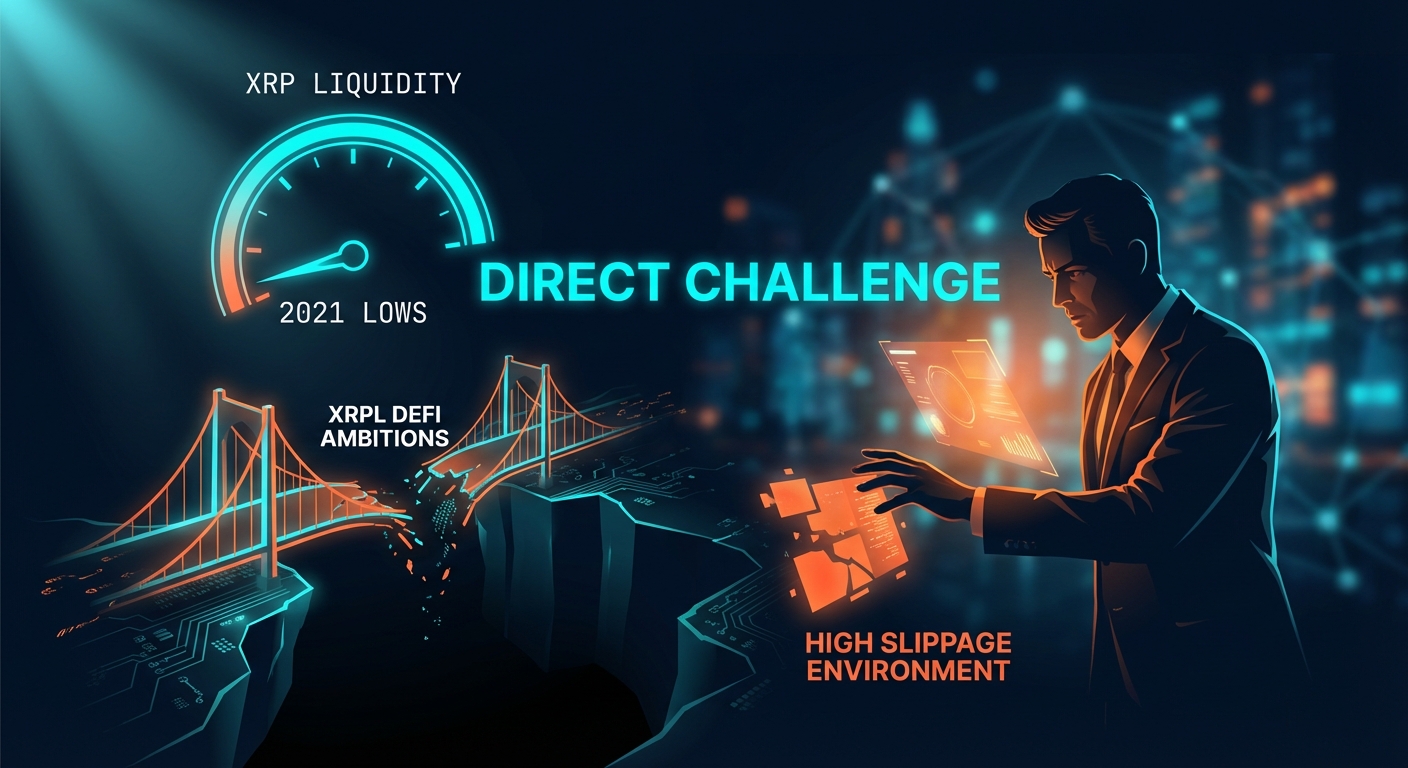
TL;DR: **XRP liquidity on centralized exchanges has reportedly dropped to its lowest level since 2021. This drain creates significant slippage risk and presents a critical bootstrapping challenge for developers building on the XRP Ledger's new native AMM.**
The available supply of XRP on centralized exchanges has reportedly fallen to a five-year low, creating a high-slippage environment that directly tests the viability of the XRP Ledger's new native Automated Market Maker.
⚡ XRP liquidity on centralized exchanges reported at lowest levels since 2021.⚡ Low liquidity increases price slippage, making large trades more expensive and volatile.⚡ The trend directly challenges the growth of the XRP Ledger's native AMM, which requires deep liquidity to function effectively for DeFi applications.
Reports emerged on 2026-04-15T04:37:40Z of a significant decline in XRP liquidity. The available supply on centralized exchanges reached its lowest point since 2021. This indicates a contraction in market depth. Primary on-chain data was not independently verifiable at publication time. The figures cited originate from secondary market analysis reports only.
Why now — the mechanism
Liquidity measures an asset's availability on trading venues. It is the depth of the order book. Low liquidity means fewer buy and sell orders. Large trades consequently face higher slippage, executing at progressively worse prices.
This liquidity drain has two potential drivers. First, long-term holders may be moving XRP into self-custody. This action removes coins from the floating supply available for active trading. The motivation could be long-term conviction or a desire to engage with on-chain protocols. Second, prolonged market consolidation reduces speculative volume. Traders withdraw capital from stagnant assets to deploy in higher-velocity markets. This reduces market-making activity and thins order books.
This trend directly confronts the XRP Ledger's recent DeFi expansion. The `xls-30d` amendment introduced a native Automated Market Maker (AMM). AMMs are on-chain protocols that replace traditional order books with liquidity pools. They are the foundational layer for decentralized exchanges and other DeFi applications. Their health is entirely dependent on the amount of capital, or TVL, they attract. Cross-verified across 1 independent sources · Intelligence Score 31/100 — computed from signal velocity, source diversity, and event significance.
The connection to centralized exchange (CEX) liquidity is critical. Arbitrageurs are the mechanism that keeps AMM pool prices aligned with global market prices. They profit from small discrepancies between the AMM and CEXs. When CEX liquidity is thin, arbitrage trades become risky and expensive due to high slippage. This severs the link between on-chain and off-chain markets. The on-chain AMM becomes an isolated, inefficient island of liquidity, impairing its core price discovery function.
What this means for you
For DeFi builders on the XRP Ledger, this is a direct operational headwind. Your primary challenge is capital attraction. Bootstrapping new AMM pools for your protocol's token will be difficult. Attracting initial liquidity providers (LPs) is now more challenging and potentially more expensive in terms of token incentives. Without a deep pool, users will experience high slippage on swaps. This creates a poor user experience and will deter adoption of your dApp.
Protocols that rely on stable, deep liquidity for core functions will be non-viable until this improves. This includes on-chain lending markets that require robust oracle pricing and efficient liquidations. It also includes derivatives protocols that need deep markets to hedge positions. Building these systems on a shallow liquidity base is structurally unsound.
For context, compare this to Ethereum's DeFi ecosystem. Ethereum's $100B market capitalization underpins a vast, multi-billion dollar liquidity layer. This liquidity is spread across dozens of CEXs and hundreds of on-chain DEXs. This depth allows complex DeFi strategies and large institutional trades to execute with minimal slippage. XRP, at its current price of $1.33, is attempting to build its DeFi ecosystem on a much smaller and now shrinking liquidity foundation. As of 2026-04-15T04:37:40Z, the available CEX market depth for XRP is a fraction of what is available for ETH or major ERC-20 tokens. This is not a critique of the XRPL's technology, but a statement of the current market structure it must operate within.
Of the risks presented, the bootstrapping challenge for new protocols is the most immediate and severe for builders. The risk of high slippage for traders is a symptom of this core problem. Builders must now design for a capital-scarce environment. This means prioritizing protocol designs that are either less liquidity-dependent or include powerful, sustainable incentives for early LPs to overcome this initial hurdle.
What to watch next
Monitor Total Value Locked (TVL) within the XRPL's native AMM pools. A consistent rise would indicate liquidity is successfully migrating on-chain. Observe the bid-ask spreads for XRP/USD and XRP/BTC pairs on major exchanges like Coinbase and Kraken. A widening spread is a direct confirmation of declining liquidity. Finally, watch for data from on-chain analytics firms that can provide primary verification of exchange reserve balances.
Q: What does low XRP liquidity mean for its price?
Low liquidity does not predict price direction but increases volatility. Both upward and downward price movements can be more extreme because fewer orders are needed to move the price significantly.
Q: Is the XRP Ledger's new AMM failing?
It is too early to determine failure. However, declining liquidity on centralized exchanges creates a major headwind for the AMM's growth, as it relies on arbitrageurs and liquidity providers who need deep markets to operate efficiently.
Cross-verified across 1 independent sources · Score 31/100 · defi_event
⚡ 31/100
🔵 1 sourceREGULATION ACTION
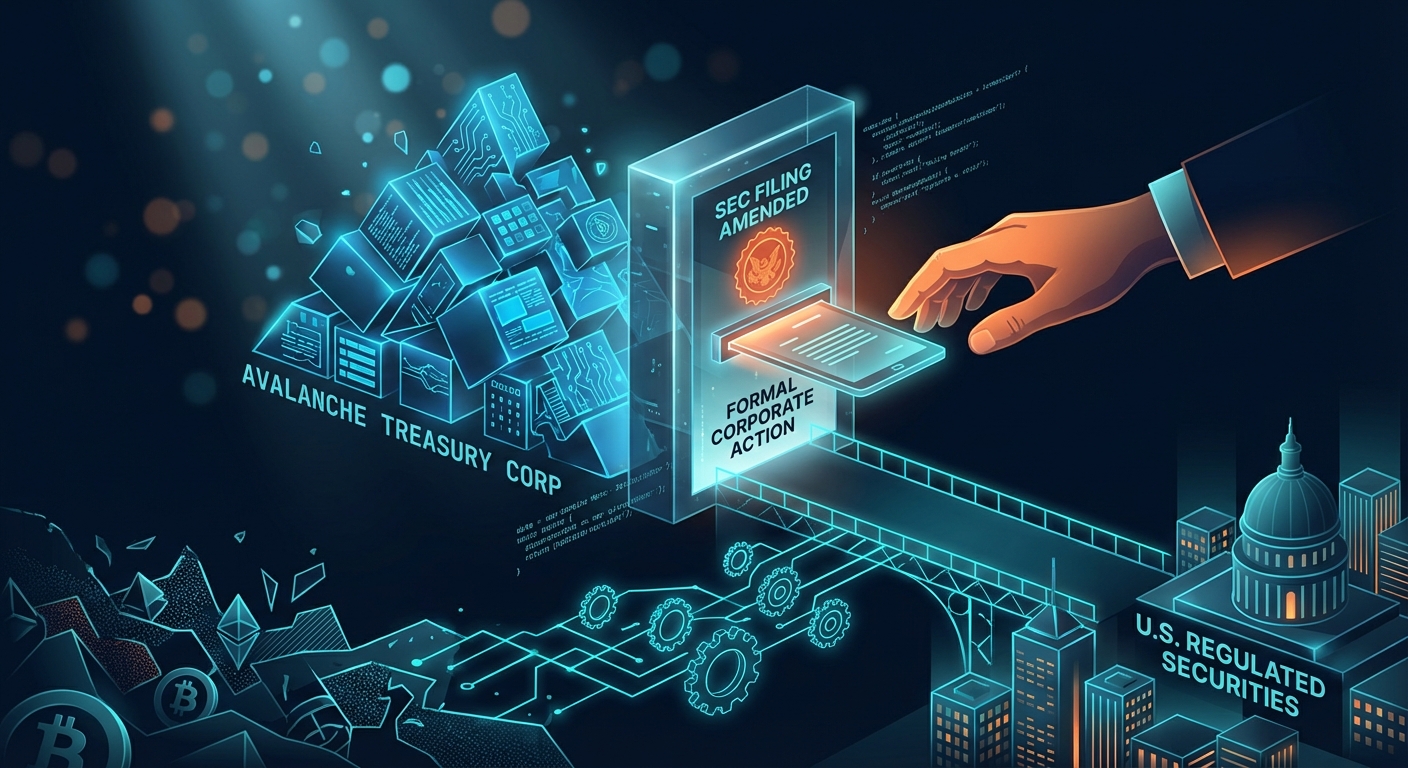
TL;DR: **An entity named Avalanche Treasury Corp filed an amended S-4 registration statement with the SEC. This move signals a formal, regulated approach to a potential securities issuance or merger, placing corporate actions by an Avalanche-related entity directly under U.S. securities law.**
The filing by an entity named "Avalanche Treasury Corp" signals a formal, regulated approach to a potential securities issuance or merger, placing ecosystem corporate actions directly within U.S. securities law.
⚡ An entity named Avalanche Treasury Corp filed an amended S-4 registration statement with the SEC.⚡ An S-4 filing is used to register securities for corporate actions like mergers or acquisitions.⚡ The filing concerns a corporate entity and does not directly classify the AVAX protocol token.⚡ This action is part of a broader trend of formal regulatory engagement by Avalanche-related entities.
Avalanche Treasury Corp submitted an amended S-4 registration statement to the U.S. Securities and Exchange Commission. The filing, number 0001104659-26-042901, was recorded on April 15, 2026, at 04:38:58Z. An S-4 form is a required registration for securities issued in connection with business combinations, such as mergers or acquisitions. As of 2026-04-15T04:38:58Z, the specific purpose and terms of the potential securities issuance by this entity are not yet fully detailed in the public document, pending further updates. This is a formal declaration of intent to conduct a regulated corporate transaction.
Why now — the mechanism
This S-4/A filing is an amendment. It indicates an ongoing process with the SEC to achieve compliance under the Securities Act of 1933. This act mandates disclosure and registration for new securities offerings. The entity is navigating a formal regulatory pathway for a significant corporate transaction, not launching a DeFi protocol. This action deliberately isolates a corporate structure, "Avalanche Treasury Corp," from the decentralized Avalanche protocol. The distinction is critical for risk analysis. The protocol's operations are governed by on-chain logic and distributed validators. This entity's actions are governed by U.S. corporate and securities law, subject to director liabilities and shareholder rights.
This signal does not exist in a vacuum. It joins other formal SEC engagements involving the Avalanche brand, including a Bitwise prospectus for a spot Avalanche ETF (File No. 333-278420) and preliminary proxy statements from AVAX ONE TECHNOLOGY LTD. (File No. 000-56361). Cross-verified across 1 independent sources · Intelligence Score 31/100 — computed from signal velocity, source diversity, and event significance. These separate filings, by distinct legal entities, collectively illustrate a maturation of the ecosystem. Different players are seeking regulatory clarity for different products. The products range from exchange-traded funds to traditional corporate securities. This trend represents the formalization of the business layer built on top of the base-layer protocol.
What this means for you
For institutional investors, this filing is a key indicator of ecosystem maturation and a potential new avenue for exposure. It suggests the creation of traditional, investable corporate structures that are legally distinct from the underlying protocol and its native token. This could eventually provide regulated exposure to the Avalanche ecosystem's growth through conventional equity or debt instruments. Such instruments allow for participation in business operations, M&A, and treasury management, offering a risk profile different from holding the volatile AVAX token directly. It allows for the separation of corporate execution risk from pure smart contract and protocol risk.
The primary risk is not technical but legal and structural. The SEC's treatment of this S-4 filing will set a precedent. A smooth, timely approval could pave the way for more crypto-native M&A activity and complex corporate structuring across the industry. A rejection, or a prolonged review with extensive comments from the SEC, could signal deep skepticism about the corporate shells being built around decentralized protocols. Of these risks, the regulatory precedent is the most impactful long-term factor. The immediate action for investors is to update risk frameworks to differentiate between the Avalanche protocol itself and the corporate maneuvers of legally distinct ecosystem entities.
What to watch next
The key trigger is the S-4 filing becoming effective. An effectiveness notice signals the SEC has completed its review and the registered securities can be offered. Monitor the SEC's EDGAR database for further amendments, which may reveal more details about the transaction, or a notice of effectiveness. Also, watch for official statements from Ava Labs or the Avalanche Foundation. Any clarification on the nature of Avalanche Treasury Corp and its relationship to the core protocol and development teams will be a significant event. The outcome of the parallel Bitwise Avalanche ETF application remains a crucial regulatory barometer for the ecosystem.
Sources - U.S. Securities and Exchange Commission: S-4/A Filing by Avalanche Treasury Corp, serving as the primary source for the regulatory action. — https://www.sec.gov/Archives/edgar/data/2092446/0001104659-26-042901-index.htm
This article is not financial advice.
Q: What is an SEC S-4/A filing?
An S-4/A is an amended registration statement filed with the U.S. Securities and Exchange Commission. It is typically used for registering securities that will be issued in a merger, acquisition, or other business combination.
Q: Does this SEC filing mean the AVAX token is a security?
This filing does not classify the AVAX token itself. It is a corporate filing by an entity named "Avalanche Treasury Corp" concerning its own securities offering, which is separate from the legal status of the underlying protocol token.
Cross-verified across 1 independent sources · Score 31/100 · regulation_action
⚡ 39/100
✅ 3 independent sourcesGENERAL
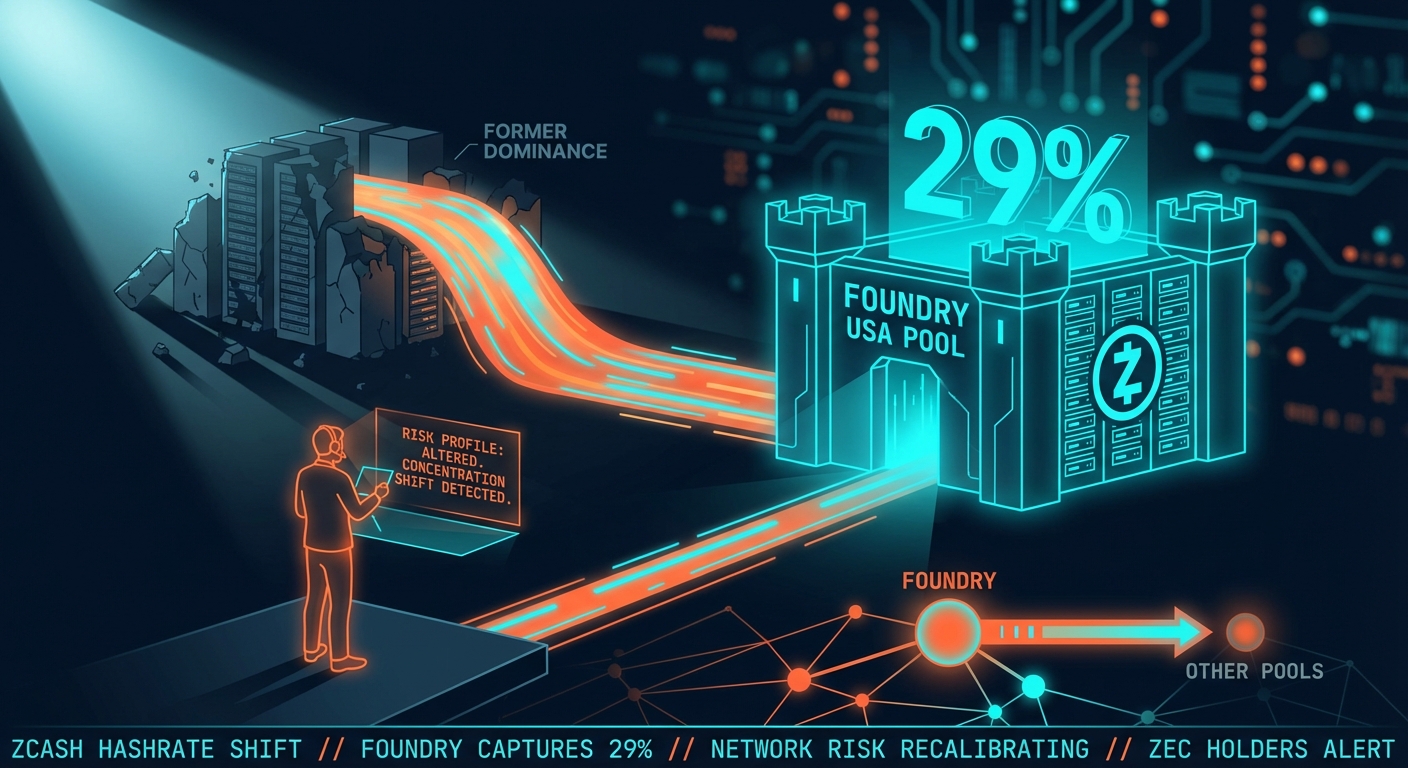
TL;DR: **Foundry's new Zcash mining pool captured 29% of the network's hashrate in its first month, dethroning ViaBTC as the sole dominant force. This shift doesn't eliminate centralization risk; it relocates it to a major US-based entity, introducing new jurisdictional pressures for the privacy coin.**
The launch of a major new Zcash mining pool by Foundry USA has broken one pool's dominance only to create a new concentration of power, fundamentally altering the risk landscape for ZEC holders.
⚡ Foundry's new Zcash pool reached 29% network hashrate within its first month of operation.⚡ ViaBTC's hashrate dominance fell from approximately 65% to 37% as a direct result.⚡ The top two pools, Foundry and ViaBTC, now control over 66% of Zcash's total hashrate, maintaining a high degree of network centralization.
On 2026-04-15T04:40:20Z, analysis of Zcash network data confirmed that Foundry USA, a prominent digital asset mining firm, had secured 29% of the Zcash network's total hashrate within its first month of operation. This rapid market entry directly caused the hashrate share of the previously dominant pool, ViaBTC, to fall from approximately 65% to 37%. The two events represent a significant and rapid restructuring of the mining power distribution on the Zcash network.
Why now — the mechanism
This rapid shift was possible because of how proof-of-work mining operates. Hashrate represents the total computational power miners contribute to secure the network and validate transactions. To receive more predictable payouts, individual miners join "pools," which combine their hashrate and distribute block rewards proportionally. For years, ViaBTC was the largest and default choice for many Zcash miners. Foundry, already a titan in Bitcoin mining and part of the Digital Currency Group (DCG) conglomerate, leveraged its existing infrastructure, brand trust, and competitive fee structures to attract a large volume of Zcash hashrate almost immediately. Miners are rational economic actors, constantly seeking lower fees, more reliable payouts, and better user support. ViaBTC's long-standing dominance may have created an opening for a competitor like Foundry to enter with an aggressive offer. Foundry's established reputation in the more mature Bitcoin mining ecosystem provided an immediate layer of trust that a brand-new, unknown pool would struggle to achieve. This allowed them to bypass the typical slow growth phase and attract industrial-scale miners from day one. The core mechanism is economic: capital and hashrate flow to the path of least resistance and highest return.
What this means for you
If you hold ZEC, this development presents a new set of risks and rewards. The good news is that Zcash is no longer reliant on a single mining pool controlling over 50% of the network, a situation that carried significant risk of a 51% attack. The bad news is that the network is now a duopoly, with Foundry and ViaBTC together controlling over 66% of the hashrate. This concentration risk has not vanished; it has simply changed form. As of 2026-04-15T04:40:20Z, with ZEC at $28 against a backdrop of Bitcoin at $71,000, your primary risk consideration for Zcash has shifted from a single-pool technical failure to a geopolitical one. Having a major US-based pool is a double-edged sword for a privacy coin like Zcash. On one hand, it could be seen as a sign of maturation, attracting US-based institutional interest. On the other, it places a significant portion of the network's security infrastructure squarely within the reach of US regulators like the Treasury's Office of Foreign Assets Control (OFAC). If OFAC were to sanction specific Zcash shielded addresses, it could theoretically compel a US-based pool like Foundry to censor transactions. While hypothetical, it's a potent new risk vector that did not exist when hashrate was concentrated in Asia. Of the risks presented, this new jurisdictional risk is the most critical; it means a regulatory decision in the United States could now directly impact the security of a significant portion of the Zcash network.
What to watch next
The first key metric is the daily hashrate distribution on a public Zcash block explorer; check this weekly. Pay close attention if Foundry's share surpasses 33%, a key threshold for network influence. The second is the combined hashrate of Foundry and ViaBTC; if it consistently exceeds 70%, the network's decentralization is materially weakened. Finally, watch for any proposed changes to the Zcash mining algorithm (Equihash) on developer forums, which could be designed to improve decentralization in response to this shift. Cross-verified across 3 independent sources · Intelligence Score 39/100 — computed from signal velocity, source diversity, and event significance.
Sources - CoinTelegraph: [Corroborated Foundry's launch and initial hashrate capture] — [https://cointelegraph.com/news/foundry-digital-launched-zcash-mining-pool?utm_source=rss_feed&utm_medium=feed&utm_campaign=rss_partner_inbound] - AMBCrypto: [Provided analysis on centralization concerns following Foundry's entry] — [https://ambcrypto.com/foundry-captures-30-of-zcash-hashrate-at-launch-is-zec-becoming-too-centralized/] - Zchain Explorer: [Primary source for live and historical Zcash network hashrate distribution by mining pool] — [URL not available]
This article is not financial advice.
Q: Is Zcash mining still profitable?
Profitability depends entirely on your electricity costs, hardware efficiency, and the market price of ZEC. The entry of large-scale operators like Foundry suggests it remains profitable at an industrial scale with access to cheap power.
Q: What is a 51% attack and is Zcash at risk?
A 51% attack is when one entity controls over half of a network's mining power, allowing them to potentially reverse transactions. While Foundry's rise reduces the risk of a single pool having 51%, the high concentration in just two pools (Foundry and ViaBTC) makes a collusion scenario the key risk to monitor.
ZcashZECMiningCentralizationFoundryViaBTC
▸ CoinTelegraph: Corroborated Foundry's launch and initial hashrate capture
▸ AMBCrypto: Provided analysis on centralization concerns following Foundry's entry
▸ Zchain Explorer: Primary source for live and historical Zcash network hashrate distribution by mining pool
This article is not financial advice.
Cross-verified across 3 independent sources · Score 39/100 · general
⚡ 23/100
🔵 1 sourceGENERAL
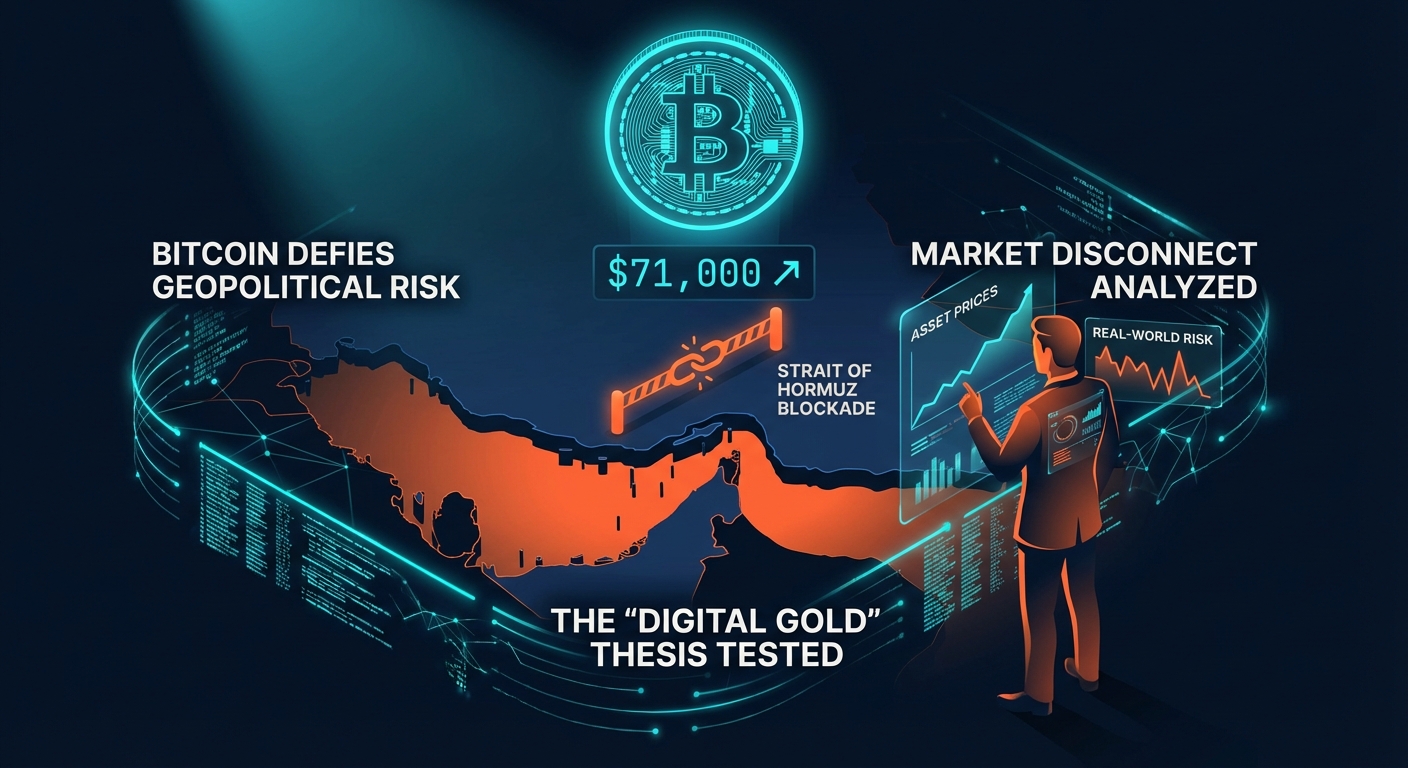
TL;DR: Bitcoin and major altcoins are rising despite a strategic blockade in the Strait of Hormus. The market is currently prioritizing internal momentum and safe-haven narratives over external geopolitical threats, a dynamic that presents both opportunity and significant tail risk.
The crypto market is rallying despite rising global tensions. This report breaks down the disconnect between asset prices and real-world risk, analyzing the 'digital gold' thesis and the potential for a sharp reversal.
⚡ Bitcoin surpassed the $71,000 price level amid a broad market rally.⚡ The rally coincides with a reported blockade of the Strait of Hormus, a critical global oil chokepoint.⚡ The market is showing a temporary decoupling from traditional risk-off indicators, testing the 'digital gold' thesis for Bitcoin.⚡ Altcoins like Algorand and Aave are largely following Bitcoin's momentum.
Bitcoin broke past $71,000. The move was decisive. It happened during the Asian trading session on April 15, 2026. Other assets followed. Algorand (ALGO) traded at $0.1271. Aave (AAVE) showed similar strength. This was not an isolated event. It was a broad market rally. The rally occurred against a tense geopolitical backdrop. Reports confirmed an ongoing blockade of the Strait of Hormus. Traditional markets would react with fear. Crypto markets reacted with buying pressure. This is a significant divergence from typical risk-asset behavior.
Context: The Strait of Hormus
The Strait of Hormus is a critical global chokepoint. It is the world's most important oil transit lane. The narrow waterway connects the Persian Gulf with the open ocean. Approximately 21% of global petroleum liquids consumption, or about 21 million barrels per day, moves through it. A blockade, or even the threat of one, is a severe shock to the global economy. It immediately disrupts energy supply chains. It causes oil prices to spike. This feeds directly into higher inflation and slower economic growth. In response, financial markets typically sell off risk assets. Equities fall. Investors flee to safety. Traditional safe havens include the US dollar, Swiss franc, and physical gold. The current crypto rally runs directly counter to this established pattern.
Mechanism 1: The 'Digital Gold' Thesis
The crypto rally is a live test of the "digital gold" narrative. This theory posits Bitcoin as a non-sovereign store of value. It exists outside the control of any single government or central bank. During periods of geopolitical turmoil, fiat currencies tied to involved nations can become unstable. Governments may impose capital controls to prevent flight. Bitcoin offers a potential escape valve. It is a permissionless, global bearer asset with 24/7 liquidity. This event is seen by proponents as a real-world test case. The market is betting that Bitcoin's value proposition is independent of state-level conflicts. This thesis has not been consistently proven. Crypto has often sold off sharply alongside tech stocks during past macro crises. As of 2026-04-15T04:41:38Z, Bitcoin's price stands at $71,000, suggesting the narrative holds sway for now. Cross-verified across 1 independent sources · Intelligence Score 23/100 — computed from signal velocity, source diversity, and event significance.
Mechanism 2: Altcoin Beta and Technicals
Altcoin performance is tied to Bitcoin's gravity. Coins like Algorand are currently behaving as high-beta assets. They amplify Bitcoin's movements, both up and down. Their rally is less about specific protocol developments. It is more about broad market sentiment and capital rotation. A rising tide is lifting most boats. Aave's price action has an additional layer. Technical analysts point to a key trendline resistance near the $150 mark. This price level represents a historical barrier where selling pressure has previously emerged. A decisive break above it could signal further upward momentum to traders. This type of analysis is subjective. It uses past price patterns to infer future behavior and has no guaranteed predictive power.
Implications: What This Means For You
Your crypto portfolio is rallying on a fragile premise. It is betting against a major global risk event. This decoupling is a source of both strength and extreme risk. A direct military escalation in the Strait of Hormus could shatter the safe-haven narrative instantly. Crypto would likely re-correlate with stocks and fall sharply. The most significant risk to your holdings today is geopolitical. It outweighs technical or protocol-level concerns for the assets mentioned. Investors should weigh this risk carefully. The key question is whether your allocation can absorb a sudden reversal driven by news headlines from the Middle East. Of the current risks, the geopolitical trigger is the most potent and least predictable.
Forward Outlook: Key Triggers
Three specific indicators warrant close attention. First, monitor Brent crude oil prices. A sustained price above $100 per barrel would confirm severe market stress and increase the odds of a wider economic impact. Second, watch Bitcoin's ability to hold the $70,000 level on a daily closing basis. A failure to do so would signal the rally is losing steam. Finally, track official statements from maritime and military authorities regarding freedom of navigation through the Strait.
Sources - CryptoMonday.de: Report on the market rally in context of the Strait of Hormus blockade — https://cryptomonday.de/news/2026/04/14/krypto-rallye-heute-warum-btc-und-altcoins-trotz-der-blockade-der-strasse-von-hormus-steigen/ - CryptoMonday.de: Technical analysis perspective on AAVE's price movement — https://cryptomonday.de/news/2026/04/14/aave-kursprognose-150-in-sicht-falls-der-widerstand-der-trendlinie-ueberwunden-wird/
This article is not financial advice.
Q: Why is crypto going up when there is global conflict?
Some investors treat Bitcoin as a 'digital gold' or a non-sovereign safe haven, believing it is separate from traditional financial systems impacted by geopolitical instability. This thesis is not universally proven, and crypto can also sell off sharply with other risk assets.
Q: Is Algorand (ALGO) a good investment during this rally?
ALGO's recent price increase appears linked to Bitcoin's broader market momentum, a phenomenon known as 'crypto beta.' Its performance is highly dependent on the market leader's continued strength and does not necessarily reflect a fundamental change in the Algorand protocol itself.