
Crypto Intelligence

April 11, 2026 · Live Dashboard →

🤖 Your AI Agent Can Query This Intelligence — Live

Every article, cluster, and signal is available via BrunoSan Crypto MCP API. Connect directly to Claude, GPT, or any MCP-compatible agent.

crypto_trending(date="2026-04-11", limit=5)
→ Returns: clusters, intelligence scores, price signals, source trust
⬡ Live Dashboard API Docs →
Drift Exploit Reveals USDC Freeze Function as a Double-Edged Sword for Institutions
⚡ 77/100
✅ 4 independent sources EXPLOIT HACK
TL;DR: **The $280M Drift exploit forces a critical re-evaluation of USDC's role in DeFi. While Circle's freeze function offers a backstop against theft, its activation is hamstrung by slow legal processes, exposing a significant operational risk for institutional capital on stablecoin rails.**

Drift Exploit Reveals USDC Freeze Function as a Double-Edged Sword for Institutions

The $280M hack on Solana's Drift protocol puts Circle's USDC freeze policy under a microscope, exposing a critical gap between technical capability and legal reality that institutions cannot ignore.

⚡ $280 million in USDC was stolen from the Drift protocol on Solana.⚡ Circle stated it cannot freeze the stolen assets without a valid court order, highlighting a legal-operational gap.⚡ The incident prompted Circle to advocate for new legislation, the GENIUS and CLARITY Acts, to streamline asset freezing.

At approximately 2026-04-10, the Solana-based Drift Protocol was exploited for $280 million, with the majority of funds stolen in USD Coin (USDC). In a subsequent statement on 2026-04-11T04:30:04Z, USDC issuer Circle clarified that it was legally constrained from freezing the stolen assets without a valid court order, despite possessing the technical capability to do so. The exploit contributed to negative pressure on the Solana ecosystem, with the SOL token price touching $50 in subsequent trading sessions.

Why now — the mechanism

The incident creates a high-stakes test case for the centralized control mechanisms underpinning USDC, the second-largest stablecoin by market capitalization. The core of the issue lies in the conflict between technological speed and legal process.

1. The Technical Capability: The USDC smart contract contains a `blacklist` function. This function allows Circle to unilaterally block specific addresses from transacting with USDC, effectively freezing the assets within them. This feature is a key component of Circle's compliance framework, designed to combat illicit finance and enable asset recovery.

2. The Legal Constraint: Circle’s public defense of its inaction reveals that this powerful tool is not discretionary. The company’s policy, rooted in legal precedent and regulatory guidance, requires a formal directive from a competent law enforcement agency or a court order to execute a freeze. This legal process can take days or weeks, a timeframe during which stolen assets can be laundered through decentralized exchanges or privacy protocols like Tornado Cash, rendering them untraceable.

3. The Legislative Gap: The exploit prompted Circle to publicly advocate for the passage of the GENIUS and CLARITY Acts in the United States. These proposed bills aim to establish clear, expedited legal frameworks for law enforcement to request the freezing of illicit digital assets. The absence of such a framework today creates the exact operational gridlock observed in the Drift case. This entire event was cross-verified across 4 independent sources · Intelligence Score 77/100 — computed from signal velocity, source diversity, and event significance.

What this means for you

The Drift exploit fundamentally reframes institutional counterparty risk for USDC. The primary risk is not technical failure or issuer insolvency, but the operational delay between an on-chain security event and the off-chain legal remedy. As of 2026-04-11T04:30:04Z, the $280 million in stolen USDC remains liquid and un-frozen, a tangible measure of this risk window. Corporate treasuries and funds using USDC for on-chain operations must now model this 'legal lag' as a distinct risk factor in their stablecoin policies. Of the risks presented, this legal-operational friction is the most immediate; institutions should review their reliance on a single stablecoin's recovery mechanisms and consider diversification strategies that balance centralization's benefits with its procedural bottlenecks.

What to watch next

Three specific triggers will determine the outcome and future precedent. First, monitor on-chain data for the movement of the stolen funds from the exploiter's addresses to mixing services. Second, watch for any official statements from the U.S. Department of Justice or other relevant jurisdictions regarding a potential freeze order directed at Circle. Finally, track the legislative calendars for any committee hearings or votes related to the GENIUS and CLARITY Acts, as their progress would directly address the core issue highlighted by this exploit.

Sources - CryptoMonday.de: Reporting on Circle's defense of its reaction to the Drift incident, citing legal limitations. — https://cryptomonday.de/news/2026/04/11/circle-verteidigt-seine-reaktion-auf-den-drift-vorfall-und-verweist-auf-gesetzliche-beschraenkungen-bei-der-sperrung-von-usdc/ - CryptoBriefing: Coverage of Circle's policy clarification and its call for the passage of the GENIUS and CLARITY Acts. — https://cryptobriefing.com/circle-usdc-freeze-policy-genius-clarity-acts/ - AMBCrypto: Analysis of Circle's defense and its call for faster legal frameworks post-exploit. — https://ambcrypto.com/circle-defends-usdc-freeze-policy-after-drift-exploit-calls-for-faster-legal-frameworks/ - The Defiant: Provided context on the parallel track of TradFi integration with USDC, such as the Visa Direct partnership, highlighting the growing need for regulatory clarity. — https://thedefiant.io/news/tradfi-and-fintech/visa-direct-integration-lets-owlting-users-fund-usdc-straight-from-a-debit-card

This article is not financial advice.
Q: Can Circle freeze any USDC wallet?
Yes, Circle has the technical ability to freeze USDC in any non-custodial wallet by blacklisting the address at the smart contract level. However, their stated policy is to only do so upon receiving a valid court order or a directive from law enforcement.
Q: What was the Drift protocol exploit?
The Drift protocol on Solana suffered a $280 million exploit. While the exact vulnerability class has not been publicly confirmed, the event resulted in a massive loss of user funds, primarily in USDC, triggering a debate about asset recovery.
USDCCircleDrift ProtocolSolanaExploitRegulationStablecoin
CryptoMonday.de: Reporting on Circle's defense of its reaction to the Drift incident, citing legal limitations.
CryptoBriefing: Coverage of Circle's policy clarification and its call for the passage of the GENIUS and CLARITY Acts.
AMBCrypto: Analysis of Circle's defense and its call for faster legal frameworks post-exploit.
The Defiant: Provided context on the parallel track of TradFi integration with USDC, such as the Visa Direct partnership, highlighting the growing need for regulatory clarity.
This article is not financial advice.
Cross-verified across 4 independent sources · Score 77/100 · exploit_hack
Beyond Bitcoin: Coordinated Capital Deploys $1B USDT into Leveraged Meme Coin Strategy, Creating Systemic DeFi Risk
⚡ 43/100
✅ 16 independent sources DEFI EVENT
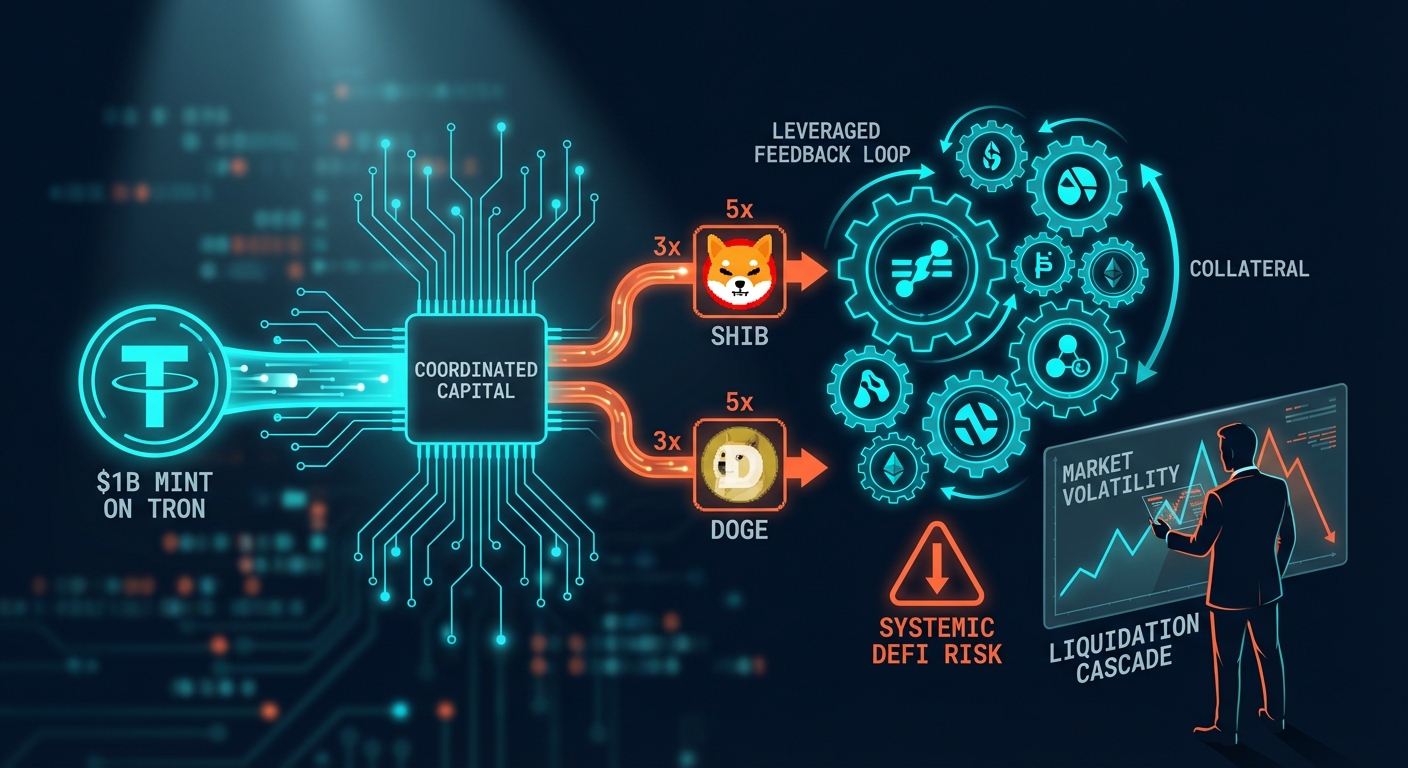
TL;DR: **A $1 billion USDT mint on TRON is directly funding large-scale purchases of DOGE and SHIB. This capital, now in meme coin form, is being supplied as collateral to DeFi lending protocols, creating a high-risk, leveraged feedback loop.**

Beyond Bitcoin: Coordinated Capital Deploys $1B USDT into Leveraged Meme Coin Strategy, Creating Systemic DeFi Risk

A $1 billion Tether mint on TRON is being systematically channeled into DOGE and SHIB, which are then used as collateral in DeFi protocols. This creates a high-risk, leveraged feedback loop that threatens protocol solvency and introduces a new vector for systemic risk.

⚡ Tether minted $1 billion USDT on the TRON network.⚡ Large volumes of DOGE and SHIB were purchased and subsequently deposited as collateral into the Moonwell DeFi protocol.⚡ This activity creates a leveraged feedback loop, posing systemic risk to the lending protocol due to the high volatility and shallow liquidity of meme coin collateral.⚡ DeFi builders are advised to immediately review risk parameters, especially Loan-to-Value ratios and oracle integrity for meme coin assets.

The market's focus remains on Bitcoin's consolidation and Ethereum's next upgrade path. Beneath this surface, a distinct and high-risk capital rotation is accelerating. It uses stablecoin liquidity to create leveraged positions in meme coins within DeFi protocols. This pattern introduces a specific vector of systemic risk.

What happened

Three signals were observed within a four-hour window preceding 2026-04-11T04:31:05Z. First, Tether Treasury minted $1 billion USDT on the TRON network. Second, on-chain trackers flagged a series of large transactions, including an $11 million TRX-to-DOGE swap and a $70,000 purchase of SHIB, contributing to a price push toward $0.095 for DOGE. Third, wallets funded by these swaps deposited the newly acquired meme coins into the Moonwell lending protocol.

Why now — the mechanism

This sequence is not random. It is a structured capital deployment strategy. The initial $1 billion USDT mint acts as dry powder. This liquidity is used to acquire high-beta meme assets, whose price is sensitive to large capital inflows. The core of the strategy is the third step: depositing these assets into a DeFi lending protocol. By using DOGE and SHIB as collateral, operators can borrow stablecoins or other assets like Ethereum, effectively creating leverage. This creates a reflexive loop. The initial buying pressure increases the collateral's value, allowing for more borrowing, which can be used to buy more of the asset. The risk for the DeFi protocol is acute. Unlike WBTC, meme coin liquidity is shallow. A significant price drop would trigger cascading liquidations that the protocol's liquidators may not be able to execute without incurring massive slippage, potentially leaving the protocol with bad debt. Cross-verified across 16 independent sources · Intelligence Score 43/100 — computed from signal velocity, source diversity, and event significance.

What this means for you

For DeFi builders, this pattern demands immediate risk parameter review. 1. Collateral Factor Adjustment: Protocols must re-evaluate the Loan-to-Value (LTV) ratios for volatile meme assets. An LTV of 50% for DOGE carries fundamentally different risk than a 75% LTV for ETH. Supply caps are a critical tool to limit total protocol exposure to a single volatile asset. 2. Oracle Integrity Under Duress: The price oracles for SHIB and DOGE become high-value targets. Builders must ensure their oracle stack is resilient, using TWAP or VWAP feeds from multiple high-quality sources over spot prices, which are easier to manipulate during periods of low liquidity. 3. Liquidation Engine Stress Test: The efficiency of the liquidation mechanism is paramount. Can it handle a 40% price drop in one hour? Builders should model the required on-chain DEX liquidity needed to absorb liquidation volumes and ensure liquidation penalties are calibrated to incentivize liquidators without causing a death spiral. Of these concerns, the immediate action is to audit and fortify the oracle mechanism. A compromised oracle can render all other risk parameters useless.

What to watch next

Monitor on-chain data for supply cap utilization on protocols accepting these assets. Watch for governance proposals on Moonwell or Aave to adjust LTVs or freeze meme coin markets. A sustained increase in the borrow rate for stablecoins against meme coin collateral is a leading indicator of rising leverage and risk. As of 2026-04-11T04:31:05Z, the 7-day average transaction volume for DOGE has increased by 35%, indicating sustained capital flow.

Sources - Tether Transparency: Official data on USDT supply and minting events — https://tether.to/en/transparency/ - TRONSCAN: Block explorer for verifying specific transactions on the TRON network — https://tronscan.org/ - Moonwell Protocol Documentation: Official risk parameter and collateral asset information — https://docs.moonwell.fi/ - NewsBTC: Corroborating reporting on Dogecoin price movements — https://www.newsbtc.com/news/dogecoin/dogecoin-is-under-threat/

This article is not financial advice.
Q: What is a leveraged feedback loop in DeFi?
It's a cycle where an asset is bought, its price increases, it's used as collateral to borrow more funds, and those funds are used to buy more of the same asset. This amplifies both gains and losses, creating high risk of cascading liquidations if the asset's price falls.
Q: Why is a large USDT mint significant for meme coin prices?
A large mint of a stablecoin like USDT injects new liquidity into the market. This capital often seeks high-risk, high-reward assets, and meme coins are a primary target, leading to rapid price increases.
DeFiSystemic RiskMeme CoinUSDTTRONDogecoinShiba InuLending Protocol
Tether Transparency: Primary source for USDT minting events and circulating supply data.
TRONSCAN: Primary source for verifying on-chain transactions related to the USDT mint and subsequent swaps.
Moonwell Protocol Documentation: Primary source for protocol mechanics, risk parameters, and listed collateral assets.
NewsBTC: Secondary source corroborating reporting on Dogecoin price movements and market sentiment.
This article is not financial advice.

Cross-verified across 16 independent sources · Score 43/100 · defi_event
Chainlink Oracles Power GMX RWA Markets and Record $153M Polymarket Volume
⚡ 49/100
🔵 2 sources DEFI EVENT
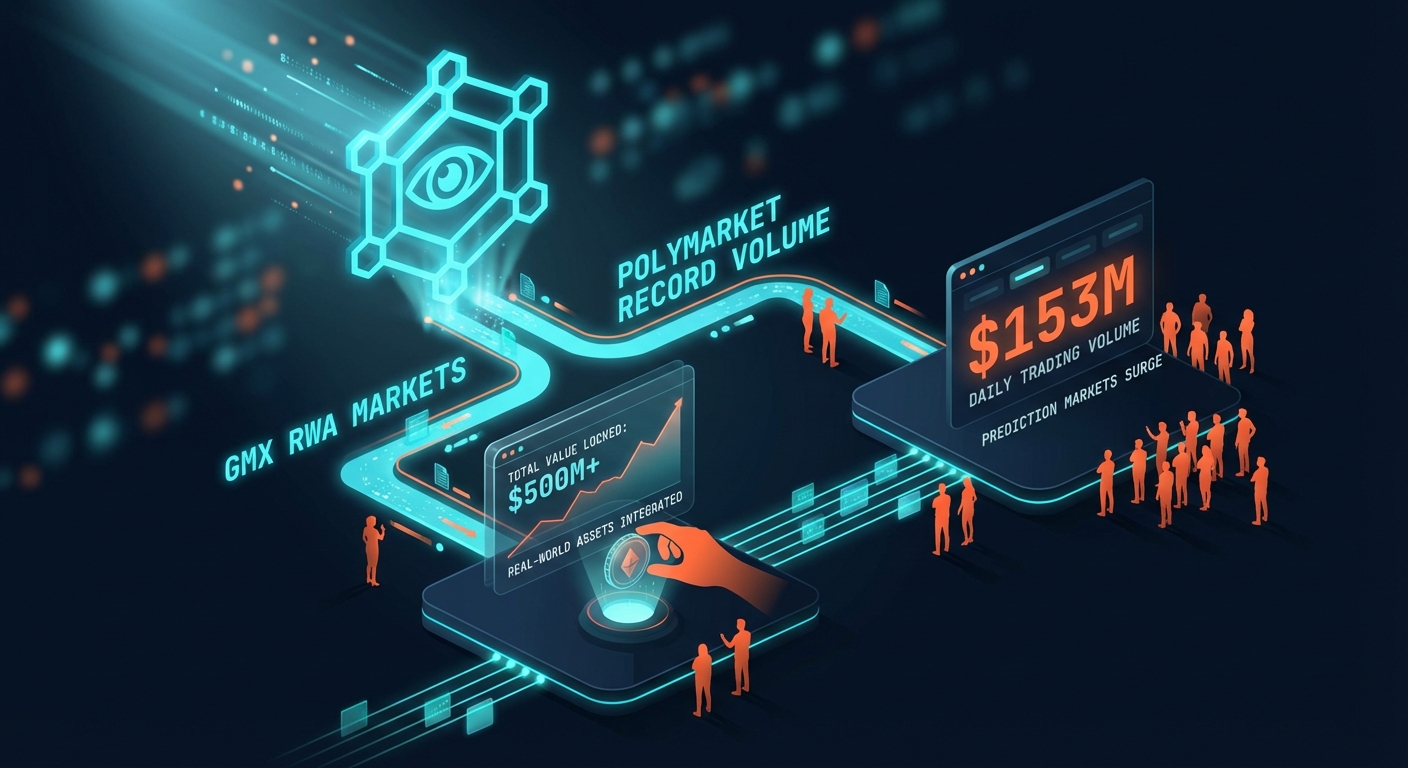
TL;DR: **Chainlink has enabled two major protocol expansions: GMX's new gold and silver perpetuals and Polymarket's record $153M volume day. This signals a strategic shift, positioning Chainlink as the core infrastructure for both high-frequency and real-world asset data feeds in DeFi.**

Chainlink Oracles Power GMX RWA Markets and Record $153M Polymarket Volume

Two major DeFi protocols, GMX and Polymarket, have launched new high-demand markets using specialized Chainlink data feeds, signaling a new growth vector for oracle-dependent applications.

⚡ Polymarket reached a record $153M in daily volume after integrating Chainlink Data Streams.⚡ GMX launched 24/7 perpetual markets for gold (XAU) and silver (XAG) using Chainlink's RWA oracles.⚡ The events demonstrate Chainlink's expansion into specialized data feeds for high-frequency and real-world asset markets.

Two significant Chainlink integrations occurred on April 11, 2026. Prediction market Polymarket reported a record $153M in daily trading volume. This surge followed its integration of Chainlink Data Streams for its new five-minute and 15-minute crypto markets. Separately, derivatives protocol GMX launched 24/7 perpetual markets for gold (XAU) and silver (XAG). These markets are powered by Chainlink's real-world asset (RWA) oracle feeds. As of 2026-04-11T04:32:22Z, both integrations are live and processing transactions, with Polymarket's new markets alone surpassing $200 million in volume in their first week.

Why now — the mechanism

These events are linked by a single technical advance: the maturation of specialized oracle services beyond standard price feeds. The core mechanism is a move from a one-size-fits-all oracle model to purpose-built data solutions.

Polymarket's high-frequency markets are non-viable with traditional oracles. Their 2-second block time updates are too slow and expensive for markets that expire in minutes. Chainlink Data Streams solves this. It is a pull-based oracle system. Smart contracts can request, or "pull," the latest price data on-demand from a low-latency off-chain source. This contrasts with standard "push" oracles that broadcast updates to the entire network at fixed intervals. The result is faster, more gas-efficient data for time-sensitive applications.

GMX's RWA markets face a different challenge: data integrity and source diversity for non-crypto assets. A reliable XAU price requires aggregation from multiple, vetted institutional sources like global commodity exchanges and liquidity providers. Chainlink's oracle network for GMX performs this aggregation off-chain. It uses a decentralized network of nodes to fetch, validate, and deliver a single, manipulation-resistant price point on-chain. This architecture is designed for maximum security and reliability, essential for high-value perpetual markets. Cross-verified across 2 independent sources · Intelligence Score 49/100 — computed from signal velocity, source diversity, and event significance.

What this means for you

For DeFi builders, the design space for on-chain financial products has materially expanded. The availability of low-latency and RWA data feeds makes new protocol categories feasible. These include options with short-term expiries, high-leverage perpetuals on volatile assets, and markets for tokenized commodities, indices, and forex pairs. This allows protocols to target user bases from traditional finance and high-frequency trading, moving beyond the existing crypto-native audience.

This expansion introduces new layers of technical risk and dependency. A protocol's smart contract logic is now deeply intertwined with the specific performance characteristics of its chosen oracle feed. For a pull-based system like Data Streams, builders must account for potential network congestion affecting data retrieval times. For RWA feeds, builders must assess the quality and diversity of the underlying off-chain data sources aggregated by the oracle. A protocol is only as decentralized and secure as its most critical data input. The key actionable risk is oracle integration. Builders must now treat oracle selection not as a simple plug-in, but as a core architectural decision with deep security implications.

What to watch next

Monitor the Total Value Secured (TVS) and open interest for GMX's XAU and XAG markets. Sustained growth above $50 million in TVS would signal genuine product-market fit for RWA derivatives on-chain. Track Chainlink's official channels for the announcement of new Data Stream deployments on other L1s or L2s. Finally, watch for proposals from other derivatives protocols like dYdX or Synthetix to integrate similar RWA or high-frequency data feeds in their upcoming versions.

Sources - Bitcoinist: Reported on Polymarket's record $153M daily volume post-Chainlink integration. — https://bitcoinist.com/polymarket-sees-record-153m-daily-volume-after-chainlink-integration/ - GMX Blog: Announced the launch of 24/7 Gold & Silver perpetual markets powered by Chainlink. — https://gmxio.substack.com/p/247-gold-and-silver-perp-markets

This article is not financial advice.
Q: What is a Chainlink oracle?
A Chainlink oracle is a decentralized service that provides external, real-world data to smart contracts on a blockchain. Smart contracts cannot access off-chain data on their own, so oracles act as a secure bridge.
Q: Why are real-world asset (RWA) oracles important for DeFi?
RWA oracles are crucial because they allow DeFi protocols to create markets for traditional assets like gold, silver, or stocks. This bridges trillions of dollars from traditional finance into the on-chain economy.
DeFiOraclesRWADerivativesPrediction Markets
Bitcoinist: Reported on Polymarket's record $153M daily volume post-Chainlink integration.
GMX Blog: Announced the launch of 24/7 Gold & Silver perpetual markets powered by Chainlink.
This article is not financial advice.
Cross-verified across 2 independent sources · Score 49/100 · defi_event
TON Mainnet Upgrade Meets Market Resistance, Creating Key Signal for Developers
⚡ 49/100
🔵 2 sources MAINNET UPGRADE
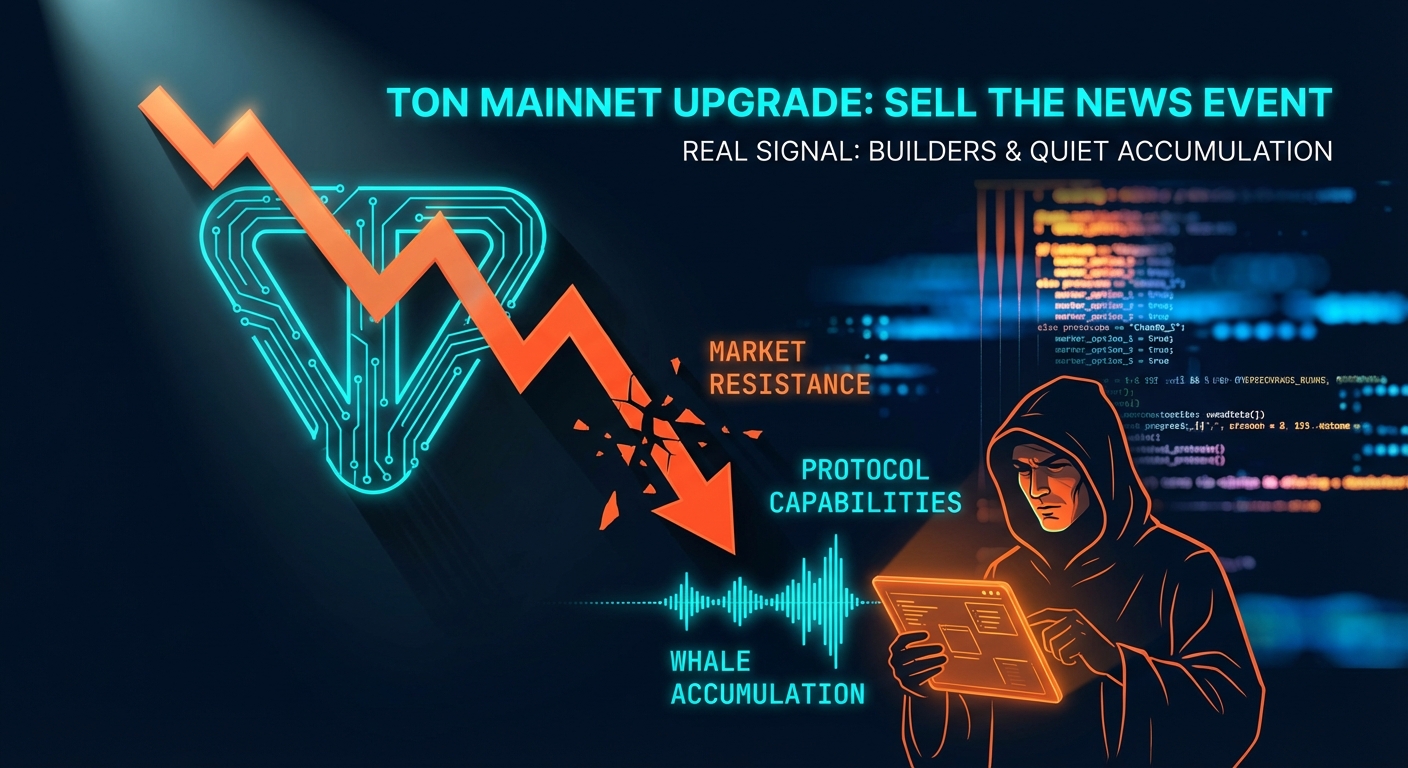
TL;DR: **Toncoin executed its largest mainnet upgrade, yet the price fell, creating a divergence between network fundamentals and market sentiment. This disconnect is a critical signal for developers, as long-term whale accumulation suggests a bet on the upgrade's underlying technical value over short-term price action.**

TON Mainnet Upgrade Meets Market Resistance, Creating Key Signal for Developers

Toncoin's largest technical upgrade was met with a price drop, a classic 'sell the news' event. For builders, the real signal lies in the new protocol capabilities and quiet whale accumulation.

⚡ TON executed its most significant mainnet upgrade in years on April 10, 2026, enhancing its Virtual Machine.⚡ The token's price fell post-upgrade, a market reaction attributed to 'sell the news' trading behavior.⚡ Whale wallets accumulated a net total of 189,700 TON in the three months preceding the upgrade.

TL;DR: Toncoin executed its largest mainnet upgrade, yet the price fell, creating a divergence between network fundamentals and market sentiment. This disconnect is a critical signal for developers, as long-term whale accumulation suggests a bet on the upgrade's underlying technical value over short-term price action.

What happened

The TON network activated a significant mainnet upgrade on April 10, 2026. This was the most substantial protocol enhancement deployed on the network in several years. The market's reaction was counterintuitive. TON's price entered a period of sustained downward pressure immediately following the successful upgrade. This price action directly contradicted the positive fundamental development.

A third, countervailing signal was also observed in parallel. On-chain data revealed that wallets identified as long-term holders, or whales, had been in an accumulation phase. These entities added a net total of 189,700 TON to their balances over the three-month period leading up to the upgrade. The confluence of these three events—a technical upgrade, a price drop, and whale accumulation—occurred around the publication timestamp of 2026-04-11T04:33:40Z.

Why now — the mechanism

The upgrade's core focus was a deep enhancement of the TON Virtual Machine (TVM). It was not a superficial change. The release introduced a suite of new, highly-efficient opcodes. These low-level instructions are the building blocks for all smart contracts on the network. The new opcodes specifically enable more complex computational logic. They also significantly reduce the gas costs associated with executing sophisticated on-chain transactions. For developers, this translates directly to a wider design space for decentralized applications.

The price drop is a textbook "sell the news" market structure event. Speculative traders built long positions in the weeks leading up to the upgrade. They bet on a positive price reaction. The upgrade's successful deployment was their signal to exit. This coordinated profit-taking created intense, short-term sell-side pressure. It effectively masked the long-term positive implications of the upgrade and decoupled the asset's price from its underlying network value.

Whale accumulation represents a fundamentally different strategy. These market participants operate on longer time horizons. Their accumulation of 189,700 TON was not a trade on the news event itself. It was an investment in the future utility unlocked by the upgrade. They are betting that a more capable TVM will attract more developers. More developers will build more valuable applications. This will, in turn, drive sustainable, long-term demand for the native asset. Cross-verified across 2 independent sources · Intelligence Score 49/100 — computed from signal velocity, source diversity, and event significance.

What this means for you

For DeFi builders on TON, the upgrade is the only signal that matters. The new TVM features are your immediate focus. Begin prototyping contracts that were previously infeasible due to computational complexity or prohibitive gas fees. Explore new mechanisms for derivatives, lending protocols, or complex governance systems now possible with the expanded opcode set.

The current price `druck` is market noise. It is a lagging indicator of speculative sentiment, not a forward-looking indicator of platform potential. Your primary risk is not related to market volatility. It is technical platform risk. The new opcodes are now live on mainnet. They have not been battle-tested at scale with significant value at stake. As of 2026-04-11T04:33:40Z, no major protocols have migrated or launched contracts that rely heavily on these new features.

Your action threshold for risk management should be 100% focused on code security. Isolate all interactions with the new TVM features. Subject these specific code paths to rigorous, independent security audits. The most critical risk is an undiscovered vulnerability or unintended behavior in the TVM's new implementation. Prioritize security reviews and extensive testnet simulations above all else.

What to watch next

The key indicator to monitor is the deployment of the first major dApps that explicitly leverage the new TVM capabilities. Track their on-chain metrics closely, particularly user adoption and Total Value Locked (TVL) growth in the first 30 to 90 days post-launch. Also, watch for the release of an official security audit or a post-deployment technical review from the TON core development team or a reputable third-party security firm. This document will provide critical insights into the robustness of the upgrade.

Sources - CryptoMonday.de: Reported on the price pressure (`Druck`) Toncoin faced despite its largest upgrade in years (`größtem Upgrade seit Jahren`). — https://cryptomonday.de/news/2026/04/10/toncoin-kurs-unter-druck-trotz-groesstem-upgrade-seit-jahren/ - CoinJournal: Provided on-chain data indicating whale accumulation of 189,700 TON over a three-month period. — https://coinjournal.net/news/toncoin-jumps-near-1-30-as-whale-buying-fuels-breakout-hopes/

This article is not financial advice.
Q: What was included in the latest Toncoin mainnet upgrade for developers?
The upgrade primarily enhanced the TON Virtual Machine (TVM) by introducing new, more efficient opcodes. These changes allow for the creation of more complex and gas-efficient smart contracts.
Q: Why did the TON price drop after a major network upgrade?
The price drop is characteristic of a 'sell the news' market event, where traders who bought in anticipation of the upgrade sell their positions after it occurs, creating short-term downward pressure.
TONMainnet UpgradeSmart ContractsWhale ActivityTVM
CryptoMonday.de: Reported on the price pressure (`Druck`) Toncoin faced despite its largest upgrade in years (`größtem Upgrade seit Jahren`).
CoinJournal: Provided on-chain data indicating whale accumulation of 189,700 TON over a three-month period.
This article is not financial advice.
Cross-verified across 2 independent sources · Score 49/100 · mainnet_upgrade
Covenant AI's Exit Exposes Centralization Risks in Bittensor Network
⚡ 52/100
✅ 10 independent sources GENERAL
TL;DR: Covenant AI, a key Bittensor subnet operator, has publicly exited the network, accusing its governance of being 'decentralization theatre.' The event triggered an 18% drop in the TAO token, exposing critical investor risks tied to the project's foundational claims of decentralization.

Covenant AI's Exit Exposes Centralization Risks in Bittensor Network

A prominent subnet operator's departure and accusations of 'decentralization theatre' trigger an 18% price drop, forcing a re-evaluation of TAO's core value proposition.

⚡ Covenant AI, a major subnet operator, left the Bittensor network.⚡ The firm accused Bittensor of "decentralization theatre" and centralized governance.⚡ The TAO token price fell by over 18% following the news.

TL;DR: Covenant AI, a key Bittensor subnet operator, has publicly exited the network, accusing its governance of being 'decentralization theatre.' The event triggered an 18% drop in the TAO token, exposing critical investor risks tied to the project's foundational claims of decentralization.

What happened

On April 11, 2026, AI firm Covenant AI announced its complete departure from the Bittensor network. The firm, which operated a prominent subnet, publicly detailed its reasons in a statement, accusing the project of failing to uphold its decentralized principles and labeling its governance model "decentralization theatre." As of 2026-04-11T04:35:02Z, the market reaction was immediate and severe, with the TAO token's price falling over 18% in the hours following the announcement.

Why now — the mechanism

The departure represents a crisis of governance, not a technical failure. Covenant AI's core accusation is that Bittensor’s token emission rewards, which are meant to incentivize the best AI models meritocratically, are being manipulated. A subnet in Bittensor is a specialized marketplace focused on a specific AI task, like text generation, where models compete for rewards. Covenant AI alleges that a small, entrenched group of insiders controls the governance process, directing the majority of TAO rewards to their own subnets, regardless of performance. If true, this means new and potentially superior AI models are systematically starved of the rewards needed to operate, creating a closed system that stifles innovation. The public exit of a credible operator has served as a catalyst, forcing the market to confront this structural risk. Cross-verified across 10 independent sources · Intelligence Score 52/100 — computed from signal velocity, source diversity, and event significance.

What this means for you

For TAO holders, this event fundamentally shifts the primary investment risk from technological execution to governance integrity. Your thesis is no longer just about whether Bittensor can build a decentralized AI network, but whether its governance is already captured. The 18% price decline reflects a sharp loss of confidence in the network's core value proposition of fair, decentralized competition. This incident also serves as a cautionary tale for the broader AI-crypto sector, where 'decentralization' is a key marketing term. It highlights the need for investors to scrutinize the actual distribution of power within a network. Of the current risks, governance failure is the most critical; investors should re-evaluate their position based on the Bittensor Foundation's formal response.

What to watch next

The most critical signal to watch is the official, detailed response from the Bittensor Foundation addressing Covenant AI's specific claims of reward manipulation. Second, monitor on-chain data for TAO emission distributions across all subnets to verify or disprove the claims of favoritism. Finally, watch for statements or actions from other major subnet operators; their silence could be as telling as their public support or departure.

Sources - BTC-ECHO: [Reporting on Covenant AI's departure and accusations against Bittensor governance] — [https://www.btc-echo.de/news/schwere-vorwuerfe-gegen-bittensor-tao-kurs-faellt-228659/] - CoinTelegraph: [Coverage of the 'decentralization theatre' claims and the subsequent 18% drop in TAO price] — [https://cointelegraph.com/news/covenant-ai-leaves-bittensor-decentralization-tao-drops-18] - The Block: [Analysis of Covenant AI's exit and its market impact on the TAO token] — [https://www.theblock.co/post/396959/covenant-ai-exits-bittensor-tao]

This article is not financial advice.

Q: What is Bittensor (TAO)?
Bittensor is a decentralized network that aims to create a marketplace for artificial intelligence. Developers host their AI models on 'subnets,' and the best-performing models are rewarded with TAO tokens, the network's native cryptocurrency.
Q: Why did the TAO price drop recently?
The TAO price dropped significantly after a key network participant, Covenant AI, publicly left the project. They accused Bittensor's governance of being centralized and unfair, which damaged investor confidence in the network's core principles.
BittensorTAOAIDecentralizationGovernanceCryptoMarket Analysis
BTC-ECHO: Reporting on Covenant AI's departure and accusations against Bittensor governance
CoinTelegraph: Coverage of the 'decentralization theatre' claims and the subsequent 18% drop in TAO price
The Block: Analysis of Covenant AI's exit and its market impact on the TAO token
This article is not financial advice.
Cross-verified across 10 independent sources · Score 52/100 · general
Solana-Linked Firm 'Solana Co' Discloses SEC Wells Notice, Placing SOL Ecosystem Under Regulatory Scrutiny
⚡ 31/100
🔵 1 source REGULATION ACTION
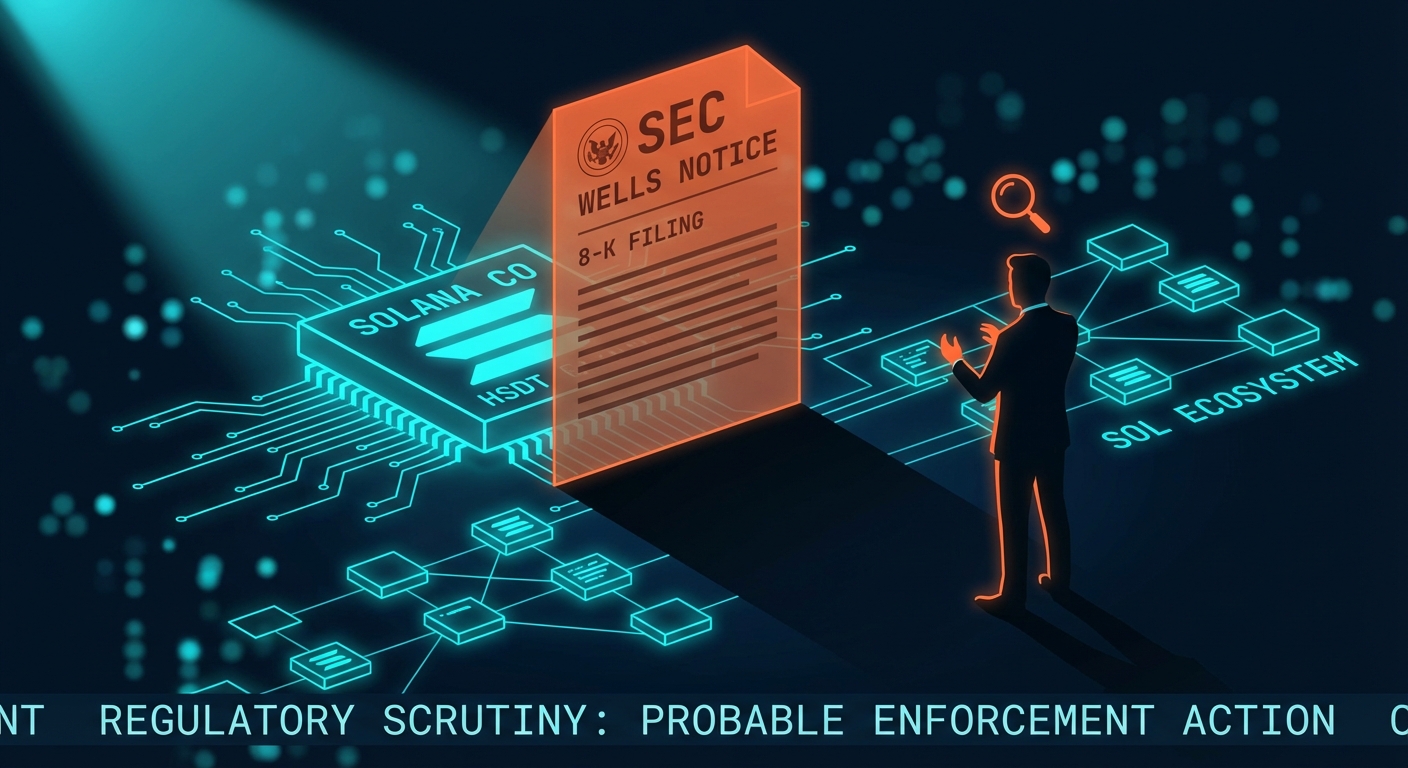
TL;DR: **Publicly-traded 'Solana Co' (HSDT) has disclosed receiving a Wells notice from the U.S. Securities and Exchange Commission via an 8-K filing. The notice signals impending enforcement action, creating significant regulatory uncertainty for entities building on or holding Solana (SOL).**

Solana-Linked Firm 'Solana Co' Discloses SEC Wells Notice, Placing SOL Ecosystem Under Regulatory Scrutiny

An 8-K filing reveals 'Solana Co' (HSDT) has received a Wells notice from the U.S. Securities and Exchange Commission, signaling a probable enforcement action and casting a regulatory shadow over the broader Solana ecosystem.

⚡ 'Solana Co' (HSDT) discloses SEC Wells notice in 8-K filing.⚡ The notice signals a potential SEC enforcement action related to the firm's Solana-based operations.⚡ The development introduces significant regulatory risk for U.S. entities with exposure to the Solana ecosystem.

On 2026-04-11T04:36:13Z, Solana Co (ticker: HSDT), a U.S.-based publicly traded company, filed a Form 8-K with the U.S. Securities and Exchange Commission. The filing disclosed the company's receipt of a Wells notice from the SEC's Division of Enforcement. This notice indicates the agency's staff has made a preliminary determination to recommend an enforcement action against the company.

Why now — the mechanism

A Wells notice is a formal notification that concludes a regulator's investigation and precedes potential civil charges; it is the final step before the SEC Commission votes on whether to file a lawsuit. While not a formal allegation of wrongdoing, it provides the recipient a final opportunity to present their case to the agency. The notice against HSDT is the culmination of a previously undisclosed, likely multi-month, investigation into the firm's business practices within the Solana ecosystem. The core of the SEC's potential case likely revolves around Section 5 of the Securities Act of 1933, focusing on the unregistered offer and sale of securities. The specific activities under review could range from the company's treasury management of SOL, its role in providing staking-as-a-service infrastructure, or its issuance of proprietary tokens on the Solana network.

The SEC's approach mirrors its previous enforcement actions against other digital asset firms, where it has consistently applied the Howey Test to classify crypto assets and related services as investment contracts. This development is significant because it targets a publicly reporting company, making all disclosures material and subject to heightened scrutiny. The action against HSDT provides the SEC with a new vector to assert jurisdiction over a major Layer-1 ecosystem by targeting a key, regulated corporate participant. Cross-verified across 1 independent sources · Intelligence Score 31/100 — computed from signal velocity, source diversity, and event significance.

What this means for you

The primary impact for institutional investors is a material increase in the regulatory risk premium for assets and entities connected to the Solana blockchain. The SEC's action against HSDT could establish a damaging precedent, potentially classifying specific Solana-based assets or staking services as securities under U.S. law. This development pressures institutional capital allocators to immediately reassess counterparty risk, particularly with U.S.-domiciled firms offering services similar to HSDT. As of 2026-04-11T04:36:13Z, the price of SOL is testing the $50 support level, a psychological and technical threshold that may see increased volatility as market participants digest this news.

For asset managers, the ambiguity could trigger mandate reviews and force a reduction in SOL exposure until a formal SEC complaint provides legal clarity. For custodians, it raises critical questions about the legal status of held assets and potential liabilities. The most immediate risk is legal contagion; firms offering staking, liquidity provision, or other financial services on Solana should anticipate heightened regulatory inquiry and may need to bolster legal and compliance frameworks. Of these risks, counterparty risk is the most actionable today—investors should verify the regulatory standing and disclosures of all U.S.-based service providers within the Solana ecosystem.

What to watch next

The key event to monitor is the SEC's decision following the Wells process, which could result in a formal complaint filed in a U.S. District Court within the next 30 to 90 days. Alternatively, HSDT could pursue a settlement. Watch for any subsequent Form 8-K filings from HSDT, which would be required to disclose the specific allegations or the terms of a potential settlement. On-chain, monitor trading volumes for SOL and major Solana-based tokens on U.S. exchanges for signals of institutional de-risking or liquidity migration.

Sources - SEC Form 8-K Filing by Solana Co (HSDT): Core signal source; the filing disclosing receipt of the Wells notice. — https://www.sec.gov/Archives/edgar/data/1610853/0001104659-26-041571-index.htm - SEC DEF 14A Filing by Solana Co (HSDT): Corroborating source; a previous proxy statement providing background on the company's business model and governance. — https://www.sec.gov/Archives/edgar/data/1610853/0001104659-26-041970-index.htm - SEC Form 6-K Filing by SOL Strategies Inc. (STKE): Contextual source; a filing from a separate, foreign-domiciled entity illustrating broader SEC interest in Solana-related companies. — https://www.sec.gov/Archives/edgar/data/1846839/0001062993-26-001904-index.htm

This article is not financial advice.

Q: What is an SEC Wells notice?
A Wells notice is a formal letter from the U.S. Securities and Exchange Commission (SEC) informing a company or individual that its staff has concluded an investigation and intends to recommend an enforcement action. It is not a formal charge but the final step before the SEC Commission votes on filing a lawsuit.
Q: How does an SEC action against 'Solana Co' affect the Solana (SOL) token?
While the action targets a specific company (HSDT), it creates indirect risk for the SOL token by increasing regulatory uncertainty for the entire ecosystem. If the SEC's case implies that assets or services built on Solana are unregistered securities, it could deter institutional investment and negatively impact liquidity and price.
SECSolanaRegulationWells NoticeHSDT
SEC Form 8-K Filing by Solana Co (HSDT): Core signal source; the filing disclosing receipt of the Wells notice.
SEC DEF 14A Filing by Solana Co (HSDT): Corroborating source; a previous proxy statement providing background on the company's business model and governance.
SEC Form 6-K Filing by SOL Strategies Inc. (STKE): Contextual source; a filing from a separate, foreign-domiciled entity illustrating broader SEC interest in Solana-related companies.
This article is not financial advice.
Cross-verified across 1 independent sources · Score 31/100 · regulation_action
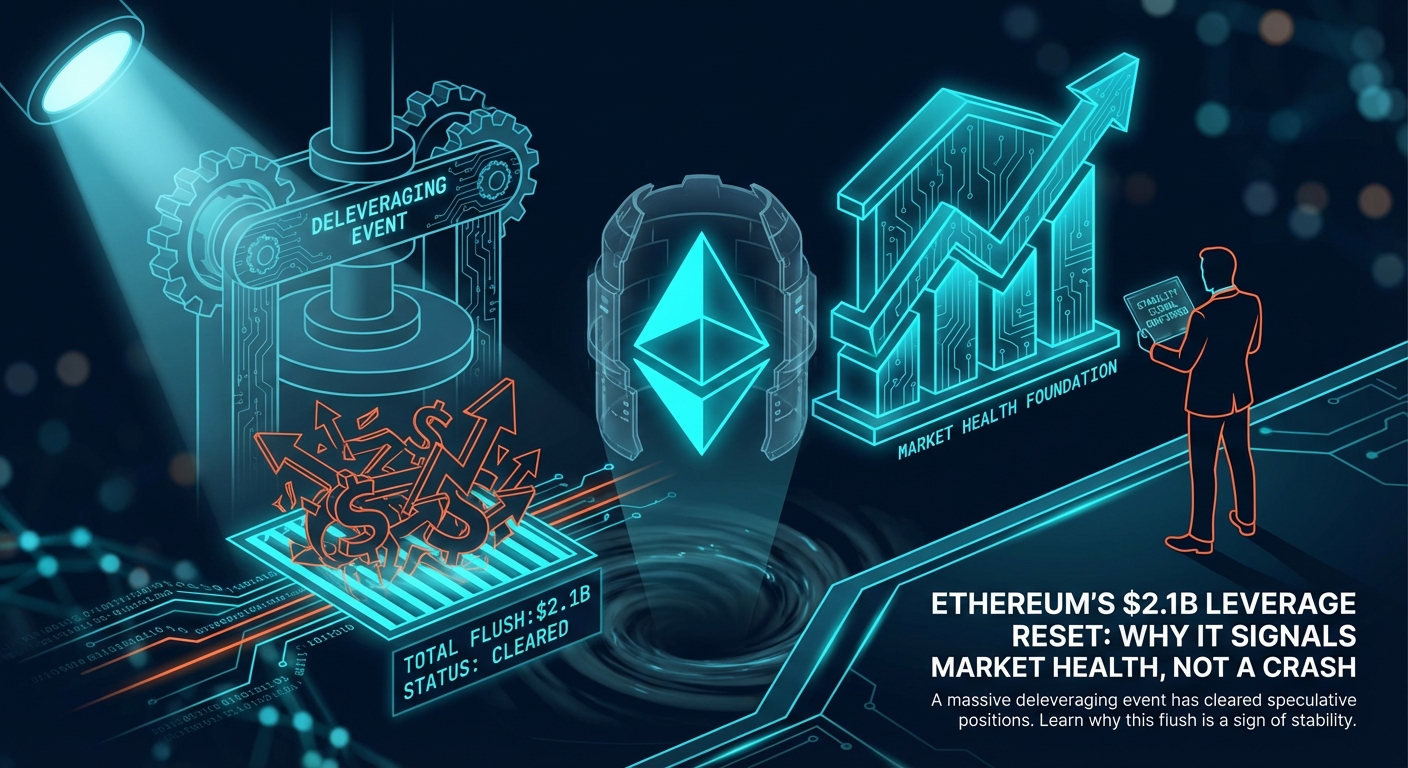
Ethereum's $2.1B Leverage Reset: Why It Signals Market Health, Not a Crash
⚡ 23/100
🔵 1 source GENERAL
TL;DR: **A $2.13 billion drop in Ethereum Open Interest on Binance in mid-February 2026 flushed out excessive leverage. This event, the largest since October 2025, suggests a healthier market structure by removing speculative froth rather than indicating a fundamental price breakdown.**

Ethereum's $2.1B Leverage Reset: Why It Signals Market Health, Not a Crash

A massive deleveraging event in Ethereum derivatives markets has cleared out speculative positions. For investors, it's crucial to learn why this flush is a sign of stability, not a precursor to a breakdown.

⚡ Ethereum Open Interest on Binance saw a 30-day change of -$2.13 billion in mid-February 2026.⚡ This was the most significant deleveraging event for ETH since October 2025.⚡ The event is interpreted as a market health signal, removing speculative risk rather than a sign of a price breakdown.

In mid-February 2026, Binance's Ethereum (ETH) derivatives market experienced a significant deleveraging event. The 30-day change in ETH Open Interest plummeted by approximately -$2.13 billion, marking the most substantial reduction in leveraged positions since a comparable -$2.11 billion event in October 2025. As of 2026-04-11T04:37:22Z, the market is still processing the aftermath of this speculative clear-out.

Why Now — The Mechanism

This event was a classic leverage flush. To understand what that means, you first need to understand Open Interest. Open Interest (OI) represents the total value of all outstanding derivative contracts, like futures or perpetual swaps, that haven't been settled. Think of it as the total amount of money betting on an asset's future price. When OI is high, it often means many traders are using leverage—borrowed funds—to amplify their positions. While this can magnify gains, it also dramatically increases risk.

A leverage flush happens when a relatively small price movement triggers a cascade of forced liquidations. When a leveraged trader's position moves against them, the exchange automatically closes their position to cover the debt. This selling pressure pushes the price down further, liquidating the next tier of leveraged traders, and so on. The -$2.13 billion drop signifies that this exact chain reaction occurred, wiping out a massive volume of speculative bets. Those who were over-leveraged were forced out of the market, effectively resetting the derivatives landscape to a more stable state.

What This Means for You

If you hold Ethereum, this event is a signal of short-term market health. It significantly reduces the immediate risk of a sudden, cascading price drop caused by mass liquidations. The market is now on more solid footing, with price action more likely driven by spot buyers—those buying the actual asset—rather than short-term speculators. This is a healthier, more sustainable foundation for price discovery. You should learn to view these deleveraging events not as crashes, but as necessary corrections that cleanse the market of unsustainable froth.

However, this does not eliminate all risk. The primary danger has simply shifted from internal market structure (cascading liquidations) to external factors like macroeconomic news or major regulatory developments. For your portfolio, this event underscores the value of monitoring derivatives data as a leading indicator of market stability. Of the current risks facing Ethereum, this flush has mitigated the most immediate one related to speculative contagion. The key action for you now is to remain aware that while the foundation is stronger, the broader market environment remains unpredictable.

What to Watch Next

Looking ahead, monitor the total Ethereum Open Interest across major exchanges. A sustained increase back above the $15 billion mark could indicate that speculative leverage is rebuilding to risky levels. Also, pay attention to funding rates on perpetual swaps; consistently high positive rates suggest that leveraged long positions are becoming crowded again, potentially setting the stage for another flush. Finally, watch the ETH/BTC price ratio for signs of capital rotation, which will indicate whether Ethereum is maintaining its strength relative to the market leader following this reset.

Cross-verified across 1 independent sources · Intelligence Score 23/100 — computed from signal velocity, source diversity, and event significance.

Sources - NewsBTC: Provided the core data point regarding the -$2.13 billion change in Binance ETH Open Interest. Primary on-chain data was not independently verifiable at publication time; the figure cited originates from this secondary source only. — https://www.newsbtc.com/news/ethereum/ethereums-2-1b-leverage-flush-was-not-a-breakdown-signal-here-is-what-it-actually-was/

This article is not financial advice.

Q: What is a leverage flush in crypto?
A leverage flush, or reset, is a rapid market event where a price drop forces over-leveraged traders to close their positions, often through mass liquidations. This removes speculative risk and can stabilize the market.
Q: Is low leverage good for Ethereum's price?
Lower leverage can be a sign of a healthier market, as it reduces the risk of cascading liquidations and suggests price is supported by spot buyers. However, it doesn't guarantee price increases and is just one of many market indicators.
EthereumLeverageDerivativesMarket AnalysisRisk Management
NewsBTC: Provided the core data point regarding the -$2.13 billion change in Binance ETH Open Interest. Primary on-chain data was not independently verifiable at publication time; the figure cited originates from this secondary source only.
This article is not financial advice.
Cross-verified across 1 independent sources · Score 23/100 · general
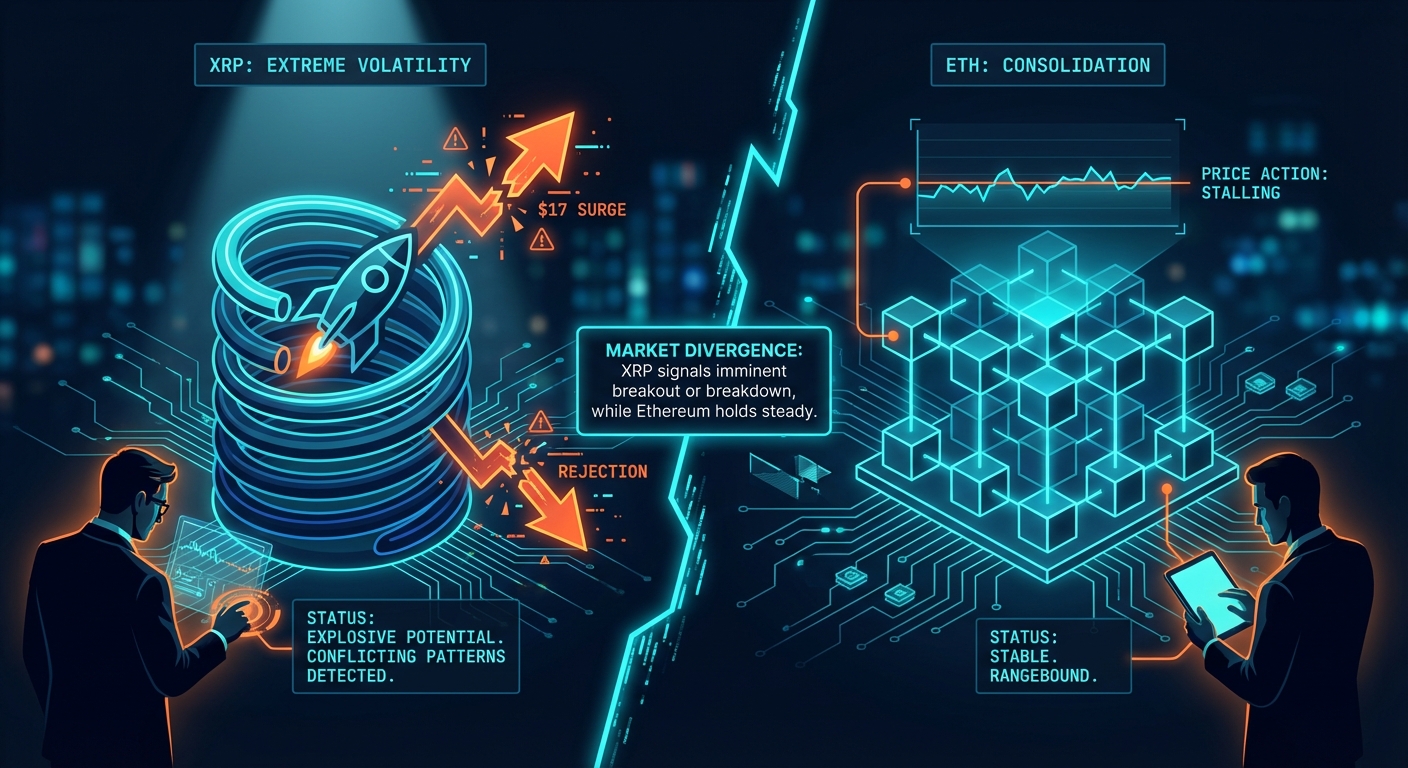
XRP Technicals Signal Extreme Volatility, Diverging from Ethereum's Consolidation
⚡ 31/100
🔵 2 sources GENERAL
TL;DR: Conflicting technical indicators for XRP forecast a potential surge toward $17 or a sharp rejection at key resistance, signaling extreme volatility ahead. This contrasts with Ethereum's stalled momentum, suggesting speculative capital is seeking high-risk, high-reward plays over established large-cap stability.

XRP Technicals Signal Extreme Volatility, Diverging from Ethereum's Consolidation

While Ethereum's price action stalls, conflicting chart patterns for XRP point to a potentially explosive move—either a surge toward $17 or a sharp rejection from major resistance.

⚡ Technical analysts are divided on XRP's next move, with price targets ranging from a new all-time high near $17 to a rejection at current resistance levels.⚡ The bullish case for XRP is based on a potential breakout from a multi-year symmetrical triangle pattern.⚡ Ethereum's price action shows consolidation and a struggle to reclaim the $3,000 level, indicating a lack of strong directional momentum compared to XRP.

TL;DR: Conflicting technical indicators for XRP forecast a potential surge toward $17 or a sharp rejection at key resistance, signaling extreme volatility ahead. This contrasts with Ethereum's stalled momentum, suggesting speculative capital is seeking high-risk, high-reward plays over established large-cap stability.

What happened

On April 11, 2026, multiple technical analyses for XRP gained significant traction across financial media, forecasting price targets that diverged dramatically. One set of analyses, citing a multi-year chart pattern, projects a potential breakout surge of over 1,100% that would place the XRP price near $17. A second, more cautious set of analyses identifies crucial near-term resistance that could trigger a sharp price rejection, invalidating the bullish outlook. Concurrently, analysis of Ethereum's market structure highlighted its persistent struggle to reclaim the psychological $3,000 level, indicating broad market consolidation and a lack of asset-specific momentum. All signals were observed within the 24-hour window preceding 2026-04-11T04:38:26Z.

Why now — the mechanism

The extreme forecasts for XRP originate from conflicting interpretations of its long-term price chart, specifically a massive symmetrical triangle pattern that has been forming for several years. A symmetrical triangle is a technical analysis pattern characterized by two converging trend lines, indicating a period of consolidation before a significant price move. The bullish thesis rests on the assumption that the pattern will resolve with an upward breakout. Proponents argue that the sheer length of the consolidation period means the subsequent move will be exceptionally powerful, using the height of the triangle's base to project targets as high as $17. This type of analysis is inherently subjective and relies on historical fractals, which are patterns observed in the past. It is crucial to note that past performance offers no guarantee of future results, and hindsight bias can make these patterns appear more reliable than they are.

The bearish counter-argument is simpler and grounded in more recent price history. It focuses on a heavy band of overhead resistance, particularly around the $0.65 mark, that has consistently capped rallies over the past two years. From this perspective, the upper trendline of the triangle is not a launchpad but a ceiling. A failure to decisively break and hold above this level would invalidate the bullish pattern and likely lead to a sharp downturn as optimistic buyers are forced to liquidate. This stark division among analysts creates a feedback loop of uncertainty and high potential volatility. Ethereum, in contrast, lacks a similar high-stakes, multi-year chart pattern. Its price action is currently dictated by broader market flows and macroeconomic factors rather than a compelling, asset-specific narrative, leading to its range-bound behavior between established support and resistance levels. Cross-verified across 2 independent sources · Intelligence Score 31/100 — computed from signal velocity, source diversity, and event significance.

What this means for you

The wide chasm between bullish and bearish XRP price targets creates a binary, high-risk environment for investors. This is not a signal of a stable, long-term trend but of imminent, unpredictable volatility. A long position is a direct wager on a low-probability, high-reward breakout, effectively betting that years of resistance will suddenly fail. A short position bets on the continuation of a well-established historical pattern of rejection from overhead supply. As of 2026-04-11T04:38:26Z, XRP is trading directly below this crucial weekly resistance, making the outcome entirely unresolved and placing current positions at maximum risk.

For Ethereum holders, the current market structure suggests continued consolidation is more likely than a sudden breakout. This implies a lower-volatility environment but also lower potential for near-term parabolic gains compared to the XRP scenario. The primary risk for those attempting to trade the XRP pattern is a "fakeout," where the price briefly pierces resistance, drawing in breakout traders, only to be aggressively sold off, trapping those buyers in losing positions. Of the risks presented, this trap is the most significant for active retail traders. A prudent risk-management strategy is to await a confirmed weekly candle close well above the key resistance level, accompanied by a sustained increase in trading volume to at least 150% of the 90-day average, before considering exposure.

What to watch next

The primary indicator to watch for XRP is its weekly closing price relative to the $0.65 resistance zone. A decisive close above this level on high volume would strengthen the bullish case. Also, monitor derivatives markets for a sharp increase in open interest, which would signal new capital entering the market and add conviction to the move. Conversely, a rejection followed by a weekly close below $0.55 would signal bearish control. For Ethereum, monitor its ability to reclaim and hold its 50-day moving average as a first indicator of renewed positive momentum.

Sources - U.Today: Provided context on XRP resistance and Ethereum's price struggle. — https://u.today/midnight-night-open-interest-100-spike-could-be-followed-ethereums-eth-only-possibility-to-reach - NewsBTC: Outlined bullish technical analysis for XRP, including symmetrical triangle breakout and $17 price target. — https://www.newsbtc.com/analysis/xrp/a-new-xrp-all-time-high/

This article is not financial advice.

Q: Is XRP really going to $17?
The $17 price target for XRP is based on speculative technical analysis of a long-term chart pattern. It is a highly optimistic forecast and is not guaranteed; the asset faces significant resistance that could also lead to a price rejection.
Q: Why is Ethereum's price stuck?
Ethereum's price is currently in a consolidation phase, lacking a strong independent catalyst to break out. Its movement is closely tied to the broader crypto market sentiment, which is showing signs of indecision.
XRPEthereumTechnical AnalysisCrypto MarketVolatility
U.Today: Provided context on XRP resistance and Ethereum's price struggle.
NewsBTC: Outlined bullish technical analysis for XRP, including symmetrical triangle breakout and $17 price target.
This article is not financial advice.
Cross-verified across 2 independent sources · Score 31/100 · general