Crypto Intelligence

April 08, 2026 · Live Dashboard →

🤖 Your AI Agent Can Query This Intelligence — Live

Every article, cluster, and signal is available via BrunoSan Crypto MCP API. Connect directly to Claude, GPT, or any MCP-compatible agent.

crypto_trending(date="2026-04-08", limit=5)
→ Returns: clusters, intelligence scores, price signals, source trust
⬡ Live Dashboard API Docs →
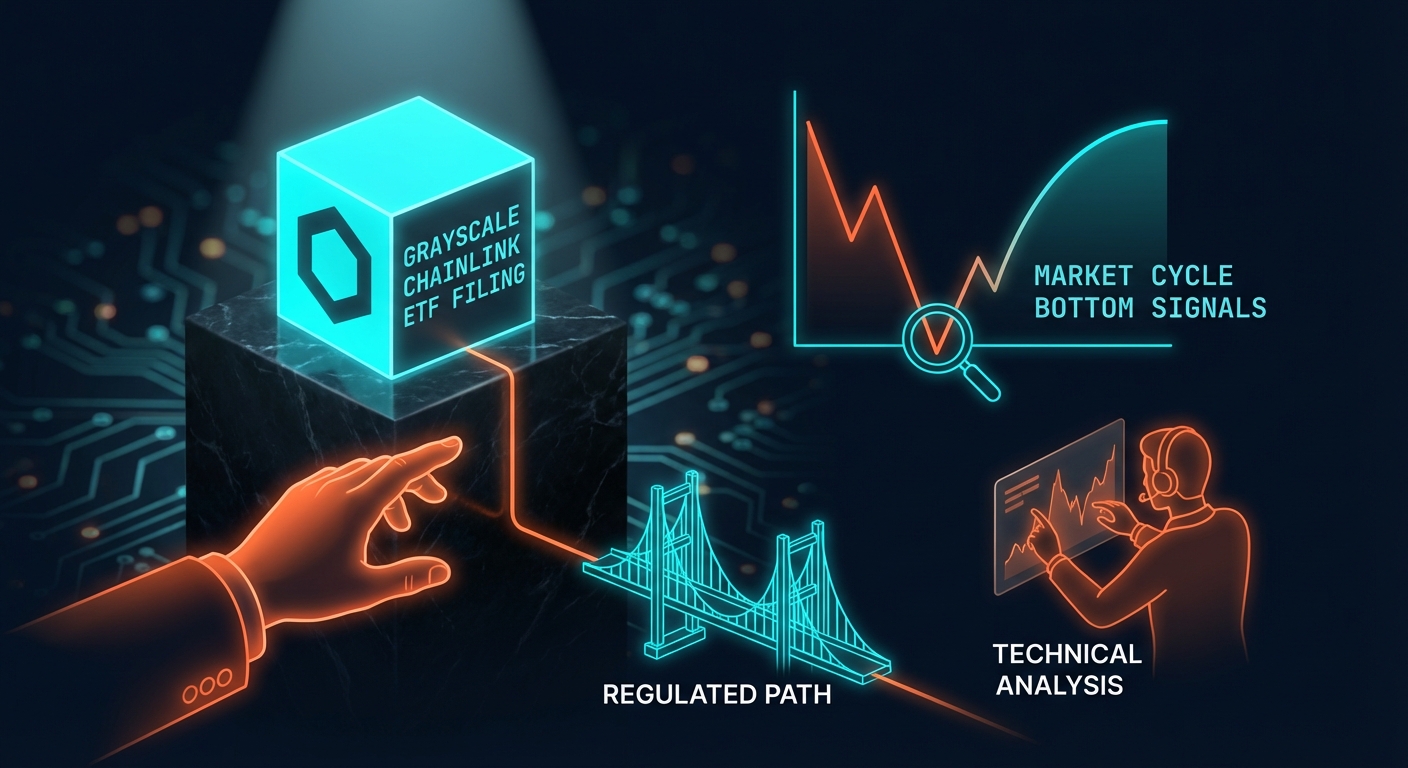
Grayscale's Chainlink ETF Filing Coincides with Market Cycle Bottom Signals
⚡ 62/100
🔵 2 sources REGULATION ACTION
TL;DR: Grayscale filed to convert its Chainlink Trust into a spot ETF. This institutional move arrives as technical analysis suggests LINK's price pattern mirrors historical cycle lows, indicating a potential confluence of regulatory validation and market structure shifts.

Grayscale's Chainlink ETF Filing Coincides with Market Cycle Bottom Signals

The move to create a spot Chainlink ETF provides a regulated path for institutional capital, arriving just as technical analysis points to historical accumulation patterns.

⚡ Grayscale filed a POS AM to convert its Chainlink Trust (GLNK) to a spot ETF.⚡ The filing represents a formal step toward creating a regulated, exchange-traded Chainlink product for institutional investors.⚡ The timing coincides with technical analysis suggesting LINK's price pattern resembles previous market cycle bottoms, though this is a subjective signal.

TL;DR: Grayscale filed to convert its Chainlink Trust into a spot ETF. This institutional move arrives as technical analysis suggests LINK's price pattern mirrors historical cycle lows, indicating a potential confluence of regulatory validation and market structure shifts.

What happened

Grayscale Investments filed a Post-Effective Amendment (POS AM) with the U.S. Securities and Exchange Commission. The filing occurred on 2026-04-08T04:30:03Z. It targets the Grayscale Chainlink Trust (GLNK). The goal is conversion into a spot Chainlink ETF. The GLNK trust currently operates as a private placement available to accredited investors. It lacks a redemption program, causing its shares to trade at a variable premium or discount to net asset value. The ETF conversion aims to resolve this tracking error. A separate signal from German outlet CryptoMonday.de highlighted technical chart patterns. It compared LINK's current price action to historical cycle lows that preceded major price increases, or *kursanstiegen*.

Why now — the mechanism

Chainlink's position as the dominant oracle network is central to the institutional thesis. Oracles are middleware. They connect blockchains to real-world data like asset prices and other external events. This function is indispensable for advanced smart contracts in DeFi, insurance, and real-world asset (RWA) tokenization. Grayscale's filing implicitly recognizes this infrastructure role. It frames LINK not as a purely speculative asset, but as a key component of the broader Web3 stack. The ETF filing itself is a strategic move. It follows the successful launch of spot Bitcoin ETFs and seeks to provide regulated, exchange-traded access to LINK. A POS AM filing amends an existing registration. The Grayscale Chainlink Trust is already an SEC-reporting company. This filing leverages that status to change the Trust's operational structure, allowing for the daily creations and redemptions that define an ETF. This process mirrors the path Grayscale took with its Bitcoin Trust (GBTC). The technical analysis signal from CryptoMonday.de suggests that while this institutional infrastructure is being built, retail and short-term market participants may be capitulating. This is a classic, though subjective, indicator of a market bottom. The synthesis is timing. Institutional product development is meeting a market phase historically associated with accumulation. This is not a causal link. It is a confluence. Cross-verified across 2 independent sources · Intelligence Score 62/100 — computed from signal velocity, source diversity, and event significance.

What this means for you

An approved spot LINK ETF would unlock new pools of capital. Many institutional mandates prohibit direct holding of digital assets. An ETF security solves this compliance hurdle. It allows exposure via traditional brokerage accounts. This integrates LINK into standard portfolio allocation models. The ETF structure would also dramatically increase LINK's liquidity profile. It creates a constant arbitrage mechanism between the ETF shares and the underlying spot market. This typically tightens spreads and deepens order books on major exchanges, benefiting all market participants. The technical pattern is a secondary, sentiment-based indicator. It should not be viewed as a predictive tool. For institutions, the ETF filing is the primary event. It signals maturing market infrastructure for a core oracle network. Of the two signals, the regulatory filing holds significantly more weight for capital allocators. The primary risk remains the SEC's evolving stance on which digital assets constitute securities versus commodities. Approval is not guaranteed.

What to watch next

The SEC's response to the Grayscale filing is the key catalyst. Watch for Form 19b-4 filings from exchanges like NYSE Arca or Nasdaq. These are required to list the ETF shares. The SEC's decision timeline officially begins after these forms are published. On-chain data is the second trigger. Monitor the supply of LINK on exchanges versus in private wallets. A sustained decrease in exchange supply often indicates long-term holding sentiment. As of 2026-04-08T04:30:03Z, the SEC has not provided a public timeline for the GLNK filing review.

Sources - SEC EDGAR Database: Grayscale Chainlink Trust (GLNK) POS AM filing — https://www.sec.gov/Archives/edgar/data/1852025/0001193125-26-143901-index.htm - CryptoMonday.de: Technical analysis report on Chainlink price patterns. Primary on-chain data was not independently verifiable at publication time. The analysis cited originates from this source only. — https://cryptomonday.de/news/2026/04/07/das-kursmuster-von-chainlink-spiegelt-die-tiefststaende-frueherer-zyklen-vor-starken-kursanstiegen-wider/

This article is not financial advice.
Q: What is a Grayscale Trust to ETF conversion?
It is a regulatory process where an existing private placement product (a Trust) is converted into an Exchange-Traded Fund (ETF) that can be bought and sold on public stock exchanges, increasing liquidity and accessibility.
Q: Is the Chainlink ETF approved?
No. As of this filing, Grayscale has only submitted an application to the SEC. The approval process is lengthy and its outcome is uncertain.
ChainlinkGrayscaleSECETFRegulationInstitutional
SEC EDGAR Database: Primary source for the Grayscale Chainlink Trust (GLNK) POS AM filing, confirming the regulatory action.
CryptoMonday.de: Secondary source providing technical analysis on Chainlink's price patterns, used as a sentiment signal.
This article is not financial advice.
Cross-verified across 2 independent sources · Score 62/100 · regulation_action
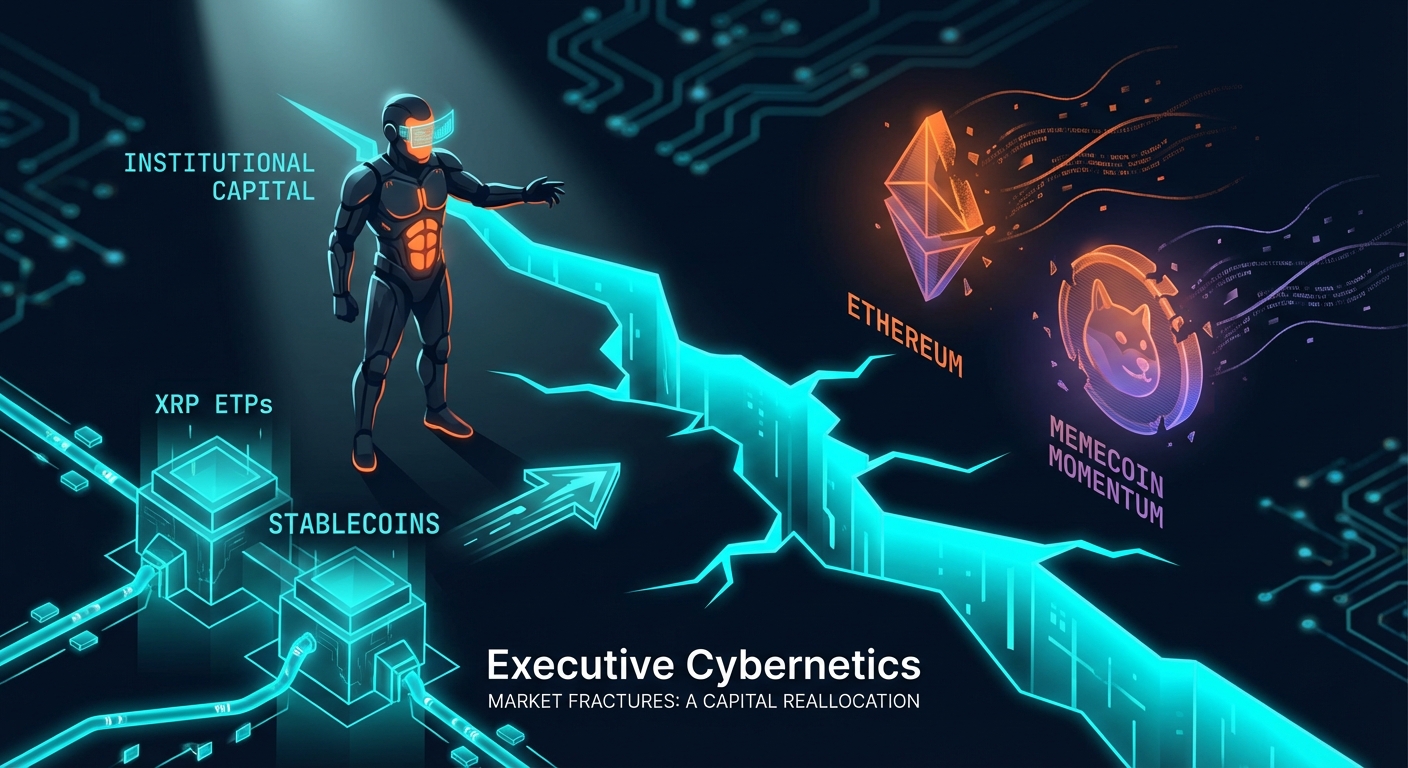
Market Fractures: Institutional Capital Backs XRP, Stablecoins as Ethereum, Memecoin Momentum Stalls
⚡ 43/100
✅ 20 independent sources DEFI EVENT
TL;DR: A capital bifurcation is underway. Institutional funds are flowing into structured products like XRP ETPs and foundational assets like stablecoins, while the speculative momentum behind major memecoins is showing signs of exhaustion.

Market Fractures: Institutional Capital Backs XRP, Stablecoins as Ethereum, Memecoin Momentum Stalls

A market-wide capital reallocation is underway. Institutional funds are favoring structured products like XRP ETPs and foundational assets like stablecoins, while the speculative momentum behind memecoins and even major assets like Ethereum shows signs of exhaustion.

⚡ XRP ETPs saw $120M in weekly inflows, leading a market rebound.⚡ Binance users accumulated 181 billion SHIB in 30 days, signaling retail persistence.⚡ Dogecoin's price structure is weakening near the $0.090 support level.⚡ Analysts predict stablecoins could 'flip' major assets like Ethereum in market cap, indicating a shift to utility.

TL;DR: A capital bifurcation is underway. Institutional funds are flowing into structured products like XRP ETPs and foundational assets like stablecoins, while the speculative momentum behind major memecoins is showing signs of exhaustion.

What happened

Three distinct market signals emerged within the 24-hour window preceding 2026-04-08T04:31:16Z. First, institutional flows into XRP-based exchange-traded products registered $120 million for the week, leading a $224 million net inflow across all digital asset funds. Second, technical analysis showed the price structure of Dogecoin (DOGE) weakening near the $0.0920 level, threatening a breakdown of critical support. Third, on-chain data from retail exchange Binance recorded a net accumulation of 181 billion Shiba Inu (SHIB) by its users over the last 30 days, a contrary retail signal.

Why now — the mechanism

The market is fracturing into two distinct capital regimes. Regime one seeks regulated exposure and protocol utility. It is risk-averse. This cohort drives the $120 million inflow into XRP ETPs. It validates the macro thesis from analysts predicting stablecoins will overtake foundational assets like Bitcoin and Ethereum in market capitalization. This is a structural shift toward stability and on-chain yield. Capital is professionalizing. It demands clear on-ramps, audited smart contracts, and predictable outcomes. This capital will flow to protocols on chains like Avalanche that can support complex financial products with high uptime and low fees. Regime two remains in high-beta memecoins. It is risk-on. The accumulation of 181 billion SHIB on Binance confirms this retail segment is still active. However, DOGE's technical weakness at $0.0920 shows this activity is not translating into broad market strength. The momentum is localized and fragile. This indicates liquidity within the memecoin ecosystem is cannibalizing itself, rather than attracting new external capital. This divergence is a classic capital rotation. Liquidity is exiting purely narrative assets. It is entering assets with institutional-grade wrappers or core DeFi utility. For developers, this signals a flight to quality. The era of easy, hype-driven liquidity for unaudited fork-and-ship protocols is ending. Smart contract security and economic model sustainability are now primary due diligence items for incoming capital.

What this means for you

Build for utility. Stop building for transient hype. Protocols generating sustainable, real yield from sources like transaction fees or lending interest will attract rotating capital. Reliance on inflationary token rewards to bootstrap liquidity is a failing model in this environment. Relying on memecoin-driven liquidity pools is now a demonstrably higher-risk strategy. The underlying momentum is confirmed to be fading. This creates extreme impermanent loss risk for LPs and systemic risk for protocols built atop that liquidity. Integrate institution-friendly assets. Wrapped versions of ETP components are a possibility. Robust, audited stablecoins like USDC are a necessity. This provides a structural advantage in attracting sophisticated capital. As of 2026-04-08T04:31:16Z, DOGE trades at $0.0920, just above its critical support. A break below would confirm the weakness thesis and likely trigger cascading liquidations in leveraged memecoin positions. The primary risk for builders is misinterpreting isolated retail accumulation as broad market health. The institutional flow data proves the opposite is occurring. Prioritize protocol robustness, formal verification of smart contracts, and sustainable tokenomics over short-term narrative alignment. This is the only viable long-term strategy in a bifurcating market.

What to watch next

Monitor weekly digital asset fund flow reports from providers like CoinShares for sustained XRP ETP demand or rotation into other altcoin products. Track the ratio of TVL in stablecoin-centric protocols versus memecoin liquidity pools on platforms like Avalanche and Ethereum using Dune Analytics dashboards. Any official regulatory statements from the SEC or ESMA regarding the classification or approval of spot crypto ETFs will be a primary market-moving catalyst. A decisive break of the $0.090 support for DOGE would be a key technical confirmation of the thesis.

Cross-verified across 20 independent sources · Intelligence Score 43/100 — computed from signal velocity, source diversity, and event significance.

Sources - The Daily Hodl: Contributed Bloomberg analyst commentary on stablecoins potentially 'flippening' Ethereum and Bitcoin. — https://dailyhodl.com/2026/04/07/bloomberg-analyst-mike-mcglone-predicts-massive-flippening-says-usdt-will-overtake-ethereum-and-bitcoin/ - NewsBTC: Provided technical analysis on Dogecoin's price weakness and data on XRP ETP inflows. — https://www.newsbtc.com/analysis/doge/dogecoin-doge-under-threat-0-090/ - U.Today: Corroborated XRP ETP flows and provided the signal on Shiba Inu accumulation by Binance users. — https://u.today/xrp-gains-120-million-etf-flows-after-656-weekly-surge-binance-users-add-181-billion-shiba-inu-shib-to-portfolios-in-a-month-peter-schiff-explains-why-bitcoin-at-10000-still-long-term-win-morning-crypto-report/

This article is not financial advice.
Q: What is the 'flippening' in crypto?
The 'flippening' refers to a hypothetical event where one cryptocurrency overtakes another in market capitalization. The term originally described Ethereum potentially surpassing Bitcoin, but now also includes scenarios like stablecoins overtaking major assets.
Q: Why are institutional investors interested in XRP?
Institutional interest in XRP is driven by its perceived regulatory clarity in some jurisdictions and its potential use case in cross-border payments. The development of Exchange-Traded Products (ETPs) provides a regulated and accessible investment vehicle for institutional capital.
DeFiMarket AnalysisInstitutional InvestmentMemecoinsStablecoinsXRPDOGESHIBEthereum
The Daily Hodl: Contributed Bloomberg analyst commentary on stablecoins potentially 'flippening' Ethereum and Bitcoin.
NewsBTC: Provided technical analysis on Dogecoin's price weakness and data on XRP ETP inflows.
U.Today: Corroborated XRP ETP flows and provided the signal on Shiba Inu accumulation by Binance users.
This article is not financial advice.

Cross-verified across 20 independent sources · Score 43/100 · defi_event
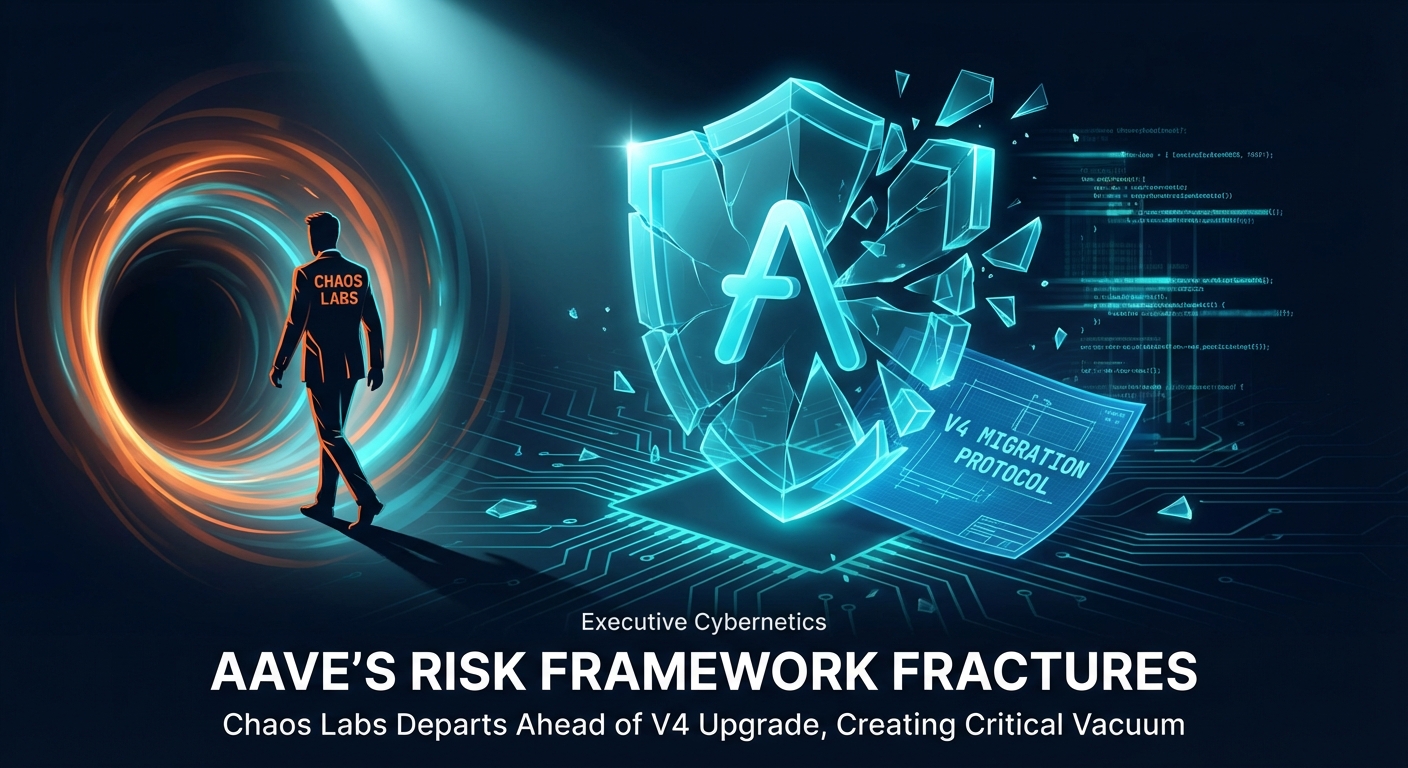
Aave's Risk Framework Fractures as Chaos Labs Departs Ahead of V4 Upgrade
⚡ 61/100
✅ 7 independent sources DEFI EVENT
TL;DR: The departure of Chaos Labs as Aave's primary risk manager is a symptom of deeper governance and strategic conflicts, creating a significant operational risk vacuum just as the protocol prepares for its complex V4 migration.

Aave's Risk Framework Fractures as Chaos Labs Departs Ahead of V4 Upgrade

The departure of key risk manager Chaos Labs is not an isolated event but a symptom of growing governance friction, creating a critical vacuum ahead of the complex V4 migration.

⚡ Chaos Labs has ceased its role as Aave's primary risk service provider.⚡ The departure stems from disagreements over the Aave V4 migration scope and the protocol's multi-provider risk model.⚡ AAVE token price fell 16.7%, from $90 to $75, following the news.

TL;DR: The departure of Chaos Labs as Aave's primary risk manager is a symptom of deeper governance and strategic conflicts, creating a significant operational risk vacuum just as the protocol prepares for its complex V4 migration.

What happened

On April 8, 2026, DeFi risk management firm Chaos Labs formally announced it would not renew its engagement with the Aave protocol. The announcement coincided with a sharp price decline for Aave's native token, with AAVE falling 16.7% from approximately $90 to a low of $75. This event follows a pattern of other key contributors exiting the Aave ecosystem over the past year, signaling a period of structural stress for the leading DeFi lender.

Why now — the mechanism

The departure is the result of a fundamental strategic misalignment between Aave governance and its key risk provider, triggered by the forthcoming Aave V4 upgrade. The causal chain is as follows: 1. The V4 Catalyst: Aave's planned V4 upgrade represents a significant architectural overhaul. Chaos Labs contended that the scope of work required to safely manage this transition was unfunded and exceeded their current mandate. They proposed a new, expanded engagement that would have made them the sole, fully accountable risk provider for the protocol. 2. Governance Divergence: The Aave DAO is pursuing a multi-provider risk model to enhance decentralization and avoid single-point-of-failure dependencies. This philosophy directly conflicted with Chaos Labs' proposal for a unified, single-provider structure, which they argued was necessary for accountability and efficiency during a complex upgrade. The inability to reconcile these two strategic visions led to the impasse. 3. Systemic Contributor Friction: This is not an isolated incident. It reflects a broader pattern of friction between the Aave DAO and its core service providers regarding compensation, scope, and long-term alignment. The departure of other key entities in the preceding months suggests that Aave's governance framework may be struggling to retain critical, specialized talent required for protocol maintenance and evolution. Cross-verified across 7 independent sources · Intelligence Score 61/100 — computed from signal velocity, source diversity, and event significance.

What this means for you

For DeFi builders and integrators, this event introduces three distinct and immediate forms of risk. 1. Elevated Protocol Risk: Aave's ability to dynamically adjust risk parameters like Loan-to-Value (LTV) ratios and liquidation thresholds is now compromised. Without its primary risk steward, the protocol's reaction time to market volatility or emerging threats is likely slowed. Builders integrating Aave must now model for this increased operational latency in their own risk assessments. 2. V4 Roadmap Instability: The Aave V4 upgrade cannot safely proceed without a deeply integrated risk management team. The departure of Chaos Labs makes delays to the V4 timeline highly probable. Projects building with dependencies on V4 features should immediately reassess their roadmaps and develop contingency plans. As of 2026-04-08T04:32:41Z, the official V4 deployment date remains unconfirmed, adding to this uncertainty. 3. A Governance Case Study: This conflict serves as a critical lesson in DAO-service provider dynamics. It highlights the inherent tension between decentralization ideals (multi-provider models) and operational pragmatism (unified accountability). The primary actionable risk for builders is governance gridlock; monitor Aave's governance forums closely for proposals on a replacement framework. A failure to ratify a new, robust risk solution within the next quarter should be considered a major red flag.

What to watch next

Monitor the Aave governance forum for an official Request for Proposal (RFP) for new risk service providers. The terms of this RFP will reveal the DAO's new strategic direction. Also, track on-chain votes related to any interim risk parameter adjustments, as these will be the first test of the new, fragmented risk management process. Finally, watch for any formal announcements from the Aave Companies revising the V4 development and deployment timeline.

Sources - CoinTelegraph: [Report on Chaos Labs' statement regarding the decision not being made 'in haste'] — [https://cointelegraph.com/news/defi-risk-manager-chaos-labs-leaves-aave-says-decision-not-made-haste] - CryptoSlate: [Context on the departure's impact on Aave's market position and other contributor exits] — [https://cryptoslate.com/aave-contributor-exits-put-25b-lending-lead-to-the-test/] - The Defiant: [Analysis of the AAVE token price reaction and market sentiment] — [https://thedefiant.io/news/defi/aave-slides-below-usd90-as-contributor-departures-weigh-on-defi-s-largest-lender] - Unchained Crypto: [Details on the specific reasons cited by Chaos Labs, including V4 workload and funding] — [https://unchainedcrypto.com/chaos-labs-exits-aave-risk-management-role-citing-v4-workload-and-funding-gap/]

This article is not financial advice.

Q: Why did Chaos Labs leave Aave?
Chaos Labs officially cited increased workload and uncompensated risks for the upcoming Aave V4 upgrade, alongside a strategic disagreement over Aave's move to a multi-provider risk model.
Q: What is the biggest risk to Aave now?
The most significant risk is operational. Without its primary risk manager, Aave's ability to quickly and effectively adjust lending parameters in response to market volatility is diminished, particularly during the complex transition to V4.
AaveDeFiRisk ManagementGovernanceChaos Labs
CoinTelegraph: Report on Chaos Labs' statement regarding the decision not being made 'in haste'
CryptoSlate: Context on the departure's impact on Aave's market position and other contributor exits
The Defiant: Analysis of the AAVE token price reaction and market sentiment
Unchained Crypto: Details on the specific reasons cited by Chaos Labs, including V4 workload and funding
This article is not financial advice.
Cross-verified across 7 independent sources · Score 61/100 · defi_event
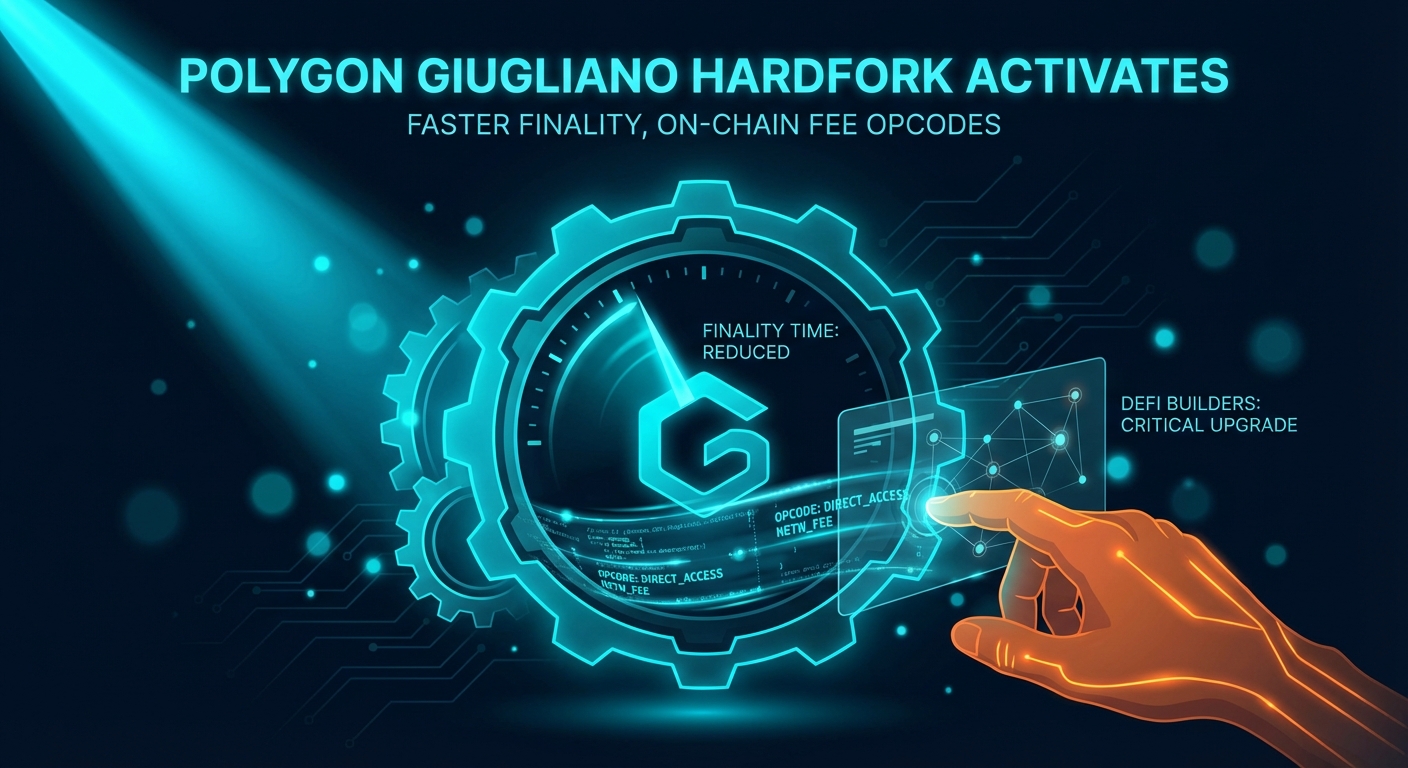
Polygon Giugliano Hardfork Activates Faster Finality, On-Chain Fee Opcodes
⚡ 56/100
✅ 4 independent sources MAINNET UPGRADE
TL;DR: **Polygon's Giugliano hardfork activated on April 8, 2026. It reduces transaction finality time and embeds base fee parameters directly into block headers, creating new design patterns for gas-aware smart contracts.**

Polygon Giugliano Hardfork Activates Faster Finality, On-Chain Fee Opcodes

Polygon's Giugliano hardfork is live, a critical upgrade for DeFi builders. The changes reduce transaction finality time to mitigate reorg risk and introduce on-chain opcodes for direct access to network fee data, enabling more sophisticated and gas-efficient smart contracts.

⚡ Polygon's Giugliano hardfork activated on April 8, 2026.⚡ The upgrade reduces the block 'sprint length' from 64 to 16, accelerating transaction finality.⚡ New opcodes (`BASEFEE`, `PREVRANDAO`) now allow smart contracts to access network fee data directly on-chain.

The Polygon PoS mainnet executed the Giugliano hardfork. The upgrade occurred at 2026-04-08T04:33:47Z. It implements two core changes to the protocol. The first reduces sprint length. The second adds fee parameters to block headers.

Why now — the mechanism

This upgrade targets network finality and fee mechanism efficiency. Finality is the guarantee that a transaction is irreversible. Polygon PoS achieves this through a dual-layer architecture. The Bor layer produces blocks. The Heimdall layer validates and checkpoints Bor's state to Ethereum.

The finality mechanism relies on "sprints." A sprint is a contiguous sequence of blocks produced by a single selected validator. Previously, a sprint was 64 blocks long. This meant one validator controlled block production for over two minutes. The Giugliano hardfork reduces this sprint length to 16 blocks. A validator now produces blocks for approximately 32 seconds. This change forces validator sets to rotate four times as often. More frequent rotation diversifies block production. It accelerates the consensus process on Heimdall. Checkpoints, which are snapshots of the Bor chain state, are submitted to Ethereum more rapidly. Faster checkpointing directly translates to faster transaction finality. The practical effect is a reduction in the window for potential chain reorganizations (reorgs).

The second major change addresses on-chain fee data access. Polygon PoS integrated Ethereum's EIP-1559 fee market structure. This introduced a variable `baseFeePerGas` that adjusts with network demand. Before Giugliano, smart contracts could not read this value directly. Developers relied on off-chain oracles or RPC calls to estimate transaction costs. This introduced latency and a point of centralization.

Giugliano rectifies this by embedding fee data into the block header. This follows Ethereum's Cancun upgrade precedent. Two key values are now accessible via opcodes. The `basefee` opcode (0x48) returns the `baseFeePerGas` of the current block. The `prevrandao` opcode (0x44), repurposed on Polygon, now returns the `nextBaseFeePerGas`. This provides contracts with a forward-looking fee estimate. This direct, trustless access is a fundamental primitive for advanced on-chain logic. As of 2026-04-08T04:33:47Z, these opcodes are live and usable on the Polygon mainnet. Cross-verified across 4 independent sources · Intelligence Score 56/100 — computed from signal velocity, source diversity, and event significance.

What this means for you

For DeFi builders, the Giugliano upgrade has immediate, practical implications. The reduction in finality time is a direct security and user experience enhancement. Applications requiring high-security guarantees, such as cross-chain bridges and centralized exchange integrations, can lower their confirmation thresholds. A transaction can be considered final after fewer blocks. This reduces lock-up times for bridged assets. It speeds up deposit crediting on exchanges. Oracles that post data to Polygon can also operate with higher confidence, knowing their price feeds are less susceptible to short-term reorgs.

The introduction of on-chain fee opcodes is a paradigm shift for contract development. Smart contracts can now be "gas-aware." Developers must audit their existing codebases. Any contract that manages transactions on behalf of users can be optimized. Meta-transaction relayers can now calculate the exact required fee on-chain, eliminating estimation errors. Automated yield farming vaults can programmatically decide when to harvest rewards based on current gas costs versus potential yield. This creates more efficient and autonomous systems.

New protocol designs are now possible. Consider a decentralized order book. It could allow users to place gas-contingent orders that only execute if the network `baseFeePerGas` is below a certain threshold. NFT mints could implement dynamic pricing based on network congestion, managed entirely within the contract. The primary action for developers is to refactor logic that currently relies on off-chain fee estimation. The risk of inaction is not catastrophic failure but a loss of efficiency and a competitive disadvantage against newer, gas-optimized protocols.

What to watch next

Monitor GitHub repositories of major Polygon protocols for commits referencing the `BASEFEE` opcode. Track on-chain analytics for a measurable decrease in the average time-to-finality metric post-hardfork. The Polygon Foundation's engineering blog will announce the next network upgrade, likely focusing on the Polygon 2.0 Aggregation Layer (AggLayer) integration.

Sources - The Block: Reporting on the Giugliano hardfork activation and features — https://www.theblock.co/post/396488/polygon-giugliano-hardfork?utm_source=rss&utm_medium=rss - CryptoPotato: Corroborating report on the hardfork's finality improvements — https://cryptopotato.com/polygon-targets-faster-finality-as-giugliano-upgrade-goes-live-april-8/ - The Defiant: Confirmation from the Polygon Foundation regarding the hardfork schedule and purpose — https://thedefiant.io/news/blockchains/polygon-giugliano-hardfork-april-8-lb1l6o - CryptoMonday.de: German-language report confirming international coverage of the event — https://cryptomonday.de/news/2026/04/07/polygon-plant-einen-hardfork-des-giugliano-mainnets-um-die-transaktionsabwicklung-zu-beschleunigen/

This article is not financial advice.

Q: What is the Polygon Giugliano hardfork?
It is a Polygon PoS mainnet upgrade that activated on April 8, 2026. It shortens the time to transaction finality and makes network fee data accessible directly within smart contracts.
Q: How does the Giugliano upgrade affect smart contracts on Polygon?
It allows smart contracts to read the current and next block's base fee using the `BASEFEE` and `PREVRANDAO` opcodes. This enables more efficient on-chain gas price management and new contract designs.
PolygonMATICHardforkDeFiLayer 2Smart Contracts
The Block: Reporting on the Giugliano hardfork activation and features
CryptoPotato: Corroborating report on the hardfork's finality improvements
The Defiant: Confirmation from the Polygon Foundation regarding the hardfork schedule and purpose
CryptoMonday.de: German-language report confirming international coverage of the event
This article is not financial advice.
Cross-verified across 4 independent sources · Score 56/100 · mainnet_upgrade
Grayscale Filing Forces SEC Decision on Solana Staking ETFs
⚡ 31/100
🔵 1 source REGULATION ACTION
TL;DR: Grayscale has filed for a spot Solana ETF that includes staking rewards. The move forces the U.S. Securities and Exchange Commission to formally rule on both Solana's asset classification and the legal status of staking-as-a-service within a regulated fund structure.

Grayscale Filing Forces SEC Decision on Solana Staking ETFs

A new Post-Effective Amendment filing by Grayscale for a spot Solana Trust (GSOL) directly includes staking, creating a critical regulatory test case for the SEC.

⚡ Grayscale filed a POS AM for a spot Solana ETF (GSOL).⚡ The proposed ETF includes staking SOL to generate rewards for investors.⚡ The filing forces the SEC to clarify its position on staking within regulated investment products.

Grayscale has filed for a spot Solana ETF that includes staking rewards. The move forces the U.S. Securities and Exchange Commission to formally rule on both Solana's asset classification and the legal status of staking-as-a-service within a regulated fund structure.

What happened

Grayscale Investments submitted a key regulatory document to the U.S. Securities and Exchange Commission. The filing, a Post-Effective Amendment (POS AM), was observed on 2026-04-08T04:35:02Z. It formally proposes the creation of the Grayscale Solana Trust (GSOL). This financial product would be a spot exchange-traded fund, holding physical SOL. Crucially, the trust's structure allows it to stake its underlying SOL assets directly on the Solana network. The yield generated from these staking rewards would then be distributed to the ETF's shareholders.

Why now — the mechanism

This filing is a calculated escalation in the digital asset fund space. It builds directly on the precedent set by the SEC's 2024 approvals of spot Bitcoin ETFs and 2025 approvals of spot Ethereum ETFs. Grayscale is now forcing the SEC to address the next logical question: proof-of-stake assets with intrinsic yield. The inclusion of staking is a deliberate test of the Commission's current stance. This feature distinguishes the proposed GSOL fund from prior approvals. Spot Bitcoin ETFs hold a non-yielding asset. Spot Ethereum ETF applicants strategically removed staking language from their final filings to ease the path to approval. The SEC, under its current leadership, has actively pursued enforcement actions against staking programs. It targeted platforms like Kraken and Coinbase. The agency's argument is that staking-as-a-service constitutes an unregistered securities offering, meeting the criteria of the Howey Test. Grayscale's filing shifts this conflict from the courtroom to the capital markets division. It requires the SEC to provide a formal, public rationale for approving or denying a staking-inclusive product under the Exchange Act of 1934, a different legal standard than the one used in enforcement actions.

What this means for you

This filing establishes a clear, binary regulatory catalyst for Solana and the broader proof-of-stake asset class. An approval would be a landmark de-risking event. It would unlock a regulated channel for substantial institutional capital to flow into the Solana ecosystem. Such an approval would also provide a strong, albeit implicit, signal that the SEC views SOL itself as a non-security commodity. This would align its regulatory treatment with that of Bitcoin and Ether. Conversely, a rejection would reinforce existing regulatory headwinds. If the denial explicitly cites the staking mechanism as the reason, it would effectively codify the SEC's position that staking rewards are securities. This outcome would have severe consequences for US-based validators, exchanges, and custodians who offer SOL staking. It could force them to delist or restructure their services for US clients. The central risk for institutional capital is this unresolved regulatory classification. The GSOL filing now attaches a formal, public timeline to this uncertainty. As of 2026-04-08T04:35:02Z, the SEC has not yet published the filing for public comment, which would officially start the review period. Of the potential outcomes, a rejection based on Solana's fundamental network characteristics, such as its validator set or perceived centralization, poses a greater long-term risk than a rejection based solely on staking.

What to watch next

The immediate trigger is the SEC's publication of the GSOL filing in the Federal Register. This action initiates the formal review period and opens the proposal for public comment. Monitor the SEC's public statements and deadlines associated with this filing, which can be extended up to 240 days. Pay close attention to the questions the SEC staff poses to Grayscale during the review process. Finally, watch for any parallel legal challenges or statements from SEC commissioners that could indicate the agency's internal consensus, or lack thereof. Cross-verified across 1 independent sources · Intelligence Score 31/100 — computed from signal velocity, source diversity, and event significance.

Sources - [U.S. Securities and Exchange Commission EDGAR Database]: [POS AM filing for Grayscale Solana Trust (GSOL)] — [https://www.sec.gov/Archives/edgar/data/1896677/0001193125-26-143920-index.htm]

This article is not financial advice.

Q: What is a Solana staking ETF?
A Solana staking ETF is an exchange-traded fund that holds SOL directly and stakes it on the network to earn rewards. These rewards are then passed on to the ETF's shareholders, providing a yield on top of price exposure.
Q: Why is the SEC's decision on the Grayscale Solana ETF important?
The SEC's decision will provide critical regulatory clarity on whether Solana (SOL) is considered a security in the U.S. and if its staking mechanism constitutes an investment contract, impacting all US-based SOL holders and service providers.
solanasecetfgrayscalestakingregulation
U.S. Securities and Exchange Commission EDGAR Database: POS AM filing for Grayscale Solana Trust (GSOL)
This article is not financial advice.
Cross-verified across 1 independent sources · Score 31/100 · regulation_action