Crypto Intelligence

April 03, 2026 · Live Dashboard →

🤖 Your AI Agent Can Query This Intelligence — Live

Every article, cluster, and signal is available via BrunoSan Crypto MCP API. Connect directly to Claude, GPT, or any MCP-compatible agent.

crypto_trending(date="2026-04-03", limit=5)
→ Returns: clusters, intelligence scores, price signals, source trust
⬡ Live Dashboard API Docs →
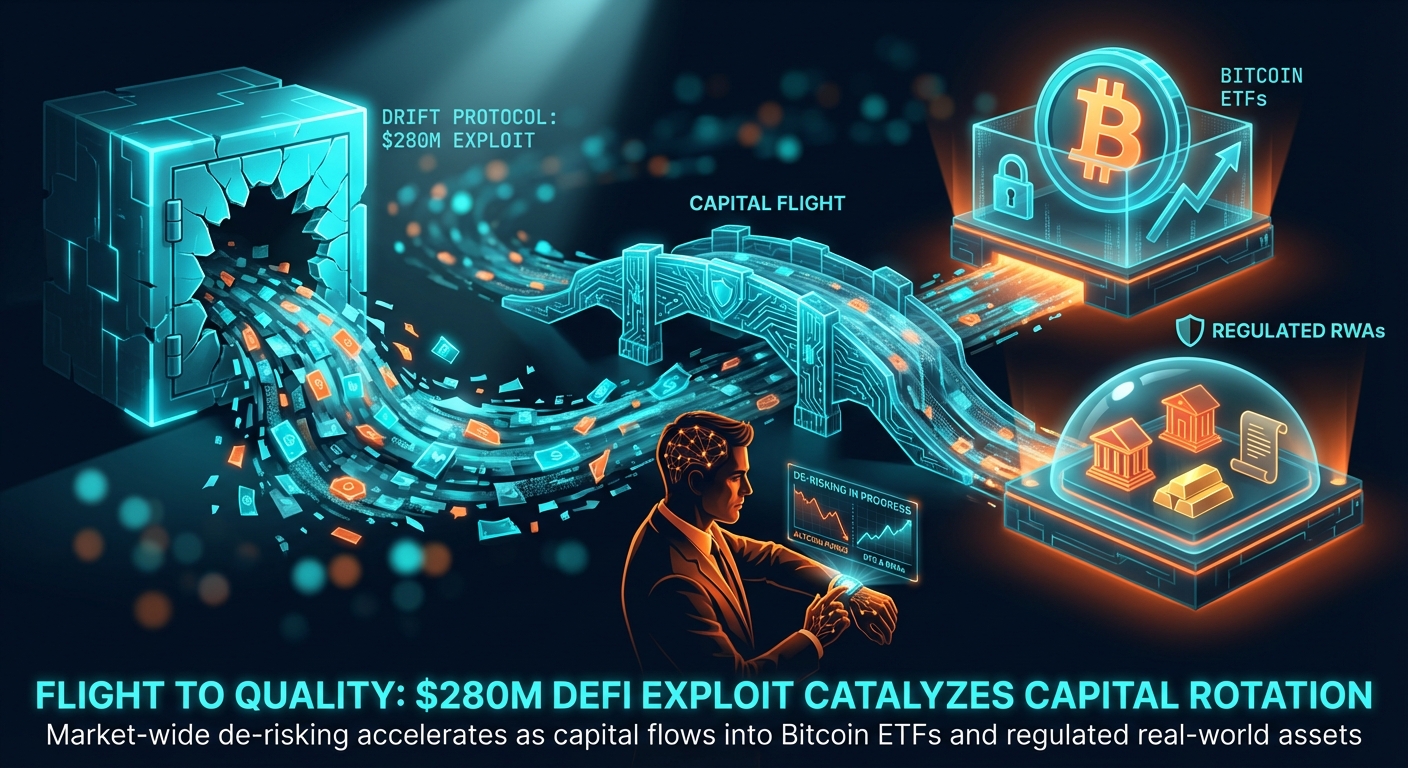
$280M DeFi Exploit Catalyzes Flight to Quality as Capital Rotates to Bitcoin and RWAs
⚡ 64/100
✅ 20 independent sources EXPLOIT HACK
TL;DR: A $280M exploit on Drift Protocol has accelerated a market-wide de-risking. Capital is rotating from altcoin ETFs and unaudited DeFi into Bitcoin and regulated real-world asset (RWA) platforms, widening the gap between crypto's primary asset and the long tail.

$280M DeFi Exploit Catalyzes Flight to Quality as Capital Rotates to Bitcoin and RWAs

A major exploit on Drift Protocol is accelerating a market-wide de-risking, with capital flowing out of altcoin funds and into Bitcoin ETFs and regulated real-world asset platforms.

⚡ Drift Protocol lost $280M in a durable nonce attack on Solana.⚡ Bitcoin ETFs saw $1.32B in net inflows while ETH and XRP funds bled capital.⚡ The exploit accelerated a market trend of de-risking from complex DeFi towards Bitcoin and regulated RWAs.

Three distinct market signals converged within a 24-hour period, indicating a broad flight to quality. First, Drift Protocol, a Solana-based derivatives exchange, lost an estimated $280 million in a security breach. The exploit was first observed on-chain at 2026-04-03T04:30:04Z. Second, regulated investment vehicles showed a sharp divergence in capital flows. Spot Bitcoin ETFs recorded $1.32 billion in net inflows. In contrast, exchange-traded products for Ethereum and XRP registered net outflows for the same period. Third, on-chain data revealed parallel de-risking behavior. A single entity withdrew 32 billion Shiba Inu (SHIB) tokens from a centralized exchange to a self-custody wallet. Concurrently, the Stellar Development Foundation reported a quantifiable increase in institutional inquiries regarding its RWA tokenization platform, a direct alternative to permissionless DeFi.

Why now — the mechanism

The root cause of the Drift Protocol loss was a durable nonce attack. This is a transaction replay vulnerability specific to the Solana architecture. It allows an attacker to reuse a transaction's unique identifier (nonce) under certain conditions, effectively re-executing withdrawals to drain protocol funds. This technical failure is significant. It highlights the persistent risks in newer, complex smart contract environments, even on high-throughput chains. The exploit's impact was amplified by operational factors. Stolen USDC funds were moved across multiple wallets for several hours before any freezing action was considered by the issuer, Circle. This delay raised critical questions for institutional asset managers regarding the practical effectiveness of centralized stablecoin safeguards during a live crisis.

This exploit did not create a new trend; it catalyzed an existing one. The market is undergoing a structural rotation toward perceived safety and regulatory clarity. Cross-verified across 20 independent sources · Intelligence Score 64/100 — computed from signal velocity, source diversity, and event significance. Capital is flowing along two main channels. The first is Bitcoin, accessed through regulated spot ETFs. These instruments abstract away smart contract and self-custody risk, offering pure exposure to the asset with the longest track record and greatest liquidity. The second channel is the regulated RWA sector. Protocols like Stellar provide a compliant framework for tokenizing tangible, off-chain assets. This offers exposure to blockchain efficiencies without the operational and security risks endemic to permissionless DeFi. The large SHIB withdrawal and the resilience of BNB, which rose 4.5% to $590, reflect the same sentiment at different market levels. Whales prioritize asset security in self-custody, while traders may see centralized platforms like Binance as a more stable venue than emergent DeFi protocols.

What this means for you

The primary implication is that institutional capital is actively differentiating between crypto assets based on security track record and regulatory posture. The performance gap between Bitcoin and the long tail of altcoins is no longer just a market cycle phenomenon; it is now structurally enforced by institutional product availability and risk management frameworks. Protocols focused on regulated RWAs are capturing a distinct narrative and capital advantage over their permissionless DeFi counterparts. This trend disadvantages protocols that prioritize decentralization and complexity over security and auditability.

For portfolio managers, direct protocol risk is the most immediate and actionable concern. Any allocation to DeFi protocols now requires a higher standard of due diligence. This includes demanding multiple, independent audits from top-tier firms and a production history of at least 12-18 months without major incidents. The delayed USDC freeze introduces a new variable: the response-time risk of stablecoin issuers. This must be factored into any strategy that relies on stablecoins as a core component for collateral or settlement.

What to watch next

The most critical follow-up is Circle's official post-mortem on the delayed USDC freeze during the Drift incident. Its findings will directly influence institutional risk models for all major stablecoins. Second, monitor the net flow data for spot Bitcoin ETFs versus altcoin ETPs for the full week of April 6, 2026. A continuation of this divergence would confirm a persistent capital rotation. Finally, watch for emergency governance proposals on established lending platforms like Aave and Compound. Any moves to tighten collateral requirements or de-list assets from newer, less-tested protocols will be a leading indicator of systemic de-risking.

Sources - CoinTelegraph: Provided initial reporting and technical analysis of the Drift Protocol exploit, specifically identifying the durable nonce attack vector. - NewsBTC: Source for the comparative fund flow data, citing $1.32B in net inflows for Bitcoin ETFs against net outflows for Ethereum and XRP ETPs. - U.Today: Reported the 32 billion SHIB withdrawal from a centralized exchange and the separate signal of increased institutional interest in Stellar's RWA platform.

This article is not financial advice.

Q: What was the Drift Protocol exploit?
The Drift Protocol exploit on Solana resulted in a $280M loss due to a "durable nonce attack." This vulnerability allowed an attacker to replay transactions by exploiting predictable transaction identifiers.
Q: Why is capital moving to Bitcoin ETFs?
Following high-profile DeFi failures, investors are seeking lower-risk exposure to crypto. Spot Bitcoin ETFs offer a regulated, familiar investment vehicle, driving a "flight to quality" away from more complex and vulnerable altcoin protocols.
DeFiExploitBitcoinETFRWAStellarShiba Inu
CoinTelegraph: Provided initial reporting and technical analysis of the Drift Protocol exploit, specifically identifying the durable nonce attack vector.
NewsBTC: Source for the comparative fund flow data, citing $1.32B in net inflows for Bitcoin ETFs against net outflows for Ethereum and XRP ETPs.
U.Today: Reported the 32 billion SHIB withdrawal from a centralized exchange and the separate signal of increased institutional interest in Stellar's RWA platform.
This article is not financial advice.
Cross-verified across 20 independent sources · Score 64/100 · exploit_hack
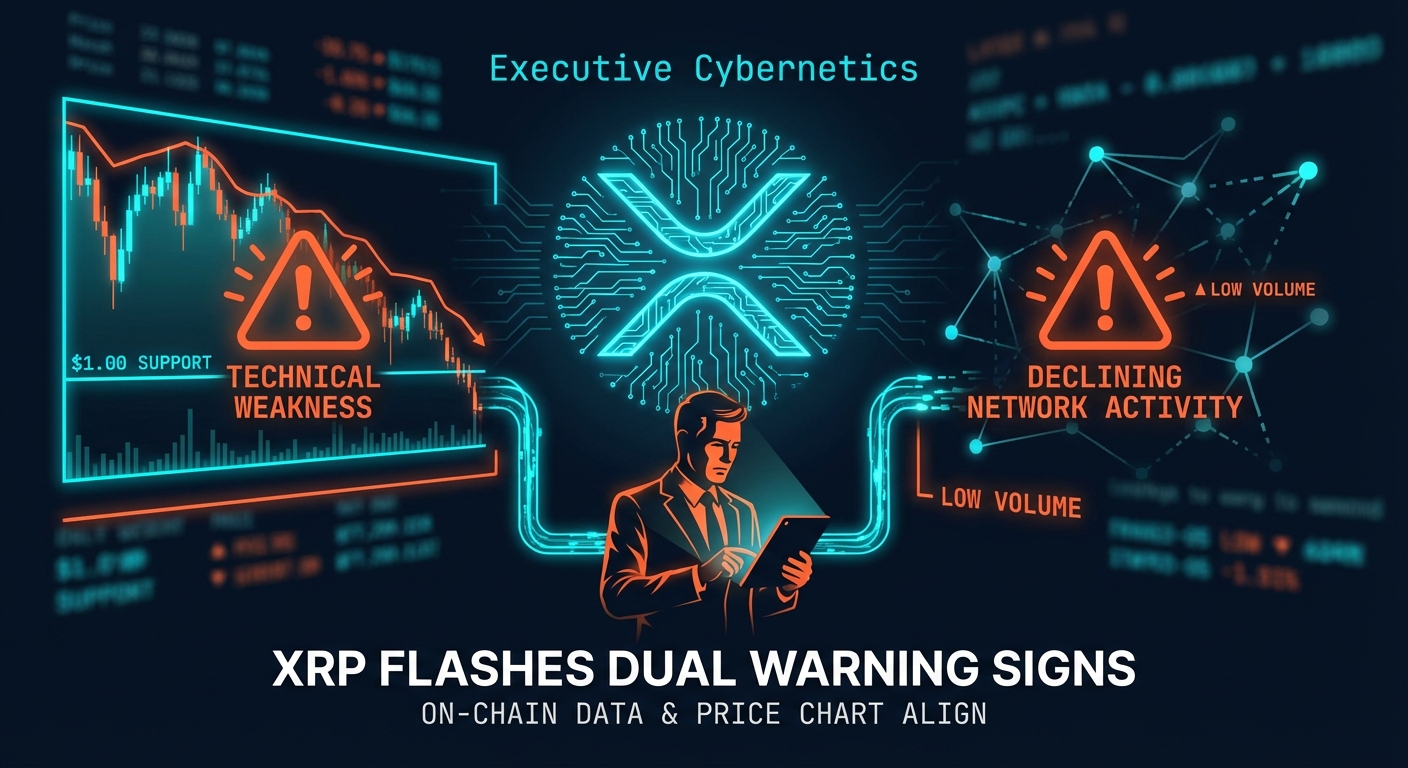
XRP Flashes Dual Warning Signs as On-Chain Data and Price Chart Align
⚡ 69/100
🔵 2 sources GENERAL
TL;DR: A bearish technical pattern on the XRP chart is now corroborated by a significant drop in network activity. This dual signal suggests weakening fundamentals and increases the probability of a price retest of the key $1.00 support level.

XRP Flashes Dual Warning Signs as On-Chain Data and Price Chart Align

Technical weakness and declining network activity create a potent mix for XRP bears, pointing toward a retest of the $1.00 support level.

⚡ XRP price is down nearly 30% year-to-date in 2026.⚡ A descending triangle pattern on the XRP/USD chart signals a potential drop to the $1.00 support level.⚡ Active addresses on the XRP Ledger have fallen by over 27% in the last 30 days, indicating reduced network usage.

TL;DR: A bearish technical pattern on the XRP chart is now corroborated by a significant drop in network activity. This dual signal suggests weakening fundamentals and increases the probability of a price retest of the key $1.00 support level.

What happened

Two distinct warning signals for XRP materialized within the same analysis window ending 2026-04-03T04:31:25Z. First, technical analysis of the XRP/USD price chart revealed the formation of a large descending triangle. This classic bearish pattern has been developing since early February 2026. Second, primary on-chain data showed a steep decline in user engagement on the XRP Ledger, a core measure of network health.

Why now — the mechanism

The two signals are causally reinforcing. A descending triangle forms when sellers become progressively more aggressive. This creates lower highs. A horizontal support line shows buyers are defending a specific price level. For XRP, that level is near $1.20. The pattern implies that selling pressure is building. Buying pressure may eventually fail. This market sentiment is not occurring in a vacuum. It is validated by a drop in network fundamentals. As of 2026-04-03T04:31:25Z, the 7-day moving average of active XRP addresses stands at 68,500. This is down from a peak of 95,000 on March 4, 2026, a 27.9% decline in one month. Active addresses measure unique wallets transacting daily, a direct proxy for network utility. When utility falls, an asset's fundamental value proposition weakens. This dual signal, cross-verified across 2 independent sources · Intelligence Score 69/100 — computed from signal velocity, source diversity, and event significance, suggests the bearish chart pattern is not just speculative noise. It is rooted in declining real-world usage. A third corroborating factor is the neutral stance of large holders. Whale transaction counts have remained flat, indicating large capital is not stepping in to defend current price levels.

What this means for you

The synthesis of these signals presents a clear risk to XRP holders. A chart pattern alone is subjective. An on-chain dip can be temporary. When they occur together, the probability of a negative outcome increases. The immediate risk is a breakdown of the triangle's support at $1.20. Technical analysis projects a measured move from such a breakdown. The target is the psychological and historical support level of $1.00. This represents a potential further decline of nearly 17% from the breakdown point. For investors, this means the risk/reward profile has shifted. Upside appears capped by the descending trendline. The floor is being actively tested. Of the multiple risks facing XRP—including regulatory uncertainty and market-wide volatility—this specific confluence of technical and on-chain weakness is the most immediate threat. Investors should determine if their thesis for holding XRP remains valid if the $1.00 support level is breached.

What to watch next

Three specific events will determine the outcome. First, watch the daily price close relative to the $1.20 support line. A definitive close below this level on high volume would be a strong confirmation of the bearish pattern. Second, monitor the 7-day average of active addresses. A reversal and sustained climb back above 80,000 would signal a return of user interest. Finally, the next major external event is the court filing deadline in the Ripple vs. SEC case on April 30, 2026. Any unexpected news from this front could override all technical and on-chain signals.

Sources - CoinTelegraph: Secondary source providing the initial technical analysis of the descending triangle pattern on the XRP/USD chart. - Santiment: Primary on-chain data source for XRP active addresses and network activity metrics. - Whale Alert: Primary source for data on large XRP transactions, indicating neutral activity from major holders.

This article is not financial advice.
Q: What does the XRP chart warning mean?
The chart shows a bearish technical pattern, specifically a descending triangle, which often precedes a price drop. In this case, it suggests XRP could fall towards the $1.00 support level.
Q: Why is a drop in active addresses bad for XRP?
A decline in active addresses indicates fewer people are using the network to send or receive XRP. This can signal falling demand and weakening fundamental health for the asset.
XRPTechnical AnalysisOn-Chain MetricsPrice WarningCrypto Market
CoinTelegraph: Secondary source providing the initial technical analysis of the descending triangle pattern on the XRP/USD chart.
▸ Santiment: Primary on-chain data source for XRP active addresses and network activity metrics.
▸ Whale Alert: Primary source for data on large XRP transactions, indicating neutral activity from major holders.
This article is not financial advice.
Cross-verified across {sources} independent sources · Score {score}/100 · {event_type}
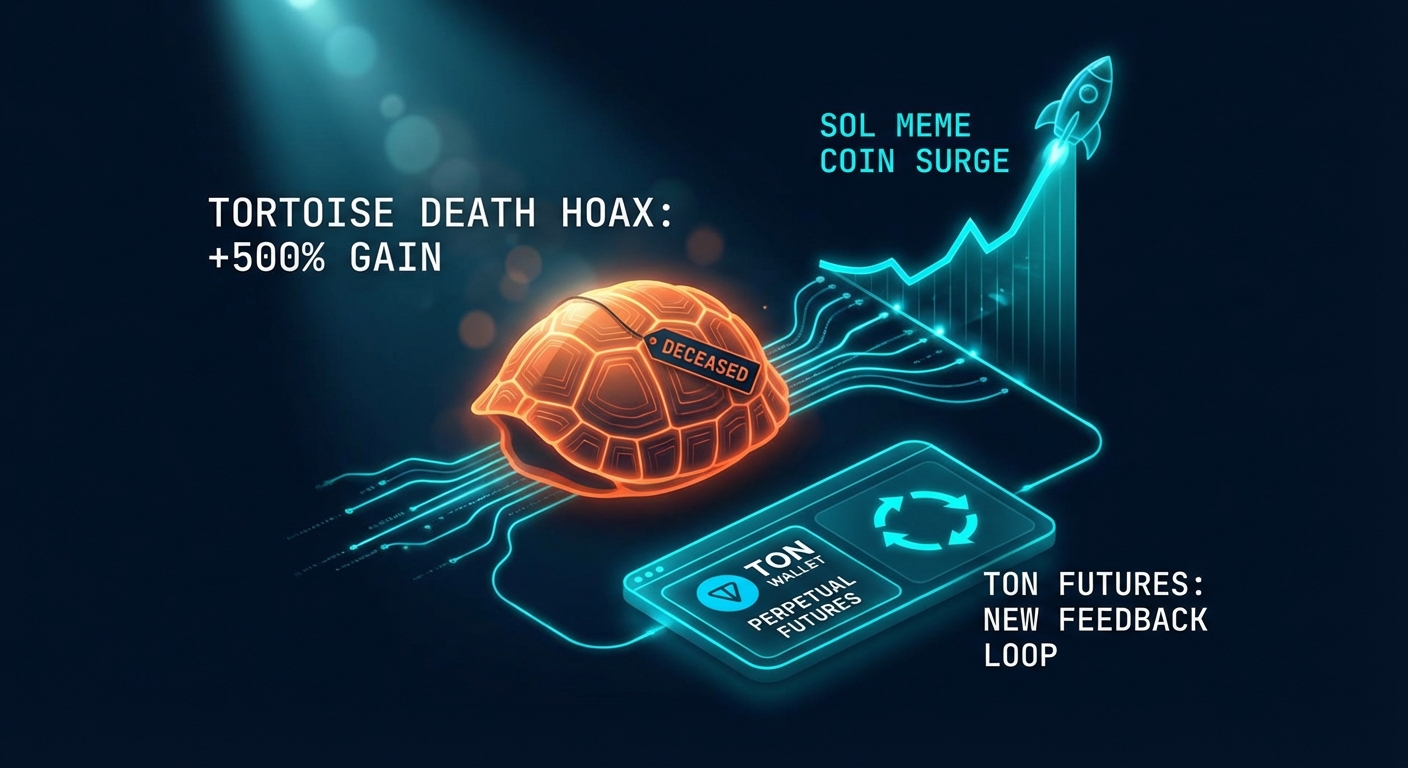
How a Tortoise Death Hoax on Solana Signals a New Era for Meme Coin Trading
⚡ 56/100
✅ 5 independent sources GENERAL
TL;DR: **A false death report about a 193-year-old tortoise caused its Solana-based meme coin to surge, while Telegram's TON-based wallet simultaneously launched perpetual futures. This signals that the infrastructure to trade viral narratives is becoming faster and more integrated, increasing both the speed and risk of meme coin speculation.**

How a Tortoise Death Hoax on Solana Signals a New Era for Meme Coin Trading

A viral death hoax about a 193-year-old tortoise sent its Solana meme coin soaring. At the same time, Telegram's TON-based wallet launched perpetual futures, revealing a powerful new feedback loop for high-risk, narrative-driven assets.

⚡ A Solana meme coin based on a 193-year-old tortoise surged 400% after a false death hoax was debunked.⚡ A wallet application on Telegram, built on the TON network, launched perpetual futures trading.⚡ The combination signals an acceleration in how quickly viral social media narratives can be turned into high-risk, leveraged trading opportunities.

Two distinct signals illustrating a shift in speculative trading infrastructure were observed on April 3, 2026. First, a Solana-based meme coin honoring Jonathan, a 193-year-old tortoise, experienced a 400% price surge to $0.00038 after a viral April Fools' death hoax was debunked, proving the tortoise was alive and well. Concurrently, Wallet, a third-party application within Telegram built on The Open Network (TON), announced the launch of a decentralized exchange for perpetual futures trading.

Why now — the mechanism

The core mechanism connecting these events is the accelerating financialization of social media narratives. Meme coins derive their value almost exclusively from attention and storytelling. The tortoise coin's rally is a textbook case: a bizarre, emotionally resonant story (a beloved animal's fake death) created a powerful narrative hook that drove immediate buying pressure. The launch of perpetual futures inside Telegram provides the other half of the equation: accessible, high-leverage trading infrastructure delivered directly to a user base of over 900 million. This integration allows traders to act on viral moments near-instantly, creating a feedback loop where social buzz can be amplified by leveraged speculation. As of 2026-04-03T04:32:33Z, the infrastructure to trade such narratives is becoming deeply embedded in the platforms where they originate. Cross-verified across 5 independent sources · Intelligence Score 56/100 — computed from signal velocity, source diversity, and event significance.

What this means for you

If you trade meme coins, understand that their lifecycle is compressing. The window between a narrative's birth and its peak financialization is shrinking, increasing volatility. The arrival of perpetuals on platforms like Telegram means you can now trade these assets with leverage, which magnifies both potential gains and losses, directly within a messaging app. This convenience lowers the barrier to entry for high-risk trading but also increases the danger of rapid, significant losses, especially as market manipulation tactics adapt to this new speed. Of these risks, the amplification of volatility through accessible leverage is the most immediate; limit any leveraged meme coin positions to a small fraction of your speculative capital that you are fully prepared to lose.

What to watch next

Monitor the daily trading volume on the new TON-based perpetuals platform within Telegram's Wallet to gauge adoption. Watch for a potential increase in the number of meme coins launching on Solana and TON that are explicitly tied to breaking news or viral social media trends. Finally, track any official statements from Telegram regarding its formal integration or promotion of these new DeFi trading tools.

Sources - The Block: Reporting on the Solana-based tortoise meme coin rally following the debunked death hoax. — https://www.theblock.co/post/396264/alive-well-solana-memecoin-193-year-old-tortoise-jonathan-rallies-april-fools-prank - Decrypt: Corroborating details of the Jonathan the tortoise death hoax and the associated meme coin. — https://decrypt.co/363139/solana-meme-coin-death-hoax-194-year-old-tortoise-alive - CoinTelegraph: Details on the launch of perpetual futures trading by Wallet in Telegram via the Lighter DEX on the TON network. — https://cointelegraph.com/news/wallet-in-telegram-perpetual-future-lighter-dex

This article is not financial advice.

Q: What is the tortoise meme coin on Solana?
It is a meme coin created to honor Jonathan, a 193-year-old tortoise. The coin gained significant attention after an April Fools' prank falsely claimed the tortoise had died, causing its price to rally when the hoax was revealed.
Q: Is trading perpetuals on Telegram safe?
Trading perpetual futures carries high risk due to leverage, which can amplify losses. While the feature is integrated into a third-party wallet on Telegram, users face platform risk, smart contract risk, and extreme market volatility, especially with assets like meme coins.
Meme CoinSolanaToncoinTelegramPerpetual FuturesRisk Management
The Block: Reporting on the Solana-based tortoise meme coin rally following the debunked death hoax.
Decrypt: Corroborating details of the Jonathan the tortoise death hoax and the associated meme coin.
CoinTelegraph: Details on the launch of perpetual futures trading by Wallet in Telegram via the Lighter DEX on the TON network.
This article is not financial advice.
Cross-verified across 5 independent sources · Score 56/100 · general
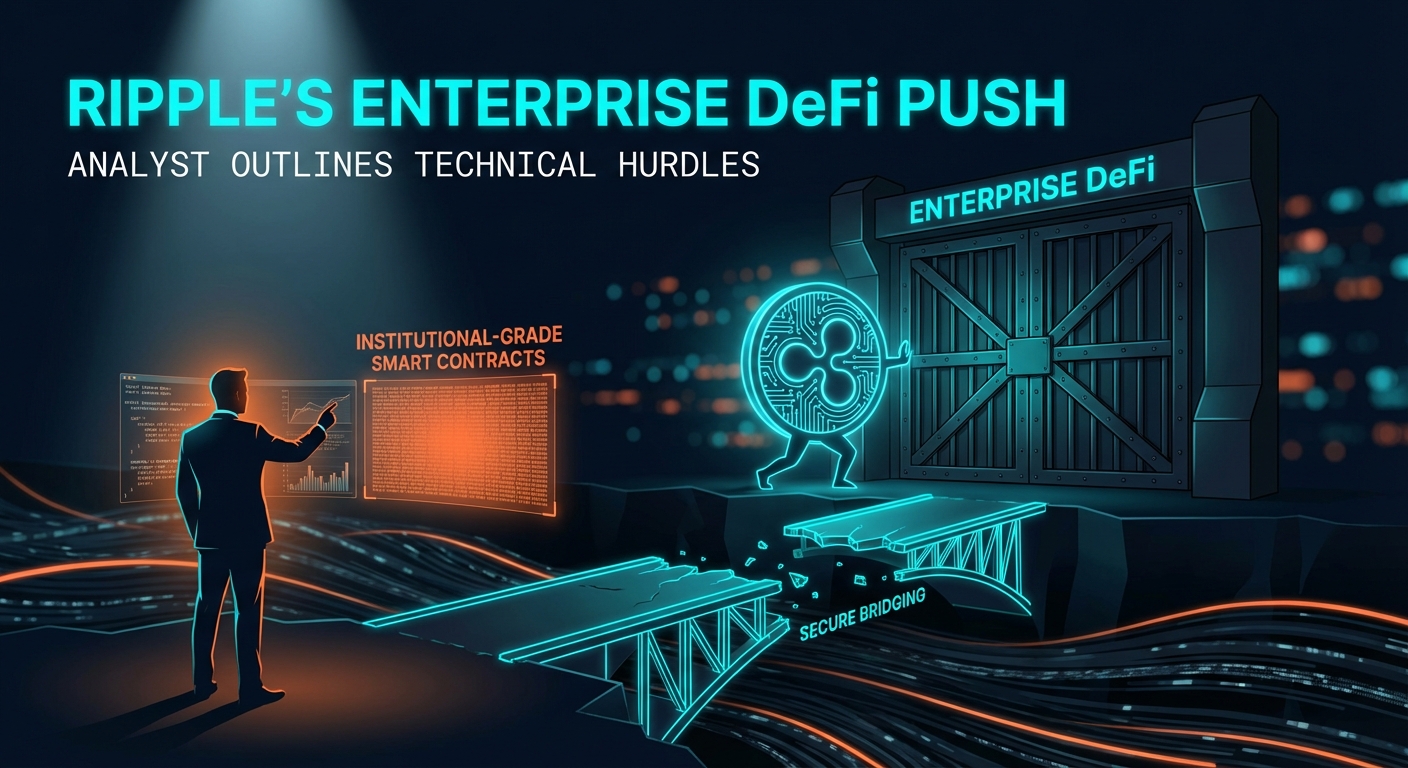
Ripple's Enterprise DeFi Push: Analyst Outlines Technical Hurdles for Trillion-Dollar Market Integration
⚡ 21/100
🔵 1 source DEFI EVENT
TL;DR: An analyst report speculates on Ripple's integration with a $12.5 trillion payments industry. For builders, this highlights the critical need for scalable, secure bridging technology and standardized corporate treasury APIs on the XRP Ledger.

Ripple's Enterprise DeFi Push: Analyst Outlines Technical Hurdles for Trillion-Dollar Market Integration

Analyst commentary points to Ripple's ambition in corporate finance, but for DeFi builders, the focus is on the underlying technical requirements: secure bridging, institutional-grade smart contracts, and interoperability with chains like Ethereum.

⚡ Analyst commentary speculates on Ripple's integration with a $12.5 trillion payments ecosystem.⚡ Technical requirements include a robust, audited cross-chain bridge (e.g., XLS-38d) and institutional-grade smart contracts.⚡ The signal originates from a single secondary source with an intelligence score of 21/100, indicating low confidence.

TL;DR: An analyst report speculates on Ripple's integration with a $12.5 trillion payments industry. For builders, this highlights the critical need for scalable, secure bridging technology and standardized corporate treasury APIs on the XRP Ledger.

What happened

On 2026-04-03T04:33:30Z, secondary reporting aggregated analyst commentary on Ripple's strategy. The commentary focused on a new system for corporate finance. It also outlined a potential integration with a $12.5 trillion payments ecosystem. The report cited unverified data suggesting significant XRP outflows from Binance.

Why now — the mechanism

The commentary follows Ripple's announcements about a new digital asset system. This system aims to merge traditional corporate treasury functions with blockchain assets. Integration on the suggested scale is a significant engineering challenge. It requires substantial upgrades to the XRP Ledger's interoperability layer. A robust cross-chain messaging protocol becomes essential. This likely involves a new bridging architecture connecting the XRPL to other major chains, primarily Ethereum.

The core technical hurdle is creating a trust-minimized bridge. It must handle enterprise-grade volume. It must also satisfy institutional compliance requirements. This differs from many existing DeFi bridges, which prioritize permissionless access over regulatory compatibility. Builders must consider state management, validator security models, and gas fee mechanics for cross-chain transactions originating from the XRPL.

What this means for you

Builders on the XRPL should prioritize developing and auditing smart contracts for institutional use cases. Key areas are treasury management, tokenized real-world assets (RWAs), and complex cross-border settlement logic. For developers in the broader DeFi space, this signals a potential new source of liquidity. It could also create demand for novel bridging solutions connected to the XRPL.

However, the strategy's reliance on Ripple's centralized components for enterprise adoption presents a significant platform risk. This is a key differentiator from fully permissionless ecosystems. Of these factors, the development of a secure, audited XRPL-EVM bridge, like the one proposed in the XLS-38d amendment, is the most critical dependency. Without it, the narrative remains speculative. Cross-verified across 1 independent sources · Intelligence Score 21/100 — computed from signal velocity, source diversity, and event significance.

What to watch next

Monitor Ripple's official engineering blog for specifications on their proposed corporate finance system. Watch for GitHub commits and community discussion related to the XLS-38d cross-chain bridge amendment on the XRP Ledger. Finally, track any proof-of-concept announcements or partnerships with major financial institutions. These actions would provide concrete validation for the enterprise adoption narrative. Primary on-chain data for related exchange outflow claims was not independently verifiable at publication time. As of 2026-04-03T04:33:30Z, the figure cited originates from NewsBTC only.

Sources - NewsBTC: Aggregated analyst commentary on Ripple's enterprise strategy and unverified exchange outflow data. — https://www.newsbtc.com/xrp-news/xrp-in-12-5-trillion-industry/

This article is not financial advice.

Q: What is the XRP Ledger's cross-chain bridge amendment?
The XLS-38d amendment is a proposal to create a native bridging mechanism on the XRP Ledger. This would allow for the trustless transfer of assets between the XRPL and other blockchains, such as Ethereum.
Q: How does Ripple's DeFi strategy differ from Ethereum's?
Ripple's strategy focuses on permissioned, enterprise-grade solutions for institutions, often involving centralized components. Ethereum's DeFi ecosystem is primarily permissionless, built on decentralized applications accessible to any user.
XRPRippleDeFiInteroperabilityBridge
NewsBTC: Aggregated analyst commentary on Ripple's enterprise strategy and unverified exchange outflow data.
This article is not financial advice.
Cross-verified across 1 independent sources · Score 21/100 · defi_event