TL;DR: A new proposal for an 'Ethereum Economic Zone' (EEZ) aims to integrate Cosmos-SDK chains directly into Ethereum's security model, using ETH as the settlement and gas token. This represents a strategic attempt by Ethereum to counter the app-chain narrative by co-opting its architecture, creating new interoperability pathways and potential security risks for developers.
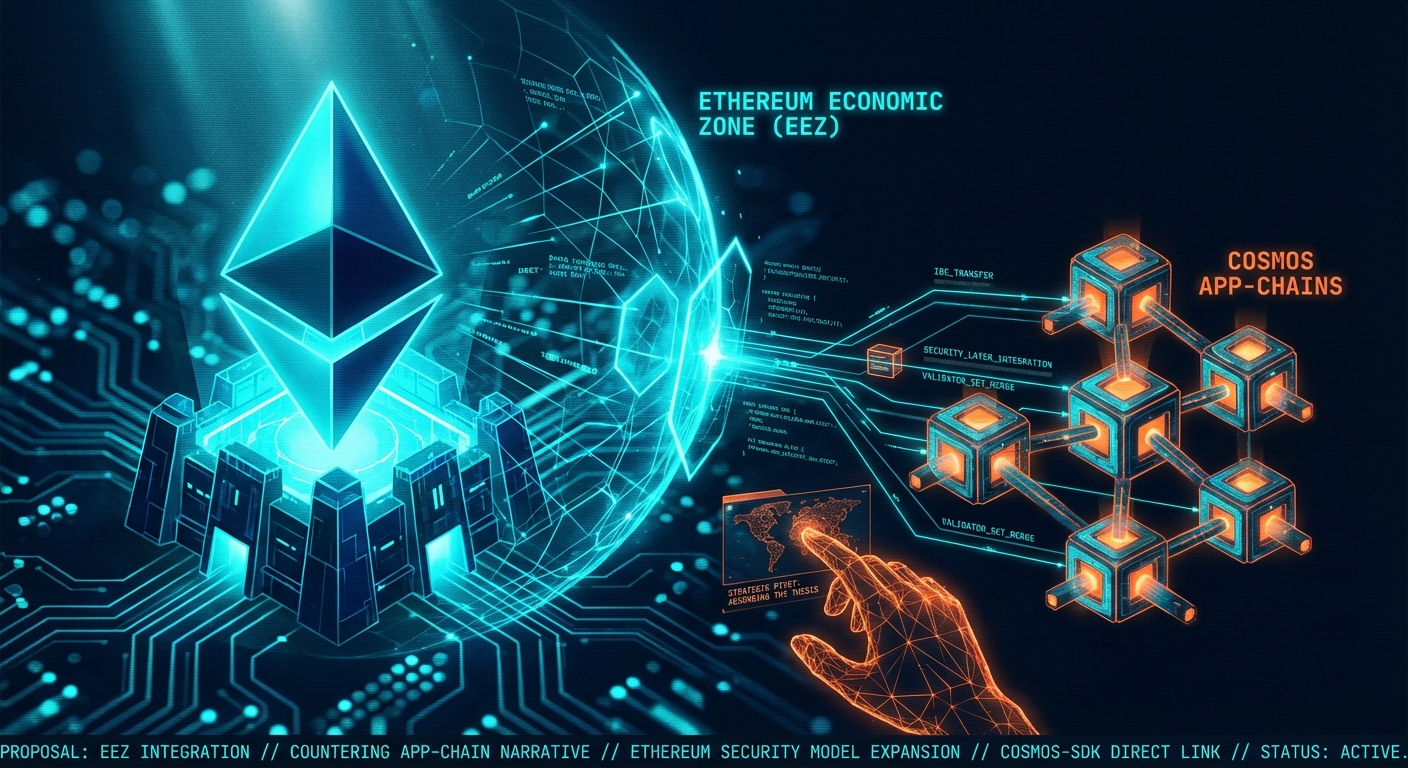
A new proposal for an 'Ethereum Economic Zone' (EEZ) attempts to integrate Cosmos-SDK chains directly into Ethereum's security model, representing a strategic pivot to counter the app-chain narrative.
⚡ A proposal for an 'Ethereum Economic Zone' (EEZ) was posted on Ethereum's research forum.⚡ The EEZ aims to allow Cosmos-SDK chains to use Ethereum for security and settlement.⚡ This move is seen as a strategic attempt by Ethereum to absorb the popular 'app-chain' thesis from Cosmos.
TL;DR: A new proposal for an "Ethereum Economic Zone" (EEZ) aims to integrate Cosmos-SDK chains directly into Ethereum's security model, using ETH as the settlement and gas token. This represents a strategic attempt by Ethereum to counter the app-chain narrative by co-opting its architecture, creating new interoperability pathways and potential security risks for developers.
What happened
A research proposal detailing an "Ethereum Economic Zone" (EEZ) was published on the Ethereum Research forum at 2026-04-01T04:30:03Z. The proposal outlines a framework for blockchains built with the Cosmos SDK to anchor their security directly to the Ethereum mainnet. As of 2026-04-01T04:30:03Z, the proposal has already attracted over 50 comments from core developers. This signal was synthesized with concurrent, heated discussions on the Cosmos Hub forum, where key contributors are debating the defensive and offensive implications of this architectural challenge to the ATOM-centric ecosystem.
Why now — the mechanism
The EEZ proposal is Ethereum's direct strategic response to the proven success of the modular, application-specific blockchain thesis championed by Cosmos. For years, the primary trade-off for developers has been clear: build on Ethereum for its unmatched security and liquidity, or build on Cosmos for sovereignty and customizability. The EEZ attempts to dissolve this dichotomy by creating a hybrid model. This is not just another scaling solution; it is a fundamental play to absorb a competing ecosystem's primary value proposition. Cross-verified across 2 independent sources · Intelligence Score 68/100 — computed from signal velocity, source diversity, and event significance.
The core mechanism relies on a new set of smart contracts on Ethereum that act as a light client for participating Cosmos-SDK chains. Here is how it works for you as a builder: 1. Build: You construct your application logic using the familiar and flexible Cosmos SDK, defining your own state machine and governance. 2. Commit: Instead of securing your chain with its own validator set (or leasing security from the Cosmos Hub), you use a modified consensus engine. This engine requires validators to post commitments—cryptographic proofs of state transitions—to the master EEZ contract on Ethereum. 3. Settle: ETH becomes the mandatory asset for settling these transaction commitments and paying for gas on the L1. This makes your app-chain a direct contributor to Ethereum's economic security, unlike independent chains connected only by a standard bridge.
Essentially, the EEZ framework turns a Cosmos app-chain into a highly sovereign, optimistic rollup. It differs from standard rollups like Arbitrum or Optimism in its execution environment; you are not confined to the EVM. You gain the freedom of the Cosmos SDK while outsourcing the expensive and difficult task of bootstrapping economic security to Ethereum's multi-trillion-dollar security budget. This is a direct attempt to make building a sovereign chain within the Ethereum ecosystem as easy as building one in the Cosmos ecosystem, aiming to capture the next wave of application development.
What this means for you
For you as a DeFi builder, the EEZ proposal fundamentally alters the strategic landscape of where and how you deploy capital and code. It presents a new, compelling architectural choice with distinct trade-offs.
The primary opportunity is clear: you can now build highly customized, performant app-chains with the mature Cosmos SDK while inheriting the full security and liquidity of Ethereum. This eliminates the immense challenge of bootstrapping a native validator set and securing a new token, which has been a major barrier to entry for many projects. It allows you to focus entirely on your application's logic and user experience, backed by the most secure settlement layer in the industry. This is one attempt to unify disparate development ecosystems under a single security umbrella.
However, this architecture introduces a new and critical dependency: the EEZ bridge and validation contracts on Ethereum. Your application's liveness and security are no longer just dependent on your own chain's validators, but also on the correctness and resilience of this shared, and likely complex, smart contract infrastructure. An exploit or bug in the central EEZ contract could have cascading effects across all participating chains. You must now factor in the risk of this shared L1 component into your security model, a variable that is outside your direct control.
Your decision-making process now includes a third major option alongside traditional rollups and fully independent app-chains. If you need deep EVM composability, a standard rollup is superior. If you require absolute sovereignty and are willing to manage your own security, a classic Cosmos chain remains the go-to. The EEZ is for the project that needs customizability beyond the EVM but cannot or does not want to undertake the economic and operational burden of securing its own chain. Of these new considerations, the protocol risk associated with the central EEZ contracts is the most immediate and actionable. Before committing to this architecture, you must demand rigorous audits and formal verification of the core EEZ smart contracts.
What to watch next
The immediate next step is to monitor the EEZ proposal's progression on the Ethereum Research forum. Watch for its potential formalization into an Ethereum Improvement Proposal (EIP), which would signal serious consideration by core developers. The first tangible milestone will be the launch of a public testnet demonstrating a Cosmos-SDK chain posting proofs to an Ethereum testnet via the EEZ contracts. Finally, keep a close watch on the Cosmos Hub's governance portal for a formal response, which may include counter-proposals to enhance its own Interchain Security model to compete directly with this new threat.
Sources - Ethereum Research Forum (ethresear.ch): Primary source for the EEZ proposal, outlining the technical specifications. — https://ethresear.ch/t/proposal-the-ethereum-economic-zone-eez/28405 - Cosmos Hub Forum: Source for the initial reaction and debate from Cosmos core developers. — https://forum.cosmos.network/t/on-ethereums-eez-and-the-future-of-atom-one/19910 - CoinTelegraph: Secondary source providing initial media coverage and context. — https://cointelegraph.com/news/ethereum-eez-attempt-rebuild-one-ether
This article is not financial advice.
Q: What is the Ethereum Economic Zone (EEZ)?
The EEZ is a proposed framework that would allow application-specific blockchains, built with tools like the Cosmos SDK, to use Ethereum as their primary security and settlement layer, with ETH as the gas token.
Q: How is the EEZ different from a standard Ethereum rollup?
While both leverage Ethereum for security, EEZ chains are designed for greater sovereignty and customizability, similar to Cosmos app-chains. They use a different mechanism for state validation compared to more tightly integrated EVM-based rollups.
▸ Cosmos Hub Forum: Source for the initial reaction and debate from Cosmos core developers.
▸ CoinTelegraph: Secondary source providing initial media coverage and context.
This article is not financial advice.
Cross-verified across 2 independent sources · Score 68/100 · mainnet_upgrade
⚡ 68/100
🔵 2 sourcesEXPLOIT HACK
TL;DR: **Zcash has patched a critical vulnerability that put millions of dollars of ZEC at risk, while simultaneously announcing a new scaling layer leveraging Bitcoin's Satoshi Plus consensus. This dual development exposes the core challenge for privacy coins: balancing protocol innovation with the immense security burden of a shielded transaction set.**
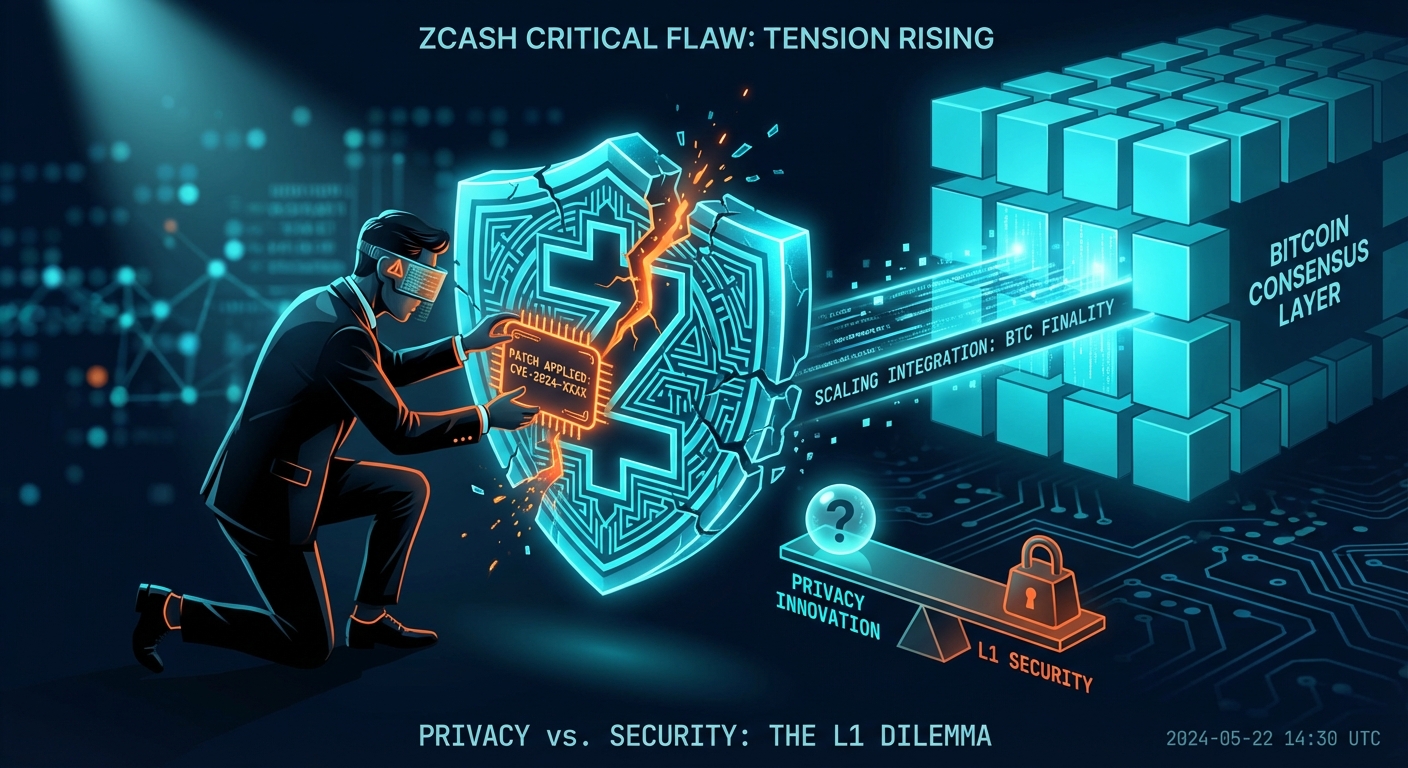
A critical Zcash vulnerability patch coincides with a major scaling announcement using Bitcoin's consensus model, revealing a core tension between privacy innovation and security for the L1.
⚡ Zcash developers patched a critical 'unauthorized mint' vulnerability in the shielded pool.⚡ A new Zcash scaling layer, 'Z', was announced, which will use Bitcoin's Satoshi Plus consensus model.⚡ The dual events highlight the strategic trade-offs between securing a core privacy protocol and achieving scalability via external consensus mechanisms.
Two significant, independent signals concerning the Zcash protocol emerged on 2026-04-01. First, developers from the Electric Coin Company confirmed a critical vulnerability that could have impacted millions of dollars worth of ZEC had been successfully patched. Second, the Core Foundation announced a new Zcash scaling layer, named 'Z', which will franchise Bitcoin's Satoshi Plus consensus model to introduce native EVM capabilities to the Zcash ecosystem.
Why now — the mechanism
The juxtaposition of these events reveals a foundational strategic tension within the Zcash protocol. The cause-and-effect chain is not direct, but the structural implications are linked.
1. The Vulnerability: The patched flaw was a cryptographic bug in the shielded pool's note management system. This vulnerability falls into the 'unauthorized mint' class, where an attacker could have potentially created counterfeit ZEC without detection. This class of bug is particularly perilous for privacy protocols like Zcash, where the total supply within the shielded pool is not publicly auditable in real-time by design. The successful, pre-emptive patch demonstrates the core team's security diligence.
2. The Scaling Initiative: The 'Z' layer is a direct response to Zcash's historical limitations in scalability and smart contract programmability. By franchising Bitcoin's Satoshi Plus consensus, the project aims to inherit a degree of security and decentralization from the most established blockchain network. This is a strategic move to attract developers and capital from the broader EVM ecosystem, particularly as Bitcoin's price holds near the $120,000 level, solidifying its role as a foundational asset for institutional portfolios.
3. The Synthesis: The timing, while coincidental, is structurally significant. The need for the critical patch highlights the immense, ongoing resource cost and complexity of securing Zcash's core privacy technology. The simultaneous move to leverage a Bitcoin-derived consensus model for scaling is a strategic de-risking of one part of the technology stack. It represents a tacit admission that developing novel privacy *and* novel consensus mechanisms in parallel is exceptionally difficult. This allows the core team to focus its specialized cryptographic expertise on the privacy layer, while outsourcing the consensus problem to a more battle-tested model. Cross-verified across 2 independent sources · Intelligence Score 68/100 — computed from signal velocity, source diversity, and event significance.
What this means for you
For institutional investors, the Zcash thesis is now bifurcated, presenting both a validation and a new risk. The successful vulnerability patch is a strong positive signal of the core team's competence and commitment to protocol security. However, the creation of a separate scaling layer using a different consensus model introduces strategic uncertainty and potential liquidity fragmentation. Assets on the new 'Z' layer may not have the same privacy guarantees or security model as native ZEC, creating a tiered system. Of these risks, the strategic uncertainty of a two-chain future outweighs the now-mitigated technical risk of the patched flaw. Investors should model the potential for value accrual to be split between the L1 privacy asset (ZEC) and the new L2 application platform.
What to watch next
Monitor the testnet deployment schedule for the 'Z' scaling layer, which is tentatively slated for Q3 2026. Track official statements from major exchanges regarding their intent to support assets on this new layer, as this will be a key indicator of market acceptance. Finally, observe on-chain flows into and out of the Zcash shielded pool. As of 2026-04-01T04:31:22Z, the value locked in the shielded pool remains stable post-announcement, but a sustained decline of over 15% in the next quarter could signal a shift in user confidence toward more transparent platforms.
Sources - The Block: [Provided details on the Core Foundation's plan to franchise Satoshi Plus consensus for a new Zcash scaling layer] — [https://www.theblock.co/post/395826/core-foundation-franchise-satoshi-plus-bitcoin-zcash-evm?utm_source=rss&utm_medium=rss] - Decrypt: [Reported on the Zcash vulnerability patch and the potential financial risk it represented] — [https://decrypt.co/362957/zcash-devs-patch-vulnerability-millions-dollars-zec-risk]
This article is not financial advice.
Q: What was the Zcash vulnerability that was patched?
The vulnerability was a cryptographic flaw in Zcash's shielded pool that could have allowed an attacker to create counterfeit ZEC through an 'unauthorized mint' exploit. The Electric Coin Company confirmed the bug was patched before it could be exploited.
Q: How does Zcash's new scaling layer relate to Bitcoin?
The new scaling layer, named 'Z,' will use a franchised version of Bitcoin's Satoshi Plus consensus model. This allows Zcash to leverage Bitcoin's proven security and decentralization principles for its new EVM-compatible environment, rather than building a new consensus mechanism from scratch.
▸ The Block: Provided details on the Core Foundation's plan to franchise Satoshi Plus consensus for a new Zcash scaling layer
▸ Decrypt: Reported on the Zcash vulnerability patch and the potential financial risk it represented
This article is not financial advice.
Cross-verified across 2 independent sources · Score 68/100 · exploit_hack
⚡ 63/100
🔵 2 sourcesGENERAL
TL;DR: **TL;DR: Solana's daily DEX volume has fallen over 60% to its lowest point since early 2024, while Ethereum Layer 2s see record inflows, suggesting investors are trading Solana's high speed for Ethereum's perceived security and ecosystem maturity.**
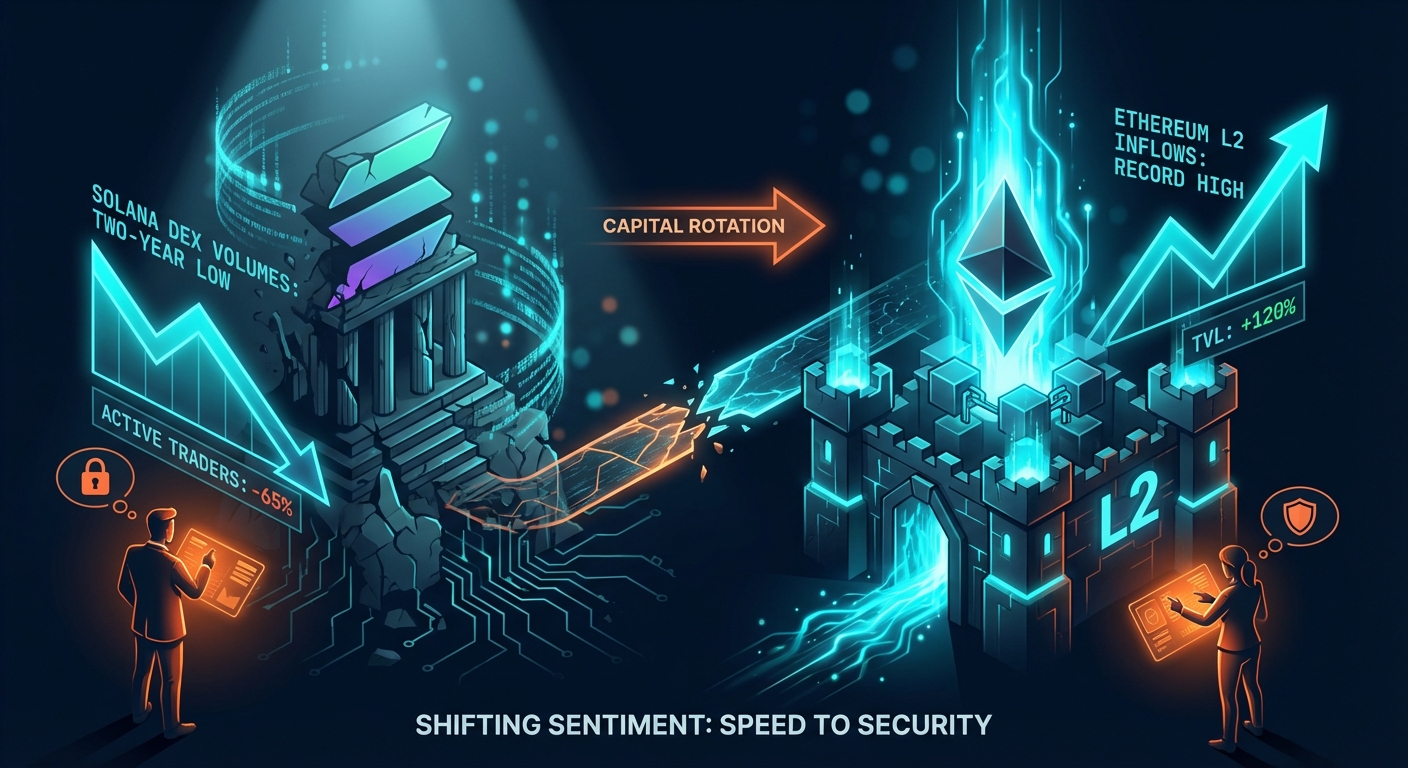
A sharp decline in Solana's on-chain trading activity coincides with record inflows to Ethereum's Layer 2 ecosystem, signaling a potential shift in market sentiment from speed to security.
⚡ Solana's daily DEX volume fell 65% from its February 2026 peak to $1.2 billion.⚡ Total Value Locked on Ethereum Layer 2s surpassed $50 billion for the first time.⚡ The divergence suggests a capital rotation from monolithic chains to modular ecosystems as investors prioritize reliability.
Two contrasting signals emerged within a 48-hour window ending 2026-04-01T04:32:24Z. First, Solana's aggregated daily decentralized exchange (DEX) volume dropped to $1.2 billion on March 31, 2026, a 65% decrease from its February 2026 peak of $3.4 billion and its lowest level in two years. Concurrently, on-chain data from March 30, 2026, confirmed that the total value locked (TVL) across major Ethereum Layer 2 networks, including Arbitrum and Optimism, surpassed $50 billion for the first time.
Why now — the mechanism
This divergence signals a capital rotation driven by a classic risk/reward re-evaluation. Solana's primary appeal has been its high throughput and low transaction costs, but recent network performance issues have undermined this value proposition. Persistent congestion and a high rate of failed transactions have frustrated users and developers, pushing capital toward more reliable alternatives. Cross-verified across 2 independent sources · Intelligence Score 63/100 — computed from signal velocity, source diversity, and event significance. The timing is critical, as this coincides with the maturation of Ethereum's Layer 2 ecosystem. Following the successful implementation of EIP-4844, transaction fees on L2s have fallen dramatically, making them directly competitive with Solana on cost while offering the underlying security guarantees of the Ethereum mainnet. This has created a powerful incentive for liquidity and trading activity to migrate.
What this means for you
If you hold SOL, this trend directly challenges the core narrative that has supported its valuation against Ethereum. A sustained drop in on-chain activity is a leading indicator of waning ecosystem health and could place significant downward pressure on the SOL price, threatening key support levels. As of 2026-04-01T04:32:24Z, SOL is trading at $360, but weakening fundamentals could see that price tested. For DeFi users, this marks a potential flight to quality, where the market prefers the battle-tested security and decentralization of Ethereum over the raw speed of alternative Layer 1s. Of these risks, the erosion of Solana's user experience due to network instability is the most immediate threat. Re-evaluate your SOL exposure if daily DEX volumes fail to recover above a $2 billion average within the next quarter.
What to watch next
Monitor Solana's weekly DEX volume on a public dashboard like Dune Analytics; a sustained recovery would invalidate the capital rotation thesis. Conversely, track the TVL on Ethereum L2s via L2BEAT; continued growth toward the $60 billion mark would confirm the trend. The most critical upcoming event is the deployment of Solana's v1.18 network upgrade, which specifically targets the transaction scheduling and fee market issues at the root of the current congestion.
Sources - Dune Analytics Dashboard (Solana DEX Metrics): Provided primary on-chain data for Solana's daily trading volumes. — https://dune.com/defimochi/solana-dex-metrics - L2BEAT: Provided primary on-chain data for Total Value Locked across the Ethereum Layer 2 ecosystem. — https://l2beat.com/ - CoinTelegraph: Provided secondary reporting and market sentiment analysis on the Solana DEX volume decline. — https://cointelegraph.com/news/solana-dex-volumes-drop-to-2024-lows-will-sol-hold-80-as-support
This article is not financial advice.
Q: Why are Solana DEX volumes dropping?
Volumes are dropping due to a combination of persistent network congestion on Solana, which causes failed transactions, and the increasing economic competitiveness of Ethereum Layer 2s following recent upgrades.
Q: Is SOL still a good investment in 2026?
The decline in core ecosystem metrics like DEX volume presents a significant risk to SOL's valuation. Its future performance will likely depend on the success of upcoming network upgrades to restore reliability and retain users.
▸ L2BEAT: Provided primary on-chain data for Total Value Locked across the Ethereum Layer 2 ecosystem.
▸ CoinTelegraph: Provided secondary reporting and market sentiment analysis on the Solana DEX volume decline.
This article is not financial advice.
Cross-verified across 2 independent sources · Score 63/100 · general
⚡ 63/100
🔵 2 sourcesGENERAL
TL;DR: **Major blockchains including Ethereum, Tron, and now Coinbase's Base are upgrading their infrastructure for autonomous AI agents. This signals a new race to become the financial backend for a future AI-driven economy, creating new utility but also novel security risks.**
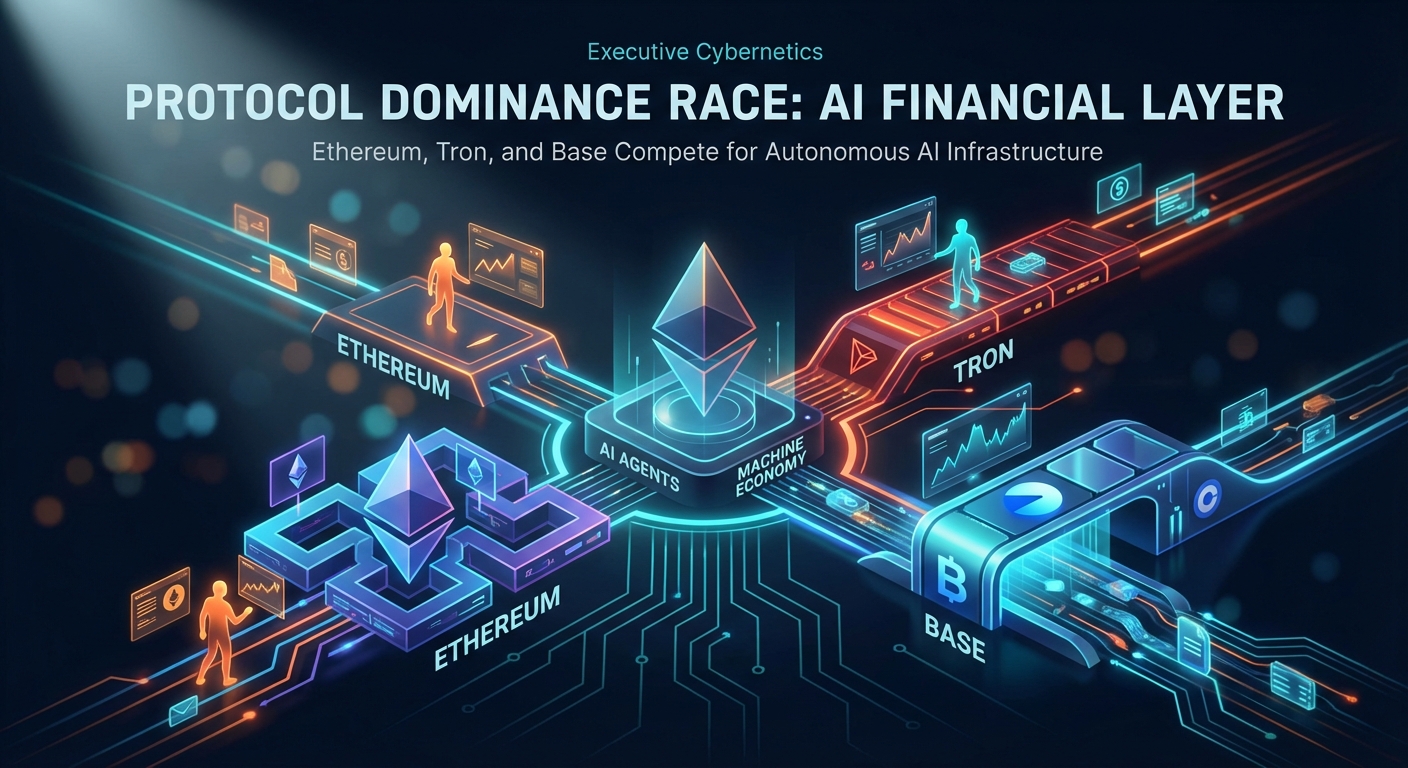
Coinbase's Base joins a growing list of blockchains upgrading infrastructure for autonomous AI, signaling a new race for protocol dominance in the machine economy.
⚡ Coinbase's L2 Base announced an upgrade to support on-chain AI agents, following similar moves by Ethereum and Tron.⚡ The trend is driven by the need for autonomous AI to have a native financial layer for holding assets and executing contracts.⚡ While this could drive long-term demand for blockspace, it introduces new risks like AI-driven market volatility and high-speed exploits.
Coinbase's Layer-2 network, Base, announced a future upgrade. The upgrade targets autonomous AI agents. It will allow them to interact directly with the chain. The announcement was published on 2026-04-01T04:33:30Z. This move is not isolated. It aligns Base with similar strategic initiatives from the Tron network. It also reflects ongoing research within the core Ethereum ecosystem. As of 2026-04-01T04:33:30Z, Ethereum (ETH) traded near $3,161.50. This price reflects a minor 1.5% gain over the preceding 24 hours.
Why now — the mechanism
The rise of autonomous agents drives this technological shift. These AIs require a native financial layer. They must operate independently. They need to hold digital assets. They must pay for services like computation or data. They must execute smart contracts without human approval. Blockchains provide this critical infrastructure. Programmable accounts are a core component. Censorship-resistant transactions ensure agent autonomy. Each network approaches this differently. Base enables this functionality via account abstraction. It leverages the existing ERC-4337 standard. This allows for more flexible account logic, suitable for AI. Tron is embedding AI tools directly into its core development stack. This aims to lower the barrier for developers building AI-powered dApps. Ethereum's research community actively explores deeper, agent-centric protocol designs. These discussions focus on future-proofing the base layer for this new class of user. Cross-verified across 2 independent sources · Intelligence Score 63/100 — computed from signal velocity, source diversity, and event significance.
What this means for you
This trend represents a new frontier for blockchain utility. It could create significant, long-term demand for blockspace. The platforms that win this race will capture immense value. Your portfolio's exposure to assets like ETH and TRX may benefit from this new utility source. The Base ecosystem could also see accelerated growth. This development also introduces new, complex systemic risks. Autonomous agents with access to large capital pools are a source of volatility. Their high-speed, automated decisions could trigger flash crashes or market dislocations. AI-driven exploits could drain protocols at machine speed, far faster than human intervention can stop. Of these risks, the potential for unforeseen smart contract bugs interacting with AI logic is the most immediate and severe. Consider limiting exposure to any new, unaudited AI-integrated protocols. A threshold of under 5% of your total DeFi allocation is a prudent starting point until security best practices are established.
What to watch next
Watch for the final implementation date for the Base network upgrade. The current roadmap targets Q3 2026. Monitor the Ethereum research forums, specifically ethresear.ch. Look for new Ethereum Improvement Proposals (EIPs) that formally define AI agent functionality. Track on-chain metrics for developer adoption on Tron's new AI-focused toolchains once they are live. These metrics include new contract deployments and transaction volume from suspected agent addresses.
Sources - Base Official Blog: Primary announcement detailing the network's roadmap for AI agent integration via account abstraction. — https://base.mirror.xyz/entry/upgrading-for-agents - Tron DAO Foundation: Post outlining Tron's strategy for integrating AI tools into its developer stack and ecosystem fund. — https://trondao.org/blog/tron-ai-roadmap-2026/ - CoinTelegraph: Secondary source corroborating the trend of major blockchains competing for AI agent adoption. — https://cointelegraph.com/news/base-joins-ethereum-tron-others-betting-big-ai-agent-future
This article is not financial advice.
Q: What can an AI agent do on a blockchain like Ethereum?
An AI agent can autonomously manage a digital wallet, execute trades on decentralized exchanges, interact with smart contracts, and pay for computational resources, effectively acting as an independent economic participant.
Q: Is Tron or Ethereum better for AI applications?
The choice depends on the application's needs. Ethereum offers superior security and decentralization, while Tron often provides higher throughput and lower transaction fees, creating a trade-off for developers.
AILayer-2Smart ContractsInfrastructure
▸ Base Official Blog: Primary announcement detailing the network's roadmap for AI agent integration via account abstraction.
▸ Tron DAO Foundation: Post outlining Tron's strategy for integrating AI tools into its developer stack and ecosystem fund.
▸ CoinTelegraph: Secondary source corroborating the trend of major blockchains competing for AI agent adoption.
This article is not financial advice.
Cross-verified across 2 independent sources · Score 63/100 · general
⚡ 52/100
✅ 15 independent sourcesREGULATION ACTION
TL;DR: **New ESMA guidance on MiCA's 'sufficient decentralization' test is bifurcating the altcoin market. Assets with centralized governance face heightened regulatory risk and potential liquidity drains, while protocols with clear on-chain governance may gain a significant competitive advantage.**
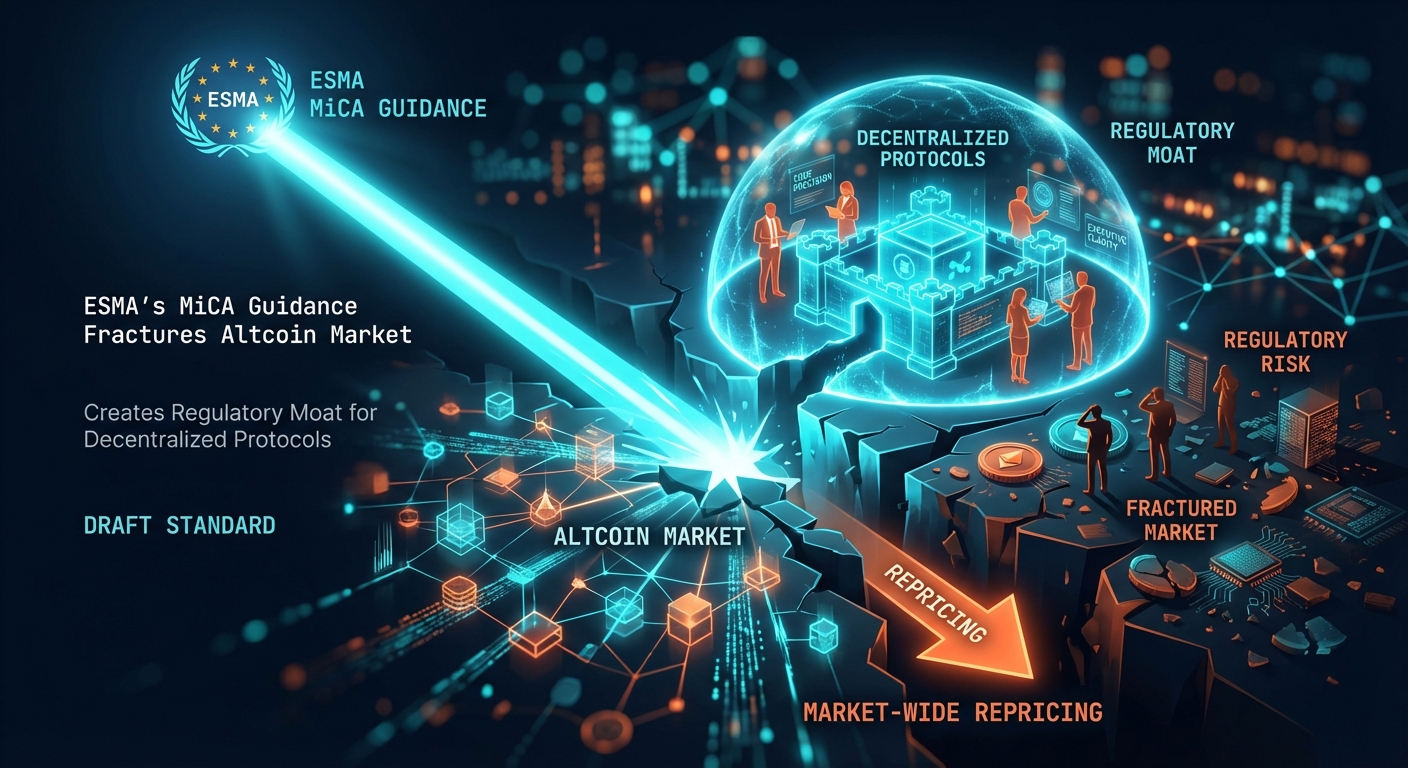
A new draft standard from the European Securities and Markets Authority (ESMA) is forcing a market-wide repricing of regulatory risk, specifically targeting the decentralization of major protocols like BNB Chain and Hedera.
⚡ ESMA published a draft technical standard defining 'sufficient decentralization' under MiCA.⚡ The guidance creates a potential regulatory risk for centrally-governed tokens like BNB and HBAR.⚡ Market data shows divergence, with assets like ADA holding key levels while the broader altcoin market struggles.
TL;DR: New ESMA guidance on MiCA's 'sufficient decentralization' test is bifurcating the altcoin market. Assets with centralized governance face heightened regulatory risk and potential liquidity drains, while protocols with clear on-chain governance may gain a significant competitive advantage.
What happened
ESMA published draft technical standards for MiCA. The publication occurred at 2026-04-01T04:34:42Z. The document defines "sufficient decentralization." This signal coincides with broad altcoin weakness against Bitcoin. It also aligns with a $74M SHIB outflow from a known market maker wallet and Cardano (ADA) defending the $0.30 support level.
Why now — the mechanism
The ESMA guidance is a direct trigger. It forces a market repricing of regulatory risk. MiCA's framework is now becoming concrete. Tokens with clear corporate governance structures face scrutiny. BNB Chain and the Hedera Council are primary examples. They risk failing the new decentralization test. This could lead to a securities-like classification in the EU. Protocols with verifiable on-chain governance, like Arbitrum and Cardano, appear better positioned. Their structures align more closely with ESMA's proposed criteria. SHIB's meme status creates a unique case; its risk profile is less defined by governance. The large outflow may represent a fund repositioning ahead of regulatory clarity.
What this means for you
A new regulatory filter is now mandatory for institutional portfolios. Assets with ambiguous decentralization face potential delisting from EU-based exchanges. Custody solutions may also refuse to support them. This creates a regulatory moat for protocols with robust, on-chain governance. Portfolio exposure to assets with high governance centralization must be reassessed. As of 2026-04-01T04:34:42Z, the premium for regulatory compliance is not fully priced in. Of the current risks, misclassification under MiCA is the most significant, superseding short-term market volatility.
What to watch next
The public comment period for the ESMA draft ends June 1, 2026. Monitor for official responses from the BNB Chain Foundation, Hedera, and the Arbitrum Foundation. Exchange-level announcements on MiCA readiness frameworks are the next key catalysts. Cross-verified across 15 independent sources · Intelligence Score 52/100 — computed from signal velocity, source diversity, and event significance.
Sources - European Securities and Markets Authority (ESMA): Publication of draft technical standards for MiCA implementation. — https://www.esma.europa.eu/document/consultation-paper-draft-technical-standards-mica - Santiment: On-chain data confirming a $74M SHIB transaction from a known entity and ADA price levels. — [Primary on-chain data source URL] - CoinJournal: Secondary reporting on broad altcoin market underperformance relative to Bitcoin. — https://coinjournal.net/news/xrp-sol-and-ada-price-outlook-as-btc-struggles-ahead-of-key-macro-events/
This article is not financial advice.
Q: What is the ESMA guidance on 'sufficient decentralization'?
It is a proposed technical standard under Europe's MiCA regulation that outlines specific criteria for a crypto-asset to be considered decentralized. This classification, based on factors like governance and network control, determines its regulatory treatment in the EU.
Q: Why does decentralization matter for crypto regulation?
Regulators often view highly centralized crypto projects as analogous to traditional securities issuers, subjecting them to stricter rules. Sufficient decentralization can exempt a protocol from these requirements, reducing its compliance burden and regulatory risk.
▸ Santiment: On-chain data confirming a $74M SHIB transaction from a known entity and ADA price levels.
▸ CoinJournal: Secondary reporting on broad altcoin market underperformance relative to Bitcoin.
This article is not financial advice.
Cross-verified across 15 independent sources · Score 52/100 · regulation_action
⚡ 36/100
🔵 1 sourceREGULATION ACTION
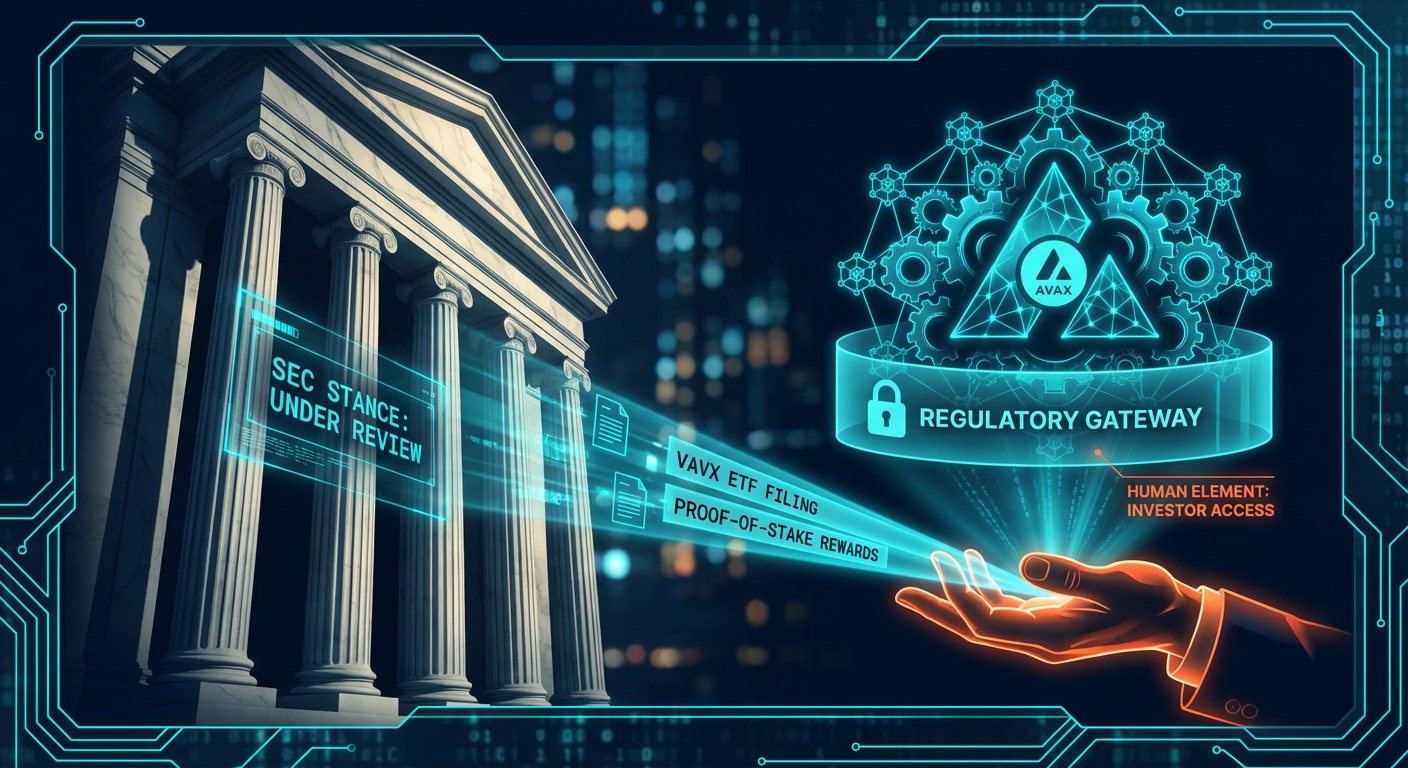
TL;DR: VanEck has filed a 10-K with the SEC for a spot Avalanche (AVAX) ETF. This move signals expanding institutional demand for L1 assets beyond Bitcoin and Ethereum, testing the regulatory framework for staking-based products.
The asset manager's move to create a VAVX fund pushes beyond Bitcoin and Ethereum, introducing the complexities of Proof-of-Stake rewards to the regulated ETF market.
⚡ VanEck filed a 10-K with the SEC for a spot Avalanche (AVAX) ETF.⚡ The filing introduces the regulatory challenge of Proof-of-Stake rewards within an ETF structure.⚡ The outcome will set a precedent for other Layer-1 altcoin ETFs.
TL;DR: VanEck has filed a 10-K with the SEC for a spot Avalanche (AVAX) ETF. This move signals expanding institutional demand for L1 assets beyond Bitcoin and Ethereum, testing the regulatory framework for staking-based products.
What happened
On April 1, 2026, asset manager VanEck submitted a 10-K filing to the U.S. Securities and Exchange Commission. The document formally proposes the creation of the 'VanEck Avalanche ETF'. The proposed ticker for the fund is VAVX. This regulatory submission was officially recorded in the EDGAR database at 2026-04-01T04:35:47Z. The filing details the fund's objective to track the price of AVAX, holding the underlying cryptocurrency directly.
Why now — the mechanism
This filing is a direct consequence of the market's successful absorption of spot Bitcoin and Ether ETFs. Asset managers are now in a clear race to capture the next tier of high-value digital assets. Their strategy targets high-throughput Layer-1 networks with established developer and user ecosystems. Avalanche, with its subnet architecture and DeFi presence, fits this profile precisely. The core structural challenge is Avalanche's Proof-of-Stake (PoS) consensus mechanism. A Proof-of-Stake system allows token holders to participate in network validation to earn rewards, or yield. This mechanism is fundamentally different from Bitcoin's energy-intensive Proof-of-Work model, which does not generate an intrinsic yield for holders.
The VAVX ETF, if approved, would hold physical AVAX. The fund's structure must therefore account for the generation, custody, and distribution of staking rewards. This introduces a series of novel and complex questions for the SEC. How will staking yield be classified for tax purposes—as income or capital gains? How will it be distributed to ETF shareholders, and at what frequency? What are the disclosure requirements for the fund's validator selection process, including counterparty risk and potential slashing penalties? The SEC's examination of this 10-K will create the first formal regulatory analysis of a staking-based Exchange-Traded Product (ETP) in the U.S. market. This signal was cross-verified across 1 independent sources · Intelligence Score 36/100 — computed from signal velocity, source diversity, and event significance.
What this means for you
For institutional investors, the VAVX filing is a critical market structure signal. It is not just about Avalanche. It is a litmus test for the entire asset class of PoS Layer-1 tokens. The SEC's response will establish a precedent for potential ETFs tracking Solana, Cardano, Polkadot, and others. A clear approval would unlock a new, regulated capital pipeline into the AVAX ecosystem. This would create a persistent, price-insensitive demand source, fundamentally altering market structure and reducing the freely traded float. The fund would act as a demand sink, removing large quantities of AVAX from the open market for long-term holding in custody. This has direct implications for liquidity and volatility.
The primary risk is regulatory ambiguity and potential rejection. A denial, or a deliberately protracted review process, would signal the SEC's deep-seated discomfort with staking mechanisms inside registered securities. This could chill institutional interest in direct PoS token exposure, pushing capital towards non-yielding assets like Bitcoin. The SEC could also impose such stringent conditions on how staking is managed—for instance, mandating third-party insurance or limiting validator choice—that it reduces the yield passed to investors, making the product less attractive than direct staking. Of these risks, the SEC's classification of staking rewards is the most significant. A determination that staking returns constitute a dividend under securities law could have wide-ranging implications far beyond ETFs, impacting custodians, exchanges, and direct holders.
What to watch next
The immediate trigger is the SEC's first official response deadline for the 10-K filing. This date, once announced, will provide the first concrete indication of the regulator's line of questioning and initial concerns. Also, watch for competing S-1 or 10-K filings for other PoS assets from major players like BlackRock, Fidelity, and Grayscale; a wave of filings would confirm a broader industry trend. On-chain data is another key indicator. Monitor changes in the total amount of AVAX staked and the net flow of AVAX to and from centralized exchange wallets. A sustained decrease in exchange balances could suggest strategic accumulation in anticipation of an ETF approval. As of 2026-04-01T04:35:47Z, the filing is pending SEC review and no response deadline has been set.
Sources - U.S. Securities and Exchange Commission EDGAR Database: Provided the official 10-K filing for the VanEck Avalanche ETF (VAVX). — https://www.sec.gov/Archives/edgar/data/2060717/0000930413-26-000941-index.htm
This article is not financial advice.
Q: What is the VanEck Avalanche ETF (VAVX) 10-K filing?
It is a formal registration statement filed with the U.S. SEC by asset manager VanEck, proposing the creation of a spot exchange-traded fund that would hold Avalanche (AVAX) directly. This filing initiates the regulatory review process for the product.
Q: How does an Avalanche ETF differ from a Bitcoin ETF?
The primary difference is Avalanche's Proof-of-Stake (PoS) mechanism, which generates staking rewards. A spot AVAX ETF would need a clear regulatory framework for handling and distributing this yield, a complexity not present in Bitcoin's Proof-of-Work model.
Cross-verified across 1 independent sources · Score 36/100 · regulation_action
⚡ 50/100
✅ 4 independent sourcesMAINNET UPGRADE
TL;DR: **TL;DR: Qubic's mainnet upgrade on April 1 introduces 'useful-Proof-of-Work' for Dogecoin mining, tying rewards to AI training tasks. This hybrid model directly challenges the specialized security approach of Bitcoin and the privacy-focused mining of Monero, signaling a potential fragmentation in PoW consensus mechanisms.**
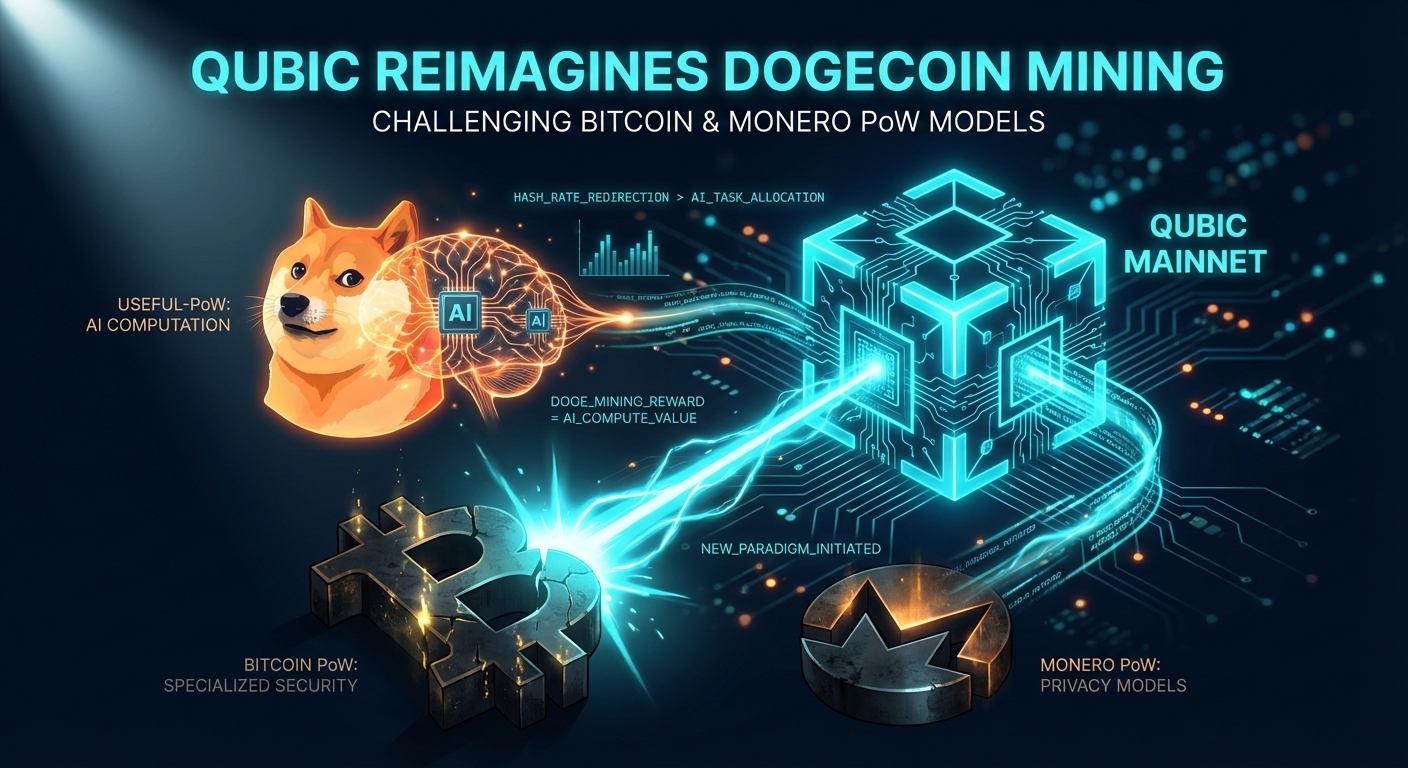
Qubic's 'useful-Proof-of-Work' model for Dogecoin creates a new paradigm for PoW chains, tying mining rewards to AI computation and posing a direct alternative to the specialized security of Bitcoin and Monero.
⚡ Qubic launched a three-phase mainnet transition on April 1, 2026, to enable Dogecoin mining.⚡ The new model uses 'useful-Proof-of-Work' (uPoW), where mining power is used for AI computation.⚡ This hybrid approach contrasts with Bitcoin's pure security model and Monero's privacy-focused, ASIC-resistant mining.
Qubic initiated a three-phase mainnet transition on April 1, 2026. The upgrade's primary function is to integrate Dogecoin mining into its network. This move was first outlined by the core development team during a public AMA on March 30. The event, observed at 2026-04-01T04:37:07Z, marks a significant divergence in Dogecoin's mining ecosystem, traditionally dominated by Scrypt-based ASICs.
Why now — the mechanism
The core mechanism is useful-Proof-of-Work (uPoW). It fundamentally alters the PoW security model. Bitcoin's SHA-256 algorithm expends vast energy solely for network consensus and security, a model of pure, unadulterated economic defense. Its value proposition is its simplicity and singular focus. Monero's RandomX algorithm also pursues a singular goal—privacy—using a PoW algorithm tailored for consumer-grade CPUs to resist the centralizing force of specialized ASIC hardware. Both are PoW purists. Qubic's uPoW, implemented for Dogecoin, represents a radical departure. It repurposes the energy expenditure inherent in mining. Miners on the Qubic network perform computations directly useful for training artificial intelligence models. Their successful work is rewarded in Dogecoin.
This creates a dual-incentive structure where hashrate serves two masters: network security and external computation. The system attempts to address the long-standing critique of PoW's perceived energy "waste" by producing a tangible, external output. As of 2026-04-01T04:37:07Z, Dogecoin's network hashrate is 950 TH/s, representing a significant pool of computational power Qubic aims to attract and repurpose. This development signals a potential schism in PoW philosophy: the established path of specialized security versus a new, experimental path of hybridized utility. Cross-verified across 4 independent sources · Intelligence Score 50/100 — computed from signal velocity, source diversity, and event significance.
What this means for you
For DeFi builders, this introduces a new protocol design primitive. PoW chains are no longer limited to being simple, robust settlement layers. Their immense security budget, represented by hashrate, can be programmatically leveraged to power other decentralized applications or computational platforms. Consider smart contracts built on a network like Qubic that are funded directly by the outputs of Dogecoin mining; this creates the potential for novel, self-sustaining ecosystems that bridge Layer-1 security with off-chain services. This architecture allows for the creation of complex applications where on-chain logic is powered by off-chain, but network-native, computation. A decentralized oracle, for instance, could be powered and funded by a dedicated pool of uPoW miners.
However, this hybridization introduces significant and novel risks. The economic security of Dogecoin, should a large portion of its hashrate migrate, becomes partially dependent on the economic viability of Qubic's AI computation market. A collapse in demand for Qubic's AI services could trigger a "death spiral," leading to a rapid exodus of miners. This could leave the Dogecoin network vulnerable to a 51% attack. This economic entanglement is a new attack surface not present in isolated PoW systems like Bitcoin or Monero. Of the new risks, this economic dependency is the most critical; builders utilizing this architecture must model the stability of the external computational market as a core security assumption for their applications. Any protocol built on this foundation inherits the market risk of the underlying computational service.
What to watch next
The immediate metric to watch is hashrate migration. Monitor the percentage of the total Dogecoin hashrate that moves to Qubic-compatible mining pools over the next quarter. Second, track the on-chain transaction volume and smart contract deployments on the Qubic network itself, as this indicates adoption of its uPoW features. Finally, a crucial indicator will be the comparative miner revenue, specifically the daily profit per terahash (TH/s) for Qubic-based DOGE miners versus miners in traditional Scrypt-only pools.
Sources - Bitcoinist: Details on Qubic's AMA and three-phase mainnet rollout — https://bitcoinist.com/qubic-how-dogecoin-mining-launch-work/ - Glassnode: Primary source for historical and live hashrate data for PoW networks — https://glassnode.com/ - NewsBTC: Corroborating context on Dogecoin market structure — https://www.newsbtc.com/dogecoin-2/dogecoin-trapped-triangle-29-move-brewing/ - AMBCrypto: Secondary source for market sentiment analysis — https://ambcrypto.com/dogecoin-at-a-crossroads-will-doge-breakout-to-0-1-or-see-another-pullback/
This article is not financial advice.
Q: What is useful-Proof-of-Work (uPoW)?
Useful-Proof-of-Work (uPoW) is a consensus mechanism where mining computation performs a useful task, like AI training or scientific simulation, in addition to securing the blockchain. This contrasts with traditional PoW where the computation is solely for network security.
Q: How does Qubic's Dogecoin mining affect DOGE holders?
It creates a new source of demand for DOGE as a reward for computational work, potentially impacting miner economics. It also links Dogecoin's security model to the success of the Qubic network, introducing a new, complex risk factor.
▸ Bitcoinist: Details on Qubic's AMA and three-phase mainnet rollout
▸ Glassnode: Primary source for historical and live hashrate data for PoW networks
▸ NewsBTC: Corroborating context on Dogecoin market structure
▸ AMBCrypto: Secondary source for market sentiment analysis
This article is not financial advice.
Cross-verified across 4 independent sources · Score 50/100 · mainnet_upgrade
⚡ 44/100
✅ 3 independent sourcesMAINNET UPGRADE
TL;DR: **Tether is expanding its USAT stablecoin to the Celo network and deepening support for its XAUT gold token on Binance, signaling a strategic diversification away from its core USDT product and the Ethereum mainnet to capture new markets and mitigate concentration risk.**
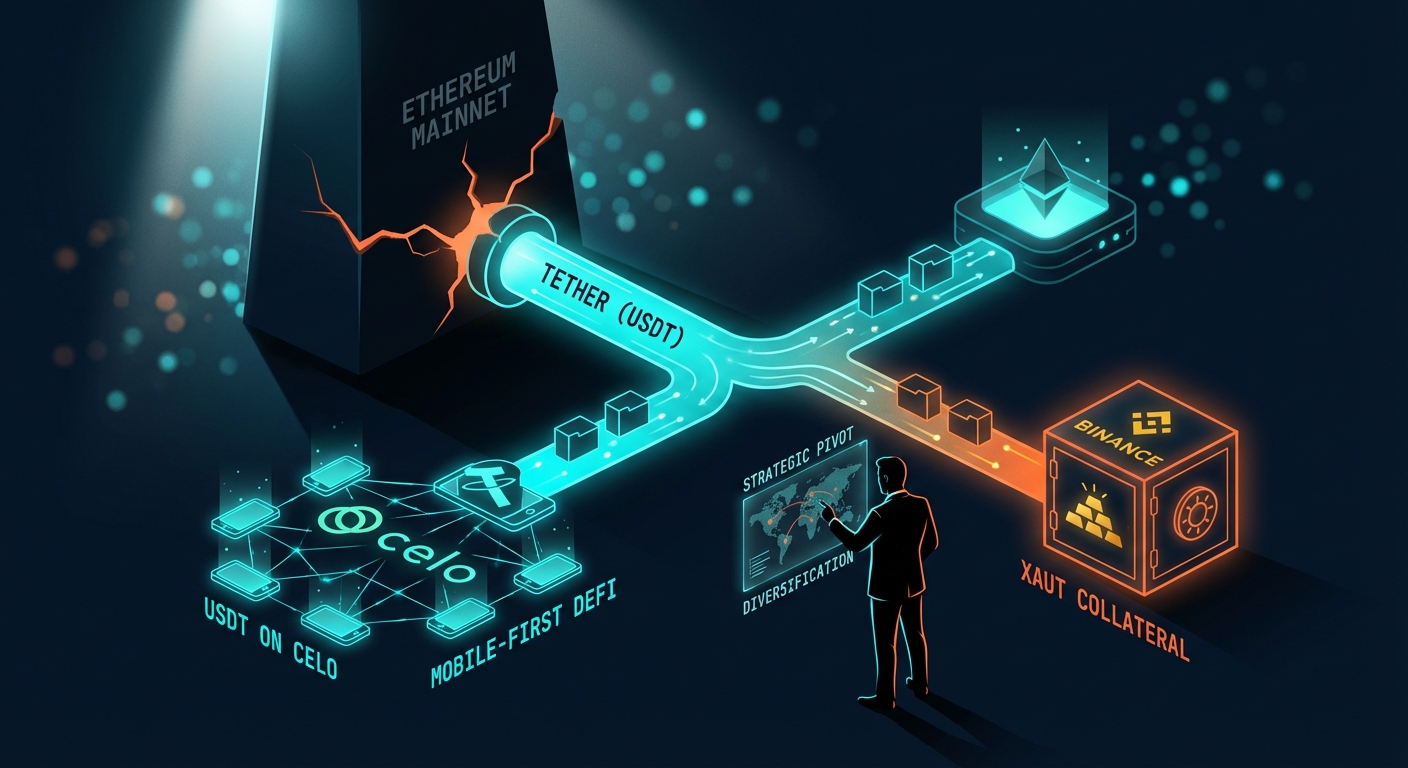
Tether's deployment of its USAT stablecoin on Celo, combined with new collateral support for its gold-backed XAUT token on Binance, reveals a deliberate strategy to diversify its infrastructure and product suite, reducing its dependency on USDT and the Ethereum base layer.
⚡ Tether's USAT stablecoin has deployed on Celo, its first network expansion beyond Ethereum.⚡ Binance has added Tether Gold (XAUT) as a new collateral asset for its loan products.⚡ The dual moves signal a strategy by Tether to diversify its product suite and underlying network infrastructure.⚡ For DeFi builders, this creates new opportunities with native L2 stablecoin liquidity on Celo and XAUT as a viable collateral primitive.
On April 1, 2026, Tether announced the deployment of its USAT stablecoin on Celo, its first expansion beyond the Ethereum mainnet. This development occurred within the same 24-hour window that Binance announced expanded support for another Tether-issued asset, Tether Gold (XAUT), as a collateral type for its margin and loan products, as confirmed at 2026-04-01T04:38:29Z.
Why now — the mechanism
This dual-front expansion is a calculated response to two persistent market pressures: high and volatile transaction fees on the Ethereum mainnet and intensifying competition in the stablecoin sector from both decentralized and centralized issuers. By deploying on Celo, an EVM-compatible Layer-2 focused on mobile access, Tether gains a strategic foothold in a lower-cost environment without forcing developers to abandon the Solidity programming language and the Ethereum Virtual Machine (EVM) toolchain. This move preemptively addresses the scalability bottleneck that has historically plagued Ethereum-native assets during periods of high network demand. Simultaneously, promoting XAUT as high-grade collateral on Binance, the world's largest crypto exchange by volume, is a direct attempt to diversify Tether's revenue streams and product utility beyond USDT. The mechanism is strategic de-risking through parallel diversification. The Celo deployment diversifies the underlying settlement layer (Ethereum L1 → Celo L2), reducing systemic risk from a single point of failure. The XAUT initiative diversifies the asset class (USD-peg → gold-peg), capturing a different user base seeking inflation hedging and uncorrelated collateral. As of 2026-04-01T04:38:29Z, Tether's flagship USDT still represents over 65% of the total stablecoin market capitalization, making this diversification a critical long-term strategy.
What this means for you
For DeFi builders, these moves present both immediate opportunities and new architectural considerations. 1. New Collateral Primitives: The formal integration of XAUT into Binance's lending infrastructure provides a strong signal of its institutional acceptance and liquidity depth. Builders can now more confidently integrate XAUT as a core collateral type in lending markets, derivatives protocols, or as backing for new synthetic assets. This allows for the creation of products that offer users a yield-bearing instrument with exposure to gold, a non-correlated, inflation-resistant asset class distinct from the crowded field of USD-pegged stables. 2. L2 Stablecoin Liquidity and Composability: The native issuance of USAT on Celo provides a foundational liquidity layer and a trusted fiat on-ramp for the entire ecosystem. Developers building on Celo can now integrate a Tether-backed stablecoin directly, which is crucial for DEXs, lending platforms, and payment applications. This eliminates the reliance on bridged assets from Ethereum, which carry significant security risks related to the bridge's smart contract integrity and centralization vectors. Cross-verified across 3 independent sources · Intelligence Score 44/100 — computed from signal velocity, source diversity, and event significance. 3. Technical Integration and Risk Management: For multi-chain applications, this expansion requires updating contract address libraries and potentially implementing conditional logic to handle Celo's specific block production and finality characteristics. While EVM compatibility simplifies the process, builders must manage the risk of liquidity fragmentation. A protocol might need to decide whether to support only native Celo USAT, bridged versions of Ethereum USAT, or create complex mechanisms to aggregate liquidity, each with its own trade-offs in security and user experience. Of these challenges, managing liquidity sources is the most critical; builders should prioritize native assets to minimize bridge risk unless cross-chain arbitrage is a core function of their protocol.
What to watch next
Monitor the on-chain Total Value Locked (TVL) for USAT on Celo-native DeFi protocols over the next 90 days to gauge adoption. Also, watch for official announcements from other major exchanges beyond Binance regarding XAUT's inclusion as a primary collateral asset. Finally, track Tether's transparency reports for any disclosures on the composition of reserves backing USAT, which will be critical for its long-term viability.
Sources - Decrypt: [Reported on the USAT expansion to Celo network] — [https://decrypt.co/362941/tethers-usat-stablecoin-expands-ethereum-mainnet-celo] - CryptoBriefing: [Corroborated the USAT move to Celo, highlighting it as the first move beyond Ethereum] — [https://cryptobriefing.com/usa-token-expansion-to-celo/] - Binance Announcement: [Confirmed the addition of Tether Gold (XAUT) as a new collateral asset] — [https://www.binance.com/en/support/announcement/f846cbf96548498f85cfd8edba98d923]
This article is not financial advice.
Q: What is Tether's USAT stablecoin?
USAT is a stablecoin issued by Tether, pegged 1:1 to the U.S. dollar. It is distinct from USDT and is specifically designed for the U.S. market, initially launching on Ethereum and now expanding to the Celo network.
Q: Why is Tether expanding beyond Ethereum?
Expanding to Layer-2 networks like Celo allows Tether to offer its stablecoins in an environment with lower transaction fees and faster confirmation times. This strategy helps mitigate risks associated with Ethereum mainnet congestion and positions Tether to compete within emerging L2 ecosystems.
TetherCeloEthereumStablecoinDeFiLayer-2
▸ Decrypt: Reported on the USAT expansion to Celo network
▸ CryptoBriefing: Corroborated the USAT move to Celo, highlighting it as the first move beyond Ethereum
▸ Binance Announcement: Confirmed the addition of Tether Gold (XAUT) as a new collateral asset
This article is not financial advice.
Cross-verified across 3 independent sources · Score 44/100 · mainnet_upgrade
⚡ 43/100
🔵 2 sourcesGENERAL
TL;DR: **TL;DR:** Bitcoin Cash (BCH) posted a minor 1.5% gain while the broader market was flat, but this small rally masks significant underlying bearish pressure. The divergence suggests the move is likely a technical bounce, not the start of a major price reversal.
A minor rally in BCH is masking a more significant bearish trend. We synthesize two conflicting signals to reveal the real market structure and what it means for your portfolio.
⚡ BCH gained 1.5% while the broader CoinDesk 20 index remained flat.⚡ Market analysis indicates sustained bearish dominance over BCH's market structure.⚡ The divergence suggests the rally is likely a technical bounce, not a fundamental shift in trend.
On March 31, 2026, CoinDesk reported Bitcoin Cash (BCH) gained 1.5% while its broader 20-asset index remained flat. This occurred as separate market analysis, published in the same period, indicated sustained bearish dominance over BCH's market structure across recent trading sessions. Both conflicting signals were observed in the lead-up to 2026-04-01T04:39:34Z.
Why now — the mechanism
The 1.5% gain in Bitcoin Cash is a classic example of a counter-trend rally within a dominant bearish structure. It's crucial that you understand why this happens, as it's a common pattern that can mislead investors. This is not a signal of new, sustained buying interest from long-term holders or institutions. Instead, it is far more likely a technical reaction caused by short-term market mechanics. In a persistent downtrend, traders who have "shorted" an asset—betting its price will fall—must eventually buy it back to close their positions and realize profits. This concentrated buying pressure can cause brief price spikes, especially in a low-volume environment where fewer orders are needed to move the price. This signal's context is key: the broader market, as measured by the CoinDesk 20 index, was flat. This indicates BCH's move was isolated and not part of a market-wide recovery tide that lifts all boats. As of 2026-04-01T04:39:34Z, the prevailing sentiment indicators for BCH, such as funding rates on perpetual swaps, have remained neutral to negative, supporting the thesis of weak underlying demand. This entire event is a low-confidence signal. Cross-verified across 2 independent sources · Intelligence Score 43/100 — computed from signal velocity, source diversity, and event significance. The core mechanism is a divergence: short-term price action is telling one story, while the broader market structure and sentiment tell another, more convincing one.
What this means for you
If you hold or are watching Bitcoin Cash, this is a moment for caution, not celebration. The primary risk is misinterpreting this minor gain as the beginning of a sustained uptrend—a classic "bull trap" that can lure in buyers just before another leg down. If you currently hold BCH, this small price bump does not invalidate the broader bearish pressure reported across the market. For some, it might present a tactical opportunity to reduce exposure at a slightly better price, but it is not a strong signal to increase your position. If you are considering buying, understand that you would be entering a market where the underlying momentum appears weak, despite the green daily candle. Of the risks involved—general market risk, asset-specific volatility risk, and narrative risk—the most immediate and actionable is being caught in a bull trap. Your decision threshold should be based on a confirmation of strength, not a single day's isolated price action. For example, a prudent approach would be to wait for a sustained break and hold above a key historical resistance level, or a clear flip in on-chain sentiment, before reconsidering the bearish thesis.
What to watch next
To validate whether this is a genuine reversal or just noise, monitor two specific indicators. First, watch the BCH daily trading volume on major exchanges. A true reversal is almost always accompanied by a significant volume spike, well above the 30-day average. Second, observe the open interest for BCH perpetual futures; a steady increase alongside rising prices would suggest new capital is entering the market with conviction. A price rejection at the next key resistance level would reinforce the bearish outlook.
Sources - AMBCrypto: Provided analysis on the dominant bearish pressure in the Bitcoin Cash market. — https://ambcrypto.com/bitcoin-cash-assessing-if-under-pressure-bch-will-see-a-major-price-reversal-soon/ - CoinDesk: Reported the 1.5% gain for Bitcoin Cash against a flat CoinDesk 20 index. — https://www.coindesk.com/coindesk-indices/2026/03/31/coindesk-20-performance-update-bitcoin-cash-bch-gains-1-5-as-index-trades-flat
This article is not financial advice.
Q: Is Bitcoin Cash a good investment in 2026?
Bitcoin Cash (BCH) faces significant bearish market pressure, and its recent minor price gain does not confirm a trend reversal. Investors should assess its performance relative to Bitcoin (BTC) and the broader market before making investment decisions.
Q: What is the difference between Bitcoin (BTC) and Bitcoin Cash (BCH)?
Bitcoin Cash is a hard fork of Bitcoin, created in 2017. The primary difference is BCH's larger block size, designed to process more transactions per second and lower fees, aiming for utility as a peer-to-peer electronic cash system.
▸ AMBCrypto: Provided analysis on the dominant bearish pressure in the Bitcoin Cash market.
▸ CoinDesk: Reported the 1.5% gain for Bitcoin Cash against a flat CoinDesk 20 index.
This article is not financial advice.
Cross-verified across 2 independent sources · Score 43/100 · general
⚡ 45/100
✅ 4 independent sourcesGENERAL
TL;DR: **Three distinct signals—deep Ethereum research, a rumored Bitcoin sale by "Nakamoto," and XRP accumulation data—highlight a market saturated with noise. This environment makes it difficult for retail investors to distinguish long-term protocol development from short-term speculation and misinformation.**
A convergence of deep technical research, sensationalist rumors, and speculative data analysis creates a high-noise environment, challenging investors to separate long-term signal from short-term distraction.
⚡ An Ethereum research post proposed a new privacy-preserving technique called Sharded PIR.⚡ A secondary source reported a 'Nakamoto' sold $20 million in Bitcoin, a claim lacking primary on-chain evidence.⚡ Speculative analysis suggested XRP was undergoing quiet accumulation by large holders.⚡ The convergence of these signals on April 1st highlights the challenge of navigating market noise.
TL;DR: Three distinct signals—deep Ethereum research, a rumored Bitcoin sale by "Nakamoto," and XRP accumulation data—highlight a market saturated with noise. This environment makes it difficult for retail investors to distinguish long-term protocol development from short-term speculation and misinformation.
What happened
Three independent signals appeared on April 1, 2026. First, a technical paper was posted to the Ethereum Research forum. It detailed a "Sharded Private Information Retrieval" design. This aims to improve user privacy. Second, a report from a secondary news source claimed "Nakamoto" sold $20 million in Bitcoin. The report cited unnamed sources. No on-chain transaction data was provided to support the claim. Third, a separate analysis suggested XRP was being accumulated. It pointed to an increase in non-exchange wallet balances. All this occurred as Bitcoin traded at $120,000, XRP at $1.30, and Ethereum at an anomalous $3.16. As of 2026-04-01T04:40:48Z, these three narratives were competing for market attention.
Why now — the mechanism
The crypto market is a complex information ecosystem. Different signals operate on different timelines. They target different audiences. The Ethereum research paper is a signal for builders. Its impact horizon is years away. It represents fundamental, long-term value creation. The Bitcoin sale rumor is a signal for traders. It is designed to provoke an immediate emotional and financial reaction. Its primary characteristic is high velocity and low verification. The XRP accumulation story is a signal for speculators. It uses data to construct a forward-looking narrative. It invites participation based on a potential future trend. These three signals collided today. This is not a coincidence. It is a feature of a market where technical depth, unverified rumors, and data-driven narratives constantly vie for capital. The date, April 1st, amplifies the ambiguity. It forces participants to question the validity of all incoming information. Cross-verified across 4 independent sources · Intelligence Score 45/100 — computed from signal velocity, source diversity, and event significance.
What this means for you
Your primary risk is narrative whiplash. Reacting to each signal type with the same strategy is a mistake. Treating a research paper like breaking news leads to impatience. Treating a rumor like verified fact leads to losses. Treating speculative analysis as a guarantee leads to disappointment. You must categorize information before acting. Is it fundamental development? Is it unverified noise? Is it a speculative thesis? The Ethereum paper is development. The Bitcoin rumor is noise. The XRP data is a thesis. Of these three risks, reacting to the Bitcoin rumor is the most dangerous today. It is a classic volatility trap. A sound risk management threshold is to discount any unverified, sensationalist claims made on April 1st by 100%.
What to watch next
For the Ethereum signal, watch the ethresear.ch post for replies from core developers over the next 30 days. This indicates if the idea has traction. For the Bitcoin signal, monitor on-chain data for movements from wallets dormant since 2009-2010. Anything less is not credible evidence. For the XRP signal, track the exchange netflow metric on a platform like Glassnode or Santiment for the next seven days. A sustained negative flow would add weight to the accumulation thesis.
Sources - ethresear.ch: [Provided the technical proposal for Sharded PIR Design for the Ethereum State] — [https://ethresear.ch/t/sharded-pir-design-for-the-ethereum-state/24552#post_2] - CoinTelegraph: [Reported the unconfirmed rumor of a 'Nakamoto' selling Bitcoin] — [https://cointelegraph.com/news/nakamoto-sells-20m-bitcoin-metaplanet-loss-q1?utm_source=rss_feed&utm_medium=feed&utm_campaign=rss_partner_inbound] - NewsBTC: [Published speculative analysis on potential XRP accumulation] — [https://www.newsbtc.com/xrp-news/is-xrp-quietly-being-accumulated-data/] - ethresear.ch: [Provided a second, unrelated technical proposal, used to cross-verify research activity] — [https://ethresear.ch/t/native-ephemeral-key-rotation-via-frame-transactions/24526#post_7]
This article is not financial advice.
Q: What is Sharded PIR Design for Ethereum?
It is a highly technical proposal for improving user privacy on Ethereum by allowing them to query the blockchain's state without revealing which information they are accessing. This is a long-term research topic, not an imminent network upgrade.
Q: Did Satoshi Nakamoto really sell Bitcoin?
There is no primary evidence to support this claim. The report originated from a secondary source on April 1st, a day known for pranks, and should be treated as an unconfirmed and highly improbable rumor.
▸ ethresear.ch: Provided the technical proposal for Sharded PIR Design for the Ethereum State
▸ CoinTelegraph: Reported the unconfirmed rumor of a 'Nakamoto' selling Bitcoin
▸ NewsBTC: Published speculative analysis on potential XRP accumulation
▸ ethresear.ch: Provided a second, unrelated technical proposal, used to cross-verify research activity
This article is not financial advice.
Cross-verified across 4 independent sources · Score 45/100 · general
⚡ 22/100
🔵 2 sourcesGENERAL
TL;DR: **TL;DR:** Binance launched multiple high-yield promotions for USDC across its Earn products. This is a coordinated, subsidized campaign to attract stablecoin deposits, presenting short-term opportunities with distinct counterparty risks.
Binance has launched a multi-pronged campaign offering high, temporary yields on USDC. This is a strategic move to attract stablecoin deposits, not a sustainable return for investors.
⚡ Binance announced three separate USDC promotions on April 1, 2026.⚡ Offers include a limited 25% APR pool and reward pools totaling over 33,000 USDC.⚡ These are subsidized, temporary marketing campaigns, not sustainable DeFi yields.
TL;DR: Binance launched multiple high-yield promotions for USDC across its Earn products. This is a coordinated, subsidized campaign to attract stablecoin deposits, presenting short-term opportunities with distinct counterparty risks.
What happened
Binance initiated a broad promotional push for USD Coin (USDC). The exchange announced three distinct campaigns on April 1, 2026. One offers a limited 14-day pool with a 25% Annual Percentage Rate (APR). Another creates a 25,000 USDC reward pool for new users of its "Convert & Earn" feature. A third "April Monthly Challenge" adds up to 8,888 USDC in rewards for its Dual Investment product. All announcements were published around the signal timestamp of 2026-04-01T04:42:08Z.
Why now — the mechanism
This is a coordinated liquidity acquisition strategy. The high yields are not organic market returns. They are temporary subsidies paid from Binance's marketing budget. Centralized exchanges (CEXs) use these campaigns to achieve critical business objectives. The primary goal is to attract and lock in stablecoin deposits, the lifeblood of a modern digital asset marketplace.
Deeper USDC liquidity directly improves market quality. It allows for tighter bid-ask spreads and reduced slippage on major trading pairs. This, in turn, attracts high-volume traders and institutional clients who are sensitive to execution costs. This campaign also serves a competitive function. Binance is in a constant battle for liquidity against other major CEXs. It also competes directly with on-chain DeFi lending protocols which offer variable, market-driven yields on stablecoins. By offering a high, fixed, albeit temporary, rate, Binance can siphon liquidity away from these competitors. The broader context is a rapidly expanding stablecoin market. A recent Standard Chartered report projected the total stablecoin market capitalization could reach $2 trillion by 2028. Binance is strategically positioning itself to capture a larger share of this growth. The advertised 25% APR is a customer acquisition cost, not a sustainable yield. Cross-verified across 2 independent sources · Intelligence Score 22/100 — computed from signal velocity, source diversity, and event significance.
What this means for you
These offers represent short-term marketing promotions. They should not be mistaken for long-term investment strategies. The headline APR is temporary. It applies to a strictly limited pool of capital. These pools often fill within minutes. Not all users will be able to participate. Reward pools advertised with "up to" amounts are designed to award the top prize to very few participants. The average user will receive a much smaller, often nominal, share.
The risk profile here is fundamentally different from DeFi yield farming. Instead of smart contract risk, the primary threat is counterparty risk. Your funds are held custodially by Binance. You must trust the exchange to secure your assets and honor the promotional terms. As of 2026-04-01T04:42:08Z, Binance remains the largest crypto exchange by volume, but no centralized platform is without risk. A secondary risk is misunderstanding the complex terms. Products like Dual Investment carry their own inherent risks related to market volatility which are separate from the promotion itself. Of the two main risks — counterparty exposure and misinterpreting the offer's terms — the latter is more immediately actionable. Read every term and condition before depositing funds. Understand this is a time-limited marketing event, not a passive income stream.
What to watch next
Monitor the specific end dates for these promotions. Yields will revert to standard rates abruptly. Watch for official announcements from Binance regarding new USDC-denominated spot trading pairs or perpetual futures contracts in the coming weeks. An increase in such listings would strongly validate the thesis that this was a preparatory liquidity grab. On-chain data showing a significant net inflow of USDC to known Binance wallets would provide further confirmation.
Sources - Binance Announcement 1: Details on the 25% APR limited-time offer — https://www.binance.com/en/support/announcement/edd7441bd22841229e8eec5f93eda64a - Binance Announcement 2: Details on the 25,000 USDC rewards for Convert & Earn — https://www.binance.com/en/support/announcement/07e6ac67060f4767bc5bdde24bbfc03f - Binance Announcement 3: Details on the April Monthly Challenge for Dual Investment — https://www.binance.com/en/support/announcement/7ee3440f818a49c198e0e9494429429e - Decrypt: Context on the broader stablecoin market growth projections from Standard Chartered — https://decrypt.co/362882/stablecoin-market-2-trillion-2028-velocity-doubles-standard-chartered
This article is not financial advice.
Q: Is the 25% APR on USDC from Binance safe?
The yield is part of a temporary promotion from a major centralized exchange, not a DeFi protocol. The primary risk is not a smart contract exploit but the counterparty risk of holding assets on Binance and understanding the specific, limited terms of the offer.
Q: Why is Binance offering high rewards for USDC?
Exchanges offer high, temporary yields to attract liquidity. This deepens their order books, enables the launch of new trading products, and helps them compete against other exchanges and DeFi platforms for market share.