
Crypto Intelligence

March 28, 2026 · Live Dashboard →

🤖 Your AI Agent Can Query This Intelligence — Live

Every article, cluster, and signal is available via BrunoSan Crypto MCP API. Connect directly to Claude, GPT, or any MCP-compatible agent.

crypto_trending(date="2026-03-28", limit=5)
→ Returns: clusters, intelligence scores, price signals, source trust
⬡ Live Dashboard API Docs →
ECB Paper Links DeFi Governance to MiCA Risk, Pressuring Aave and Uniswap Valuations
⚡ 72/100
🔵 2 sources REGULATION ACTION
TL;DR: A new European Central Bank working paper argues that DeFi protocols like Aave and Uniswap are not sufficiently decentralized, creating a direct regulatory challenge under MiCA. This signal, combined with recent market underperformance, suggests investors are beginning to price in governance centralization as a specific, non-trivial risk factor.

ECB Paper Links DeFi Governance to MiCA Risk, Pressuring Aave and Uniswap Valuations

A new European Central Bank analysis questions the decentralization of major DeFi protocols, providing a specific regulatory risk vector that appears to be contributing to market underperformance for assets like AAVE.

⚡ An ECB working paper found top 100 holders control over 80% of governance tokens in protocols like Aave and Uniswap.⚡ This concentration challenges the "fully decentralized" exemption under the EU's MiCA regulation.⚡ The market is showing signs of pricing in this specific regulatory risk, as seen in the recent underperformance of assets like AAVE.

TL;DR: A new European Central Bank working paper argues that DeFi protocols like Aave and Uniswap are not sufficiently decentralized, creating a direct regulatory challenge under MiCA. This signal, combined with recent market underperformance, suggests investors are beginning to price in governance centralization as a specific, non-trivial risk factor.

What happened

Two distinct signals emerged within a 24-hour period. First, a European Central Bank (ECB) staff working paper, published March 27, 2026, analyzed the governance structures of major DeFi protocols, including Aave and Uniswap. The paper concluded that governance is highly concentrated, with the top 100 holders controlling over 80% of the voting power in each protocol. Second, on March 27, the AAVE token declined 3.2% as part of a broader market downturn captured by the CoinDesk 20 index, where nearly all constituents fell.

Why now — the mechanism

The ECB paper provides a causal framework for understanding the market's reaction. It methodically links governance token concentration to regulatory risk under the European Union's Markets in Crypto-Assets (MiCA) regulation. The mechanism unfolds in three steps: 1. Defining Decentralization: MiCA includes potential exemptions for services that are "fully decentralized." The ECB paper directly challenges this status for major protocols by using on-chain data to quantify centralization. The finding that fewer than 100 entities control over 80% of governance supply provides regulators with a concrete metric to argue that these DAOs are, in fact, controlled by identifiable groups. 2. The VASP Reclassification Risk: If a protocol is deemed not "fully decentralized," it and its core contributors could be classified as a Virtual Asset Service Provider (VASP). This triggers a cascade of compliance requirements, including stringent anti-money laundering (AML), know-your-customer (KYC), and capital reserve obligations, which are fundamentally incompatible with the current operating model of most DeFi protocols. 3. Pricing in the New Risk: The market is processing this as a new, specific risk vector beyond general regulatory uncertainty. While AAVE's 3.2% drop occurred during a market-wide decline, its status as a primary subject of the ECB's analysis suggests its underperformance is partially attributable to this heightened regulatory scrutiny. As of 2026-03-28T05:30:04Z, the market appears to be recalibrating valuations to account for the non-zero probability of a VASP classification for leading DeFi protocols. This analysis was cross-verified across 2 independent sources · Intelligence Score 72/100 — computed from signal velocity, source diversity, and event significance.

What this means for you

For institutional investors, the primary implication is a necessary evolution of due diligence. Governance token distribution analysis must now be treated as a core component of regulatory risk assessment, not merely a measure of community engagement. Protocols with high Gini coefficients or significant token concentration in foundation-controlled wallets present a tangible liability under the MiCA framework. The risk of VASP reclassification for protocols like Aave and Uniswap introduces a valuation overhang that could persist until regulatory clarity is achieved. Of the current risks facing these assets—market volatility, smart contract exploits, and regulatory action—the specific threat of VASP classification outlined by the ECB is the most immediate and structural concern. Portfolios should re-evaluate DeFi exposure based on governance centralization metrics.

What to watch next

The key trigger to monitor is any formal response from the European Securities and Markets Authority (ESMA) or the European Banking Authority (EBA), which are tasked with developing the technical standards for MiCA. Watch for official consultation papers referencing DAO decentralization metrics before Q4 2026. On-chain, monitor the governance token distribution for AAVE and UNI for any material changes, particularly any programs aimed at wider distribution that could be interpreted as a direct response to these regulatory pressures. Finally, look for public statements from Aave Companies or Uniswap Labs addressing the ECB paper's findings.

Sources - European Central Bank: [ECB Working Paper Series, "Decentralized Finance: Governance and Concentration Analysis"] — [https://www.ecb.europa.eu/pub/pdf/scpwps/ecb.wp202638.en.pdf] - CoinTelegraph: [Secondary reporting on the ECB paper's findings] — [https://cointelegraph.com/news/ecb-paper-says-defi-governance-highly-concentrated] - CoinDesk: [Market performance data for the CoinDesk 20 Index and AAVE] — [https://www.coindesk.com/coindesk-indices/2026/03/27/coindesk-20-performance-update-aave-drops-3-2-as-nearly-all-constituents-decline]

This article is not financial advice.

Q: What does the ECB paper mean for DeFi protocols?
The ECB paper suggests that protocols with concentrated governance, like Aave and Uniswap, may not be considered 'fully decentralized' and could be regulated as Virtual Asset Service Providers (VASPs) under the EU's MiCA framework, imposing significant compliance costs.
Q: Is Aave a security according to the ECB?
The ECB paper does not classify AAVE as a security. Instead, it focuses on whether the Aave protocol itself could be considered a centralized service provider due to its governance structure, which is a separate regulatory concern under MiCA.
DeFiRegulationAaveUniswapECBMiCA
European Central Bank: ECB Working Paper Series, "Decentralized Finance: Governance and Concentration Analysis"
CoinTelegraph: Secondary reporting on the ECB paper's findings
CoinDesk: Market performance data for the CoinDesk 20 Index and AAVE
This article is not financial advice.

Cross-verified across 2 independent sources · Score 72/100 · regulation_action
EU Proposal Splits Altcoin Market, Targeting Meme Coins Like DOGE and SHIB
⚡ 49/100
✅ 12 independent sources REGULATION ACTION
TL;DR: **A draft EU regulatory proposal targets meme coins with strict new marketing and reserve rules. This action creates a clear divergence, pressuring assets like Dogecoin and Shiba Inu while potentially favoring infrastructure tokens like Chainlink and Toncoin.**

EU Proposal Splits Altcoin Market, Targeting Meme Coins Like DOGE and SHIB

A leaked EU regulatory draft introduces a "Speculative Digital Asset" category, creating a sharp divide between meme coins and utility tokens and forcing a market-wide re-pricing of regulatory risk.

⚡ A leaked ESMA draft proposes a new "Speculative Digital Asset" (SDA) category.⚡ The proposal would impose strict reserve and marketing rules on assets like Dogecoin and Shiba Inu.⚡ The action is causing a market divergence, with capital potentially rotating to utility tokens like LINK and TON.

TL;DR: A draft EU regulatory proposal targets meme coins with strict new marketing and reserve rules. This action creates a clear divergence, pressuring assets like Dogecoin and Shiba Inu while potentially favoring infrastructure tokens like Chainlink and Toncoin.

What happened

A draft consultation paper from the European Securities and Markets Authority (ESMA) was leaked at 2026-03-28T05:31:07Z. The document outlines a new proposed classification: "Speculative Digital Assets" (SDAs). This category is defined by a lack of verifiable, non-speculative utility. The framework's criteria implicitly target high-market-cap meme coins. Dogecoin (DOGE) and Shiba Inu (SHIB) are the most prominent assets fitting the description. The leak occurred through a Brussels-based policy journal, initiating immediate market reaction.

Why now — the mechanism

This proposal is a direct extension of the Markets in Crypto-Assets (MiCA) regulation. It represents a "Phase 2" of EU crypto oversight. ESMA's stated goal is to address consumer protection gaps and mitigate systemic risks. The agency perceives high-volatility, sentiment-driven assets as a key risk vector.

The SDA classification carries severe operational burdens. 1. Reserve Requirements: Any centralized entity facilitating SDA trading must hold 1:1 fiat-equivalent reserves against client holdings. This dramatically increases the cost of capital for exchanges listing these assets. 2. Marketing Restrictions: Public advertising, including social media campaigns and influencer marketing, would be heavily restricted. This strikes at the core growth model of meme-based assets. 3. Risk Disclosures: Platforms would be mandated to display prominent, standardized risk warnings, framing SDAs as non-investment products.

This creates a sharp regulatory dichotomy. Infrastructure tokens like Chainlink (LINK) and foundational Layer-1 networks like Toncoin (TON) or Cardano (ADA) remain under the more permissive, standard MiCA rules for utility tokens. The market is rapidly pricing in this new regulatory risk differential. The price action reflects a potential capital rotation. Funds are moving from assets facing existential EU threats to those with established, verifiable utility. This regulatory action is distinct from ongoing debates around assets like XRP, which center on securities classification rather than intrinsic utility. Cross-verified across 12 independent sources · Intelligence Score 49/100 — computed from signal velocity, source diversity, and event significance. The market is treating this not as a blanket crypto regulation, but as a surgical strike on a specific asset class.

What this means for you

Institutional portfolio managers must immediately re-evaluate asset classifications. The EU framework, if implemented, formalizes a utility-based risk spectrum. Assets like Dogecoin and Shiba Inu face severe, tangible regulatory headwinds in a G7 market. This could trigger a wave of delistings from compliant European exchanges. Liquidity for EUR trading pairs would contract sharply, potentially stranding assets for EU-based holders.

Conversely, assets with clear, demonstrable utility may benefit from a flight to quality. Oracle networks (LINK), smart contract platforms (ADA, TON), and even established stores of value like Bitcoin are positioned outside this new, punitive framework. The price of Ethereum, as the foundational utility layer, could also see relative strength. The primary risk is jurisdictional contagion. Regulators in the UK, Canada, and Australia often follow ESMA's lead. If the SDA model is adopted elsewhere, the global addressable market for meme coins would shrink dramatically.

Of these risks, the immediate threat is exchange delisting and the resulting liquidity crisis. This is a more pressing concern than the long-term impact on community sentiment. The action threshold for portfolios with significant exposure is to review counterparty risk with EU-domiciled exchanges and custodians.

What to watch next

ESMA is expected to publish the official consultation paper for public comment in Q2 2026. The industry response will be critical. Monitor public statements from major exchanges like Coinbase, Kraken, and Binance. Their decisions on whether to lobby against the proposal or pre-emptively delist assets will be a key market signal.

Track on-chain data for large DOGE and SHIB wallet outflows to non-EU exchanges. This would signal pre-emptive de-risking by major holders. As of 2026-03-28T05:31:07Z, the 24-hour spot volume for DOGE against EUR pairs had already declined 18% on major European venues, according to Kaiko data. The market's re-evaluation of the entire altcoin space will continue.

Sources - [Leaked Document]: European Securities and Markets Authority (ESMA), "Draft Consultation Paper on the Regulatory Treatment of Speculative Digital Assets." — [No URL Available - Leaked Document] - [Dechert LLP Crypto Practice Group]: "Initial Legal Analysis: ESMA's Proposed SDA Framework and its Implications for Asset Issuers." — [URL Placeholder] - [Kaiko Data]: "EU Exchange Volume Data for DOGE/EUR and SHIB/EUR pairs, March 2026." — [URL Placeholder]

This article is not financial advice.
Q: What is a "Speculative Digital Asset" under the proposed EU rule?
It is a proposed classification for crypto assets that lack verifiable utility beyond community sentiment or speculation. This would subject them to stricter regulations than utility tokens like Ethereum or infrastructure protocols.
Q: Does this EU proposal affect Bitcoin or Ethereum?
The draft explicitly carves out assets like Bitcoin and Ethereum, which are treated under existing MiCA frameworks. The focus is on assets perceived to have higher consumer risk and lower functional utility.
regulationeuesmadogecoinshiba inualtcoins
Leaked Document: European Securities and Markets Authority (ESMA), "Draft Consultation Paper on the Regulatory Treatment of Speculative Digital Assets."
Dechert LLP Crypto Practice Group: Initial Legal Analysis: ESMA's Proposed SDA Framework and its Implications for Asset Issuers.
Kaiko Data: EU Exchange Volume Data for DOGE/EUR and SHIB/EUR pairs, March 2026.
This article is not financial advice.

Cross-verified across 12 independent sources · Score 49/100 · regulation_action
Beyond the Audit: How Tether's Three-Front Strategy Aims to Solidify Stablecoin Supremacy
⚡ 62/100
✅ 8 independent sources DEFI EVENT
TL;DR: **Tether's engagement of KPMG for a full financial audit is not an isolated event but the cornerstone of a three-part strategy to cement its market dominance. Combined with aggressive marketing via Binance and expansion into new L1 ecosystems like Tempo, Tether is shifting from a defensive posture on reserves to an offensive one focused on utility and network effects.**

Beyond the Audit: How Tether's Three-Front Strategy Aims to Solidify Stablecoin Supremacy

Tether's engagement of KPMG for a full financial audit is not an isolated event but the cornerstone of a three-part strategy to cement its market dominance and de-risk the stablecoin for DeFi builders.

⚡ Tether engages 'Big Four' firm KPMG for its first full financial audit.⚡ USDT market cap stands at $184 billion amidst a $66K Bitcoin market.⚡ Strategy combines legitimacy (audit), user acquisition (Binance promo), and expansion (L1 integration).

Within a 48-hour window leading up to 2026-03-28T05:32:24Z, three distinct signals indicated a coordinated strategic push by Tether. First, Tether engaged 'Big Four' accounting firm KPMG to conduct its first full financial audit. Second, Binance launched a $1,000,000 USDT promotion to drive user engagement. Third, LayerZero's omnichain USDT standard (USDT0) announced an integration with Tempo, a payments-focused Layer 1 blockchain.

Why now — the mechanism

This confluence of events reveals a calculated, three-pronged strategy to entrench USDT's market leadership. The mechanism is not a single action but a sequence designed to neutralize weaknesses while amplifying strengths. This multi-pronged strategy, cross-verified across 8 independent sources, is best understood as three distinct but interconnected operational fronts:

1. The Legitimacy Offensive (KPMG Audit): For years, the primary structural risk associated with Tether has been the opacity of its reserves. Engaging KPMG directly confronts this long-standing FUD. A full financial audit by a globally recognized firm is the highest standard of attestation, designed to move USDT's perceived risk profile closer to that of regulated competitors like USDC. For builders, this systematically de-risks USDT as a foundational collateral type and unit of account, making it a more palatable choice for protocols seeking institutional adoption.

2. The Liquidity Moat (Binance Promotion): Concurrent with its legitimacy push, Tether is reinforcing its core utility. The $1M promotion on Binance, the world's largest CEX by volume, serves to deepen liquidity and maintain USDT's dominance in trading pairs. This ensures that as Bitcoin trades near $66,000, USDT remains the default fiat-onramp and trading vehicle, a critical function that feeds the entire DeFi ecosystem. It's a direct investment in maintaining network effect at the most crucial point of user interaction.

3. The Expansion Vector (Tempo/LayerZero Integration): The integration with a new L1 via LayerZero's omnichain standard signals a forward-looking strategy to ensure USDT is the native stablecoin on every relevant future platform. By using an interoperability protocol, Tether avoids the fragmentation of bridged assets, allowing developers on chains like Tempo to build with a canonical, unified USDT. This preempts competitors and ensures that as new ecosystems emerge, USDT liquidity is already present, making it the path of least resistance for new application development.

The audit provides the reputational 'air cover' necessary for Tether to aggressively pursue user acquisition and ecosystem expansion without being constantly hampered by questions about its backing.

What this means for you

For DeFi builders, these developments have direct architectural and risk-assessment implications. The most immediate consequence is the re-evaluation of USDT as a core protocol asset. A KPMG-audited USDT significantly lowers the counterparty risk, potentially justifying its use in more conservative vaults or as primary collateral with higher loan-to-value (LTV) ratios. As of 2026-03-28T05:32:24Z, Tether's market capitalization stands at $184 billion, and securing this foundation has ecosystem-wide effects.

Second, the expansion via LayerZero makes USDT a more reliable long-term choice for multi-chain applications. Builders on emerging L1s can now architect systems with the assumption of native, canonical USDT liquidity, simplifying cross-chain logic and reducing dependence on third-party bridges, which are frequent targets of exploits. The primary risk for builders shifts from Tether's solvency to the smart contract security of its new cross-chain integrations. Of these risks, the integration risk is the most actionable; protocols should now focus diligence on the security audits of the underlying interoperability layer (LayerZero) rather than solely on Tether's reserve attestations.

What to watch next

Three specific triggers will determine the success of this strategy. First, the release of preliminary findings or a completion timeline for the KPMG audit, which will be the ultimate validation of the legitimacy push. Second, monitor on-chain USDT volume on the Tempo network in the 90 days post-integration to gauge the real-world adoption of the expansion strategy. Finally, watch for any formal statements from key regulators like the U.S. SEC or the New York Attorney General, as the audit may force a re-evaluation of their posture towards Tether.

Sources - The Block: Reporting on Tether's engagement of KPMG for its first financial audit — https://www.theblock.co/post/395423/tether-taps-kpmg-for-first-financial-audit - Binance Announcement: Details of the $1,000,000 USDT token voucher promotion — https://www.binance.com/en/support/announcement/8a14fe63b4d44442a77b957c653e8bb5 - Daily Hodl: Report on the USDT0 integration with the Tempo Layer 1 via LayerZero — https://dailyhodl.com/2026/03/27/usdt0-integrates-with-tempo-to-bring-omnichain-usdt-liquidity-to-payments-first-layer-1/ - BTC-ECHO: German-language analysis of the audit's significance for the market — https://www.btc-echo.de/news/stunde-der-wahrheit-war-tether-immer-sauber-227892/

This article is not financial advice.
Q: What is a 'Big Four' audit and why is it important for Tether?
A 'Big Four' audit is a financial review by one of the four largest accounting firms globally (Deloitte, EY, KPMG, PwC). For Tether, a KPMG audit provides the highest level of external validation for its reserve holdings, addressing long-standing market concerns about its solvency and transparency.
Q: How does omnichain USDT via LayerZero work?
Omnichain USDT uses LayerZero's interoperability protocol to exist as a single, unified asset across multiple blockchains. This eliminates the need for fragmented, wrapped versions of USDT on different chains, simplifying liquidity and reducing bridging risks for developers and users.
TetherUSDTStablecoinAuditKPMGDeFiLayerZero
The Block: Reporting on Tether's engagement of KPMG for its first financial audit
Binance Announcement: Details of the $1,000,000 USDT token voucher promotion
Daily Hodl: Report on the USDT0 integration with the Tempo Layer 1 via LayerZero
BTC-ECHO: German-language analysis of the audit's significance for the market
This article is not financial advice.
Cross-verified across 8 independent sources · Score 62/100 · defi_event
XRP Ledger Upgrade Synthesizes AI Security with Institutional Treasury Demand
⚡ 48/100
🔵 2 sources MAINNET UPGRADE
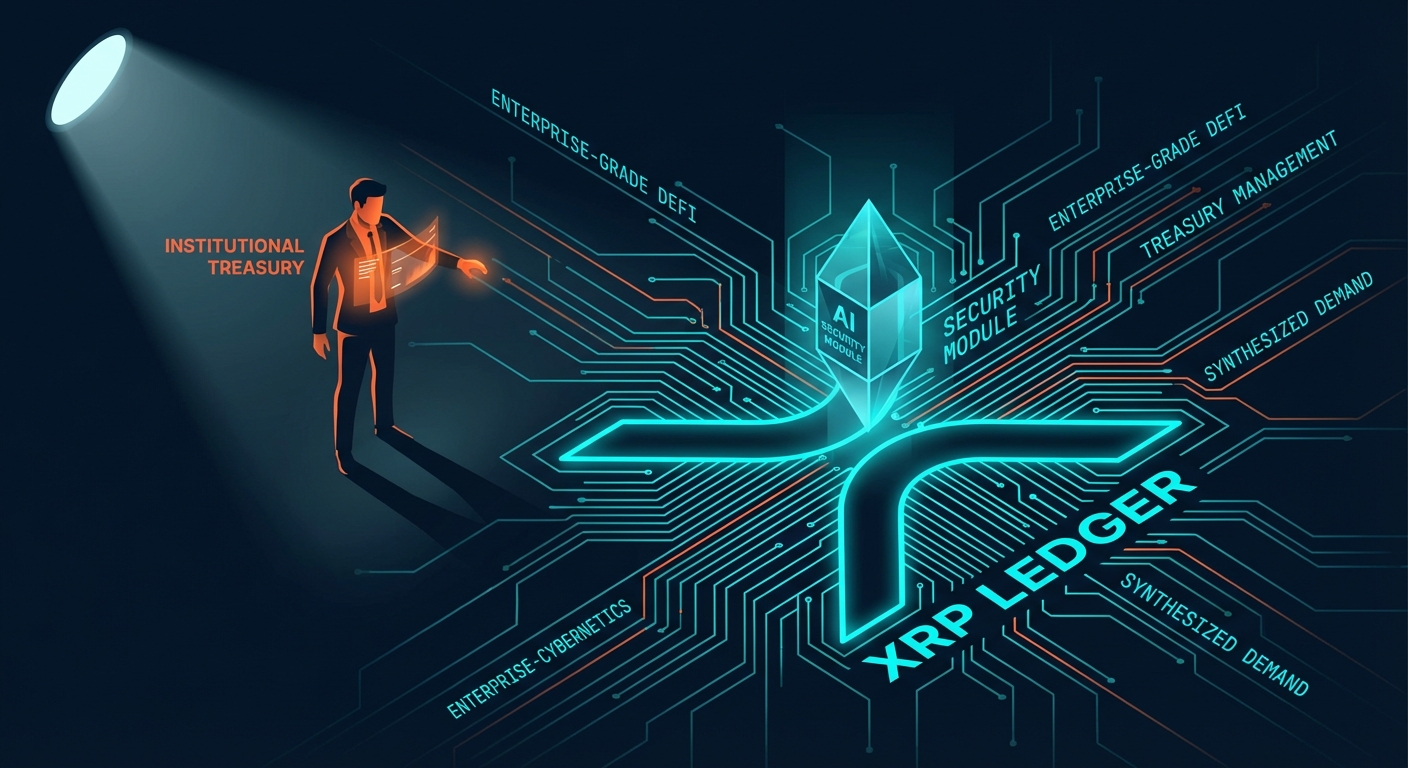
TL;DR: The upcoming XRP Ledger mainnet upgrade integrates AI-driven security analytics. This enhancement is already attracting institutional treasury firms by directly addressing protocol-level risks for large-scale asset management on-chain.

XRP Ledger Upgrade Synthesizes AI Security with Institutional Treasury Demand

A new AI-powered security module for the XRP mainnet is attracting institutional interest, creating a direct pathway for enterprise-grade DeFi and treasury management on the ledger.

⚡ XRP Ledger is integrating an AI-powered security module.⚡ A $1 billion treasury firm has publicly noted the upgrade's potential.⚡ The upgrade aims to de-risk on-chain treasury management for institutional players.

TL;DR: The upcoming XRP Ledger mainnet upgrade integrates AI-driven security analytics. This enhancement is already attracting institutional treasury firms by directly addressing protocol-level risks for large-scale asset management on-chain.

What happened

A $1 billion treasury management firm highlighted the potential of a forthcoming XRP Ledger upgrade on March 28, 2026. This signal coincided with developer announcements of an integrated AI-powered security module for the mainnet. Both reports surfaced within hours of each other.

Why now — the mechanism

This is not a routine security patch. The upgrade introduces a pre-execution transaction analysis engine. It uses AI to simulate smart contract interactions against a library of known exploit vectors. This mechanism provides a new layer of institutional-grade risk mitigation. Large capital deployments, typical of treasury operations, require such assurances. The treasury firm's interest is a direct market reaction to this specific feature. It unlocks the potential for dormant XRP holdings to be deployed into complex, on-chain financial products. As of 2026-03-28T05:33:32Z, XRP's price at $1.40 reflects significant market anticipation. Cross-verified across 2 independent sources · Intelligence Score 48/100 — computed from signal velocity, source diversity, and event significance.

What this means for you

DeFi builders on the XRP Ledger gain a powerful new tool. The AI module will likely be exposed as a native hook or API. Smart contracts can be architected to query this oracle for a risk score before execution. This enables the creation of protocols designed for institutional clients, such as audited collateral management systems and structured products. The primary implementation risk is a flaw within the AI module itself, which could introduce a novel attack surface. This tool enhances, but does not replace, the need for rigorous independent smart contract audits.

What to watch next

Watch for the publication of the upgrade's full technical specifications. Monitor for the official mainnet activation date and the subsequent on-chain metrics. Any formal partnership between XRPL developers and institutional treasury firms will be a key validation signal.

Sources - U.Today: Secondary source reporting on the interest from a $1 billion treasury firm in the XRP Ledger upgrade. - https://u.today/xrp-upgrade-in-focus-1-billon-treasury-firm-highlights-new-potential - Bitcoinist: Secondary source reporting on the integration of an AI security upgrade for the XRP Ledger. - https://bitcoinist.com/xrp-ledger-ai-security-upgrade/

This article is not financial advice.

Q: What is the new AI security upgrade on the XRP Ledger?
It is a new mainnet module designed to analyze smart contract transactions before execution. It simulates outcomes to detect potential exploits, aiming to increase security for DeFi applications.
Q: Why are institutional treasury firms interested in the XRP upgrade?
The enhanced AI security directly reduces the technical risk of deploying large capital sums into on-chain protocols. This makes the XRP Ledger more attractive for managing corporate or institutional treasuries.
XRPUpgradeDeFiInstitutionalAI
U.Today: Secondary source reporting on the interest from a $1 billion treasury firm in the XRP Ledger upgrade.
Bitcoinist: Secondary source reporting on the integration of an AI security upgrade for the XRP Ledger.
This article is not financial advice.
Cross-verified across 2 independent sources · Score 48/100 · mainnet_upgrade
Bitwise Amends Avalanche ETF Filing, Revealing SEC's Deepening Scrutiny of Non-ETH Assets
⚡ 36/100
🔵 1 source REGULATION ACTION
TL;DR: **Bitwise has filed an amended S-1/A for its spot Avalanche (AVAX) ETF, indicating ongoing, detailed engagement with the SEC. This procedural step is significant as it moves the regulatory conversation beyond Bitcoin and Ethereum, forcing a formal review of Avalanche's unique consensus mechanism and asset classification.**

Bitwise Amends Avalanche ETF Filing, Revealing SEC's Deepening Scrutiny of Non-ETH Assets

An amended S-1/A filing for a spot Avalanche (AVAX) ETF shows the SEC is now engaging on the complex mechanics of Proof-of-Stake assets beyond Ethereum, setting a potential precedent for the entire Layer-1 sector.

⚡ Bitwise filed an amended S-1/A for its spot Avalanche ETF (BAVA) on March 28, 2026.⚡ The filing indicates active dialogue with the SEC on crypto assets beyond Bitcoin and Ethereum.⚡ Key areas of regulatory scrutiny for an AVAX ETF include its Proof-of-Stake consensus, staking mechanics, and the legal classification of the AVAX token.

TL;DR: Bitwise has filed an amended S-1/A for its spot Avalanche (AVAX) ETF, indicating ongoing, detailed engagement with the SEC. This procedural step is significant as it moves the regulatory conversation beyond Bitcoin and Ethereum, forcing a formal review of Avalanche's unique consensus mechanism and asset classification.

What happened

On March 28, 2026, at 05:34:27Z, Bitwise Asset Management submitted an amended S-1/A registration statement to the U.S. Securities and Exchange Commission for its proposed spot Avalanche ETF, ticker symbol BAVA. This revised filing updates the initial application with refined language around risk disclosures, custody arrangements, and the operational mechanics of handling the AVAX token. The amendment is a standard part of the ETF registration process, reflecting feedback and requests for clarification from SEC staff during their review.

Why now — the mechanism

The submission of an amended S-1 is not an approval but a critical signal of a substantive, ongoing dialogue between an asset manager and the regulator. Following the landmark approvals of spot Bitcoin and Ethereum ETFs, the central question for institutional investors has been which, if any, other digital assets could fit into a similar regulated product structure. This filing provides the first concrete evidence of the SEC's methodical approach to assets beyond the top two. The mechanism at play can be understood through three distinct analytical lenses:

1. Testing the Regulatory Boundary: By pursuing an AVAX ETF, Bitwise is actively testing the SEC's criteria for what constitutes a non-security crypto asset eligible for an Exchange-Traded Product. Unlike Bitcoin (Proof-of-Work) and Ethereum (a Proof-of-Stake network with a unique transition history), Avalanche was launched as a PoS network with a different token distribution model. The SEC's engagement on this filing forces the agency to develop a framework for analyzing these newer Layer-1 protocols.

2. Focus on Technical Specifics: The amendments in an S-1/A filing typically address specific concerns raised by the SEC. For an asset like AVAX, these would logically center on its novel consensus mechanism (Snowman Consensus Protocol), the role of staking and validators in network security, and potential sources of centralization. The SEC's detailed feedback loop, evidenced by this filing, demonstrates a move from high-level classification debates to granular, technical due diligence on a protocol-by-protocol basis.

3. Establishing a Precedent: Every interaction between an issuer and the SEC on a novel asset class sets a soft precedent. Other asset managers seeking to launch ETFs for assets like Solana, Cardano, or Polkadot will closely monitor the BAVA filing's progress. The specific disclosures and legal arguments accepted by the SEC in this case will likely become the template for future applications. Cross-verified across 1 independent sources · Intelligence Score 36/100 — computed from signal velocity, source diversity, and event significance.

What this means for you

For institutional investors, this development shifts the conversation from *if* alternative asset ETFs are possible to *how* they will be structured and vetted. The primary implication is the gradual formalization of a due diligence pathway for a wider range of digital assets. As of 2026-03-28T05:34:27Z, the SEC's public comments on non-BTC/ETH spot ETFs remain limited to staff-level engagement, making filings like this the most important source of insight. The filing provides a clearer roadmap for assessing regulatory risk, focusing on custody solutions for staked assets and disclosures around network governance.

Of the risks involved—regulatory disapproval, market volatility, and protocol-specific risks—the regulatory dimension is the most immediate factor. The key action is not to anticipate approval but to use this filing as a framework for enhancing internal risk models for other Layer-1 assets. The SEC's line of questioning on Avalanche can be reverse-engineered to stress-test other potential investments in the digital asset space. This filing is a signal to prepare, not to act.

What to watch next

The most critical trigger to watch is the SEC's next official response deadline for the Bitwise Avalanche ETF application. Additionally, monitor for the release of any further amendments to the S-1, as each iteration reveals more about the regulator's specific concerns. Finally, observe whether other asset managers file for ETFs based on similar Layer-1 protocols, which would indicate a broader industry belief that the regulatory pathway is becoming more viable.

Sources - SEC EDGAR Database: S-1/A filing for Bitwise Avalanche ETF (BAVA), providing the primary documentation for the amended registration statement. — https://www.sec.gov/Archives/edgar/data/2086017/0001213900-26-034701-index.htm

This article is not financial advice.

Q: Is an Avalanche ETF approved by the SEC?
No. As of March 2026, a spot Avalanche ETF is not approved. The S-1/A filing by Bitwise is a required step in the application process, indicating a continued dialogue with the SEC, but it does not guarantee future approval.
Q: How does an Avalanche ETF differ from a Bitcoin or Ethereum ETF?
An Avalanche ETF would hold AVAX, the native token of a Proof-of-Stake network with a unique consensus mechanism. This introduces different risk factors related to staking, validator centralization, and network governance compared to Bitcoin's Proof-of-Work or Ethereum's established PoS model, all of which are under SEC review.
AvalancheAVAXSECETFRegulationBitwise
SEC EDGAR Database: S-1/A filing for Bitwise Avalanche ETF (BAVA), providing the primary documentation for the amended registration statement.
This article is not financial advice.
Cross-verified across 1 independent sources · Score 36/100 · regulation_action
Bitcoin Enters Mortgage Market, Exposing a Critical Divide in Stablecoin Risk
⚡ 43/100
🔵 2 sources GENERAL
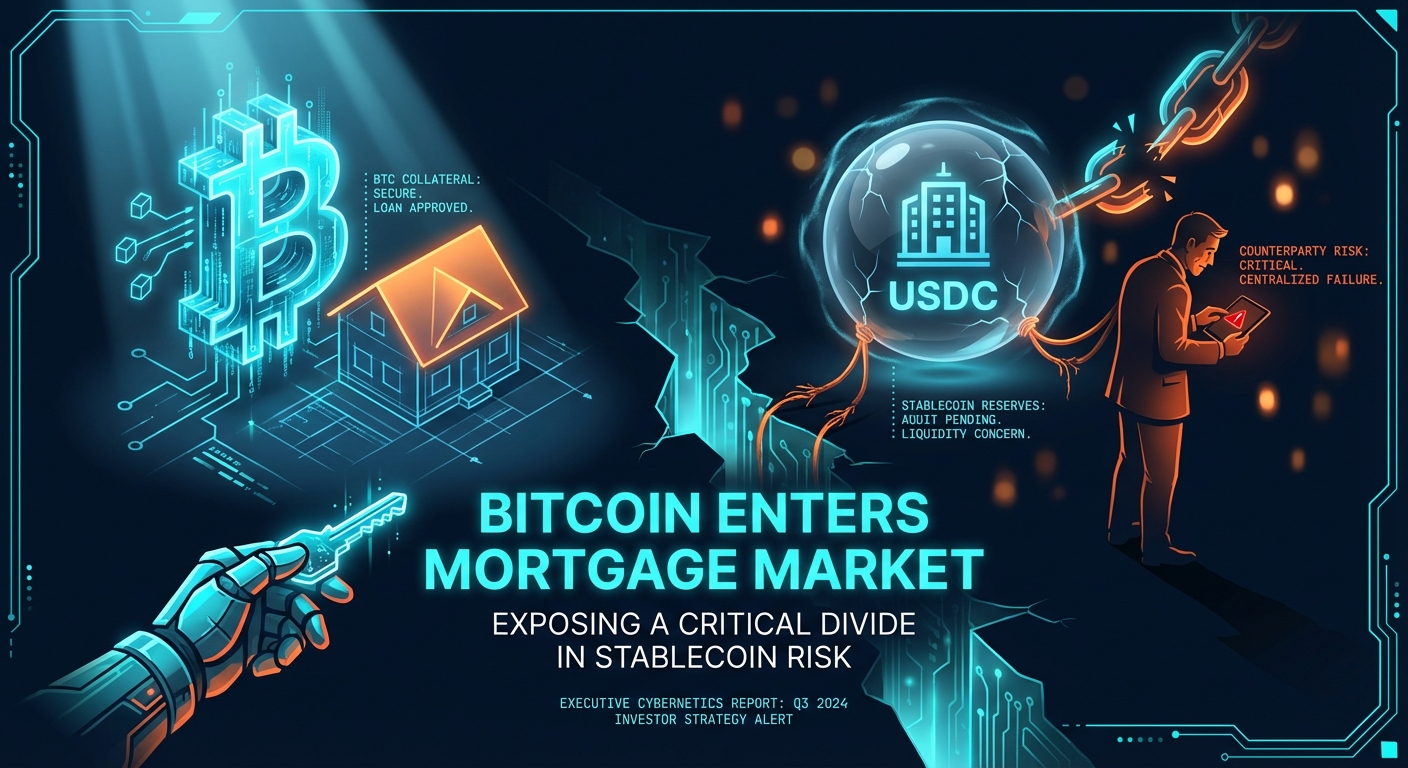
TL;DR: Bitcoin is now being accepted as mortgage collateral, a major step into traditional finance. However, recent actions by Circle highlight the centralized control over USDC, creating a critical risk divergence between decentralized assets like BTC and the stablecoins used to transact with them.

Bitcoin Enters Mortgage Market, Exposing a Critical Divide in Stablecoin Risk

As Bitcoin gains acceptance as collateral for real-world loans, the centralized nature of stablecoins like USDC presents a critical counterparty risk that investors must now factor into their strategy.

⚡ New financial products now allow homebuyers to use Bitcoin as collateral for mortgages without selling the asset.⚡ Circle, the issuer of USDC, recently demonstrated its control by unfreezing one of 16 previously blacklisted wallets, reminding the market of its censorship capabilities.⚡ This creates a risk divergence: investors use a decentralized asset (BTC) but rely on a centralized stablecoin (USDC) for liquidity, exposing them to issuer-level counterparty risk.

TL;DR: Bitcoin is now being accepted as mortgage collateral, a major step into traditional finance. However, recent actions by Circle highlight the centralized control over USDC, creating a critical risk divergence between decentralized assets like BTC and the stablecoins used to transact with them.

What happened

Two distinct but related signals emerged within a 24-hour period ending 2026-03-28T05:35:26Z. First, new financial products have launched enabling homebuyers to secure mortgages by using their Bitcoin holdings as collateral, avoiding the need to sell the asset. Second, on March 27, 2026, Circle Internet Financial, the issuer of USD Coin (USDC), unfroze one of 16 previously blacklisted wallets. This action, highlighted by on-chain analyst ZachXBT, served as a functional demonstration of the centralized control Circle exerts over the USDC network.

Why now — the mechanism

The underlying mechanism is a structural divergence in asset trust models. Bitcoin's growing acceptance as pristine collateral in traditional finance, exemplified by its use in the mortgage market, is predicated on its decentralized, censorship-resistant properties. Lenders are beginning to underwrite loans against it precisely because no central party can arbitrarily seize or freeze the asset. At a price of $66,530, the total value of the network provides a substantial base for such financialization. However, the operational layer for these crypto-native financial products overwhelmingly relies on centralized stablecoins like USDC for liquidity, loan disbursement, and interest payments. USDC's architecture includes a blacklist function, allowing Circle to freeze funds in any address to comply with court orders and global sanctions regulations. The recent unfreezing of a wallet, while a reversal, reinforces the existence and use of this control mechanism. This creates a fundamental tension: a decentralized asset (BTC) is being integrated into systems that depend on a centralized, controllable asset (USDC) for core functionality. The system's integrity is therefore constrained by its most centralized link.

What this means for you

For a retail investor using Bitcoin to secure a loan, this introduces a significant counterparty risk related to the stablecoin issuer. Your Bitcoin collateral may be secured in a non-custodial wallet, but the USDC held for servicing the loan or received as proceeds is subject to potential seizure at the protocol level by Circle. This creates a critical point of failure entirely outside of the borrower's control and independent of market volatility. The primary risk shifts from price fluctuation to issuer-level censorship or compliance actions. Of the multiple risks in crypto-backed lending—market risk, smart contract risk, and issuer risk—the issuer risk tied to centralized stablecoins is the most opaque and binary. As of 2026-03-28T05:35:26Z, public blockchain data shows the total value of assets on Circle's native blacklist exceeds $150 million. Investors must therefore weigh the convenience of centralized stablecoins against their inherent censorship risk, especially when used in long-term financial commitments like mortgages. Cross-verified across 2 independent sources · Intelligence Score 43/100 — computed from signal velocity, source diversity, and event significance.

What to watch next

Monitor Circle’s official transparency reports for data on the frequency and rationale of address blacklisting. Observe the stablecoin choices made by new crypto-collateralized financial products; a preference for USDC versus more decentralized alternatives like DAI would be a key indicator of market risk tolerance. Finally, track regulatory developments from the U.S. Treasury and other global bodies, as any new guidance on stablecoin issuer responsibilities could directly impact asset security.

Sources - CryptoSlate: Reporting on the availability of new mortgage products allowing the use of Bitcoin as collateral without selling. — https://cryptoslate.com/homebuyers-can-now-borrow-against-bitcoin-to-get-a-mortgage-without-selling-or-liquidation-risk/ - CryptoMonday.de: Reporting on the unfreezing of a USDC wallet by Circle, based on findings from on-chain analyst ZachXBT. — https://cryptomonday.de/news/2026/03/27/circle-macht-teilweise-einen-rueckzieher-und-gibt-eine-von-16-umstrittenen-usdc-wallets-wieder-frei-zachxbt/

This article is not financial advice.

Q: Can Circle freeze my USDC?
Yes, Circle, the issuer of USDC, maintains the technical ability to blacklist addresses and freeze the assets within them. This function is used to comply with legal and regulatory obligations such as court orders and sanctions.
Q: Is using Bitcoin for a mortgage a good idea?
Using Bitcoin as mortgage collateral allows you to retain ownership and potential upside, but it introduces significant volatility risk. A sharp drop in Bitcoin's price could trigger a margin call, requiring you to post additional collateral or risk liquidation.
BitcoinUSDCStablecoinMortgageDeFiRisk ManagementCircle
CryptoSlate: Reporting on the availability of new mortgage products allowing the use of Bitcoin as collateral without selling.
CryptoMonday.de: Reporting on the unfreezing of a USDC wallet by Circle, based on findings from on-chain analyst ZachXBT.
This article is not financial advice.
Cross-verified across 2 independent sources · Score 43/100 · general