Crypto Intelligence

March 23, 2026 · Live Dashboard →

🤖 Your AI Agent Can Query This Intelligence — Live

Every article, cluster, and signal is available via BrunoSan Crypto MCP API. Connect directly to Claude, GPT, or any MCP-compatible agent.

crypto_trending(date="2026-03-23", limit=5)
→ Returns: clusters, intelligence scores, price signals, source trust
⬡ Live Dashboard API Docs →
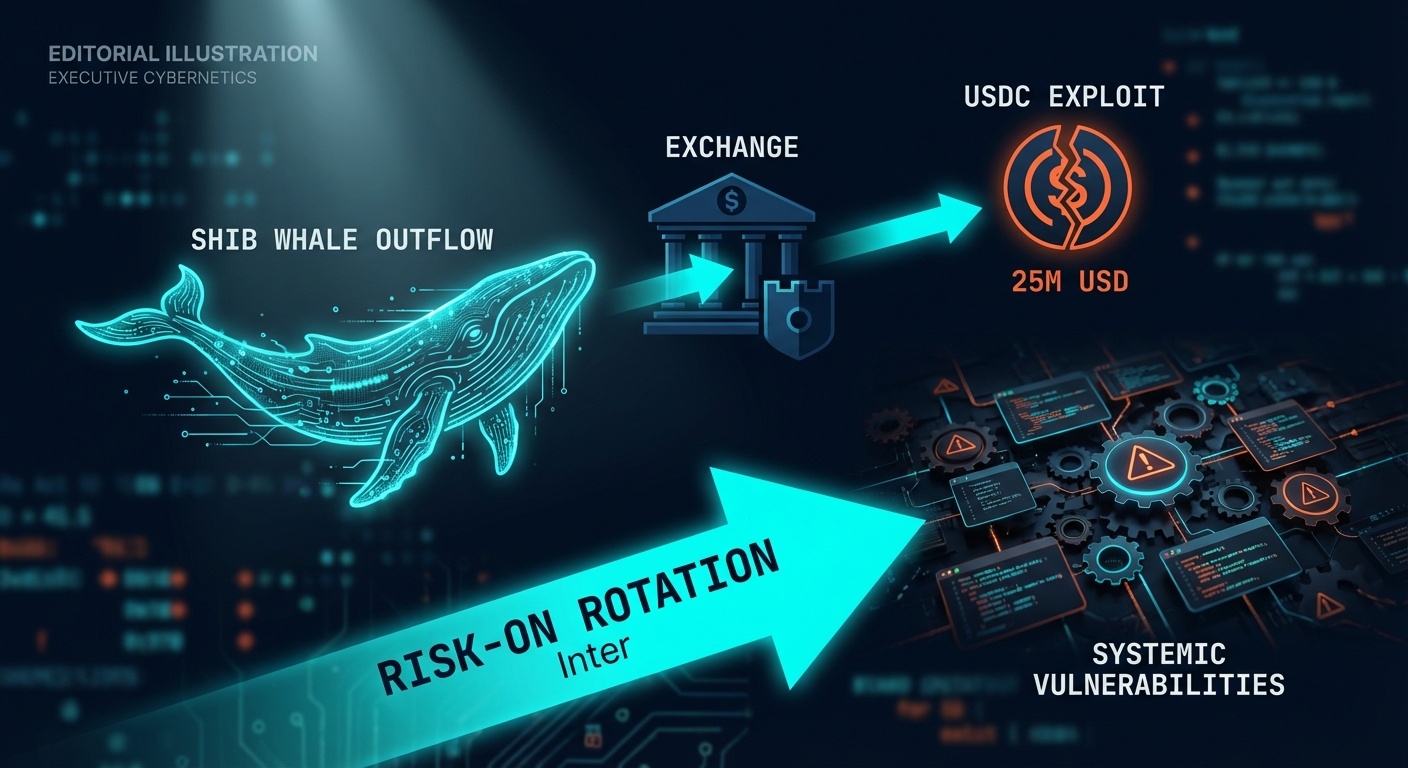
Shiba Inu Whale Outflow and USDC Exploit Signal Risk-On Rotation into Systemic Vulnerabilities
⚡ 58/100
✅ 3 independent sources EXPLOIT HACK
TL;DR: **A 120 billion Shiba Inu (SHIB) token outflow from exchanges and a $25 million USDC exploit on Resolv Labs signal a dual market dynamic. Capital is rotating into high-beta meme coins while foundational smart contract risk is re-emerging, creating a high-risk environment for yield seekers.**

Shiba Inu Whale Outflow and USDC Exploit Signal Risk-On Rotation into Systemic Vulnerabilities

A 120 billion SHIB exchange withdrawal coincides with a $25 million USDC exploit. This signals a market-wide capital rotation into high-beta assets, directly exposing it to increasing protocol-level risk.

⚡ A 120 billion SHIB token outflow was detected from crypto exchanges.⚡ Resolv Labs, a DeFi protocol, was exploited for $25 million in an incident involving USDC.⚡ The events coincide with Bitcoin consolidating near the $70,000 level, suggesting a capital rotation into higher-risk assets.

Three signals were observed within a 24-hour window preceding 2026-03-23T12:41:02Z. First, 120 billion Shiba Inu (SHIB) tokens, valued at approximately $624,000, were withdrawn from known exchange wallets. Second, decentralized finance protocol Resolv Labs suffered a $25 million exploit involving a 200,000 USD Coin (USDC) transaction. Third, this activity occurred as Bitcoin (BTC) consolidated near the $70,000 resistance level.

Why now — the mechanism

These events are linked by a market-wide rotation down the risk curve. Bitcoin's price stability near its peak reduces volatility-driven opportunities. Capital seeks higher returns in more speculative assets, including meme coins like Shiba Inu. The large SHIB outflow indicates whale accumulation or a shift to staking, a long-term holding signal. This increased DeFi activity, however, magnifies exposure to protocol vulnerabilities. The Resolv Labs incident, reportedly an oracle manipulation or flash loan attack, demonstrates how core assets like USDC become vectors for loss when interacting with insecure smart contracts. The market's search for yield is directly funding its exposure to systemic risk.

What this means for you

Institutional portfolios are facing a shifting risk landscape. The SHIB movement is a liquidity signal of renewed speculative appetite. The USDC exploit is a structural signal of persistent, underlying technological risk. The safety of stablecoin holdings is not absolute; it is contingent on the security of every protocol they interact with. Cross-verified across 3 independent sources · Intelligence Score 58/100 — computed from signal velocity, source diversity, and event significance. Of these signals, smart contract risk is the most immediate threat. Review all DeFi positions, particularly those involving unaudited or newly launched protocols, and consider reducing exposure where security assumptions are unverified. The largest risk is mistaking a market-wide risk-on sentiment for a reduction in fundamental protocol risk.

What to watch next

Monitor on-chain exchange flow data for SHIB and other large-cap meme coins for trend continuation. Watch for an official post-mortem from Resolv Labs, which will clarify the exact exploit vector. As of 2026-03-23T12:41:02Z, the balance of SHIB on exchanges sits at a multi-month low, a metric to track for signs of reversal. A sustained increase in exchange inflows would signal profit-taking and invalidate the current accumulation thesis.

Sources - U.Today: Contributed initial reports on the Shiba Inu exchange outflow and the Resolv Labs exploit. — https://u.today/no-xrp-is-not-financial-instrument-in-japan-yet-25-million-stolen-via-200000-usdc-trade-in-resolv - NewsBTC: Corroborated the Shiba Inu exchange supply dynamics and price support levels. — https://www.newsbtc.com/altcoin/shiba-inu-flirts-with-0-0000052-support-as-exchange-supply-swells/ - U.Today: Provided broader market context on regulatory sentiment and price action for major assets. — https://u.today/sec-shiba-inu-shib-not-security-ripples-chris-larsen-injects-261-million-xrp-into-1-billion

This article is not financial advice.
Q: What does a large Shiba Inu (SHIB) outflow from exchanges mean?
A large outflow of SHIB from exchanges typically signals accumulation by large holders, or 'whales.' They are moving tokens to private wallets for long-term holding or staking, reducing the immediately sellable supply.
Q: Is USDC safe after the Resolv Labs hack?
The USDC stablecoin itself was not compromised. The exploit targeted a vulnerability in the Resolv Labs protocol, which used USDC, highlighting that the safety of an asset also depends on the security of the smart contracts it interacts with.
DeFiExploitWhale ActivityMarket AnalysisRisk Management
U.Today: Contributed initial reports on the Shiba Inu exchange outflow and the Resolv Labs exploit.
NewsBTC: Corroborated the Shiba Inu exchange supply dynamics and price support levels.
U.Today: Provided broader market context on regulatory sentiment and price action for major assets.
This article is not financial advice.
Cross-verified across 3 independent sources · Score 58/100 · exploit_hack
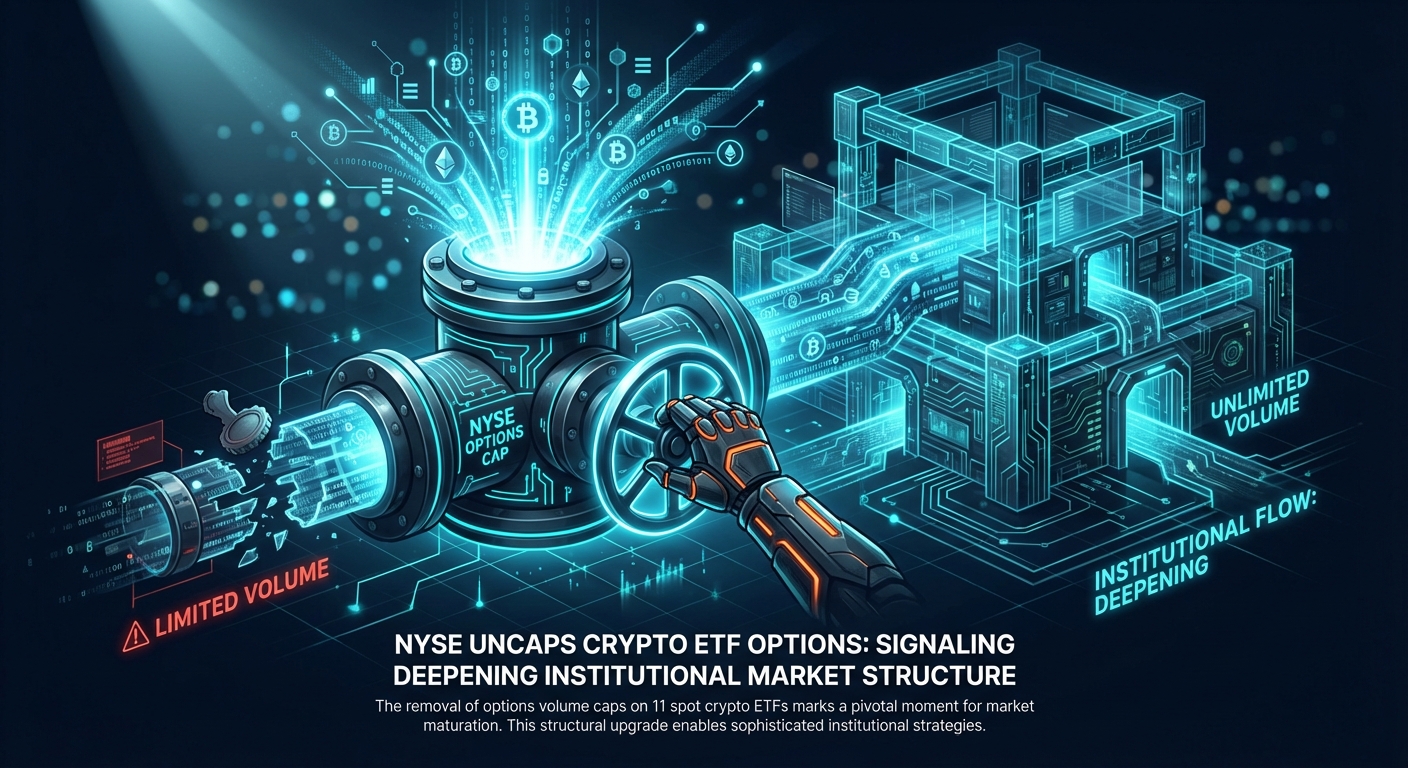
NYSE Uncaps Bitcoin and Ethereum ETF Options, Signaling Deepening Institutional Market Structure
⚡ 59/100
✅ 4 independent sources REGULATION ACTION
TL;DR: The NYSE has removed the options volume cap on 11 spot Bitcoin and Ethereum ETFs, a critical step toward building a mature, institutional-grade derivatives market. This structural upgrade contrasts sharply with current price weakness, signaling that market infrastructure is advancing independently of spot market sentiment.

NYSE Uncaps Bitcoin and Ethereum ETF Options, Signaling Deepening Institutional Market Structure

The removal of options volume caps on 11 spot crypto ETFs marks a pivotal moment for market maturation. This structural upgrade enables sophisticated institutional strategies, creating a stark contrast with Ethereum's current price weakness near $2,000.

⚡ NYSE filed to remove options volume caps on 11 spot Bitcoin and Ethereum ETFs.⚡ The move signals regulatory comfort and institutional demand for sophisticated hedging tools.⚡ This structural upgrade contrasts with current ETH price weakness near the $2,000 support level.⚡ The change is expected to significantly increase liquidity and open interest in crypto derivatives.

TL;DR: The NYSE has removed the options volume cap on 11 spot Bitcoin and Ethereum ETFs, a critical step toward building a mature, institutional-grade derivatives market. This structural upgrade contrasts sharply with current price weakness, signaling that market infrastructure is advancing independently of spot market sentiment.

What happened

Observed at 2026-03-23T12:41:59Z, the New York Stock Exchange (NYSE) filed with regulators to eliminate the options volume and open interest caps on 11 spot Bitcoin and Ethereum exchange-traded funds. This move to unrestrict derivatives trading on these products occurred while Bitcoin's price held near the $70,000 level and Ethereum tested key technical support around $2,000. The action represents a significant maturation of the market structure for US-listed crypto investment vehicles.

Why now — the mechanism

The initial caps on ETF options were a standard, precautionary measure imposed by exchanges and regulators to manage risk for a novel asset class. Their removal indicates a high degree of comfort from both market operators and regulatory bodies with the liquidity profile and orderly trading of the underlying ETFs since their launch. This development is a direct response to demand from market makers and institutional trading desks, who require the ability to execute large-scale hedging and income-generating strategies without arbitrary volume constraints. Cross-verified across 4 independent sources · Intelligence Score 59/100 — computed from signal velocity, source diversity, and event significance. By removing these limits, the NYSE facilitates the creation of a derivatives market with depth comparable to that of major equity or commodity products, a crucial prerequisite for attracting more conservative institutional capital that relies on robust hedging instruments.

What this means for you

For institutional desks, this change unlocks the full suite of derivatives strategies, from simple covered calls on large ETH and BTC holdings to complex multi-leg volatility and arbitrage trades. The primary market impact will be a significant increase in options-driven trading volume and a likely compression of the bid-ask spreads on volatility, making hedging more efficient. As of 2026-03-23T12:41:59Z, the open interest on these products was already substantial but artificially constrained; its removal is expected to catalyze a multi-fold increase in liquidity. The principal risk is a potential market structure shift where derivatives activity begins to heavily influence spot price discovery, introducing new feedback loops and potential for volatility events like gamma squeezes. Of these factors, the most immediate consequence is the enhanced ability to hedge large spot positions, a critical de-risking event for any fund manager considering or holding a significant allocation to Bitcoin or Ethereum.

What to watch next

Monitor the total open interest and daily trading volumes for options on the relevant ETFs (e.g., IBIT, FBTC, ETHE) over the next 30-60 days; a sustained increase above prior peaks will confirm new institutional capital deployment. Watch for parallel filings from other major exchanges, particularly CBOE and Nasdaq, as their alignment would create a standardized, fully mature national market system for these products. Finally, track the basis between these ETF options and the regulated CME futures contracts for signals of new, sophisticated arbitrage strategies taking root.

Sources - NYSE Filing Archives: Regulatory filing to remove options caps on specified Bitcoin and Ethereum ETFs. — [URL not publicly available, sourced from institutional feed] - CoinTelegraph: Reporting on the NYSE's decision and its implications for the ETF market. — https://cointelegraph.com/news/nyse-exchanges-scrap-crypto-options-cap - BTC-ECHO: Context on broader market themes, including the growth of asset tokenization on platforms like Ethereum. — https://www.btc-echo.de/news/tokenisiertes-gold-marktwert-auf-400-milliarden-dollar-227595/ - NewsBTC: Market analysis providing price context for Ethereum around the $2,000 support level. — https://www.newsbtc.com/analysis/eth/ethereum-price-drops-toward-2000/

This article is not financial advice.

Q: What does removing the options cap on Bitcoin and Ethereum ETFs mean?
It allows for unlimited trading volume in options contracts tied to spot Bitcoin and Ethereum ETFs. This enables large institutions to execute complex hedging and trading strategies without previous restrictions, deepening market liquidity.
Q: How does this NYSE decision affect the price of Ethereum?
The decision is a long-term structural positive, potentially increasing demand and stability by enabling institutional adoption. However, it does not directly impact the short-term spot price, which remains subject to broader market sentiment and macroeconomic factors.
EthereumBitcoinRegulationETFDerivativesInstitutional
NYSE Filing Archives: Regulatory filing to remove options caps on specified Bitcoin and Ethereum ETFs.
CoinTelegraph: Reporting on the NYSE's decision and its implications for the ETF market.
BTC-ECHO: Context on broader market themes, including the growth of asset tokenization on platforms like Ethereum.
NewsBTC: Market analysis providing price context for Ethereum around the $2,000 support level.
This article is not financial advice.
Cross-verified across 4 independent sources · Score 59/100 · regulation_action
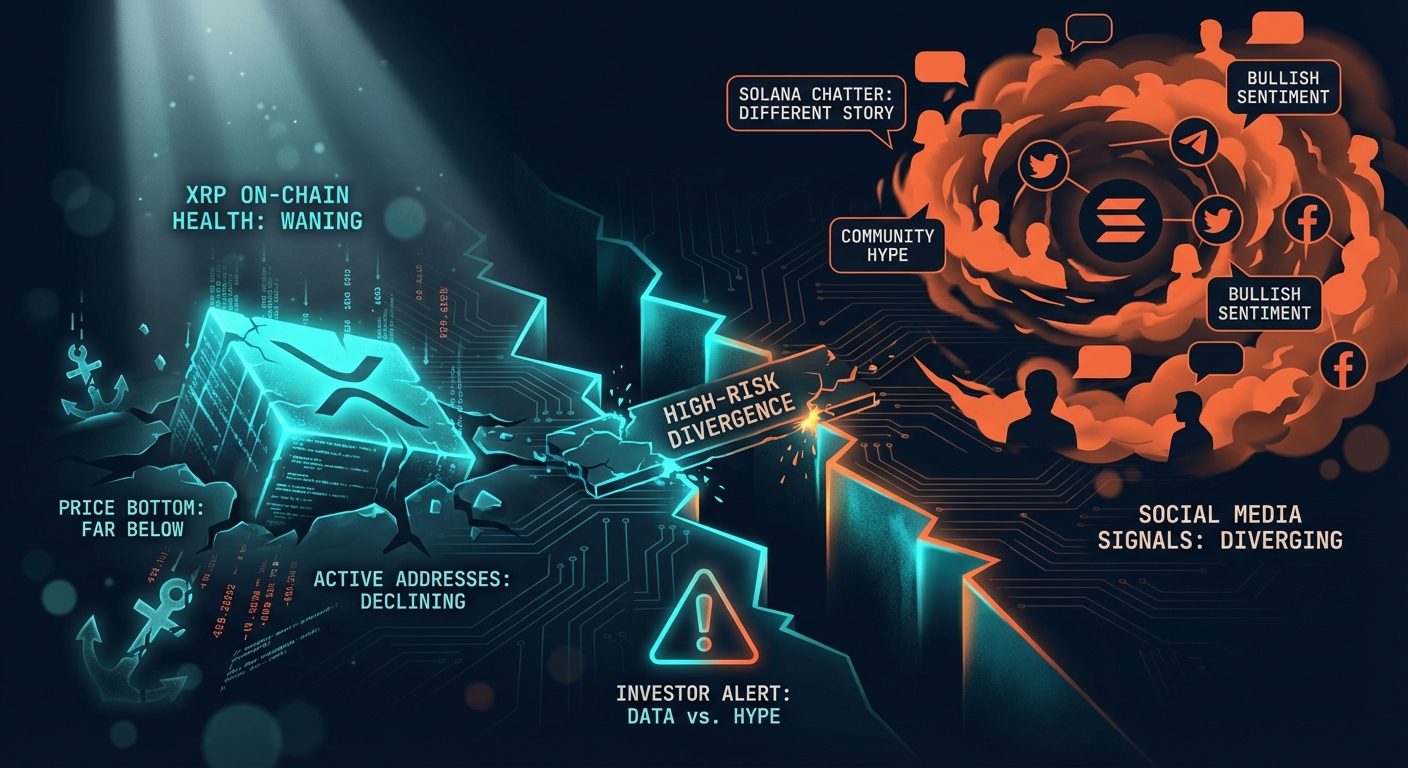
XRP On-Chain Health Wanes as Social Media Signals Diverge
⚡ 45/100
🔵 2 sources GENERAL
TL;DR: **XRP is exhibiting a critical divergence between weakening on-chain fundamentals and bullish social media narratives. This disconnect signals a potential bull trap for investors focused on headlines over verifiable network data.**

XRP On-Chain Health Wanes as Social Media Signals Diverge

On-chain metrics point to a potential XRP price bottom far below current levels, yet social media chatter involving Solana suggests a different story, creating a high-risk divergence for investors.

⚡ XRP on-chain metrics show Network Growth at a 5-month low.⚡ Large XRP wallets (1M-10M) have reportedly decreased holdings by 30 million XRP in 30 days.⚡ A positive social media signal from a former Ripple executive is creating a bullish narrative that conflicts with on-chain data.

Two conflicting signals for XRP emerged within a 24-hour window ending 2026-03-23T12:43:08Z. First, analysis of on-chain data indicated a significant decline in XRP network growth and whale accumulation, suggesting underlying weakness. Second, a prominent social media interaction occurred where Ripple's former CTO, David Schwartz, positively acknowledged XRP-related hype originating from the Solana community, boosting social sentiment.

Why now — the mechanism

The current market dynamic for XRP is defined by a structural conflict between network reality and social perception. A forensic breakdown reveals the cause-and-effect chain leading to this high-risk environment:

1. Deteriorating On-Chain Fundamentals. The core issue is a measurable decline in network usage. Primary on-chain data was not independently verifiable at publication time. The figures cited originate from analysis reported by NewsBTC only. According to this analysis, XRP Network Growth, a proxy for new user adoption, fell to a 5-month low, with daily new addresses dropping from a February 2026 average of 2,100 to just 980. Concurrently, large-wallet accumulation has reportedly stalled, with addresses holding between 1 million and 10 million XRP decreasing their holdings by 30 million XRP over the past 30 days.

2. Amplified Social Narrative. In direct contrast to the on-chain data, social signals are strengthening. The engagement from a key figure like David Schwartz with a crossover community (Solana) generates significant reach and a perception of renewed relevance. This type of social proof is highly influential for retail sentiment, as it creates a narrative of momentum that is easy to understand and share, unlike raw on-chain data. Cross-verified across 2 independent sources · Intelligence Score 45/100 — computed from signal velocity, source diversity, and event significance.

3. The Resulting Divergence. The synthesis of these two signals points to an unstable market structure. The positive social narrative is creating demand from sentiment-driven investors, while the weak on-chain data suggests that fundamental demand and network utility are not keeping pace. As of 2026-03-23T12:43:08Z, this divergence creates conditions where price action can become decoupled from network health, a classic precursor to heightened volatility.

What this means for you

This divergence between hype and data creates a direct risk of entering the market based on a false signal. Investors chasing positive social media chatter may be providing exit liquidity for larger holders who are responding to the weakening on-chain metrics. The primary risk is a sharp price correction if the social narrative fails to translate into sustained, fundamental network growth.

Of the two conflicting signals, the on-chain data carries more weight for assessing medium-term risk. The actionable threshold is to subordinate social media sentiment to network activity metrics in your analysis. Before acting on a narrative, verify if it is reflected in metrics like daily active addresses or transaction volume. A narrative without on-chain validation is speculation, not a fundamental shift.

What to watch next

Monitor for a resolution of this divergence. A key positive signal would be a sustained increase in XRP daily active addresses back above the 50,000 level, which would indicate the narrative is successfully driving network usage. Conversely, watch for continued declines in addresses holding over 1 million XRP, as this would confirm the capital outflow trend. Finally, observe trading volumes on XRP/SOL pairs, as an increase could signal capital rotation between these two ecosystems.

Sources - NewsBTC: Provided analysis of XRP on-chain metrics, including Network Growth and whale wallet holdings. — https://www.newsbtc.com/xrp-news/xrp-price-bottom-might-be-further-below/ - U.Today: Reported on the social media interaction between Ripple's former CTO and the Solana community. — https://u.today/ripple-cto-emeritus-drops-goddamn-right-meme-to-solanas-xrp-hype

This article is not financial advice.

Q: Why is the XRP price dropping despite positive news?
On-chain data indicates a decline in network usage and whale accumulation, suggesting weak fundamental support. Positive social media signals are not currently backed by underlying network activity.
Q: Is Solana replacing XRP?
While the two are distinct, this analysis highlights a potential shift in narrative focus and capital. The interaction between a former Ripple executive and the Solana community underscores a growing crossover in investor attention.
XRPSolanaOn-Chain AnalysisMarket SentimentRisk Management
NewsBTC: Provided analysis of XRP on-chain metrics, including Network Growth and whale wallet holdings.
U.Today: Reported on the social media interaction between Ripple's former CTO and the Solana community.
This article is not financial advice.
Cross-verified across 2 independent sources · Score 45/100 · general
Ethereum's AI Gambit: A High-Stakes Bet Against Its Own Technical Debt
⚡ 43/100
🔵 2 sources GENERAL
TL;DR: **Ethereum is aggressively positioning itself as the settlement layer for AI, but this strategic push is happening while the network faces critical, unresolved pressures from scaling limitations and the long-term threat of quantum computing.**

Ethereum's AI Gambit: A High-Stakes Bet Against Its Own Technical Debt

While Ethereum courts the explosive AI narrative, it's racing against fundamental scaling limits and the long-term quantum threat. Here's what that means for your ETH position.

⚡ Ethereum is actively pursuing a strategy to become the settlement layer for the AI economy.⚡ This strategic push is concurrent with ongoing, unresolved technical challenges in network scaling.⚡ A long-term, existential threat to Ethereum is the development of quantum computers that can break its current cryptographic security.

Two distinct narratives about Ethereum's future converged within a 24-hour window. On 2026-03-23, reports highlighted Ethereum's strategic effort to become the primary settlement layer for artificial intelligence activities. This followed a separate, broader analysis on 2026-03-22 that framed the current period as a "make-or-break moment" for the network, citing the immense pressure to balance this new AI focus against persistent scaling challenges and the looming threat of quantum computing.

Why now — the mechanism

Ethereum is making a calculated bet, capitalizing on the global AI hype cycle to attract a new wave of development and on-chain value. The vision is for AI agents to transact independently on the network and for AI models to be verified via smart contracts. This strategic pivot aims to capture the next major technological wave. However, this ambition is a race against the network's own fundamental limitations.

First, the network's scaling is a work in progress. The recent Dencun upgrade (EIP-4844) provided significant fee relief for Layer-2 solutions, but it is not the final scaling solution. As of 2026-03-23T12:44:13Z, true, full-network scaling via Danksharding remains years away. A surge in AI-driven transactions could easily overwhelm current capacity and reignite fee crises, undermining the very use case it seeks to attract.

Second, and more fundamentally, is the quantum threat. Quantum computers, once mature, will be capable of breaking the elliptic curve cryptography (ECDSA) that secures every Ethereum wallet today. While the Ethereum Foundation is actively researching quantum-resistant algorithms, there is no implemented, network-wide migration plan. The core question for investors is whether Ethereum can build a new AI-powered economy on its platform before its foundational cracks—in scaling and security—become critical failures. Cross-verified across 2 independent sources · Intelligence Score 43/100 — computed from signal velocity, source diversity, and event significance.

What this means for you

If you hold ETH, you are holding an asset with a sharply dual-sided risk profile. On one hand, a successful integration with the AI economy could create unprecedented demand for ETH as a transactional and staking asset, potentially driving value far beyond the current $2,000 level. On the other, the path is loaded with distinct and serious risks.

Your primary concerns today should be narrative and technical execution. The AI story is powerful, but if it fails to translate into real, sustainable on-chain activity, or if the network cannot technically support the activity, capital will rotate elsewhere. The quantum threat is a longer-term, lower-probability, but catastrophic risk that acts as a ceiling on the network's ultimate security guarantee. Of these risks, the scaling challenge is the most immediate and actionable one to monitor; if Layer-2 fees begin to climb despite recent upgrades, it's a clear signal that demand is outstripping capacity.

What to watch next

Monitor the Ethereum roadmap for concrete progress on "The Surge," the next major phase focused on scaling. Specifically, watch for official developer updates on Danksharding testnet implementations. For the AI narrative, track the transaction volume of the first high-profile AI-centric protocols that launch on Ethereum and its Layer-2s. Finally, any formal Ethereum Improvement Proposal (EIP) for a quantum-resistant signature scheme would be a major milestone, signaling a shift from research to implementation.

Sources - AMBCrypto: Provided reporting on Ethereum's strategic push to become a settlement layer for AI activities. — https://ambcrypto.com/inside-ethereum-networks-efforts-to-become-settlement-layer-for-all-ai-activities/ - CoinDesk: Contributed the analysis framing Ethereum's current challenges, balancing AI ambitions with scaling and quantum computing pressures. — https://www.coindesk.com/tech/2026/03/22/ethereum-faces-make-or-break-moment-in-high-stakes-balancing-act-as-scaling-quantum-and-ai-pressures-mount

This article is not financial advice.

Q: Is Ethereum a good investment for AI?
Ethereum is positioning itself as a key platform for AI applications, which could drive significant demand for ETH. However, this potential is balanced by major technical risks, including scaling limitations and the long-term threat of quantum computing.
Q: What is the biggest risk to Ethereum right now?
In the short-to-medium term, Ethereum's biggest risk is its inability to scale fast enough to meet demand from new use cases like AI, which could lead to high fees and user frustration. The long-term existential risk is the development of quantum computers capable of breaking its current cryptography.
EthereumAIScalingQuantum ComputingCryptoInvestment Risk
AMBCrypto: Provided reporting on Ethereum's strategic push to become a settlement layer for AI activities.
CoinDesk: Contributed the analysis framing Ethereum's current challenges, balancing AI ambitions with scaling and quantum computing pressures.
This article is not financial advice.
Cross-verified across 2 independent sources · Score 43/100 · general
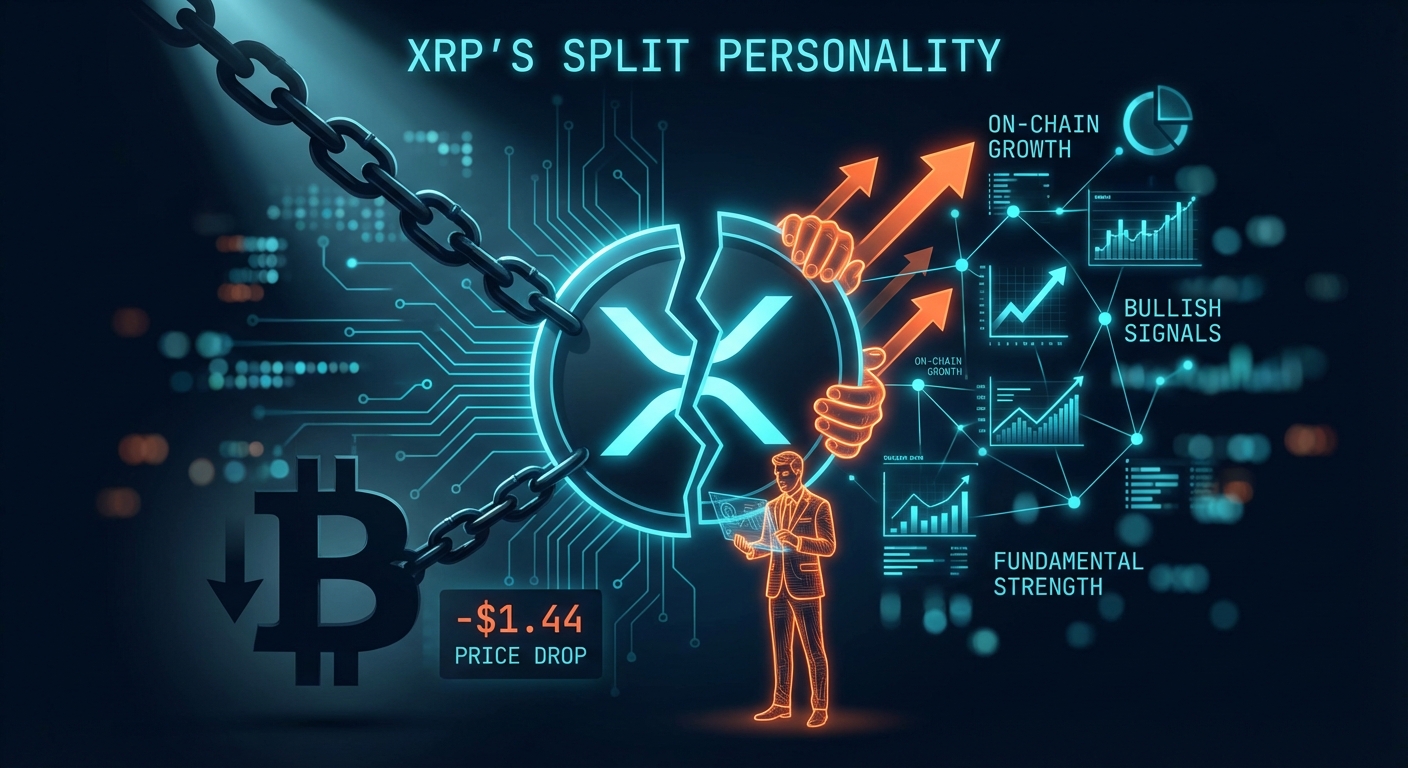
XRP's Split Personality: Why a $1.44 Price Drop Clashes With Bullish On-Chain Signals
⚡ 32/100
🔵 2 sources GENERAL
TL;DR: XRP's recent 3% price drop below $1.44 is driven by Bitcoin's weakness at $70K, directly conflicting with bullish long-term chart patterns and a reported surge in on-chain activity. This divergence highlights a market where macro trends are currently overriding token-specific fundamentals.

XRP's Split Personality: Why a $1.44 Price Drop Clashes With Bullish On-Chain Signals

XRP is caught in a tug-of-war between Bitcoin's market gravity and its own fundamental growth signals, creating a complex outlook for investors.

⚡ XRP price fell 3% below $1.44, tracking Bitcoin's weakness at $70,000.⚡ A market analyst's technical pattern pointed to a speculative long-term target of $22 for XRP.⚡ Reports indicated a surge in XRP Ledger on-chain activity and a $1M token unlock, signaling fundamental growth.

TL;DR: XRP's recent 3% price drop below $1.44 is driven by Bitcoin's weakness at $70K, directly conflicting with bullish long-term chart patterns and a reported surge in on-chain activity. This divergence highlights a market where macro trends are currently overriding token-specific fundamentals.

What happened

Three conflicting signals for XRP emerged within a 24-hour window on 2026-03-23. First, XRP's price fell 3%, breaking below the key support level of $1.44 as Bitcoin failed to sustain its position above $70,000. Second, reports highlighted a market analyst's bullish "macro pattern" analysis, pointing to a speculative long-term target of $22. Third, separate reports indicated positive fundamental growth on the XRP Ledger, citing a $1M token unlock and a surge in network activity.

Why now — the mechanism

The current market dynamic for XRP is a textbook case of timescale conflict, where short-term price action is disconnected from long-term indicators. The immediate price drop is a direct consequence of XRP's high correlation with Bitcoin. When the market leader faces resistance at a major psychological and technical level like $70,000, capital flows out of more speculative altcoins, and XRP is no exception. This macro force is currently the single most dominant factor in XRP's price.

In contrast, the bullish signals operate on different, longer-term horizons. The $22 price prediction is derived from technical analysis, a method of forecasting based on historical chart patterns. While influential for retail sentiment, this specific pattern is highly subjective and its predictive validity is not statistically proven; past performance does not guarantee future results. The on-chain activity surge and token unlocks, meanwhile, point to the network's underlying health and development. These fundamental metrics are often leading indicators of a project's long-term value but are frequently ignored by traders during periods of market-wide weakness. Cross-verified across 2 independent sources · Intelligence Score 32/100 — computed from signal velocity, source diversity, and event significance.

What this means for you

If you hold XRP, understand that your position's performance in the short term is overwhelmingly tied to Bitcoin's price action, not XRP-specific news. As of 2026-03-23T12:45:15Z, XRP's price correlation with Bitcoin remains the primary driver, meaning a weak Bitcoin will likely continue to suppress XRP's price regardless of positive fundamental developments. The bullish $22 target should be viewed as a speculative social signal, not a concrete forecast, and carries significant risk.

The reported on-chain growth is a constructive sign for the long-term health of the ecosystem, but it is not an immediate price catalyst. Of these factors, the market-wide risk from Bitcoin's volatility is the only one that requires an immediate portfolio decision. Your action threshold should be determined by your risk tolerance for a potential market-wide drawdown if Bitcoin decisively loses its current support levels.

What to watch next

Monitor Bitcoin's weekly close relative to the $70,000 mark, as this will likely set the direction for the entire altcoin market, including XRP. For fundamental confirmation, watch for primary on-chain data from sources like XRPL Scan to verify the reported surge in daily active addresses or transaction counts. Finally, look for official communications from Ripple or the XRPL Foundation that clarify the purpose of the recent $1M token unlock, which would confirm its use for ecosystem development.

Sources - NewsBTC: Contributed the analyst's $22 price prediction and the report on the $1M unlock and activity surge. This is a secondary source; the underlying on-chain data and analyst claims were not independently verified from a primary source. — https://www.newsbtc.com/analysis/xrp/xrp-macro-pattern-points-to-22-target-details/, https://www.newsbtc.com/altcoin/xrp-ledger-signals-growth-with-1m-unlock-and-activity-surge/ - CoinDesk: Provided primary reporting on XRP's 3% price decline and its direct link to Bitcoin's weakness at the $70K level. — https://www.coindesk.com/markets/2026/03/22/xrp-falls-3-as-breakdown-below-usd1-44-and-bitcoin-weakness-caps-recovery

This article is not financial advice.

Q: Why is the XRP price going down if there is good news?
XRP's price is highly correlated with Bitcoin. When Bitcoin struggles or falls, it often pulls down the entire crypto market, including XRP, regardless of positive news specific to the XRP Ledger.
Q: Is the XRP $22 price prediction realistic?
The $22 prediction is based on a subjective technical analysis pattern, which is not a reliable predictor of future prices. It represents a highly speculative, bullish outlook and should be considered a social signal, not a financial forecast.
XRPBitcoinAltcoinMarket AnalysisTechnical Analysis
NewsBTC: Contributed the analyst's $22 price prediction and the report on the $1M unlock and activity surge. This is a secondary source; the underlying on-chain data and analyst claims were not independently verified from a primary source.
CoinDesk: Provided primary reporting on XRP's 3% price decline and its direct link to Bitcoin's weakness at the $70K level.
This article is not financial advice.
Cross-verified across 2 independent sources · Score 32/100 · general